
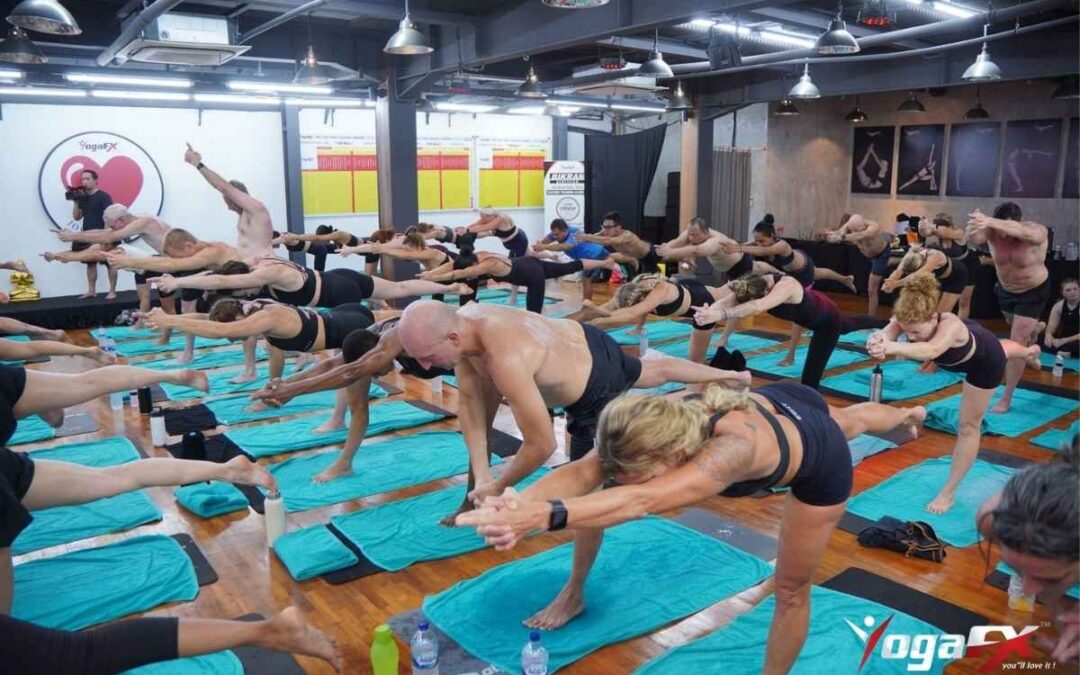
Is hot yoga good for your heart? The research says it probably is, in modest ways. Small trials of Bikram-style hot yoga show better artery function, lower blood pressure in people with mild hypertension, and a real cardio workload. However, the studies are small, and the heat itself adds strain. So it may help healthy hearts, but it is not a treatment.
Is Hot Yoga Good for Your Heart? The Short Verdict
Here's the honest version, graded the way we grade every claim on this site. The evidence that hot yoga is good for your heart comes mostly from one research group in Texas, led by Dr. Stacy Hunter. Their trials are careful, but each one has between 10 and 54 people.
That means the results are promising signals, not proof. Here is what the trials do and do not show:
- Arteries: 8 to 12 weeks of classes improved how well arteries widen or how stiff they are, in some groups but not all.
- Blood pressure: in healthy people it barely moved. In 10 adults with raised blood pressure, 24-hour systolic pressure fell by about 5 points.
- Heart rate: a 90-minute class pushes men to about 80% of their maximum heart rate on average, so it is real cardio work.
- The heat: one trial found the same artery gains at room temperature. So the postures may matter more than the thermostat.
In short, a regular practice looks good for your heart if you are healthy, but nobody has shown it prevents heart disease. And if you already have a heart condition, the heat changes the question entirely. Please consult a healthcare professional before your first class.
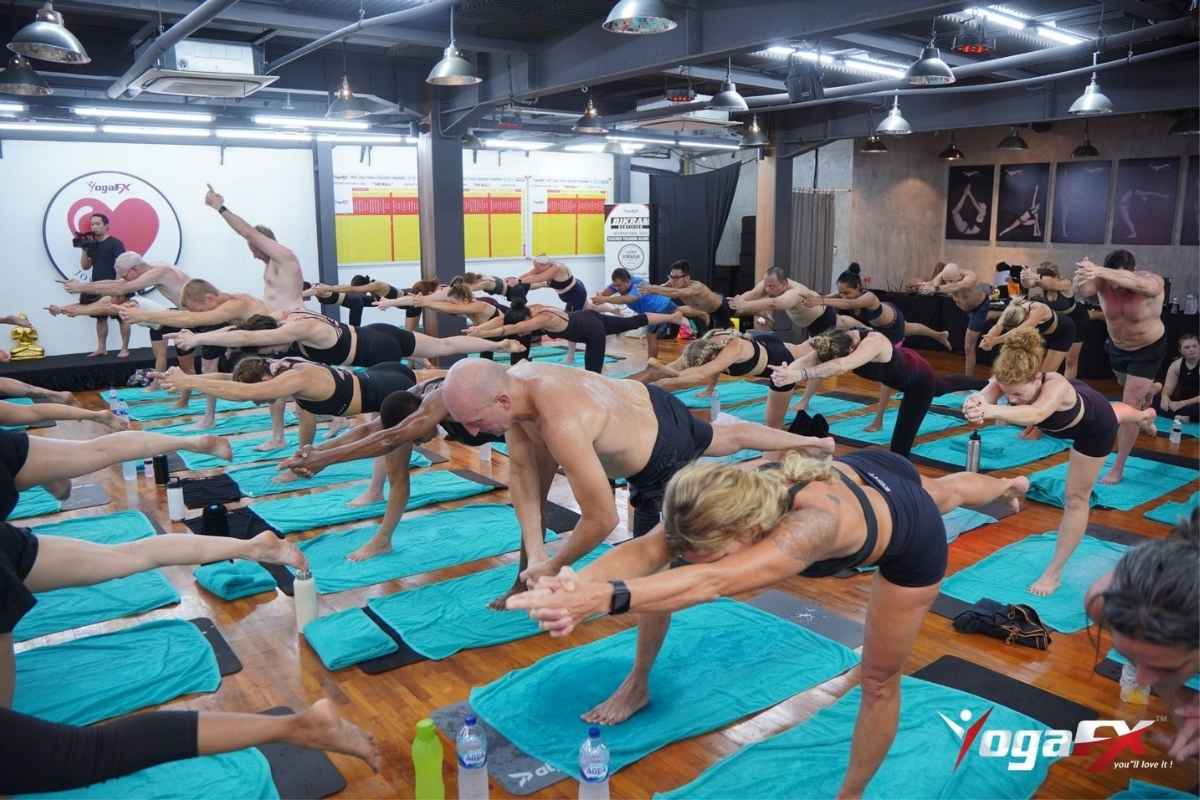
The Hot Yoga Blood Pressure Trials, Side by Side
Most articles quote one study and stop. Instead, the table below lists every controlled or measured trial we could verify on hot yoga, blood pressure and blood vessels. The last column is our own evidence grade, so you can see how much weight each result deserves when you ask whether hot yoga is good for your heart.
Seven Hot Yoga Trials at a Glance
| Study | Who took part | Dose | Heart or blood pressure result | Our grade |
|---|---|---|---|---|
| Hunter et al. 2013 | 24 young and 18 older healthy adults | 90 min, 3x a week, 8 weeks, 40.5°C | Blood pressure did not change. Carotid arteries became more elastic in young adults only. | C (no control group) |
| Hunter et al. 2016 | 43 adults, 20 overweight or obese | 8 weeks of Bikram classes | Arterial stiffness fell in the overweight group, not in normal-weight adults. | C (no control group) |
| Hunter et al. 2017 | 36 healthy adults, 17 young and 19 older | 3x a week, 8 weeks | Artery widening (FMD) improved in middle-aged and older adults only. | C (no control group) |
| Hewett et al. 2017 | 63 stressed, sedentary adults, 79% women | 3 to 5 classes a week, 16 weeks | No group change in blood pressure. People who attended more had lower diastolic pressure. | B (randomised, low attendance) |
| Hunter et al. 2018 (Bikram Yoga Heart Study) | 52 sedentary adults aged 40 to 60 | 90 min, 3x a week, 12 weeks, 40.5°C vs 23°C | Artery widening improved at 23°C and tended to improve at 40.5°C. No real difference between rooms. | B (randomised, small) |
| Hunter et al. 2018 (arterial stiffness) | 54 sedentary adults aged 40 to 60 | 12 weeks, hot vs room temperature | Arterial stiffness did not change in either yoga group. | B (randomised, small) |
| Hunter et al. 2019 (conference abstract) | 10 unmedicated adults with raised blood pressure | 60 min, 3x a week, 12 weeks | 24-hour blood pressure fell from 126/82 to 121/79 mmHg. No change in controls. | C (pilot, not yet a full paper) |
The Pattern Across the Trials
Read the table from top to bottom and a pattern appears. The early trials had no comparison group, so we can't tell whether yoga, a new routine or simply the season caused the change. The later randomised trials are stronger, and their results are mixed but mostly positive.
What the Blood Pressure Numbers Mean in Plain Language
Blood pressure is written as two numbers, such as 126/82. The top number (systolic) is the pressure when your heart beats. The bottom number (diastolic) is the pressure between beats. Both are measured in millimetres of mercury, or mmHg.
In the 2019 pilot, the top number dropped by 5 points and the bottom by 3. That is a modest change, roughly the size seen with yoga in general. For example, a 2016 review of 32 yoga trials in the European Journal of Preventive Cardiology (Chu et al.) found an average systolic drop of about 5 points versus no exercise.
So hot yoga does not look like a blood pressure miracle. Instead, it looks like a solid form of exercise that produces exercise-sized results. That is still useful, because many people who hate running will happily come back to a hot room three times a week. Regular exercise you actually do is good for your heart, whatever the room temperature.
7 Honest Findings From the Heart Research
If you only remember one section, make it this one. These seven findings sum up whether hot yoga is good for your heart, based on what researchers actually measured.
- Healthy blood pressure stays healthy. In normal-pressure adults, 8 weeks of classes did not move blood pressure up or down (Hunter 2013).
- Raised blood pressure may come down. The only trial in people with high readings saw a 5-point systolic drop, but it had just 10 people.
- Older arteries respond best to widening tests. Middle-aged and older adults improved artery widening, while young adults did not (Hunter 2017).
- Stiffness results depend on the person. Overweight adults and young adults got less stiff arteries. Healthy middle-aged adults did not.
- The postures do much of the work. Room-temperature Bikram yoga matched or beat hot yoga for artery widening (Hunter 2018).
- Attendance matters. In Hewett's 16-week trial, people averaged 27 classes, and only those who came more often saw lower diastolic pressure.
- The heat is a real load. Heart rate and core temperature climb steadily through a 90-minute class, which is why screening matters.
Put together, those findings explain the careful wording you see from researchers. Hot yoga is likely good for your heart in the same way other regular exercise is good for your heart. It is not yet proven to be better than that.
Four Numbers That Sum It Up
126 → 121
24-hour systolic, mmHg
10 adults with raised blood pressure after 12 weeks of hot yoga.
40.5°C = 23°C
Same artery gains
52 adults aged 40 to 60, hot room vs room temperature, 12 weeks.
80% / 92%
Men's heart rate, average / peak
Share of predicted maximum during a 90-minute class at 105°F.
7 of 20
Passed 103°F core heat
Regular practitioners whose core temperature went above 103°F in class.
What Happens to Your Heart During a 90-Minute Class
Long-term results are one half of the story. The other half is what the heat does to your heart rate, blood pressure and core temperature in real time. Two studies measured this directly.
Heart Rate and Core Temperature: The Quandt Study
Emily Quandt and John Porcari at the University of Wisconsin-La Crosse tested 20 regular practitioners, 7 men and 13 women aged 28 to 67. Each did a standard 90-minute class at 105°F and 40% humidity while wearing heart rate and core temperature sensors.
Men averaged about 80% of predicted maximum heart rate and peaked at 92%. Women averaged 72% and peaked at 85%. Core temperature rose steadily all class long, and seven of the 20 went above 103°F.
A workload this high is part of why the class can be good for your heart, and also why it deserves respect. You can read the full write-up from the American Council on Exercise, which funded the work.
Nobody in the study showed signs of heat illness. Even so, the authors suggested hydration, acclimatisation and shorter or cooler classes for anyone new to the heat. Their message is useful for teachers too: sweating alone does not cool a body efficiently in humid air.
Blood Pressure Posture by Posture
A 2019 pilot by Miranda Hurtado and colleagues in Chile measured blood pressure after every posture in 16 experienced female practitioners. Heart rate averaged 126.6 beats per minute and reached 168.1 at its peak.
Surprisingly, systolic pressure never rose significantly above resting levels. Diastolic pressure actually fell by about 10%, especially during the floor series. The heat widens blood vessels, which seems to offset the pressure rise you would expect from effort.
That drop is reassuring for healthy people. However, it is also why some beginners feel light-headed when they stand up quickly from the floor. If that happens, sit down, breathe and let your body catch up. A class is only good for your heart if you finish it feeling steady, not shaky.
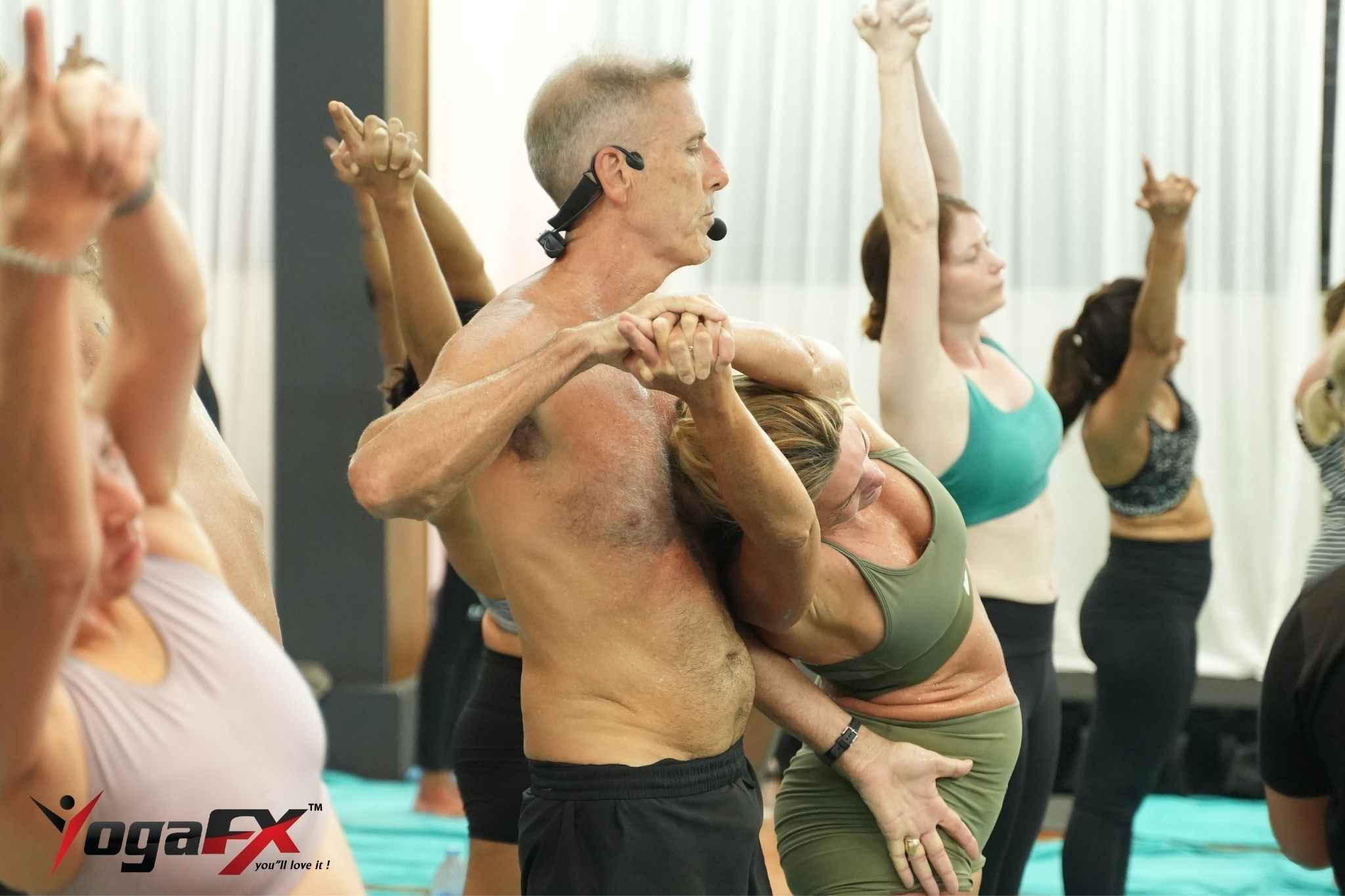
Is Hot Yoga Bad for Your Heart? Who Should Check First
Many people search the opposite question too: is hot yoga bad for your heart? For most healthy adults the answer is no. Still, a 2025 systematic review of 43 hot yoga studies by Willmott and colleagues, published in Sports Medicine - Open, urges caution.
The review describes case reports of a sudden cardiac arrest in a 35-year-old woman and a heart attack in a 53-year-old man after hot yoga. The authors stress that the direct causes are uncertain, because underlying conditions were not ruled out. In a survey of 157 practitioners, many reported dizziness, light-headedness or nausea at some point.
What is good for your heart when it is healthy can be too much when it is not. So talk to your doctor before you start if any of these apply to you:
- A diagnosed heart condition, such as heart failure, an arrhythmia, a valve problem or a past heart attack.
- High or low blood pressure that is not yet under control, or regular dizzy spells.
- Medication that affects heat or fluid balance, such as blood pressure pills or diuretics.
- Pregnancy. A 2014 review in Canadian Family Physician advised pregnant women to avoid hot yoga because of the risks of overheating.
People who have recovered from a heart attack often ask online whether they can return to the hot room. That decision belongs to your cardiologist or cardiac rehab team, not to a blog or a studio. If they agree, start with a cooler or shorter class first.
How to Practise So Hot Yoga Is Good for Your Heart
If your doctor gives you the green light, copy the dose that researchers tested. That way you know your routine matches the evidence, rather than a guess. The steps below follow the Hunter and Hewett protocols as closely as a normal week allows.
- Aim for three classes a week. Most trials used three 90-minute sessions weekly for 8 to 12 weeks.
- Give it at least 8 weeks. Artery changes in these studies showed up after 8 to 12 weeks, not after a few classes.
- Track your blood pressure at home. Measure at the same time each morning, so you can see your own trend.
- Drink before, during and after class. Sip water through the session rather than gulping a litre at the end.
- Rest whenever you need to. Sitting or lying down in the room is always allowed, and it is a smart choice, not a failure.
Expect your first week to feel harder than the next. Acclimatisation usually takes 10 to 14 days, according to the ACE experts who reviewed the Quandt data. As a result, many people find that the same class feels noticeably calmer by week three. Steady, repeated practice is what makes hot yoga good for your heart, not one heroic session.
Warning Signs to Stop and Sit Down
Stop, sit down and tell the teacher if you notice chest pain, a racing or irregular heartbeat, confusion, severe headache, nausea or cramps. For example, cramps and dizziness are early signs of heat intolerance. Chest pain needs urgent medical help, so call emergency services rather than waiting it out.

Hot Yoga vs Regular Yoga for Heart Health
Yoga at room temperature has a bigger evidence base than hot yoga. A 2013 meta-analysis of 17 studies by Hagins and colleagues found yoga lowered systolic pressure by about 4 points and diastolic by about 3.6 points in people with hypertension. The effect was larger when classes combined postures, breathing and meditation.
Harvard Health summed up the wider picture in plain terms. Yoga, it reported, may cut heart disease risk factors about as much as brisk walking, including a drop of roughly five points in systolic pressure. You can read the Harvard Health summary of yoga and the heart for the details.
So where does that leave the heat? The Bikram Yoga Heart Study found no clear extra benefit from 40.5°C over 23°C. On the other hand, the hot group lost more body fat, and many students simply enjoy the heat more. If you love it and you are healthy, it is a fine choice. If heat worries you, room-temperature yoga is also good for your heart.
Bikram Yoga and Blood Pressure: Same Sequence, New Name
You will see this topic searched as bikram yoga and blood pressure as well. Nearly every trial above used the same 26 postures and 2 breathing exercises, now often taught as Original Hot 26&2 Yoga. That consistency is useful, because it means the research applies to the class most hot studios teach today.
Why the Evidence Is Still Early
Our site is built around graded evidence, so we owe you the weak spots too. The question of whether hot yoga is good for your heart is still open for four reasons:
- Small samples. The largest heart trial had 63 people, and the blood pressure pilot had 10.
- One main lab. Most results come from the same research group, so independent replication is thin.
- Short follow-up. Nothing lasted longer than 16 weeks, so heart attacks and strokes were never measured.
- Healthy volunteers. Almost nobody with heart disease took part, so the results do not apply to them.
The 2025 Willmott review reached the same conclusion. It found signs of better body composition, blood fats and artery function, which are all good for your heart, yet it called for larger, better-controlled trials. That's the honest headline: likely helpful, modest in size, and not a medical treatment.
What Our Trainees Say About Training From the Heart
Research measures arteries. Our graduates talk about the other kind of heart, the reason they kept showing up. These comments come from video reviews recorded at the end of YogaFX teacher trainings.
"Honestly, this is the best training that I've ever learned... it's from the deep of my heart. This is what Mr. Ian has been teaching from his heart."
Musya, YouTube review, 2023
"I've learned that I can do it... it feels so good to just accept you don't have to be perfect... I love the practice and these classes are great, they're the best."
Louise, YouTube review, 2025
"It was so crucial for us to have posture clinics and learn about the anatomy, muscular system... and yoga's principles."
Stephanie, YouTube review, 2019
Stephanie's point about anatomy matters here. A teacher who understands the circulatory system can spot a struggling student early, and can explain honestly why a class is good for your heart without overselling it. You can watch Louise's full review below.
Learn the Science Behind the Heat With YogaFX
If this article made you curious about the physiology, that curiosity is exactly what good hot yoga teachers need. Teachers are often the first people students ask whether hot yoga is good for your heart. Our hot yoga teacher training online course lets you study the 26 postures, the dialogue and the science at home, on your own schedule.
The course is led by Mr. Ian Terry, E-RYT 500, who has more than 12,000 teaching hours. He trained for 5 years, from 2014 to 2019, with the founder of the method. Since 2017, YogaFX has trained more than 1,500 graduates from 80+ countries, and Mr. Ian keeps the class structure fixed so every student knows what comes next in the heat.
- Know the postures. Start with our guide to the 26&2 poses, including the floor series where blood pressure dips.
- See how online study works. Read the 8-week breakdown of online yoga teacher training.
- Read the mental side. See what researchers measured on hot yoga and mental health in men.
When you're ready for the heat in person, the next step is the 6-day Bikram Hot 26&2 Yoga Teacher Training MasterClass in Bali. The next batch checks in on Sunday 24 January 2027 at Soham Wellness Center in Seminyak. The Early Bird price is US$1,899 (normally US$1,999), with payment plans from US$250 a month.

FAQ
Is hot yoga bad for your heart?
For most healthy adults, no. Trials of 8 to 16 weeks found neutral or positive effects on blood pressure and arteries, so regular practice looks good for your heart. However, a 2025 review noted rare case reports of cardiac events after hot yoga. If you have a heart problem or take heart medication, ask your doctor first.
Does hot yoga lower blood pressure?
It may in people whose blood pressure is raised. A small 2019 pilot of 10 adults found 24-hour systolic pressure fell from 126 to 121 mmHg after 12 weeks. In people with normal blood pressure, an 8-week trial found no change. Larger trials are still needed to confirm the effect.
Can you do hot yoga with high blood pressure?
Possibly, but only with your doctor's approval. Researchers have safely tested hot yoga in unmedicated adults with mildly raised blood pressure. If you take blood pressure medication, the heat can add to its effect and cause dizziness. Start slowly, drink regularly, and rest whenever you feel light-headed.
Does hot yoga get your heart rate up?
Yes. In a University of Wisconsin-La Crosse study, men averaged about 80% of their predicted maximum heart rate during a 90-minute class and women about 72%. Peaks reached 92% and 85%. That puts a hot class in the range of moderate to vigorous cardio, even though you stay on one mat.
Is hot yoga good for heart patients?
There is no research on hot yoga in people with heart disease, so nobody can say it is safe for them. Gentle room-temperature yoga is often used alongside cardiac rehab instead. Anyone with a heart condition should get clearance from their cardiologist before trying a heated class of any kind.
Still have questions? Mr. Ian and the YogaFX team answer them personally. Take the 2-minute quiz to see if you're ready to teach hot yoga, or go straight to the online course enrolment page.