
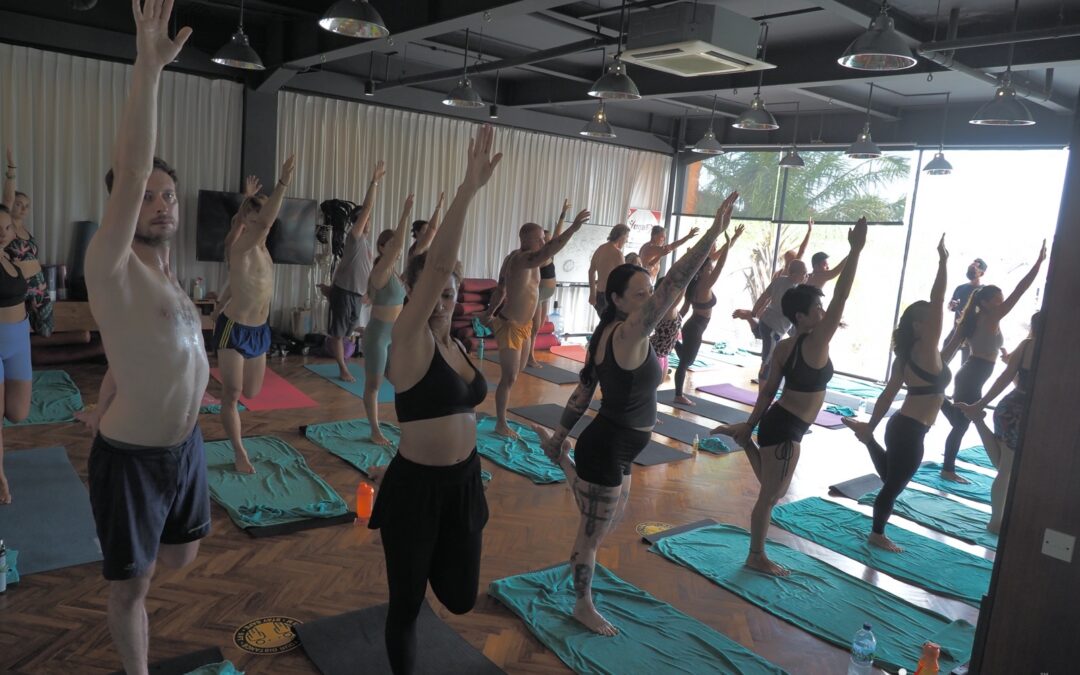
Savasana benefits show up in three places after a hot class: your heart rate and blood pressure settle gradually, your breathing slows, and your mind learns to rest. Small trials of savasana report lower heart rate and blood pressure over weeks. One study also suggests the rest works best after effort.
Savasana Benefits at a Glance: 5 Honest Reasons It Matters
Here's the short version, graded the way we grade every claim on this site. Savasana isn't magic, and the evidence is small. Still, five points hold up when you read the studies and watch what happens in a heated room:
- Gradual recovery. A cool-down lets heart rate and blood pressure come down in steps, which exercise experts link with fewer dizzy spells.
- Lower numbers in a small trial. After six weeks of daily practice, 35 medical students showed lower heart rate and blood pressure, while a control group did not change.
- Effort first, rest second. A 2014 study found that cardiovascular recovery was greater after postures than after savasana alone.
- A pause for the breath. Slow nasal breathing is how we teach the body to leave the effort state and settle.
- A skill you can practise at home. It needs no equipment, so you can learn it long before you step into a heated room.
These savasana benefits come from different studies, so none of them proves the others. We take each one apart below. As always, please consult a healthcare professional before starting if you have any heart or blood pressure concern. If you want the wider picture first, start with the guides linked through this article.
Savasana Meaning: What Corpse Pose Is and Why It Has That Name
Shavasana joins two Sanskrit words: shava, meaning corpse, and asana, meaning posture. That is why people also search for corpse pose benefits. The name describes stillness, not death. You lie on your back, rest your arms a little away from your sides, and let your legs fall open. Then you stop trying. Understanding the name is the first step to understanding savasana benefits.
Spelling varies. You will see savasana, shavasana and savasana pose, and all of them point to the same posture. In Hot 26&2 Yoga the posture appears several times in one class, so it earns an article of its own.
Most students find it the hardest pose in the room. The body is still, but the mind isn't. That makes sense. After 90 minutes of precise instruction, balance and heat, a quiet mind takes practice. Teachers treat savasana as a skill to build, not a reward you get for surviving the class.
Because it is a skill, the savasana benefits grow with repetition. Your first few attempts may feel restless, and that's normal.
Why Final Rest Matters After Heat
A Hot 26&2 class runs 90 minutes in a room at about 40°C and 40% humidity. You practise 26 postures and 2 breathing exercises. The standing series asks the most of your heart and big muscles, and the floor series asks less. Savasana sits between the two as a bridge, and that bridge is where the savasana benefits begin.
That bridge matters because stopping hard effort all at once is jarring. Cleveland Clinic quotes exercise physiologist Karen Feakes, who explains that a cool-down brings heart rate, blood pressure and breathing down in steps. A sudden dip in blood pressure or heart rate can leave you dizzy or lightheaded, she says. She adds that this matters even more for people with diabetes, high blood pressure or heart conditions.
The same article suggests a general cool-down of about three to ten minutes. That advice covers exercise in general, so it isn't a rule for savasana. Still, it explains why teachers never rush students from effort straight back to the street.
Recovery Zones in Plain Language
We teach a simple map of the class. These bands are our teaching shorthand, not a medical standard, and the studies we checked don't measure every posture one by one. Your own response will vary with age, fitness, heat acclimation and medication. Here is where the savasana benefits show up in a class.
- Standing series. It creates the most cardiovascular demand. Balance, long holds and heat keep heart rate and breathing at their highest.
- Savasana after the standing series. Muscular effort drops and breathing becomes more controlled, so your heart rate has a chance to slow.
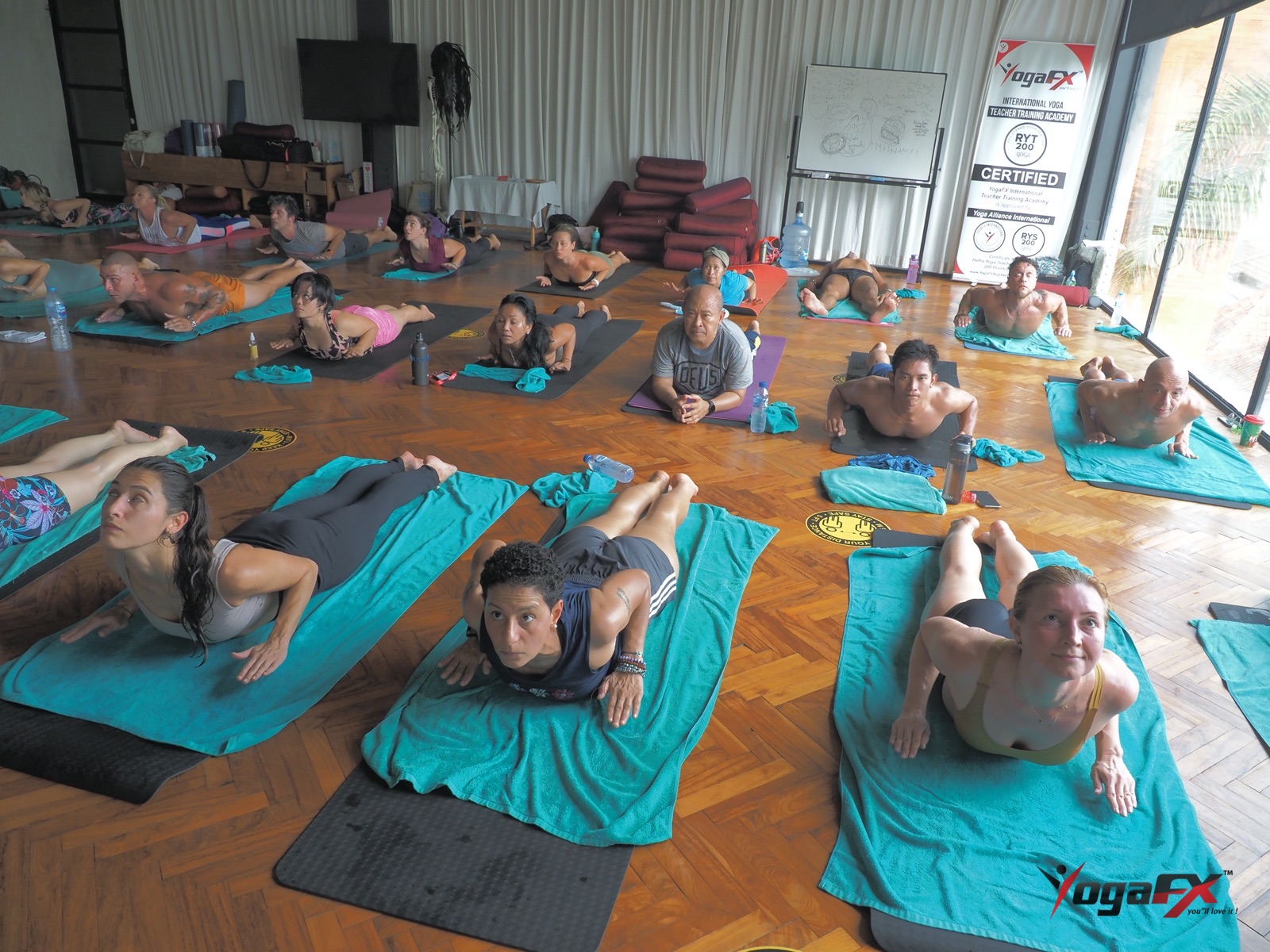
- Floor series. Most of it is lower demand, a Zone 1-style recovery. Cobra, Locust, Bow and Camel bring effort back for a short time.
- Final savasana. It is the closing chance for your heart rate to settle and for your nervous system to calm before you leave the room.
If you'd like the numbers behind the effort side, read our guide to heart rate zones in a hot class. For the stress side, see our notes on hot yoga and the stress hormone cortisol.
What to Do If the Heat Hits You Mid-Class
Safety is one of the quieter savasana benefits, because savasana is also your safety valve. If you feel dizzy or lightheaded, lower your centre of gravity at once. Turn around with your head to the mirror and your feet to the wall, then lie down on your back in savasana. Never force movement through dizziness, and stay in the room.
Keep your mouth closed and breathe calmly through your nose. If symptoms don't settle, tell the teacher. Chest pain is different: stop, and get urgent medical help. Our guide on feeling tired after hot yoga explains how to tell normal fatigue from a warning sign.
What the Studies Say About Savasana Benefits
Few trials test savasana benefits on their own, and none we found test it in a heated room. So read the table as a map of what is known, not a promise. Every figure comes from the source named in the first column.
Four Sources at a Glance
| Source | Who took part | What was done | What it found | Main limit |
|---|---|---|---|---|
| American Journal of Health Promotion, 2014 | 67 first-year medical students (35 practising, 32 control) | Shavasana with soothing background music, 1 hour a day for 6 weeks | Lower heart rate, systolic and diastolic blood pressure, and better heart rate variability indices. No change in the control group. | Young medical students. Music and a daily hour differ from a class. |
| International Journal of Yoga, 2014 (Bhavanani et al.) | 22 healthy young nursing students | Heart rate and blood pressure tracked during 10 minutes of lying down after five different postures, with shavasana as the comparison | Cardiovascular recovery was greater after the postures than after shavasana alone. | Small sample. The abstract gives no numbers. |
| Cleveland Clinic, 2024 (Karen Feakes) | Expert advice, not a trial | General cool-down guidance after exercise | Cool-downs bring heart rate, blood pressure and breathing down in steps. Three to ten minutes is suggested. | Not specific to yoga or to savasana. |
| Nyer et al., Massachusetts General Hospital, 2023 | Heated yoga group and waitlist group, 8 weeks | Heated yoga classes | 59.3% of the yoga group had a 50% or greater drop in depressive symptoms, against 6.3% of the waitlist group. | Tests whole classes. Savasana alone is not isolated. |
Study One: Six Weeks of Daily Shavasana
The American Journal of Health Promotion trial is the closest match to our question about savasana benefits. Researchers asked 35 first-year medical students to practise shavasana with soothing background music for one hour a day over six weeks. A control group of 32 students did no relaxation practice.
At the end, the practising group had a lower heart rate and lower systolic and diastolic blood pressure. Their heart rate variability indices also improved. Heart rate variability is the small change in time between heartbeats, and researchers use it as a window on the nervous system. The control group showed no significant change.
The authors concluded that short-term relaxation practice can improve autonomic balance and support cardiovascular health in young adults. That's encouraging, but we'd read it with care. The students were young and healthy, the practice lasted an hour a day, and music was playing. A class ending in a short savasana, with no music, is a different dose.
Study Two: Effort Before Rest Beats Rest Alone
The second source adds a useful twist. In the International Journal of Yoga study, 22 healthy young nursing students did one posture a day on seven days, in random order. The team recorded heart rate and blood pressure before and after each posture, then through ten minutes of lying down.
Shavasana served as the comparison. The authors report that cardiovascular recovery was greater after the postures than after shavasana alone. They read this as a better response when effort comes before relaxation. That fits the way a hot class is built, with the long effort first and the rest after it.
In other words, savasana benefits seem to depend on what comes before it. Lying down after nothing is pleasant. Lying down after work is where the recovery shows.
The Mood Question
A 2023 randomized trial from Massachusetts General Hospital (Nyer et al.), published in the Journal of Clinical Psychiatry, compared heated yoga with a waitlist over 8 weeks. In the yoga group, 59.3% had a 50% or greater drop in depressive symptoms, against 6.3% of the waitlist group. You can see how the Harvard trial was run in our own review.
The trial tested whole classes, so we can't credit savasana benefits alone. We include it because final rest is part of every class in that setting. It's context, not proof that the rest causes the change.
What We Can't Say Yet
- No heated-room trial of savasana alone. The studies above test it at room temperature or as part of mixed classes.
- No treatment claims. Savasana may help you recover and relax. It doesn't treat blood pressure, depression or any other condition.
- No sweat or toxin claims. The research we reviewed measures heart rate, blood pressure and mood, not any clearing of the body.
If you take blood pressure medication or have a heart condition, speak to your doctor before adding any new practice, and tell your teacher before class.
Where Savasana Sits in a 90-Minute Class
The graphic below shows the class format in five cards, so you can see where the rest fits.
90 min
One class
A fixed sequence from opening breath to final rest.
26 + 2
Postures and breathing exercises
Standing series first, then the floor series.
40°C
Room temperature
Natural tropical heat, not electric heaters.
40%
Humidity
The room stays warm and damp the whole class.
Rest
Savasana between and after
Short rests link the work, and a final savasana closes the class.
Notice that nothing in the graphic is about playing music or watching a demonstration. Teachers guide the room with a scripted dialogue, so the final rest begins with words and ends in quiet. The trial in Study One used music, which is one more reason to treat its numbers as a guide only.
How to Practise Savasana at Home: 6 Steps
You don't need a heated room to learn the pose or to feel the first savasana benefits. Practise on a mat, a towel or a carpet, after your own stretching or a walk, because the research suggests rest works best after effort.
- Lie on your back. Rest your head on the floor. A folded towel under it is fine if your neck feels strained.
- Set your limbs. Let your feet fall open and rest your arms a little away from your sides, palms up.
- Close your mouth. Breathe slowly through your nose, which is how we teach heart rate to settle.
- Soften from the top down. Release your forehead, jaw, shoulders and belly one at a time.
- Let thoughts pass. When your mind wanders, note it and come back to the breath. Don't fight the wandering.
- Come out slowly. Deepen your breath, move your fingers and toes, roll onto one side, and sit up gradually.
If your lower back complains, try a bolster or rolled towel under your knees. If you feel faint lying flat, or you're pregnant, ask a healthcare professional which position suits you, and tell your teacher.
Start with a few minutes. Research gives no single best length, so let your comfort and your teacher guide you. Over a few weeks, notice whether you settle faster. That is the practical sign the savasana benefits are building.
What Teachers Watch During Final Rest
Teacher trainees study savasana benefits and risks as carefully as any standing posture, because it's where a class can quietly go wrong. Our online course teaches the dialogue and the 26&2 poses so you can see where the rest sits. A trained teacher watches for several things:
- Held breath. A student who tenses and stops breathing isn't resting yet.
- Restlessness. Fidgeting often means the student is fighting stillness, not failing at it.
- Heat strain. Flushed skin, nausea, or a sudden end to sweating means the student needs cooling and attention.
- Dizziness on rising. Students should sit up gradually, never spring up.
A good teacher says little and watches closely. That balance is hard to learn from a video alone, which is why we teach it in steps and check it in practice.
What Our Trainees Say
Numbers can't tell you how rest feels from the inside. These comments come from YogaFX students, taken word for word from their public reviews.
"this is something that we all will be able to take with us for the rest of our life"
Rachel, YouTube review, 2024
"I just can't tell you how awesome it was"
A trainee in our YouTube review, 2023
"There is a great atmosphere in the classes, sweet participants, entertaining and motivating teacher."
Anouk, Google review, 2020
Rachel is talking about the whole training, not only the final rest. Still, her words about something to keep for life describe what savasana benefits become over time. You can watch her full review below.

The second video is a short review from another graduate.

Learn Savasana and the Full Dialogue Online With YogaFX
Students often ask a teacher why the class ends in stillness. A good teacher answers with evidence, not hype. Our hot yoga online course lets you study the 26 postures, the dialogue, the savasana benefits and the physiology at home, on your own schedule. See the 8-week breakdown of online yoga teacher training if you want to know how the weeks fit together.
The course is led by Mr. Ian Terry, E-RYT 500, who has more than 12,000 teaching hours. He trained for 5 years, from 2014 to 2019, with the founder of the method. Since 2017, YogaFX has trained more than 1,500 graduates from 80+ countries, and we hold more than 550 reviews across Google, Yoga Alliance and YouTube.
- Learn the rest as part of the class. Study where savasana sits in the sequence before you practise it.
- Understand the science. Read each study the way we did above, with its limits.
- Know the next step. Graduates of the Bali MasterClass register with Yoga Alliance as RYT 200.
When you're ready for the heat in person, the next step is the 6-day Bikram Hot 26&2 Yoga Teacher Training MasterClass in Bali. The next batch checks in on Sunday 24 January 2027 at Soham Wellness Center in Seminyak. The Early Bird price is US$1,899 (normally US$1,999), with payment plans from US$250 a month.
FAQ
Why is savasana important after yoga?
Savasana gives your heart rate, blood pressure and breathing time to come down gradually after effort. A 2014 study found recovery was greater after postures than after lying down alone, which suggests rest works best after work. It also gives your mind a short pause before you leave the room.
What is savasana and its benefits?
Savasana, or corpse pose, is a lying-down posture from the Sanskrit words for corpse and posture. Savasana benefits seen in small trials include lower heart rate and blood pressure after weeks of practice, plus better recovery after effort. It does not treat any medical condition.
Is savasana a meditation?
Savasana is a rest posture, and many teachers use it to practise meditation-style attention. You lie still, follow your breath and let thoughts pass. In a Hot 26&2 class it works first as recovery after effort, so it's best to treat it as rest with attention, not a trance.
Is savasana good for high blood pressure?
One small trial of daily shavasana found lower systolic and diastolic blood pressure in young medical students. That does not show it treats high blood pressure. If you have a blood pressure condition or take medication, ask your doctor before starting any practice and tell your teacher.
How long should savasana be?
Research gives no single best length. Cleveland Clinic's exercise physiologist suggests a general cool-down of three to ten minutes, though that advice isn't specific to yoga. In class, follow your teacher. At home, start with a few minutes and extend it as you settle comfortably.
Still have questions? Mr. Ian and the YogaFX team answer them personally. Message us on WhatsApp at +62 811 388 8330, or go straight to the online course enrolment page.

Founder and lead trainer of YogaFX International Yoga Teaching Academy, with more than 12,000 hours of teaching. He trained for 5 years, from 2014 to 2019, with the founder of the Bikram Hot 26&2 method.
Published · Last reviewed and updated
You may also like
Explore all articles Hot Yoga Clothes and Gear10 min read17 Nov 2026
Yoga Teacher Gifts for Him: Study Tools and Online Course Picks
Read article ↗ Hot Yoga for Men11 min read17 Nov 2026
Men in Yoga Classes: 5 Honest Reasons to Start at Home
Read article ↗ Hot Yoga for Men9 min read17 Nov 2026