
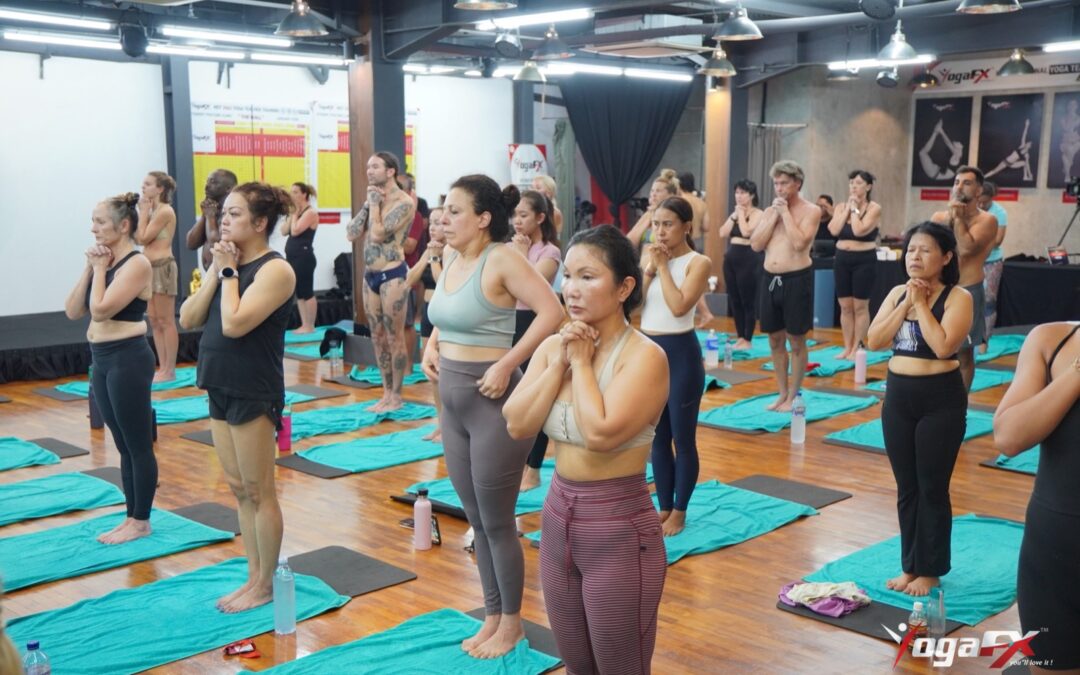
The hot yoga depression study from Massachusetts General Hospital randomised 80 adults with moderate to severe depression to eight weeks of heated yoga or a waitlist. Among the 65 people analysed, 59% of the yoga group halved their symptoms, against 6% of the waitlist. Here is how the hot yoga depression study was run and measured.
How the Hot Yoga Depression Study Was Built
A headline number is only as good as the trial behind it. So before you trust the 59%, it helps to see how the hot yoga depression study was put together. The paper is open access, and we read its full text on PubMed Central, not just the abstract.
Maren Nyer and colleagues ran the trial, and it appeared in the Journal of Clinical Psychiatry in 2023. The title calls the classes community-delivered heated hatha yoga. The hot yoga depression study is registered as NCT02607514, and it ran from March 2017 to August 2019.
Who Could Join
The team found volunteers through advertisements and local referrals in the greater Boston area. Adults aged 18 to 60 could take part. To qualify, a person needed a score of at least 23 on the clinician-rated Inventory of Depressive Symptomatology, called the IDS-CR. The average starting score was 35.6.
Some of the volunteers were already taking antidepressants. That detail matters later, because it means yoga was tested as an addition to care, not as a replacement for it.
How Adults Were Assigned
Eighty adults were randomised. The study statistician made the assignments with a random permuted block design, in blocks of 2 and 4. In plain words, the two groups stayed close in size as people joined, and nobody picked which group a person landed in.
That matters because of how bias creeps in. The Cochrane Handbook chapter on risk of bias explains that knowing the next assignment in advance "can enable selective enrolment of participants on the basis of prognostic factors." A sequence built by a statistician, instead of by the people recruiting, is the kind of safeguard that passage has in mind.
What Each Group Did
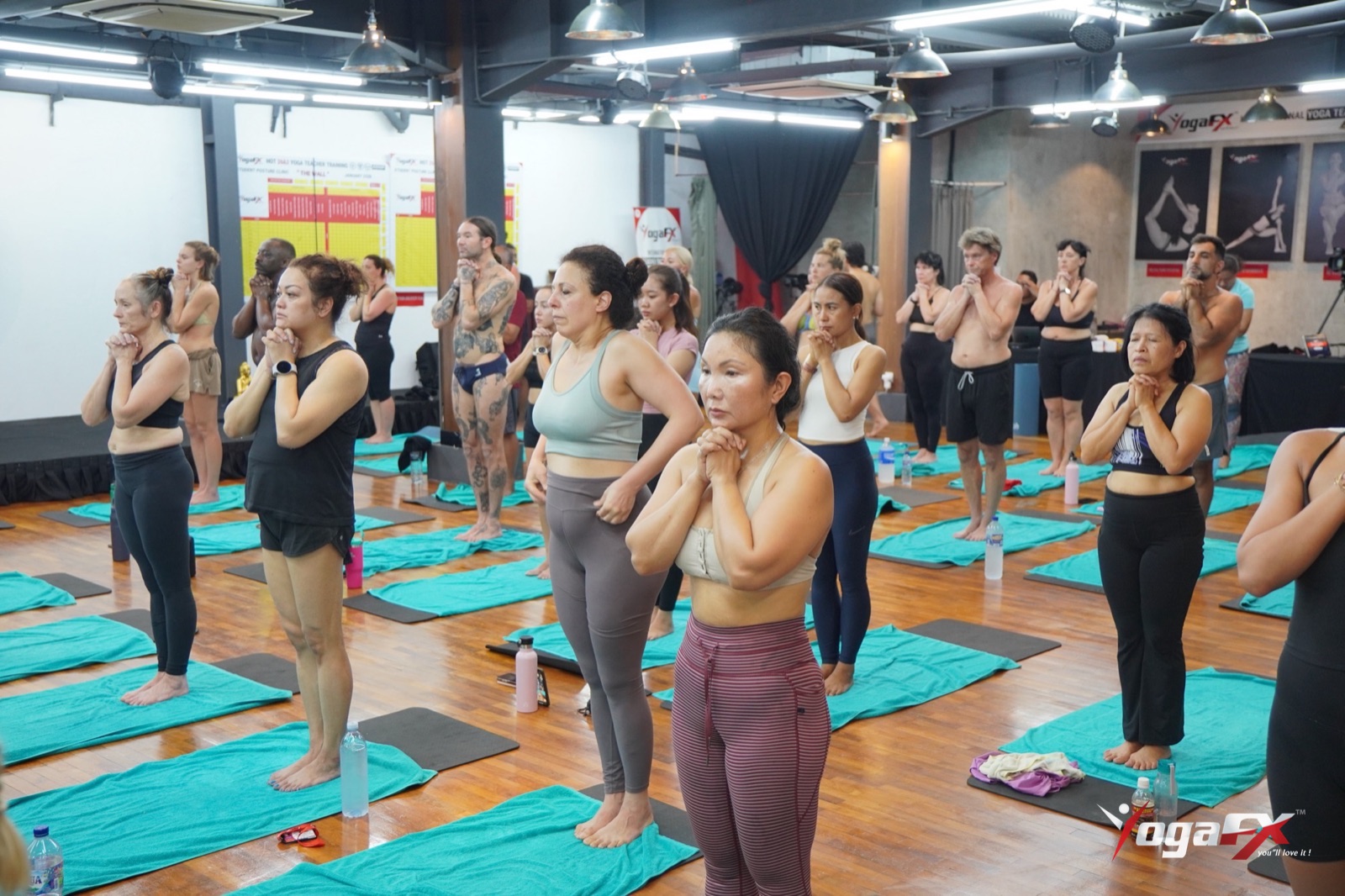
The yoga group was asked to attend at least two 90-minute classes a week for eight weeks. The room was kept at 105°F (about 40.6°C), and the paper describes the class as vigorous. The waitlist group carried on as usual and took the classes afterwards.
Step 1
Recruit
Volunteers from advertisements and local referrals around Boston.
Step 2
Screen
Ages 18 to 60 with an IDS-CR score of 23 or more.
Step 3
Randomise
80 adults assigned by permuted blocks of 2 and 4.
Step 4
Treat
90-minute classes at 105°F, at least twice a week for 8 weeks.
Step 5
Rate
Blinded clinicians scored symptoms. 65 people were analysed.
How the Hot Yoga Depression Study Measured Depression
Measurement is where many readers lose the thread, so let's slow down. The main outcome was the change in a score. It was not a feeling, and it was not a diagnosis.
A Clinician Did the Scoring
The scale was the IDS-CR, the clinician-rated version of the Inventory of Depressive Symptomatology. A clinician rates the symptoms, rather than the participant ticking boxes alone. The paper states that the assessors were blinded to whether a person was in the yoga or the waitlist group.
Blinding is a big deal here. Nobody can hide yoga from the person doing it. Still, a rater who doesn't know the group can't lean the score toward the result they hope to see. The same Cochrane chapter also covers the role of blinding in more depth.
Other scales exist. According to StatPearls, clinicians also use questionnaires such as the Beck Depression Inventory, the Hamilton Depression Scale and the Zung Self Rating Depression Scale. The MGH team chose a clinician-rated one.
What Response Meant
A person counted as a responder when their IDS-CR score fell by at least 50%. That is a cut-off the researchers set, and it is not the same as remission. Someone who starts at 34 and falls to 17 is a responder, yet may still have clear symptoms.
On that rule, 16 people in the yoga group and 2 people on the waitlist were responders. Those are small counts, so each person moves the percentage a lot. Here is a detail worth noticing. Dividing 16 by 59.3% gives about 27, not 33. That suggests the percentage was calculated on people who had a final score, and the abstract does not spell this out. If you need the exact base, check the tables in the full paper.
Who Was Counted in the Results
The paper says the analysis included participants who completed at least one assessment after their first visit. So 65 of the 80 randomised adults are in the results, with 33 in the yoga group and 32 on the waitlist. The other 15 are not. That is a normal choice in trials like this, but it does shape the numbers.
What the Dose in the Hot Yoga Depression Study Tells You
Dose is the next thing to check. The plan asked for two classes a week, which would be about 16 in total. People actually attended 10.3 classes on average. That is closer to one class a week, and the yoga group still improved more than the waitlist group.
The authors read this carefully. They wrote that about one session a week went with a bigger drop in symptoms than waiting did. The effect size was large (Cohen's d of 1.04, P below .001), and Harvard Health notes that the group improved even when people averaged only one class a week.
A 2026 Follow-Up on Attendance
The same team later asked whether more classes meant more benefit. In a secondary analysis in the Journal of Affective Disorders (2026), Copeland and colleagues pooled attendance from both phases of the hot yoga depression study. Each extra class went with about 0.72 fewer IDS-CR points, and the authors saw no plateau in the range they tested.
That paper is not open access, so we read its Europe PMC record and not the full text. Be careful with the words "went with". Attendance was not randomised, because people chose how often to come. The authors themselves call for studies that randomise different attendance targets.
Design Choices, What They Protect and What Stays Open
The table below pairs each design choice with the problem it guards against. Read the last column closely. It is where honest readers should slow down.
| Design choice | What it protects against | What it still leaves open |
|---|---|---|
| Random permuted blocks of 2 and 4, made by a statistician | Recruiters steering certain people into one group | Small groups can still differ by chance |
| Blinded clinician raters | Scores tilting toward the hoped-for result | Participants knew whether they were doing yoga |
| Clinician-rated IDS-CR with a 50% drop as response | Relying only on self-report, and vague wording of success | Response is not remission, and the cut-off is a choice |
| Waitlist control | Mistaking time passing for treatment | It cannot separate heat, exercise, routine or company |
| Analysis of people with at least one follow-up assessment | Losing most of the sample to missed visits | 15 of the 80 randomised adults are not in the results |
| Community studio classes at 105°F | A lab routine nobody could copy | Local classes differ in teacher, humidity and style |
What the Hot Yoga Depression Study Cannot Answer
Every good trial answers one question well and leaves others open. This one asked whether adding heated yoga helped adults with depression more than waiting. Its authors call for future work with an active comparison group. Keep these limits in mind:
- It cannot say the heat did the work. The waitlist did nothing, so heat, movement, routine and company are tangled together.
- It did not compare styles. Harvard Health notes the study "did not investigate whether hot yoga was better than other types of yoga."
- It is short. The treatment phase lasted 8 weeks, so lasting effects are unknown.
- It is small. Sixty-five analysed adults is enough to see a big effect, but it is small beside large drug trials.
- It started from volunteers. People who answer an advert for a yoga study may already be open to yoga.
None of this makes the trial weak. It makes it early. Treat the result as a reason for bigger studies, not as a proven treatment. For a different reading of the same research, see our guide to hot yoga for depression and the evidence behind it, and our look at heated versus room-temperature yoga trials.
Does the Class in the Study Match a 26&2 Class?
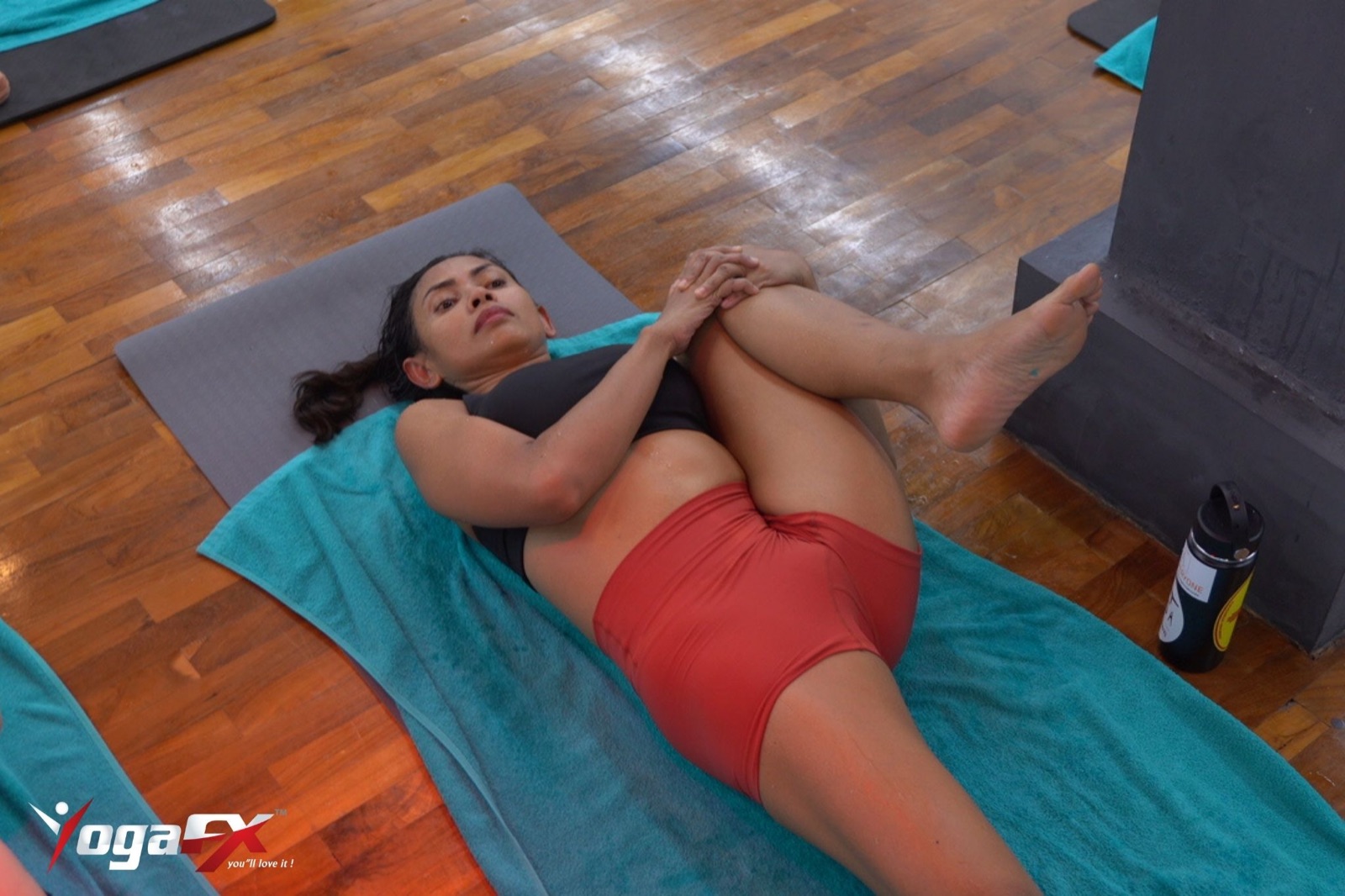
The paper describes a Bikram-style class in a 105°F room, and Harvard Health calls the style hot, or Bikram, yoga. Today many teachers, including us, run the same family of practice as Original Hot 26&2: 26 postures and 2 breathing exercises in a fixed order.
At YogaFX, a class runs 90 minutes at about 40°C and 40% humidity, using natural tropical heat. The teacher follows a scripted dialogue, with no music and no demonstration. The length and temperature are close to the hot yoga depression study. Humidity is not given as a number in the paper, so we can't match that part. A similar setup to the hot yoga depression study is not proof of similar results.
If you want a second walk-through of the same trial, there is a companion guide to the Harvard trial's methods from our Bali teacher training site.
Student Voices: Context, Not Evidence
Trials give averages. Students give stories. The two clips below are YouTube reviews from our teacher training graduates. They describe effort and curiosity, not depression, and they are not evidence that hot yoga treats anything. We share them so you can see the human side of a class.
"I think my mind was strong, my body is not strong enough, but it will be strong."
Katalin, YouTube review, 2025 (lightly trimmed)

"I wanted to learn about yoga. I feel like something missing, so I seek, so I found, so keep seeking."
Carol, YouTube review, 2025 (lightly trimmed)

Using the Hot Yoga Depression Study Responsibly
The hot yoga depression study gives you information, not a prescription. Harvard Health says hot yoga can be used alone or alongside medication, and it advises talking to your doctor first, because heat can pose risks with conditions such as heart problems. If the research makes you curious, these steps follow the heated yoga depression study's own logic:
- Talk to your doctor first. This matters most if you take medication, have heart or blood pressure concerns, or are pregnant.
- Keep your existing care. The trial tested yoga as an addition, and some volunteers stayed on antidepressants.
- Start below the trial dose. The average was about one class a week, so you don't need to begin with two.
- Aim for steady attendance. The trial's own follow-up links more classes with larger drops, but it can't prove that more is always better.
- Drink water, rest when you need to and leave the room if you feel dizzy. Pushing through proves nothing.
- Track your mood. A note after each class helps you and your doctor see changes over weeks.
Depression is a medical condition. The National Institute of Mental Health describes it as different from passing sadness, and it lists the 988 Suicide and Crisis Lifeline: if you or someone you know is struggling or having thoughts of suicide, call or text 988 in the US, or contact your local emergency number. Hot yoga is not a crisis tool.
Teaching From the Evidence With Mr. Ian Terry and YogaFX
Mr. Ian Terry, E-RYT 500 and founder of YogaFX, has taught more than 12,000 hours of Original Hot 26&2 yoga. He trained for 5 years, from 2014 to 2019, with the founder of the method. Since 2017, YogaFX has trained more than 1,500 graduates from 80+ countries.
Under his lead, we present studies like this one as context for students, never as a promise. A teacher who can read a trial can also say "please ask your doctor" at the right moment. That is part of what our online yoga teacher training teaches, and it is why we suggest these checks for any hot yoga certification before you pay.
When you are ready for the heat, the next step is the 6-day Bikram Hot 26&2 Yoga Teacher Training MasterClass in Bali. The next batch checks in on Sunday 24 January 2027 at Soham Wellness Center in Seminyak. The Early Bird price is US$1,899 (normally US$1,999), with payment plans from US$250 a month.
FAQ
Does hot yoga help with depression?
It may help some adults. In the Massachusetts General Hospital trial, 59% of the yoga group halved their symptoms after 8 weeks, against 6% on the waitlist. It was one early trial of 65 analysed adults, so treat it as a possible addition to care, not a replacement.
Is there a Harvard hot yoga study on depression?
Yes. Massachusetts General Hospital, a Harvard teaching hospital, ran the MGH hot yoga trial, and Harvard Health reported it in 2024. It randomised adults aged 18 to 60 to heated yoga or a waitlist for 8 weeks. The results appeared in the Journal of Clinical Psychiatry in 2023.
How often should you do hot yoga for mental health?
The trial asked for at least two 90-minute classes a week, but people averaged about 10 classes in 8 weeks, near one a week. A 2026 follow-up linked more classes with larger drops. Nobody has randomised different weekly doses yet, so ask your doctor what suits you.
Is hot yoga good for anxiety?
This trial reported depression scores, not anxiety, so it cannot answer that question. Anxiety needs its own evidence. Our separate review of the trial data on anxiety explains what researchers have measured so far. If anxiety is troubling you, speak with a healthcare professional rather than relying on a class.
Who should not do hot yoga?
Check with a doctor first if you have heart or blood pressure problems, take medication that affects heat tolerance, are pregnant, or have a history of fainting or heat illness. Harvard Health advises talking to your doctor before trying hot yoga. Leave the room at once if you feel dizzy.
Still have questions? Mr. Ian and the YogaFX team answer them personally. Take the 2-minute quiz to see if you're ready to teach hot yoga, or message Mr. Ian on WhatsApp and we will point you to the right next step.
This article is general information, not medical advice. If you think you may have depression, please consult a healthcare professional.

Founder and lead trainer of YogaFX International Yoga Teaching Academy, with more than 12,000 hours of teaching. He trained for 5 years, from 2014 to 2019, with the founder of the Bikram Hot 26&2 method.
Published · Last reviewed and updated
You may also like
Explore all articles ↗ Hot Yoga Science and Benefits12 min read16 Nov 2026
Tired After Hot Yoga? Fatigue and Mood Studies Explained
Read article ↗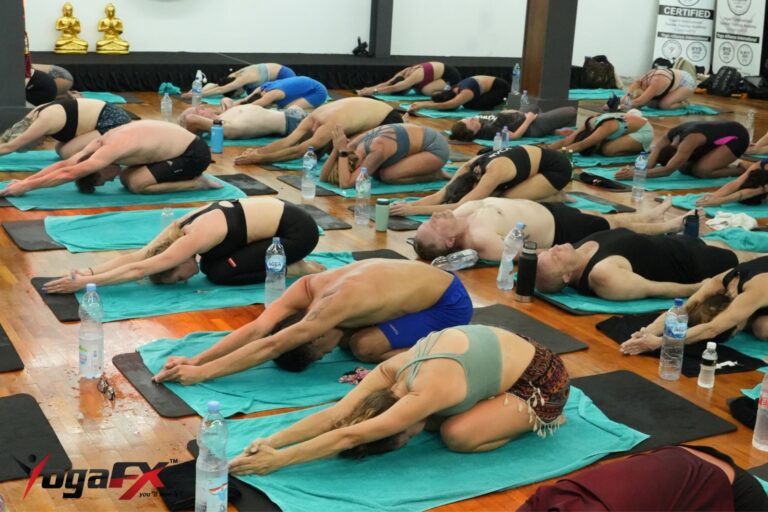 Yoga for Athletes and Yoga Sport12 min read16 Nov 2026
Celebrities Who Do Bikram Yoga: 4 Real Cases and the Science
Read article ↗ Bikram and Hot Yoga Explained12 min read16 Nov 2026