
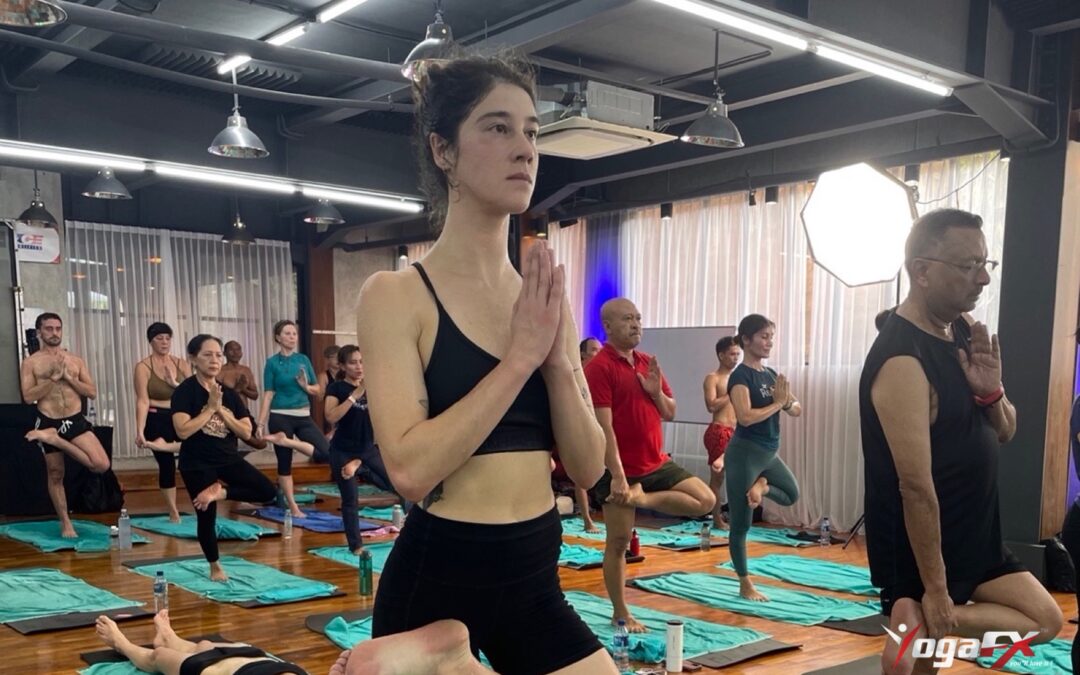
Hot yoga for depression has one strong trial behind it. In 2023, researchers at Massachusetts General Hospital found that 59% of adults who took heated yoga for 8 weeks cut their depression symptoms by half or more, compared with 6% of adults who waited. That is promising, but it is early evidence, not a treatment plan.
Hot Yoga for Depression: The Short Answer
If you're searching for hot yoga for depression, you probably want a straight answer, so here it is. Does hot yoga help with depression? It may help some adults feel better, and the best study so far supports that. However, one trial can't settle the question, and it can't tell you whether the heat, the exercise or the routine did the work.
We teach hot yoga, so we want to be careful when we write about hot yoga for depression. Depression is a medical condition, and the people who read this page are often tired, low and looking for hope. Hope is fair. Hype is not. This guide to hot yoga for depression walks through what researchers measured, how strong the proof is, and where it stops.
Here is the evidence in four lines:
- It does show that 8 weeks of heated yoga for depression cut clinician-rated depression scores far more than waiting did.
- It does show that no serious adverse events were reported in that trial.
- It does not show that hot yoga beats other types of yoga, other exercise or other treatments.
- It does not show that hot yoga can replace therapy, medication or medical advice.
Mr. Ian Terry, E-RYT 500 and founder of YogaFX, has taught more than 12,000 hours of Original Hot 26&2 yoga. He is clear on this point with every student: a class can sit beside care, but it is never a substitute for care.
What the Hot Yoga for Depression Trial Actually Did
Almost every article about hot yoga and depression traces back to one randomised controlled trial. Maren Nyer and colleagues at Massachusetts General Hospital published it in the Journal of Clinical Psychiatry in 2023. Because so much rests on it, the details matter for anyone weighing hot yoga for depression.
Who Took Part and What They Did
The team enrolled adults aged 18 to 60 with moderate to severe depression. Some were already taking antidepressants. According to MGH Psychiatry News, 80 people were randomised and 65 were analysed.
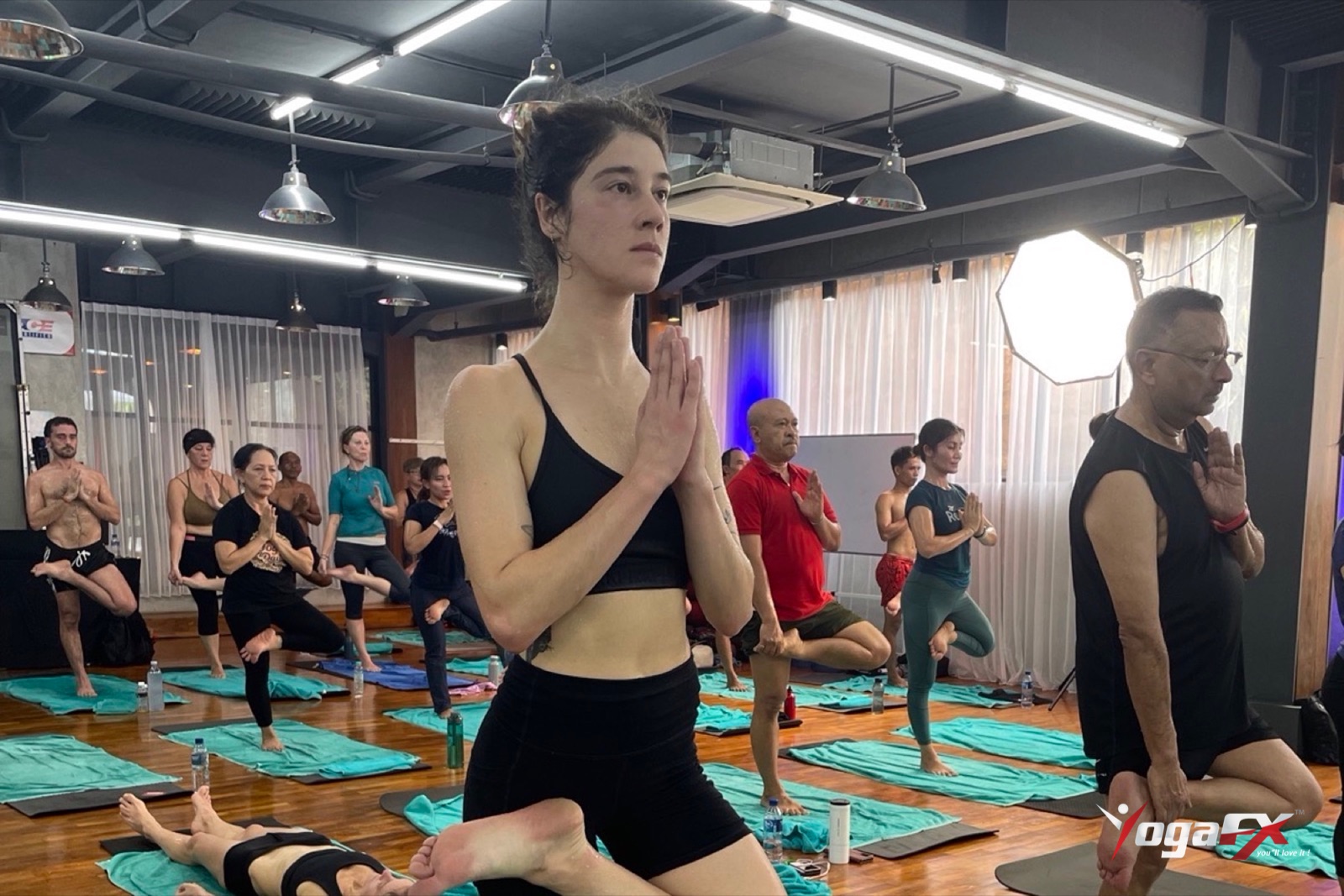
Half were asked to attend two 90-minute heated classes a week for 8 weeks, in a room kept at 105°F (about 40°C). The other half joined a waitlist and took the classes later. A clinician scored every participant with the Inventory of Depressive Symptomatology, a standard rating scale.
The Results in Plain Numbers
The gap was large, and it is the main reason people talk about heated yoga depression research at all. About 59% of the yoga group had a 50% or greater drop in symptoms, against about 6% of the waitlist group. Harvard Health summarised it as roughly 60% versus 6%. The paper reported a large effect size (Cohen's d of 1.04), and the result was statistically significant.
Attendance was lower than the plan. People went to about 10 classes on average over the 8 weeks, not 16. Even so, the group improved. That detail matters for anyone considering hot yoga for depression who worries they can't keep up a heavy schedule.
59% vs 6%
Halved their symptoms
Heated yoga group vs waitlist group in the Massachusetts General Hospital trial.
8 weeks
Length of the trial
Short follow-up, so long-term effects are unknown.
2 x 90 min
Classes per week
Held in a room at 105°F (about 40°C).
10 classes
Average attended
Out of 16 planned, and people still improved.
None
Serious adverse events
None were reported during the trial.
How Strong Is the Evidence for Hot Yoga for Depression?
Not every claim about hot yoga for depression carries the same weight, so it helps to grade them. A randomised trial counts for more than a forum post, and a forum post counts for more than a studio slogan. The table below grades each source by who took part, what it compared, and what it can and cannot prove.
| Source | Who took part | What it compared | What it shows | What it cannot show |
|---|---|---|---|---|
| MGH randomised trial (Nyer et al. 2023) | Adults 18 to 60 with moderate to severe depression | Heated yoga vs waitlist, 8 weeks | Large drop in clinician-rated symptoms | Heat vs yoga vs exercise; effects beyond 8 weeks |
| Six-week well-being trial (Hui et al. 2022) | Healthy adults, not people with depression | Hot yoga vs waitlist | Greater well-being and lower state anxiety | Anything about clinical depression |
| Harvard Health summary (2024) | Readers of a health newsletter | Reports the MGH trial | Plain-language account and safety advice | New evidence of its own |
| Forum posts and testimonials | Self-selected people | Nothing, no control | That some people feel better | Cause, dose or who will benefit |
Read down the last column. Each source leaves a gap, and the gaps are the honest part of the story. The Massachusetts trial is the only one built around people with depression, so it carries most of the weight.
What the Hot Yoga for Depression Trial Cannot Tell You
A good trial answers one question well, and the hot yoga for depression trial did. This one asked whether adding heated yoga helped adults with depression more than waiting did. It left several other questions open, and a careful reader should keep them in mind.
- No active comparison. The control group waited. So we can't separate the effect of the heat from the effect of exercise, movement, routine or social contact. The MGH authors say further studies must test each element.
- No head-to-head test. Harvard Health notes the study did not look at whether hot yoga beats other types of yoga for depression.
- Short follow-up. The 8 weeks ended, and we don't know whether the gains lasted.
- Volunteers only. People who sign up for a yoga study may already be open to trying yoga.
- Hard to compare. MGH Psychiatry News points out that fewer waitlisted people improved than in the placebo groups of typical antidepressant trials, so putting the two sets of numbers side by side is unsafe.
None of this erases the result, but it shapes how far hot yoga for depression claims can go. It means the fair headline is "promising, early and worth more research," not a proven treatment. It also means you should be wary of any studio, influencer or article that claims more than the trial can support.
Why Might Heated Yoga Help? What Researchers Suspect
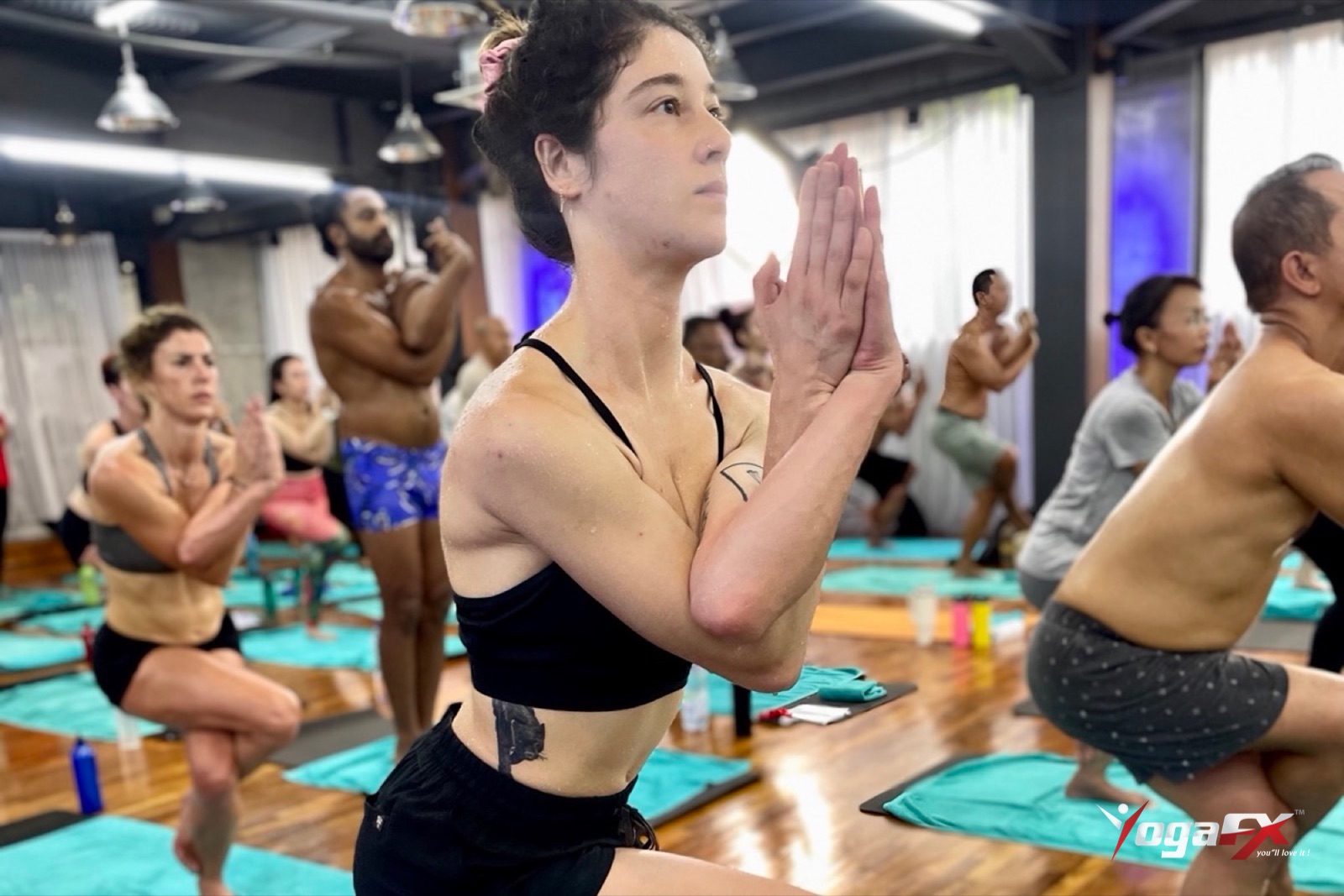
Nobody has proved the mechanism yet. As a result, hot yoga for depression remains a promising idea, not a settled one. Still, researchers and teachers have a few reasonable ideas about hot yoga for depression, and it helps to separate ideas from facts.
- Structure. A fixed class, at a fixed time, gives a low day a shape. Depression often makes planning feel impossible, so a ready-made routine may lower the barrier.
- Movement and breath. Physical activity is already linked with better mood, and slow, focused breathing may calm a racing mind.
- Attention. In a hot room, you can't ruminate easily. You are busy keeping your balance and your breath.
- Company. Sharing a room with other people, without having to talk, can ease isolation.
A separate six-week trial in healthy adults (Hui et al. 2022) found greater well-being and lower state anxiety after hot yoga. That study did not recruit people with depression, so it supports the mood side of the idea, not the clinical side. For more on the stress-hormone question, read our guide to whether hot yoga increases cortisol.
Treat all four ideas as hypotheses. The heat itself is a stressor, and some people feel worse in it. That is why the next section matters more than the science above.
Hot Yoga for Depression Is Not a Substitute for Care
Depression can be serious, and it responds to treatment. Hot yoga for depression is an addition that some people find useful. It is not a replacement for a doctor, a therapist or prescribed medication. Harvard Health puts it simply: hot yoga can be used alone or alongside medication, but you should talk to your doctor before trying it.
Who Should Check First
Please speak to a healthcare professional before your first class if any of these apply:
- Heart or blood pressure problems. Heat raises heart rate, so ask a doctor first. Our review of hot yoga and heart health explains why.
- Medication that affects heat tolerance. Some medicines change how you sweat or regulate temperature. Your prescriber can tell you.
- Pregnancy, fainting history or heat illness. Heated rooms carry extra risk for these groups.
- Current treatment. Never stop or lower antidepressants because yoga feels helpful. Changes belong with your prescriber.
Signs You Need More Than a Class
See a healthcare professional soon if low mood lasts more than two weeks, if you lose interest in things you used to enjoy, if sleep or appetite change a lot, or if you're using alcohol to cope. If you are thinking about harming yourself, call or text 988 in the US, or contact your local emergency number, today. Hot yoga is not a crisis tool.
Trying Hot Yoga for Depression: A Careful Plan
Say your doctor agrees, and you want to try hot yoga for depression yourself. The safest approach copies what the trial did, but gently. Start below the research dose, then build toward it only if you feel well. This plan follows that logic.
- Check with your doctor first. Mention the heat, and mention any medication.
- Begin with one class a week. The trial average was about 10 classes in 8 weeks, so one a week is a fair start.
- Build toward two a week only when you recover well. The study protocol was two 90-minute classes weekly.
- Rate your mood from 1 to 10 after each class. A simple note shows whether you are improving over weeks, not hours.
- Drink water, rest when you need to and leave the room if you feel dizzy. Pushing through proves nothing.
- Keep your existing care. Yoga joins your plan. It does not replace anything in it.
Expect the first two or three classes to feel hard. The room is hot, and ninety minutes is long. That discomfort is not, for example, a sign that something is wrong with you. However, if a class leaves you drained for a full day, scale back and tell your doctor.
At YogaFX, a class runs 90 minutes at about 40°C and 40% humidity. The teacher follows a scripted dialogue, so there is no music, no demonstration and no need to talk. Students often tell us that predictability is what lets them show up on a heavy day. Each of the 26 postures asks for balance, breath and focus, which keeps the mind busy for the full 90 minutes.
What Our Trainees Say About the Experience
Trials give averages, so students give us the stories. Hot yoga for depression is a clinical question, but the experience is personal. The comments below come from Google and YouTube reviews of our teacher training. They describe community, effort and emotion. They are not evidence that hot yoga treats depression, and we share them only so you can see the human side.
"I never experienced so much joy in my entire life. YogaFX is so much more than just a yoga school, it's a community that helps bring fantastic people together."
Hoda, Google review, 2019
"Realize I am becoming the person I longed to be for so long. I wake up early every morning, with love in my heart."
Andrea, Google review, 2019
"Very very very very extremely grateful. Grateful for Mr. Ian... I don't think I could have made it without you. We all shared. We all held it together."
Zainab, YouTube review, 2026
Notice the common thread, because people describe the group holding them up. That fits the "company" idea above, though it proves nothing on its own. You can watch Zainab's full video review below.

Bikram, Heated and 26&2: Which Class Did the Studies Use?
You'll see this topic searched as Bikram yoga depression too. The MGH team describes its classes as heated hatha yoga in a 105°F room, and Harvard Health notes the style is also called Bikram yoga. Today, many studios, including ours, teach the same sequence as Original Hot 26&2: 26 postures and 2 breathing exercises in a fixed order.
That overlap is useful, but it has limits for anyone reading about hot yoga for depression. The trial used community studio classes, not a lab-built protocol, and your local class may differ in temperature, humidity and teaching style. So if you try a class, ask the studio what it teaches and how it handles students who need breaks.
For a different angle on the same research, read our piece on hot yoga and mental health in men, which looks at who the trials left out.
From Student to Teacher: Learning the Method Online With YogaFX
Some people who try hot yoga for depression, or simply love the practice, want to understand it properly, and a few want to teach it. That is the purpose of our hot yoga teacher training online. It is education, not therapy: you study the 26 postures, the dialogue and the science, and you learn how to teach safely.
The course is led by Mr. Ian Terry, E-RYT 500, who has more than 12,000 teaching hours. He trained for 5 years, from 2014 to 2019, with the founder of the method. Since 2017, YogaFX has trained more than 1,500 graduates from 80+ countries. A big part of teacher training is learning when to say "please check with your doctor" and when to send a student to a professional.
- See how online study works. Read the 8-week breakdown of online yoga teacher training.
- Check any course first. Use these 7 honest checks for an online hot yoga certification.
When you are ready for the heat, the next step is the 6-day Bikram Hot 26&2 Yoga Teacher Training MasterClass in Bali. The next batch checks in on Sunday 24 January 2027 at Soham Wellness Center in Seminyak. The Early Bird price is US$1,899 (normally US$1,999), with payment plans from US$250 a month.
FAQ
Is hot yoga good for depression?
Hot yoga for depression may help some adults. In a 2023 Massachusetts General Hospital trial, 59% of people with moderate to severe depression who did heated yoga for 8 weeks halved their symptoms, versus 6% on a waitlist. It is early evidence from one main trial, so treat it as an addition to care.
Can hot yoga replace antidepressants or therapy?
No. The research tested hot yoga for depression as an addition, and some participants kept taking their antidepressants. Harvard Health advises talking to your doctor before trying it. Never stop or change medication because of a yoga class. Decisions about treatment belong with your doctor, therapist or prescriber.
How many hot yoga classes does it take to help depression?
The trial asked for two 90-minute classes a week for 8 weeks, about 16 in total. Participants actually attended about 10 on average, and the group still improved. That suggests you don't need perfect attendance, but one study can't prove an exact number of classes.
Is hot yoga safe if I have depression?
No serious adverse events were reported in the MGH trial. Heat still carries risks, especially with heart problems, certain medications or pregnancy. Check with your doctor first, drink water, rest when you need to, and leave the room if you feel dizzy or unwell.
Which type of yoga is best for depression?
Researchers don't know yet. Harvard Health notes the hot yoga study did not test whether heated yoga beats other types. Many people choose a style they enjoy and can attend regularly, because consistency matters. A doctor or therapist can help you decide what fits your situation.
Still have questions? Mr. Ian and the YogaFX team answer them personally. Take the 2-minute quiz to see if you're ready to teach hot yoga, or message Mr. Ian on WhatsApp and we will point you to the right next step.
This article is general information, not medical advice. If you think you may have depression, please consult a healthcare professional.