
Yoga Alliance certification is a listing on a voluntary registry run by a US nonprofit, and online study can count toward it. A Registered Yoga School may teach its course fully online, but at least 15% of the hours must be live with a teacher. For a 200-hour school, that is 30 hours.
Yoga Alliance Certification From Home: What Counts as an Hour
Most people ask the wrong question first. They ask whether Yoga Alliance accepts online courses. The better question is whether the school behind the course is a Registered Yoga School, because that status decides how far your Yoga Alliance certification can go.
What is Yoga Alliance, and what does accreditation mean?
So what is Yoga Alliance? Think of a membership body, not an exam board. Search results often call it Yoga Alliance accreditation, but that phrase is loose. Nobody gives you a degree-style award here. In everyday talk, Yoga Alliance certification means two things: your school is on the register, and you are listed as a teacher.
That distinction saves money. A cheap course that is not a Registered Yoga School can give you a lovely certificate and no way to apply for a listing. Picture a working parent who finishes a weekend course in March. In June she finds out the school was never registered, so her hours cannot lead to an RYT 200 at all.
Yoga Alliance is a 501(c)(6) nonprofit, and it runs a voluntary registry of schools and teachers. It is not a government body, so it cannot license anyone. Your school teaches you and confirms your training. Yoga Alliance then lists you as a teacher once you apply.
The three rules that shape online hours
The current standards for schools set three rules that matter to anyone studying from home. Here is what they say, in plain terms.
- Delivery is open. A program may be 100% in person, 100% distance learning, or a mix of both.
- 15% must be live. Schools must deliver at least 15% of program hours in a synchronous format, which means real-time interaction with faculty. For a 200-hour school, the table in the standards sets the minimum at 30 hours.
- Faculty carry the weight. Every lead trainer at a 200-hour school must hold the E-RYT 500 credential. Lead trainers must teach at least 150 of the 200 hours.
You can check the wording yourself in the Yoga Alliance Standards for Registered Yoga Schools. Those figures come from the version we read in November 2026. Yoga Alliance revises its documents, so open the live PDF before you pay any deposit.
How the 200 Hours Split Across Four Categories
Hours are not one block. The standards divide a 200-hour training behind any Yoga Alliance certification into four educational categories, each with its own minimum. A good school shows you how its timetable maps to all four, and that timetable is the fastest way to see how much of the course is live.
| Category | Minimum hours | What it covers | Home-study fit (our view) |
|---|---|---|---|
| Techniques, Training and Practice | 75 | Asana, meditation, pranayama and the subtle body | Study at home, but you need live correction on your own postures |
| Anatomy and Physiology | 30 | Anatomy, physiology and biomechanics | Strong fit for video lessons, reading and quizzes |
| Yoga Humanities | 30 | History, philosophy and ethics | Strong fit, and better with a live discussion |
| Professional Essentials | 50 | Teaching methodology, professional development and practicum | Needs live teaching practice with feedback |
The four minimums add up to 185 hours. Where a school places the rest is part of its program design, so ask to see the full timetable. Also notice the pattern in the last column. Content you can absorb alone fits home study well. Skills that need a watching eye do not.
That is the logic behind the live floor. Reading about anatomy at midnight works fine. Cueing a posture to a real person while someone checks your timing does not translate to a recording.
Live Hours vs Self-Paced Hours: Why the 30-Hour Floor Exists
Yoga Alliance describes non-contact hours as learning done without a faculty member present. Examples include reading, written assignments, and attending yoga classes outside the program. Those hours are real learning, and they count toward your Yoga Alliance certification. They are just not the same as time spent with your trainer.
What to ask any school about live time
- How many hours are synchronous? Ask for the number in writing, and compare it with the 30-hour figure for a 200-hour school.
- Who is on the call? The lead trainer should be an E-RYT 500, not only an assistant.
- When do the live sessions run? A fixed schedule shows the live hours are real and not a promise.
- Do you teach, and do you get corrected? A practicum without feedback teaches very little.
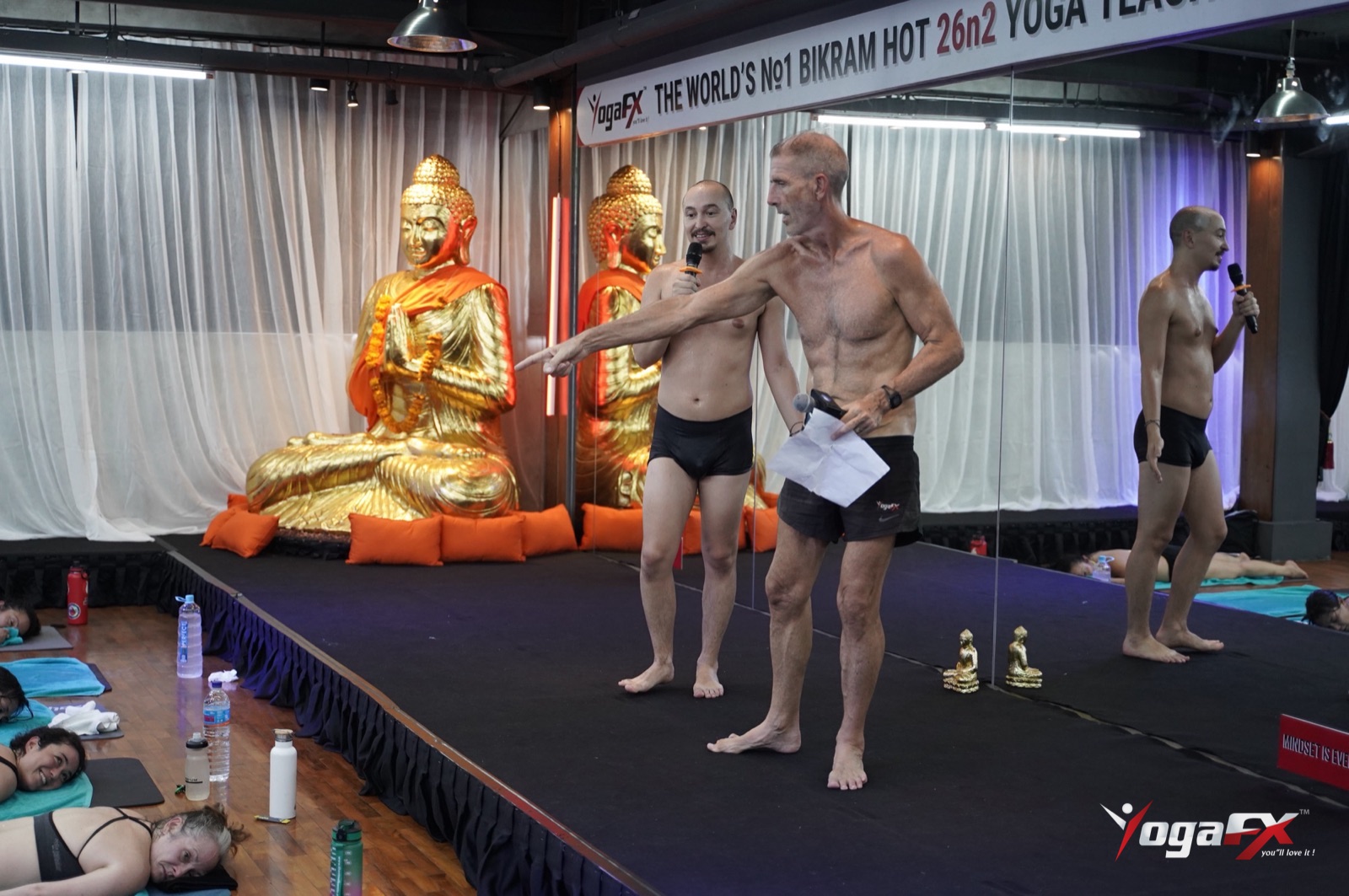
For hot yoga, live time matters even more. A hot class runs 90 minutes in a heated room, and the body behaves differently there. In a University of Wisconsin study (Porcari et al., 2014), women burned about 333 calories and men about 460 in a 90-minute class, at around 80% of maximum heart rate. A teacher has to lead that room and keep the pace safe.
You can study the dialogue at home. You can't rehearse reading a hot, tired room from a laptop, and you won't learn it from a recording. That is why schools in this style tend to keep their live hours for the heated practicum.
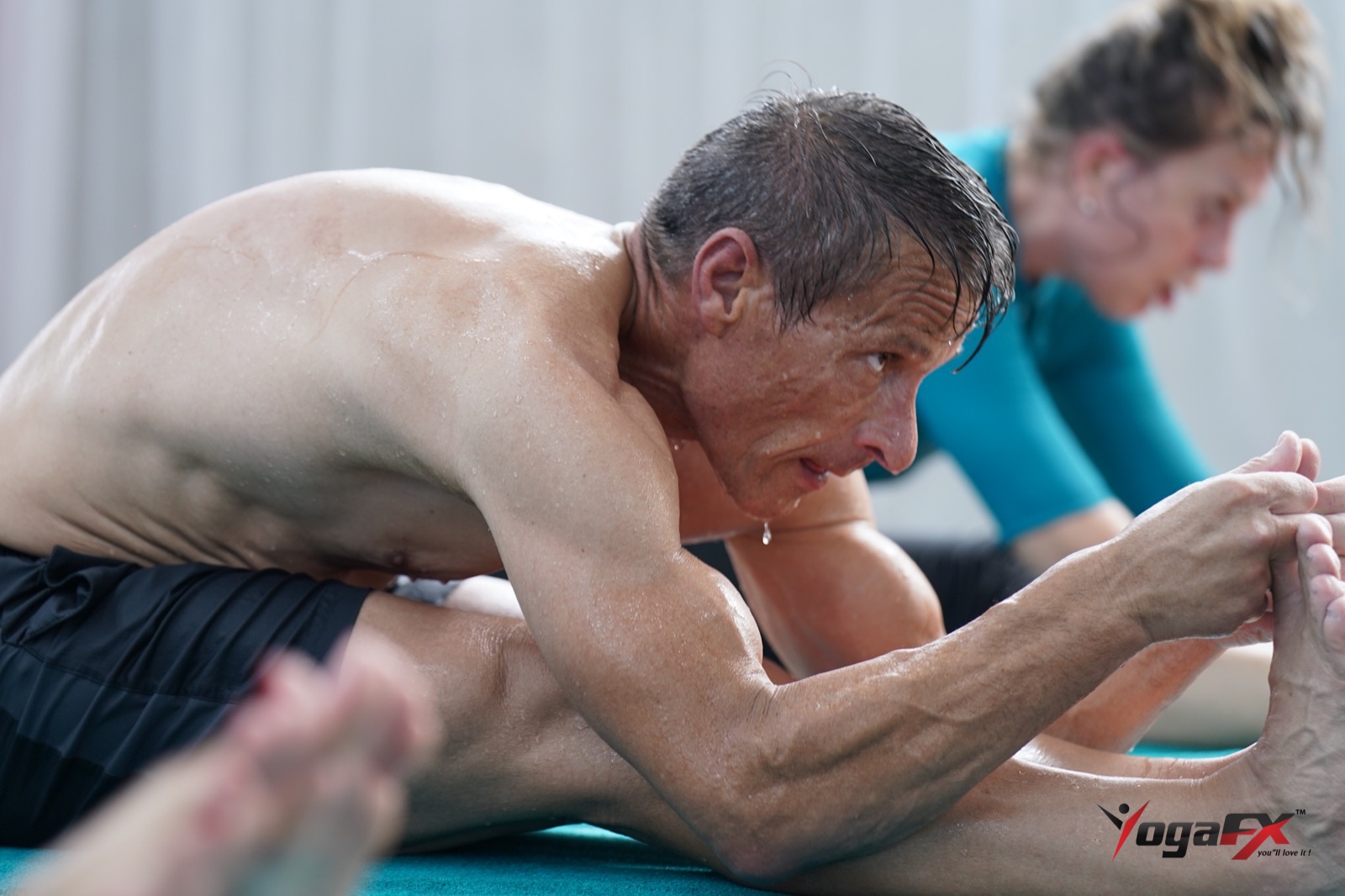
The practice itself is also a reason people sign up. A Massachusetts General Hospital trial (Nyer et al., 2023, Journal of Clinical Psychiatry) found that 59.3% of people in an 8-week heated yoga program cut their depression symptoms by half or more, against 6.3% on a waitlist. That is one trial, not a promise for every student.
If you have a health condition, consult a healthcare professional before you train in a heated room.
RYS vs RYT: Which Yoga Alliance Certification Do You Earn Online?
Two sets of letters cause most of the confusion. RYS is the credential a school holds. RYT is the credential a teacher holds. Yoga Alliance says that becoming a Registered Yoga School lets a school's graduates register as RYTs.
So Yoga Alliance certification works in two steps. You do not earn the RYT by finishing an online course. You earn a certificate from your school, and after that you apply to be listed.
For an RYT 200, the Standards for RYT Credentials say you must have completed a 200-hour training with a Registered Yoga School 200. They also say multiple trainings cannot be combined to meet the 200-hour requirement. No teaching experience is required.
That second rule trips people up. A student who buys four 50-hour online courses from different providers cannot add them up into one RYT 200. The 200 hours have to come from one program at one school.
We found no separate online rule for graduates in those RYT documents. The test is whether your school is a Registered Yoga School 200, which you can check in the public School Directory. For what the listing means to employers and how the renewal cycle works, read what the RYT listing means in a studio and how renewal works.
From Final Class to Directory Listing: The Application Steps
Once your online and live hours are complete, the paperwork is short. This is the order that avoids the usual delays.
Yoga Alliance certification requirements for online graduates
The Yoga Alliance certification requirements for an RYT 200 are simple on paper. You need a finished 200-hour training at a Registered Yoga School 200, a digital certificate, and the exact start and end dates of the program. There is no teaching experience requirement for this level.
Where graduates slip is the detail. If you studied online, keep the school's name exactly as it appears in the directory. Then follow these steps in order.
- Check the school first. Search for it in the Yoga Alliance School Directory before you pay anything.
- Keep your certificate and dates. The end date you enter must match the date printed on your certificate.
- Submit the program confirmation request. Your school confirms your training by email, and the Guide to the RYT Application Process says this can take up to 14 days.
- Pay to finish the listing. The first year costs 115 USD: a one-time 50 USD fee plus 65 USD annual dues.
- Plan your renewal. Every three years you log 75 hours of continuing education, split into 45 teaching hours and 30 training hours.
One detail matters for online students. Training you did before registering does not count toward your first continuing education cycle, so start the clock when you are listed, not when you graduate.
A mismatched end date is a simple mistake to avoid. Copy the dates from your certificate, not from memory, and keep a digital copy ready to upload.
5 Mistakes That Waste Money on Online Yoga Alliance Certification
Most problems with Yoga Alliance certification online come from a handful of repeat mistakes. They are easy to avoid once you know them, so read this list before you enrol anywhere, including with us.
- Assuming online means counted. An online course counts only when a Registered Yoga School runs it. Check the directory, not the badge on the sales page.
- Buying add-ons for a base credential. A short specialty course can't replace a 200-hour foundation, and it can't be added to other courses to reach 200 hours.
- Ignoring the live schedule. If a school can't tell you when the synchronous hours happen, the 15% rule may not be met in a way you can see.
- Skipping the practicum. You'll want to teach a full class to real people before a studio asks you to audition.
- Confusing the listing with a method credential. An RYT listing says you finished 200 hours. It doesn't say which style you can teach, so ask for both.
Each mistake has the same root. People judge a course by the price and the picture, instead of by the registration and the timetable. Spend an hour on the school's page and the directory, and you'll avoid most of them.
The same logic applies to the Yoga Alliance certification you hold later. A listing stays useful only while you keep up with renewals, so choose a school that explains the whole path and not only the first step.
What YogaFX Graduates Say About Studying Online First
Numbers explain the rules. Graduates explain what Yoga Alliance certification feels like in real life. Here are three voices from the YogaFX review store.
Greta, YouTube review, 2026: "I thought the best part was going to be getting this certificate and being able to tell my parents I did something. But the best part was meeting all of you."
Florian, Google review, 2020: "Mr Ian's responses, the support and explanations as well as his dedication during the classes are fantastic."
Angela, YouTube review, 2024, called her training "more than just a certification" and described it as a true quest to find a little about herself. Watch her graduation message below.
Notice what all three describe. None of them talk about the registry. They talk about people, feedback and time with the teacher, which is what the live hours are for.
Study Online With YogaFX, Then Finish in Bali
The YogaFX course follows the same pattern as the rules above. You study first at home, then finish with a six-day intensive in Bali with Mr. Ian Terry. He holds the E-RYT 500 credential, has more than 12,000 teaching hours, and trained for five years, from 2014 to 2019, with the founder of the Bikram Hot 26&2 method.
Since 2017 he has trained 1,500+ graduates from more than 80 countries. The school also holds 150 Google reviews, 50 Yoga Alliance reviews and 357 YouTube video testimonials, so you can read and watch many more before you decide.
Graduates leave with Yoga Alliance certification at the RYT 200 level once they apply, plus a method credential for the hot room.
- Dual certification. Graduates leave with the Yoga Alliance RYT 200-Hour credential and the Bikram Hot 26&2 200-Hour International Yoga Certification.
- Study format. Pre-course online study at home, followed by a six-day hybrid intensive at the Soham Wellness Center in Seminyak.
- Next batch. Check in on Sunday 24 January 2027 and check out on Friday 29 January 2027.
If you want the full week-by-week picture of home study, read our online yoga teacher training breakdown. If you are weighing whether a certificate is legitimate, use these 7 honest checks before you pay. And once you are qualified, see what the hot yoga instructor salary looks like in practice.
Ready to start? See the hot yoga teacher training online course page for what is included, or message the team on WhatsApp and ask how your hours would be counted.
FAQ
Does Yoga Alliance accept online yoga teacher training?
Yes, if the school is a Registered Yoga School. Yoga Alliance lets schools teach 100% in person, 100% by distance learning, or a mix. At least 15% of the hours must be synchronous, which means live with a teacher. Check the school in the Yoga Alliance directory before you pay.
How many live hours does a 200-hour online course need?
The standards set a minimum of 15% of program hours in a synchronous format, which is 30 hours for a 200-hour school. The remaining hours can be self-paced study such as reading and assignments. Ask the school for its live schedule in writing, so you know when sessions run and who teaches them.
Is Yoga Alliance certification necessary to teach yoga?
Yoga Alliance is a voluntary registry, so it is not a legal licence. Many studios and insurers still ask for an RYT listing because they can verify it in a public directory. Check what the studios near you and your insurer require before you choose a course.
Can I combine several short online courses into a 200-hour certification?
No. Yoga Alliance states that multiple trainings cannot be combined to meet the 200-hour requirement for an RYT 200. Your 200 hours must come from one training at one Registered Yoga School 200, so choose one complete program instead of stacking short courses from different providers.
How long does Yoga Alliance take to confirm my training?
After you submit your application, your school confirms your training by email. The Yoga Alliance guide says this can take up to 14 days. The end date you enter must match the date on your certificate, so check it carefully before you submit the request.
Still have questions? Message Mr. Ian and the YogaFX team on WhatsApp and we will answer them personally, including how your own study hours would be counted.