
Do you need a license to teach yoga? In most places, no. No single government license exists for individual yoga teachers that we could find. A training certificate gets you hired, and insurance gets you covered. Insurers ask about where you live, your registry status, your course hours and your live assessment.
Most pages on this topic stop at "no license needed." This guide answers do you need a license to teach yoga, then goes a step further for people who study online. In November 2026 we read four insurer pages and one US government labour page for what they say about hours, registries and online study. Mr. Ian Terry, E-RYT 500, leads the YogaFX course, and trainees ask us about this paperwork before they enrol.
This is general information, not legal or insurance advice. Rules differ by country, state and city, so please confirm them with the people who set them.
Do You Need a License to Teach Yoga? The Short Answer
The short answer is no, at least not a personal government permit that every teacher must hold. Insurance Canopy, a yoga insurance provider, says in its guide to becoming a certified yoga teacher that being certified is not a legal requirement to teach. It adds that certification is usually a requirement to get hired. That is the real split: the law is quiet, but employers are not.
The US Bureau of Labor Statistics points the same way. Its profile of fitness trainers and instructors says employers usually prefer certification, but requirements vary by facility. It says group fitness instructors may begin work without certification. The page names no state license for these workers.
So, do you need a license to teach yoga where you live? Probably not for the teaching itself. But three other things can still apply:
- Local business rules. A business licence or a park permit comes from your city or county. It is a local registration, not a yoga qualification.
- Venue rules. A studio, gym or retreat sets its own hiring standards. It may ask for a certificate, a registry listing, first aid or insurance.
- Work rights. If you teach abroad, a visa or work permit comes from immigration offices and has nothing to do with yoga.
Write down who you spoke to and the date, because rules change. A quick call to your city office and to one local studio will tell you more than any blog, including this one.
Do you need a license to teach yoga in the USA?
We found no federal yoga license, and the BLS page lists no state license for fitness instructors. State and city rules can still differ, so call your own state or city office if you want a firm answer. Ask about business registration as well, because self-employed teachers often need one even when no yoga permit exists.
Do you need a license to teach yoga online?
Teaching live online brings the same questions as teaching in a room: the venue or platform's terms, and insurance. One UK trainee policy page says its cover reaches live online or virtual classes worldwide, but excludes the USA and Canada. So where your students sit can change your cover, even when your certificate stays the same.
Do You Need a License to Teach Yoga? Four Words That Get Mixed Up
A yoga teacher license, a certificate, a registration and an insurance policy are four different things. Mixing them up is the main reason this question feels confusing. Each one has a different issuer and a different job, and only one of them is a government permit.
| Word | Who issues it | Is it the law? | What it proves |
|---|---|---|---|
| Certificate | Your training school | No. Not a legal requirement to teach, but usually needed to get hired (Insurance Canopy) | You finished a course with set hours and a named teacher |
| License | A government body | None found for individual yoga teachers. The BLS page names none for fitness instructors | Permission to practise, which does not seem to apply to teaching yoga |
| Registration | A registry such as Yoga Alliance | No. It is a voluntary listing | Your school and you meet that registry's standards |
| Insurance | A private insurer | No, but studios often ask for proof | You are covered if a student is hurt in your class |
Registration is the one that trips people most. Yoga Alliance keeps a registry, not a licensing system, and it does not train anyone. Our guide on who registers and accredits a yoga school shows what the registry checks and what it leaves to you.
Do Yoga Teachers Need to Be Certified? What US Labour Data Says
The BLS page is useful because it separates what employers prefer from what the law demands. It was last modified on 27 August 2026. Three lines matter for a new teacher:
- Employers prefer certification. The page says they usually do, but requirements vary by facility.
- Group instructors can start without it. The page says they may begin work without certification, so a gym may hire you first and ask later.
- Most still get certified. The page says most fitness instructors earn a certification for their preferred type of training, and it lists yoga as one example.
The page also mentions credentials that call for 200 or 500 hours of training. Those numbers will look familiar to anyone comparing courses, and they show how much weight the industry puts on training hours rather than on permits.
If you are still asking do you need a license to teach yoga, notice what the BLS page lists: certification, not licensing. In short, a certificate is a hiring tool, not a legal gate, and that is why the next question is about insurance, not permits.
Why Insurers Care: What Injury Research Shows
Yoga teacher insurance exists because injuries happen. A 2016 paper by Swain and McGwin in the Orthopaedic Journal of Sports Medicine counted them. Their 2016 study of yoga-related injuries in the United States found 29,590 yoga-related injuries treated in US hospital emergency departments between 2001 and 2014.
The numbers have a pattern. The trunk was the most frequent region injured, at 46.6%, and sprains or strains made up 45.0% of diagnoses. The rate was highest for people aged 65 and over, at 57.9 per 100,000 in 2014. For adults aged 18 to 44 it was 11.9 per 100,000.
The authors still describe yoga as a safe form of exercise. They also advise people to practise under the guidance of certified instructors. One limit matters: the study only counts emergency department visits that mention yoga, so milder injuries never appear in it.
So the research does not say yoga is dangerous. It says a student can get hurt, and that teacher training is part of the protection. That is why "do you need a license to teach yoga" is rarely the best first question. Insurers want to know that the person leading a room has been trained, and they want a clear record of who taught whom.
A heated room adds heat stress on top of the posture work. If you plan to teach hot classes, ask your insurer whether heated rooms are covered before you sign. Please speak to a healthcare professional about your own health before you practise in the heat.
5 Insurer Checks Before You Get Covered
Do you need a license to teach yoga before an insurer will cover you? Not on the pages we read. They ask other things instead. Here is what they actually say, as shown when we read them in November 2026.
The 5 checks on the insurer pages we read
Check 1: where you live
Both schemes with clear rules start with residence. The yoga insurance FAQ from Alliant says coverage can only be provided to people living in the U.S. The UK and Ireland trainee policy page is limited to residents of the UK and Ireland. If you graduate online from another country, this check can decide your options before any certificate is read.
Check 2: registry membership
The same Alliant FAQ says you must be a Yoga Alliance member to get a quote and buy a policy. That is an insurer rule, not a law. It also shows why a registry listing can matter in practice even though no law demands it. Our guide on how Yoga Alliance counts online hours explains how an online course fits into that registration.
Check 3: course hours and contact hours
The UK trainee page is the most specific. It asks for a course of at least 200 hours, with at least 180 contact hours. It also says you cannot already hold a certificate of 200 hours or more. Contact hours means time with a teacher, so a course made only of videos may not count the way you expect.
Check 4: a live assessment
That page also says all teacher training courses must include a live assessment. For an online graduate this is the line to read twice. A live assessment is a moment when a trainer watches you teach and judges it. Ask any school how and when it does this, and ask for the answer in writing.
Check 5: a qualification that matches your style
The trainee page says cover is always subject to you holding a suitable qualification for the techniques you offer. A certificate in one style may not stretch to another. If you plan to teach a heated or scripted class, say so when you ask for a quote.
| Source | Who it covers | What it asks for | Cost model |
|---|---|---|---|
| Alliant yoga insurance FAQ | US residents only | Yoga Alliance membership to get a quote | A quote is needed; no individual price is listed (page undated) |
| YogaPros UK and Ireland trainee page | UK and Irish residents who are trainees | 200 hours with 180 contact hours, a live assessment, no existing 200-hour certificate | One payment of £25, for up to 18 months or until you graduate (page undated) |
| Next Insurance yoga teacher page | US business owners | Questions on what you do, where, and how many people you employ. No certificate rule shown | Monthly premiums; a national average is shown on the page (October 2026) |
| Insurance Canopy certification guide | Teachers in general | Says studios often want proof of CPR and teacher insurance | Monthly premiums; a starting price is shown (guide updated October 2024) |
Notice the gaps. Only two of the four pages state eligibility rules. The other two describe a quote process and say studios may ask for proof. None of them is a promise that any one certificate will be accepted, and neither are we.
Do You Need a License to Teach Yoga Online? What Insurers Leave Out
Here is the finding we did not expect. We read all four pages looking for a line on online certificates. None of them says an online certificate is refused. None says one is accepted either. The rules we found talk about contact hours and a live assessment, not about the word "online."
That matters for you. It means the label on your course matters less than what the course contains. A certificate from an online-only course with no live contact may fail the check on the UK trainee page. A hybrid course with live teaching and a live assessment may pass. We cannot say for sure, because each insurer decides for itself.
So do not guess. Email the insurer before you pay for a course and ask these questions:
- How do you count online hours? Ask whether recorded lessons count as contact hours or only live sessions do.
- Does the course need a live assessment? Ask what the assessment must look like and who must run it.
- Is registry membership required? Ask whether you must be listed before you can get a quote.
- Are heated classes covered? Ask whether a hot room changes the price or the terms.
Keep the reply. If a studio later asks for proof, an email from your insurer is better than your memory. Our guide to how online yoga teacher training really works shows what a live feedback routine can look like from home.
How to Check Your Certificate Before You Ask for a Quote
You can run this check in an afternoon, whether you train with us or elsewhere. Run it whenever you wonder, do you need a license to teach yoga where I plan to work? It turns a vague worry into a short list of facts. Do it before you pay for a course, and again before you ask for a quote.
- Name where you will teach. A hot studio, a gym, a retreat and online classes ask for different things.
- Read three real job posts. Write down what each one asks for: certificate, registry, first aid, insurance.
- Ask the school for hours in writing. Get total hours, contact hours and the way the live assessment works.
- Check the registry. If the school says it is registered, look it up yourself and match the name.
- Email one insurer. Ask the four questions above and file the answer with your certificate.
This is also where a conversation helps. Mr. Ian speaks personally with every student before they enrol, and those calls sometimes run up to an hour and a half. Use that time to ask about paperwork, not just about postures.

What YogaFX Graduates Say About Being Certified
A certificate is a document, but the training behind it is a lived week. Three graduates describe how it felt, in their own words. Reviews are not research, and results differ from student to student, yet they show what a live assessment feels like from the inside.
"I was required to demonstrate teaching cues, adjustments, and sequences while receiving real-time critiques in small-group format that demands active participation."
JJ, Yoga Alliance review, 2025
"You'll leave not just certified, but transformed as a teacher."
Joanne, Google review, 2025
"It's more than just a class it's a family with a very great teacher. Mr Ian teach me a lot about yoga, he encourage me."
Amalia, Google review, 2020
Notice what JJ describes: demonstrating, being critiqued in real time, in a small group. That is the kind of live contact the UK trainee page asks about. We are not saying it satisfies any insurer. It is simply what to look for when a school describes its assessment.
If you want more voices, the YogaFX review pages hold 150 Google reviews, 50 Yoga Alliance reviews and 357 YouTube testimonials.
The YogaFX Route: Online Course First, Live Practical in Bali
The YogaFX online course is the first stage of a hybrid path. You study at home, with guidance from experienced teachers when you get stuck. Then you can join Mr. Ian for the 6-day Bikram Hot 26&2 Yoga Teacher Training MasterClass in Bali.
It is a 6-day hybrid format, with an online pre-course and an intensive in Bali. The next batch runs from Sunday 24 January to Friday 29 January 2027 at the Soham Wellness Center in Seminyak.
The MasterClass leads to Yoga Alliance RYT 200-Hour and the Bikram Hot 26&2 200-Hour International Yoga Certification. Mr. Ian holds E-RYT 500 and has more than 12,000 teaching hours. YogaFX has trained more than 1,500 graduates from over 80 countries since 2017, and they teach under very different local rules. Trainees still ask us do you need a license to teach yoga, and our answer is the same each time: check the local rules, then check the insurer.
After the MasterClass, graduates keep lifetime access to the YogaFX Online Academy, including Posture Clinics, Dialogue Demonstrations and more than 50 premium yoga lectures. When you are ready to keep learning, our page on continuing education hours explains how to plan your hours.
If you want the wider view of this question, our sister guide to the four-part toolkit graduates carry covers the same ground for graduates in many countries. It looks at the certificate, the registry, first aid and insurance as four layers, while this guide focuses on what insurers ask.
So, do you need a license to teach yoga? Usually not. You need a certificate you can explain, a clear idea of where you will teach, and written answers from the insurer you plan to use. Yoga is not a replacement for medical care, and this guide is general information. Please consult a healthcare professional about your own health, especially before you practise in the heat.
FAQ
Do you need a license to teach yoga?
In most places we know of, no single government license exists for individual yoga teachers. Employers usually ask for a training certificate, and some also want insurance. Rules differ by country, state and city, so check with your local authority and the venue before you take your first paid class.
Do you need a certification to teach yoga?
Legally, often not, but in practice most studios and gyms want one. The US Bureau of Labor Statistics says employers usually prefer certification, though group fitness instructors may start without it. A certificate also helps when an insurer asks about your training, so it is worth having before you apply for cover.
What do insurers ask yoga teachers for?
The pages we read asked about where you live, Yoga Alliance membership for one US scheme, course hours and contact hours, a live assessment for one UK trainee policy, and a qualification that fits your style. Each insurer sets its own rules, so ask for the terms in writing before you pay.
Do insurers accept an online yoga teacher training certificate?
None of the four insurer pages we read in November 2026 says online certificates are refused or accepted. One trainee policy asks for at least 180 contact hours and a live assessment. So ask your insurer in writing how it counts online hours before you pay for a course.
Do you need a license to teach yoga in California?
We have not verified California's rules, and the BLS page lists no state license for fitness instructors. Cities and counties set their own business and permit rules, so call yours. Studios also set hiring standards, so ask the venue what it needs from a new teacher before you apply.
Do I need a business license to teach yoga?
That depends on your city or county and on whether you teach as self-employed. A business licence is a local registration, not a yoga qualification. We could not verify one rule that fits everywhere, so call your local city office and ask before you take paid classes.
Still have questions? Message Mr. Ian and the YogaFX team on WhatsApp and we will answer them personally.

Founder and lead trainer of YogaFX International Yoga Teaching Academy, with more than 12,000 hours of teaching. He trained for 5 years, from 2014 to 2019, with the founder of the Bikram Hot 26&2 method.
You may also like
Explore all articles ↗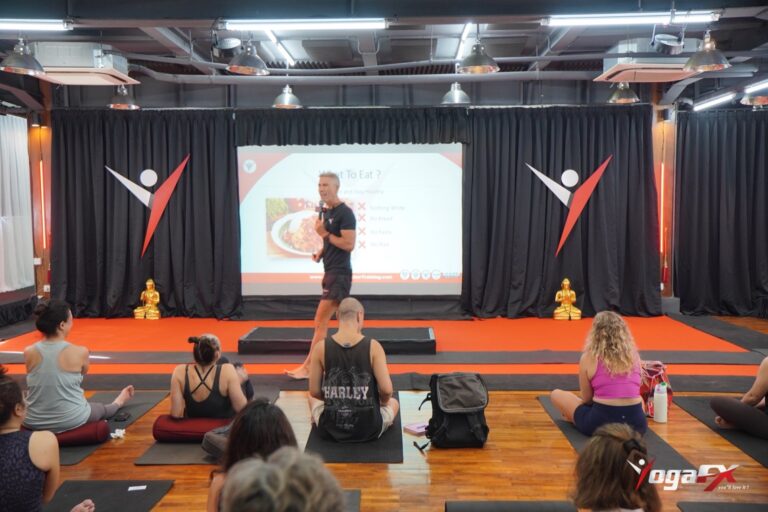 Teacher Training Guides11 min read13 Nov 2026
Sauna After Hot Yoga? What Core Temperature Data Suggests
Read article ↗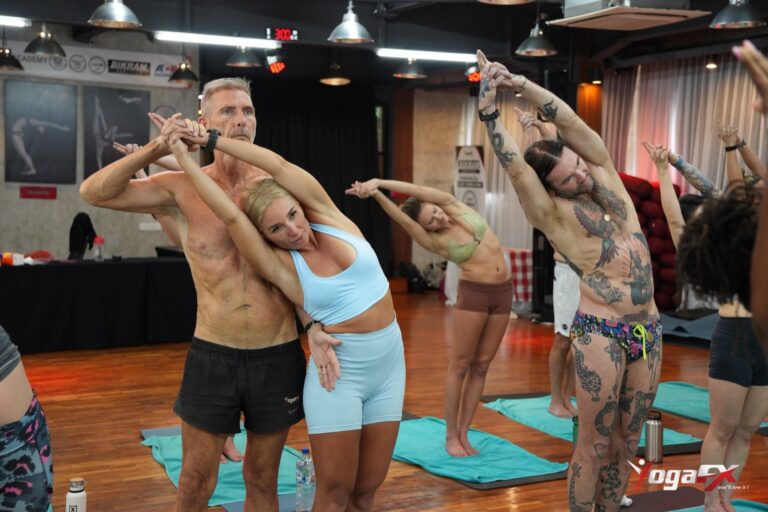 Teacher Training Guides10 min read13 Nov 2026
Hot Yoga Calories Burned: What Two Lab Studies Measured
Read article ↗ Teacher Training Guides11 min read13 Nov 2026