
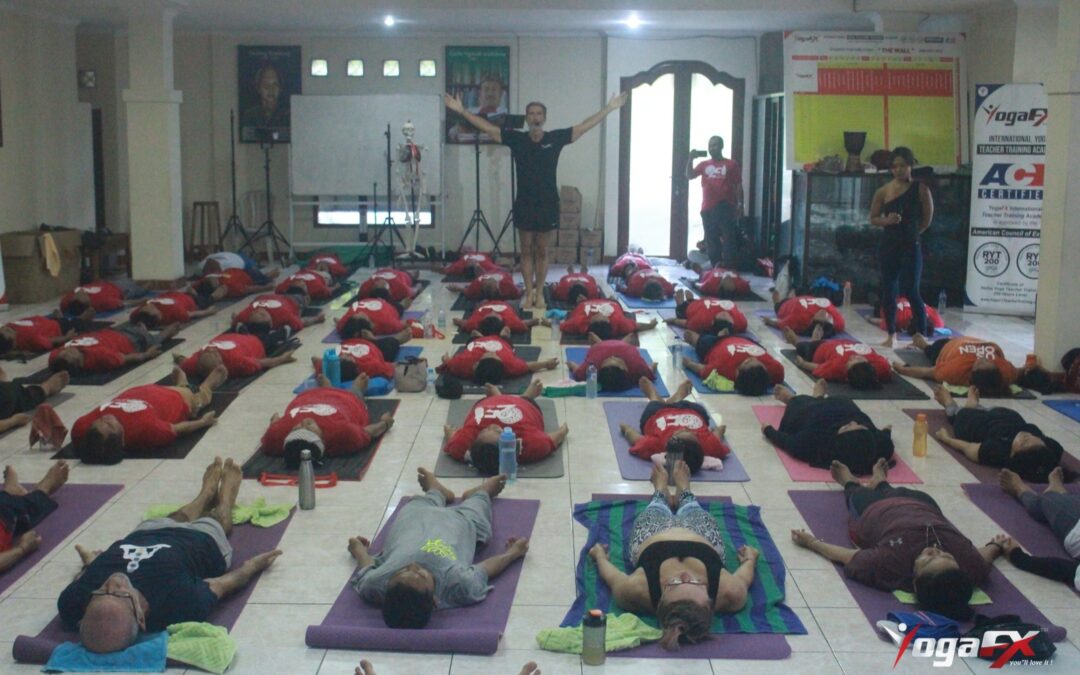
RYT 200 training includes 30 hours of anatomy and physiology. That is one of four education categories in the Yoga Alliance standard for a Registered Yoga School. The hours cover anatomy, physiology and biomechanics, from major bones to the stress response and safe movement. Use this guide to check what any course really teaches.
Most pages about RYT 200 stop at the title and the fees. They skip the part that decides whether you can teach a real person safely, which is the science. So we read the Yoga Alliance standard line by line and turned its anatomy and physiology section into a plain checklist.
Mr. Ian Terry, E-RYT 500, has taught for more than 12,000 hours. Our course ties each science topic to something you do on the mat, because a name you can recite is no use until you can spot it in a student.
What the RYT 200 Science Hours Are
The Yoga Alliance standard for schools that train RYT 200 teachers sets four education categories. Anatomy and physiology gets 30 hours, the same as yoga humanities. Techniques, training and practice gets 75 hours, and professional essentials gets 50. The standard places teaching methodology, professional development and the practicum inside that last category.
Those four figures add up to 185 hours. The document does not say where the other 15 hours sit, so the school decides. That is one more reason to ask for a syllabus in writing. You can read the full Yoga Alliance Standards for RYS Credentials yourself.
| Category | Hours | What it covers | Where the science shows up |
|---|---|---|---|
| Techniques, Training and Practice | 75 | Asana, meditation, pranayama and subtle body | Joint action and breathing muscles inside every posture |
| Anatomy and Physiology | 30 | Anatomy, physiology and biomechanics | The core science block this guide explains |
| Yoga Humanities | 30 | History, philosophy and ethics | Ethics helps you stay inside your scope when students ask about health |
| Professional Essentials | 50 | Teaching methodology, professional development and practicum | Cueing and class management use anatomy words every day |
What the RYT 200 title does and doesn’t tell you
A quick word on the title itself. If you are asking what is RYT 200, it is a Registered Yoga Teacher credential at the 200-hour level. Our course site explains how the RYT 200 title is earned and registered, so here we stay with the science.
So what does RYT 200 mean for a teacher's science knowledge? The RYT 200 meaning is narrower than many people think. A teacher who is RYT 200 certified trained at a school that met the standard, including the 30 science hours. That doesn't make them a health professional.
It also doesn't guarantee how well the school taught the topics. Think of the credential as a floor, not a ceiling, because the quality of the teaching still depends on the school.
RYT 200 Anatomy: Bones, Joints and Muscles
The standard splits anatomy into four items: major bones, types of joints, the major muscles involved in asana, and types of muscle contraction.
In plain words, a trainee should be able to point at a joint and say what it can do. For example, a hip hinges and rotates. A knee mostly bends and straightens. A shoulder moves in almost every direction, so it needs care in arm-heavy postures.
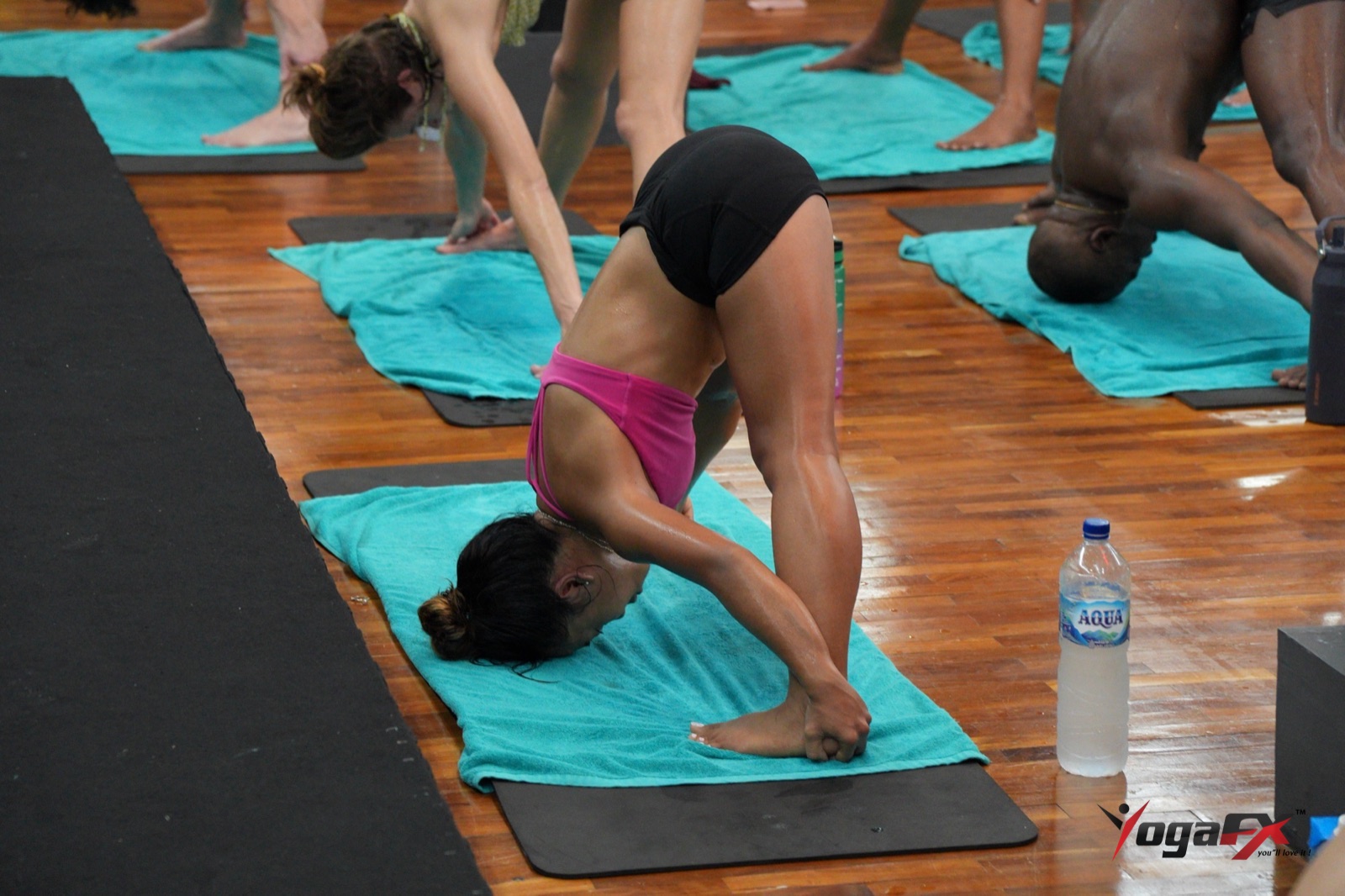
Take the forward fold in the photo. A teacher who has studied anatomy can name the hamstrings at the back of the thigh and explain that they cross the hip and the knee. As a result, that teacher can tell a stiff student to soften the knees instead of forcing the stretch. That is anatomy turning into a cue.
Three questions an anatomy block should answer
- Which bones and joints does this posture load, and in which direction do they move?
- Which muscles are lengthening, and which are working to hold the shape?
- What type of contraction is happening, and how long can a student reasonably hold it?
If a syllabus can answer those three for every posture in the class, the anatomy hours are doing real work. If it only lists muscle names, they are not.
RYT 200 Physiology: Nervous System, Heart, Breath and Heat
Physiology covers how the body systems behave while a student practises. Think of it as the why behind how a class feels. The standard asks a school to show three groups of topics, which we list in the order it uses:
- Nervous system. This includes the "fight, flight, freeze" stress response, vagal theory and the overall mind-body connection.
- Cardiovascular, endocrine and digestive systems, as they relate to yoga practice.
- Respiratory system. This covers the muscles that affect breathing, involuntary versus voluntary breath, and how air enters and leaves the body.
Notice the phrase "as they relate to yoga practice". The standard does not ask you to become a doctor. It asks you to connect each body system to what students actually do in class, and to explain it in words a beginner can follow.
The RYT 200 science hours at a glance
Why heat needs extra time in a hot yoga course
The standard says nothing about heat, because it covers every style of yoga. A hot class adds a load that a gentle class does not. Our guide to what the physiology module should teach in original hot yoga teacher training goes deep on heart rate and core temperature. Here we keep to the basics a new teacher needs.
The CDC describes heat exhaustion as "the body's response to an excessive loss of water and salt, usually through excessive sweating". Its page on heat-related illnesses lists headache, nausea, dizziness, weakness, irritability, thirst, heavy sweating and decreased urine output. It was written for workers, but the body does not care where the heat comes from.
The same CDC page calls heat stroke the most serious heat-related illness and says body temperature can rise to 106°F or higher within 10 to 15 minutes. The Mayo Clinic page on heat exhaustion lists faintness, a weak and rapid pulse and muscle cramps too.
Mayo Clinic says to get help right away if core temperature reaches 104°F (40°C) or higher, or if a person becomes confused or loses consciousness.
The two pages quote different numbers, but they give teachers the same message: act early. For example, that means noticing a pale or unsteady student, asking them to sit, moving them to cooler air and offering water. A teacher coaches and calls for help. A teacher does not diagnose.
Biomechanics: Moving Safely in Every Posture
Biomechanics is where anatomy meets teaching. The standard lists types of joint movement, joint stabilisation, and safe movement "as it pertains to balancing, stretching, awareness, and physical limitations". It also lists contraindications, misalignments and adaptations.
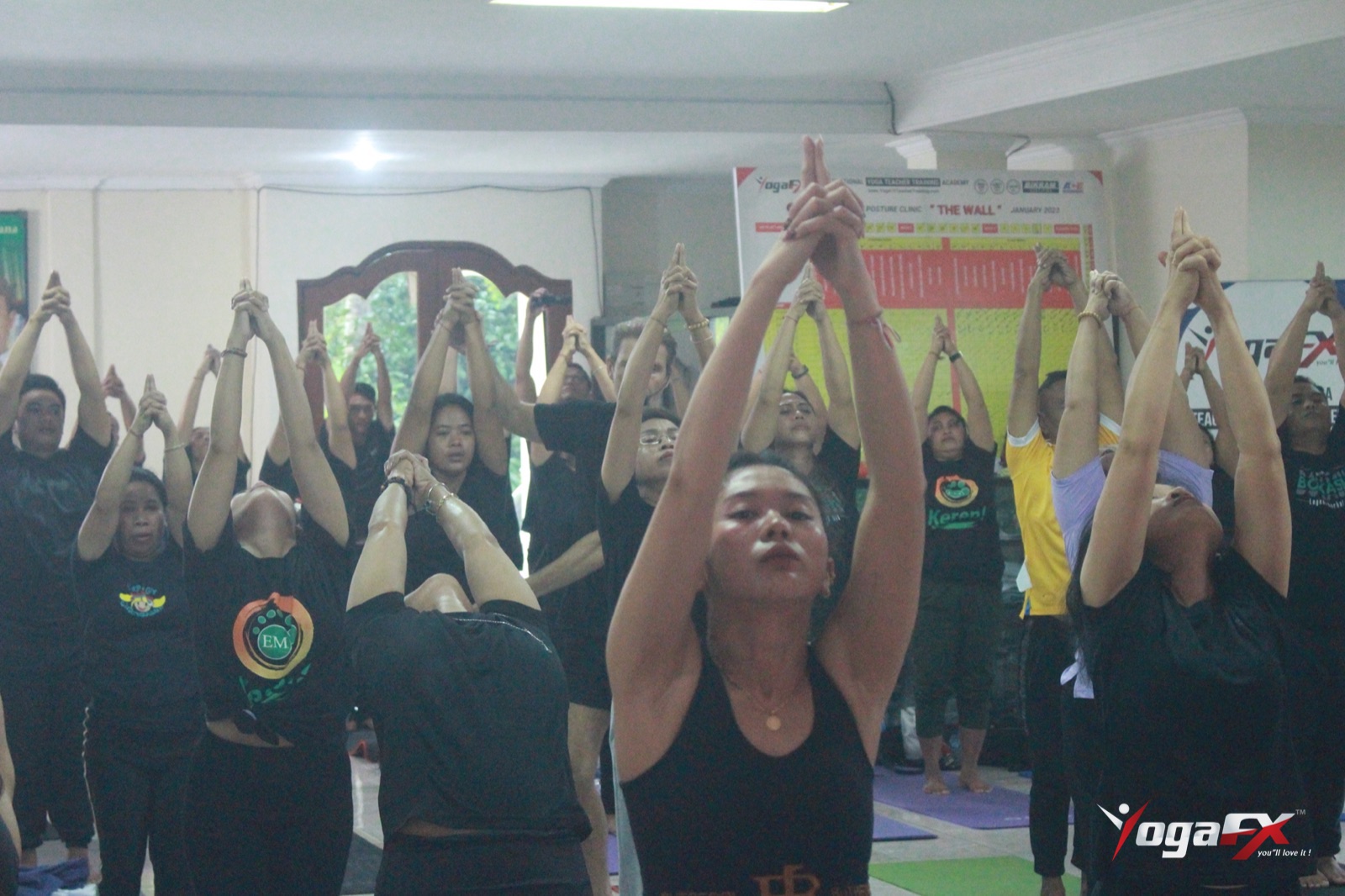
Arms-overhead postures show why this matters. A student with tight shoulders often leans back from the lower spine to make the shape look right. A trainee who has studied joint stabilisation can cue the ribs down and ask for the arms only as high as the shoulders allow. That one cue protects the student and keeps the posture honest.
Adaptations are the other half. Bodies differ, so one posture needs several versions. A teacher who has practised offering them can keep a mixed room safe without slowing the class down.
Four steps that turn a science topic into a cue
- Name the structure you want the student to notice, such as the hamstrings or the ribs.
- Say what it should do in one short sentence.
- Say what to avoid, so the student knows the limit.
- Offer a variation for the student who cannot reach the full shape today.
Where RYT 200 Science Teaching Often Falls Short
Because the standard names topics rather than lessons, schools can meet it in very different ways. Four gaps come up again and again when a course is built around the title instead of the student:
- Memorising instead of understanding. Trainees recite muscle names for a quiz, then forget them by the first practice class.
- Science kept apart from teaching. The anatomy lesson ends, and nobody links it to a cue.
- No heat lesson in a course that trains teachers for a hot room.
- No scope of practice. Trainees never practise saying "please check with your doctor first".
None of these is hard to fix. They only need a school that treats the 30 hours as a skill to practise, not a box to tick. That's the real difference between a syllabus that looks right on paper and one that works in a room full of students.
How to Test an RYT 200 Science Syllabus Before You Pay
You don’t need a science degree to judge a syllabus. You just need to know what to look for. Ask the school for its anatomy and physiology outline, then check it against this list:
- Hours in writing. The outline should show the 30 anatomy and physiology hours, not just a line saying "anatomy included".
- All three areas. Anatomy, physiology and biomechanics should each have named lessons.
- Heat, if the class is hot. A hot class needs heat safety taught as its own topic.
- Practice, not just quizzes. Look for topics tested through teaching on the mat.
- A named lead trainer. The standard says a Lead Trainer must teach 150 of the 200 hours and hold E-RYT 500, so check the trainer's own directory listing.
- A way to ask questions. Science is easier to learn when you can ask someone, so find out how and when you can.
A school that answers all six clearly is taking the science seriously. One that cannot show you a written outline deserves a follow-up call. In short, the title RYT 200 tells you the hours were completed. It doesn’t tell you how well the science was taught.
How Online Study Handles the RYT 200 Science Hours
The Yoga Alliance standard allows a school to run 100% in person, 100% distance learning or a mix of both. It also requires at least 15% of the programme hours to be delivered in a live, synchronous format. For a 200-hour programme that is 30 hours.
Science theory suits self-paced study, because the facts are the same for every student. You can read, watch and revise at home, then bring your questions to the live sessions. Live time is better spent on what a screen cannot give you: practising the cues, feeling the room and getting feedback on your teaching.
If you are weighing formats, three of our guides help. One explains how Yoga Alliance counts online hours. Another sets out the Yoga Alliance certification cost for online graduates. The third is an honest 8-week breakdown of online yoga teacher training.
What YogaFX Students Say About the Science
Reviews are not research, but they show how the training feels from a student's seat. Afdaly finished the 200-hour course and wrote about the curriculum and the safety teaching in her Google review.
The curriculum covered a wide range of topics, including yoga philosophy, anatomy, sequencing, and teaching methodology, and each module built upon the previous one in a logical and meaningful way.
Afdaly, Google review, 2023
One of the things I appreciated most about YogaFX was the emphasis on safety and alignment in the poses.
Afdaly, Google review, 2023
Cristine, a 2024 graduate, put her view on camera. She said the program went beyond what she expected.
This is beyond my expectations for the program.
Cristine, YouTube review, 2024
Together, the YogaFX review pages hold 150 Google reviews, 50 Yoga Alliance reviews and 357 YouTube testimonials. You can read and watch them before you decide.
RYT 200 at YogaFX: Science Taught Where You Practise
YogaFX teaches the Original Hot 26&2 Yoga method, which is 26 postures and 2 breathing exercises in a 90-minute class. The course is a 6-day hybrid. You study online first, then join an intensive in Bali, and you graduate with two certificates: Yoga Alliance RYT 200-Hour and Bikram Hot 26&2 200-Hour International Yoga Certification.
The next intake checks in on Sunday 24 January 2027 and checks out on Friday 29 January 2027, at Soham Wellness Center in Seminyak. The Early Bird price is US$1,899, and instalments start from US$250 a month with no interest. Mr. Ian speaks to each student before they enrol, so you can ask about the science syllabus directly.
Yoga is not a replacement for medical care, and this guide is general information. Please consult a healthcare professional about your own health, especially before practising in the heat.
FAQ
How many anatomy and physiology hours does RYT 200 need?
The Yoga Alliance standard for 200-hour Registered Yoga Schools sets 30 hours for anatomy and physiology. That is one of four education categories, alongside techniques, yoga humanities and professional essentials. The standard lists anatomy, physiology and biomechanics as the three groups of topics a school must cover in those hours.
What is the RYT 200 curriculum for physiology?
It covers the nervous system, including the stress response and vagal theory, plus the cardiovascular, endocrine and digestive systems as they relate to yoga practice. It also covers the respiratory system, including the muscles that affect breathing. The aim is to link each body system to what students do in class.
Can I study the RYT 200 science hours online?
Yes. The standard allows a school to teach 100% by distance learning. It does require at least 15% of the hours, which is 30 for a 200-hour programme, to be delivered live. Theory suits self-paced study, so many students save live time for practice and teaching feedback.
Does RYT 200 teach heat safety for hot yoga?
The standard covers every style of yoga, so it does not name heat. A hot yoga school has to add it. Good heat lessons cover heat exhaustion signs from the CDC and Mayo Clinic, plus what a teacher does first. Ask any school for its heat syllabus in writing.
Is the RYT 200 science syllabus the same in every school?
The topics come from one standard, but each school writes its own lessons, so depth and teaching style vary. Two schools can both list 30 hours and teach them very differently. Ask for the written outline, check all three areas are covered, and ask who teaches them.
Still have questions? Message Mr. Ian and the YogaFX team on WhatsApp and we will answer them personally.

Founder and lead trainer of YogaFX International Yoga Teaching Academy, with more than 12,000 hours of teaching. He trained for 5 years, from 2014 to 2019, with the founder of the Bikram Hot 26&2 method.
You may also like
Explore all articles ↗ Teacher Training Guides11 min read13 Nov 2026
Sauna After Hot Yoga? What Core Temperature Data Suggests
Read article ↗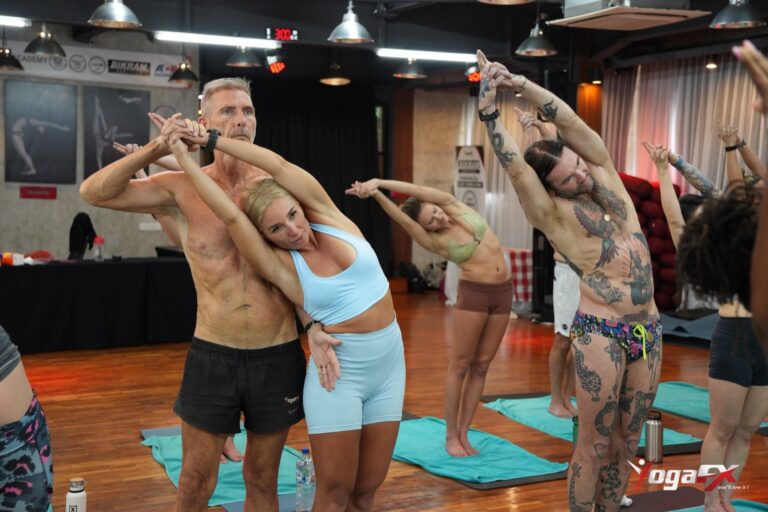 Teacher Training Guides10 min read13 Nov 2026
Hot Yoga Calories Burned: What Two Lab Studies Measured
Read article ↗ Teacher Training Guides11 min read13 Nov 2026