

Hot yoga vs infrared sauna is really a question about how heat reaches you. An infrared sauna sends radiant energy into your skin while you sit still. A humid 26&2 yoga room warms the air around you, and your own muscles make most of the heat. Different routes, so different research.
That difference is easy to miss, because both options make you sweat. Sweat is a result, though, not a method, so it tells you little about what happened. The method decides what your body has to do, how it cools itself, and which studies can speak to your hour.
Mr. Ian Terry, E-RYT 500, has taught more than 12,000 hours of the Bikram Hot 26&2 method, and he trains teachers to explain this exact difference to students.
This guide walks through the physics first, then the trials, then the practical choice. For a plain side-by-side of a class and a sauna session, see this class versus sauna comparison from the YogaFX teacher training team. Here we go deeper on the heat itself.
Hot Yoga vs Infrared Sauna: The Short Answer
If you want to build strength, balance and a skill, take the class. If you want quiet, gentle heat, an infrared sauna can be a fair choice for a healthy adult. They are not interchangeable, and the research does not treat them as if they were.
Here is the plain-English version of the hot yoga vs infrared sauna split:
- Where the heat comes from. In a sauna it comes from a panel. In class it comes mostly from your own working muscles.
- What the room does. A humid class room slows the evaporation of sweat. An infrared cabin is built around radiant warmth and a lower air temperature.
- What the evidence covers. Sauna studies measure sitting still. Hot yoga studies measure moving through postures.
How Infrared Heat Reaches You, and How Room Air Does
Heat moves in four ways, and the hot yoga vs infrared sauna question turns on which one dominates: radiation, convection, conduction and evaporation. Each one matters differently in a sauna cabin and in a yoga room. Understanding them clears up most of the confusion around hot yoga vs infrared sauna claims online.
Radiant heat versus room air
Mayo Clinic frames the key difference this way: an infrared sauna heats the body itself rather than the surrounding air, whereas a regular sauna heats the air first. Mayo adds that infrared cabins can produce similar reactions at lower temperatures.
Where your muscles come in
A yoga room works the other way round. The air is the main carrier of heat, and it surrounds you. Then you add a second source from the inside, because moving muscles release heat all the time. That’s why a class room can sit at a modest air temperature and still feel demanding.
| Heat pathway | Infrared sauna cabin | Humid 26&2 class room |
|---|---|---|
| Radiation | Main route. Panels send radiant energy straight to your skin. | Minor. Walls and ceiling add a little, but the room is not built around it. |
| Convection | Small. The cabin air is kept cooler than in a traditional sauna. | Large. Warm, humid air flows around you for the whole class. |
| Conduction | Light contact with the bench or floor. | Contact with your mat and towel while you move through postures. |
| Evaporation (cooling) | Cabins are usually dry, so sweat evaporates easily and cooling works well. | Sweat evaporates more slowly in humid air, so cooling has to be managed. |
| Internal heat from muscles | Close to resting level, because you sit still. | Large. Moving for 90 minutes adds heat from the inside. |
Notice the last row of this hot yoga vs infrared sauna table. In a cabin, the panel is doing the work. In class, you are. That single fact matters because it changes how hard your heart works, how long you can stay comfortable, and why teachers watch their students so closely.

Why Humidity Changes the Cooling Story
In the hot yoga vs infrared sauna debate, cooling is where radiant and ambient heat really part ways. Your body loses heat mainly by evaporating sweat. When the air is dry, that works smoothly. When the air is humid, sweat clings to the skin and evaporates more slowly, so the same sweat cools you less.
A 26&2 room is held near 40°C with about 40% humidity, and a class lasts 90 minutes. That is a deliberate trade. The humidity is part of the design, the sequence is fixed, and the teacher speaks a scripted dialogue so students know what comes next. Nothing is left to guesswork.
In the hot yoga vs infrared sauna trade-off, an infrared cabin chooses differently. Because the panels warm you directly, the air can stay cooler. Far-infrared saunas heat to roughly 60°C, compared with about 85°C for a traditional sauna, according to a 2009 review in Canadian Family Physician by Beever.
The review also says infrared heat is thought to penetrate more deeply than warmed air. Treat that as a claim from a narrative review, not as a measured fact about every cabin.
So the numbers on the wall are not comparable. A 60°C radiant cabin and a 40°C humid room are doing different jobs on your skin, your sweat and your core temperature. That is also why you cannot borrow a result from one setting and apply it to the other.

What Passive Heating Trials Found
Passive heating means warming your body without exercise: saunas, hot baths, heat packs. Researchers led by Rikuta Hamaya and Howard Sesso pooled 20 randomised trials of these methods. Their 2025 systematic review and meta-analysis in the American Journal of Preventive Cardiology looked at blood pressure, vascular function and other cardiometabolic markers.
For the hot yoga vs infrared sauna question, the headline is cautious. The authors concluded that passive heating may not improve most of these markers. Because the trials varied so much, they asked readers to interpret the results with caution.
The pooled numbers
| Outcome | Pooled result | How to read it |
|---|---|---|
| Systolic blood pressure, all trials (15 RCTs) | -2.46 mmHg (CI -5.02 to 0.10) | Not statistically significant |
| Systolic blood pressure, whole-body heating only | -4.11 mmHg (CI -7.36 to -0.86) | A possible drop, but a subgroup |
| Systolic blood pressure, local heating only | +0.96 mmHg | No benefit shown |
| Diastolic blood pressure | -1.08 mmHg (CI -2.79 to 0.63) | Not statistically significant |
| Flow-mediated dilation and pulse wave velocity | No significant pooled effect | No clear vascular change |
Passive heating trials at a glance
20
Randomised trials
Pooled in one 2025 meta-analysis of passive heating.
-2.46
mmHg, systolic
Pooled drop across 15 trials. Not statistically significant.
-4.11
mmHg, whole-body
Subgroup with whole-body heating. Interpret with caution.
60.3%
Heterogeneity
Trials differed a lot, so results are not tidy.
Where hot yoga fits in the evidence
One more detail matters for anyone weighing hot yoga vs infrared sauna. The pool included a randomised trial of Bikram hot yoga (Hunter 2018) with 40 participants, a room at 40.5°C and 90-minute sessions. So hot yoga sits inside the passive heating literature as a comparison point, even though a class is active, not passive.
That is a useful reminder. Researchers group hot yoga with heat exposure because the room is hot, which is why hot yoga vs infrared sauna studies overlap. Yet the class adds movement, balance, breathing and focus, which a cabin does not. As a result, any benefit seen in a class may come from the heat, the movement, or both together, and these trials can’t separate them.
What Far-Infrared Sauna Reviews Say
Infrared saunas have their own research, and it deserves a fair reading. Beever’s 2009 review summarised the published far-infrared sauna studies on cardiovascular risk factors. It found limited moderate evidence for helping to normalise blood pressure and for treating congestive heart failure.
The same review was blunt about the weak spots in the hot yoga vs infrared sauna evidence base. None of the studies had blinded placebo groups, many had small samples and short durations, and most came from the same core research group. For cholesterol, the review found consistent fair evidence against the claims.
Mayo Clinic is just as careful. It notes that studies of infrared saunas have found some proof they may help with long-lasting problems such as high blood pressure, heart failure and arthritis. It also says that larger and more exact studies are needed, and that some of the studies used a regular sauna.
Put these together and the honest hot yoga vs infrared sauna summary is modest. Infrared saunas are probably pleasant and look safe for healthy adults using them sensibly. The strong claims you see in cabin adverts go further than the best evidence does.
- What is reasonably supported: relaxing, gentle heat for a healthy adult, used briefly.
- What is still uncertain: lasting effects on blood pressure, heart function and pain.
- What is not supported by these sources: claims that a cabin replaces exercise or class.
None of this makes a sauna a poor choice. Instead, the choice should rest on what you want from the hour, not on a big promise.
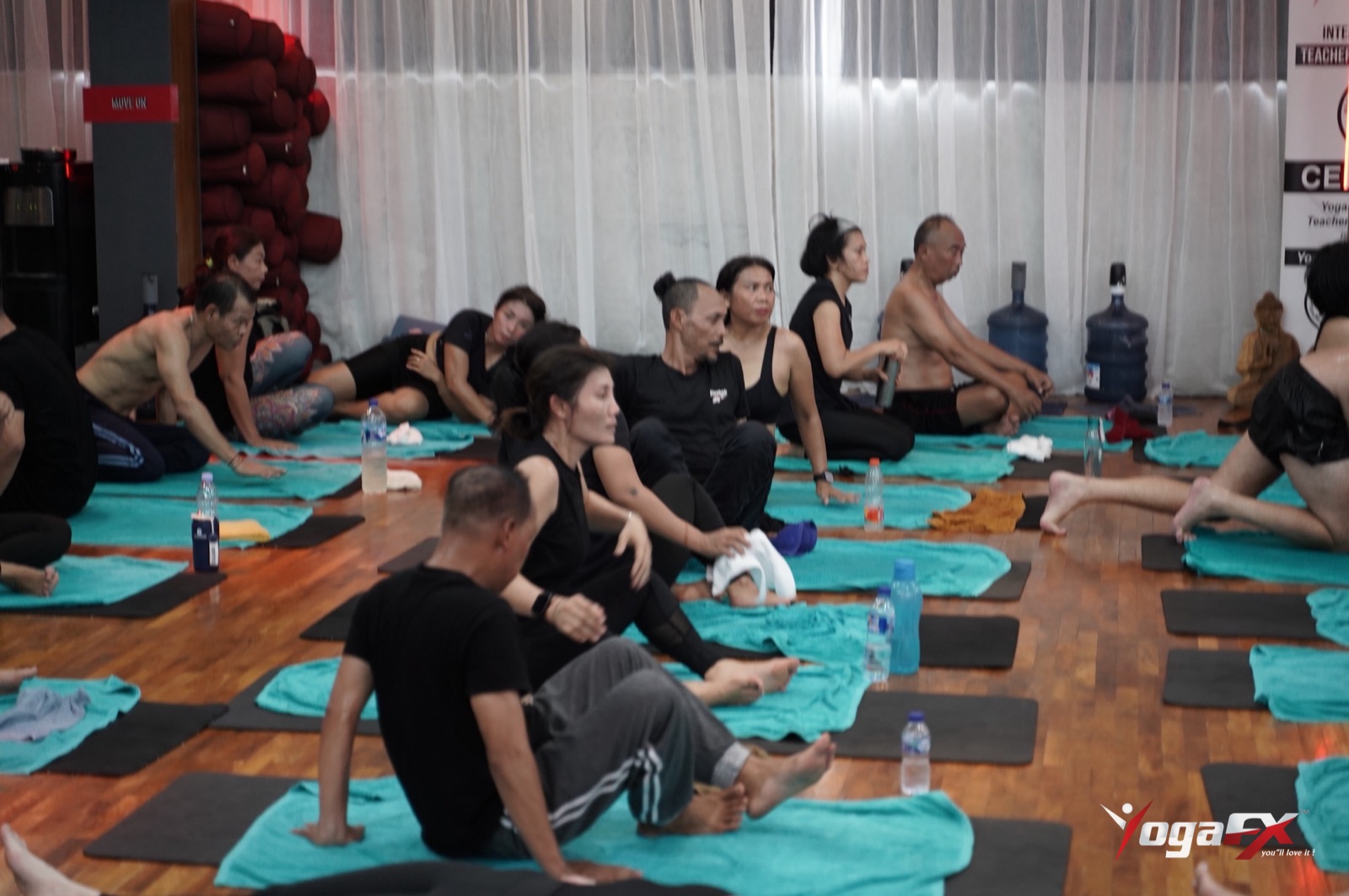
Infrared Hot Yoga Studios: What Changes in the Room
Some studios now fit radiant panels and run flow classes under them, which blurs hot yoga vs infrared sauna into one product. This is often sold as “infrared hot yoga”. It’s a real format, and for some people it’s a gentler way to try heat.
The catch in the hot yoga vs infrared sauna picture is that panel yoga is a different room. The physics above says the panels warm you directly, the air can stay cooler, and humidity is usually not part of the plan.
We could not find a trial in the sources checked for this article that tested panel-heated yoga classes against a humid 26&2 room. So the Bikram trials in the meta-analysis cannot be assumed to apply to an infrared class.
Before you book any heated class, look for evidence of three things:
- A real reading. A thermometer and a humidity gauge on the wall, not the word “warm” on a flyer.
- Water breaks. A teacher who cues water and rest tells you the room is run with care.
- A repeatable class. The same sequence each week lets you notice your own progress.
If a studio cannot show these, treat its claims about heat with the same caution as a cabin advert.
Choosing Between Them: A Practical Guide
Settling hot yoga vs infrared sauna for yourself comes down to your goal and your health. Here is how most people sort themselves:
- Progress you can measure. Class wins, because each posture can be practised and improved.
- A quiet reset. A short cabin session suits a healthy adult whose doctor is comfortable with heat.
- A teaching career. Only training leads to it, because a teacher needs the sequence, the dialogue and a live room.
- Both in one week. Space them across different days and drink water around each.
If you are weighing hot yoga vs infrared sauna as a future teacher, read how heated and room-temperature yoga compare in trials. For what a class actually demands from your body, see the lab data on effort and intensity. For the sweat question that comes up with every sauna, read what sweat actually does.
Hot Yoga vs Infrared Sauna Safety: Both Ask for Respect
Heat is heat, whether it comes from a panel or a room, so the same basic cautions apply. Dehydration, dizziness and overheating are the common risks. Drink water before and after, step out if you feel faint, and never push through nausea.
Some people should check with a healthcare professional first. That includes anyone who is pregnant, has heart or blood pressure conditions, or has been advised to avoid heat. This article is general education, not medical advice, and neither a sauna nor a class replaces care from your doctor.
Neither option is a shortcut to lasting change. Our guide to how long hot yoga takes to show results sets out a more realistic timeline.
What YogaFX Students Say About the Class
Students feel the difference between warmth and work quickly. Here is what three YogaFX trainees said in public reviews about the class side of hot yoga vs infrared sauna:
“The great professionalism and human skills of our instructor Mr Ian made everything so simple and fun.”
Mario, Google review, 2022
“Mr. Ian, a great man with a naturally incredible humility, passed on his knowledge of bikram yoga, which he has mastered to perfection.”
Hermann, Google review, 2025
“It was enlightening. It was unexpected, fulfilling. It was invigorating, challenging. It was tough.”
Omayra, YouTube review, 2019
Read those words again: professionalism, humility, challenge. Nobody describes a sauna session that way, and that’s the point. A teacher, a sequence and a room full of people give a class a shape that a cabin does not have.
Learn the Method With Mr. Ian
Mr. Ian Terry, E-RYT 500, spent 2014 to 2019 studying under the founder of the Bikram Hot 26&2 method. Since 2017, YogaFX has trained 1,500+ teachers who came from 80+ countries. Learning to teach the heat is the surest way to understand it.
The YogaFX MasterClass runs as a 6-day hybrid. You complete online pre-course study first, then join an intensive in Bali.
The next group arrives on Sunday 24 January 2027 and leaves on Friday 29 January 2027, at Soham Wellness Center in Seminyak. It leads to two credentials: Yoga Alliance RYT 200-Hour and the Bikram Hot 26&2 200-Hour International Yoga Certification. Early Bird pricing is US$1,899, with instalments from US$250 a month and no interest.
Hot yoga vs infrared sauna is easier to judge once you have felt a full class. Start with the online side from home, and see whether the science of heat and the discipline of the method suit you. For example, you can explore the online hot yoga teacher training here.
FAQ
Does an infrared sauna get hot?
Yes, but usually at a lower air temperature than a traditional sauna. A 2009 review in Canadian Family Physician describes far-infrared saunas heating to roughly 60°C, against about 85°C for traditional ones. Mayo Clinic notes you can get similar reactions at lower temperatures. Cabin settings vary, so follow the manufacturer guidance.
Are infrared saunas better than traditional saunas?
The sources checked here do not show that. Mayo Clinic says larger and more exact studies are needed, and that some of the research used a regular sauna. Beever’s review found limited moderate evidence for blood pressure and noted weak study designs. Choose by comfort and health advice, not by hype.
Does passive heat lower blood pressure?
Maybe slightly, but the evidence is uncertain. A 2025 meta-analysis of 20 randomised trials found a pooled systolic drop of 2.46 mmHg that was not statistically significant. Whole-body heating showed 4.11 mmHg in a subgroup. The authors urged caution because the trials varied widely. Ask your doctor before using heat for blood pressure.
Is infrared hot yoga safe?
It is heat exposure with exercise, so the usual cautions apply. We found no trial in the checked sources that tested panel-heated yoga classes, so there is no strong safety data either way. Drink water, leave the room if you feel dizzy or faint, and check with your healthcare provider first if you have a medical condition.
Can I do a sauna after hot yoga?
Both raise your heart rate and fluid loss, so stacking them is a judgment call. If you want both, drink water, keep the sauna short, and stop if you feel dizzy or nauseated. Many people simply pick one per day. Speak to your healthcare provider if you are pregnant or have a heart or blood pressure condition.
Still have questions? Message Mr. Ian and the YogaFX team on WhatsApp and we will answer them personally.

Founder and lead trainer of YogaFX International Yoga Teaching Academy, with more than 12,000 hours of teaching. He trained for 5 years, from 2014 to 2019, with the founder of the Bikram Hot 26&2 method.
You may also like
Explore all articles ↗ Teacher Training Guides11 min read13 Nov 2026
Sauna After Hot Yoga? What Core Temperature Data Suggests
Read article ↗ Teacher Training Guides10 min read13 Nov 2026
Hot Yoga Calories Burned: What Two Lab Studies Measured
Read article ↗ Teacher Training Guides11 min read13 Nov 2026