
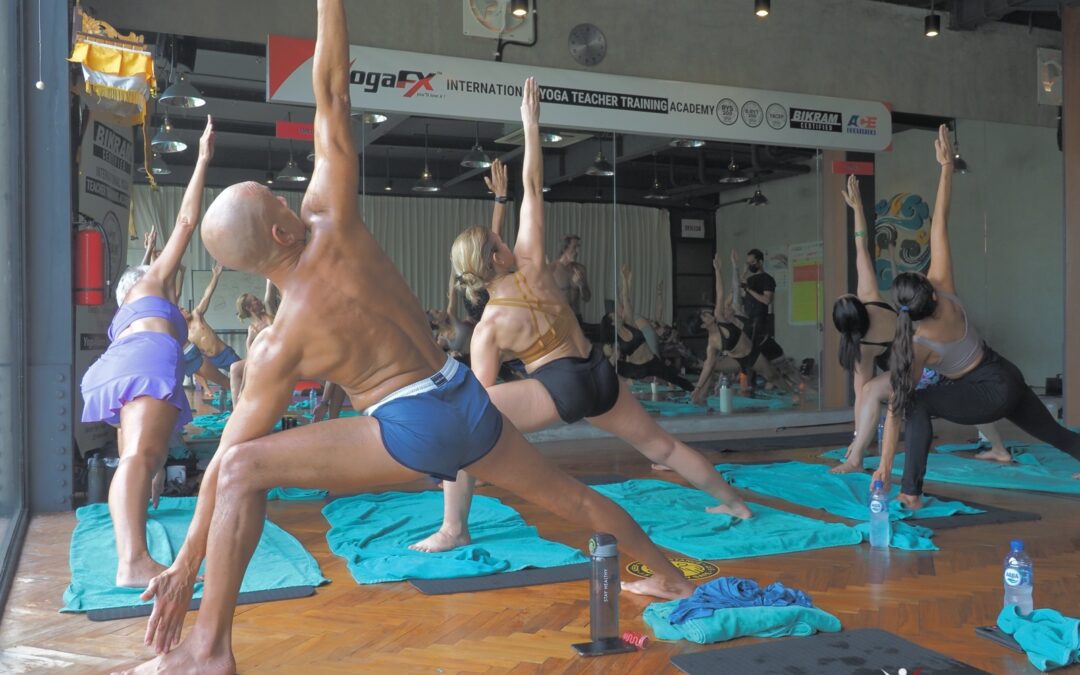
Is hot yoga a good workout? For most healthy adults, yes, at a moderate level of effort. In one 90-minute class study, heart rates averaged 72 to 80% of predicted maximum, yet the energy cost matched a brisk walk. So it's a real workout, just not a hard one.
Is Hot Yoga a Good Workout? The Short Verdict
Here's the verdict, graded the way we grade every claim on this site. Whether is hot yoga a good workout deserves a yes depends on what you want from it. For steady effort, balance and flexibility, the lab data says yes. For fast aerobic gains on their own, it says no. Four findings explain why:
- The heart works. In a University of Wisconsin-La Crosse study, men averaged about 80% of predicted maximum heart rate across a 90-minute class, and women about 72%.
- The energy cost stays moderate. Colorado State researchers measured about 460 calories for men and 330 for women. That's roughly a brisk 3.5 mph walk held for 90 minutes.
- The heat adds less than you'd expect. In a small one-hour crossover trial, heated and room-temperature classes gave similar heart rates and calories.
- The gains are specific. Earlier Colorado State work found better strength, balance and flexibility, while aerobic fitness stayed largely unchanged.
That adds up to a useful workout with a clear shape. This guide turns each number into something you can feel, so you can check your own effort at home. It comes from the team at YogaFX, led by Mr. Ian Terry, E-RYT 500, who has more than 12,000 teaching hours and trained from 2014 to 2019 with the founder of the Bikram Hot 26&2 method.
One note first: this is general information, not medical advice. If you have a heart condition, take blood pressure medication or are pregnant, please consult a healthcare professional before any heated practice.
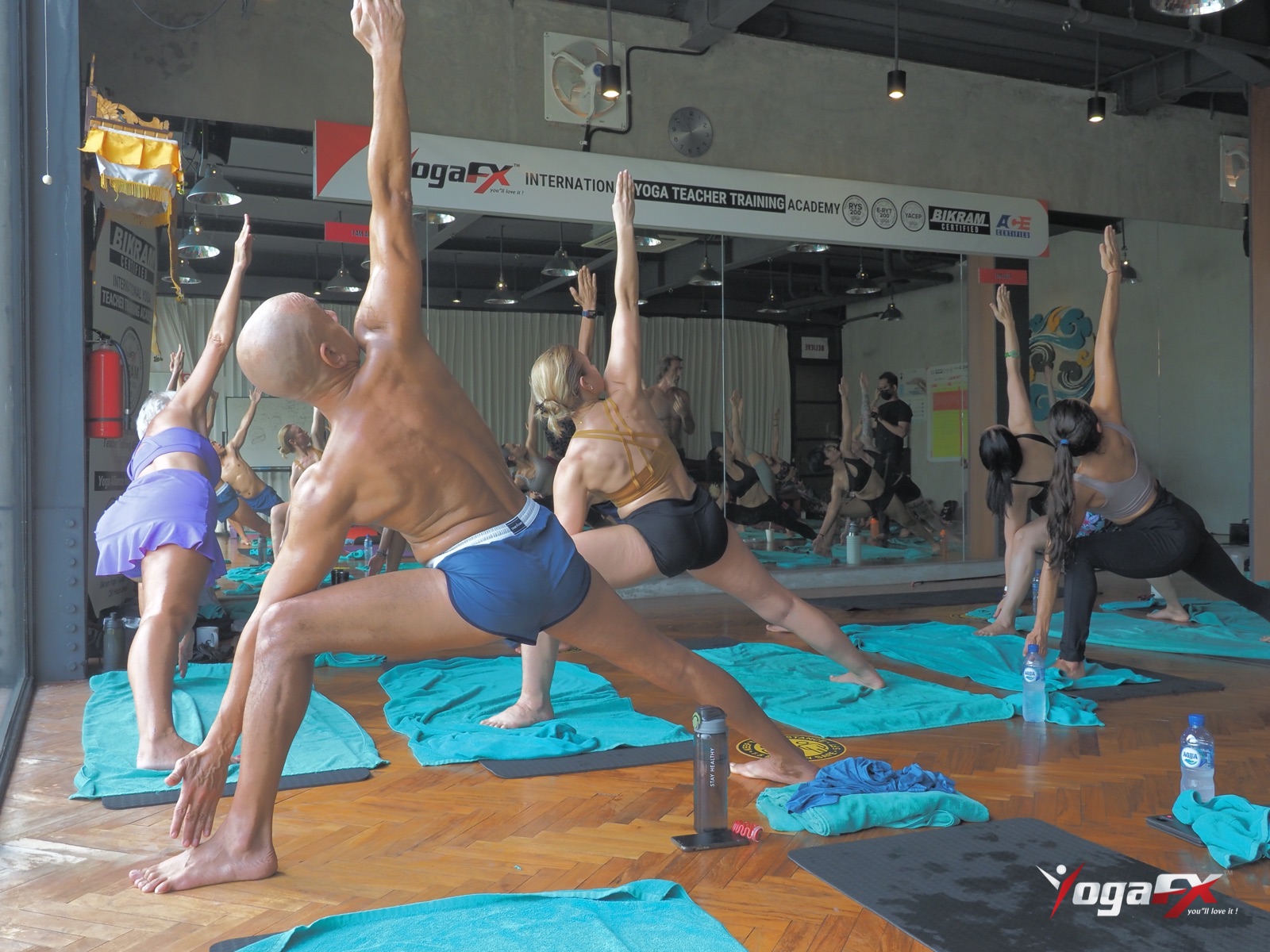
Is Hot Yoga a Good Workout? What Four Lab Studies Measured
Most articles quote one number and stop. Instead, the table sets four sources side by side, so you can see how far the results spread. The last column says what each one means for effort. Every figure comes from the paper or report named in the first column.
Four Sources at a Glance
| Source | Who took part | What they measured | What it means for effort |
|---|---|---|---|
| Quandt, Porcari and colleagues, University of Wisconsin-La Crosse (ACE-sponsored) | 20 healthy regular practitioners (7 men, 13 women) aged 28 to 67, one 90-minute class | Average heart rate 80% (men) and 72% (women) of predicted maximum. Highest readings 92% and 85%. Core temperature above 103°F in 7 of 20. | Steady to hard for the heart. For a 35-year-old, about 148 and 133 beats per minute on average. |
| Tracy, Colorado State University, 2014 (news report of a conference study) | 19 seasoned practitioners aged 18 to 40 (11 women, 8 men), 90-minute class | Heart rate averaged about 160 beats per minute. Energy about 460 calories (men) and 330 (women), measured, not predicted. | High heart rate, moderate energy cost. Like a brisk walk of the same length. |
| Lambert and colleagues, International Journal of Exercise Science, 2020 | 16 experienced practitioners (14 women, 2 men), average age 40, one-hour class heated (105°F) and room temperature (74°F) | 113 beats per minute heated, 109 at room temperature. 156 vs 151 calories. Neither gap was significant. | Light to moderate in the lab. The paper puts the workload below 30% of VO2max. |
| Willmott and colleagues, 2025 systematic review | 43 studies, 942 participants | Pooled results on flexibility, bone density and well-being. | Broad evidence for benefits. Study quality varies, so treat the numbers as a guide. |
What the Pattern Shows
Read down the last column and a pattern shows. The heart rate numbers look high, while the energy numbers look modest. That gap is the most useful thing this research tells you about the class.
Why Heart Rate and Effort Don't Match
The Colorado State group averaged about 160 beats per minute. The Lambert group averaged 113. Both are fair measurements, so why the gap? We can't say for sure, because the groups, class lengths and methods all differ. It also raises a fair question: is hot yoga a good workout if the heart rate swings that much?
Still, three differences stand out. The Colorado State class ran 90 minutes, while Lambert's lasted one hour. The Colorado State volunteers were aged 18 to 40, while Lambert's averaged 40 with a wider fitness spread. And the Wisconsin team found men ran at higher percentages of predicted maximum than women, even though raw heart rate looked similar across the sexes.
So the lesson is simple. Because every group differs, treat any single heart rate number from a hot class as one clue about effort, not the whole answer.
Turning Heart Rate Zones Into Effort You Can Feel
A heart rate zone is a band of your maximum heart rate. A common rule of thumb estimates that maximum as 220 minus your age. It's only an estimate, and real maximums vary from person to person, so use the zones as a rough guide.
The CDC offers three ways to judge intensity without a lab. First, METs, where 3 to 5.9 counts as moderate and 6 or more as vigorous. Second, a talk test: at moderate effort you can talk but not sing. At vigorous effort you can't say more than a few words without pausing for breath.
Third, a 0 to 10 effort scale, where moderate sits at 5 or 6 and vigorous begins at 7 or 8. You can read the details on the CDC page on measuring physical activity intensity.
We pair those with three heart rate bands. The bands are our teaching shorthand, not a medical standard, and the CDC page defines intensity by METs, talk and effort rather than heart rate. They give you a quick cross-check, so use all three signals together.
Effort Levels Side by Side
| Effort level | Talk test | 0 to 10 scale | Share of estimated maximum | Age 35 (estimate 185) | Age 50 (estimate 170) |
|---|---|---|---|---|---|
| Easy | You can chat, even sing | Below 5 | 50 to 70% | 92 to 130 beats | 85 to 119 beats |
| Steady (moderate) | You can talk but not sing | 5 to 6 | 70 to 85% | 130 to 157 beats | 119 to 145 beats |
| Hard (vigorous) | A few words per breath | 7 to 8 | Above 85% | 157 beats and up | 145 beats and up |
Now place the studies on that map. For a 35-year-old, the Wisconsin averages of 72 and 80% come to about 133 and 148 beats. Both sit in the steady zone. The peak readings of 85 and 92% come to about 157 and 170 beats, which touches the hard zone. For a 50-year-old, the same averages are about 122 and 136 beats.
The Colorado State average of 160 beats is about 86% of the estimated maximum for a 35-year-old. That's the edge of the hard zone, yet the energy cost matched a brisk walk. Heart rate and workload simply don't move together in a hot room.
Five Numbers That Sum It Up
72 to 80%
Average heart rate
Share of predicted maximum across a 90-minute class, women and men.
92%
Highest reading
The peak for men in the same class. The peak for women was 85%.
460 / 330
Calories in 90 minutes
Men and women, measured. Like a brisk 3.5 mph walk.
113 vs 109
Beats per minute
Heated vs room temperature in a one-hour class. Not a significant gap.
7 of 20
Passed 103°F
Volunteers whose core temperature rose above 103°F during class.
Is Hot Yoga a Good Workout at Home? How to Check Your Effort
Many of our online students practise at home long before they step into a heated room. That makes self-checks valuable, because nobody is standing beside you with a heart rate monitor. Here's a simple routine that uses the three signals above.
- Run the talk test in every long hold. If you can speak a full sentence, you're easy or steady. If you can only manage a few words, you're in the hard zone, so ease off.
- Rate each block from 0 to 10. Jot a number after the standing series, in the middle of the floor series and at the end. A pattern of 5s and 6s means you're working at a moderate level.
- Use a strap or watch as a trend. Compare your average across weeks, not minute to minute. Ignore the calorie number, which is the least reliable thing on the screen.
- Note what stops you. Was it your breath, your legs or your balance? The answer tells you whether you need fitness, strength or practice.
- Keep the room modest. You don't need a hot space to learn the sequence. In Lambert's small trial, heating didn't change the energy cost significantly for experienced practitioners. If you do warm a room, keep it mild and keep water within reach.
Curious how heated and room-temperature classes compare more broadly? Our breakdown of hot yoga vs regular yoga in three trials goes through the evidence.
Is Hot Yoga a Good Workout for Beginners?
Yes, as long as you treat the first weeks as practice rather than a test. Is hot yoga a good workout for beginners if the room feels overwhelming? It can be, because you control the effort. Stay at the back, rest whenever you need to and sit out anything that feels wrong. As a result, your body learns the sequence before it learns the heat.
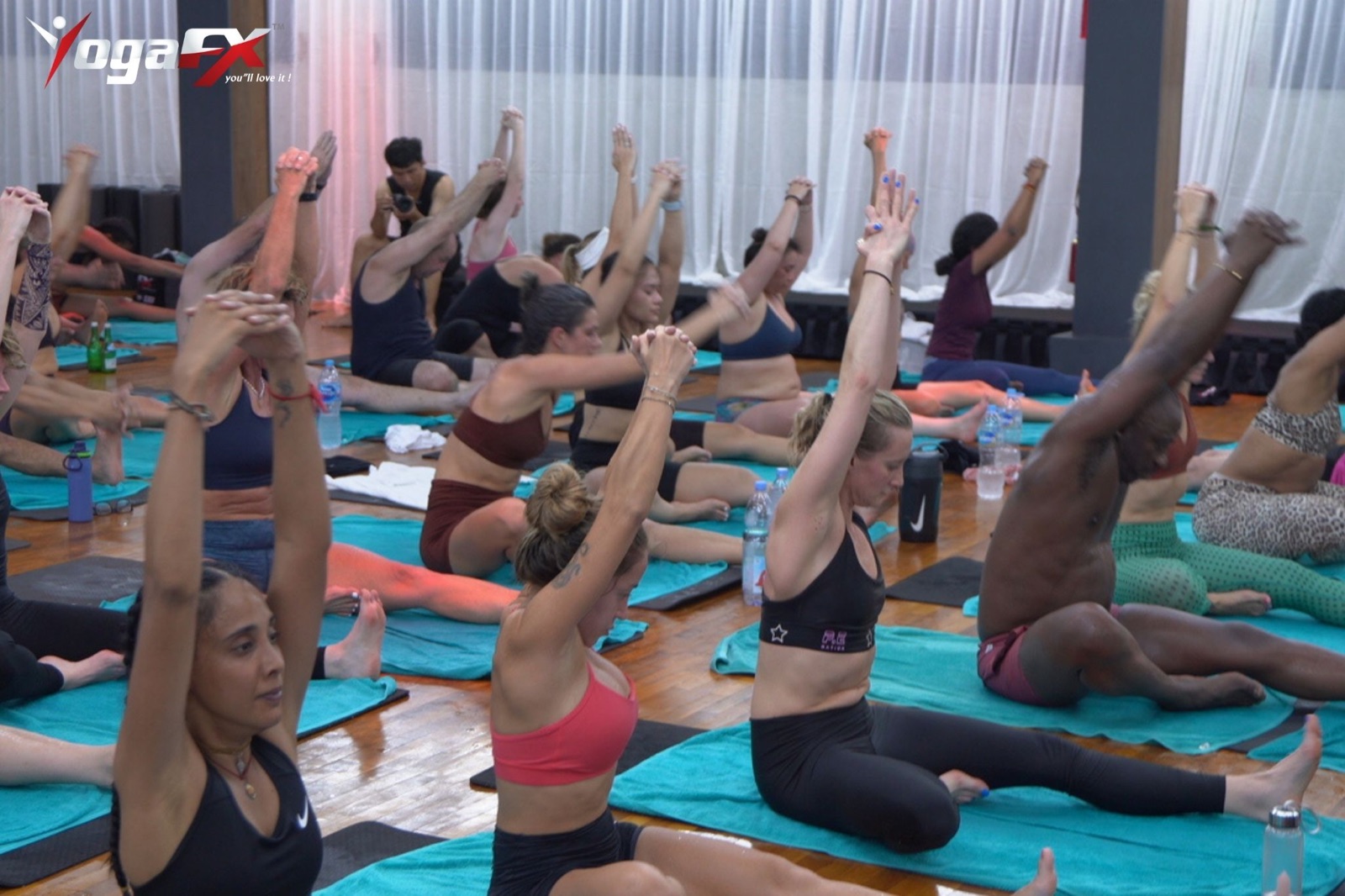
Reading Your Watch Without Fooling Yourself
The Colorado State researcher added a warning for anyone with a fitness watch. Some practitioners had reported burning as many as 1,000 calories in one class. He said those figures come from heart rate equations built for normal temperatures, which give an inflated estimate in a hot room.
In other words, a high heart rate in the heat doesn't automatically mean a high workload. That's why we ask students to trust effort ratings and the talk test first. The watch is a second opinion, and it can be wrong in both directions.
Is Hot Yoga a Good Workout for Fitness? What It Builds
Fitness means more than heart rate, so look at what changed in people who practised for weeks. The Colorado State group describes two earlier studies. In an eight-week study with 24 sessions, practitioners improved muscle control, balance and strength compared with a control group. In a 2013 study, flexibility in the spine, hamstrings and shoulders improved, along with whole-body strength.
Aerobic fitness, however, "remained largely unchanged" in that 2013 work. The researchers suggested the short training period and the healthy starting fitness of the volunteers may explain it. You can read the full story on the Colorado State University news page.
A 2025 systematic review by Willmott and colleagues pooled 43 studies and 942 participants. It reported benefits for flexibility, bone density and well-being. We couldn't open the full paper to check it, so we won't link it. Search for Hot Yoga: A Systematic Review of the Physiological, Functional and Psychological Responses and Adaptations to read it yourself.
Is Hot Yoga a Full Body Workout?
Mostly yes, in a particular way. The 26 postures take your legs, hips, spine, shoulders and core through a fixed order, and most are held for a set time. That's static strength and balance work, not heavy lifting. Whole-body strength gains appeared in the Colorado State work, but nobody measured maximum strength against a weights programme.
- Where the evidence is decent. Flexibility, balance and strength endurance, mostly in small trials.
- Where it's thin. Aerobic fitness, long-term fat loss and any head-to-head comparison with running or lifting.
- Where you need extra work. Brisk walking, cycling or running for your heart and lungs, and weights for maximum strength.
If weight is your goal, remember that a measured class costs about as much as a brisk walk. For the heart side of the picture, see our guide to whether hot yoga counts as a cardio workout, which maps heart rate zones across the class.
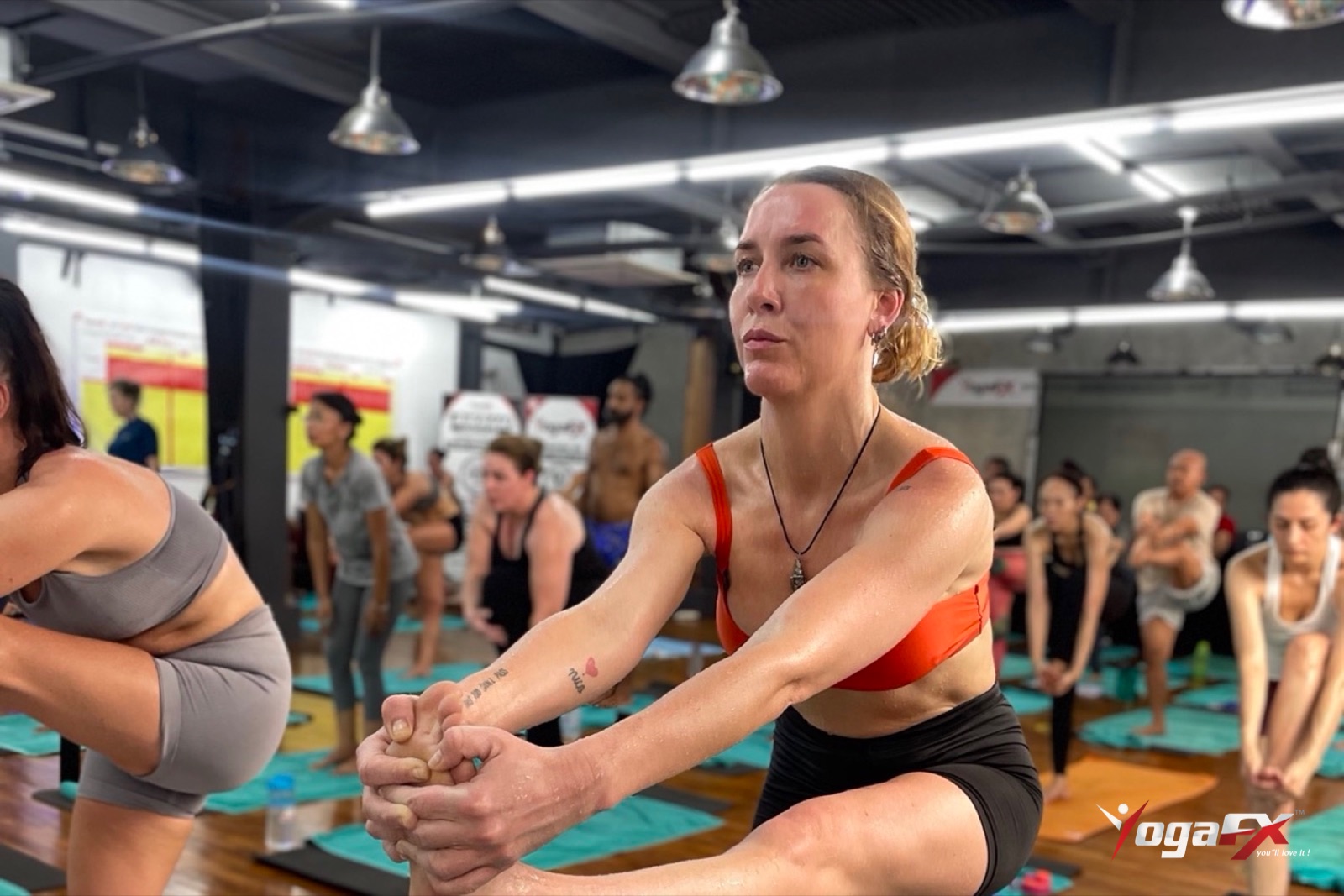
Want to see how the load stacks up over several days? Our partner training site follows trainees through a full Bali week in how six hot days in a row test the body.
When a High Effort Becomes a Warning
Effort and risk are different things. In the Wisconsin study, core temperature rose steadily through the 90 minutes. The average highest reading was 103.2°F for men and 102.0°F for women, and one man reached 104.1°F. Seven of the 20 volunteers went above 103°F. None showed signs or symptoms of heat intolerance, but that's a small, experienced group.
You can read the details in the American Council on Exercise write-up. A beginner has not adapted to the room yet, so the safe plan is to start gently. Stop and sit down if you notice any of these:
- Chest pain or pressure. Stop at once and get urgent medical help.
- A racing or irregular heartbeat that doesn't settle within a minute or two of resting.
- Dizziness, confusion or a pounding headache. These are classic early signs of heat strain.
- Nausea, cramps or a sudden stop in sweating. Cool down, drink water and tell the teacher.
If you have a heart condition, take medication that affects blood pressure or hydration, or you're pregnant, speak to your doctor before any heated class. A high effort score is a reason to slow down, never a target to chase.
What Our Trainees Say About the Effort
Is hot yoga a good workout from the inside? Numbers can't capture how a class feels, so here are comments from YogaFX graduates, taken word for word from their public reviews.
"Very good for beginners, after I do it regularly my body always feels fresh"
Sony, Google review, 2024
"very very difficult I was afraid that I didn't manage I did it I am very happy I am full of joy I am full of power"
Agnieszka, YouTube review, 2023
"actually changed me and changed my brain changed my mind changed my body"
Erick, YouTube review, 2024
Notice how Agnieszka calls it difficult and rewarding in the same breath. Hard and good aren't opposites here. You can watch Erick's full review below.
Learn to Read Effort Like a Teacher With YogaFX
Students will ask their teachers, "is hot yoga a good workout?" A good teacher answers with evidence, not hype, and watches faces as well as postures. Our hot yoga teacher training online course lets you study the 26 postures, the dialogue and the physiology at home, on your own schedule.
The course is led by Mr. Ian Terry, E-RYT 500, who has more than 12,000 teaching hours. Since 2017, YogaFX has trained more than 1,500 graduates from 80+ countries, and we hold more than 550 reviews across Google, Yoga Alliance and YouTube.
- See how online study works. Read the 8-week breakdown of online yoga teacher training.
- Know the sequence first. Walk through the 26&2 postures before you step into the room.
- Learn what the heat does to the body. Trainees study how to spot heat strain early and keep a class safe.
When you're ready for the heat in person, the next step is the 6-day Bikram Hot 26&2 Yoga Teacher Training MasterClass in Bali. The next batch checks in on Sunday 24 January 2027 and checks out on Friday 29 January 2027 at Soham Wellness Center in Seminyak. The Early Bird price is US$1,899 (normally US$1,999), with payment plans from US$250 a month.
FAQ
Is hot yoga a good workout for weight loss?
It can help a little, but it is not a shortcut. A 90-minute class burned about 330 to 460 calories in the Colorado State study, close to a brisk walk of the same length. Weight change also depends on food, sleep and how often you practise. Ask a healthcare professional about your goals first.
Is Bikram yoga a good workout?
Most of the research is on Bikram-style classes, now often taught as Original Hot 26&2 Yoga. They raise the heart rate to a steady or hard zone while the energy cost stays moderate. That makes them a solid workout for balance, strength and flexibility, though not a full aerobic programme.
Is hot yoga a full body workout?
Mostly yes. The 26 postures work your legs, hips, spine, shoulders and core in a set order, and the heat keeps your heart rate up. Strength gains appeared in Colorado State research. It doesn't replace heavy lifting, so add weights if maximum strength is your goal and your doctor agrees.
How good of a workout is hot yoga?
Is hot yoga a good workout? It's a moderate one. Heart rates averaged 72 to 80% of predicted maximum in one study, while the energy cost matched a brisk walk. Use the talk test and a 0 to 10 effort scale to check yourself. If you can talk but not sing, you're in the moderate zone.
Is hot yoga a good workout on its own?
For many people, it covers flexibility, balance and strength endurance. Aerobic fitness stayed largely unchanged in earlier Colorado State work, so adding brisk walking, cycling or running makes sense. A healthcare professional can help you decide the right mix if you have a heart or blood pressure concern.
Still have questions? Mr. Ian and the YogaFX team answer them personally. Take the 2-minute quiz to see if you're ready to teach hot yoga, or message Mr. Ian on WhatsApp for course dates.

Founder and lead trainer of YogaFX International Yoga Teaching Academy, with more than 12,000 hours of teaching. He trained for 5 years, from 2014 to 2019, with the founder of the Bikram Hot 26&2 method.
You may also like
Explore all articles ↗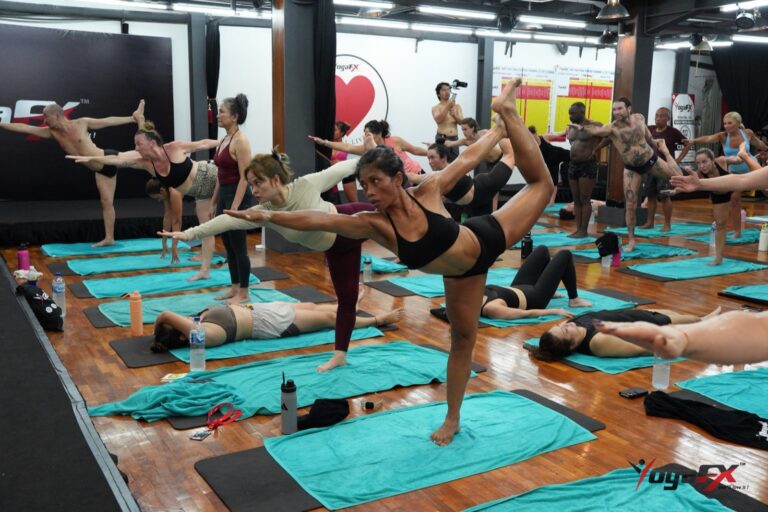 Teacher Training Guides11 min read14 Nov 2026
International Yoga Sports Federation and Yoga as a Sport: What Recognition Requires
Read article ↗ Teacher Training Guides11 min read13 Nov 2026
Sauna After Hot Yoga? What Core Temperature Data Suggests
Read article ↗ Teacher Training Guides10 min read13 Nov 2026