
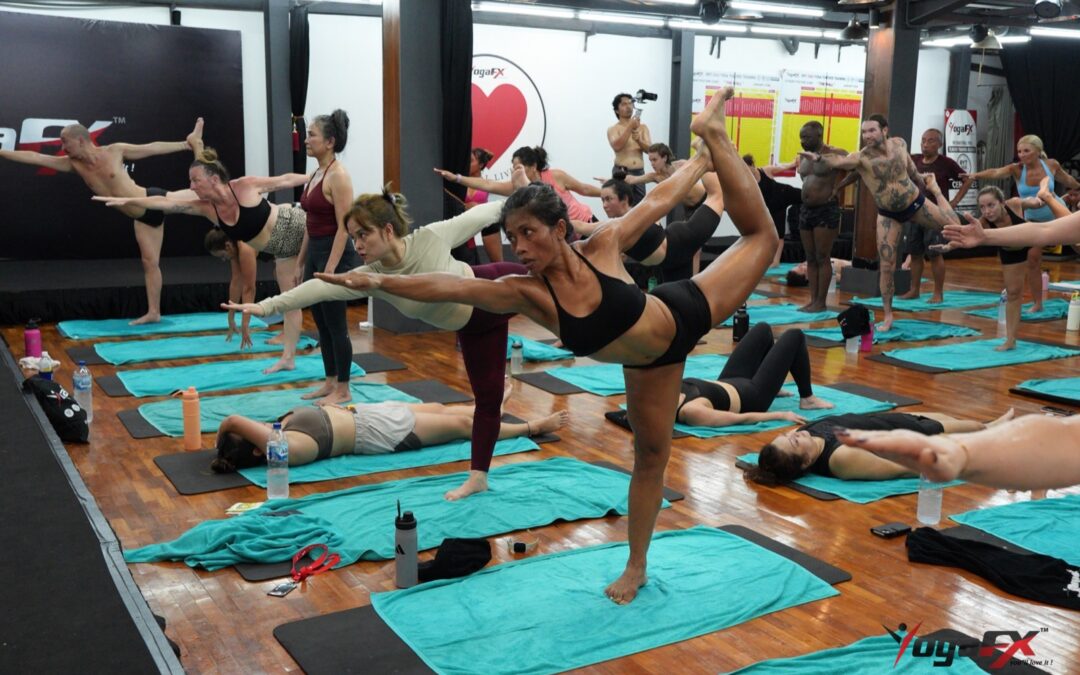
The international yoga sports federation (IYSF) is a world body for competitive yoga, but by its own account it is not yet recognised by the IOC. Its website says it is working toward the IOC’s criteria. Recognition asks for governance, rules and anti-doping systems, not just good postures and a big championship.
That gap is the whole story of the international yoga sports federation right now. This guide explains what recognition involves, step by step, and where yoga stands on each step. It also shows how to check any federation’s claims yourself, because the names are easy to mix up. For a different view of the same body, our sister site has a federation-by-federation breakdown.
Mr. Ian Terry, E-RYT 500, brings the teacher’s side. He has more than 12,000 teaching hours and is a Master Trainer of the Republic of Indonesia Yogasana Sports Federation. Our working rule for the international yoga sports federation, and for every other body, is simple: a sport is a set of rules you can verify, so we read the primary pages before writing a word of this.
What the International Yoga Sports Federation Is, and What It Is Not
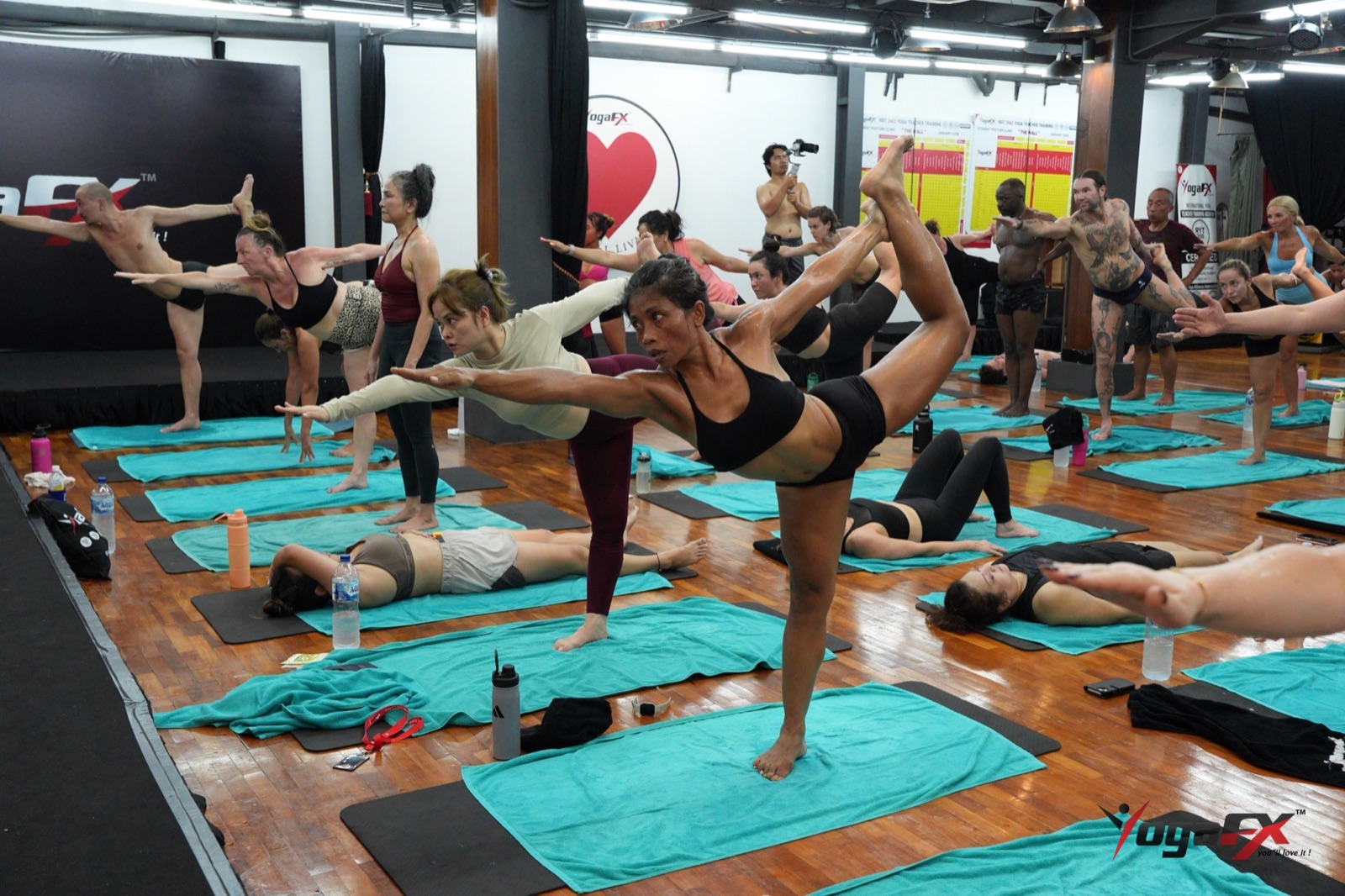
The international yoga sports federation presents itself as the global governing body for “Yoga Sports”. In other words, the international yoga sports federation wants to be to yoga what other world federations are to their sports. Its homepage lists an Executive Committee, an Athletes’ Commission and a Technical Committee. It also lists international judges and international coaches.
Three things it isn’t are worth stating early, because search results blur them:
- Not a teacher registry. A credential such as RYT 200 comes from a school and a registry. A federation certifies judges and coaches for a sport.
- Not owned by one style. A federation scores posture families. It does not sell a brand of yoga.
- Not automatically “Olympic”. A world championship is not the same as recognition by the IOC.
If you came here comparing a federation with a teacher registry, our guide to who registers an online yoga school covers the registry side. Here we stay on the sport side.
How Recognition Works: What the International Yoga Sports Federation Would Need
The IOC’s own page defines the term. It says International Sports Federations are international non-governmental organisations recognised by the IOC as administering one or more sports at world level. The page adds that a federation seeking recognition must ensure its statutes, practice and activities conform with the Olympic Charter.
That’s a governance test, not a talent test. The Olympic Charter, which is in force as from 24 June 2026, sets the conditions for the Games and the relations between the federations, the national Olympic committees and the movement. It has a rule titled “Recognition of IFs” (Rule 25), so the process is written down and public.
So recognition is a ladder with named rungs. The table below sets each rung beside what it checks and where yoga stands, using only pages we opened and read.
| Recognition rung | Who decides | What it checks | Where yoga stands (IYSF’s own wording) |
|---|---|---|---|
| 1. Run a sport worldwide | The federation | Rules, committees, a regular world event | IYSF lists committees and a 17th World Championship, 4 to 6 December 2026, in Italy |
| 2. Train and certify officials | The federation and its national members | Judges and coaches at set levels | IYSF certifies judges and coaches at three levels (A, B, C); only national federations certify national officials |
| 3. Build national members | Country federations | One body per country that selects athletes | Indonesia, for example, has a national yogasana federation with a Master Trainer |
| 4. Conform with the Olympic Charter | The IOC | Statutes, practice and activities in line with the Charter | IYSF says it is “actively working to meet” the criteria |
| 5. Handle anti-doping and fair play | The sport and WADA-aligned rules | Anti-doping rules harmonised with the Code | IYSF says it adheres to the principles of the World Anti-Doping Convention and Fair Play |
Read the last column carefully, because it’s where the answer sits. Rungs 1 to 3 are things the international yoga sports federation can build itself. Rungs 4 and 5 depend on outside bodies, which is why they take years.
Where Yoga Stands Today: Five Checks on the Federation Itself
Instead of trusting a headline, run the same five checks on the international yoga sports federation that you would run on any federation. We did, using its own site, because a primary source beats a summary.
- Is there a rulebook? Yes. The IYSF rules page says its rules apply to all IYSF official competitions and links the posture guidelines.
- Is the format clear? Yes. Athletes perform a six-posture routine within three minutes, one posture from each of six groups: backbends, forward compressions, tractions, twists, lifts and inversions.
- Are the stillness rules measurable? Yes. A posture needs at least three seconds of stillness to score and five for the maximum, with deductions in between.
- Are the categories published? Yes. The rules list five divisions: youth (9 to 11, 12 to 14, 15 to 17), adult (18 and over) and senior (50 and over).
- Is the history consistent? Not fully. The IYSF history page gives more than one founding date, one line saying 2003 and another saying it was founded in Lausanne in 2013 and registered in 2014.
That last result isn’t a scandal. It’s a reminder to read the primary page, cross-check dates, and say so when sources disagree. As a result, a federation can have a sound rulebook and still need tidier records.
The recognition status, stated fairly
On recognition itself, the international yoga sports federation is honest on its own site. It says it is “on the path to official recognition” and is working to meet the IOC’s criteria. We found no claim of current IOC recognition on the pages we read, and none of government recognition. So “is yoga an Olympic sport?” has a plain answer today: not on IYSF’s own account.
A quick way to test any claim
When a page says “recognised”, ask three questions. Who recognised it? Where is that body’s own page saying so? And what date is on it? If the answer to the second question is only the federation’s own website, treat the claim as a hope, not a fact. That test works for the international yoga sports federation, and it works equally well for a school that says it is “internationally accredited”.
Doping, Fair Play and Why Judges Matter More Than Medals
Anti-doping is the second pillar of recognition. The World Anti-Doping Code is described by WADA as the core document that harmonises anti-doping policies, rules and regulations within sport organisations and among public authorities around the world. A yoga body can adopt the same principles, and the international yoga sports federation says it does.
Officials are the other pillar for any international yoga sports federation. Scores only mean something if the people giving them are trained the same way. IYSF’s three official levels, A for international, B for national and C for local, show the structure a recognised sport needs: a pathway from local judge to world judge.
- Local (C): judges and coaches working at club and regional events.
- National (B): certified by the national federation, since only national federations can certify national officials.
- International (A): the level that judges world events.
International Yoga Sports Federation: The Numbers at a Glance
Why a Sport Needs National Federations: The Indonesia Example
International bodies set the stage. National federations build the athletes. That is the third rung in the table, and it is where our own story sits.
In June 2026 the Republic of Indonesia Yogasana Sports Federation confirmed Mr. Ian as a Master Trainer. At the World Yogasana Sports Federation Championships in Ahmedabad, 4 to 8 June 2026, Indonesia took 7 medals: 1 gold, 2 silver and 4 bronze. Over the years, YogaFX students have won 12 medals in total, 5 gold, 3 silver and 4 bronze.
Notice what that shows about national bodies. A national federation can send a team to a world event even while the international yoga sports federation is still working toward recognition. Our competitive yoga scoring guide explains how those scores are built, line by line.
Three Myths About the International Yoga Sports Federation
Three misunderstandings come up again and again when people search for this topic. Each one is easy to test against the sources above.
Myth 1: A big world championship means the sport is recognised
A championship shows that a federation can organise an event. Recognition is a separate step, and the IOC page ties it to conformity with the Olympic Charter. The international yoga sports federation can fill a hall in Italy in December 2026 and still be working toward that step, exactly as it says on its own site.
Myth 2: A federation title replaces a teaching certificate
It does not. A federation certifies judges and coaches for competition. A teaching registration confirms that a school met a training standard. Many people need both, but they answer different questions, and neither one stands in for the other.
Myth 3: There is one world rulebook
The rulebook of the international yoga sports federation applies to its own official competitions. Other bodies, such as the USA Yoga federation and its national championship, run their own rulebooks, with different scoring details. So a USA yoga championship routine isn’t automatically an IYSF routine. Always read the rules of the specific event before you train for it.
What This Means If You Want to Teach, Coach or Judge
Recognition of an international yoga sports federation would change what teachers can do. A recognised sport needs coaches who can teach to a scoring standard, not just lead a flow. That opens practical doors, but each one has a different entry ticket:
- Teaching: start with a registered course. Our guide to the E-RYT 500 meaning explains why the lead trainer’s experience matters online.
- Coaching: go through your national federation, since only national bodies certify national coaches.
- Judging: the pathway runs from local to national to international levels, as the table showed.
- Training as an athlete: see how heat and flexibility work for athletes in our hot yoga for athletes guide.
Here is where study online helps. Most deductions in any yoga scoring system come from knowledge, such as the order of postures, the entry, the hold and the exit. In the YogaFX online hot yoga course you learn each posture in the Original Hot 26&2 Yoga series by name and in order, before you ever step into a studio.
The six-day hybrid route
The YogaFX Bikram Hot 26&2 Yoga Teacher Training MasterClass is a 6-day hybrid programme: you study online first, then train in Bali. It leads to Yoga Alliance RYT 200 plus a Bikram Hot 26&2 200-Hour International Yoga Certification.
The next batch checks in on Sunday 24 January 2027 and checks out on Friday 29 January 2027, at Soham Wellness Center in Seminyak. So if you want to teach, read how to judge any course in our online hot yoga certification checks.
A note of care. Hot yoga is demanding and is not right for everybody. This article is general information, so please talk to a healthcare professional before you start, especially if you have a heart condition, are pregnant or take medication.
What Trainees Say About Learning With Mr. Ian
Standards only matter if the teaching is good. Here are three trainees in their own words, summarised closely. Each carries a first name, a source and a year.
- Oche, Google review, 2020: gave positive marks for communication, quality and professionalism (close paraphrase of the rating tags).
- Agung, Google review, 2019: called the experience fantastic and said it left him relaxed inside (close paraphrase).
- Thomas, YouTube review, 2023: expected a tough physical class and instead found a diverse, supportive group and a very professional standard (close paraphrase, from his graduation video).
You can watch Thomas’s YouTube graduation review below. In total we have 150 Google reviews, 50 on Yoga Alliance and 357 video testimonials on YouTube.
What We Could Not Verify
Honest sourcing means saying what we could not confirm. We could not open PubMed or PMC to check health studies, so this guide makes no health claims from them. We also read only part of the IYSF posture-guidelines PDF and none of its 2027 rules, so check the current rulebook before you compete. Rules change.
FAQ
Is yoga an Olympic sport?
Not on IYSF’s own account. Its website says it is working to meet the IOC’s criteria and is on the path to official recognition. Recognition depends on governance and anti-doping systems, so a large world championship alone does not make a sport Olympic. Check the IOC federations page for the current list.
Why is yoga not considered a sport by everyone?
Many teachers see yoga as more than postures, so a scoreboard feels like a contradiction. Others point out that judged postures are physical skills with clear rules. Both views exist. Competitive yoga, called yogasana, measures only the physical side, and nobody has to compete to practise.
What is the difference between a yoga federation and Yoga Alliance?
A yoga sports federation governs a competitive sport and certifies judges and coaches. Yoga Alliance is a registry for yoga schools and teachers, such as RYT 200. They do different jobs, so a federation title does not replace a teacher registration, and a registration does not make you a judge.
How many divisions does the international yoga sports federation have?
Its rules list five divisions: youth ages 9 to 11, 12 to 14 and 15 to 17, adult 18 and over, and senior 50 and over. Rules can change between events, so read the current rules page and the event notice before you register for any championship.
How do I check if a yoga federation is legitimate?
Look for a published rulebook, named committees, trained judges, a clear event history and national members. Then compare dates across its own pages, as we did here. Ask whether any outside body, such as the IOC, has actually recognised it, and read that body’s page, not the federation’s claim.
Still have questions? Message Mr. Ian and the YogaFX team on WhatsApp and we will answer them personally. Chat with us on WhatsApp

Founder and lead trainer of YogaFX International Yoga Teaching Academy, with more than 12,000 hours of teaching. He trained for 5 years, from 2014 to 2019, with the founder of the Bikram Hot 26&2 method.
You may also like
Explore all articles ↗ Teacher Training Guides11 min read13 Nov 2026
Sauna After Hot Yoga? What Core Temperature Data Suggests
Read article ↗ Teacher Training Guides10 min read13 Nov 2026
Hot Yoga Calories Burned: What Two Lab Studies Measured
Read article ↗ Teacher Training Guides11 min read13 Nov 2026