
Accredited yoga teacher training almost always means a school listed with Yoga Alliance, because Yoga Alliance runs a registry rather than an accreditation system. Registration shows a school met a published standard. It does not guarantee teaching quality, so check the school, the lead trainer and the live hours yourself before you pay.
Mr. Ian Terry, E-RYT 500, is asked this question by applicants at YogaFX again and again. Is the school really accredited? This guide puts his answer in writing, so you can run the same checks on any school, including ours.
What Accredited Yoga Teacher Training Really Means
Accreditation in Education
The word sounds official. In practice it's a word schools borrow. In higher education, accreditation has a precise meaning, and the U.S. Department of Education describes its goal as making sure that education "meets acceptable levels of quality." It also lists accrediting agencies it recognises as reliable authorities on that quality. That system is built for colleges and universities.
Where Yoga Schools Fit
A private yoga school sits somewhere else. Most teacher trainings sit outside that system, and the closest thing to a shared standard is a voluntary register. That's where Yoga Alliance comes in. Its own site calls it the global registry for yoga teachers and schools, and its homepage describes it as a nonprofit 501(c)(6).
Here is the key point about accredited yoga teacher training. Yoga Alliance grants credentials to schools and to teachers that meet its published standards. It doesn't describe itself as a government regulator, and it doesn't call itself an accreditor on the pages we read. So when a website says "accredited yoga teacher training," ask a plain question: accredited by whom?
A good answer names a body you can look up. A weak answer is a logo with no directory entry behind it. Because accredited yoga teacher training is such a loose term, the safest habit is to check the registry yourself rather than trust the badge on the homepage.
Who Registers the School? Four Labels, Four Different Meanings
Most confusion about accredited yoga teacher training comes from mixing up four different labels. Each one is issued by someone different, and each one proves a different thing. The table below separates them, so you can see what a label shows and what it leaves out.
| Label | Who issues it | What it shows | What it does not show |
|---|---|---|---|
| Education accreditation | An accrediting agency recognised by the U.S. Secretary of Education | An institution of higher education meets a quality standard | Anything about a private yoga school unless it is also a college |
| RYS (Registered Yoga School) | Yoga Alliance | The school registered a programme under published standards | How well any single class or trainer teaches |
| RYT (Registered Yoga Teacher) | Yoga Alliance | The teacher trained with a registered school and applied for a listing | Teaching skill or years of experience |
| School certificate | The school itself | You finished that school's course | Independent approval of the course |
Notice the pattern. Only the middle two labels come from an outside register. The last label is issued by the school you paid, so it can only be as strong as the school's own record. That's why the registry listing matters more than the certificate design.
The letters also run in two directions. RYS belongs to the school. RYT belongs to you. The Yoga Alliance standards document says a teacher applying for RYT 200 must have completed a 200-hour training with an RYS 200. It also says several short trainings can't be combined to reach the 200 hours.
That last rule catches people out. Imagine a student of accredited yoga teacher training who takes three weekend courses of 60, 70 and 70 hours at three different schools. The total looks like 200, but it can't be used for the credential. Ask any school whether its programme is a single 200-hour training before you pay.
How to Verify Accredited Yoga Teacher Training in the Directory
Checking accredited yoga teacher training takes about five minutes, and you only need a browser. We opened the public directory on 12 November 2026. Its "Search the Directory" section has a designation menu with options such as RYS 200, RYS 300 and RYS 500. Here is a sensible routine.
- Open the Yoga Alliance school directory and select the designation that matches your course, for example RYS 200.
- Search for the school by the exact name on your invoice or booking page, not the brand name on its homepage.
- Compare what you find with the claim. A school that says "RYS 200" should appear under that designation.
- Check the lead trainer's own registered level. The standards document also tells teachers to check the school directory to confirm a training came from a Registered Yoga School.
- Save a dated screenshot of what you find, and file it next to your booking confirmation.
Two things can go wrong with accredited yoga teacher training claims. First, the name on the invoice may differ from the name in the directory. Second, the school may be listed at a different level from the one it advertises. Neither is always a scam. Both are reasons to ask the school to explain in writing before any deposit leaves your account.
A school that dodges the question of its registered name has told you something. Good accredited yoga teacher training should stand up to a check, and the school should help you run it.
The Credential Chain at a Glance
Registry, not regulator
Yoga Alliance calls itself the global registry for yoga teachers and schools. It is a 501(c)(6) nonprofit.
RYS 200: the school
A school registers its 200-hour programme. Anyone can search for it in the public directory.
RYT 200: the teacher
You train with an RYS 200, finish all 200 hours in one programme, then apply for your own listing.
February 2018
The month YogaFX registered as an RYS 200 school. You can search for it by name.
The chain explains why the order matters in accredited yoga teacher training. The school registers first. Only then can its graduates apply for a teacher listing. If the first link is missing, the later ones can't be built, however good the training felt.
What Official Sources Say About Learning From a Qualified Instructor
Registration in accredited yoga teacher training isn't only about paperwork. It connects to a safety question: who is guiding your body? The National Center for Complementary and Integrative Health (NCCIH) says yoga is generally considered a safe form of physical activity for healthy people when performed properly. It also says injuries can occur, that serious ones are rare, and that sprains and strains are the most common.
The same NIH page advises people to practise under the guidance of a qualified instructor. It adds that learning yoga on your own without supervision has been associated with increased risks. And it suggests you ask about the training and experience of any instructor you're considering.
For hot yoga, it adds a specific warning: hot yoga has special risks related to overheating and dehydration. So it matters who trained your teacher to notice those signs. That's the practical reason to look past the badge and into the programme when you compare accredited yoga teacher training options.
- Ask about training. The NIH tip is to ask about the instructor's training and experience, which is exactly what a directory lookup starts to answer.
- Ask about heat. If your course teaches a heated style, ask what the syllabus covers on heat, hydration and spotting a struggling student. Our hot yoga certification checklist explains what a strong answer looks like.
- Ask about supervision. A trainee who teaches a class and gets corrected live learns faster than one who only watches videos.
This article is general information, not medical advice. If you have a heart condition, a pregnancy, or any health concern, consult a healthcare professional before you train in a heated room.
Online Accredited Yoga Teacher Training: What Registration Cannot Replace
Online Study and the Registry
Many readers of this site study from home, so the online question deserves a direct answer. Online accredited yoga teacher training can be a sound start, as long as the school itself is registered. But registration is a floor, not a ceiling. It tells you the school is on the list, which is the starting point for accredited yoga teacher training of any kind. It doesn't tell you how much feedback you will get on your own teaching.
That gap matters most in a scripted, heated method. You can learn a dialogue from a recording. You can't learn how to deliver it to a hot, tired room without someone watching you and correcting you on the spot. For a full walk-through of what can and can't be learned remotely, read our guide to online yoga teacher training.
Hours are the second gap. Yoga Alliance counts different kinds of time differently, and the rules for distance learning are detailed. Our guide on how online hours are counted for Yoga Alliance sets them out step by step. Once you're registered, our Yoga Alliance certification cost guide covers the fees and the hours needed to keep the listing current.
- Online-first, then live: study theory at home, then practise teaching in person with feedback.
- Fully online: flexible and lower cost, but ask exactly how your teaching is observed.
- Fully in person: the most feedback, with the highest cost in time away from work.
How YogaFX Answers the Question
Please hold us to the same test. Here is how our accredited yoga teacher training measures up. YogaFX has been a Yoga Alliance RYS 200 school since February 2018, and you can search the directory for it by name. Mr. Ian Terry, our lead trainer, holds E-RYT 500 and has more than 12,000 teaching hours.
Mr. Ian's Background
Between 2014 and 2019, he also spent five years training with the founder of the Bikram Hot 26&2 method, and he is a Master Trainer for the Republic of Indonesia Yogasana Sports Federation. Since 2017, YogaFX has trained more than 1,500 graduates from over 80 countries. Trainees finish with Yoga Alliance RYT 200 plus the Bikram Hot 26&2 200-Hour International Yoga Certification.
Our track record is public too. YogaFX has 150 Google reviews, 50 Yoga Alliance reviews and 357 YouTube video testimonials. Here is what three graduates said in their own words.
"The training is extremely organized."
Guro, Google review, 2026
"The way the teachings are passed down with respect for lineage, structure and integrity made me feel honoured to be learning this practice."
Sophie, Google review, 2026
Arkan, one of our early trainees, said in his YouTube review (2023, paraphrased) that he arrived in Bali unsure what to do and left having learned about emotional and mental health as well as the postures. You can watch it below.
If you want the school-by-school comparison method in full, we set it out in a seven-point school checklist on our Bali training site. It's written for readers who plan to train in Bali, while this guide is for people comparing online routes.
Red Flags in Accredited Yoga Teacher Training Claims
Over the years, we've seen the same warning signs again and again. None of them proves a school is poor. Together, though, they show where a claim of accredited yoga teacher training deserves a second look. Read the list slowly, because each point is easy to miss on a busy website.
- A badge with no link. A logo on the homepage that doesn't lead to a directory entry proves nothing. A registered school is easy to find in the directory.
- The word "accredited" with no named body. If the page never says who accredits the school, the word is decoration. Ask for the name, then search for it.
- A trainer who can't be found. A school profile is not a teacher listing. Look up the lead trainer separately and read the registered level.
- Hours that don't add up. A 200-hour programme stitched together from several short courses can't be used for the credential, as the Yoga Alliance standards state.
- A certificate with no explanation. A vague "international certificate" tells you nothing about who stands behind it.
Why do these points matter so much? Because an accredited yoga teacher training label is a promise, and a promise is only worth something if someone can check it. The more steps a school takes to make checking easy, the more you can trust the rest of what it says.
There's also a human side. Teaching yoga means looking after other people's bodies. The registry is only the first filter. The second is whether you will be seen, corrected and supported while you learn. So when you compare accredited yoga teacher training options, ask to speak with the lead trainer before you pay anything.
Finally, remember that registration is a snapshot. Schools and trainers can change status, so a listing you saw last year may not hold today. Check again on the day you pay, and keep the dated screenshot. It takes two minutes, and it can save you a very long email thread later.
5 Checks Before You Pay for Accredited Yoga Teacher Training
Use these five checks on any school offering accredited yoga teacher training. They take an evening, and they protect your deposit. Each one turns a vague promise into something you can verify.
- The registered name matches. Find the exact school name in the directory, at the level it advertises.
- The lead trainer is listed. Look up the trainer's own registered level, not only the school's page.
- Live hours are in writing. Ask how many hours are with a teacher in real time and how many are self-study.
- The certificate is explained. Ask who issues it and request a sample before you pay.
- The total cost is written down. Get the price, instalment terms and anything extra in one message.
Run them in that order, whichever accredited yoga teacher training you choose. Because the first two are free and fast, they filter out most loosely labelled programmes before you spend time on the rest. If a school resists any of the five, that tells you more than its marketing does.
When you're ready to talk, start at our hot yoga teacher training online page, where you can message Mr. Ian and the team directly. Ask us to prove each claim about our accredited yoga teacher training. We'd like you to.
FAQ
What does accredited yoga teacher training mean?
It usually means the school is registered with Yoga Alliance as an RYS. Yoga Alliance runs a registry of schools and teachers, so registration shows a school met published standards. It is not the same as university accreditation, so always ask which body is behind the claim and look it up.
Can you teach yoga with an online certification?
Often yes, if the school behind the course is a Registered Yoga School and you then register as a teacher. Rules differ by country and by studio, so ask the studio you want to teach at what it accepts. Check live teaching hours too.
What is the difference between RYS and RYT?
RYS is a Registered Yoga School, the credential a school holds. RYT is a Registered Yoga Teacher, the credential you hold after completing a training with a registered school and applying. You do not earn an RYT just by finishing a course, so the order matters.
How do I check if a yoga school is registered?
Open the Yoga Alliance school directory, choose the designation such as RYS 200, and search the exact school name from your invoice. Then look up the lead trainer. Keep a dated screenshot with your receipt, and ask the school to explain any name mismatch in writing.
Is accredited yoga teacher training online worth it?
It can be, when the school is registered and you get real feedback on your teaching. Registration alone will not tell you that. Ask how many hours are live, who corrects your practice, and whether a hot yoga syllabus covers heat safety before you pay a deposit.
Still have questions? Message Mr. Ian and the YogaFX team on WhatsApp and we will answer them personally.

Founder and lead trainer of YogaFX International Yoga Teaching Academy, with more than 12,000 hours of teaching. He trained for 5 years, from 2014 to 2019, with the founder of the Bikram Hot 26&2 method.
You may also like
Explore all articles ↗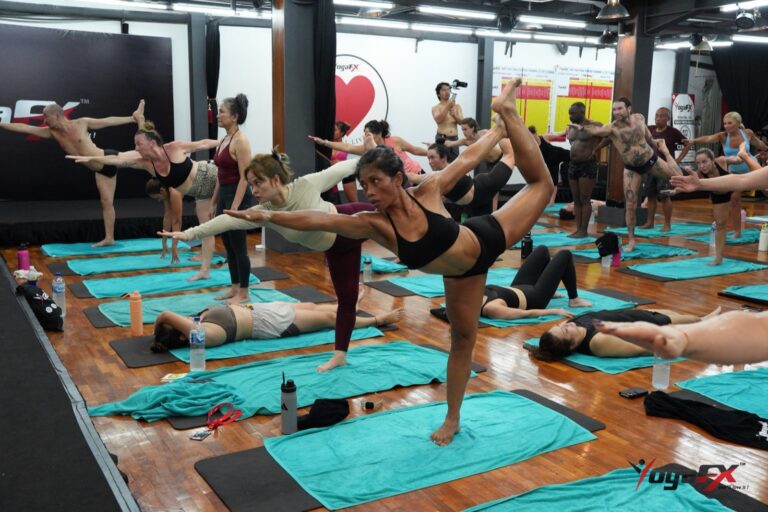 Teacher Training Guides11 min read14 Nov 2026
International Yoga Sports Federation and Yoga as a Sport: What Recognition Requires
Read article ↗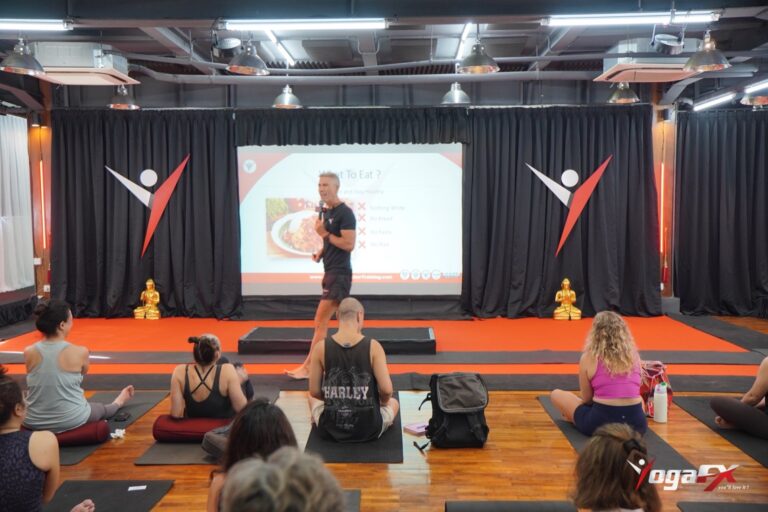 Teacher Training Guides11 min read13 Nov 2026
Sauna After Hot Yoga? What Core Temperature Data Suggests
Read article ↗ Teacher Training Guides10 min read13 Nov 2026