
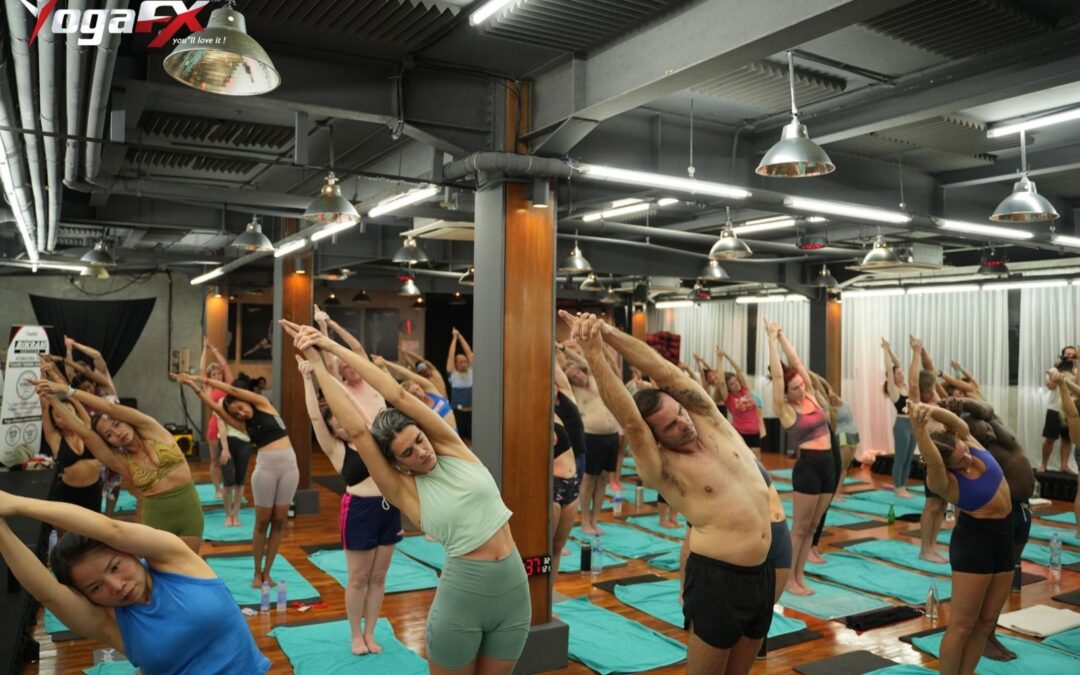
Bishnu Charan Ghosh (1903 to 1970) was a Calcutta physical culture teacher who founded a college of physical education in 1923 and was the younger brother of Paramahansa Yogananda. Sources name him as a root of the Hot 26&2 method. Here’s what they document, what they leave open, and how to use that at home.
In this article11 sections
- Bishnu Charan Ghosh in Five Documented Facts
- Bishnu Charan Ghosh Timeline: Six Dates in One Graphic
- Muscle Control First: What Bishnu Charan Ghosh Taught
- Bishnu Charan Ghosh and Yogananda: Brothers, Not One School
- From Bishnu Charan Ghosh to Bose to Bikram: Who Taught Whom?
- Why the Bishnu Charan Ghosh Story Matters Before You Enrol
- What Science Adds to the Bishnu Charan Ghosh Story
- Bishnu Charan Ghosh Lessons for Home Study
- What Students Say After Learning With YogaFX
- Learn the Method Online With YogaFX
- FAQ
Bishnu Charan Ghosh in Five Documented Facts
Start with what the sources agree on. We opened each page linked below before writing this guide. We’ll flag any claim that rests on a single source.
- Born in Lahore, died in Calcutta. The Wikipedia biography gives 24 June 1903 and 9 July 1970, so he lived to 67.
- Youngest of eight children. His older brother, Mukunda Lal Ghosh, became known worldwide as Paramahansa Yogananda.
- Founder of a college. In 1923, at age 20, he founded the College of Physical Education in Calcutta. The interview in The Week gives the same year.
- Co-author of a strength book. Muscle Control and Barbell Exercises appeared in 1930, written with K.C. Sen Gupta.
- Teacher abroad, on one source. Wikipedia says he taught at Columbia University in 1939 and toured Japan in 1968. It cites one reference for both, so treat them as likely, not proven.
One question has no dated answer on any page we opened: who first put the 26 postures in their present order. Treat that silence as information. It sets the limits for everything that follows.
Mr. Ian Terry, E-RYT 500, is the Founder and Lead Instructor at YogaFX. He has more than 12,000 teaching hours, and he trained for five years, from 2014 to 2019, alongside the founder of the Bikram Hot 26&2 method. He asks students to learn history the way they learn a posture: slowly, and with a check at every step.
Bishnu Charan Ghosh Timeline: Six Dates in One Graphic
Dates are easier to trust side by side. The graphic below marks one date, 1939, as single-source, so you can see how firm each point is.
Muscle Control First: What Bishnu Charan Ghosh Taught
Bishnu Charan Ghosh began as a strength teacher. Ida Josephine Pajunen of SOAS University of London wrote in the Journal of Yoga Studies in 2024 that his first book, from 1930, does not include asana. She describes muscle control and barbell work, with some hatha yoga elements repackaged as “muscle control.”
Wikipedia adds that the Bishnu Charan Ghosh book leaned heavily on a 1913 book of the same name by the strongman Maxick. So the roots are strongman training and body control, not a meditation manual.
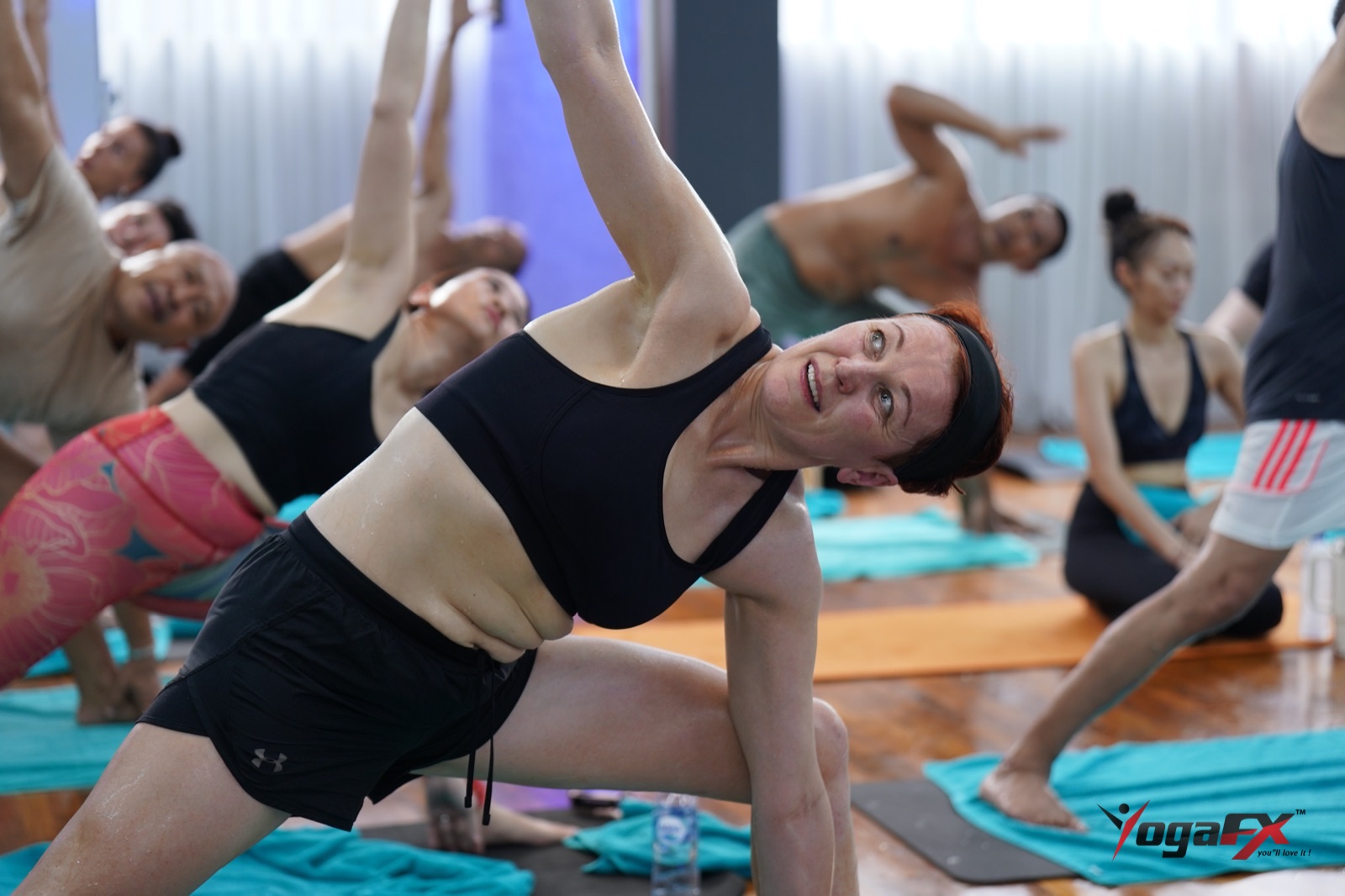
The paper tells the story of Bishnu Charan Ghosh in three steps, and each one helps a home student:
- Build the body. His earliest book is about muscles and barbells, not about postures.
- Add the posture. The paper traces a shift across the late 1930s and 1940s, from strength toward internal health, which brought asana to the front.
- Aim at health. The paper lists a 1961 English-language text on yoga and health, so his interest in yoga as a health practice grew over time.
That order is a useful study habit, whatever the exact history: body first, posture second, words third. Wikipedia says the college still runs today under the Ghosh family name, which shows how long this physical culture tradition has lasted.
Bishnu Charan Ghosh and Yogananda: Brothers, Not One School
Both Wikipedia and the journal paper confirm the family tie between Bishnu Charan Ghosh and his famous brother. The paper adds that his older brother influenced him, and that his 1930 book quotes Yogananda as founder of the “Yogoda system” of physical culture.
Jerome Armstrong, author of Calcutta Yoga, goes further in the interview in The Week. He says Ghosh trained in yoga asanas in the 1910s through his brother, and taught them to his student Buddha Bose around 1930. That is one researcher’s account, so we present it as his.
The sources prove a family bond. In the pages we opened, they do not prove that the two brothers ran one teaching lineage, and a careful writer keeps those two statements apart. For the wider cast around Ghosh, see our guide to famous male yoga teachers and the methods you can study online.
From Bishnu Charan Ghosh to Bose to Bikram: Who Taught Whom?
Two more names appear in every lineage story. Buddha Bose is described as Ghosh’s devoted student. The sources disagree on his family tie: Wikipedia calls him Ghosh’s adoptive nephew, while The Week says he married Ghosh’s daughter. The 2024 paper lists his 1939 English manual, Key to the Kingdom of Health Through Yoga.
Bikram Choudhury and the age-five claim
Bikram Choudhury is the second name. Wikipedia says he claimed to have been taught by Ghosh from the age of five, then says he did not become a regular student at the gymnasium until 1962, at age 18. A footnote in the journal paper says he studied with Ghosh briefly, and that his system uses postures from the Bengali sources in a fixed sequence in a heated room.
Six claims, graded
The table grades common claims the way we grade research on this site. Use it as a quick filter before you repeat a story.
| Claim | Evidence grade | What the sources say | How to use it at home |
|---|---|---|---|
| Ghosh and Yogananda were brothers | Documented | Wikipedia and the 2024 paper agree. | State it as a fact. |
| Ghosh founded a Calcutta college in 1923 | Documented | Wikipedia and The Week give the same year. | State it as a fact. |
| Ghosh taught at Columbia in 1939 | Single source | Wikipedia cites one reference. | Say “reportedly.” |
| Bose was Ghosh’s nephew or son-in-law | Sources differ | Adoptive nephew (Wikipedia) or married his daughter (The Week). | Say “close family and student.” |
| Bikram studied with Ghosh from age five | Disputed | Wikipedia reports the claim, then dates regular study to 1962. | Do not repeat it as fact. |
| Ghosh created the 26 postures | Not found | No source we opened gives a date or a posture-by-posture chain. | Say “a root of the method.” |
How much of the sequence came from Bishnu Charan Ghosh, and how much changed later, is still debated. Anyone who offers a tidy chain from one man to the next is simplifying.
If you want the same history told by a studio that teaches the class daily, read how a Seminyak studio tells the Ghosh story. For how researchers began measuring the method afterwards, read our Bikram yoga history and the science post.
Why the Bishnu Charan Ghosh Story Matters Before You Enrol
Most students ask about lineage for one practical reason. They want to know whether the class they are about to join, or the course they are about to buy, stands on firm ground. The honest answer has two halves.
What the history explains
It explains why the method is body-first. A teacher raised in Calcutta physical culture cared about strength, flexibility and control before he cared about philosophy. That helps you understand why a fixed sequence asks so much of the legs, the spine and the breath.
It also explains why the stories grow tall. In The Week, Armstrong says some feats linked to Ghosh’s circle sound too fantastic to believe, though he says photographs exist. Bold stories travel well, and footnotes do not.
What the history does not explain
It does not tell you how good a particular teacher is today. A famous name in the background does not replace clear instruction, safe heat practice and honest limits in the room. It also does not prove that any health benefit comes from the lineage itself.
Use the history for context, then judge a course on what you can check:
- Who teaches it, and how many hours they have taught.
- What you learn, in the order you learn it.
- Which sources the teacher cites, and whether you can open them.
- How the course handles heat safety, including when to stop.
A course that welcomes those questions is usually a course you can trust. It’s the same habit the Ghosh story teaches: ask for the date, ask for the document, and say plainly when the record runs out.
What Science Adds to the Bishnu Charan Ghosh Story
The history of Bishnu Charan Ghosh tells you where a method came from. Research tells you what it may do. The two answers are different, and the science is more modest than most websites suggest.
Strength work is a modern guideline too
The US Centers for Disease Control and Prevention says adults need at least 150 minutes of moderate-intensity activity a week. It also says adults need muscle-strengthening activity on at least 2 days a week. That is general advice, not a claim about any yoga class. Still, it shows why a strength-minded approach is not old-fashioned.
The heated yoga depression trial
Researchers at Massachusetts General Hospital ran an eight-week randomised trial, published in the Journal of Clinical Psychiatry in 2023. Per the Harvard Gazette report, 80 adults with moderate to severe depression were randomised, and 33 yoga and 32 waitlist participants were analysed. The yoga group took 90-minute Bikram classes in a 105°F (40.6°C) room.
The result: 59.3% of the yoga group had a 50% or greater drop in depressive symptoms, against 6.3% of the waitlist group. Because this is a single trial, treat it with care. The researchers say future studies must compare heated with non-heated yoga, so the trial does not show that heat is the active ingredient. Our hot yoga depression study write-up explains how it was run and measured.
Yoga is not a treatment for depression or any other condition. Anyone with a heart condition or high blood pressure, anyone who is pregnant, and anyone on medication should consult a healthcare professional before a heated class. Stop if you feel dizzy.
Bishnu Charan Ghosh Lessons for Home Study
Lineage stories travel fast online, and most arrive without a source. Before you repeat one, place its source on this ladder, from firmest to weakest:
- A dated primary record: a book, a college record or a dated photograph.
- A peer-reviewed paper: read the page, not just the headline.
- A reference work: useful, but check what it cites.
- An interview or news piece: treat each claim as its speaker’s own.
- A retold story with no source: hold it loosely, or leave it out.
Then match the grade to your wording. Say “documented” only for the top two rungs. Say “reportedly” for the middle, and say nothing for the bottom.
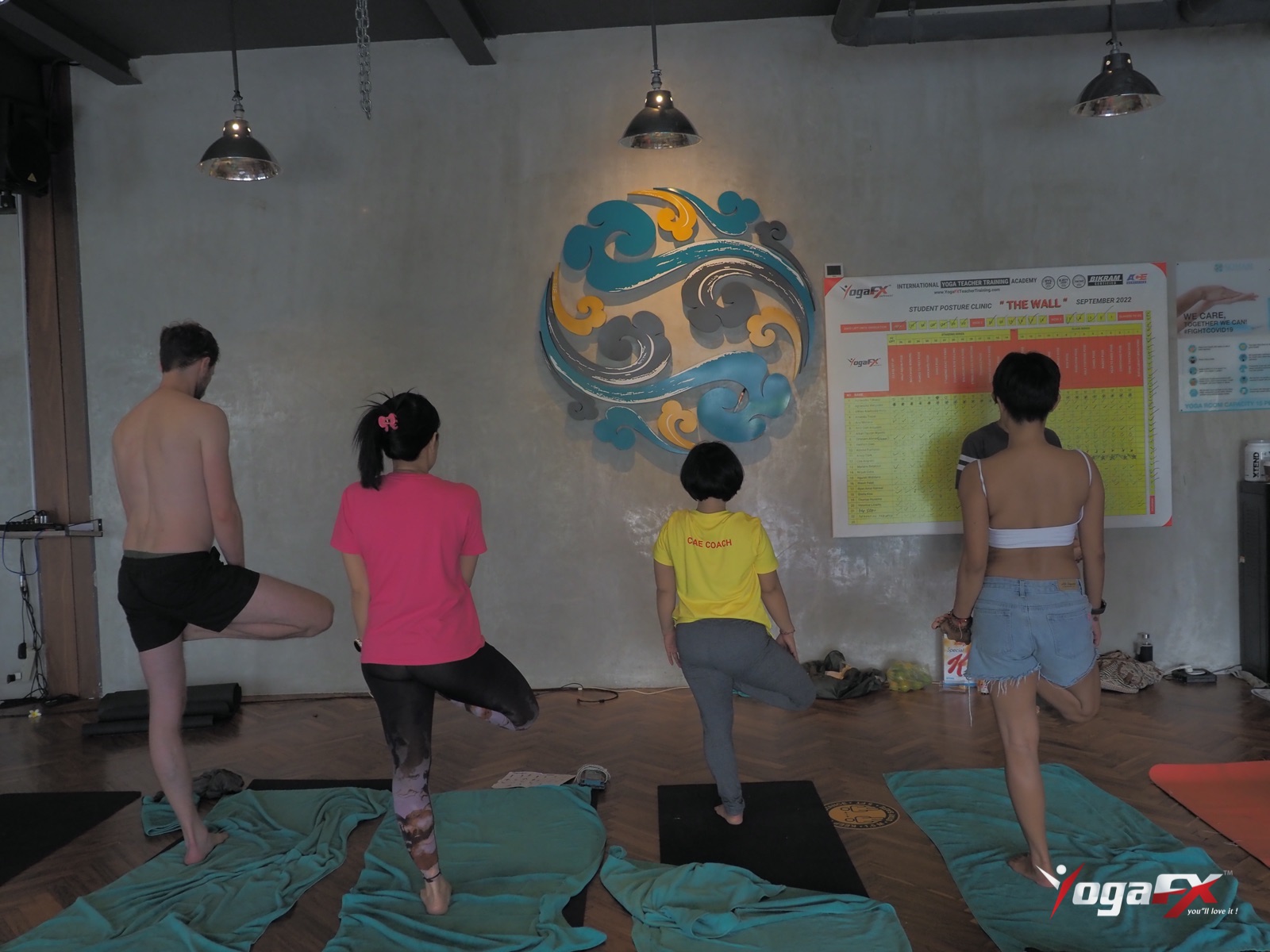
Once the Bishnu Charan Ghosh history is graded, put it to work. This four-week plan keeps the reading light and the practice steady:
- Week 1: read the three sources linked above and place five online claims on the ladder.
- Week 2: do strength work on two days, as the CDC page describes, at a level your doctor agrees with.
- Week 3: read the first posture cues in our guide to learning the Bikram yoga dialogue from home, and say them aloud.
- Week 4: record a five-minute phone clip of yourself giving one posture cue, then watch it back and note one fix.
None of this needs the Bishnu Charan Ghosh story to be perfect. It needs you to know which parts are firm, and it’s fair to say so when you teach.
What Students Say After Learning With YogaFX
Dates only go so far, so here are students in their own words. These are in-person class reviews from the YogaFX YouTube channel, recorded in 2018, not reviews of the online course. None of the three gave a name on camera.
One of the best instructors I’ve ever come across. Loved it, loved it, loved it. Thank you.
A trainee in our YouTube review, 2018
Very good, the best ever!
A trainee in our YouTube review, 2018
In a third 2018 video, a student thanked the teacher, called the session amazing and asked the team to come back to Dubai (watch the review). You can watch the first of these reviews below.

Learn the Method Online With YogaFX
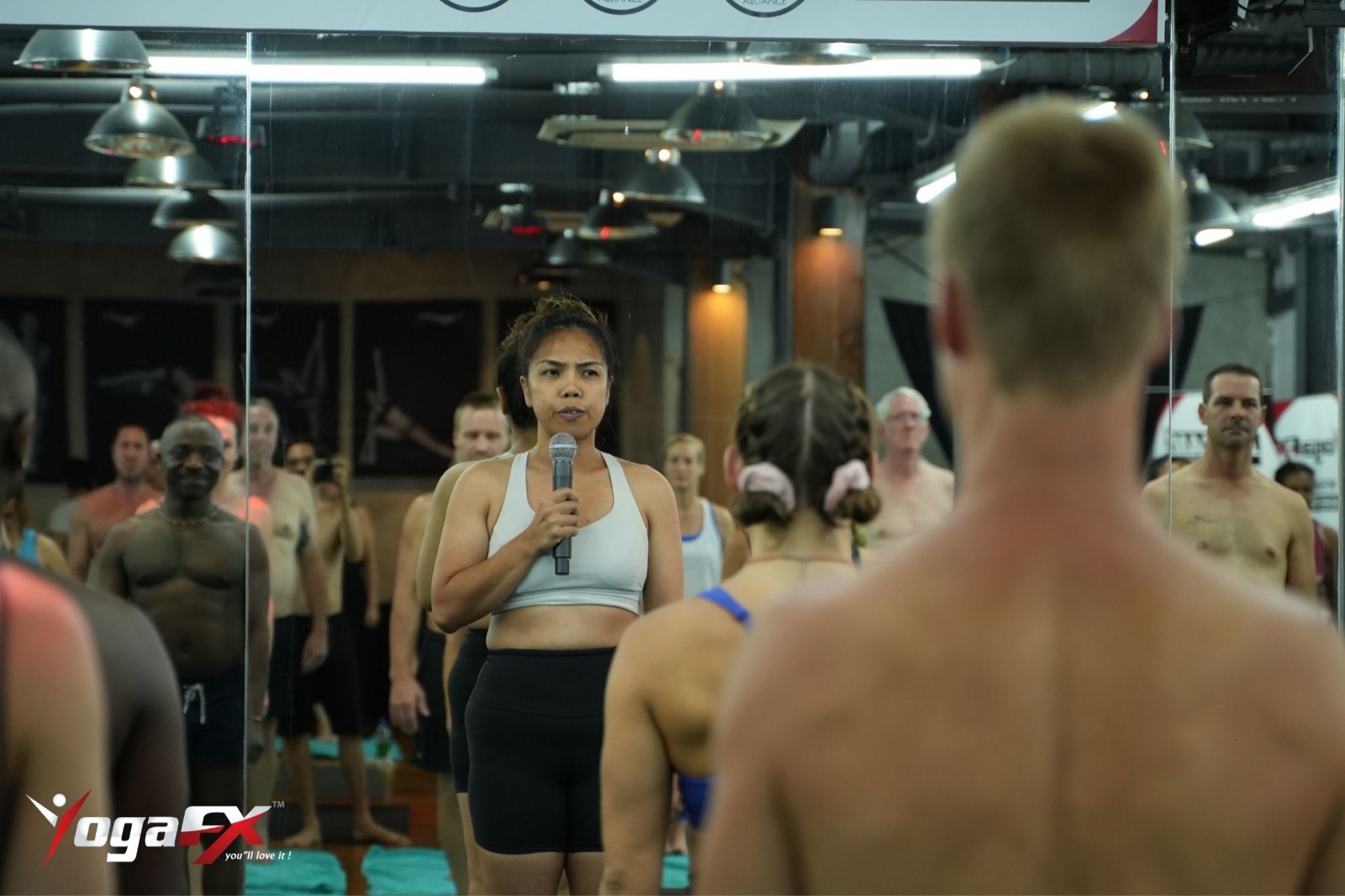
Knowing where a method comes from is a good first step toward teaching it. The next step is learning the sequence and the scripted words yourself. Our online hot yoga course lets you study the 26&2 sequence and the scripted dialogue from home, at your own pace.
The online course costs USD 329, or 4 x USD 82. Check the current price and what is included on the course page before you pay, and use the source ladder above on any claim, ours included.
This article is part of our complete guide to what hot yoga is. Related reading in Bikram and Hot Yoga Explained: Hot Yoga vs Pilates: Honest Evidence for Men (80% vs 54%) and Bikram Yoga History and the Science: When Researchers Started Measuring Hot Yoga.
FAQ
Who is Bishnu Charan Ghosh?
Bishnu Charan Ghosh (1903 to 1970) was an Indian physical culture teacher, born in Lahore, who worked in Calcutta. He founded the College of Physical Education there in 1923 and was the younger brother of Paramahansa Yogananda. Sources link him to the roots of the Hot 26&2 method, though not as its proven author.
How old was Bishnu Charan Ghosh when he died?
He was 67. Wikipedia gives his birth as 24 June 1903 in Lahore and his death as 9 July 1970 in Calcutta. Check the exact days against that biography before you quote them, because the second source we opened, The Week, confirms only the birth year.
What was Bishnu Charan Ghosh’s cause of death?
None of the sources we opened state a cause of death. The Wikipedia biography gives only the date and his age, and the Week interview, as far as we could see, does not mention it. If a website gives a cause, ask for its document before you repeat it, and treat an unsourced claim as unproven.
Did Bishnu Charan Ghosh write a book on muscle control?
Yes. Muscle Control and Barbell Exercises appeared in 1930, co-written with K.C. Sen Gupta. A 2024 Journal of Yoga Studies paper says it contains no asana, and Wikipedia says it leaned heavily on Maxick’s 1913 book of the same name. So it is a strength book, not a posture manual.
Did Bishnu Charan Ghosh create the 26 poses?
No source we opened says so. Wikipedia and a 2024 journal paper link Bikram yoga to Ghosh’s teaching, but neither gives a posture-by-posture chain. Call him a root of the method, not its author. YogaFX runs independent training, not official Bikram Choudhury Teacher Training.
Still have questions? Message Mr. Ian and the YogaFX team on WhatsApp and we will answer them personally.

Founder and lead trainer of YogaFX International Yoga Teaching Academy, with more than 12,000 hours of teaching. He trained for 5 years, from 2014 to 2019, with the founder of the Bikram Hot 26&2 method.
Published · Last reviewed and updated
You may also like
Explore all articles Bikram and Hot Yoga Explained12 min read16 Nov 2026
Hot Yoga vs Sauna: How Heat Studies Compare Moving and Sitting
Read article ↗ Bikram and Hot Yoga Explained11 min read10 Nov 2026
Hot Yoga vs Regular Yoga: Heated vs Room Temperature Trials
Read article ↗ Bikram and Hot Yoga Explained11 min read23 Nov 2026