
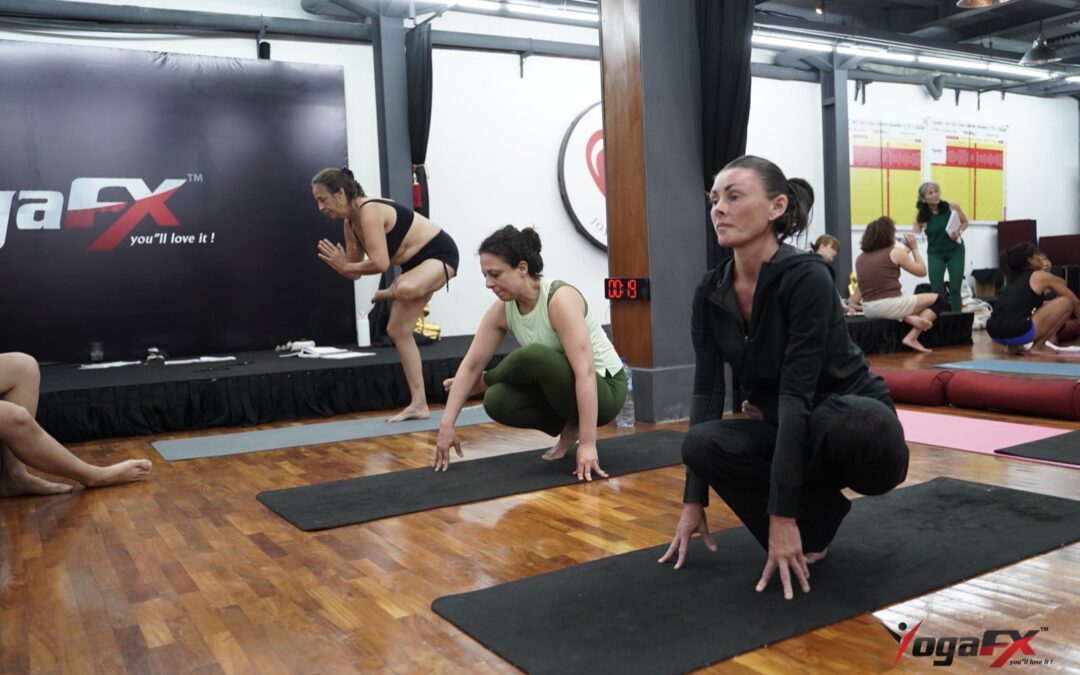
Hot yoga heart rate is easiest to read against your own maximum. Mayo Clinic puts moderate exercise at 50% to about 70% of maximum heart rate, and vigorous exercise at 70% to about 85%. Your maximum depends on age and fitness, so these zones give you a starting point.
Hot Yoga Heart Rate: What the Zones Mean
A heart rate zone is a band of beats per minute that matches a certain effort. Low effort sits near rest. Moderate effort is steady and conversational. Vigorous effort is hard enough that talking in full sentences becomes difficult. Heat adds a second layer on top of effort, which is why a number on a watch can be hard to interpret without a reference point.
Hot yoga heart rate zones only help if you know your own top end. Most people never measure it, so they use a rough estimate. The formula on the Mayo Clinic exercise intensity page is 208 minus 0.7 times your age. It is a population estimate, not a test, and it can be off by a good margin for any one person. Treat it as a starting line.
A worked example for a 40-year-old
Take a 40-year-old practising at home. The estimated maximum is 208 minus 28, which gives 180 beats per minute. Using the Mayo Clinic ranges, the moderate zone runs from about 90 to 126 beats per minute, and the vigorous zone runs from about 126 to 153 beats per minute.
A heart rate that sits in the middle of the moderate band suggests steady work. A heart rate that climbs past 153 and stays there for long stretches is a signal to ease off, slow the pace or rest in child's pose.
The same logic works for any age, and it works for a hot yoga heart rate check at home as well as in a studio. Do the sum once, write the two bands on a card, and keep the card near your mat. You do not need a fitness lab. A chest strap or a wrist monitor will do the counting, and the card does the interpreting.
What the Heated-Room Study Actually Measured
Most hot yoga claims online come from anecdotes. One of the more useful studies is a crossover trial published in the International Journal of Exercise Science in 2020 by Lambert and colleagues. Sixteen experienced practitioners completed a one-hour Bikram sequence twice, once in a heated room at 105°F and once at room temperature, at 74°F. The researchers measured heart rate, oxygen use and energy expenditure in each session.

So the headline result is the one that surprises people. The authors reported that mean oxygen use, peak oxygen use, the percentage of maximum oxygen use, heart rate and calories did not differ between the two conditions. The table below puts the reported means side by side.
| Measure (one-hour sequence) | Heated room, 105°F | Room temperature, 74°F |
|---|---|---|
| Mean heart rate (bpm) | 113 ± 8 | 109 ± 8 |
| Total energy expenditure (kcal) | 156 ± 7 | 151 ± 4 |
| Mean oxygen use (% of VO2max) | 25.3% ± 2.1 | 23.5% ± 1.3 |
| Peak oxygen use (ml/kg/min) | 14.9 ± 0.5 | 14.5 ± 0.4 |
Reading the table without over-reading it
Read the table slowly, because the hot yoga heart rate story depends on the detail. The heated session was slightly higher on every line, but the gaps are small and the study found no statistical difference between the two rooms. For you, that means the heat is not automatically doubling your workload. It can still make a class feel harder, and feeling harder is a real reason to watch your numbers more closely, not less.
A few limits matter here for anyone reading hot yoga heart rate results. The group was small, all sixteen were experienced, and the study did not measure core body temperature. So it tells us about heart rate and energy use in an experienced group, not about heat safety for beginners. Anyone who wants a broader picture should read the study with those limits in mind.
Measurement itself deserves a moment, because any hot yoga heart rate reading depends on the device. A monitor reads your pulse through skin or a chest strap, and both have limits. Movement, sweat and a loose strap can all distort a reading.
So take the number as a trend rather than a verdict, and check it once you are standing still in a safe position. If the reading looks wildly different from how you feel, trust the reading less than your body and stop to recover.
Heart Rate Zones at a Glance
50 to 70%
Moderate zone
Steady and conversational. A comfortable target for most of a class.
70 to 85%
Vigorous zone
Hard effort. Short bursts are fine for a healthy adult, long stretches are a cue to ease off.
109 to 113
Average beats per minute
Mean heart rate across one hour of heated or room-temperature practice in the 2020 study.
151 to 156
Calories in one hour
Mean energy use in the same study, with no significant gap between the two rooms.
How to Practise Hot Yoga Safely at Home
The studio and the living room are different rooms. At the online course hub we teach home practice as its own skill, and the first lesson is about the room, not the posture. Keep the temperature warm rather than extreme. Have water within reach. Never practise alone in a room you have not tested for heat and humidity.
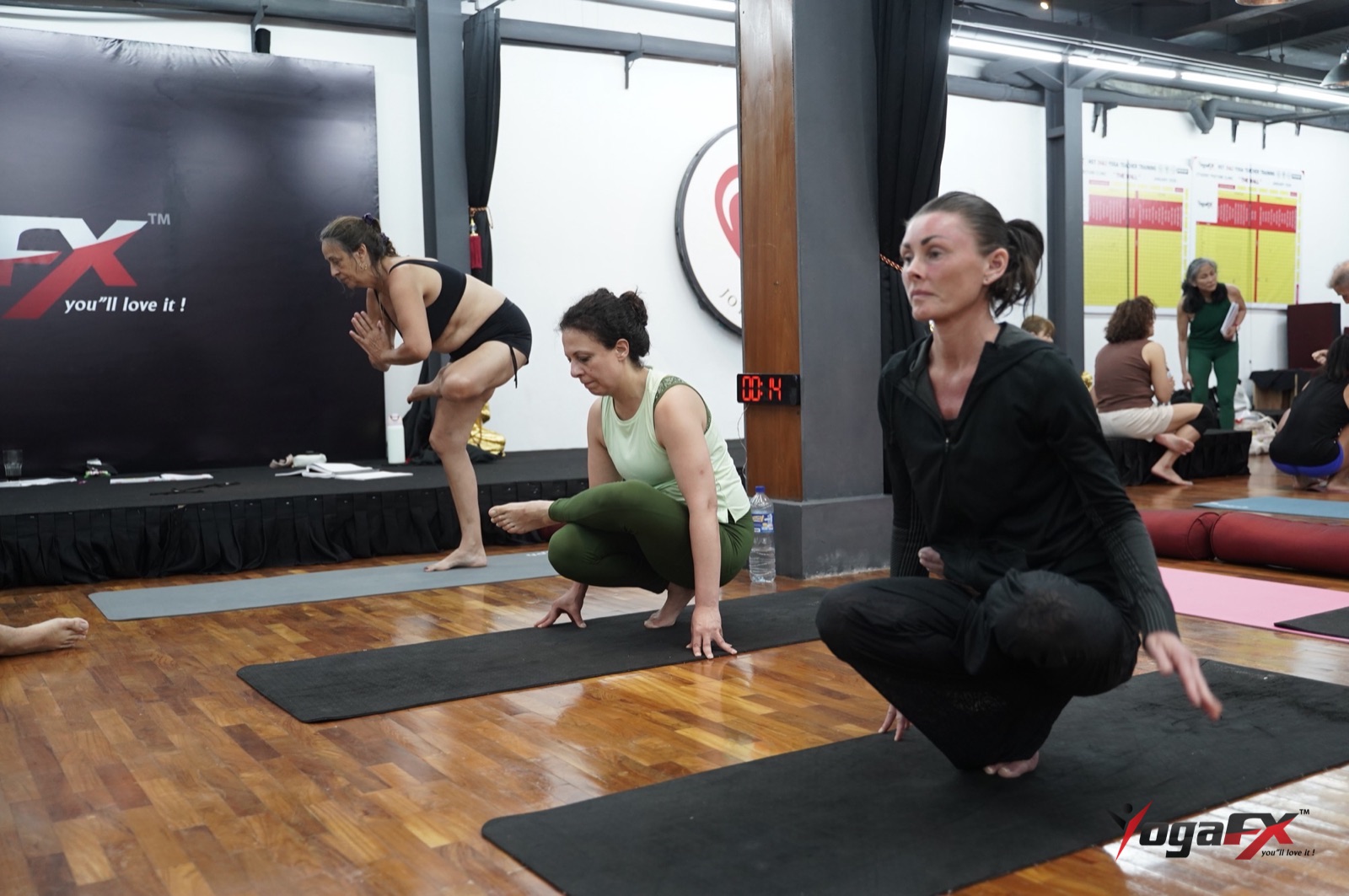
For context, the YogaFX studio class runs for 90 minutes at about 40°C with 40% humidity, and the room is warmed by natural tropical heat rather than electric heaters. That is a demanding setting. At home nobody is watching you, so the watching has to come from you.
- Warm the room, do not bake it. If you need a fan or a window open to stay comfortable, the room is probably too hot for a first session.
- Check your breath every few postures. If you cannot speak a short sentence, you are in the vigorous zone. Slow down or rest.
- Stop on dizziness, chest discomfort or nausea. These are not signs of a good class. Leave the heat and seek medical advice.
Sweat is the body's cooling system, and it tells you little about how hard you are working. Heart rate tells you how hard your heart is responding to the effort. Those are different signals, and only the second one belongs on your practice card.
Build a Practice Card You Can Actually Use
Write three lines on a hot yoga heart rate card, one per zone, and tie each line to an action you can take mid-class. The example below uses the 40-year-old from earlier, whose estimated maximum is 180 beats per minute.
| Zone (share of estimated maximum) | Beats per minute, age 40 | What to do in class |
|---|---|---|
| Moderate, 50% to 70% | 90 to 126 | Keep steady breath and hold postures with control. |
| Vigorous, 70% to 85% | 126 to 153 | Shorten holds, add rest between sets, and check your breath. |
| Above 85% for long stretches | Above 153 | Rest in child's pose, drink water, and leave the room if symptoms appear. |
Who Should Check With a Doctor First
Heart rate zones are a useful tool for healthy adults. They are not a substitute for medical advice. If you have heart disease, high blood pressure, a heart rhythm problem, diabetes, or you take medication that affects heart rate or sweating, speak with your doctor before a heated class.
Pregnancy is another reason to ask first. Your doctor can tell you which zones are safe for you, and that number may be lower than the ones above.
- Chest pain, pressure or tightness during or after practice.
- Fainting, near-fainting or a racing heartbeat that does not settle.
- Shortness of breath that continues once you have rested.
This article is for general information and does not replace advice from a qualified healthcare professional. Consult a healthcare professional before starting or changing any exercise programme, especially in heat.
Reading Your Numbers Over a Whole Practice
A single hot yoga heart rate reading tells you little. Heart rate rises and falls within a class, and the pattern over several sessions tells you more. Watch three things across a week: how quickly your heart rate settles in child's pose, whether the same posture feels easier after two weeks, and how your recovery feels the next morning.
Experience matters too. The Lambert group worked with practitioners who already knew the sequence, so their numbers describe experienced people, not beginners. Your own numbers will change as you learn the postures, which is one reason the card with your zones should be reviewed every few weeks rather than set once and forgotten.
What Students Say About the Challenge
Numbers do not tell the whole story. Students who train with YogaFX often describe the effort in their own words, and two of those reviews are worth reading here.
One trainee said, "it's nice to suffer a bit and to get like the benefits out of it because it's all good for your health guys" (Ozge, YouTube review, 2025). Another described the teaching this way: "what I had the most about you is pushing me beyond my limits" (Erinc, YouTube review, 2019).
Both comments are about effort and challenge, not about heart rate. That is the point. The zones above are the tool that lets you push without tipping into the wrong side of the line. A good teacher, or a good online course, helps you learn where that line sits for your own body.
Learn Hot Yoga Safety Step by Step With Mr. Ian
Mr. Ian Terry, E-RYT 500, has taught more than 12,000 hours and trained more than 1,500 teachers from over 80 countries since the YogaFX programme began in 2017. The online Yoga Alliance certified academy covers the physiology, the research and the home-practice habits, so students learn the reasons behind the heat as well as the sequence.
If you want to go deeper, see how the online course works. Earlier posts on this site cover the same research from other angles, including heart rate zones across a posture-by-posture class, what two lab studies measured for calories, and what blood pressure trials found. Read them alongside this page, not instead of it.
Keep a Simple Practice Log
A hot yoga heart rate log turns a feeling into a pattern. After each home session, write down the date, the room temperature if you know it, the posture where your breath got short, and how you felt the next morning.
Add the heart rate you noted at the hardest point and the lowest point you reached during rest. Those five lines take less than two minutes and they answer most of the questions people bring to a teacher.
After four or five weeks, look for three things. Does the heart rate at the hardest point drop for the same posture? Does your recovery in child's pose get faster? Do you feel more able to stay in the moderate zone for most of the class? If the answer to all three is yes, your practice is becoming more efficient.
If the answer is no, reduce the heat, shorten the session, or talk to your doctor before pushing further.
- Hardest-point heart rate. Does it fall for the same posture after a few weeks?
- Recovery speed. Does your heart rate settle faster in child's pose?
- Time in the moderate zone. Can you stay there for most of the class?
Where the Research Stops
It helps to be honest about what the evidence does and does not show. The 2020 Lambert study is useful because it compared a heated room with a room at normal temperature under matched conditions.
It is less useful for questions it never asked. It did not test beginners, it did not track core body temperature, and it did not follow people over months of practice. Any claim that goes beyond those measures should be treated with caution.
Mayo Clinic's zones for hot yoga heart rate come from general exercise guidance rather than from hot yoga trials. They are a sound reference for effort in any setting, and they are the reason this article uses them as the frame.
Where a claim about heat and heart rate needs more than that, the honest answer is that more research is needed, and that is a fair place to end the question for now.
FAQ: Hot Yoga Heart Rate Questions
Does hot yoga increase your heart rate?
Yes, heart rate during hot yoga usually rises, because the body works harder to move blood and cool itself. In the 2020 study, experienced practitioners averaged 113 beats per minute in a heated room and 109 at 74°F, with no significant difference. Check your own rise against your estimated maximum and the zones on this page.
Is hot yoga good for your heart?
Hot yoga can be part of a heart-healthy routine for many healthy adults, provided the effort stays in a range that suits you. It is not a treatment for heart disease, and it should not replace the care your doctor gives you. Treat hot yoga as one activity among several, and keep your doctor informed about any changes in your health.
What heart rate is normal during hot yoga?
There is no single normal number, because maximum heart rate falls with age. Mayo Clinic describes moderate exercise as 50% to about 70% of maximum and vigorous exercise as 70% to about 85%. Estimate your maximum with 208 minus 0.7 times your age, and ask your doctor for a different range if you have a condition.
Can you do hot yoga with a heart condition?
Ask your doctor before you start, especially if you want a hot yoga heart rate target above the moderate band. Some heart conditions, blood pressure medicines and rhythm problems change how the body handles heat and effort. Your doctor may set a lower heart rate ceiling, recommend a room-temperature class, or advise against heat altogether. Never use the general zones on this page as a medical plan.
Still have questions? Message Mr. Ian and the YogaFX team on WhatsApp at +62 811 3888 330 and we will answer them personally.

Founder and lead trainer of YogaFX International Yoga Teaching Academy, with more than 12,000 hours of teaching. He trained for 5 years, from 2014 to 2019, with the founder of the Bikram Hot 26&2 method.
Published · Last reviewed and updated
You may also like
Explore all articles Hot Yoga Science and Benefits13 min read19 Nov 2026
Hot Yoga Inflammation: What CRP Studies Report at Home
Read article ↗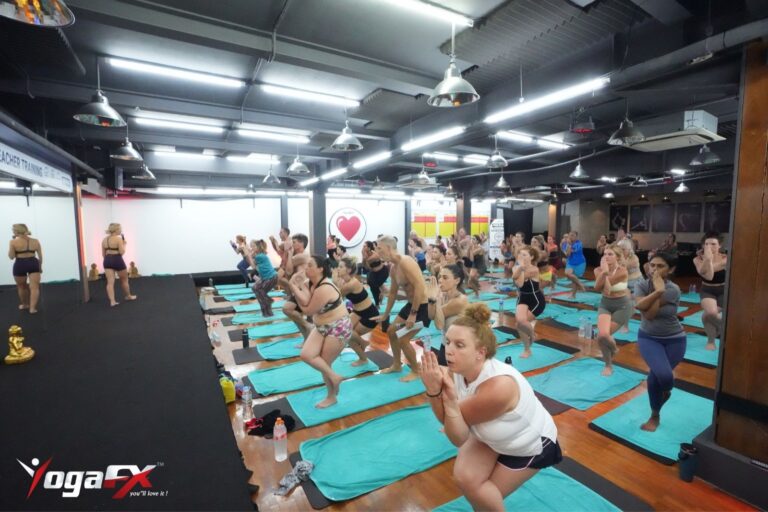 Hot Yoga Science and Benefits12 min read19 Nov 2026
Heat Therapy Benefits and How Hot Yoga Fits In
Read article ↗ Hot Yoga Science and Benefits11 min read19 Nov 2026