

Heat shock proteins are helper proteins that cells make more of when they are stressed by heat, toxins or illness. They keep other proteins folded correctly. Hot yoga raises body temperature, so many students ask whether it also raises heat shock proteins. Here is what the research shows, and what it does not.
This article is for education and is not medical advice. Consult a healthcare professional before starting heat-based exercise, especially if you have a heart, blood pressure or kidney condition.
What Heat Shock Proteins Are
The name comes from the lab. Researchers first noticed that cells exposed to high temperature began making a specific group of proteins in large amounts. They called them heat shock proteins, often shortened to HSPs. Later work showed the same family appears in response to many other stresses, including infection, oxygen shortage and toxic chemicals.
Think of a protein as a piece of origami. It only works when it folds into the right shape. Heat, stress and damage can unfold or tangle it. HSPs act as molecular chaperones. They hold unfolded proteins steady, help them refold, and tag badly damaged ones for clearance.
A 2022 review in MedComm describes HSPs as the cell's way of maintaining proteostasis, the balance of correctly folded proteins that keeps cells working.
Fact 1: They Are Already Part of Every Cell
You don't need to trigger heat shock proteins. Your body makes them all the time. The 2022 review by Hu and colleagues, published in MedComm, reports that under normal conditions HSPs make up 5 to 10 percent of the total protein in a cell. That is a large share, which tells you how central this job is.
The same review notes that heat shock proteins also play a part in cell signaling, the cell cycle and decisions about whether a damaged cell should die. Most of that work happens inside the cell, out of sight. So the useful question is not whether HSPs exist, but whether a stress such as exercise or heat pushes their levels up for a while, and whether that matters for health.
Fact 2: Heat Raises Them in a Controlled Trial
The clearest human evidence comes from a small randomized trial published in the Journal of Athletic Training, indexed as PubMed 22488284. Researchers studied 25 young, healthy adults, 13 men and 12 women, aged about 22. Each person sat in a heat chamber on one day and in a normal-temperature room on another, for 30 minutes each time.
What the Trial Measured
Blood samples were taken from a subset of 13 participants. The heat session raised core temperature, heart rate and stress hormones. It also raised HSP72, a member of the HSP70 family, by an average of 48.7 percent. For example, the control session changed none of these measures. Here is the full set of changes the abstract reports for the heat session.
| Measure | Change after 30 minutes of heat stress | Control session (no heat) |
|---|---|---|
| Rectal body temperature | Up 0.8 °C | No change |
| Heart rate | Rose to 131.4 ± 22.4 beats per minute | No change |
| Systolic blood pressure | Down 16 mm Hg | No change |
| Diastolic blood pressure | Down 5 mm Hg | No change |
| Norepinephrine (blood) | Up 58 percent | No change |
| Prolactin (blood) | Up 285 percent | No change |
| HSP72 | Up 48.7 percent on average (± 53.9) | No change |
Read the HSP72 row carefully. The average rise is large, but the spread is wider than the average itself. Some people responded strongly and some hardly at all. That is normal in small human studies, and it is one reason the result should be read as a signal, not a promise.
Fact 3: What the Studies Do Not Show About Hot Yoga
Here is the honest gap for heat shock proteins. The trial used a heat chamber and no yoga. Participants sat still. So it shows that heat can raise HSP72, one of the heat shock proteins, in healthy adults. It doesn't show that a 90-minute hot yoga class does the same thing, at the same level, for the same length of time.
A class combines heat with standing postures, balance, breath and muscle work. Each part could change the picture. The studies we could verify for this article do not measure heat shock proteins in hot yoga students, so we don't claim that hot yoga raises them. Anyone who says hot yoga "detoxes" through sweat is also making a claim the research does not support.
That doesn't make hot yoga pointless, but it means the claim about HSPs has to stay narrow. Any health benefit of hot yoga needs its own direct evidence before it is repeated as fact. Heat is a real stress that the body answers with protective proteins. Whether a particular practice gives you a meaningful benefit is a separate question.
Here is a simple way to sort what the evidence supports and what it doesn't yet.
- Supported: one heat-stress session raised HSP72 on average in healthy young adults.
- Supported: the same session raised core temperature and heart rate, and lowered blood pressure.
- Not shown: that a hot yoga class raises heat shock proteins in the same way.
- Not shown: any long-term health benefit from repeated heated sessions.
Fact 4: What This Means for Your Practice
Because the heat in a class is a real stress, the sensible approach is the same whether or not heat shock proteins rise. Drink water before and after class. Stop if you feel dizzy, nauseous or unusually weak. Do not push through chest pain or a racing heart. If you are new to heat, shorter sessions and a steady start are safer than a full 90 minutes on day one.
Mr. Ian Terry, the founder of YogaFX, teaches the Original Hot 26&2 Yoga method. He has more than 12,000 teaching hours, holds an E-RYT 500 credential, and trained for five years from 2014 to 2019 alongside the founder of the Bikram Hot 26&2 method.
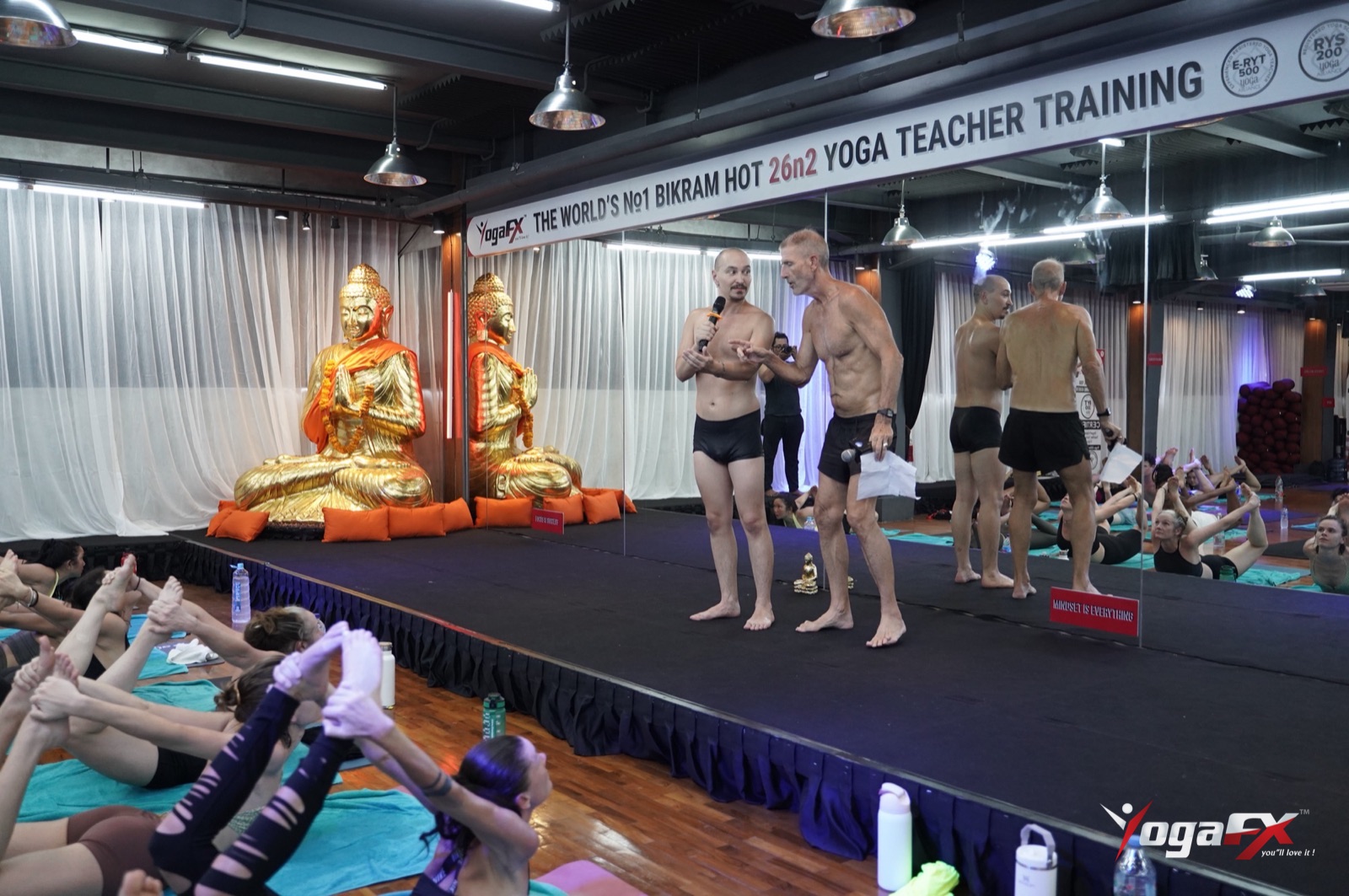
The method is built around 26 postures and two breathing exercises, delivered in a 90-minute class at about 40 degrees Celsius with 40 percent humidity. The room is heated by the tropical climate, not by an electric heater, and the class is spoken from a script with no music or demonstration.
Those details matter for the way you prepare at home, because the same routine can feel very different in a hot room.
If you want to learn the postures and the script before you walk into a heated room, our online hot yoga teacher training is designed for exactly that. You learn the sequence step by step and practice at home. You can see the program on our Hot Yoga Online page, and the 26&2 Poses guide shows the postures in order.

What Students Say About Learning Here
Two students who trained with us describe what the experience felt like. Amber, in a YouTube review from 2025, put it this way: "your support your love and care is like you can feel it". You can watch her review on YouTube.
Bronte, also a YouTube reviewer in 2025, wrote about the change in her own thinking during the course: "all you guys have inspired me so much and maybe I do actually want to teach". Her full review is on YouTube.
These are personal experiences, not measurements. They tell you what the training felt like for two people, not what any HSP level will do for you. Across Google, Yoga Alliance and YouTube, YogaFX has more than 550 published reviews.
What Heat Means in a Real Class
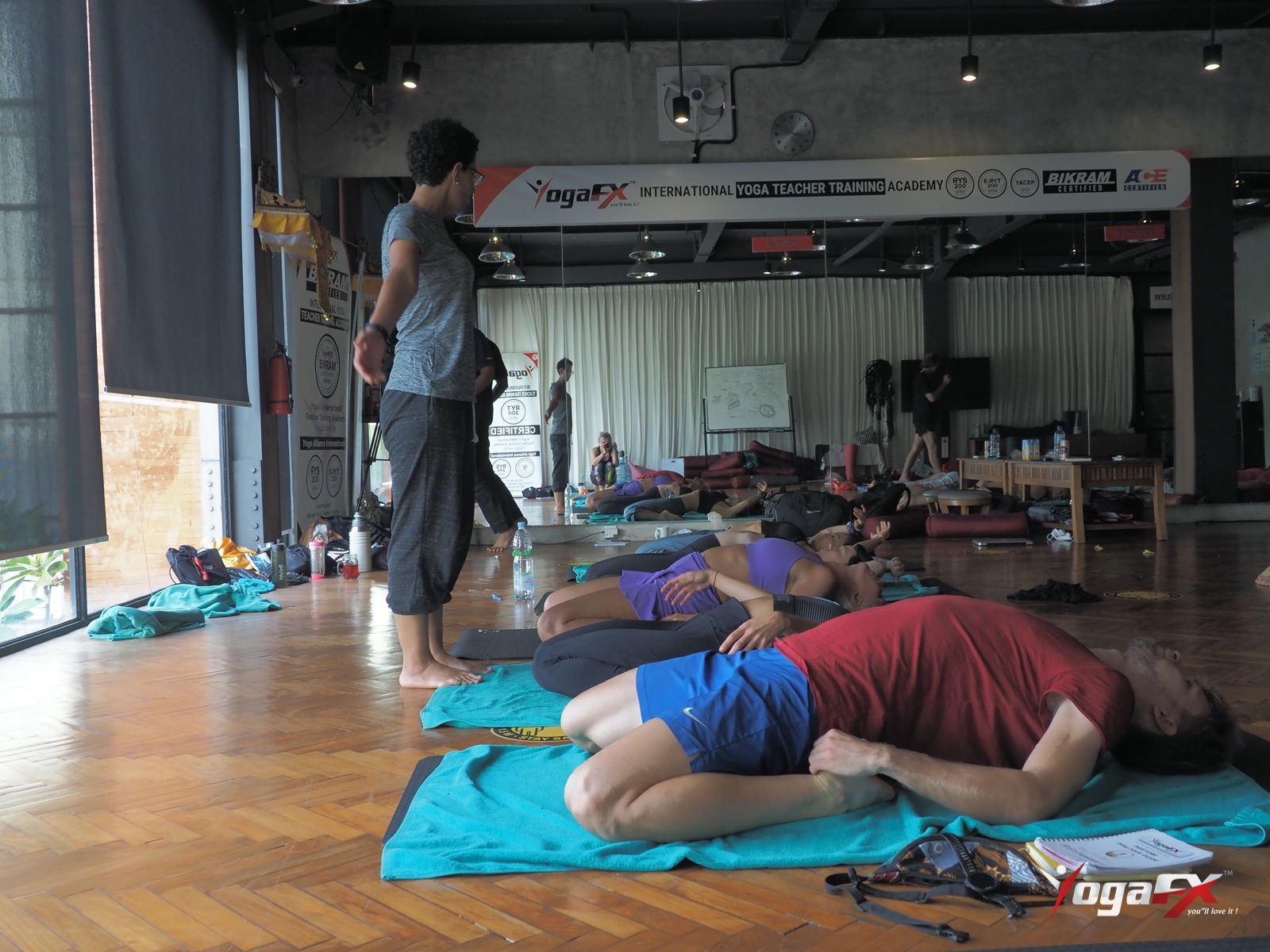
The YogaFX studio in Seminyak, Bali, is open from 06:00 to 22:00 every day. The studio classes are the place to feel the heat firsthand. Online training is the place to learn the sequence before you arrive, so the heat does not feel like a first-day surprise.
Keep your expectations realistic. A heated room is a training tool for strength, focus and endurance. The research on HSPs gives us a reason to take heat seriously, but it is not a reason to chase a hotter room. Practice at a level your body can recover from, and let the sequence do its work over weeks rather than in one session.
For a related read on practicing at home, see Men in Yoga Classes: 5 Honest Reasons to Start at Home, which suggests learning the postures and script at home before taking a drop-in class.
How to Read a Small Study Like This One
Headlines about heat and cells often jump from a single lab result straight to a health promise. A better habit is to check the study before you believe the claim. This trial is useful, but its size and design limit what it can tell us. Those limits are worth knowing, because they apply to many wellness articles you'll read.
Four Limits of This Trial
First, the group was small. Twenty-five people is enough to see a clear average change in a controlled setting, but it is not enough to know how the same heat would affect a 60-year-old with high blood pressure, or a runner training through a hot season.
Second, the people were young and healthy. Third, blood samples came from only 13 of the 25 participants. Fourth, the measurements were taken around one heated session. Nobody followed these people for months to see whether their cells, fitness or health changed in the long run.
None of this makes the study weak. It makes it specific. It tells us that a short, hard heat stress can push heat shock proteins up in healthy adults, and it reports the cardiovascular changes that came with it.
It doesn't tell us that the protein rise is the reason people feel better after class, and it doesn't give a dose for anyone. Keeping those two ideas apart, heat shock proteins on one side and health on the other, is the key skill.
The same skill helps with any claim about heat and health. When you read one, look for the answers to a few simple questions.
- Who was studied? Age, health status, fitness and sex all change how the body responds to heat.
- What was the exposure? Temperature, humidity, duration and whether the person was moving all matter.
- What was measured? A lab marker such as HSP72 is not the same as a health outcome such as fewer colds or better mood.
- Was there a control? The trial compared a heat session with a normal-temperature session on separate days.
- How long did the effect last? Short-term changes do not show long-term benefit, and a good claim names the time frame.
Why a Hot Class Is More Than Heat
A hot yoga class is a sequence of standing postures, floor postures, balance and breathing, all held in a warm room. Heat shock proteins are one small piece of that picture, not the whole story. The heat changes how the muscles feel and how long you can hold a position.
That is why many students find the same posture easier in one room and harder in another. The room is part of the method, not just a backdrop.
The Original Hot 26&2 Yoga method uses 26 postures and two breathing exercises in a fixed order. The script is spoken, so the teacher's voice guides the timing and the breath. There is no music and no demonstration in the room, which means students learn to listen and to trust their own body.
For a new student this can feel strange at first, and that is one reason preparation at home helps.
Because the class is long, around 90 minutes, the body has time to warm, tire and recover several times in one session. A teacher who knows the sequence can pace the practice so that the heat builds without taking you past your limit. That pacing is a skill, and it is one of the things our teacher training works on directly.
Heat Safety for Students in Their First Month
Whatever the research eventually shows about heat shock proteins, the everyday rules for heat stay the same. Heat stress is a real strain on the heart and circulation, and the trial recorded a rise in heart rate and a fall in blood pressure during the heat session. Treat those changes with respect. A few practical habits make a first month much safer.
- Drink water before class. Arrive hydrated rather than trying to catch up in the room.
- Start with a steady pace. Your first classes are about learning the postures, not proving your fitness.
- Leave the room if you feel unwell. Dizziness, nausea, headache or a racing heart are reasons to stop and rest.
- Tell your teacher about medical conditions. Heart, blood pressure, kidney and pregnancy questions should be raised before class.
- Rest between sessions. Your body adapts over weeks, so spacing out classes early on is normal.
If you have a condition that affects how you handle heat, speak with your doctor before you start. That conversation matters more than any article, including this one.
FAQ About Heat Shock Proteins and Hot Yoga
What are heat shock proteins?
Heat shock proteins are a family of proteins that every cell makes. They act as molecular chaperones, helping other proteins fold into the correct shape and clearing damaged ones. Cells make more of them under stress, such as high heat or infection. A 2022 MedComm review reports they make up 5 to 10 percent of a cell's protein normally.
What do heat shock proteins do in the body?
Their main job is maintaining proteostasis, the balance of correctly folded proteins that keeps cells working. They also help regulate cell signaling, the cell cycle and whether a badly damaged cell should be removed. Most of this work happens inside cells and isn't something you feel. Researchers are still working out which roles matter most for everyday health.
Are heat shock proteins good or bad?
They are normally helpful. Cells need them to protect proteins from stress and to recover from damage. Problems can arise when proteins keep misfolding. For a healthy adult, a short heat stress that raises HSP72 is a normal protective response, not a sign of harm. Anyone with a medical condition should speak with a doctor first.
Does hot yoga increase heat shock proteins?
The studies verified for this article don't show that. A randomized trial found that 30 minutes in a heat chamber raised HSP72 on average in healthy adults, but it didn't involve yoga. Hot yoga adds posture, balance and breath work, so results could differ. Until direct studies measure them in hot yoga students, the link is not yet shown.
Still have questions? Message Mr. Ian and the YogaFX team on WhatsApp and we will answer them personally. You can also visit our contact page.

Founder and lead trainer of YogaFX International Yoga Teaching Academy, with more than 12,000 hours of teaching. He trained for 5 years, from 2014 to 2019, with the founder of the Bikram Hot 26&2 method.
Published · Last reviewed and updated
You may also like
Explore all articles Hot Yoga Science and Benefits12 min read19 Nov 2026
Hot Yoga Blood Pressure: What Vascular Studies Report
Read article ↗ Hot Yoga Science and Benefits12 min read18 Nov 2026
Nitric Oxide Benefits: What Heat and Exercise Studies Show
Read article ↗ Hot Yoga Science and Benefits14 min read18 Nov 2026