

Hot yoga vs steam room comes down to one thing: how well your sweat can evaporate. In a studio hot room at 40% humidity, sweat still dries off your skin and cools you. In a steam room the air is already wet, so sweat mostly drips. That changes how each room loads your body.
Mr. Ian Terry, E-RYT 500, has more than 12,000 teaching hours in hot rooms. He trains teachers to read humidity before they read anything else. This guide to hot yoga vs steam room follows his teaching, and we keep that teaching apart from the published research so you can see which is which.
This is general information, not medical advice. Please consult a healthcare professional before you add any heat session to your week, especially if you have a heart condition, low blood pressure or you are pregnant.
Hot Yoga vs Steam Room: The Short Answer on Humidity
Hot yoga vs steam room looks like a choice between two sweaty rooms, but they cool you in different ways. A hot yoga room keeps the air warm and moderately damp, so some sweat evaporates and carries heat away. A steam room fills the air with moisture, so far less sweat can evaporate.
Here’s the quick version of hot yoga vs steam room, using only numbers we can back up:
- Hot yoga room: a standard YogaFX class runs at 40 degrees Celsius and 40% humidity, so your skin can still dry between postures.
- Steam room: Cleveland Clinic describes it simply as a room that uses humidity, so sweat has little room to dry.
- Traditional sauna: the same source puts humidity usually under 20%, which is why sweat dries fast there.
- Your job in each room: you move in the hot room and you sit in the steam room, so the heat load differs even before humidity enters.
So the real question in steam room vs hot yoga is not which room is hotter. It is which room lets your body shed heat while you are in it. For a wider comparison that adds a dry sauna, see this room-by-room breakdown from our original studio site.
How Sweat Cools You, and Why Wet Air Slows It Down
Sweat doesn’t do anything for your temperature while it sits on your skin. It cools you when it turns into vapour. That change takes heat from your body, which is why a breeze on wet skin feels cold.
The CDC’s NIOSH science bulletin on keeping workers cool states the basic fact plainly. Sweat evaporates off our skin which allows for heat loss and cooling. The same bulletin lists high air temperatures and humidity among the risk factors for heat illness. You can read it in full on the NIOSH page on staying hydrated and cool.
Why humidity decides hot yoga vs steam room
Air can only hold so much water vapour. When the air is already close to full, your sweat has nowhere to go. As a result, it runs off your skin without cooling you much, and your body keeps working to shed heat.
That is why humidity in hot yoga and in a steam room feels so different, even at the same temperature. A dry room at 40 degrees feels sharp but your sweat dries quickly. A wet room at the same number feels heavy because evaporation stalls. The NIOSH bulletin even notes that cooling clothing may not work when humidity is very high. In hot yoga vs steam room terms, sweat evaporation is the whole story.

Hot yoga vs steam room over a 90-minute class
A standard hot class runs for 90 minutes, so the room has to stay workable the whole time. At 40% humidity, a student’s skin still dries a little between postures. That gives the body one more way to shed heat while the legs and core do real work.
A steam room doesn’t ask for that work. You sit still, so the heat is the only load. In a steam room the main limit is time, because your body cannot cool itself well once the air is saturated. Short visits make sense for that reason, and it is the clearest hot yoga vs steam room difference we see in the studio.
Hot Yoga vs Steam Room: Humidity and Heat in Each Room
The table below puts hot yoga vs steam room, plus two saunas, side by side. It shows only figures we could check against a source we opened. Where a source gave no number, we say so instead of guessing.
| Room | Humidity | Air temperature | What happens to your sweat |
|---|---|---|---|
| YogaFX hot room | About 40% | 40 degrees Celsius | Some evaporates, so cooling continues while you move |
| Steam room | Humid, no figure given by our source | No figure given by our source | Little evaporates, so it mostly drips off |
| Traditional sauna | Usually under 20% | 65.6 to 90.6 degrees Celsius (150 to 195 F) | Dries fast, so cooling is quick but dehydration comes sooner |
| Infrared sauna | No figure given by our source | 43.3 to 57.2 degrees Celsius (110 to 135 F) | Warms you directly at a lower air temperature |
Read the table with one caution. Real rooms vary, so a steam room in your gym may differ from any average, and your hot yoga vs steam room choice should rest on the real settings. Ask the staff for the settings, or check a wall gauge, before you rely on a number.
Humidity and body heat: five numbers behind the comparison
Under 20%
Traditional sauna humidity
Dry air, so sweat dries fast.
About 40%
Hot class humidity
Damp, but sweat still evaporates.
102.0 F
Women, average peak core
About 38.9 C over 90 minutes.
103.2 F
Men, average peak core
About 39.6 C over 90 minutes.
7 of 20
Passed 103 F
Seven volunteers topped 39.4 C.
What a 90-Minute Hot Class Does to Core Temperature
Humidity matters because your core temperature climbs in a hot room, and the hot yoga vs steam room gap shows up in the data. The clearest data comes from a University of Wisconsin-La Crosse team led by Emily Quandt and John Porcari. The American Council on Exercise reported it in May 2015, and you can read the ACE write-up of the Bikram yoga core temperature study.
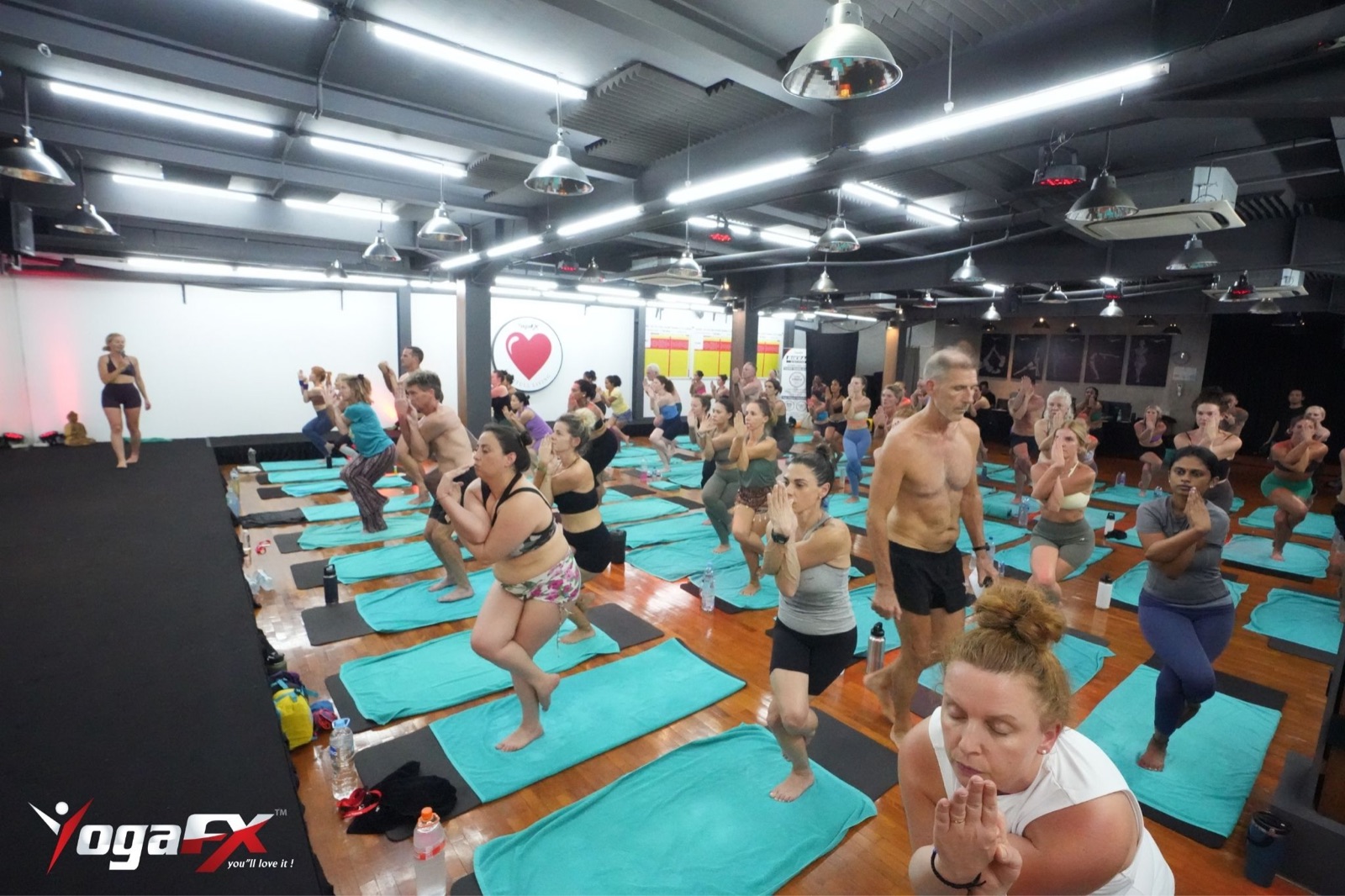
The researchers recruited 20 apparently healthy volunteers, seven men and 13 women, aged 28 to 67. Everyone took a 90-minute class in a room heated to 105 F with 40 percent humidity. The average highest core temperature was 103.2 F for men and 102.0 F for women.
- One man reached 104.1 F by the end of the class.
- Seven of the 20 volunteers went above 103 F at some point.
- All of them were regular practitioners, so they were familiar with the 26 postures and used to the heat.
Reading the hot yoga vs steam room numbers fairly
Twenty people is a small sample, and every one of them was experienced. A beginner has not adapted to the heat yet, so the strain could be higher. The study also tested a single class with no control group, so it cannot say how a steam room would compare.
It does show something useful for the hot yoga vs steam room question, though. Moving in warm, moderately damp air raises core temperature steadily, and that is a real physical load. A steam room adds heat to a body that is not working, so the two loads are not the same thing. That is why the hot yoga vs steam room question is about load, not just comfort.
Steam or Dry Heat: What Cleveland Clinic and Mayo Clinic Say
No study we opened compared a hot yoga class and a steam room head to head. So for hot yoga vs steam room we lean on two cautious medical sources and say plainly where they stop. Neither one tells you that wet heat beats dry heat, or the other way round.
What Cleveland Clinic says
Cleveland Clinic’s sauna guide, by family medicine provider Amy Zack, MD, says there is no clear indication that dry heat is better than wet heat, or the reverse. It also notes that heat raises your heart rate and sweating. It calls dehydration one of the biggest risks of sauna use. Read it at Cleveland Clinic’s guide to the benefits of a sauna.
What Mayo Clinic adds
Mayo Clinic’s page on infrared saunas adds a useful comparison. It says people like saunas because they cause reactions like those caused by moderate exercise, such as vigorous sweating and an increased heart rate. That’s a helpful reminder that sitting in heat isn’t rest for your heart. You can check it on the Mayo Clinic infrared sauna FAQ.
What the hot yoga vs steam room evidence shows
- Supported: heat raises heart rate and sweating in every room we looked at.
- Supported: sweat cools you only when it can evaporate, and high humidity is a risk factor for heat illness.
- Not shown: that a steam room helps you more or less than a dry sauna.
- Not shown: that a steam room replaces a class, or that a class replaces a steam room.
If you plan to add a dry or infrared cabin to your week, our guides on hot yoga versus infrared sauna and sauna after hot yoga cover the spacing questions in detail.
Humidity Targets for a Home Practice Room
Online students often ask what humidity a home room should have. We have no controlled study that sets a home target, so treat everything in this section as YogaFX teaching guidance, not a research result. Our approach matches the studio: start modest and watch how you feel.
Your home version of hot yoga vs steam room starts with the studio standard, which gives you a ceiling to respect. A YogaFX class runs at 40% humidity, and a home room should not go above that. A lower number is a safer place to begin, especially for a beginner who has not adapted to heat.
- Buy a hygrometer. A cheap wall gauge tells you the real humidity, because guessing from how the room feels is unreliable.
- Start lower than the studio. Begin with a warm room, not a hot one, and keep humidity at or below 40%.
- Move air. A fan or a cracked door speeds sweat evaporation, which is the cooling route the research describes.
- Skip the humidifier. Adding steam to a home room pushes you toward the steam room problem, with sweat that cannot dry.
- Keep water close and stop early. Sit down and cool off at the first sign of dizziness, headache or weakness.
Signs your home room has turned into a steam room
Your skin never feels dry between postures. Your mat stays slick. You feel heavy and sticky rather than warm. If you notice these signs, open a window, lower the heat and shorten the session. In short, let the air dry out before you continue. If you can’t get the humidity down, that session belongs in a steam room, not in a class.
New to heat? Go slowly for the first few weeks. You’ll adapt faster that way, and you won’t need to push.
Common Mistakes in the Hot Yoga vs Steam Room Debate
The hot yoga vs steam room question attracts loose claims. These are the ones we hear most, and what we tell students instead.
Mistake 1: treating sweat as a score
A wet towel doesn’t prove a good session. Sweat is a cooling system, and the amount depends on body size, fitness, hydration and the weather. Judge a class by your form, your breathing and how you feel afterwards.
Mistake 2: believing sweat does a cleaning job
We don’t make that claim, and the research on it is thin. Your liver and kidneys handle waste. Our guide to what sweat really does goes through it step by step.
Mistake 3: chasing a wetter room
More humidity does not mean more yoga. Because wet air slows sweat evaporation, a wetter room cools you less well. That makes a long class harder, not better, so steady settings beat extreme ones.
Mistake 4: skipping water because the room feels cool
You can lose fluid in any heated room. Cleveland Clinic names dehydration as one of the biggest sauna risks. So drink before you go in, sip when you need to, and rehydrate afterwards. You’ll feel the difference.
What YogaFX Trainees Say About the Heat
Numbers describe the room. Trainees describe what it is like to learn in it, and none of them needed a steam room to feel the change. These quotes come from video reviews recorded at the end of teacher training.
“It was the most challenging course I’ve ever done in my life but I’m so thankful that I’ve achieved it.”
Adam, YouTube review, 2024
Chelsea, in a 2019 video review, called her training life-changing and said it opened her mind to healing other people too (paraphrased from the video). Chelsea, YouTube review, 2019.
Katy, in another 2019 video review, described the people around her as the most supportive group she could ask for (paraphrased from the video). Katy, YouTube review, 2019.

Learn to Read a Hot Room, Online First
If you plan to teach, humidity becomes part of your job. You read the room, watch faces and decide when to cue a rest. Teachers who understand hot yoga vs steam room make safer calls, so we teach it directly. It isn’t a side topic.
Mr. Ian Terry, E-RYT 500, trained for five years, from 2014 to 2019, with the founder of the Bikram Hot 26&2 method. Since 2017, YogaFX has trained 1,500+ graduates from 80+ countries.
The YogaFX MasterClass is a 6-day hybrid. You study online first, then join an intensive in Bali. The next group checks in on Sunday 24 January 2027 and checks out on Friday 29 January 2027 at Soham Wellness Center in Seminyak.
It leads to Yoga Alliance RYT 200-Hour certification and the Bikram Hot 26&2 200-Hour International Yoga Certification. Early Bird pricing is US$1,899 (normally US$1,999), with instalments from US$250 a month and no interest. Our guide to what hot yoga certification should teach about heat safety shows what to look for, and you can explore the online hot yoga teacher training here.
FAQ
Is hot yoga humid or dry?
It sits in the middle. A standard YogaFX class runs at 40% humidity, which is damp but not saturated, so sweat can still evaporate and cool you. A steam room is far wetter. A traditional sauna is far drier, with humidity usually under 20% according to Cleveland Clinic.
What is the humidity level in hot yoga?
In a standard YogaFX class the room is held at 40 degrees Celsius and about 40% humidity. Studios differ, so ask any studio for its settings. At home, keep humidity at or below that studio figure, and measure it with a hygrometer instead of guessing.
Can I use a sauna and steam room on the same day?
Some healthy people do, but no study we opened tested it. Heat raises heart rate and sweating in both rooms, and dehydration is a main risk. Keep visits short, drink water, and leave at the first sign of dizziness. Ask your doctor first if you have a medical condition.
Does hot yoga dehydrate you?
Hot yoga makes you sweat, so you lose fluid and need to replace it. Drink before class, sip during it if you need to, and rehydrate afterwards. Cleveland Clinic names dehydration as one of the biggest risks of sauna heat. Stop and rest if you feel dizzy or faint.
Is a hot room different from a steam room?
Yes. A hot yoga room is warm and moderately damp, and you move for 90 minutes, so some sweat evaporates. A steam room is wetter and you sit still, so sweat mostly drips off. The workload, the cooling and the purpose of the two rooms all differ.
Still have questions? Message Mr. Ian and the YogaFX team on WhatsApp and we will answer them personally.

Founder and lead trainer of YogaFX International Yoga Teaching Academy, with more than 12,000 hours of teaching. He trained for 5 years, from 2014 to 2019, with the founder of the Bikram Hot 26&2 method.
Published · Last reviewed and updated
You may also like
Explore all articles ↗ Hot Yoga Science and Benefits10 min read17 Nov 2026
Hot Yoga Depression Study: How the Harvard Trial Was Run and Measured
Read article ↗ Hot Yoga Science and Benefits12 min read16 Nov 2026
Tired After Hot Yoga? Fatigue and Mood Studies Explained
Read article ↗ Yoga for Athletes and Yoga Sport12 min read16 Nov 2026