
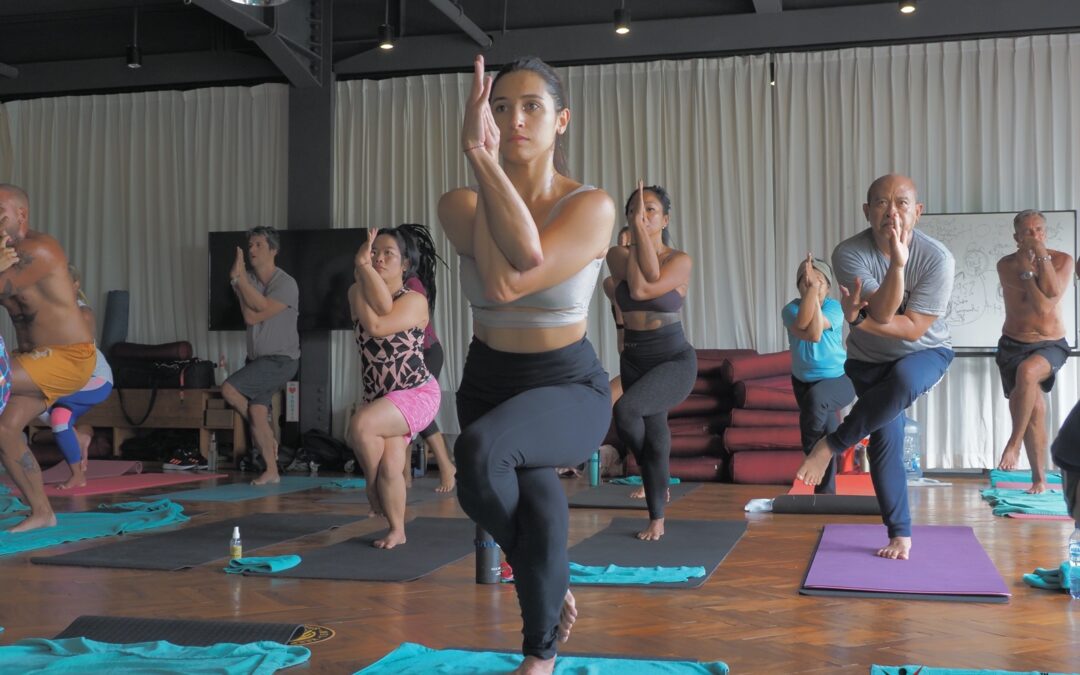
Eagle pose (Garudasana) is a one-leg balance. You sit low on a bent standing leg, wrap the other leg over it, cross your arms in front of your chest and fix your eyes on one point. You can learn the steps at home, then check your shape by filming yourself.
In this article12 sections
- Eagle Pose Steps You Can Rehearse at Home
- Set Up Your Room and Phone for Eagle Pose Practice
- What Your Clip Shows and the Fix to Try First
- Eagle Pose Benefits: What It Trains and What We Do Not Claim
- What Research Says About Balance, Gaze and Practice
- Four Home Drills Before Full Eagle Pose
- A Weekly Loop for Eagle Pose
- Eagle Pose in the Standing Series
- How the YogaFX Online Course Fits In
- What YogaFX Graduates Say
- Who Should Check With a Professional First
- FAQ
Most guides show the finished shape and stop there. The hard part online is that nobody tells you when you have drifted. This guide to eagle pose gives you seven steps you can rehearse, a phone-camera method, and a table that turns what you see into a fix. It also shows where the YogaFX Online Course fits.
A quick note first. This is general information, not medical advice. If you have a knee, hip, shoulder or balance problem, a recent injury, or you feel dizzy standing on one leg, speak to a healthcare professional before you practise. Do all the work below at room temperature, and keep the hot room for class.
Eagle Pose Steps You Can Rehearse at Home
Read the list once, then walk through eagle pose slowly. In class, the teacher's spoken dialogue gives the exact timing, and we do not reproduce that script here. Treat these steps as a map, not as the words. Stand near a wall for your first few tries.
- Stand tall. Feet together, weight even through both feet, chest lifted.
- Sit back. Bend both knees and lower the hips as if you were taking a low chair.
- Shift onto one leg. Press the standing foot into the floor and keep that knee bent the whole time.
- Cross the top leg over the thigh. Place it over the standing thigh, and hook the foot behind the calf only if it reaches.
- Wrap the arms. One elbow goes under the other, then the forearms and palms come together.
- Lift the elbows, drop the shoulders. The elbows rise to about chest height while the shoulders stay away from the ears.
- Sit a little lower and fix the eyes. Keep the back straight, choose one point and stay on it. Then unwrap slowly and rest before the other side.
Notice how each step protects the next. The bent standing leg gives the hips something to sit on, and the sitting hips give the wrap a steady base. The fixed gaze then keeps the whole shape quiet. Take one step out and eagle pose gets shakier.
If the foot will not hook behind the calf
That is normal, and it is still a good eagle pose. Rest the toes on the floor beside the standing foot and treat that as your shape for now. Forcing the hook twists the knee. The same goes for the arms: if the palms will not meet, press the backs of the hands together or hold opposite shoulders in a hug.
Set Up Your Room and Phone for Eagle Pose Practice
A mirror helps, but you cannot watch your knee, your shoulders and your eyes at once. A short clip can be paused and replayed. So filming your eagle pose is the nearest thing to a teacher's second look that you can set up alone.
- Side view. Lean the phone against a water bottle at hip height, about two metres away, and film each side once for 20 to 30 seconds.
- Front view. Move the phone to chest height and film the same two sides again.
- Same spot, same light. Use the same place on your mat each session, so clips compare fairly.
- No editing. Keep the first take. The messy clip is the useful one.
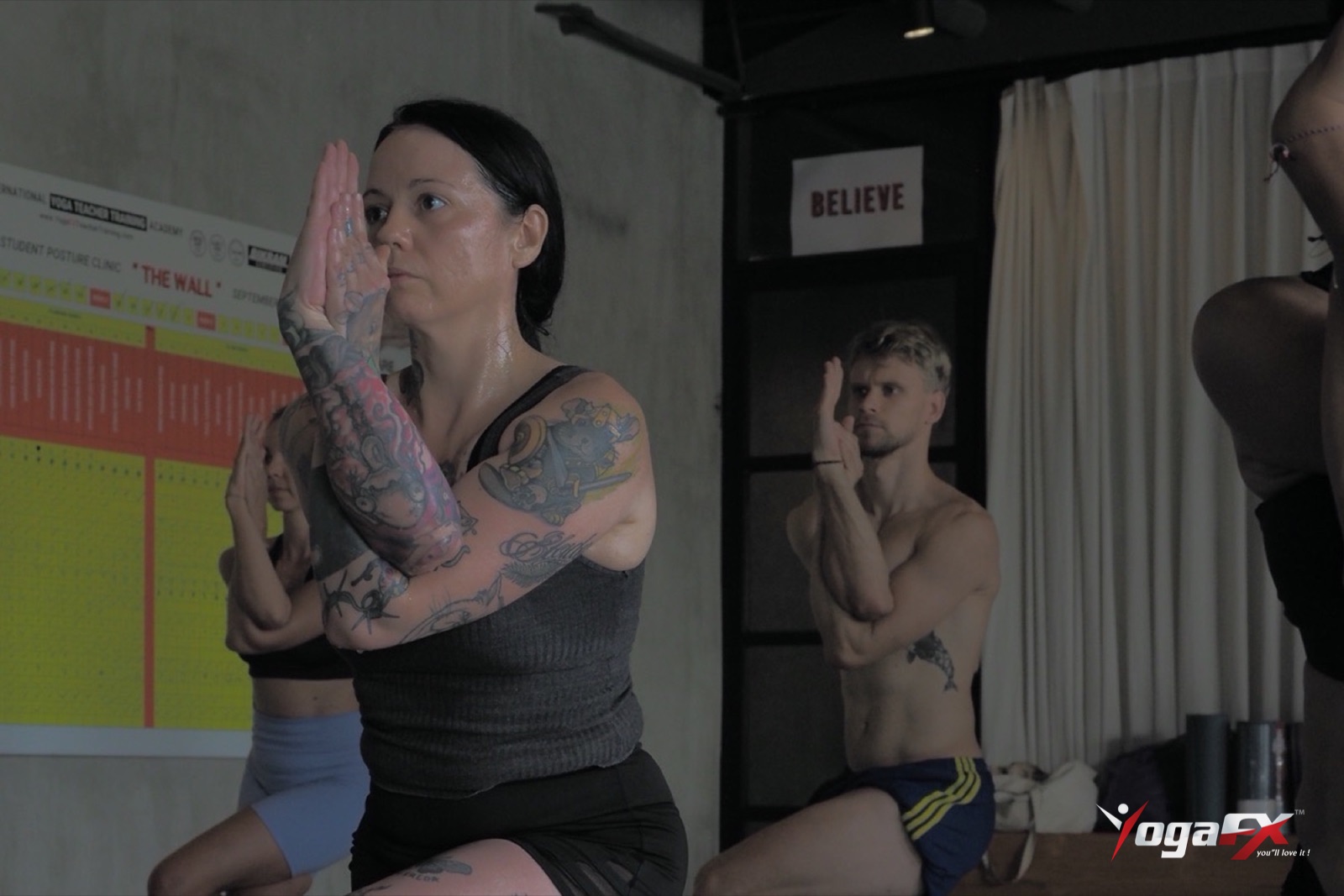
Watch each clip once with the sound off. Look for three things only: is the standing knee bent and steady, are the hips level, and are the shoulders down? Those three checks catch most of what a teacher would correct. Then ask what changed since last time, because a clip is only useful as a comparison.
What Your Clip Shows and the Fix to Try First
Use the table below as a lookup for eagle pose. Find what you see in the clip, read the likely cause, then try the cue in the last column. Change one thing per session, because two changes at once hide which one worked.
| What the clip shows | Best view | Likely cause | First fix to try |
|---|---|---|---|
| Standing knee straightens or caves inward | Side | Weight has drifted off the thigh | Bend deeper, point the knee over the second toe and sit back |
| Chest tips forward and the head leads | Side | Hips are too high, so the body leans to balance | Lift the chest, sit the hips back, look at one point at eye level |
| Shoulders creep toward the ears | Front | Held breath or a tight arm wrap | Slide the shoulder blades down and breathe out slowly |
| Top foot forced behind the calf and the knee twists | Front | Chasing the full wrap | Rest the toes on the floor and keep the thigh cross only |
| Falls to the same side every time | Front | Leaning away from the standing leg | Press the standing foot down and sit lower over it |
| Eyes wander and the whole body shakes | Front | No fixed point to steady on | Choose one spot at eye level and keep it for the whole hold |
| Elbows drop toward the belly | Front | Arms have lost their lift | Raise the elbows to chest height, even if the palms stay apart |
What the table is really telling you
Most fixes start at the standing leg, not at the wrap. That is the main idea of eagle pose. If the base is low and steady, the arms and the crossed leg have something to rest on. If it is not, no amount of tightening will save the shape.
Eagle Pose Benefits: What It Trains and What We Do Not Claim
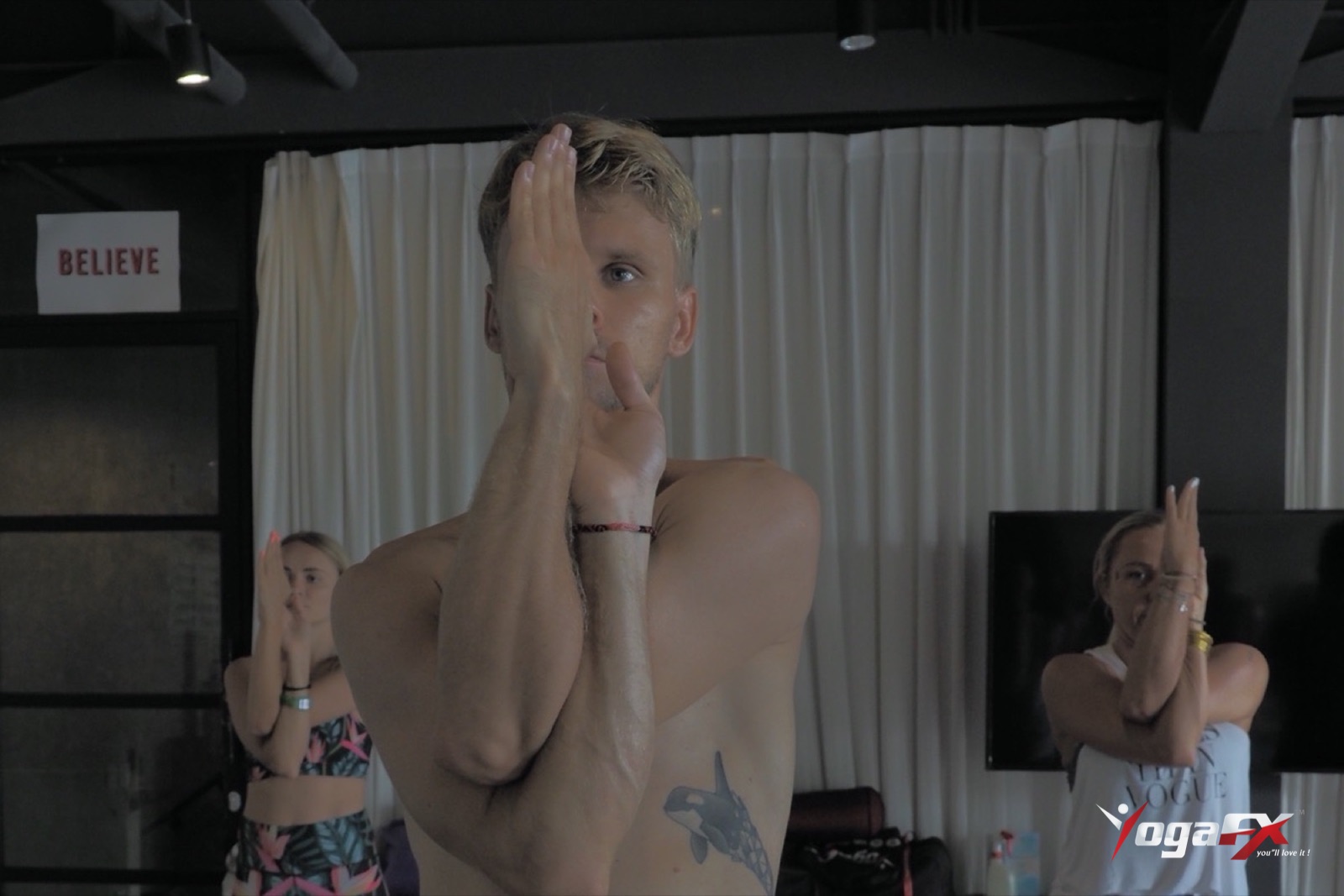
Eagle pose is a balance posture, a stretch across the outer hip and upper back, and a lesson in staying calm under load. We do not claim it treats any condition. We can describe what it asks of the body, and what trusted sources say about balance practice.
- Single-leg balance. The standing leg, ankle and hip all work to keep you upright.
- Outer hip stretch. The wrapped leg stretches the outer hip, which many students feel where they sit all day.
- Upper back stretch. Crossed arms open the space between the shoulder blades.
- Focus under load. Holding one point while the legs work is a small daily practice in keeping the mind on one thing.
What Research Says About Balance, Gaze and Practice
Research cannot tell you how fast you will learn this posture. It can explain why the base skill matters and why the eyes matter so much. Each source below has limits, so read the findings as context, not as a promise.
A plain one-leg stand: what the NHS suggests
The NHS describes a simple one-leg stand. Face a wall, touch it with your fingertips, lift one leg, keep the hips level and keep a slight bend in the standing leg. Hold for 5 to 10 seconds and repeat 3 times on each side. It also suggests doing balance exercises at least twice a week. See the NHS balance exercises page.
Eagle pose is a deeper version of the same idea, with a low seat and a wrap. So the NHS advice is a fair starting point for a home session: use the wall, keep the standing knee slightly bent, and build up slowly.
Yoga and balance in people aged 60 and over
A systematic review with meta-analysis, led by Youkhana and published in Age and Ageing, pooled six trials with 307 participants aged 60 and over. It found small improvements in balance (Hedges' g 0.40, 95% CI 0.15 to 0.65) and medium improvements in physical mobility. The authors say more research is needed to learn whether these gains reduce falls. Read the abstract on PubMed.
This was about yoga-based exercise in general, not eagle pose alone, and it covered older adults. So it supports regular balance practice as a sensible habit. It does not say eagle pose will prevent a fall.
Why the eyes matter
A PubMed-indexed study of healthy women aged 55 to 70 measured sway while standing under different head and vision conditions. Total centre-of-pressure displacement was 45% greater with the head tipped back and the eyes closed than when looking straight ahead. The study also found that vertical visual cues gave less sway than horizontal ones. See the abstract on PubMed.
It was not a yoga study, and it tested standing, not a wrapped one-leg pose. Still, it fits the simple cue in eagle pose: keep the head level and give the eyes one steady point. That is our reading of the abstract, not a claim from its authors.
Four Home Drills Before Full Eagle Pose
Arms only, with both feet on the floor
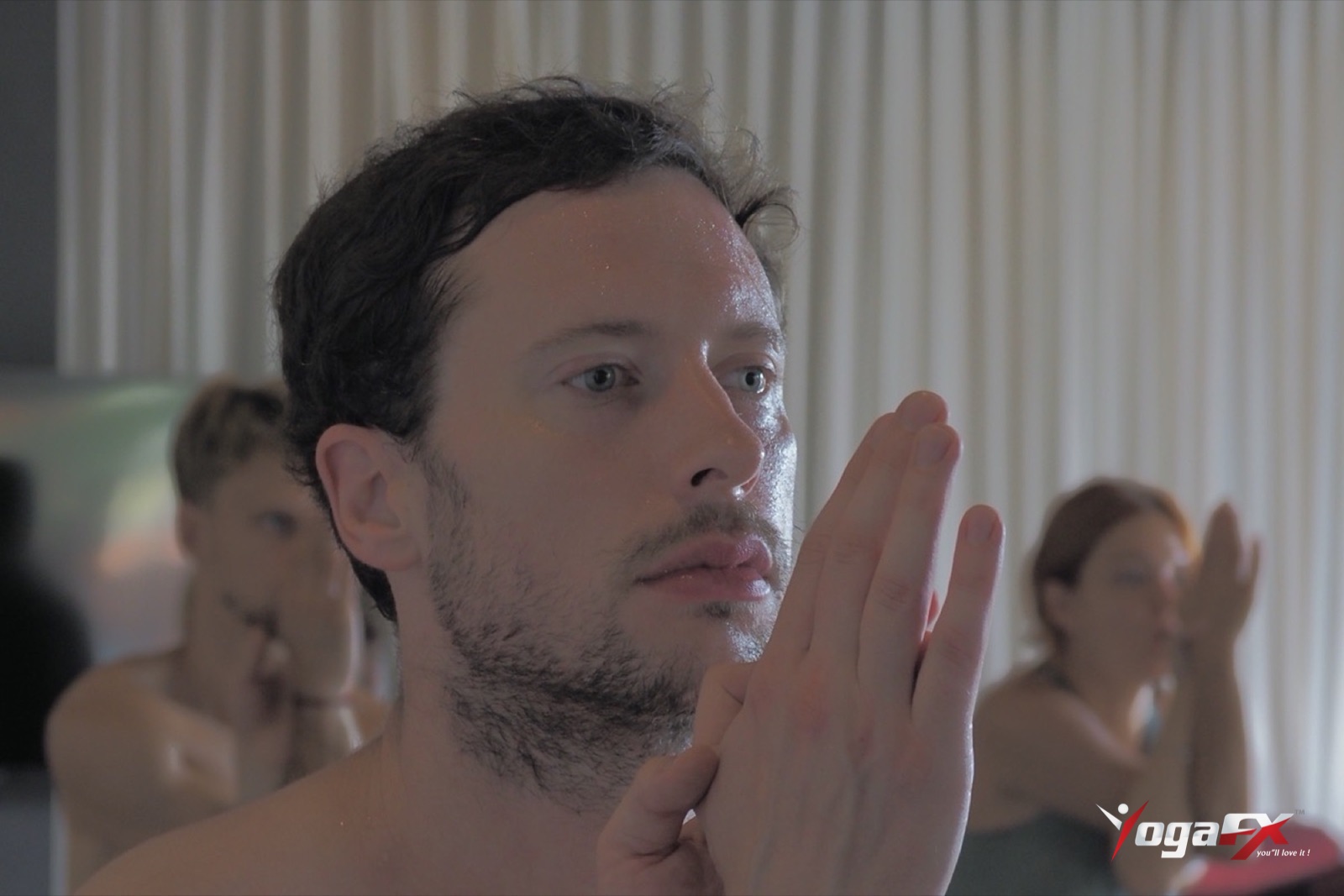
Stand on two feet and rehearse just the arm wrap. Cross the elbows, bring the forearms together and lift the elbows. Film the front view and check that the shoulders stay low. Once the arms feel easy, the full eagle pose asks one job fewer of your brain.
Chair-height seat and a wall
Stand side-on to a wall with your fingertips on it. Bend both knees and sit back, then hold for five slow breaths. This builds the low seat that the rest of eagle pose stands on. Come up whenever the standing knee starts to cave.
Toes-down leg wrap
Lift one foot, cross it over the standing thigh and let the toes rest on the floor. Hold the wall with one hand. This is the kickstand version of eagle pose, and it is the safest way to feel the outer-hip stretch without twisting the knee.
One point, ten slow breaths
Pick a still object at eye level, such as a light switch or a mark on the wall. Hold your eagle pose shape and keep your eyes on it for ten slow breaths. Then repeat while letting your eyes roam. Most people feel the difference within a minute.
A Weekly Loop for Eagle Pose
You do not need a long routine. Three short sessions a week are enough, with a rest day between them. The loop below keeps each session focused and gives you something to compare next week.
- Rehearse without filming. Spend a few minutes on the arms-only drill and the seat at the wall.
- Film one clip per side. Use the side view one session and the front view the next.
- Pick one fix. Choose the single row of the table that matches your clip and try only that cue next time.
- Write three notes. Record how many slow breaths you held, how low the seat was and which fix you tried.
After a few weeks, read your notes in order. The numbers will be small, but a pattern appears quickly. Perhaps the seat gets lower first and the wrap follows. That order is common, and it is a sign that you are building eagle pose from the right end.
Eagle Pose in the Standing Series
In the Original Hot 26&2 sequence, eagle pose sits in the standing series, after Awkward Pose and before Standing Head to Knee. Like most postures, it is done twice on each side. You can see every posture in class order on our page of the 26&2 poses.
If you want the next one-leg balance, read our guide to standing head to knee pose. For the hamstring and hip side of the series, our guide to hot yoga poses for men puts the standing postures side by side.
Want the view from a studio floor? Our sister site has a studio-side walk-through of eagle pose, written from a Bali class.
How the YogaFX Online Course Fits In
A clip tells you what happened in your eagle pose. It cannot tell you which words would have fixed it. That is where the spoken dialogue comes in. Mr. Ian Terry, E-RYT 500 with more than 12,000 teaching hours, leads the YogaFX Online Course. He trained for five years, from 2014 to 2019, with the founder of the Bikram Hot 26&2 method.
The YogaFX Online Course costs USD 329, or 4 payments of USD 82. It covers the 26 postures, the dialogue and the science at home, on your own schedule. To see how it is laid out, start from our hot yoga teacher training online course page.
One thing we cannot describe here is the exact feedback process on your practice clips, because it can change from batch to batch. Message the team on WhatsApp and ask how it works right now. When you want the heat and a live teacher, the next step is the six-day Bikram Hot 26&2 Yoga Teacher Training MasterClass in Bali.
What YogaFX Graduates Say
Eagle pose rewards patience, and graduates often talk about the effort and the group more than any one posture. These short quotes come from the YogaFX review store, from people who finished the live training in Bali. First names only, with the source and year.
“Everything is incredibly organized, attention to detail is perfection”
Matt, Google review, 2025
“I did it we did it everyone did it so I'm proud of myself”
Diah, YouTube review, 2025
Diah's 74-second video review from graduation day is below. She talks about the last class, the friends she made and why she felt proud, which is the same quiet pride a steady eagle pose can give you after weeks of practice.

Who Should Check With a Professional First
Eagle pose loads the knee, hip and ankle of the standing leg, and it compresses the shoulders. So a few people should get advice before they start.
- Joint injuries. Anyone with a current knee, hip, ankle or shoulder problem should talk to a healthcare professional first.
- Balance problems or dizziness. If standing on one leg makes you dizzy, stop and get it checked before you practise again.
- Heat concerns. If you plan to move from home practice into a hot room, read our guide on how safe hot yoga is first.
Sharp pain, pinching or tingling in a joint is a signal to stop. A stretch across the outer hip is normal, and a pinch in the knee is not. Take the slower route, and tell your teacher about any injury before class.
This article is part of our guide to becoming a yoga teacher online. Related reading in Teacher Training Guides: Tree Pose Balance Practice: Home Setup and Dialogue Cues and Tripaneer Bankruptcy: 7 Steps to Protect Your Yoga Teacher Training Deposit.
Want hands-on practice in a heated room? See the Bikram yoga teacher training in Bali, led by Mr. Ian Terry, our lead trainer.
FAQ
Why can't I do eagle pose with my legs or arms?
Most often the standing leg is too straight, the hips sit too high, or the wrap is forced. Bend the standing knee deeper, rest the toes on the floor instead of hooking the foot, and hug opposite shoulders if the palms will not meet. Depth matters less than control.
Which arm goes on top in eagle pose?
Either arm can go on top, and it makes no difference to safety. Choose one side first, then switch on the second round so both shoulders and hips get the same work. If one side feels much tighter, spend a little longer on the gentle version there.
What muscles does eagle pose work?
The standing leg works hard: the thigh, hip and ankle all stabilise the bent knee. The wrapped leg stretches the outer hip, and crossed arms stretch the upper back between the shoulder blades. We describe what you feel, and we do not claim it treats any condition.
How long should I hold eagle pose at home?
Start with a few slow breaths on each side and stop before your form slips. For comparison, the NHS suggests holding a plain one-leg stand for 5 to 10 seconds, three times per side. Build up slowly, rest between sides, and use a wall for support.
Can I learn eagle pose online?
Yes, you can learn the steps, the order of the cues and the common fixes online. Film yourself from the side and the front, then compare each clip with the cue. A video cannot replace a teacher's eyes in the room, so keep your goals modest and ask for feedback whenever you can.
Still have questions? Message Mr. Ian and the YogaFX team on WhatsApp and we will answer them personally.

Founder and lead trainer of YogaFX International Yoga Teaching Academy, with more than 12,000 hours of teaching. He trained for 5 years, from 2014 to 2019, with the founder of the Bikram Hot 26&2 method.
Published · Last reviewed and updated
You may also like
Explore all articles Teacher Training Guides14 min read22 Nov 2026
Balancing Stick Pose: Learn the Steps and Fix Mistakes Online
Read article ↗ Teacher Training Guides11 min read22 Nov 2026
Triangle Pose Step by Step: 7 Safe Cues to Learn at Home
Read article ↗ Teacher Training Guides11 min read22 Nov 2026