
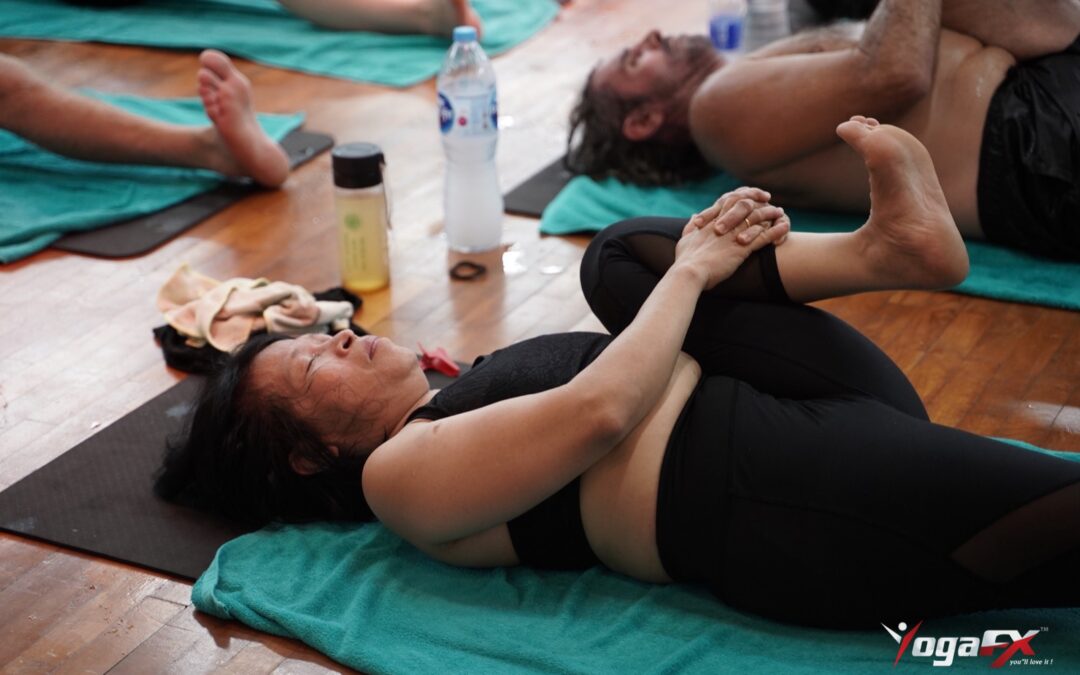
Is hot yoga safe? For most healthy adults who warm up slowly, drink well and leave the room when something feels wrong, the one study that tracked core temperature in a full class reported no signs of heat intolerance. The trials are small, though, and a 90-minute class can push core temperature close to 40°C (104°F). So some people should talk to a doctor first.
Is Hot Yoga Safe? What the Evidence Can and Cannot Promise
I am Mr. Ian Terry, E-RYT 500, and I have more than 12,000 teaching hours in heated rooms. Students ask me "is hot yoga safe?" more than any other question, and I give them the answer I would give a friend: it depends on your health, and the research is thinner than the marketing suggests.
This guide reads the main studies on hot yoga risks one by one, so you can see where the evidence is firm and where it is not.
What the Research Supports
We grade every claim the same way on this site. A study that measured something counts. A study that did not measure it does not. That matters here, because no trial has ever tested whether hot yoga is safe for everyone. Here is the short version of what the research supports:
- Healthy adults in studies coped. In the University of Wisconsin-La Crosse study, no participant showed signs or symptoms of heat intolerance across a 90-minute class.
- Core temperature does rise a lot. Seven of 20 regular practitioners passed 103°F (about 39.4°C) in that same study.
- The risk sits in the heat, not the poses. The NHS and the CDC describe heat illness and who is more exposed to it. They do not blame the postures.
- Nobody has studied the high-risk groups well. Hot yoga risks for these people remain unmeasured. The trials below mostly took healthy adults and screened out people with heart, kidney or heat-illness histories.
This article is general information, not medical advice.
If you have a heart condition, diabetes, a history of heat illness or any worry about your health, consult a healthcare professional before you start. Our companion piece for UK readers on whether hot yoga is safe, a plain-English look at hot yoga safety for UK practitioners, covers the same question from a studio angle. This one is written for people learning at home.
Five Studies on Hot Yoga Safety, Side by Side
The table below sets out what each study measured, who took part and what it can tell you about risk. Read the last column first. It shows the limit of each result.
| Study | Who took part | Heat used | What it found | What it cannot tell you |
|---|---|---|---|---|
| University of Wisconsin-La Crosse (Quandt et al., 2015) | 20 regular practitioners of the 26&2 sequence, aged 28 to 67 | 90-minute class, core temperature sensor | Average peak core temperature 103.2°F (39.6°C) for men and 102.0°F (38.9°C) for women; no signs of heat intolerance | Nothing about beginners or people with health conditions |
| Houston Methodist and Rice University (Lambert et al., 2020) | 16 experienced practitioners, average age 40 | 40.5°C (104.9°F) against 23.3°C (73.9°F), 40% humidity, 1 hour | Average heart rate 113 beats a minute in the heat and 109 at room temperature, not a significant gap | Core temperature was not measured |
| International Journal of Yoga trial (Bourbeau et al., 2021) | 22 healthy adults aged 19 to 39 | Heated chamber, 12 sessions over 4 weeks | No evidence of classic heat acclimation after 12 sessions | People with heart, kidney or heat-illness histories were excluded |
| Central Washington University (Campbell et al., 2017) | 21 participants, average age 33 | 38.7°C (101.7°F), 36% humidity, 1 hour | Sweat rate about 0.9 litres (30 fl oz) an hour; fluid intake about 0.2; 33% drank nothing | One class only, and no health outcomes |
| Massachusetts General Hospital (Nyer et al., 2023) | Adults with depression | Heated yoga, 8 weeks | 59% of the yoga group had symptoms fall by half or more, against 6% on the waitlist | It was a mood trial, not a heat-safety trial |
Is Hot Yoga Safe at 40°C (104°F)? How Hot the Body Gets in a 90-Minute Class
The most direct answer comes from the University of Wisconsin-La Crosse study. Twenty volunteers who already practised the Original Hot 26&2 Yoga sequence swallowed a temperature sensor, and the team logged their core temperature every ten minutes. Core temperature rose steadily through the class.
The average highest reading was 103.2°F (39.6°C) for men and 102.0°F (38.9°C) for women. One man reached 104.1°F (40.1°C), and seven of the 20 went above 103°F. The team also noted that the risk of heat-related illness increases at 104°F (40°C). Nobody showed signs or symptoms of heat intolerance, yet that is a small, experienced group.
So is hot yoga safe for a newcomer? The study cannot say, but it does show what to expect. Your core temperature will climb, and a class is not a sauna sit. Because you are moving, your body makes heat as well as absorbing it. As a result, pacing in your first weeks matters more than any posture.
Is Hot Yoga Safe for Your Heart? What Heart Rate Data Shows
You might expect a hot room to send your pulse up. In the 2020 study from Houston Methodist Hospital and Rice University, 16 experienced practitioners did the same one-hour Original Hot 26&2 Yoga sequence on two days. One room was 40.5°C (104.9°F) and the other was 23.3°C (73.9°F), both at 40% humidity.
Average heart rate was 113 beats a minute in the heat and 109 at room temperature. The authors reported no significant difference between the two.
That is reassuring for healthy, experienced people, and it suggests the hot yoga dangers are not about the pulse. However, it says little about someone with a heart condition, and the study did not measure core temperature, so it cannot show how close anyone came to a limit.
Is Hot Yoga Safe to Start Fast? Why Adaptation Takes Time
Many students assume they will simply get used to the heat. The 2021 trial in the International Journal of Yoga tested that. Twenty-two healthy adults aged 19 to 39 did 12 sessions over four weeks, either in the heat or at normal temperature.
The authors reported no evidence of heat acclimation after 12 sessions. Heat-tolerance tests were also set up with a safety rule: the test ended if anyone reached a core temperature of 40°C (104°F). The trial excluded people with a history of heat illness, known cardiovascular, kidney or liver disease, and anyone taking antidepressants. So those exclusions tell you who the evidence does not cover.
For more on how people adjust to a warm room, see our guide to heat acclimatization and hot yoga.

Is Hot Yoga Safe if You Barely Drink? Sweat and Fluid Data
Fluid is the part of safety you control most. In the 2017 study from Central Washington University, 21 people took one 60-minute class at 38.7°C (101.7°F). They sweated about 0.9 litres (30 fl oz) an hour and drank about 0.2, even with water freely available. A third drank nothing at all. These hot yoga dangers are easy to prevent.
For example, most started the class well hydrated (76%), and average body-mass loss was 0.9%. About half lost 1% or more, though, and people underestimated how much they had sweated. The authors called for personalised hydration advice. Our hot yoga hydration guide shows how to measure your own sweat rate at home.
Is Hot Yoga Safe for Mood Treatment? What the Trial Says
A 2023 randomized trial from Massachusetts General Hospital (Nyer et al.) tested heated yoga for depression over eight weeks. In that trial 59% of the yoga group had their depressive symptoms fall by half or more, against 6% of the waitlist group. That is a strong result for mood.
Even so, it is not a safety guarantee. The trial asked whether yoga helped depression, not whether a hot room suits every body. We could not open the full paper for this article, so we cite only its headline result and nothing about adverse events. Treat it as evidence of benefit, and use the heat studies above for risk.
Hot Yoga Safety in Five Numbers
The graphic below pulls the figures that matter most into one place. Screenshot it before your first heated class.
39.6°C
Average peak core temperature
Men in a 90-minute class, 103.2°F.
7 of 20
Passed 103°F
Regular practitioners who went above about 39.4°C (102.9°F).
0.9 L
Sweat per hour
Average in a one-hour hot class.
33%
Drank no fluid
One in three students took nothing in class.
30 min
The NHS cooling window
Heat exhaustion usually settles within it; if not, call 999.
Is Hot Yoga Safe? Heat Exhaustion and Heatstroke Signs to Know
The NHS guidance on heat exhaustion and heatstroke separates two conditions, and the difference decides what you do next. Heat exhaustion is unpleasant and fairly common. Heatstroke is an emergency. Learn both lists before your first class, because you will not want to read them mid-posture.
- Heat exhaustion: tiredness, dizziness, headache, feeling sick, heavy sweating with pale and clammy skin, cramps, a high temperature and strong thirst.
- Heatstroke: a very high temperature, hot skin that is not sweating, fast breathing and heartbeat, confusion, a seizure or loss of consciousness.
The NHS says heat exhaustion does not usually need emergency help if you can cool down within 30 minutes. Its four steps are to move somewhere cool, remove unnecessary clothing, drink water or an isotonic sports drink, and cool your skin with cool water or a fan. If you are still unwell after 30 minutes, or you see signs of heatstroke, call 999, and do not drive yourself to A&E.
What does that mean on a studio floor? Lie down, stay with someone and tell the teacher at the first sign. Pushing through a spinning room does not prove anything. Instead, a good teacher would rather pause the class than watch a student keep going.
Who Should Avoid Hot Yoga Until a Doctor Says Yes?
Heat is hard on some bodies, so who should avoid hot yoga at first is a real question. The CDC page on heat and chronic conditions says hot days can be especially dangerous for people with chronic conditions. It names heart disease, mental illness, poor blood circulation and obesity as risk factors. It also says some people take medications that can make the effect of heat worse.
| Group | Why heat can matter | What to do first | Source |
|---|---|---|---|
| Heart or circulation problems | CDC lists heart disease and poor circulation as heat-illness risk factors | Ask your doctor whether a heated class suits you | CDC |
| Regular medicines | Some medications can make the effect of heat worse | Bring a full list to your appointment | CDC |
| Diabetes or other long-term conditions | The NHS says these groups are more at risk of heat exhaustion and heatstroke | Get advice before the first class | NHS |
| Children and older people | More at risk of heat exhaustion and heatstroke | Check with a doctor and choose a gentler setting | NHS |
| Past heat illness | Screened out of the 2021 trial | Tell your doctor and your teacher | International Journal of Yoga |
| Pregnancy | NHS says to keep cool and stop if you feel too hot | Ask your midwife or doctor before any heated class | NHS |
A doctor cannot make a hot class risk-free. So is hot yoga safe for you? Because a doctor knows your history, they can tell you whether your health and medicines suit it. For example, the CDC warns that heavy sweating removes salt and minerals, and it advises talking to your doctor about how to replace them safely. Our hot yoga and blood pressure guide covers what vascular studies report.
Is Hot Yoga Safe in Pregnancy?
The NHS guidance on exercise in pregnancy tells pregnant women to drink water, try to keep cool and stop if they feel uncomfortable, too hot or unwell. It also says to tell your instructor you are pregnant. That page does not name hot yoga, so we cannot quote a ruling on it. The sensible step is to ask your midwife or doctor before you book any heated class.
Hot Yoga Risks and Five Checks That Make a Class Safer
Is hot yoga safe once you know the limits? Mostly, yes, for healthy adults. Evidence tells you where those limits are. Habits keep you inside them. These five checks come from the studies above and from years of watching students in the room. They are YogaFX teaching guidance, not medical rules.
- See your doctor if you are in a risk group. Use the table above as your checklist.
- Arrive hydrated. Drink through the day, then sip in the last hour. Do not chug.
- Start small. Take one class, rest, and build up. Twelve sessions did not bring classic heat adaptation in the trial.
- Eat light. Have a small meal a few hours before class, as in our guide on what to eat before hot yoga.
- Know your exit. Agree with the teacher that you can lie down or leave at any moment.
What a Real Class Looks Like
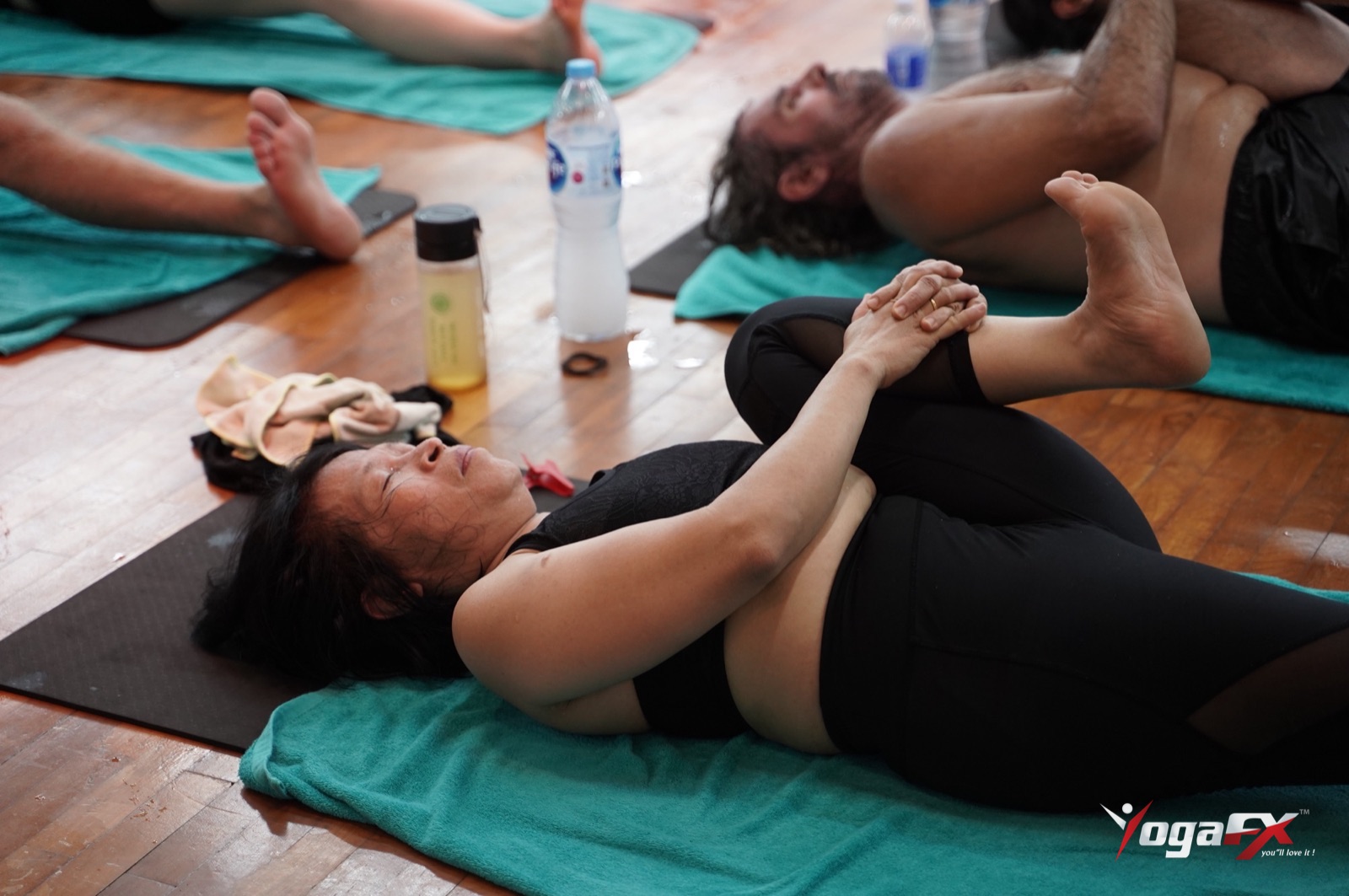
A real class at YogaFX runs 90 minutes in a room at about 40°C (104°F) and 40% humidity, heated naturally by the tropical climate. The teacher talks through every posture, and there is no music, so the teacher can hear and watch the room. That matters more than it sounds. Because the room is quiet, a teacher who sees a student go quiet or flush can step in early.
What Students Say About Feeling Safe in the Room
Reviews cannot prove medical safety. Instead, they show how a learning space feels. These comments come word for word from public YogaFX reviews, and they describe the training room rather than heat tolerance.
"Thank you so much for creating this space for us to grow the safe space."
Samantha, YouTube review, 2019
"The team is highly qualified, kind and disciplined."
Annabel, Google review, 2026
"It's been a very safe place with everyone. Everybody's been so supportive."
A trainee in our YouTube review, 2026
You can watch Samantha's graduation message below.

Is Hot Yoga Safe at Home? Study First, Add Heat Later
If you study online, your body gets time that a weekend workshop never gives it. You can learn the 26 postures and the two breathing exercises in a warm room, not a hot one. So you can find your own limits at your own pace, with a bottle, a towel and an exit within reach.

Here is how we suggest home students build up. It is teaching guidance, so adjust it with your doctor if you are in a risk group.
- Learn each posture at room temperature first, with the dialogue, until the sequence feels familiar.
- Add warmth gradually. A warm room is enough for early weeks, and you do not need to copy a 40°C (104°F) studio at home.
- Weigh yourself before and after practice to learn your sweat rate, then drink to match it.
- Rest for 10 to 15 minutes after practice before a cold shower.
- Stop at once if you feel dizzy, sick or confused, and lie down in a cool place.
Heat safety is also part of becoming a teacher. Our guide to hot yoga certification and heat safety shows what teachers must know. You will not find a claim here that hot yoga cleanses the body either. If you want the evidence on sweat, our guide on whether hot yoga sweats out toxins explains it.
Learn Heat Safety and the Full Dialogue Online With YogaFX
The YogaFX online academy lets you study the postures, the dialogue and the physiology from home, on your own schedule, and it is Yoga Alliance certified. Ask the team for the full details. The course costs USD 329, or 4 payments of USD 82.
Who Leads the Course
It is led by Mr. Ian Terry, E-RYT 500, who trained for five years, from 2014 to 2019, with the founder of the method. Since 2017, YogaFX has trained more than 1,500 graduates from 80+ countries, and we hold more than 550 reviews across Google, Yoga Alliance and YouTube. For a week-by-week view, ask the team for the 8-week course outline.
- Learn the science with its limits. Read each study the way we did above.
- Practise at home first. Learn your own numbers before you add real heat.
- Ask before you book. Message the team about your health situation, then check with your doctor.
This article is part of our hot yoga benefits research guide. Related reading in Hot Yoga Science and Benefits: Hot Yoga Dizzy? What to Do and When to Rest on the Mat and Hot Yoga Mental Health in Men: What Researchers Measured.
FAQ
Is hot yoga safe, or can it be dangerous?
It can be dangerous, mainly through heat illness and dehydration. In one study, seven of 20 regular practitioners passed 103°F core temperature, though none showed signs of heat intolerance. Risk is higher for people with chronic conditions. Learn the NHS signs of heat exhaustion, and leave the room if you feel unwell.
Is hot yoga safe with high blood pressure or a heart condition?
Check with your doctor first. The CDC lists heart disease and poor circulation as risk factors for heat-related illness, and says some medications can make the effect of heat worse. No trial we found tested hot yoga in people with these conditions, so take advice before booking.
Is hot yoga safe during pregnancy?
Ask your midwife or doctor first. The NHS advises pregnant women exercising to try to keep cool and to stop if they feel uncomfortable, too hot or unwell. Its exercise page does not name hot yoga, so we cannot quote a ruling. A heated room is a reason to check before booking.
Is it safe to do hot yoga every day?
No trial we found sets a safe number of classes per week. In a 2021 trial, 12 sessions over four weeks did not produce classic heat adaptation, so a body may not simply get used to it. Start with one class, rest, and build slowly with your doctor's advice.
Who should not do hot yoga?
Some people need medical advice first: those with heart disease, diabetes, a history of heat illness, regular medicines, older adults, children and anyone pregnant. The NHS says several of these groups are more at risk of heat exhaustion and heatstroke. A doctor can say whether a heated class suits your health.
Still have questions? Mr. Ian and the YogaFX team answer them personally. Message us on WhatsApp at +62 811 388 8330, or look at the online course page.
Medical disclaimer: this article is general information, not medical advice. If you have a heart condition, diabetes, a history of heat illness, take regular medicines or are pregnant, consult a healthcare professional before starting hot yoga.

Founder and lead trainer of YogaFX International Yoga Teaching Academy, with more than 12,000 hours of teaching. He trained for 5 years, from 2014 to 2019, with the founder of the Bikram Hot 26&2 method.
Published · Last reviewed and updated
You may also like
Explore all articles Hot Yoga Science and Benefits11 min read20 Nov 2026
Heat Acclimatization: How Your Body Adapts to Hot Yoga
Read article ↗ Hot Yoga Science and Benefits12 min read20 Nov 2026
What to Eat Before Hot Yoga: Timing Meals Around Home Study
Read article ↗ Hot Yoga Science and Benefits11 min read20 Nov 2026