
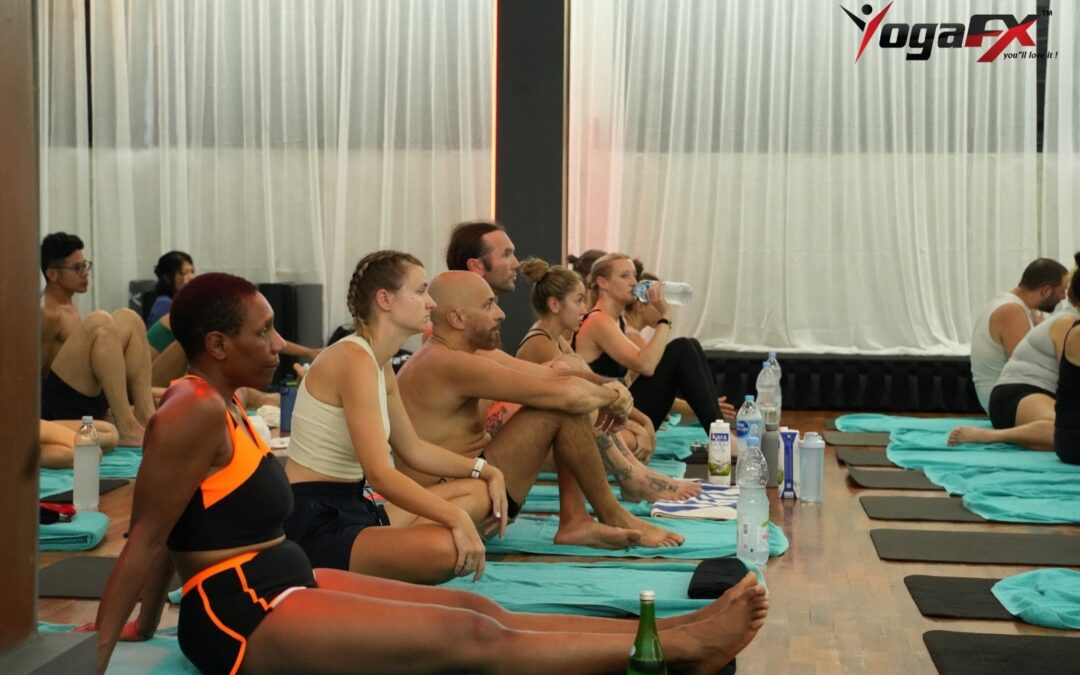
If you feel hot yoga dizzy, stop moving and lie down in Savasana. Stay in the room, sip water slowly and tell the teacher. At home, tell someone nearby. Most spells ease with rest, but fainting, chest pain or confusion need a doctor. This guide shows each step, why it works and when to rest longer.
This article is general information, not medical advice. If you have a heart condition, low blood pressure, diabetes or take regular medicines, consult a healthcare professional before you practise in the heat.
Hot Yoga Dizzy: Five Steps to Take on the Mat
YogaFX teachers, led by Mr. Ian Terry, E-RYT 500, with more than 12,000 teaching hours in heated rooms, give the same instructions for a hot yoga dizzy moment: stop, lie down, breathe, sip and speak up. Here is how each step works, in order.
1. Ease off at the first wobble
The first wobble is a message, not a test. Come out of the posture slowly and do not try to finish it. Pushing on to save face is how a small dizzy moment becomes a faint.
2. Lie down in Savasana
Lie flat on your back with your arms by your sides. Lying down takes the strain off your legs, so it is usually easier for blood to reach your brain. The US Centers for Disease Control and Prevention (CDC) gives the same first aid for heat-related fainting: sit or lie down in a cool place. Our guide to why Savasana matters after heat explains the pose itself.
3. Stay in the room, with one exception
For an ordinary light-headed moment, staying in the room works well. The teacher can see you and the dialogue keeps running, so you rest without feeling lost. The exception is a set of heat exhaustion signs: heavy sweating, nausea, headache and a pale, clammy look. In that case, move to a cooler place, because the NHS lists moving to a cool place as its first step.
4. Sip water slowly
Take small sips instead of big gulps, which are harder to manage when you feel unwell. The CDC says to slowly drink water or a sports drink. Keep the bottle close to your mat before class so you never have to hunt for it.
5. Tell the teacher or the person nearest to you
Speak up early. A quick word means the teacher can check on you, watch your colour and bring a towel or fan. At home, the "teacher" is whoever shares your house, so tell them before you start practising.
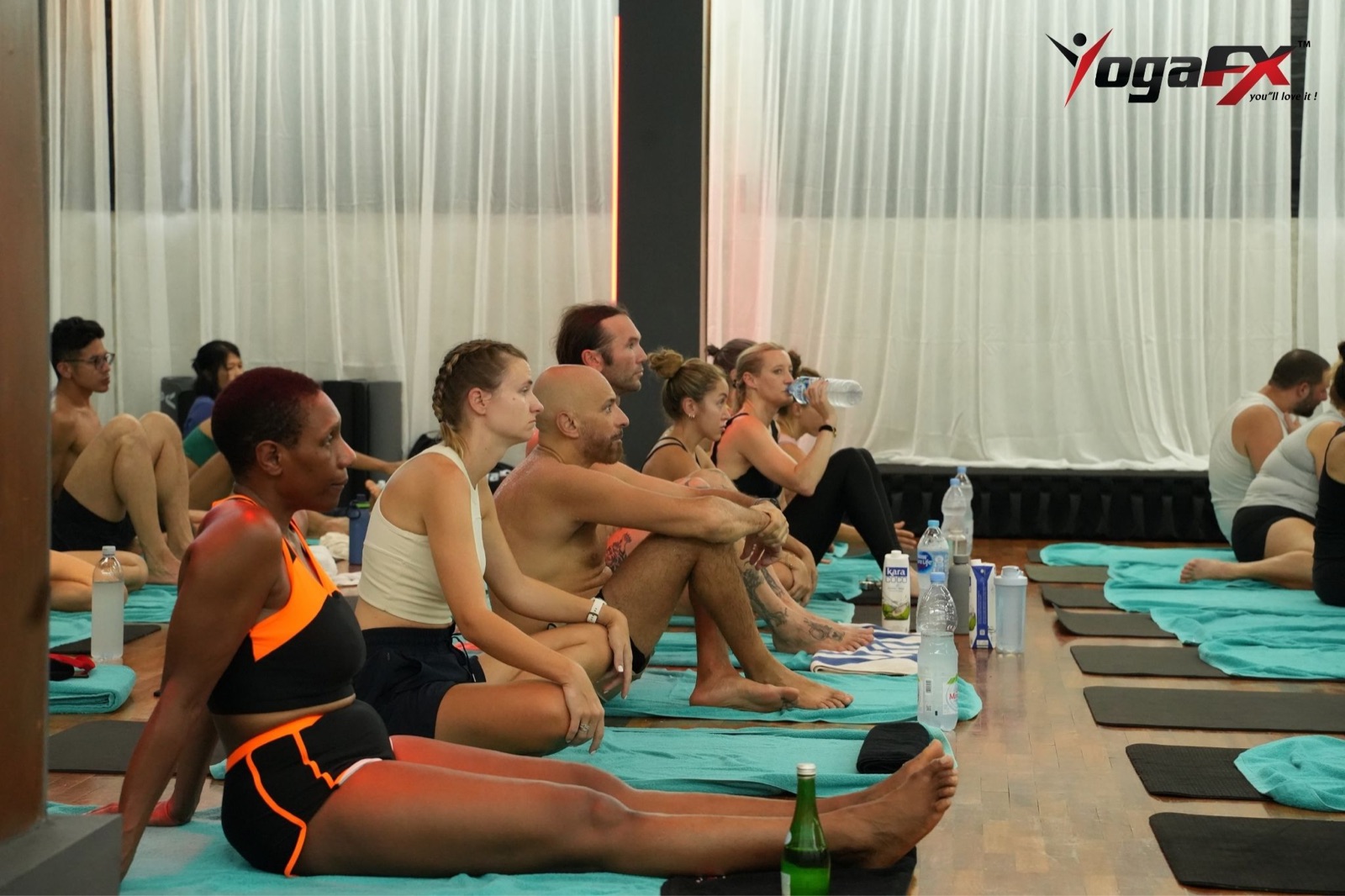
Why a Hot Yoga Dizzy Spell Happens
Dizziness is a loose word, and a hot yoga dizzy spell can mean different things. MedlinePlus, the US National Library of Medicine's health guide, says it usually describes two different feelings: lightheadedness and vertigo. Lightheadedness happens when the brain does not get enough blood. Vertigo is a sense that you or the room is spinning.
A heated room pushes you toward lightheadedness for three reasons:
- You sweat. The CDC describes heat exhaustion as the body's response to losing too much water and salt, usually through sweating.
- You stand still for too long. The CDC links this to heat syncope, a fainting episode or dizziness.
- You change position fast. MedlinePlus lists getting up too quickly as a cause of lightheadedness.
The Mayo Clinic adds that a hot environment can cause heavy sweating and possibly dehydration, which can lower blood pressure.
The same page describes orthostatic hypotension, a drop in blood pressure when you stand up after sitting or lying down. Its most common symptom is lightheadedness or dizziness on standing. That is why the moment you rise from a floor posture is the classic time for a hot yoga dizzy spell, and it is why you shouldn't spring up.
Which kind of dizzy is it?
Use the table below as a quick map for any hot yoga dizzy moment. It does not diagnose anything. It shows the usual cause, the first step and the source behind each step.
| What you notice | What may be behind it | First step on the mat | Source |
|---|---|---|---|
| Room tilts for a few seconds as you rise from the floor | A short drop in blood pressure on standing | Sit back down, hold something steady, rise slowly | Mayo Clinic; MedlinePlus |
| Faint or light-headed after standing still for a long time | Heat syncope, a fainting episode linked to heat and standing | Sit or lie down in a cool place, sip water slowly | CDC |
| Dizzy with heavy sweating, headache, nausea or cramps | Possible heat exhaustion | Stop, move somewhere cool, cool your skin, sip fluids | NHS; Mayo Clinic |
| Strong spinning, even when you keep still | Vertigo rather than lightheadedness | Keep still and rest, then ask a doctor if it returns | MedlinePlus |
Notice how little of this depends on the poses. The heat and the standing do most of the work. That matches what our guide to hot yoga safety and heat risk found when it read the heat studies one by one.
Hot Yoga Dizzy at Home: What Changes With No Teacher
Studio students have a teacher scanning the room. Home students do not. So the five steps for hot yoga dizzy moments stay the same, but you need to set up the room before you start. Most guides leave this out, and it is where an online course earns its keep.
- Tell someone you are practising. A housemate, a partner or a friend on a call. Say where your mat is and when you will finish.
- Keep a phone within reach. If you faint, you want to be able to call for help, or the person nearby can.
- Use a warm room, not a hot one. You do not need a 40°C (104°F) studio to learn the postures. Add warmth slowly, as our heat acclimatization guide explains.
- Put a bottle, a towel and a chair or wall within one step. MedlinePlus advises having something to hold on to when you stand.
- Choose a mat spot you can lie down on safely. Clear the floor around you so a rest or a slip does not turn into a bump.
If you practise alone and often feel faint, the safest answer is not a cleverer technique. Instead, talk to a doctor, and avoid practising in the heat with nobody around until you know why.
Your Hot Yoga Dizzy Decision Card
Screenshot this card before your next session. It turns the hot yoga dizzy steps above into a short timeline, so you do not need to think when your head is swimming.
0 min
Wobble
Ease out of the posture. Do not push on.
1 min
Lie down
Savasana on your back, slow breaths.
5 min
Sip
Small sips of water. Tell the teacher or someone near.
30 min
Check
The NHS says heat exhaustion should ease within 30 minutes of cooling down.
Now
Get help
Fainting, chest pain, confusion, a seizure or a very high temperature need emergency care.
The minute marks on the first three cards are a YogaFX teaching guide. The 30-minute card comes from the NHS. The Mayo Clinic is more cautious and says to contact a healthcare professional if symptoms get worse or do not improve within one hour. So treat 30 minutes as the point to reassess, not a promise.
When to Rest Longer and When to Get Help
Most dizzy spells ease with rest, but some don't, and you should know which is which before you practise. The NHS separates heat exhaustion from heatstroke, and the difference decides what you do next.
- Heat exhaustion: tiredness, dizziness, headache, feeling sick, heavy sweating, cramps and a high temperature. Move somewhere cool, remove extra clothing, drink water and cool your skin.
- Heatstroke: a very high temperature, hot skin that is not sweating, fast heartbeat, confusion, a seizure or loss of consciousness. This is an emergency. Call for help.
- Also get urgent help if you are dizzy with chest pain, shortness of breath, or fainting with a loss of alertness for more than a few minutes, as MedlinePlus lists.
The NHS says heat exhaustion does not usually need emergency care if you cool down within 30 minutes. If you are still unwell after that, it points to further help. So watch the clock, and do not talk yourself out of calling someone.
One more point. A hot yoga dizzy spell that keeps coming back is a reason to see a doctor before your next class. Repeated spells can have causes that rest on a mat will never fix, such as low blood pressure or a medicine side effect.
Coming Back After a Hot Yoga Dizzy Spell
Once a hot yoga dizzy spell has passed and you feel steady, you can often return. Go back gently. Wait until your breathing is slow, then sit up first and stand only when the room stays still. Choose lower variations for the rest of the session, with your knees down or your body seated, so your head stays near the mat.
Then look at what built up to it. A few habits lower the odds of a repeat:
- Drink through the day. Spread fluid across the hours before class. Our hot yoga hydration guide shows how to measure your own sweat rate.
- Eat light. A small meal a few hours before practice sits better than a heavy one close to it.
- Rise in two stages. Sit, then stand. Hold something if you need it.
- Build up slowly. Heat tolerance takes time. A short, warm session is better than a long hot one when you are new.
What the Research Says, and What It Does Not
Honesty matters here. We read the evidence the same way across this site, and we grade it. For a hot yoga dizzy spell, the evidence looks like this:
| Claim | Evidence grade | What backs it |
|---|---|---|
| Lying down helps heat-related fainting | Strong guidance | CDC first aid for heat syncope |
| Rising slowly cuts dizziness on standing | Strong guidance | MedlinePlus and Mayo Clinic |
| Heat exhaustion should ease within 30 minutes of cooling | Strong guidance | NHS (Mayo Clinic says one hour) |
| How often dizziness happens in hot yoga classes | Not measured | No trial we found counted dizzy spells |
| Heated rooms push heart rate far above room-temperature yoga | Weak | One 2020 study of 16 practitioners found 113 against 109 beats a minute, no significant gap |
The last row deserves a closer look. In a 2020 study from Houston Methodist Hospital (Lambert et al., International Journal of Exercise Science), 16 experienced practitioners did the same one-hour sequence in a heated room and at room temperature. Average heart rate was 113 beats a minute in the heat and 109 at room temperature, and the authors reported no significant difference.
That result is reassuring for healthy, experienced people. However, it says nothing about dizziness, and the study did not measure core temperature. So we can't use it to say how common a hot yoga dizzy spell is. For that, you need a dedicated trial, and we have not found one. Our hot yoga heart rate guide covers what the numbers mean.
What Students Say About Being Looked After
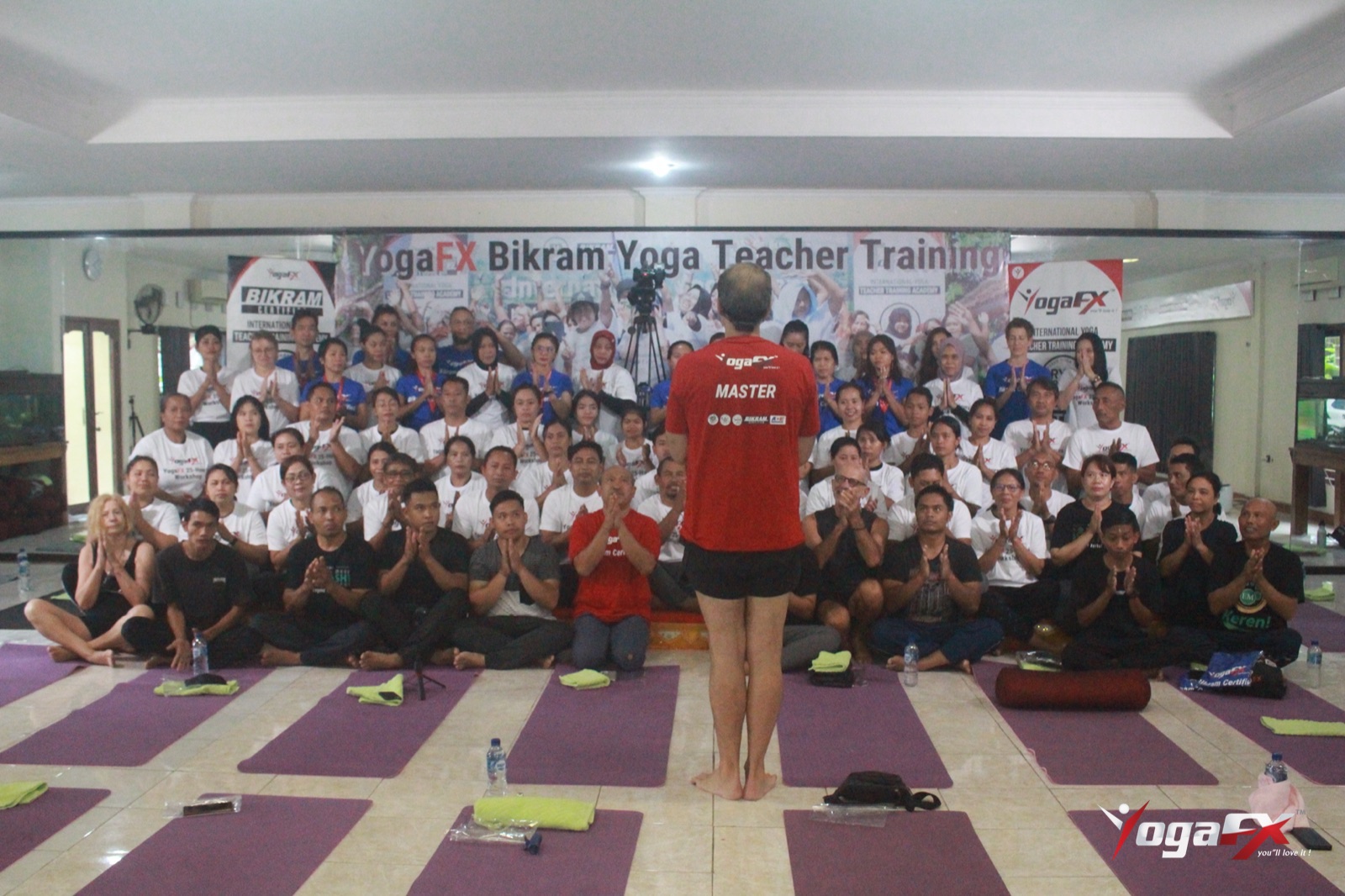
Reviews cannot prove medical safety, and these were written about teacher training, not dizziness. Even so, they show what it feels like to learn from a teacher who watches the room for a hot yoga dizzy student. These are word for word from public YogaFX reviews.
Mr. Ian is both tough on us when necessary, and loving when called for. His love for all of us was quite obvious. He could 'see' us, read into our souls and call out who we are and what we needed.
Liz, Google review, 2025
I have practised for over 10 years and this was truly one of the highlights of my journey thus far.
Pete, Google review, 2026
The way that he taught us in the lectures spoke to the depths of my soul.
Weslyn, YouTube review, 2025
You can hear Weslyn in her own words in the video below.

Learn to Read the Room With the YogaFX Online Course
Spotting a hot yoga dizzy student is a teaching skill, and you can learn it from home. The YogaFX online course covers the postures, the dialogue and the heat safety a teacher needs, on your own schedule. Mr. Ian Terry, E-RYT 500, who trained for five years, from 2014 to 2019, with the founder of the method, leads it.
The course costs USD 329, or 4 payments of USD 82. Have a look at the online course page for the details. If you want a studio view of the same moment, see how a Bali studio handles a dizzy student, and read our full heat safety guide before you add real heat to your practice.
- Start warm, not hot. Learn the sequence first, then add heat slowly.
- Set up your exit. Mat spot, bottle, towel, phone and a person who knows.
- Ask before you book. If you have a health condition, talk to your doctor first, then plan your hot yoga dizzy exit.
This article is part of our hot yoga benefits research guide. Related reading in Hot Yoga Science and Benefits: Hot Yoga Mental Health in Men: What Researchers Measured and Is Hot Yoga Good for Your Heart? Blood Pressure Trials Reviewed.
FAQ
Why am I dizzy after hot yoga?
Heat makes you sweat, so you lose water and salt, and less blood may reach your brain when you stand up fast. MedlinePlus lists dehydration and getting up too quickly as causes of lightheadedness. Rise slowly, sip water and rest first. If it keeps happening, see a doctor before your next class.
What should I do if I feel faint in hot yoga?
Stop and lie down in Savasana. The CDC advises sitting or lying down in a cool place and slowly drinking water. Tell the teacher. If you also have heavy sweating, nausea or a headache, move somewhere cool. Get urgent help if you faint, feel chest pain or become confused.
Is feeling lightheaded in hot yoga normal?
A brief light-headed moment can happen when you stand up fast, and it often passes quickly if you sit and rise slowly. It is still a signal, not a badge. If it lasts, returns often or comes with other symptoms, stop practising in the heat and ask a healthcare professional.
What if I feel dizzy and nauseous in hot yoga?
Dizziness with nausea, heavy sweating or a headache can point to heat exhaustion. The NHS says to move somewhere cool, remove extra clothing, drink water and cool your skin. Stay with someone. If you are not better within 30 minutes, or you feel confused, get medical help.
Can I practise hot yoga at home if I get dizzy easily?
Ask your doctor first. If they agree, practise in a warm room, not a hot one, with water, a towel and a steady object within reach. Tell someone you are practising. Stop at the first wobble and lie down. Avoid heat sessions alone until you know the cause.
Still have questions? Message Mr. Ian and the YogaFX team on WhatsApp and we will answer them personally. Message us at +62 811 388 8330. It is quick, friendly and free to ask.
Medical disclaimer: this article is general information, not medical advice. If you have a heart condition, low or high blood pressure, diabetes, take regular medicines or are pregnant, consult a healthcare professional before you practise in the heat.

Founder and lead trainer of YogaFX International Yoga Teaching Academy, with more than 12,000 hours of teaching. He trained for 5 years, from 2014 to 2019, with the founder of the Bikram Hot 26&2 method.
Published · Last reviewed and updated
You may also like
Explore all articles Hot Yoga Science and Benefits13 min read21 Nov 2026
Is Hot Yoga Safe? Reading the Evidence on Heat Risk
Read article ↗ Hot Yoga Science and Benefits11 min read20 Nov 2026
Heat Acclimatization: How Your Body Adapts to Hot Yoga
Read article ↗ Hot Yoga Science and Benefits12 min read20 Nov 2026