
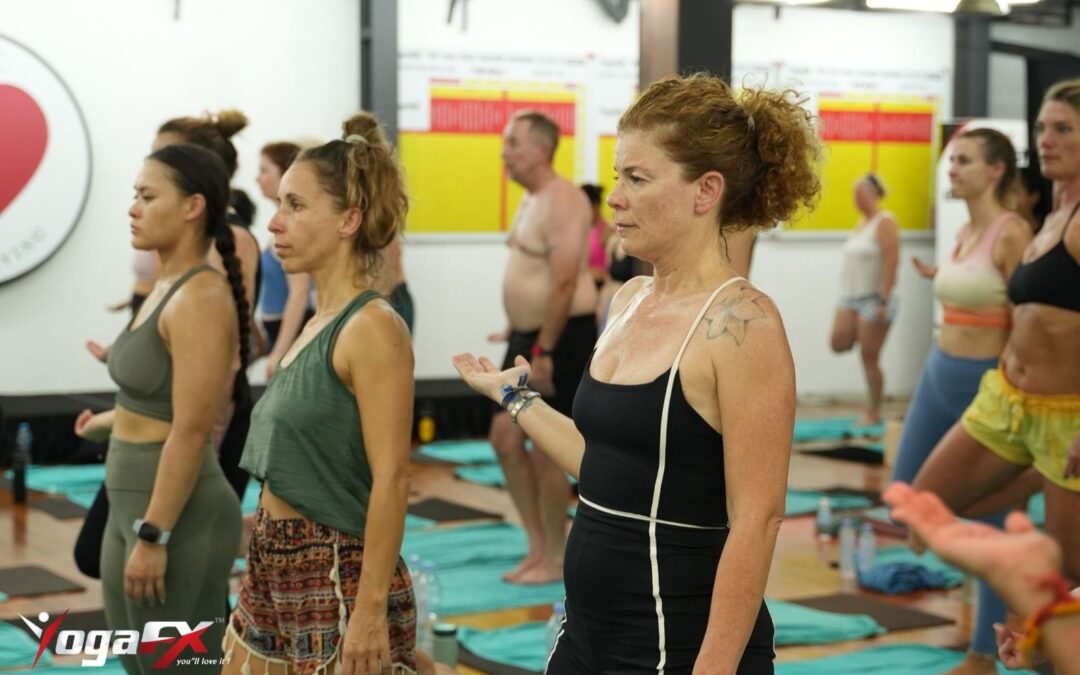
Bikram vs hot yoga is a question the studies can only partly answer. Bikram is one fixed class of 26 postures and 2 breathing exercises, so it is easy to test. Hot yoga is any heated class, so results vary. Most research tested Bikram, a few tested other heated styles, and none crowns a winner.
That limit matters when you pick a class or a course. Mr. Ian Terry, E-RYT 500, has taught more than 12,000 hours of the Original Hot 26&2. This guide goes through the main studies, says what each one tested, and shows what you can practise at home while you learn online with YogaFX.
Bikram vs Hot Yoga: The Short Answer From the Studies
Here's the verdict in plain words. No study we found has tested Bikram against free-form hot yoga head to head. The evidence comes from separate studies, each on one format. So you can describe each style, but you cannot rank them.
- Bikram has the most data. In a 2025 review of 43 hot yoga studies, Bikram made up 74% of the styles tested. Generalised hot yoga made up 19%, Hatha 5% and Vinyasa 2%.
- Free-form hot yoga is a loose label. Each studio sets its own sequence, heat and class length, so a result for one class may not hold for the next.
- Heat is not proven to add benefit. The same review calls claims that hot yoga beats other yoga or exercise unsubstantiated at present.
- Heat does add strain. Body temperature and heart rate rose in the heated classes that were measured, which is why safety comes first.
If you want the teacher's side of this comparison, a sister site has a Bikram teacher's guide to fixed and free-form classes. This page stays with the research and with learning at home.
What Counts as Bikram and What Counts as Hot Yoga
Bikram, now taught as the Original Hot 26&2, is one specific class. It has 26 postures and 2 breathing exercises in a set order. It runs 90 minutes in a room at about 40°C (104°F) and 40% humidity. Teachers speak a script, and there is no demonstration and no music.
Hot yoga is the wider label. Any yoga in a heated room qualifies, so a hot vinyasa flow, a hot hatha class and a Bikram class all count. That is why two students can say "I do hot yoga" and describe very different hours. So the bikram vs hot yoga question is really a question about structure.
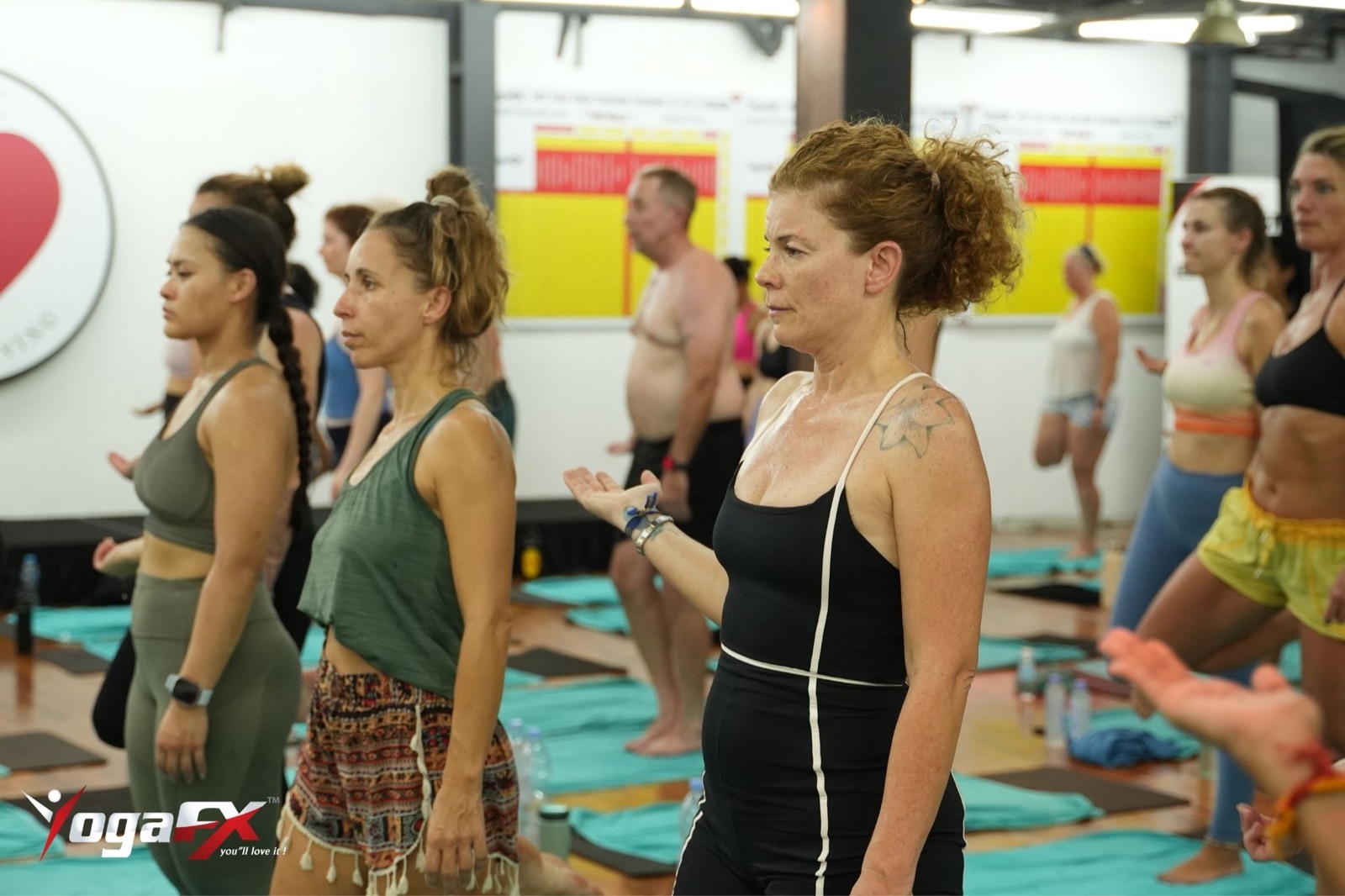
Three checks before you trust a hot yoga claim
Research can only describe what was done in the room. So before you trust any hot yoga claim, check three things:
- Which style was tested. A study of a Bikram class says little about a hot vinyasa flow, and the reverse is also true.
- What the room was like. Temperature and humidity change how hard the body works.
- Who took part and for how long. A few regular practitioners in one class is not the same as 65 adults over 8 weeks.
Bikram vs Hot Yoga, Study by Study
The table lines up four studies by what they tested. Read the style column first, because it decides which side of the Bikram vs hot yoga question each result speaks to.
The evidence at a glance
| Study | Style tested | Design | Main finding | What it cannot tell you |
|---|---|---|---|---|
| Willmott et al., 2025 | Hot yoga of all kinds (mostly Bikram) | Systematic review, 43 studies, 942 participants | Body temperature and heart rate rose in heated classes; training was linked to changes in body composition, balance and flexibility | Whether hot yoga beats unheated yoga. The authors call that claim unsubstantiated |
| Quandt, Porcari and colleagues, 2015 | Bikram | 20 regular practitioners, one class, core temperature sensor | Average peak heart rate about 80% of predicted maximum in men and 72% in women; peak core temperature 103.2°F and 102.0°F | What happens to beginners or over weeks of training |
| Nyer et al., 2023 | Heated Hatha, not Bikram | Randomised trial, 80 adults randomised, 65 analysed, 8 weeks, waitlist control | 59% of the yoga group halved depression symptoms, against 6% of the waitlist | Whether the heat mattered, because there was no unheated yoga group |
| Tracy and Hart, 2013 | Bikram | Training trial in healthy young adults | Reported changes in strength, flexibility and body composition | Whether other heated styles give the same result |
The 2025 review: 43 studies and 942 people
Willmott and colleagues pooled 43 studies in Sports Medicine - Open. Together they covered 942 people, 76% of them women. The training studies ran 6 to 36 sessions, 2 to 6 times a week, over 1 to 16 weeks. You can read the record on the Brunel University research archive.
The acute findings are the most useful for the Bikram vs hot yoga question. Heated classes raised body temperature and heart rate. They did not raise energy use compared with non-heated yoga. So a hot room makes the body work harder to cool itself, not harder to move.
Over weeks, training was linked to changes in body composition, blood fats, blood vessel function, bone mineral density, balance and flexibility. Findings on mood and thinking were described as promising but inconclusive.
The authors also warn that some studies were weak in design, and that case reports describe ill-health after hot yoga.
The heart rate and core temperature study
A team at the University of Wisconsin-La Crosse measured 20 regular Bikram practitioners for the American Council on Exercise. There were 7 men and 13 women, aged 28 to 67. Each swallowed a core temperature sensor and wore a heart rate monitor. The ACE write-up of the Bikram core temperature study describes a typical session as a room heated to 105°F with 40 percent humidity.
Men averaged about 80% of predicted maximum heart rate, and women about 72%. Average peak core temperature was 103.2°F in men and 102.0°F in women. One man reached 104.1°F, and 7 of the 20 went above 103°F. None showed signs of heat intolerance. Researcher Emily Quandt said, "The dramatic increases in heart rate and core temperature are alarming when you consider that there is very little movement."
That quote deserves a second read. The class looks calm, yet the body is under real strain. Because the group was small and experienced, the study can't tell a beginner what to expect.
The depression trial: heated Hatha, not Bikram
The most quoted mood study is a 2023 trial by Nyer and colleagues in the Journal of Clinical Psychiatry. It randomised 80 adults with moderate-to-severe depression to 8 weeks of community-delivered heated Hatha yoga or a waitlist. Among the 65 people analysed, 59% of the yoga group had their depression symptoms drop by half or more. In the waitlist group it was 6%.
The Europe PMC record of the Nyer depression trial lists the full abstract.
Two details keep this in proportion. First, the class was heated Hatha, so it says nothing direct about Bikram. Second, the comparison group was a waitlist, so the trial cannot separate the effect of heat from the effect of yoga. The authors themselves call for further research with active control groups.
For a closer look at how it was run, read our guide to the hot yoga depression study. If you live with depression, please talk to a healthcare professional before starting.
The 2013 fitness trial
A 2013 trial by Tracy and Hart tested Bikram training in healthy young adults. It reported changes in strength, flexibility and body composition. We name it without a link here, so treat it as a pointer and not as a figure to quote.
Why Bikram vs Hot Yoga Studies Cannot Crown a Winner
Put the four studies side by side and the gaps are easy to see. Each one answers a different question, so the Bikram vs hot yoga score stays level.
- Different styles. The core temperature study used Bikram. The depression trial used heated Hatha. The review mixed everything.
- Small or narrow groups. Twenty experienced practitioners, or adults with depression who were mostly young women, do not stand in for everyone.
- No unheated comparison. Most designs cannot say whether the heat or the yoga did the work.
- Short time frames. The longest training studies in the review ran 16 weeks.
That is also why the flow side of the debate has no clear winner. For a home-study view of fixed series against flow, see our guide to hot vinyasa vs Bikram for home study.
Heat Safety Applies to Both Styles
Whichever side of the Bikram vs hot yoga choice you take, the heat deserves respect. The Mayo Clinic page on heat exhaustion lists the warning signs: heavy sweating, faintness, dizziness, fatigue, a weak and rapid pulse, muscle cramps, nausea and headache.
Its advice is to stop all activity and rest, move to a cooler place and drink cool water or a sports drink. A core temperature of 104°F (40°C) or higher means you should get help right away. Mayo also notes that people who aren't used to the heat are at higher risk, and so are people taking certain medicines.
- Stop at the first sign. Dizziness is a reason to sit down, not to push on.
- Keep water and a towel within reach so you never have to leave your mat to cool off.
- Build up slowly. Start with a shorter session if you are new to heat.
- Check with a doctor first if you are pregnant, have a heart condition, or take medicine that affects heat tolerance.
Bikram vs Hot Yoga at Home: What to Practise While You Decide
A four-week test you can run
You don't need a 40°C (104°F) room to learn the shapes. At home, keep the room comfortably warm and the pace steady. The goal for the first month is to learn, not to survive. This four-week test also answers the bikram vs hot yoga question for your own body.
- Weeks 1 and 2: one fixed series. Pick the standing series and read the cues before you start. Our guide to the 26&2 postures step by step lists them in order.
- Film one posture per session. Check the knee, hip line and spine against the cue, and write down one fix.
- Weeks 3 and 4: add one flow class. Swap one session a week for a hot vinyasa or hot hatha class, online or in a studio.
- Rate each session from 1 to 10 for effort, enjoyment and how easy it was to notice your own form.
- Read your notes at the end. Most people can say which one they would do again tomorrow.
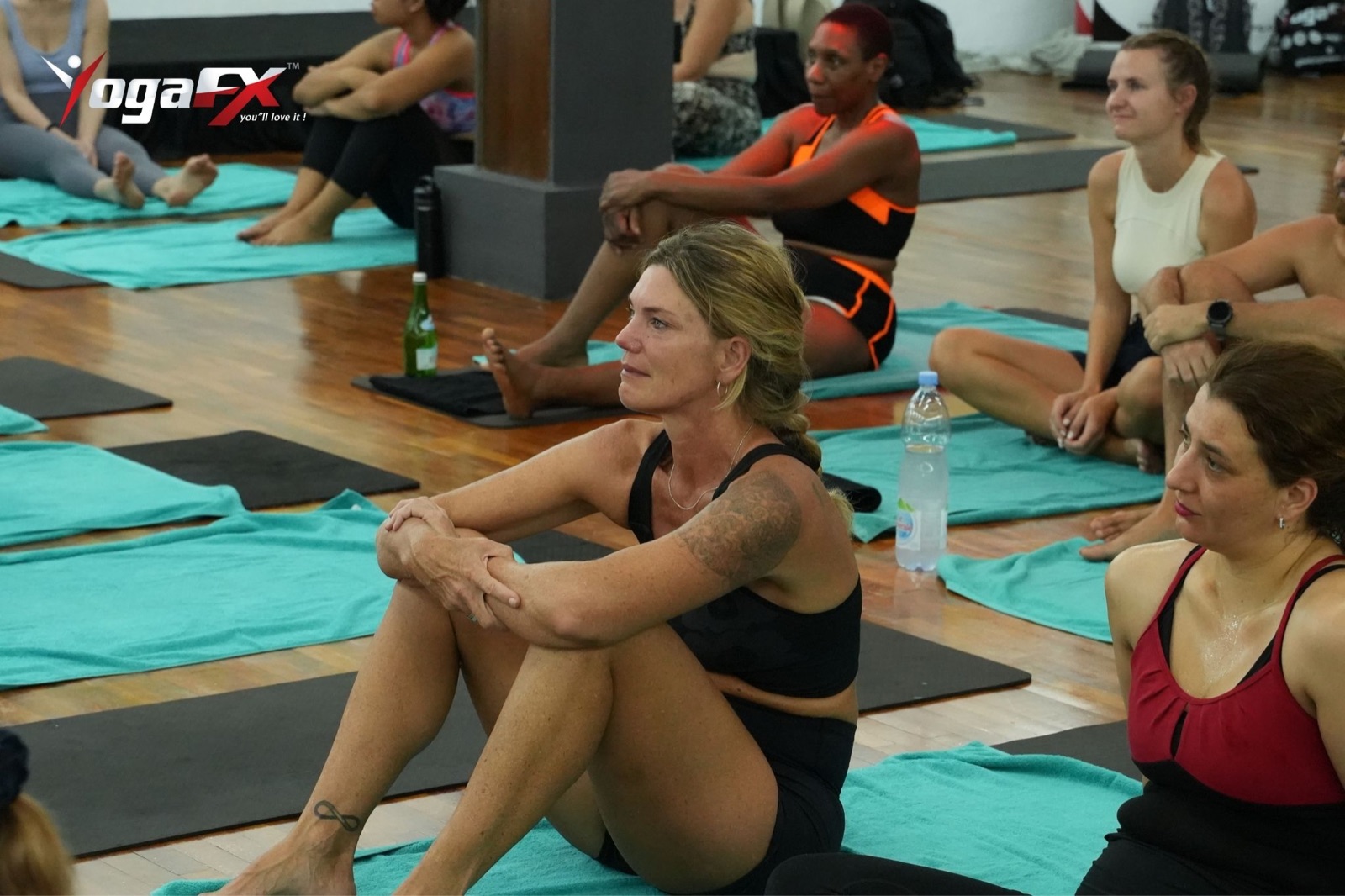
A fixed series gives you the same posture in the same place every day. That makes progress visible, and it makes mistakes easier to catch without a teacher in the room. A flow gives you variety. Both have a place, so use the test to decide which one earns your time.
What YogaFX Students Say About Learning the Fixed Sequence
Numbers only go so far. YogaFX has 150 Google reviews, 50 Yoga Alliance reviews and 357 YouTube video reviews, and three of them speak to learning a set class. That is the practical side of bikram vs hot yoga. Names are first names only.
"This has actually exceeded my expectations of what the experience would be."
Ajay, YouTube review, 2024
"For one week I can join this class and I can change my posture."
Lidya, YouTube review, 2023
"You made me meet the great people and made me learn a lot of new things."
Wanda, YouTube review, 2019 (translated)
None of them says the sequence was easy. They say it was clear, and clarity is what a fixed class gives a learner. Here's Ajay's full video review.

Bikram vs Hot Yoga for Future Teachers
If you want to teach, bikram vs hot yoga becomes a choice between a script and a blank page. Teaching free-form hot yoga means building your own sequences and cues. Teaching the 26&2 means learning a dialogue word for word, then reading the room while you speak. Many new teachers find the script freeing, because it leaves their attention for the students.
Mr. Ian Terry trained for five years, from 2014 to 2019, with the founder of the method. He has taught more than 12,000 hours, and YogaFX graduates now come from more than 80 countries. The online course is USD 329, or 4 x USD 82, and it starts with the fixed sequence so you learn the words and the order first.
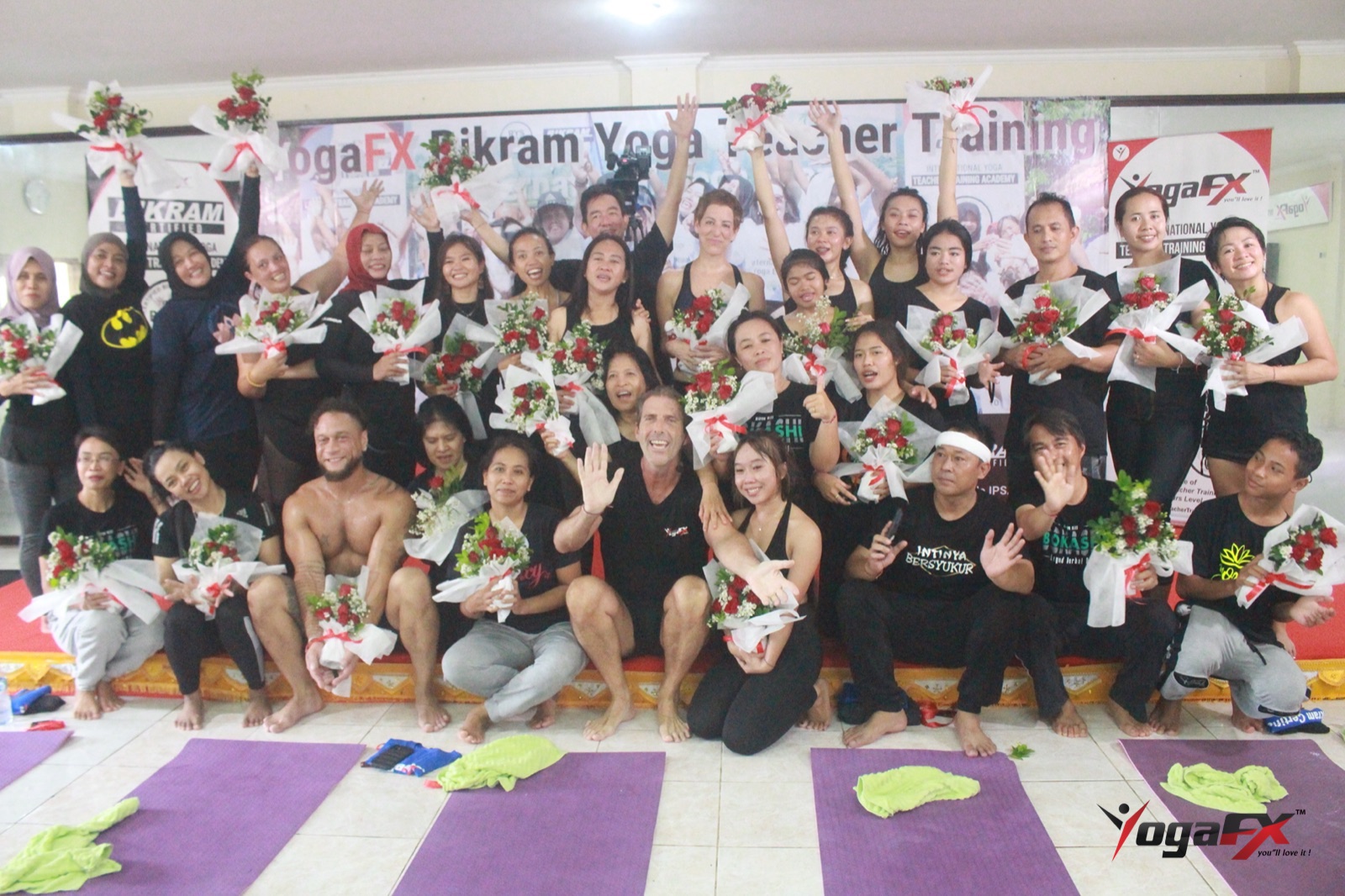
To see how the course works week by week, read how online yoga teacher training works. If you are weighing programmes rather than classes, the YogaFX Teacher Training hub compares the options in one place.
This article is part of our what is hot yoga guide. Related reading in Bikram and Hot Yoga Explained: Hot Yoga vs Pilates: Honest Evidence for Men (80% vs 54%) and Bikram Yoga History and the Science: When Researchers Started Measuring Hot Yoga.
FAQ
Is Bikram yoga and hot yoga the same?
No. Bikram is one type of hot yoga: a fixed 90-minute class of 26 postures and 2 breathing exercises at about 40°C (104°F). Hot yoga is any yoga in a heated room, so the style, heat and length change from studio to studio. Every Bikram class is hot yoga, but most hot yoga is not Bikram.
What is the difference between Bikram and hot yoga?
The main differences are structure and teaching. Bikram follows the same sequence every time, taught from a script with no music. Hot yoga leaves the sequence, music, temperature and length to the teacher. In research, that means Bikram is easier to test, while results for hot yoga depend on the class studied.
Is Bikram hot yoga good for you?
Studies link regular heated yoga to changes in balance, flexibility and body composition. Findings on mood are promising but inconclusive. Heat also raises heart rate and body temperature, so it carries risks. This is general information, so please consult a healthcare professional before starting if you have a medical condition.
Is Bikram hot yoga hard?
It can feel hard at first. In one study, regular practitioners averaged about 80% of predicted maximum heart rate in men and 72% in women, even though there is very little movement. The postures repeat every class, so many students find it easier to learn. Rest whenever you need to.
Does hot yoga work better than regular yoga?
Not proven. A 2025 review of 43 studies found heated classes raised body temperature and heart rate but not energy use compared with non-heated yoga. The authors call claims of greater health benefits unsubstantiated at present. Pick the style you will keep doing, because consistency matters most.
Still have questions? Message Mr. Ian and the YogaFX team on WhatsApp and we will answer them personally, or look at the online hot yoga teacher training course. This article is general information, not medical advice, so please consult a healthcare professional before starting any heated practice.

Founder and lead trainer of YogaFX International Yoga Teaching Academy, with more than 12,000 hours of teaching. He trained for 5 years, from 2014 to 2019, with the founder of the Bikram Hot 26&2 method.
Published · Last reviewed and updated
You may also like
Explore all articles Bikram and Hot Yoga Explained11 min read20 Nov 2026
What Is Hot Yoga? The Science of Practising in the Heat
Read article ↗ Bikram and Hot Yoga Explained12 min read16 Nov 2026
Hot Yoga vs Sauna: How Heat Studies Compare Moving and Sitting
Read article ↗ Bikram and Hot Yoga Explained12 min read15 Nov 2026