
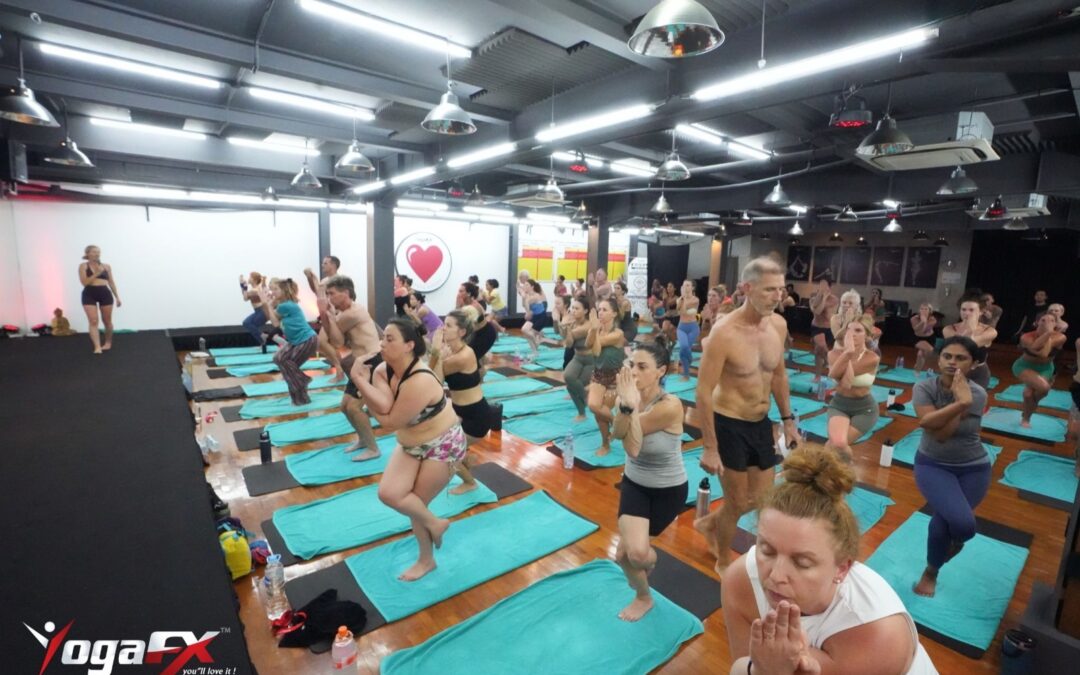
Hot vinyasa vs Bikram comes down to one question: do you want a class that changes, or one that never does? Hot vinyasa is a flowing class that is new every time. Bikram, now taught as the Original Hot 26&2, is the same 26 postures and 2 breathing exercises in the same order. For learning at home, the fixed series is easier to check.
If you're studying hot yoga online, the hot vinyasa vs Bikram difference matters more than the music or the room. A set sequence gives you something to measure yourself against. A flow gives you something to enjoy. This guide helps you decide which one should be your learning format, and which one can be your treat.
Hot Vinyasa vs Bikram: The Short Answer for Home Study
Most hot vinyasa vs Bikram comparisons ask which class is the better workout. That's the wrong question for a home learner. The better question is: which format lets me find my own mistakes without a teacher in the room?
Here is the verdict. If you are learning to practise, or learning to teach, start with the fixed 26&2 sequence. You will see the same posture in the same place every day, so progress is visible. If you already know the basic shapes and crave variety, a hot vinyasa class is a fine addition once or twice a week.
- Choose the set 26&2 series if you want to track progress posture by posture, learn from a script, or prepare to teach.
- Choose hot vinyasa if you get bored by repetition, love a playlist, and already move comfortably between standing and floor poses.
- Use both if you want a stable benchmark early in the week and a freer class later.
Neither side of the hot vinyasa vs Bikram debate is better in every way. They simply train different habits. The rest of this article shows why, using what you can check at home, what research can and cannot tell you, and a simple four-week test.
If you want the teacher's-eye view of the same debate, we also wrote a longer comparison on a sister site: a 26&2 teacher's side-by-side of Bikram and vinyasa. This page stays focused on learning online.
Why the Set Series Wins the Hot Vinyasa vs Bikram Test at Home
Think about how you learn a song, because hot vinyasa vs Bikram works the same way. You can play along with a recording over and over, and each time you hear exactly where you drifted. Now imagine the song changed every day. You would still be making music, but you could not tell if you were getting better.
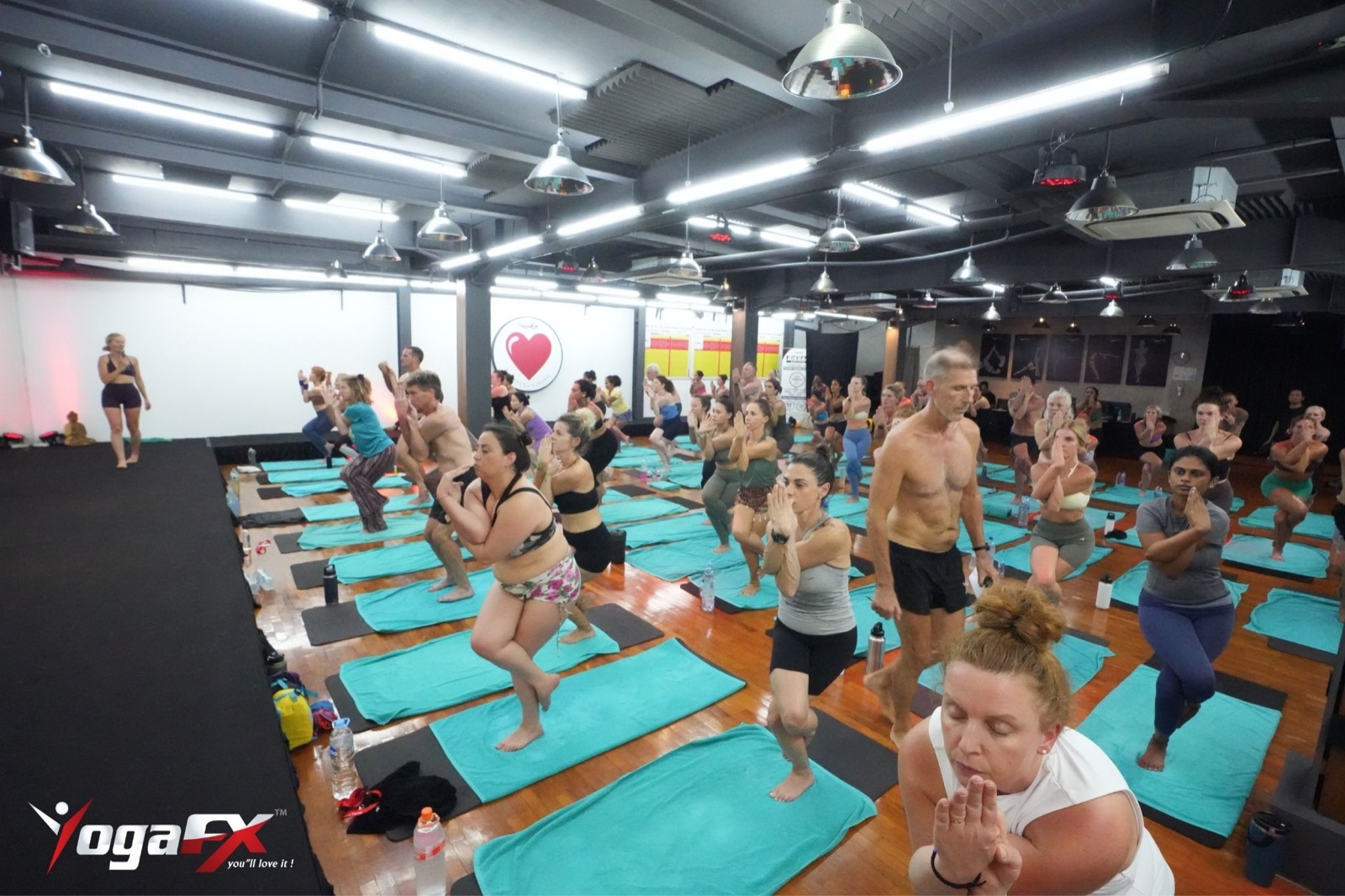
So a set yoga series works like the recording. Because the order never changes, you know what comes next, so you can spend your attention on how the posture looks and feels. That is a real advantage when nobody is there to correct you.
You can check yourself against a script
The 26&2 class is taught with a scripted dialogue. The words for each posture are the same every time. So you can read the cues, film yourself, and ask a simple question: does what I did match what the script asked for?
You can run that test on one posture in under two minutes. Prop your phone against a wall, film your standing series, then watch it back with the cues beside you. Check the knee, the hip line, the spine and the breath. Our full posture-by-posture guide to the 26&2 sequence lists every step in order, which makes this easy.
Flow gives you less to check in hot vinyasa vs Bikram
A hot vinyasa class is built fresh by each teacher. One week it might have long chair holds, the next week it might have fast lunges. That is the whole charm. But for home study it creates problems, because you can't tell what changed.
- No fixed reference. You cannot tell whether a hard class was hard because you are weaker or because the teacher chose a harder sequence.
- Faster transitions. Movements linked on the breath go by quickly, so a form error is easy to miss on video.
- Less repeatable cues. The wording changes, so you cannot learn one script and polish it.
None of this makes hot vinyasa a poor choice. It's a different tool. It does make it a poor measuring stick. If you are practising for fun, you do not need a measuring stick at all.
Hot Vinyasa vs Bikram: The Home-Study Checklist
The table below puts the two formats side by side using things a home learner actually cares about. It describes how each format is usually taught. Room settings and class length for flow styles vary by studio, so treat those rows as typical rather than fixed.
| What you want to check | Set 26&2 sequence | Hot vinyasa flow | Why it matters at home |
|---|---|---|---|
| Same class every time | Yes. 26 postures and 2 breathing exercises, in order | No. New flow each class | A repeatable class is the easiest to compare week to week |
| Class length | 90 minutes | Often around 60 minutes, set by the studio | A long, steady class shows how your focus holds up |
| Room conditions | About 40°C and 40% humidity | Warm to hot, set by each studio | Known numbers let you set up a safe home room |
| Instructions | Scripted dialogue, no demonstration | Teacher's own cues, often with a demo and music | A script is easier to read, film against and copy |
| Pace | Steady. Hold, release, rest | Often faster, linked on the breath | A slower pace gives you time to notice alignment |
| Best for | Learning the basics, tracking progress, preparing to teach | Variety, music, upper-body transitions | Pick by your goal, not by the label |
Where hot power yoga and hot yoga sculpt fit
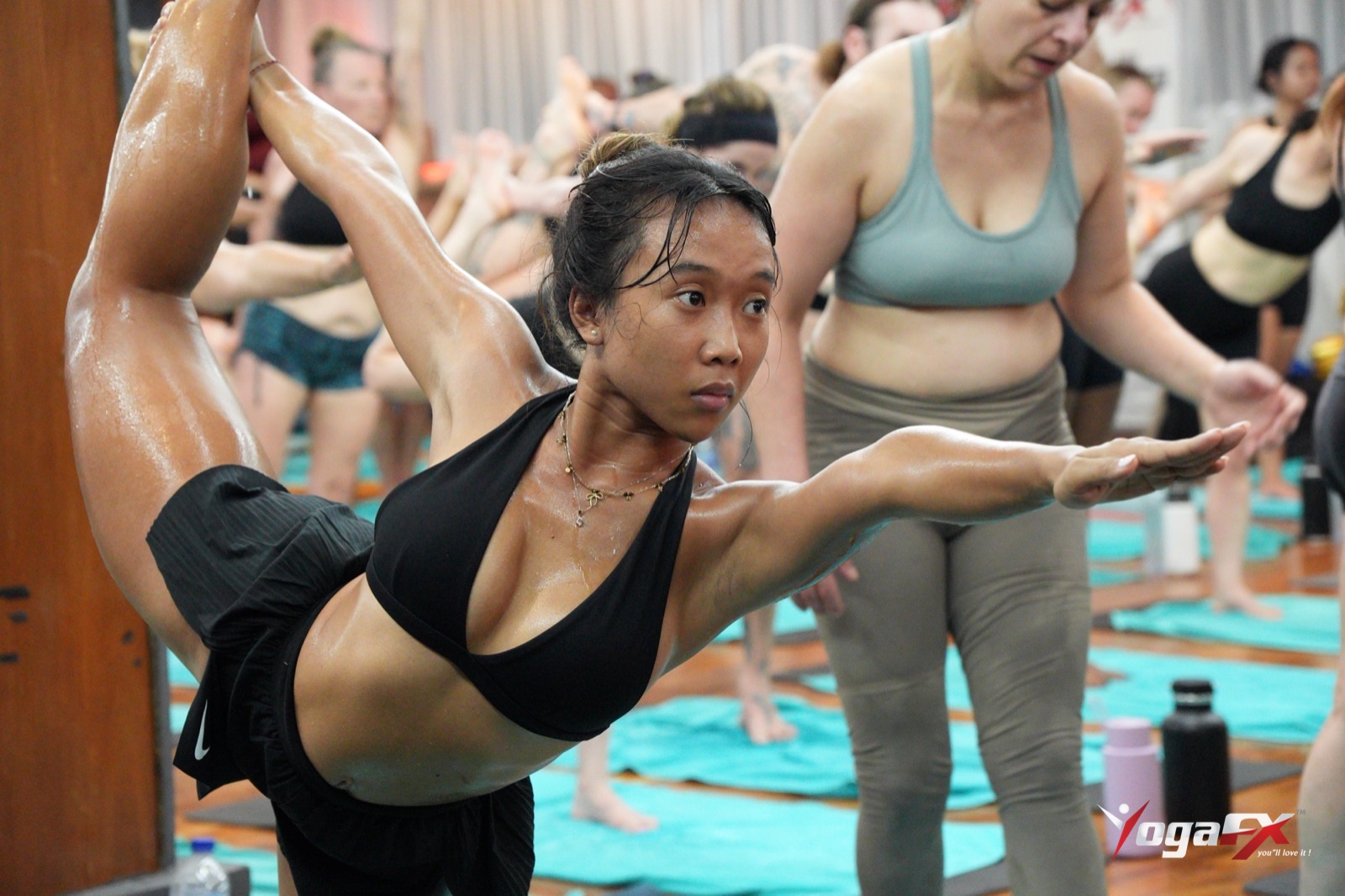
Studios use the word hot for several flow offshoots, so the hot 26 vs hot flow split is only half the picture. Hot power yoga is a faster, strength-led flow. Hot yoga sculpt adds light weights and short cardio bursts. Both are fun, and both change every class.
So when people compare hot yoga vs hot power yoga for home study, the same rule applies: the more the class changes, the harder it is to check your own form.
Hot Vinyasa vs Bikram: What the Research Can and Cannot Tell You
It is tempting to look for a study that crowns a winner. We looked. The honest answer is that the studies we cite here each tested one format, not the two against each other. So no one can tell you from research alone which side of hot vinyasa vs Bikram is healthier. What the studies do give you is a picture of what a hot class asks of your body.
What a 90-minute hot class does to the body
A well-known study commissioned by the American Council on Exercise looked at the standard class. Researchers at the University of Wisconsin-La Crosse, led by John Porcari, tracked 20 volunteers through one 90-minute class: 7 men and 13 women, aged 28 to 67, all regular practitioners.
Average heart rate reached about 80% of predicted maximum for the men and 72% for the women. Core temperature averaged a peak of 103.2°F in men and 102.0°F in women. One man reached 104.1°F. You can read the write-up on the ACE ProSource page for the Bikram yoga core temperature study.
Two lessons matter for you. First, a heated class raises heart rate and body temperature a lot, so heat safety is not optional. Second, this was a small group of experienced students, so it cannot tell a beginner what to expect. That's exactly why a home learner should start gently.
What it does for mood
A 2023 trial from Massachusetts General Hospital (Nyer and colleagues) tested a heated hatha yoga class in adults with depression. After 8 weeks, about 59% of the yoga group had a drop of 50% or more in depression symptoms, against about 6% of a waitlist group.
That's encouraging, but it describes a supervised heated class, not a home flow, and it does not rank one yoga style above another. If you live with depression, please talk to a healthcare professional before starting.
Keep both studies in proportion. They show that heated yoga is worth taking seriously. They don't prove that either side of hot vinyasa vs Bikram beats the other. For a wider view of what has been measured, see our guide to hot yoga vs regular yoga in heated and room-temperature trials.
Heat Safety at Home: Know the Warning Signs
Most home learners don't have a 40°C room, and you don't need one. If you practise at home, keep the room warm and comfortable rather than extreme, and build up slowly. The goal is to learn the shapes, not to survive the heat.
According to the Mayo Clinic overview of heat exhaustion, the warning signs include heavy sweating, faintness, dizziness, fatigue, a weak and rapid pulse, muscle cramps, nausea and headache. It advises stopping all activity, moving somewhere cooler and drinking cool water or a sports drink. It also says a core temperature of 104°F (40°C) or higher needs urgent medical attention.
- Stop at the first warning sign. Do not push through dizziness to finish the class.
- Keep a bottle and towel within reach so you never have to leave your mat to cool down.
- Open a door or window between sessions and let the room cool.
- Check with a doctor first if you have a heart condition, low blood pressure, are pregnant, or take medication that affects heat tolerance.
This applies to both formats. A fast flow in a warm room can overheat you just as easily as a slow series.
A Four-Week Home Test: Try Both and Keep a Log
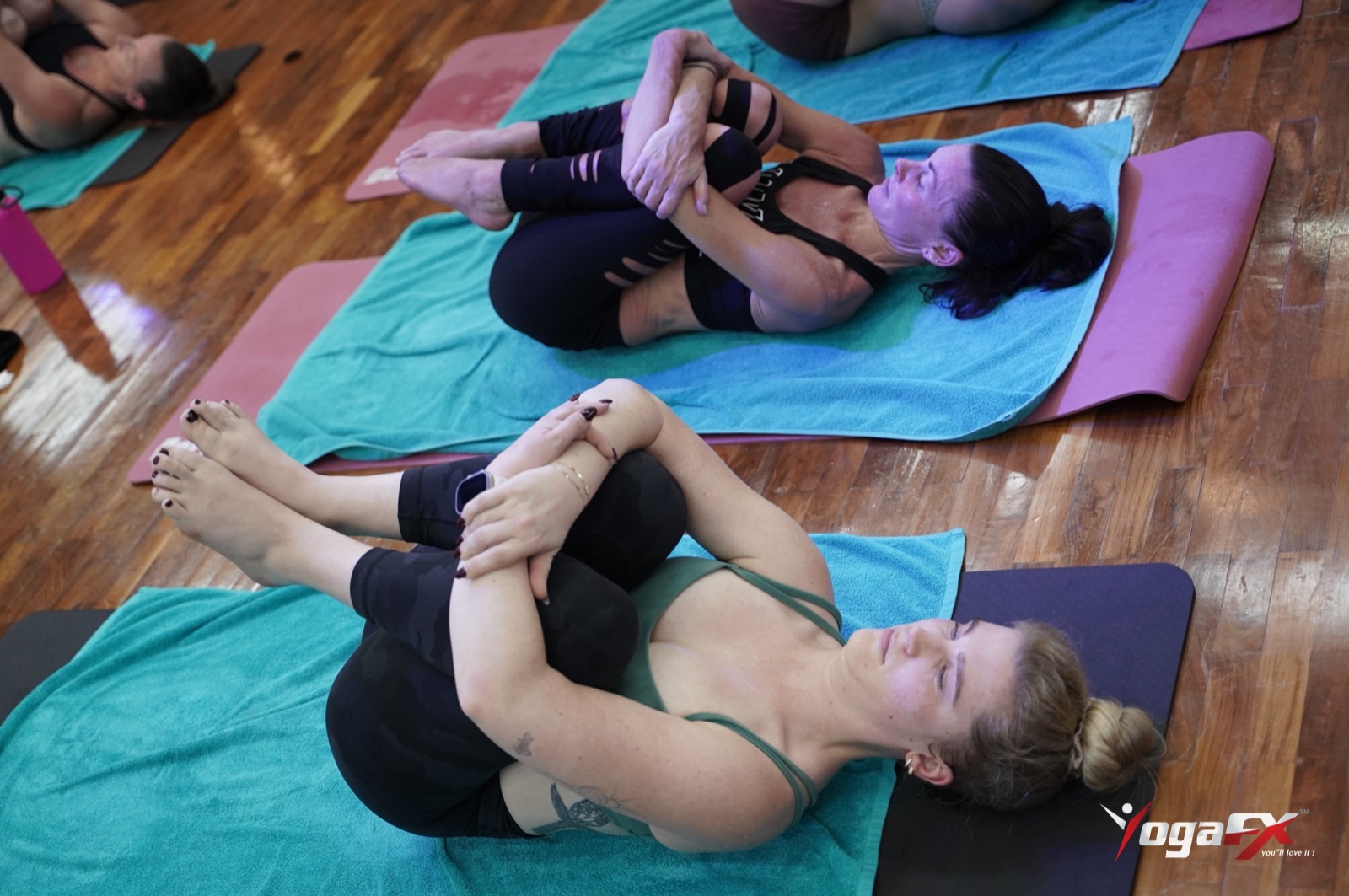
You don't have to decide in the abstract. Run a simple test. It takes four weeks, three sessions a week, and a notebook. The point is to learn what you actually stick with, because the format you keep doing beats the format that looks best on paper.
Weeks 1 and 2: learn one series
- Pick the standing series from the 26&2 sequence and read the cues before you start.
- Film one posture per session and note one thing to fix next time.
- Rate your effort from 1 to 10 after each session. The same class gives you a fair comparison.
Weeks 3 and 4: add one flow class
- Swap one session a week for a hot vinyasa class, online or in a studio.
- Rate the same things: effort, enjoyment, and how easy it was to notice your own form.
- Write one sentence at the end: which one would I do again tomorrow?
At the end of the hot vinyasa vs Bikram test, read your log. Most people find that the fixed series feels harder to start but easier to improve, because they can see what changed. Others discover they simply love the freedom of flow. Both answers are useful because they're honest. If you want help turning this into a structured plan, our guide to whether hot yoga is a good workout explains how to read your effort numbers.
Hot Vinyasa vs Bikram for Future Teachers
If your goal is to teach, the hot vinyasa vs Bikram choice gets sharper. Teaching a flow means building your own sequence and cueing it on the fly. That's a real skill, and it comes after you know the postures well, so don't rush it. Teaching the set series means learning a dialogue and delivering it clearly and in time.
Both skills are worth having. But the fixed series is the gentler place to start, because the words and the order are already written. You learn to speak, to pace and to watch students, without also inventing the class. That is why the online teacher training at YogaFX is built around the set sequence first.
Mr. Ian Terry, an E-RYT 500 with more than 12,000 teaching hours, trained for five years, from 2014 to 2019, with the founder of the method, and has now taught graduates from more than 80 countries.
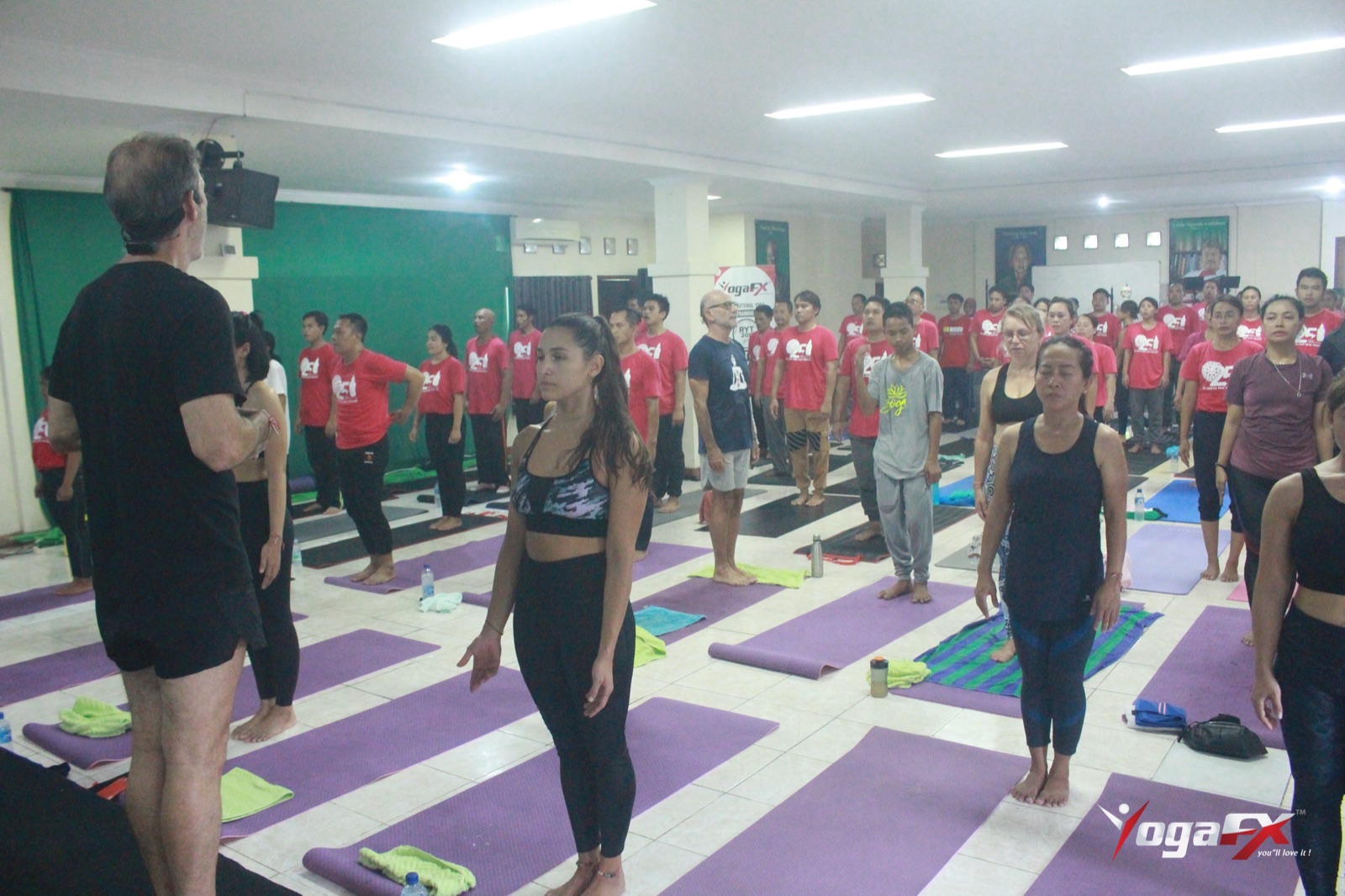
If you are weighing a course, read our honest breakdown of how online yoga teacher training works week by week and visit the YogaFX online hot yoga teacher training home page to see how the course is laid out.
What Students Say About Learning the Set Series
We asked what reviewers said about learning the sequence with YogaFX. Three comments stood out. Names are first names only, and the quotes are as the students wrote or said them.
"he teaching me yoga very well.. I feel very proud to be a student of yoga FX."
Ira, Google review, 2020
Ruby, in a YouTube video review from 2025, said Mr. Ian's structure helped trainees catch up with the dialogue in just a few days. She added that anyone who keeps practising with others will be teaching before long. (YouTube review, Ruby, 2025, paraphrased.)
Jan, in a YouTube thank-you video from 2019, called his three weeks with the team very good and thanked Mr. Ian for the work he put in. (YouTube review, Jan, 2019, paraphrased.)
As a result, none of these reviewers said the sequence was easy. They said it was clear, and that is the point of a set series.
Hot Vinyasa vs Bikram: How to Choose in Five Minutes
If you are still unsure, answer these four questions honestly. Your answers settle hot vinyasa vs Bikram for today, and you can change your mind later.
- Do I want to measure progress? If yes, start with the set sequence.
- Do I get bored easily? If yes, add a flow class so you keep showing up.
- Am I preparing to teach? If yes, learn the set series first, then flow.
- Do I have any health condition affecting heat? If yes, speak to a healthcare professional before either one.
Whatever you pick in the hot vinyasa vs Bikram choice, aim to practise two or three times a week. Consistency beats the perfect format.
FAQ
Is hot vinyasa the same as Bikram?
No. Hot vinyasa is a flowing, breath-led class that changes every time, usually with music. Bikram, now taught as the Original Hot 26&2, is a fixed series of 26 postures and 2 breathing exercises, held in the same order for 90 minutes. They share heat, not structure.
Is hot vinyasa a good workout?
It can be. A fast, strength-led flow raises your heart rate and works muscular endurance, though the effort depends on the teacher and the pace. Because every class differs, it's harder to track progress than in a set series. Check with a doctor first if you have a heart condition.
Is hot vinyasa yoga hard for beginners?
It can be, because flows move quickly and the teacher often assumes you know the basic shapes. A beginner may find a set, scripted series easier to follow, since the order never changes. If you try flow, pick a slower class and tell the teacher you are new.
How hot is hot vinyasa?
There is no single standard. Each studio chooses its own temperature, so one class may feel warm and another may feel close to a 26&2 room. The Original Hot 26&2 standard is about 40°C with 40% humidity. Ask the studio what temperature it uses before you book.
Which is better for home practice, hot vinyasa or Bikram?
For learning at home, the fixed 26&2 series is easier to self-check, because the posture order and cues never change and you can compare videos week to week. Hot vinyasa suits learners who already know the shapes and want variety. Use both if you can, and keep the room safe.
Still have questions? Message Mr. Ian and the YogaFX team on WhatsApp and we will answer them personally. This article is general information, not medical advice, so please consult a healthcare professional before starting any heated practice.

Founder and lead trainer of YogaFX International Yoga Teaching Academy, with more than 12,000 hours of teaching. He trained for 5 years, from 2014 to 2019, with the founder of the Bikram Hot 26&2 method.
You may also like
Explore all articles ↗ Teacher Training Guides11 min read14 Nov 2026
International Yoga Sports Federation and Yoga as a Sport: What Recognition Requires
Read article ↗ Teacher Training Guides11 min read13 Nov 2026
Sauna After Hot Yoga? What Core Temperature Data Suggests
Read article ↗ Teacher Training Guides10 min read13 Nov 2026