
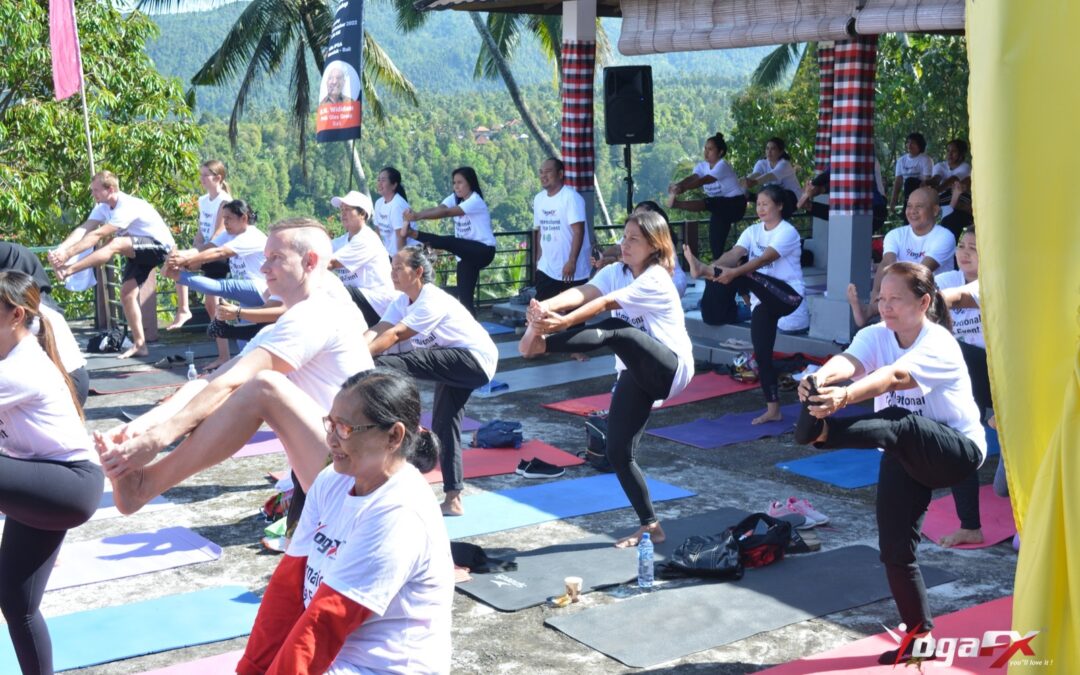
The standing bow pulling pose (Dandayamana-Dhanurasana) is a one-leg balance. You hold one foot behind you, kick it back and up, and reach your free arm forward. You can learn the shape online by listening to the spoken dialogue, rehearsing each cue at home and checking a phone clip against it.
In this article13 sections
- Standing Bow Pulling Pose Online: What You Can Learn at Home
- Seven Cues to Rehearse for the Standing Bow Pulling Pose
- How the Dialogue Teaches the Standing Bow Pulling Pose by Ear
- Studio Versus Living Room: What Changes Online
- How Hard Is the Standing Bow Pulling Pose? A Simple Effort Check
- Standing Bow Pulling Pose at a Glance
- A Four-Week Online Plan for the Standing Bow Pulling Pose
- What Research Says About the Standing Bow Pulling Pose
- Where the Standing Bow Pulling Pose Sits in the Standing Series
- From Learning the Posture to Teaching It
- What YogaFX Students Say
- When to Check With a Professional First
- FAQ
Most online guides show you the shape and stop there. The harder skill is hearing a cue and knowing what your body should do next. In a studio, the teacher's voice does that job for 90 minutes. At home, you have to build the same listening habit yourself.
This guide to the standing bow pulling pose is written for online learners. It gives you seven cues to rehearse, a table of what changes between the studio and your living room, and a four-week plan. It also reads the research honestly, and it shows where the YogaFX Online Course fits if you want to teach the dialogue one day.
A quick note first. This is education, not medical advice. If you have a knee, hip, shoulder, back or balance problem, speak to a healthcare professional before you practise. Do all the work below at room temperature, and keep the heated room for class.
Standing Bow Pulling Pose Online: What You Can Learn at Home
You can learn three things about the standing bow pulling pose without a teacher in the room: the order of the cues, the shape of each part and the usual faults. You can't learn how your body feels in minute 70 of a heated class. That part needs the room.
So think of online learning as rehearsal. You study the posture while you are fresh, calm and cool. Then you carry a clear picture of the standing bow pulling pose into the heated room, where the heat and the voice fill in the rest.
The posture asks for three skills at once, and that is why it feels hard:
- Balance. One locked standing leg holds your whole weight, so your eyes, inner ear and feet all have to agree.
- Strength. The standing thigh stays firm, which keeps the knee straight without forcing it backward.
- Flexibility. The front of the held hip and thigh lengthens, and the shoulder of the free arm opens.
Train the weakest skill first, whatever stage your standing bow pulling pose has reached. A student with a shaky standing leg gains more from calm balance work than from a deeper kick.
Mr. Ian Terry, E-RYT 500 with more than 12,000 teaching hours, leads the YogaFX Online Course, which teaches the 26 postures and the dialogue at home. That idea of fixing the weakest link first runs through every section below.
Seven Cues to Rehearse for the Standing Bow Pulling Pose
These are plain-language cues, not the class script. The exact words come from the dialogue your teacher speaks. Rehearse each cue of the standing bow pulling pose slowly near a wall, then film one clip per side and run the check beside it.
- Pick your spot. Choose one fixed point at eye level and keep your eyes there. Check: do your eyes stay put for the whole hold?
- Lock the standing leg. Press the whole foot down and lift the kneecap by tightening the thigh. Check: the clip should show a straight, firm leg, not a knee shoved backward.
- Square the hips. Point both hip bones at the front of the room. Check: film from the front and see whether one hip rides up.
- Take the foot. Bend the other knee and hold the foot with the same-side hand. Check: is the grip steady before you move anything else?
- Raise the free arm. Lift it beside the ear and keep the shoulder low. Check: does the elbow stay long, or does it bend?
- Kick, then reach. Push the held foot back and up into your hand, then let the chest lower as the arm reaches forward. Check: does the kick start before the chest tips?
- Release with control. Come up slowly, breathe out and repeat on the other side. Check: do you wobble on the way out?

Look at the list again. Every check is something you can see on a clip, and that is the whole point of rehearsing online. A cue you can't check is just a hope.
Start with a lower foot
Most people cannot kick the foot high on day one, and that is normal. Height is the last thing to chase. Hold the foot at the level where both hips stay square and the standing knee stays firm, then raise it a little each week. A modest standing bow pulling pose with good form teaches more than a high, twisted one.
How the Dialogue Teaches the Standing Bow Pulling Pose by Ear
The 26&2 class is taught by a fixed spoken dialogue. There is no demonstration and there is no music. You listen, and your body follows the words. For online learners that is a gift, because you also learn by ear, one cue at a time.
Mr. Ian Terry trained for five years, from 2014 to 2019, with the founder of the Bikram Hot 26&2 method. He now teaches the dialogue to YogaFX students and trainees. If you want the full story of where the words come from, read our guide to learning the Bikram yoga dialogue from home.
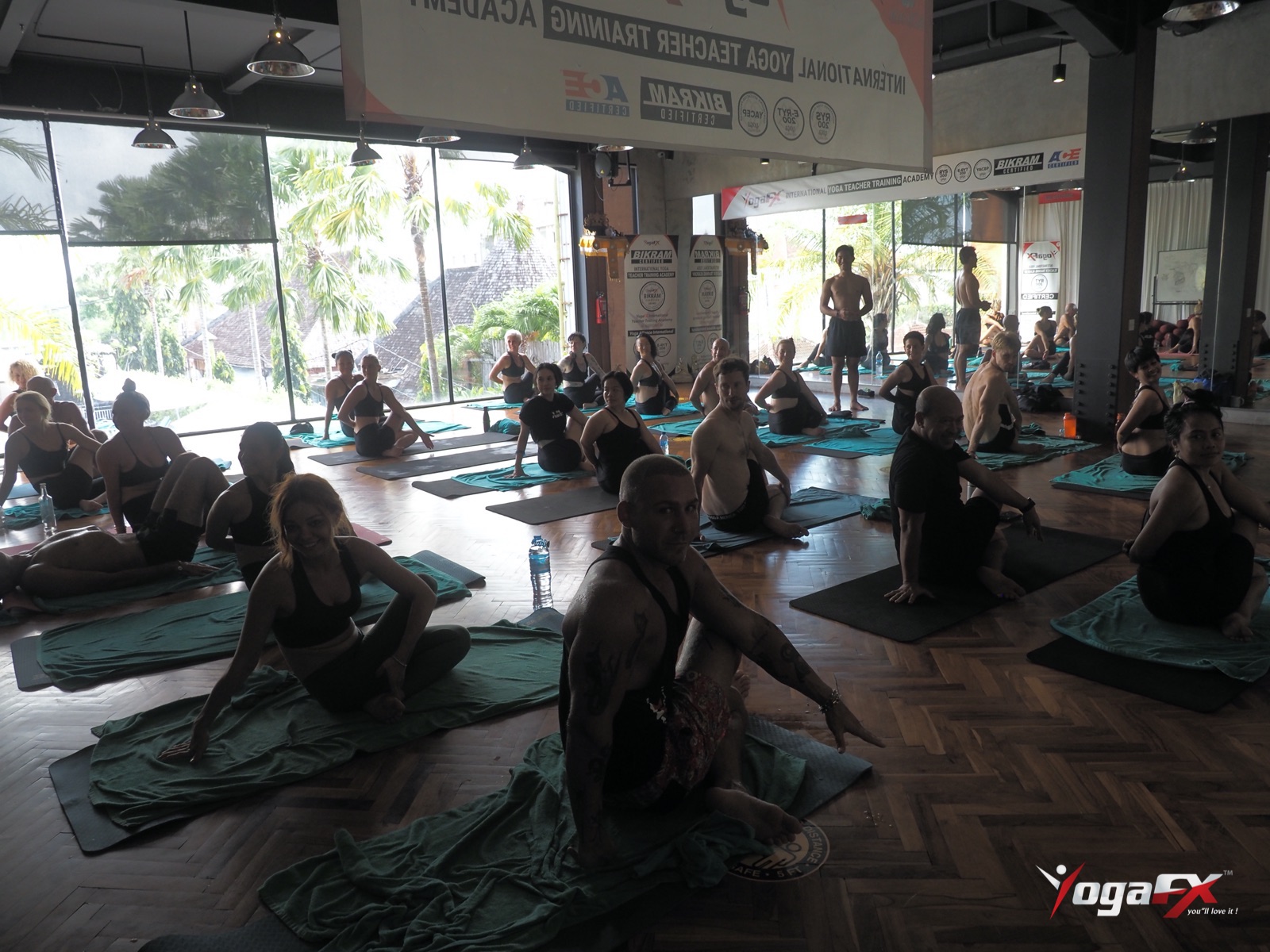
One graduate described what that listening does for a future teacher. In a YouTube review, Aditya said the training put students in front of the room early, by about the second day. He also said it taught him to look at a student's body instead of only reciting the dialogue. That is a paraphrase of his video, which you can watch further down this page.
Three listening drills for home
- Say it aloud. Speak each cue from the list above in your own words before you move. If you cannot say it, you do not yet own it.
- Close your eyes for the first breath. Listen to your own voice, then open your eyes and set your gaze point. The order matters more than the speed.
- Record the cues. Say all seven cues into your phone, then play them back while you rehearse. This is the first step toward teaching the posture.
These drills sound simple, yet they train the thing a heated room trains for you: following a voice when your attention is thin. After a week of drills, most people stop reading the steps and start hearing them.
Studio Versus Living Room: What Changes Online
The standing bow pulling pose is the same, but the conditions aren't. The table below shows the main differences and how to adapt, so you do not copy a studio habit that only works in the heat.
| Factor | In the heated class | At home online | How to adapt |
|---|---|---|---|
| Heat | 90 minutes at 40°C (104°F) with 40% humidity | Room temperature | Muscles may feel less loose, so keep the kick small and do not force the hip. |
| Voice | The teacher speaks the dialogue live | You read, replay or recite the cues | Say each cue aloud before you move. |
| Eyes on you | The teacher can spot a drifting hip | Nobody is watching | Film a side clip and a front clip, then compare them with the cue. |
| Mirror | A studio mirror at the front | A wall mirror, a window or your phone | Check both sides before you start, and again after you finish. |
| Fatigue | The standing leg arrives tired after earlier postures | You arrive fresh | Rehearse after a few easy one-leg balances so the leg is warm, not fatigued. |
| Pace | The class moves on without you | You can pause, rewind and repeat | Use the pause button to fix one cue per session. |
The biggest gap is the third row. In class, someone sees your hip drift and says so. At home, the clip does that job, so film every session for the first four weeks. Every other row follows from that one.
The pace row is the quiet advantage. A class never stops for you, but a clip does. You can pause the clip at the moment the hip opens and ask which cue you missed. That is a kind of feedback a busy room rarely gives.
How Hard Is the Standing Bow Pulling Pose? A Simple Effort Check
Coaches often split effort into five zones. As a rule of thumb, zones 3 and 4 are the middle of the scale: comfortably hard to hard. Many new students will find the standing bow pulling pose lands in that band, because balance, strength and flexibility all work together. This is a coaching rule of thumb, not a measurement.
We did not find a study that tracked heart rate in this single posture.
So use your own body as the gauge. Run this check at home, at room temperature, right after you release the posture:
- Breath. Can you still breathe through your nose, or are you gulping air through your mouth?
- Talk test. Could you say a short sentence? If you cannot, the effort is too high for a learning session.
- Recovery. Does your breathing settle within a few breaths? If it stays ragged, rest before the next side.
If the answers are poor, shorten the hold or lower the foot. In the heated room, heart rate climbs for other reasons too. Our guide to hot yoga heart rate and what the zones mean explains that side. Stop at once if you feel dizzy, sick or sharp pain.
Standing Bow Pulling Pose at a Glance
Here are the headline facts in one place. Every card comes from the fixed class format, the course page or the trainer's credentials, so none of it changes from class to class.
A Four-Week Online Plan for the Standing Bow Pulling Pose
You can't force the standing bow pulling pose in one session, so build it in layers. Practise three short sessions a week with a rest day between them. Change one thing per session, because two changes at once hide which one worked.
| Week | Main focus | What to film | Goal for the week |
|---|---|---|---|
| 1 | Standing leg and gaze | Front clip of the standing foot and knee | A firm, straight leg and eyes that stay on one spot |
| 2 | Square hips and the grip | Front clip of both hip bones | Both hips facing forward with the foot held low |
| 3 | The kick | Side clip from head to heel | A real kick, with the hand holding what the kick makes |
| 4 | The reach and the release | Side clip of the whole posture, both sides | One smooth line and a slow, controlled exit |
How to film each session
- Side view. Lean the phone on a water bottle at hip height, about two metres away, and film each side once.
- Front view. Raise the phone to chest height for the week-one and week-two checks.
- Same spot, same light. Use the same place on your mat so the clips compare fairly.
- Keep the first take. A messy clip is the useful one, so do not re-shoot it.
After each session, write one line: which cue you worked on and what the clip showed. By week four you'll have a short diary that points to your weakest skill. If your thigh or lower back feels sore the next morning, ease off. Patience beats strain with this posture.
What Research Says About the Standing Bow Pulling Pose
Here is the honest position: the standing bow pulling pose has no study of its own. The two studies below look at whole heated classes and at yoga-based balance work, so treat them as background. Neither one looked at learning online.
Strength and flexibility in a heated class
In an exploratory randomised trial, Tracy and Hart (2013) assigned 21 healthy young adults to Bikram yoga or a control group. Ten did 24 sessions in 8 weeks, each a 90-minute class in a heated, humidified studio. Against controls, the yoga group gained deadlift strength, lower back and hamstring flexibility and shoulder flexibility, and lost a little body fat. Handgrip strength and cardiovascular measures did not change.
The sample was small, so treat it with care. You can read the abstract on PubMed.
Balance in older adults
A 2016 systematic review in Age and Ageing by Youkhana and colleagues pooled six trials with 307 participants aged 60 and over. Yoga-based exercise had a small effect on balance (Hedges' g = 0.40, 95% CI 0.15 to 0.65). It had a medium effect on physical mobility (g = 0.50, three trials). These were older adults, not students learning this posture, so the result is only a hint that regular practice supports balance.
Here is the abstract on PubMed.
Put the two together and the message is modest. Regular practice may help strength, flexibility and balance, and the standing bow pulling pose asks for all three. Neither study says the standing bow pulling pose will give you a particular result.
Where the Standing Bow Pulling Pose Sits in the Standing Series
The standing bow pulling pose doesn't stand alone. It comes straight after standing head to knee pose and just before balancing stick pose, so the standing leg is already warm when you reach it. Learning the neighbours helps you learn this one.
- Before it: our guide to standing head to knee pose trains the same locked standing leg.
- After it: balancing stick pose shares the kick and the long reach.
- For calm balance: tree pose and eagle pose train the same skill from easier shapes.
If you would like a studio-side view of the same posture, the team at 26and2yoga.com wrote a walk-through of this posture from a Bali class.
From Learning the Posture to Teaching It
Once you can hear a cue and see the result in your standing bow pulling pose, a new question appears.
Could you give that cue to someone else? That is where the YogaFX Online Course starts. It costs USD 329, or 4 payments of USD 82, and it covers the 26 postures, the dialogue and the science at home. Start from our hot yoga teacher training online page to see how it is laid out.
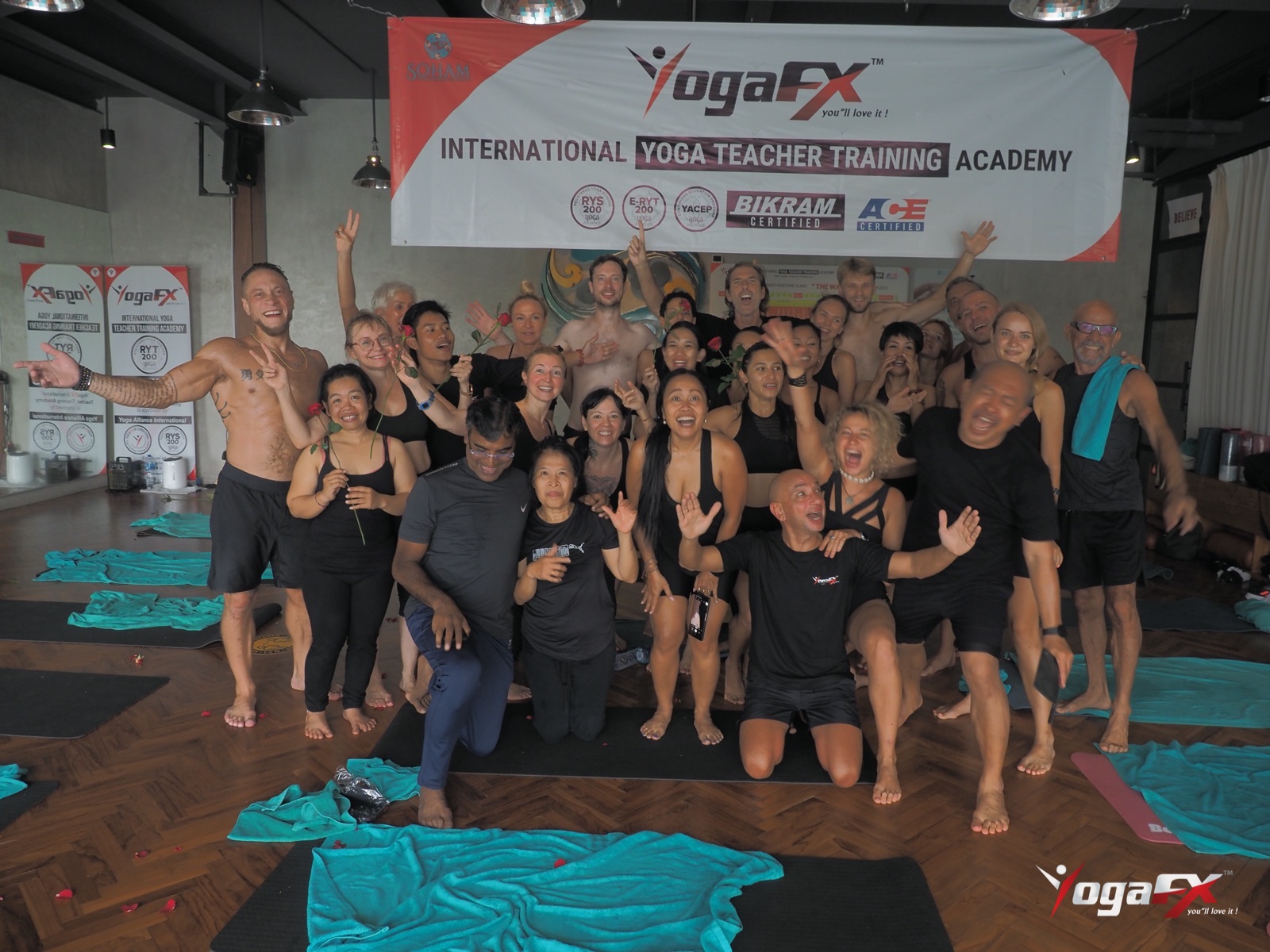
We cannot describe the exact feedback process on your practice clips here, because it can change between batches. Message the team on WhatsApp and ask how it works right now. That is a better answer than a guess in a blog post.
When you want the heat and a live teacher, the next step is the six-day hybrid Bikram Hot 26&2 Yoga Teacher Training MasterClass in Bali. The next batch checks in on Sunday 24 January 2027 and checks out on Friday 29 January 2027, at Soham Wellness Center in Seminyak.
What YogaFX Students Say
Students rarely praise the standing bow pulling pose, or any one posture, by name. They talk about the whole effort, and that effort is what builds a steady standing bow pulling pose. These short quotes come from the YogaFX review store. First names only, with the source and year.
“Training was well presented, learning material was of high quality, sessions were informative and enjoyable. Trainer was approachable and encouraging.”
Konrad, Yoga Alliance review, 2025
“Very amazing experience with Yogafx, i learn a lot from the training.”
Komang, Yoga Alliance review, 2019
Aditya's full video review is below. He talks about teaching early, managing nerves and watching the student's body, which is the skill every cue in this guide is trying to build.

When to Check With a Professional First
Balancing on one leg loads the knee, hip and ankle of the standing side, and the kick asks the shoulder and back to work. So a few people should get advice before they start.
- Joint injuries. Anyone with a current knee, hip, shoulder or back problem should talk to a healthcare professional first.
- Dizziness. If standing on one leg makes you dizzy, stop and get it checked before you practise again.
- Heat concerns. If you plan to move from home practice into a hot room, read about heat safety and talk to your doctor first.
A stretch in the front of the thigh is normal. A sharp pain in the knee, back or shoulder is not. Come out of the posture and tell your teacher about any injury before class.
This article is part of our complete guide to online yoga teacher training. Related reading in Teacher Training Guides: Tripaneer Bankruptcy: 7 Steps to Protect Your Yoga Teacher Training Deposit and Tripaneer Reviews and the Bankruptcy: Look Beyond the Booking Screen Before You Pay.
Want hands-on practice in a heated room? See the Bikram yoga teacher training in Bali, led by Mr. Ian Terry, our lead trainer.
FAQ
What is the Sanskrit name for standing bow pulling pose?
The Sanskrit name is Dandayamana-Dhanurasana. Dandayamana means standing, dhanu means bow and asana means pose, so the name simply describes the shape. Teachers often shorten the English name to standing bow. It follows standing head to knee pose in the standing series and comes just before balancing stick pose.
Is standing bow pulling pose the same as dancer pose?
They look alike in a photo, because both hold a back foot and ask for balance. The difference is in the teaching. Here the cues come from one fixed dialogue and the hips stay square, while dancer pose is cued in many ways. Check which version you are watching first.
Can I learn standing bow pulling pose online?
Yes, you can learn the cues, the shape and the common faults online. Film yourself from the side and the front, then compare each clip with the cue. A video cannot replace a teacher who sees you in the room, so keep goals modest and ask for feedback whenever you can.
What are the benefits of standing bow pulling pose?
Nobody has studied this single posture. The nearest evidence comes from whole heated classes, where young adults gained deadlift strength and flexibility, and from a review of yoga-based exercise in older adults that found a small balance benefit. Those findings are context, not a promise. Ask a healthcare professional first if you have an injury.
Why does my standing leg shake in standing bow pulling pose?
A little shaking is common, because the standing leg is doing a lot of work. Start by tightening the thigh, spread your toes and rest your gaze on a single spot. Rehearse next to a wall for support. If the shaking comes with pain, dizziness or numbness, stop and ask a healthcare professional.
Still have questions? Message Mr. Ian and the YogaFX team on WhatsApp and we will answer them personally.

Founder and lead trainer of YogaFX International Yoga Teaching Academy, with more than 12,000 hours of teaching. He trained for 5 years, from 2014 to 2019, with the founder of the Bikram Hot 26&2 method.
Published · Last reviewed and updated
You may also like
Explore all articles Teacher Training Guides11 min read23 Nov 2026
Tree Pose Balance Practice: Home Setup and Dialogue Cues
Read article ↗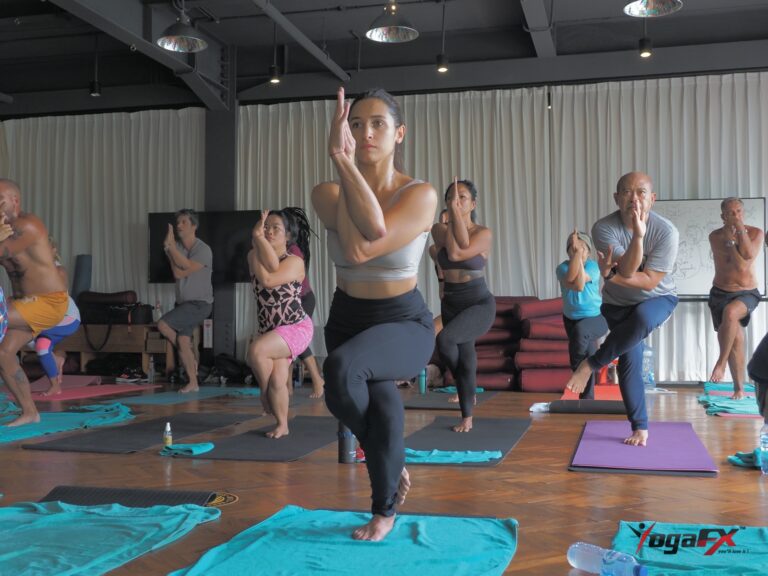 Teacher Training Guides12 min read23 Nov 2026
Eagle Pose: Steps, Cues and Fixes You Can Practise at Home
Read article ↗ Teacher Training Guides11 min read22 Nov 2026