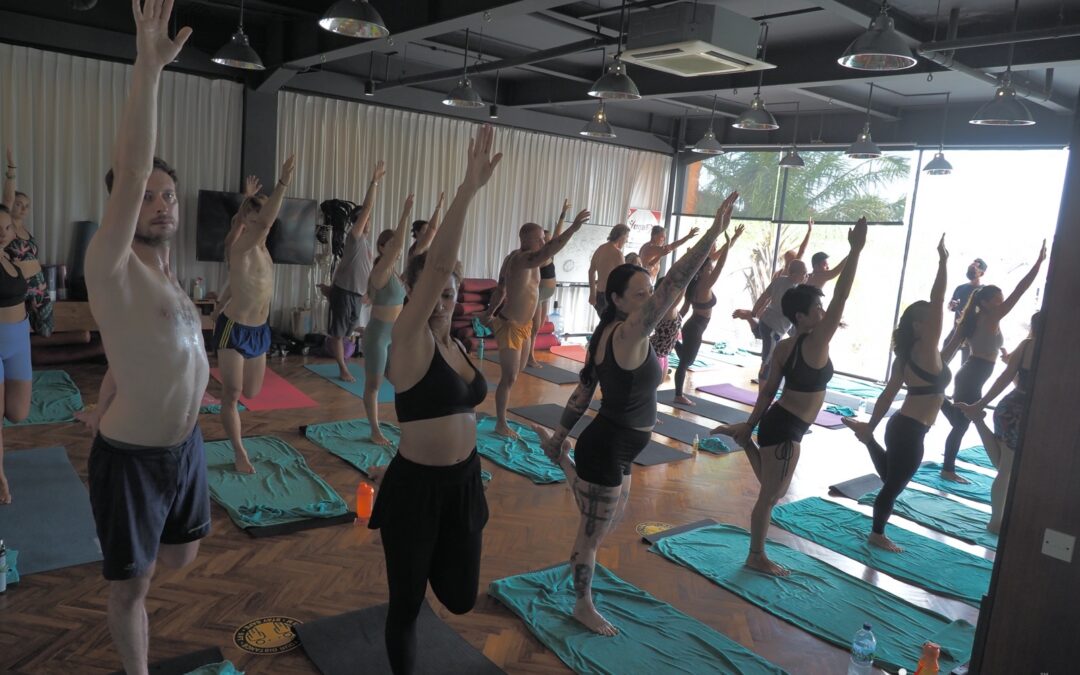
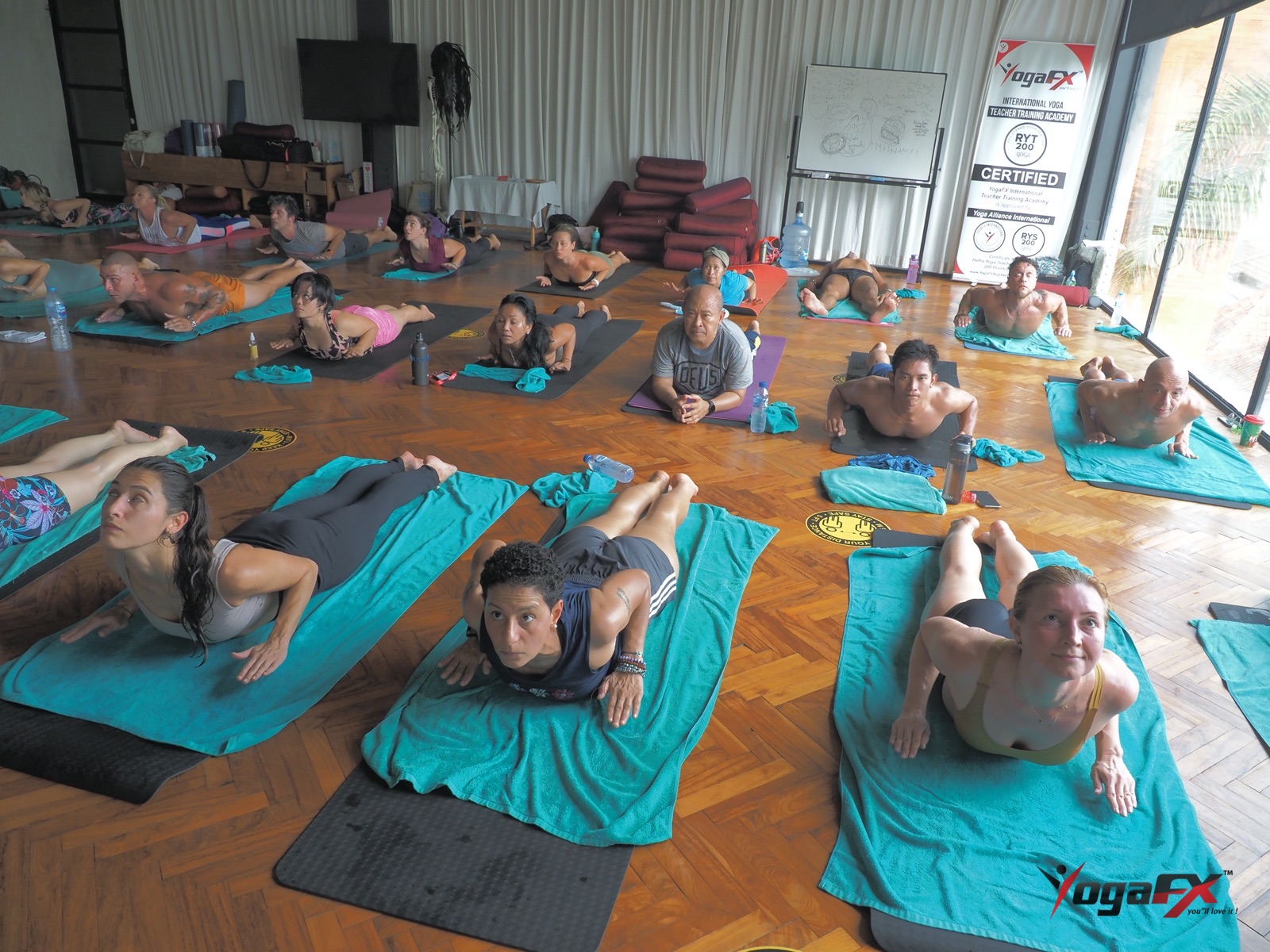
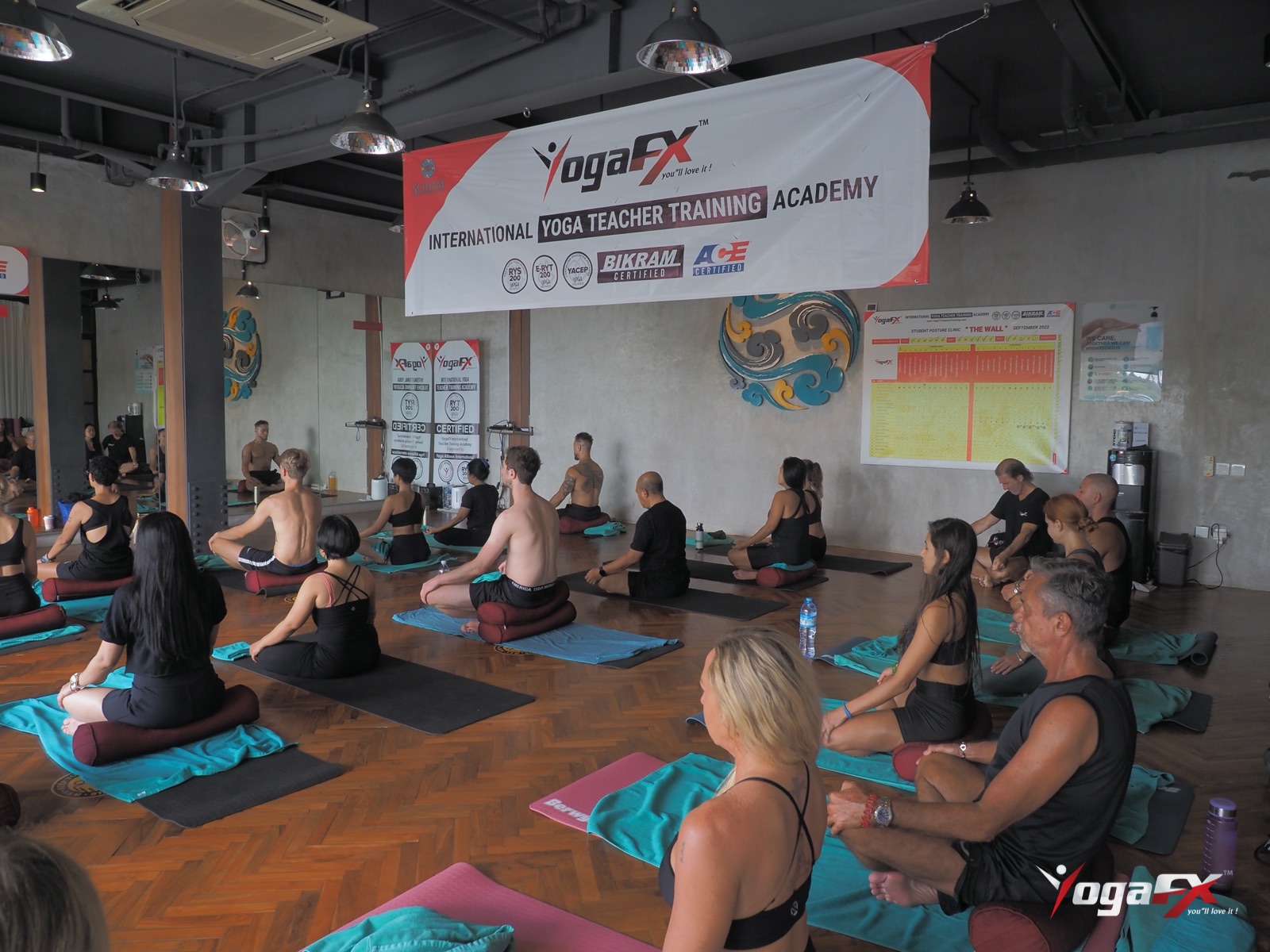
Savasana benefits show up in three places after a hot class: your heart rate and blood pressure settle gradually, your breathing slows, and your mind learns to rest. Small trials of savasana report lower heart rate and blood pressure over weeks. One study also suggests the rest works best after effort.
Savasana Benefits at a Glance: 5 Honest Reasons It Matters
Here's the short version, graded the way we grade every claim on this site. Savasana isn't magic, and the evidence is small. Still, five points hold up when you read the studies and watch what happens in a heated room:
Gradual recovery. A cool-down lets heart rate and blood pressure come down in steps, which exercise experts link with fewer dizzy spells.
Lower numbers in a small trial. After six weeks of daily practice, 35 medical students showed lower heart rate and blood pressure, while a control group did not change.
Effort first, rest second. A 2014 study found that cardiovascular recovery was greater after postures than after savasana alone.
A pause for the breath. Slow nasal breathing is how we teach the body to leave the effort state and settle.
A skill you can practise at home. It needs no equipment, so you can learn it long before you step into a heated room.
These savasana benefits come from different studies, so none of them proves the others. We take each one apart below. As always, please consult a healthcare professional before starting if you have any heart or blood pressure concern. If you want the wider picture first, start with the guides linked through this article.
Savasana Meaning: What Corpse Pose Is and Why It Has That Name
Shavasana joins two Sanskrit words: shava, meaning corpse, and asana, meaning posture. That is why people also search for corpse pose benefits. The name describes stillness, not death. You lie on your back, rest your arms a little away from your sides, and let your legs fall open. Then you stop trying. Understanding the name is the first step to understanding savasana benefits.
Spelling varies. You will see savasana, shavasana and savasana pose, and all of them point to the same posture. In Hot 26&2 Yoga the posture appears several times in one class, so it earns an article of its own.
Most students find it the hardest pose in the room. The body is still, but the mind isn't. That makes sense. After 90 minutes of precise instruction, balance and heat, a quiet mind takes practice. Teachers treat savasana as a skill to build, not a reward you get for surviving the class.
Because it is a skill, the savasana benefits grow with repetition. Your first few attempts may feel restless, and that's normal.
Why Final Rest Matters After Heat
A Hot 26&2 class runs 90 minutes in a room at about 40°C and 40% humidity. You practise 26 postures and 2 breathing exercises. The standing series asks the most of your heart and big muscles, and the floor series asks less. Savasana sits between the two as a bridge, and that bridge is where the savasana benefits begin.
That bridge matters because stopping hard effort all at once is jarring. Cleveland Clinic quotes exercise physiologist Karen Feakes, who explains that a cool-down brings heart rate, blood pressure and breathing down in steps. A sudden dip in blood pressure or heart rate can leave you dizzy or lightheaded, she says. She adds that this matters even more for people with diabetes, high blood pressure or heart conditions.
The same article suggests a general cool-down of about three to ten minutes. That advice covers exercise in general, so it isn't a rule for savasana. Still, it explains why teachers never rush students from effort straight back to the street.
Recovery Zones in Plain Language
We teach a simple map of the class. These bands are our teaching shorthand, not a medical standard, and the studies we checked don't measure every posture one by one. Your own response will vary with age, fitness, heat acclimation and medication. Here is where the savasana benefits show up in a class.
Standing series. It creates the most cardiovascular demand. Balance, long holds and heat keep heart rate and breathing at their highest.
Savasana after the standing series. Muscular effort drops and breathing becomes more controlled, so your heart rate has a chance to slow.
Floor series. Most of it is lower demand, a Zone 1-style recovery. Cobra, Locust, Bow and Camel bring effort back for a short time.
Final savasana. It is the closing chance for your heart rate to settle and for your nervous system to calm before you leave the room.
If you'd like the numbers behind the effort side, read our guide to heart rate zones in a hot class. For the stress side, see our notes on hot yoga and the stress hormone cortisol.
What to Do If the Heat Hits You Mid-Class
Safety is one of the quieter savasana benefits, because savasana is also your safety valve. If you feel dizzy or lightheaded, lower your centre of gravity at once. Turn around with your head to the mirror and your feet to the wall, then lie down on your back in savasana. Never force movement through dizziness, and stay in the room.
Keep your mouth closed and breathe calmly through your nose. If symptoms don't settle, tell the teacher. Chest pain is different: stop, and get urgent medical help. Our guide on feeling tired after hot yoga explains how to tell normal fatigue from a warning sign.
What the Studies Say About Savasana Benefits
Few trials test savasana benefits on their own, and none we found test it in a heated room. So read the table as a map of what is known, not a promise. Every figure comes from the source named in the first column.
Four Sources at a Glance
Source
Who took part
What was done
What it found
Main limit
American Journal of Health Promotion, 2014
67 first-year medical students (35 practising, 32 control)
Shavasana with soothing background music, 1 hour a day for 6 weeks
Lower heart rate, systolic and diastolic blood pressure, and better heart rate variability indices. No change in the control group.
Young medical students. Music and a daily hour differ from a class.
International Journal of Yoga, 2014 (Bhavanani et al.)
22 healthy young nursing students
Heart rate and blood pressure tracked during 10 minutes of lying down after five different postures, with shavasana as the comparison
Cardiovascular recovery was greater after the postures than after shavasana alone.
Small sample. The abstract gives no numbers.
Cleveland Clinic, 2024 (Karen Feakes)
Expert advice, not a trial
General cool-down guidance after exercise
Cool-downs bring heart rate, blood pressure and breathing down in steps. Three to ten minutes is suggested.
Not specific to yoga or to savasana.
Nyer et al., Massachusetts General Hospital, 2023
Heated yoga group and waitlist group, 8 weeks
Heated yoga classes
59.3% of the yoga group had a 50% or greater drop in depressive symptoms, against 6.3% of the waitlist group.
Tests whole classes. Savasana alone is not isolated.
Savasana benefits in four sources. Sources: American Journal of Health Promotion (2014), International Journal of Yoga (2014), Cleveland Clinic Health Essentials (2024), Journal of Clinical Psychiatry (2023).
Study One: Six Weeks of Daily Shavasana
The American Journal of Health Promotion trial is the closest match to our question about savasana benefits. Researchers asked 35 first-year medical students to practise shavasana with soothing background music for one hour a day over six weeks. A control group of 32 students did no relaxation practice.
At the end, the practising group had a lower heart rate and lower systolic and diastolic blood pressure. Their heart rate variability indices also improved. Heart rate variability is the small change in time between heartbeats, and researchers use it as a window on the nervous system. The control group showed no significant change.
The authors concluded that short-term relaxation practice can improve autonomic balance and support cardiovascular health in young adults. That's encouraging, but we'd read it with care. The students were young and healthy, the practice lasted an hour a day, and music was playing. A class ending in a short savasana, with no music, is a different dose.
Study Two: Effort Before Rest Beats Rest Alone
The second source adds a useful twist. In the International Journal of Yoga study, 22 healthy young nursing students did one posture a day on seven days, in random order. The team recorded heart rate and blood pressure before and after each posture, then through ten minutes of lying down.
Shavasana served as the comparison. The authors report that cardiovascular recovery was greater after the postures than after shavasana alone. They read this as a better response when effort comes before relaxation. That fits the way a hot class is built, with the long effort first and the rest after it.
In other words, savasana benefits seem to depend on what comes before it. Lying down after nothing is pleasant. Lying down after work is where the recovery shows.
The Mood Question
A 2023 randomized trial from Massachusetts General Hospital (Nyer et al.), published in the Journal of Clinical Psychiatry, compared heated yoga with a waitlist over 8 weeks. In the yoga group, 59.3% had a 50% or greater drop in depressive symptoms, against 6.3% of the waitlist group. You can see how the Harvard trial was run in our own review.
The trial tested whole classes, so we can't credit savasana benefits alone. We include it because final rest is part of every class in that setting. It's context, not proof that the rest causes the change.
What We Can't Say Yet
No heated-room trial of savasana alone. The studies above test it at room temperature or as part of mixed classes.
No treatment claims. Savasana may help you recover and relax. It doesn't treat blood pressure, depression or any other condition.
No sweat or toxin claims. The research we reviewed measures heart rate, blood pressure and mood, not any clearing of the body.
If you take blood pressure medication or have a heart condition, speak to your doctor before adding any new practice, and tell your teacher before class.
Where Savasana Sits in a 90-Minute Class
The graphic below shows the class format in five cards, so you can see where the rest fits.
90 min
One class
A fixed sequence from opening breath to final rest.
26 + 2
Postures and breathing exercises
Standing series first, then the floor series.
40°C
Room temperature
Natural tropical heat, not electric heaters.
40%
Humidity
The room stays warm and damp the whole class.
Rest
Savasana between and after
Short rests link the work, and a final savasana closes the class.
Where savasana benefits fit inside a Hot 26&2 class. Source: YogaFX class format.
Notice that nothing in the graphic is about playing music or watching a demonstration. Teachers guide the room with a scripted dialogue, so the final rest begins with words and ends in quiet. The trial in Study One used music, which is one more reason to treat its numbers as a guide only.
How to Practise Savasana at Home: 6 Steps
You don't need a heated room to learn the pose or to feel the first savasana benefits. Practise on a mat, a towel or a carpet, after your own stretching or a walk, because the research suggests rest works best after effort.
Lie on your back. Rest your head on the floor. A folded towel under it is fine if your neck feels strained.
Set your limbs. Let your feet fall open and rest your arms a little away from your sides, palms up.
Close your mouth. Breathe slowly through your nose, which is how we teach heart rate to settle.
Soften from the top down. Release your forehead, jaw, shoulders and belly one at a time.
Let thoughts pass. When your mind wanders, note it and come back to the breath. Don't fight the wandering.
Come out slowly. Deepen your breath, move your fingers and toes, roll onto one side, and sit up gradually.
If your lower back complains, try a bolster or rolled towel under your knees. If you feel faint lying flat, or you're pregnant, ask a healthcare professional which position suits you, and tell your teacher.
Start with a few minutes. Research gives no single best length, so let your comfort and your teacher guide you. Over a few weeks, notice whether you settle faster. That is the practical sign the savasana benefits are building.
What Teachers Watch During Final Rest
Teacher trainees study savasana benefits and risks as carefully as any standing posture, because it's where a class can quietly go wrong. Our online course teaches the dialogue and the 26&2 poses so you can see where the rest sits. A trained teacher watches for several things:
Held breath. A student who tenses and stops breathing isn't resting yet.
Restlessness. Fidgeting often means the student is fighting stillness, not failing at it.
Heat strain. Flushed skin, nausea, or a sudden end to sweating means the student needs cooling and attention.
Dizziness on rising. Students should sit up gradually, never spring up.
A good teacher says little and watches closely. That balance is hard to learn from a video alone, which is why we teach it in steps and check it in practice.
What Our Trainees Say
Numbers can't tell you how rest feels from the inside. These comments come from YogaFX students, taken word for word from their public reviews.
"this is something that we all will be able to take with us for the rest of our life"
"There is a great atmosphere in the classes, sweet participants, entertaining and motivating teacher."
Anouk, Google review, 2020
Rachel is talking about the whole training, not only the final rest. Still, her words about something to keep for life describe what savasana benefits become over time. You can watch her full review below.
The second video is a short review from another graduate.
Learn Savasana and the Full Dialogue Online With YogaFX
Students often ask a teacher why the class ends in stillness. A good teacher answers with evidence, not hype. Our hot yoga online course lets you study the 26 postures, the dialogue, the savasana benefits and the physiology at home, on your own schedule. See the 8-week breakdown of online yoga teacher training if you want to know how the weeks fit together.
The course is led by Mr. Ian Terry, E-RYT 500, who has more than 12,000 teaching hours. He trained for 5 years, from 2014 to 2019, with the founder of the method. Since 2017, YogaFX has trained more than 1,500 graduates from 80+ countries, and we hold more than 550 reviews across Google, Yoga Alliance and YouTube.
Learn the rest as part of the class. Study where savasana sits in the sequence before you practise it.
Understand the science. Read each study the way we did above, with its limits.
Know the next step. Graduates of the Bali MasterClass register with Yoga Alliance as RYT 200.
When you're ready for the heat in person, the next step is the 6-day Bikram Hot 26&2 Yoga Teacher Training MasterClass in Bali. The next batch checks in on Sunday 24 January 2027 at Soham Wellness Center in Seminyak. The Early Bird price is US$1,899 (normally US$1,999), with payment plans from US$250 a month.
FAQ
Why is savasana important after yoga?
Savasana gives your heart rate, blood pressure and breathing time to come down gradually after effort. A 2014 study found recovery was greater after postures than after lying down alone, which suggests rest works best after work. It also gives your mind a short pause before you leave the room.
What is savasana and its benefits?
Savasana, or corpse pose, is a lying-down posture from the Sanskrit words for corpse and posture. Savasana benefits seen in small trials include lower heart rate and blood pressure after weeks of practice, plus better recovery after effort. It does not treat any medical condition.
Is savasana a meditation?
Savasana is a rest posture, and many teachers use it to practise meditation-style attention. You lie still, follow your breath and let thoughts pass. In a Hot 26&2 class it works first as recovery after effort, so it's best to treat it as rest with attention, not a trance.
Is savasana good for high blood pressure?
One small trial of daily shavasana found lower systolic and diastolic blood pressure in young medical students. That does not show it treats high blood pressure. If you have a blood pressure condition or take medication, ask your doctor before starting any practice and tell your teacher.
How long should savasana be?
Research gives no single best length. Cleveland Clinic's exercise physiologist suggests a general cool-down of three to ten minutes, though that advice isn't specific to yoga. In class, follow your teacher. At home, start with a few minutes and extend it as you settle comfortably.
The hot yoga depression study from Massachusetts General Hospital randomised 80 adults with moderate to severe depression to eight weeks of heated yoga or a waitlist. Among the 65 people analysed, 59% of the yoga group halved their symptoms, against 6% of the waitlist. Here is how the hot yoga depression study was run and measured.
How the Hot Yoga Depression Study Was Built
A headline number is only as good as the trial behind it. So before you trust the 59%, it helps to see how the hot yoga depression study was put together. The paper is open access, and we read its full text on PubMed Central, not just the abstract.
Maren Nyer and colleagues ran the trial, and it appeared in the Journal of Clinical Psychiatry in 2023. The title calls the classes community-delivered heated hatha yoga. The hot yoga depression study is registered as NCT02607514, and it ran from March 2017 to August 2019.
Who Could Join
The team found volunteers through advertisements and local referrals in the greater Boston area. Adults aged 18 to 60 could take part. To qualify, a person needed a score of at least 23 on the clinician-rated Inventory of Depressive Symptomatology, called the IDS-CR. The average starting score was 35.6.
Some of the volunteers were already taking antidepressants. That detail matters later, because it means yoga was tested as an addition to care, not as a replacement for it.
How Adults Were Assigned
Eighty adults were randomised. The study statistician made the assignments with a random permuted block design, in blocks of 2 and 4. In plain words, the two groups stayed close in size as people joined, and nobody picked which group a person landed in.
That matters because of how bias creeps in. The Cochrane Handbook chapter on risk of bias explains that knowing the next assignment in advance "can enable selective enrolment of participants on the basis of prognostic factors." A sequence built by a statistician, instead of by the people recruiting, is the kind of safeguard that passage has in mind.
What Each Group Did
The yoga group was asked to attend at least two 90-minute classes a week for eight weeks. The room was kept at 105°F (about 40.6°C), and the paper describes the class as vigorous. The waitlist group carried on as usual and took the classes afterwards.
Step 1
Recruit
Volunteers from advertisements and local referrals around Boston.
Step 2
Screen
Ages 18 to 60 with an IDS-CR score of 23 or more.
Step 3
Randomise
80 adults assigned by permuted blocks of 2 and 4.
Step 4
Treat
90-minute classes at 105°F, at least twice a week for 8 weeks.
Step 5
Rate
Blinded clinicians scored symptoms. 65 people were analysed.
How the hot yoga depression study moved from 80 volunteers to its results. Source: Nyer et al. 2023, J Clin Psychiatry, full text on PubMed Central.
How the Hot Yoga Depression Study Measured Depression
Measurement is where many readers lose the thread, so let's slow down. The main outcome was the change in a score. It was not a feeling, and it was not a diagnosis.
A Clinician Did the Scoring
The scale was the IDS-CR, the clinician-rated version of the Inventory of Depressive Symptomatology. A clinician rates the symptoms, rather than the participant ticking boxes alone. The paper states that the assessors were blinded to whether a person was in the yoga or the waitlist group.
Blinding is a big deal here. Nobody can hide yoga from the person doing it. Still, a rater who doesn't know the group can't lean the score toward the result they hope to see. The same Cochrane chapter also covers the role of blinding in more depth.
Other scales exist. According to StatPearls, clinicians also use questionnaires such as the Beck Depression Inventory, the Hamilton Depression Scale and the Zung Self Rating Depression Scale. The MGH team chose a clinician-rated one.
What Response Meant
A person counted as a responder when their IDS-CR score fell by at least 50%. That is a cut-off the researchers set, and it is not the same as remission. Someone who starts at 34 and falls to 17 is a responder, yet may still have clear symptoms.
On that rule, 16 people in the yoga group and 2 people on the waitlist were responders. Those are small counts, so each person moves the percentage a lot. Here is a detail worth noticing. Dividing 16 by 59.3% gives about 27, not 33. That suggests the percentage was calculated on people who had a final score, and the abstract does not spell this out. If you need the exact base, check the tables in the full paper.
Who Was Counted in the Results
The paper says the analysis included participants who completed at least one assessment after their first visit. So 65 of the 80 randomised adults are in the results, with 33 in the yoga group and 32 on the waitlist. The other 15 are not. That is a normal choice in trials like this, but it does shape the numbers.
What the Dose in the Hot Yoga Depression Study Tells You
Dose is the next thing to check. The plan asked for two classes a week, which would be about 16 in total. People actually attended 10.3 classes on average. That is closer to one class a week, and the yoga group still improved more than the waitlist group.
The authors read this carefully. They wrote that about one session a week went with a bigger drop in symptoms than waiting did. The effect size was large (Cohen's d of 1.04, P below .001), and Harvard Health notes that the group improved even when people averaged only one class a week.
A 2026 Follow-Up on Attendance
The same team later asked whether more classes meant more benefit. In a secondary analysis in the Journal of Affective Disorders (2026), Copeland and colleagues pooled attendance from both phases of the hot yoga depression study. Each extra class went with about 0.72 fewer IDS-CR points, and the authors saw no plateau in the range they tested.
That paper is not open access, so we read its Europe PMC record and not the full text. Be careful with the words "went with". Attendance was not randomised, because people chose how often to come. The authors themselves call for studies that randomise different attendance targets.
Design Choices, What They Protect and What Stays Open
The table below pairs each design choice with the problem it guards against. Read the last column closely. It is where honest readers should slow down.
Design choice
What it protects against
What it still leaves open
Random permuted blocks of 2 and 4, made by a statistician
Recruiters steering certain people into one group
Small groups can still differ by chance
Blinded clinician raters
Scores tilting toward the hoped-for result
Participants knew whether they were doing yoga
Clinician-rated IDS-CR with a 50% drop as response
Relying only on self-report, and vague wording of success
Response is not remission, and the cut-off is a choice
Waitlist control
Mistaking time passing for treatment
It cannot separate heat, exercise, routine or company
Analysis of people with at least one follow-up assessment
Losing most of the sample to missed visits
15 of the 80 randomised adults are not in the results
Community studio classes at 105°F
A lab routine nobody could copy
Local classes differ in teacher, humidity and style
Design of the hot yoga depression study: protections and open questions. Sources: Nyer et al. 2023 (PubMed Central full text), Cochrane Handbook chapter 8.
What the Hot Yoga Depression Study Cannot Answer
Every good trial answers one question well and leaves others open. This one asked whether adding heated yoga helped adults with depression more than waiting. Its authors call for future work with an active comparison group. Keep these limits in mind:
It cannot say the heat did the work. The waitlist did nothing, so heat, movement, routine and company are tangled together.
It did not compare styles. Harvard Health notes the study "did not investigate whether hot yoga was better than other types of yoga."
It is short. The treatment phase lasted 8 weeks, so lasting effects are unknown.
It is small. Sixty-five analysed adults is enough to see a big effect, but it is small beside large drug trials.
It started from volunteers. People who answer an advert for a yoga study may already be open to yoga.
None of this makes the trial weak. It makes it early. Treat the result as a reason for bigger studies, not as a proven treatment. For a related reading, see our look at heated versus room-temperature yoga trials.
Why Might Heated Yoga Help? Four Ideas, Not Facts
Nobody has proved why heated yoga might ease depression. Researchers and teachers have a few reasonable ideas, and it helps to keep them apart from the trial’s facts. Treat each one as a hypothesis:
Structure. A fixed class at a fixed time gives a low day a shape. Depression often makes planning feel impossible, so a ready-made routine may lower the barrier.
Movement and breath. Physical activity is already linked with better mood, and slow, focused breathing may calm a racing mind.
Attention. In a hot room it is hard to ruminate, because balance and breath take all your focus.
Company. Sharing a room with other people, without having to talk, can ease isolation.
A separate six-week trial in healthy adults (Hui et al. 2022) found greater well-being and lower state anxiety after hot yoga. It did not recruit people with depression, so it supports the mood side of the idea, not the clinical side. The heat itself is also a stressor, and some people feel worse in it. For the stress-hormone question, read our guide to whether hot yoga increases cortisol.
Does the Class in the Study Match a 26&2 Class?
The paper describes a Bikram-style class in a 105°F room, and Harvard Health calls the style hot, or Bikram, yoga. Today many teachers, including us, run the same family of practice as Original Hot 26&2: 26 postures and 2 breathing exercises in a fixed order.
At YogaFX, a class runs 90 minutes at about 40°C and 40% humidity, using natural tropical heat. The teacher follows a scripted dialogue, with no music and no demonstration. The length and temperature are close to the hot yoga depression study. Humidity is not given as a number in the paper, so we can't match that part. A similar setup to the hot yoga depression study is not proof of similar results.
Trials give averages. Students give stories. The two clips below are YouTube reviews from our teacher training graduates. They describe effort and curiosity, not depression, and they are not evidence that hot yoga treats anything. We share them so you can see the human side of a class.
"I think my mind was strong, my body is not strong enough, but it will be strong."
The hot yoga depression study gives you information, not a prescription. Harvard Health says hot yoga can be used alone or alongside medication, and it advises talking to your doctor first, because heat can pose risks with conditions such as heart problems. If the research makes you curious, these steps follow the heated yoga depression study's own logic:
Talk to your doctor first. This matters most if you take medication, have heart or blood pressure concerns, or are pregnant.
Keep your existing care. The trial tested yoga as an addition, and some volunteers stayed on antidepressants.
Start below the trial dose. The average was about one class a week, so you don't need to begin with two.
Aim for steady attendance. The trial's own follow-up links more classes with larger drops, but it can't prove that more is always better.
Drink water, rest when you need to and leave the room if you feel dizzy. Pushing through proves nothing.
Track your mood. A note after each class helps you and your doctor see changes over weeks.
Signs you need more than a class. See a healthcare professional soon if low mood lasts more than two weeks, if you lose interest in things you used to enjoy, if sleep or appetite change a lot, or if you are using alcohol to cope. Never stop or lower antidepressants because yoga feels helpful; changes belong with your prescriber.
Depression is a medical condition. The National Institute of Mental Health describes it as different from passing sadness, and it lists the 988 Suicide and Crisis Lifeline: if you or someone you know is struggling or having thoughts of suicide, call or text 988 in the US, or contact your local emergency number. Hot yoga is not a crisis tool.
Teaching From the Evidence With Mr. Ian Terry and YogaFX
Mr. Ian Terry, E-RYT 500 and founder of YogaFX, has taught more than 12,000 hours of Original Hot 26&2 yoga. He trained for 5 years, from 2014 to 2019, with the founder of the method. Since 2017, YogaFX has trained more than 1,500 graduates from 80+ countries.
Under his lead, we present studies like this one as context for students, never as a promise. A teacher who can read a trial can also say "please ask your doctor" at the right moment. That is part of what our online yoga teacher training teaches, and it is why we suggest these checks for any hot yoga certification before you pay.
When you are ready for the heat, the next step is the 6-day Bikram Hot 26&2 Yoga Teacher Training MasterClass in Bali. The next batch checks in on Sunday 24 January 2027 at Soham Wellness Center in Seminyak. The Early Bird price is US$1,899 (normally US$1,999), with payment plans from US$250 a month.
FAQ
Does hot yoga help with depression?
It may help some adults. In the Massachusetts General Hospital trial, 59% of the yoga group halved their symptoms after 8 weeks, against 6% on the waitlist. It was one early trial of 65 analysed adults, so treat it as a possible addition to care, not a replacement.
Is there a Harvard hot yoga study on depression?
Yes. Massachusetts General Hospital, a Harvard teaching hospital, ran the MGH hot yoga trial, and Harvard Health reported it in 2024. It randomised adults aged 18 to 60 to heated yoga or a waitlist for 8 weeks. The results appeared in the Journal of Clinical Psychiatry in 2023.
How often should you do hot yoga for mental health?
The trial asked for at least two 90-minute classes a week, but people averaged about 10 classes in 8 weeks, near one a week. A 2026 follow-up linked more classes with larger drops. Nobody has randomised different weekly doses yet, so ask your doctor what suits you.
Is hot yoga good for anxiety?
This trial reported depression scores, not anxiety, so it cannot answer that question. Anxiety needs its own evidence. Our separate review of the trial data on anxiety explains what researchers have measured so far. If anxiety is troubling you, speak with a healthcare professional rather than relying on a class.
Who should not do hot yoga?
Check with a doctor first if you have heart or blood pressure problems, take medication that affects heat tolerance, are pregnant, or have a history of fainting or heat illness. Harvard Health advises talking to your doctor before trying hot yoga. Leave the room at once if you feel dizzy.
Feeling tired after hot yoga usually comes from three things stacking up. They are heat strain, a small loss of body water and a body told to rest. Studies link a loss of about 1.4% to 1.6% of body mass with more fatigue and worse mood. The same class can also lift mood, so students leave feeling opposite ways.
Mr. Ian Terry, E-RYT 500, has more than 12,000 teaching hours in heated rooms. He has watched the same 90-minute class leave one student floating and another flat on the sofa. This guide to being tired after hot yoga follows his teaching on pacing. It keeps that teaching apart from the published studies, so you can see which is which.
This is general information, not medical advice. Please consult a healthcare professional before heated classes if you have a heart condition or blood pressure problems. The same goes if you are pregnant or take medication that affects sweating or heart rate.
Tired After Hot Yoga: The Short Answer
If you are tired after hot yoga, the likeliest causes are heat, sweat and effort. Your body works to keep its core temperature steady, you lose fluid, and a 90-minute class asks for real effort. Then the closing breathing and rest tell your body to power down, and the tiredness arrives all at once.
Here is the short version of what we found when we opened the studies and health pages that matter. Where a source gave no number, we say so instead of guessing.
Fluid loss: two lab studies from the same research group found that a loss of about 1.4% to 1.6% of body mass raised fatigue and hurt mood in healthy young adults.
Heat strain: Mayo Clinic lists fatigue, dizziness, headache and nausea among the signs of heat exhaustion, and says to stop and rest if they appear.
Mood: an 8-week randomised trial of heated hatha yoga found a large drop in depression scores against a waitlist, so tired and uplifted can arrive together.
Your habits: class time, what you drank and what you ate decide a lot, and you can change all three.
Some students leave class tired, others leave buzzing. The studies below explain the gap. Photo: YogaFX teacher training.
Why Some People Feel Drained and Others Feel Energised
The same class can drain one person and charge another because three dials differ from student to student. Those dials are fluid lost, effort spent on cooling, and mood response. Each one has research behind it, and we take them in turn.
Dial one: water lost and feeling tired after hot yoga
The strongest evidence on being tired after hot yoga does not come from yoga at all. It comes from two lab studies. Healthy, active adults were mildly dehydrated on purpose and carefully measured.
Armstrong and colleagues published Mild dehydration affects mood in healthy young women in the Journal of Nutrition (PubMed 22190027). They tested 25 women. The average loss was 1.36% of body mass. At that level the women reported worse mood, harder tasks, more trouble concentrating and more headache.
Ganio and colleagues published Mild dehydration impairs cognitive performance and mood of men in the British Journal of Nutrition (PubMed 21736786). They tested 26 men, with a mean loss of 1.59% of body mass. The men made more errors on a vigilance task. They showed slower working memory, and they reported more fatigue at rest.
Both studies came from related research teams. They tell us about fluid loss in general. Neither tested a hot yoga class. We still find them useful, because a heated class makes that kind of small loss easy to reach.
Dial two: how hard your body worked to cool down
Heat adds a second load. The Mayo Clinic page on heat exhaustion names high temperatures, especially with high humidity, as a cause of heat illness. It also names strenuous physical activity. A standard YogaFX class runs at 40 degrees Celsius and about 40% humidity for 90 minutes. Both causes apply.
That page lists fatigue, heavy sweating, dizziness, faintness and headache as symptoms. Nausea, muscle cramps and a weak, rapid pulse are on the list too. It also says it can take several weeks for your body to adjust to hot conditions. For a new student, that adjustment period often explains why the first weeks feel the heaviest.
Dial three: how your mood responded
Then there is the other side. In 2023, Nyer and colleagues published a randomised trial of heated hatha yoga for moderate-to-severe depression in the Journal of Clinical Psychiatry (PubMed 37883245). Eighty adults were randomised and 65 were analysed, 33 in the yoga group and 32 on a waitlist.
Yoga participants attended an average of 10.3 classes over 8 weeks. The paper reports a Cohen's d of 1.04. In the yoga group, 59.3% had symptoms drop by half or more. On the waitlist, only 6.3% did. So a body that feels spent can sit beside a mood that feels lighter.
Please read that result with care. The comparison group did nothing, so the trial cannot say whether heat made the difference. It also studied adults with depression, not healthy students in the Original Hot 26&2 class. It does show that mood effects are real enough to measure. That helps explain the good feeling that arrives alongside heavy legs.
Tired After Hot Yoga or Something Else? Five Common Feelings
Not every post-class feeling means the same thing. The table below sets out five common ones, the likeliest reason, and a sensible next step. The reasons draw on the studies above and on Mayo Clinic and MedlinePlus pages. The next-step column is our teaching guidance, not a study result.
How you feel
Likely reason
What to do next
Source or basis
Heavy, sleepy, calm
Effort, heat and the closing rest
Sip water, eat a proper meal, go to bed on time
Teaching guidance, plus heat load from Mayo Clinic
Foggy, flat, mild headache
Small fluid loss, linked with fatigue and headache in lab studies
Sip steadily, add a salty snack if you sweated a lot
Armstrong et al.; Ganio et al.
Shaky, weak, irritable
Little food before class
Eat a snack with carbohydrate and protein
Teaching guidance
Light, clear, a bit wired
Mood lift plus a warm body
Cool down slowly, leave a gap before sleep
Nyer et al. for mood; guidance for sleep
Dizzy, nauseous, confused, very hot
Possible heat illness
Stop, cool down, rest, and get medical help if it does not ease
Mayo Clinic heat exhaustion page
Sources: Armstrong et al., Journal of Nutrition; Ganio et al., British Journal of Nutrition, 2011; Nyer et al., Journal of Clinical Psychiatry, 2023; Mayo Clinic page on heat exhaustion. The last two columns mix study results with YogaFX teaching guidance, and we mark which is which.
Most students land in the first three rows. That kind of tired after hot yoga is ordinary, and it usually eases with water, food and sleep. The last row is different, and we cover it in the warning signs section below.
Five numbers behind the fatigue question
Tired after hot yoga: five numbers from the studies we opened
1.36%
Body mass lost, women
Average in the women's study, with worse mood and more headache.
1.59%
Body mass lost, men
Average in the men's study, with more fatigue at rest.
40°C
Mayo Clinic alarm level
A core temperature of 40°C (104°F) or higher means get help right away.
10.3
Classes attended
Average over 8 weeks in the heated yoga trial.
59.3% vs 6.3%
Mood response
Yoga group vs waitlist, symptoms down by half or more.
Sources: Armstrong et al., J Nutr (PubMed 22190027); Ganio et al., Br J Nutr 2011 (PubMed 21736786); Mayo Clinic heat exhaustion page; Nyer et al., J Clin Psychiatry 2023 (PubMed 37883245).
Heat Strain and Fatigue: Reading Your Own Signals
Heat strain is the cost of staying cool, and it is a big part of feeling tired after hot yoga. Blood moves to the skin, you sweat, and your heart works harder even in still postures. That load adds up over 90 minutes. A YogaFX class feels like a full workout even when each posture looks simple.
Mr. Ian teaches trainees to read three signals before they read anything else: skin, breath and speech. Cool, clammy skin with goose bumps in a hot room is one sign. Breathing that will not settle is another. So are slow, muddled answers to a simple question. All three mean the student should rest. Those signs line up with the Mayo Clinic list of cool, moist skin with goose bumps, faintness and confusion.
A teacher who paces the room well helps students finish tired but calm. Photo: YogaFX teacher training.
When tiredness is a warning sign
Ordinary tiredness after hot yoga feels heavy but calm. These signs are different, and they need action, not patience:
Dizziness or fainting, in class or afterwards.
Nausea or vomiting.
Confusion, or being unable to drink.
A headache that does not ease with water and rest.
Symptoms that do not improve within one hour.
The Mayo Clinic page says to stop all activity and rest. Move somewhere cooler and drink cool water or a sports drink. It says to contact a healthcare professional if symptoms get worse or last over an hour. Get help right away if the person becomes confused, loses consciousness or cannot drink.
Fluids and Food: What the Health Pages Say
Drinking before you feel thirsty is the simplest fix we know for being tired after hot yoga. The MedlinePlus entry on dehydration lists thirst, dry mouth and darker yellow urine as signs of mild to moderate dehydration. Headache and muscle cramps are on the list too. It advises drinking more when the weather is hot or when you are exercising.
The same page says to sip water or drink fluids with electrolytes. It warns against salt tablets because they can cause serious complications. It gives no fixed number of cups, so we will not invent one. Use your urine colour and your thirst as a guide. Ask your doctor if you have a condition that affects fluids.
Before class: drink through the day, and eat something light two to three hours before.
During class: sip when the teacher allows, and rest in the room if you need to.
After class: keep sipping for the next hour, then eat a proper meal with carbohydrate and protein.
The food advice is teaching guidance from our own classes, not a study result. It is what Mr. Ian tells students who arrive hungry and leave shaky, or tired after hot yoga for no clear reason.
Home Cool-Down Tips When You Are Tired After Hot Yoga
What you do in the first two hours decides whether being tired after hot yoga fades by tomorrow. These steps are teaching guidance built on the heat and fluid points above. You can do them at home with no equipment.
Cool down slowly. A lukewarm shower is gentler than a cold blast straight after class.
Sip, do not gulp. Small drinks over the first hour settle better than one large glass.
Eat a real meal. Rice with eggs or lentils is an easy example of carbohydrate with protein.
Dim the room. Soft light and no screens help the calm feeling continue.
Leave a gap before bed. A late class leaves the body warm, so give yourself an hour or two.
If late classes keep you awake, move your practice earlier. Our guide on sauna after hot yoga covers how long to wait before a sauna.
Tired after the last class, and smiling anyway: a YogaFX training group.
Stress Hormones and Tiredness: Where to Read Next
Many students ask whether tiredness after class is a stress-hormone story. We cover that in our guide on whether hot yoga increases cortisol. It reads the hormone study on its own terms. For the mood side, hot yoga for depression goes through the trial data in more detail.
We do not claim that sweat removes anything from the body. None of the sources we opened tested that idea. Being tired after hot yoga is about heat, fluid and effort, not about cleansing.
If You Plan to Teach: Reading Fatigue Is Part of the Job
Students will tell you they are tired after hot yoga, and they will want to know whether it is normal. A teacher who can say what the studies found earns trust quickly. So does one who says what they did not test.
That is why we teach heat and hydration as a subject, not a setting on a dial. Mr. Ian trains teachers to say "this study found" instead of "science proves". He also trains them to spot a struggling student early. You can start at home. The online part of the YogaFX MasterClass lets you study the theory first, then practise it in Bali. If you are weighing options, see the honest 8-week breakdown of online yoga teacher training.
What YogaFX Trainees Say About the Hard Weeks
Numbers describe the research. Trainees describe what it is like to learn inside the heat, which studies cannot measure. These two comments come from video reviews recorded at the end of teacher training.
“It was the most challenging course I've ever done in my life, but I'm so thankful that I've achieved it.”
Adam, YouTube review, 2024
Atika, in a 2019 video review, said the first week was the hardest for her. By the second week she felt connected with the group and happy to teach. By the third she was sad that it was nearly over. Atika, YouTube review, 2019.
Adam's YogaFX graduation video review.
Train Online First, Then Finish in Bali
Mr. Ian Terry, E-RYT 500, trained with the founder of the Bikram Hot 26&2 method for five years, from 2014 to 2019. Since 2017, YogaFX has trained 1,500+ graduates from 80+ countries.
The YogaFX MasterClass is a 6-day hybrid. You study online first, then join an intensive in Bali. The next group checks in on Sunday 24 January 2027 and checks out on Friday 29 January 2027 at Soham Wellness Center in Seminyak.
It leads to Yoga Alliance RYT 200-Hour certification and the Bikram Hot 26&2 200-Hour International Yoga Certification. Early Bird pricing is US$1,899 (normally US$1,999), with instalments from US$250 a month and no interest. You can explore the online hot yoga teacher training here.
FAQ
Why am I so tired after hot yoga?
A 90-minute class at about 40 degrees Celsius raises heat strain. You lose fluid through sweat, and the closing rest switches you into calm mode. Lab studies link a loss of about 1.4% to 1.6% of body mass with more fatigue. Sip water early and eat a proper meal afterwards.
Is it normal to be tired after hot yoga?
Yes, mild tiredness is common, especially in the first weeks while your body adjusts. Mayo Clinic says adjusting to heat can take several weeks. Dizziness, nausea, confusion or symptoms lasting over an hour are not normal. Stop, cool down and get medical advice.
Why do I feel so good after hot yoga?
Mood often lifts after class. In a 2023 randomised trial of heated hatha yoga, 59.3% of the yoga group cut depression symptoms by half or more. On the waitlist it was 6.3%. The trial had no active comparison group, so it cannot say heat caused the lift.
Why can't I sleep after hot yoga?
A late class can leave your body warm and your mind alert at bedtime. The sources we opened gave no sleep figures, so this is teaching guidance. Leave an hour or two before bed. Take a lukewarm shower, dim the lights and try an earlier class if it keeps happening.
What should I do after hot yoga?
Sip water for the next hour, and eat a meal with carbohydrate and protein. MedlinePlus advises fluids with electrolytes when you are dehydrated and warns against salt tablets. Cool down with a lukewarm shower and avoid demanding tasks for about an hour.
Still have questions? Message Mr. Ian and the YogaFX team on WhatsApp and we will answer them personally.
Hot yoga calories burned in one class usually land between about 150 and 460, depending on class length, body size and effort. Two lab studies measured it with breath analysis, not guesses. One found 286 calories on average. The other found 330 for women and 460 for men. The heat adds very little.
Hot Yoga Calories Burned: The Short Answer
Most pages online quote one number and stop. Here we grade every number by how it was measured, the way we grade every claim on this site. Four findings sum up the evidence:
A San Diego State team measured 286 calories on average in 24 adults, with a spread from 179 to 478.
A Colorado State team measured about 460 calories for men and 330 for women in a 90-minute class.
Heat changed little. A one-hour crossover trial found 156 calories heated and 151 at room temperature.
Heart rate misleads. It ran near 160 beats per minute while the energy cost matched a brisk walk.
That is useful news for a teacher or a student. This guide comes from the team at YogaFX, led by Mr. Ian Terry, E-RYT 500, who has more than 12,000 teaching hours. It is general information, not medical advice. If you have a heart condition, take blood pressure medication or are pregnant, please consult a healthcare professional before any heated practice.
What Two Lab Studies Measured About Hot Yoga Calories Burned
Only a few research teams have measured hot yoga calories burned directly. They did it by capturing the oxygen people breathe in and out, which is the standard lab method. Two of those teams studied a full Bikram class, so we start there.
San Diego State University, 2014
Researchers tested 24 adults aged 18 to 57 in an environmental chamber. Some were new to the class, and some had practised for a while. The study abstract in Alternative Therapies in Health and Medicine reports an average of 286 calories, with a range from 179 to 478.
Experience mattered. Relative to body weight, new students burned 3.7 calories per kilogram and experienced students 4.7. Experienced students also worked harder, with a heart rate near 86% of predicted maximum against 72% for newcomers.
Colorado State University, 2014
A second team, led by Brian Tracy with Megan Fritz and colleagues, tested 19 seasoned practitioners aged 18 to 40 through a 90-minute class. The university news report gives about 460 calories for men and 330 for women. It describes the effort as roughly a brisk 3.5 mph walk held for the full 90 minutes.
Read this one with care. The findings were presented at a 2014 sports medicine conference, and the news page said the paper was still being drafted. It also lists funding from Bikram's Yoga College of India and PURE Action. We treat it as useful but unconfirmed.
The Evidence Graded Side by Side
Source
Who and how
Calories or effort found
Our grade and the catch
San Diego State University, 2014
24 adults (5 men, 19 women), novice and experienced, measured in a chamber
286 on average, range 179 to 478; 3.7 vs 4.7 calories per kg
Moderate. Peer-reviewed, but small and mostly women. All sessions were hot, so no heat comparison.
Colorado State University, 2014
19 experienced practitioners (11 women, 8 men), 90-minute class
About 460 (men) and 330 (women); heart rate near 160 beats per minute
Low to moderate. Conference results in a news report, with industry funding.
Houston Methodist, 2020
16 experienced practitioners (14 women, 2 men), same one-hour class twice
156 heated vs 151 at room temperature; heart rate 113 vs 109
Moderate. Good design (a crossover), but a small group and one hour only.
Harvard Health calorie table
Estimates for set body weights, not measured in yoga students
133 calories per 30 minutes of walking at 3.5 mph, for 155 lb
Reference only. A planning guide built from formulas.
Four sources graded for hot yoga calories burned. Sources: Alternative Therapies in Health and Medicine (2014); Colorado State University (2014); International Journal of Exercise Science (2020); Harvard Health.
Notice how wide the ranges are. Two students on neighbouring mats can differ by hundreds of calories in the same class. So treat every figure here as a range, never as a promise.
Does the Heat Change Hot Yoga Calories Burned?
This is the question students ask most. The cleanest answer comes from a Houston Methodist crossover trial. Sixteen experienced practitioners did the same one-hour Bikram sequence twice, once at 105°F and once at 74°F, in random order. The open-access paper in the International Journal of Exercise Science reports the results.
Total energy was 156 calories heated and 151 at room temperature. Mean oxygen use and heart rate did not differ between the two rooms. The heated class did shift the fuel mix, with a lower respiratory exchange ratio of 0.89 against 0.95. In plain terms, the body leaned a little more on fat and a little less on carbohydrate. The total did not move.
So the heat does not burn extra calories in any way you could count. It does make you sweat, and it makes the class feel harder. For a wider look at that comparison, see our breakdown of hot yoga vs regular yoga in three trials.
Four Numbers From the Lab
460 / 330
Calories in 90 minutes
Men and women in the Colorado State group. About a brisk 3.5 mph walk.
156 vs 151
Heated vs room temperature
Calories in one hour. The gap was not significant.
160
Beats per minute
Average heart rate in that class, high for such a modest energy cost.
1,000
The claim, not the finding
Some practitioners report this much. No study above measured it.
Hot yoga calories burned at a glance. Sources: Colorado State University (2014); International Journal of Exercise Science (Lambert et al., 2020).
Why a Watch Overstates Hot Yoga Calories Burned
Every teacher hears it after class: "My watch says I burned 800." Most wearables estimate calories from heart rate. In a hot room your heart pumps blood to the skin to cool you, so the pulse climbs without a matching rise in muscle work.
The Colorado State group shows the gap clearly. Their volunteers averaged about 160 beats per minute, yet the energy cost matched a brisk walk. The San Diego State group saw the same split. Experienced students ran at 86% of predicted maximum heart rate, while the average energy cost stayed near 286 calories.
So treat a watch reading of 700 or 800 as a ceiling, not a fact. We would rather tell a student an honest range they can plan around than a big number that disappears the first time they test it.
A Walking Test for Any Hot Yoga Calories Burned Claim
Here is a simple check you can run yourself. The Colorado State team said a 90-minute class matched a brisk 3.5 mph walk. The Harvard Health calorie table lists 133 calories per 30 minutes of walking at that pace for a 155 lb person.
Multiply by three and you get about 400 calories for 90 minutes. That sits inside the measured range of 330 to 460. The two sources agree, which gives us more confidence in the answer. Harvard's figures are estimates, so use this as a sanity check rather than a measurement.
Estimate Your Own Hot Yoga Calories Burned at Home
Many of our online students practise at home long before they enter a heated room. You do not need a lab to plan sensibly. Follow these steps:
Pick your class length. A 90-minute 26&2 class and a 60-minute flow are different totals.
Start from a per-minute range. The Houston group averaged about 2.6 calories a minute. The Colorado State women averaged about 3.7, and the men about 5.1.
Adjust for body size. A heavier body spends more energy on every hold and balance.
Adjust for experience. In San Diego, experienced students burned 4.7 calories per kilogram and new students 3.7.
Subtract your rest. Every posture you sit out lowers the total, and that is fine for safety.
Here is a worked example. A 70 kg beginner might burn roughly 260 calories in a Bikram class (70 times 3.7). After months of regular practice, the same person might reach about 330 (70 times 4.7). Practice, not temperature, closes that gap.
What Changes Hot Yoga Calories Burned From Class to Class
If the heat is not the main driver, what is? The research and our teaching experience point to a short list:
Body weight. Heavier bodies use more energy, which partly explains why the Colorado State men averaged more than the women.
Experience. Students who know the sequence work closer to their limits and rest less.
Class length. A longer class burns more in total, simply because it lasts longer.
Time out of the posture. Sitting down, towel breaks and water stops all lower the number.
The slowest part of class also counts. The final relaxation at the end adds almost nothing to the total, but it is where the body recovers. A good teacher protects that time rather than cutting it to chase a bigger number.
Safe Effort Matters More Than Hot Yoga Calories Burned
A bigger calorie number is never worth a heat illness. In a University of Wisconsin-La Crosse study of one heated Bikram class, core temperature rose steadily. The American Council on Exercise write-up reports that the highest readings averaged 103.2°F for men and 102.0°F for women. Seven of the 20 volunteers passed 103°F, and one man reached 104.1°F.
That group was healthy and used to the class. A beginner has not adapted yet, so the safe plan is to start gently. Sit down, cool off and tell the teacher if you notice any of these:
Dizziness, confusion or a pounding headache. These are early signs of heat strain.
Nausea or cramps. Drink water and rest before you try another posture.
Chest pain or a racing heartbeat that does not settle. Stop and seek urgent medical help.
What Graduates Say About the Work in the Heat
Numbers cannot capture how a class feels. So here are two YogaFX graduates, quoted from their public reviews.
"I especially appreciated for Ian and Ritesh who have been two of the most important mentors in my life."
Neither mentions a calorie count, and that is the point. People stay with hot yoga for the teaching, the group and the change they feel. You can watch Elvia's graduation below.
Learn to Teach the Numbers With YogaFX
A new student's first question is often about calories, not alignment. How you answer decides whether they come back for class two. Our online hot yoga teacher training course lets you study the 26 postures, the dialogue and the physiology at home, on your own schedule. Trainees learn to give a range, to separate sweat from fat and to praise effort.
Mr. Ian Terry has taught more than 12,000 hours and trained from 2014 to 2019 with the founder of the Bikram Hot 26&2 method. Since 2017, YogaFX has trained more than 1,500 graduates from 80+ countries. See how study works in our 8-week breakdown of online yoga teacher training. If you want the same question answered from another angle, our sister training site has a fuller guide to the same calorie studies.
When you are ready for the heat in person, the next step is the 6-day Bikram Hot 26&2 Yoga Teacher Training MasterClass in Bali. The next batch checks in on Sunday 24 January 2027 and checks out on Friday 29 January 2027 at Soham Wellness Center in Seminyak. The Early Bird price is US$1,899 (normally US$1,999), with payment plans from US$250 a month.
FAQ
Is hot yoga good for burning calories?
It burns a moderate amount. Lab studies measured 286 calories on average in one group and 330 to 460 in a 90-minute class in another. That is similar to a brisk walk of the same length. It works well for balance, strength and flexibility, but it is not a calorie-torching workout.
How many calories does a 45 or 75-minute hot yoga class burn?
No study measured those lengths, so these are scaled estimates. Using the lab paces, a 45-minute class comes to roughly 115 to 230 calories, and a 75-minute class to roughly 195 to 380. Your own number depends on body size, experience and how much you rest.
Can a calculator tell me my hot yoga calories burned?
Only roughly. Online calculators and tables, including Harvard Health's, use formulas for set body weights and are not measured in yoga students. Use them as a planning range, then compare with the lab figures above. Treat any single number as an estimate, not a score to beat.
Does a high heart rate mean I burned more calories?
Not in a hot room. Colorado State volunteers averaged about 160 beats per minute, yet the energy cost matched a brisk walk. Heat raises your pulse as your body cools itself. So a watch that estimates calories from heart rate will often read higher than the real burn.
Will hot yoga help me lose weight if the burn is this small?
It can support a plan, but it is not a shortcut. One class costs about as much as a brisk walk, so food, sleep and how often you practise matter more. Regular classes also build the habit that keeps people moving. Ask a healthcare professional about your own goals first.
Is hot yoga a good workout? For most healthy adults, yes, at a moderate level of effort. In one 90-minute class study, heart rates averaged 72 to 80% of predicted maximum, yet the energy cost matched a brisk walk. So it's a real workout, just not a hard one.
Is Hot Yoga a Good Workout? The Short Verdict
Here's the verdict, graded the way we grade every claim on this site. Whether is hot yoga a good workout deserves a yes depends on what you want from it. For steady effort, balance and flexibility, the lab data says yes. For fast aerobic gains on their own, it says no. Four findings explain why:
The heart works. In a University of Wisconsin-La Crosse study, men averaged about 80% of predicted maximum heart rate across a 90-minute class, and women about 72%.
The energy cost stays moderate. Colorado State researchers measured about 460 calories for men and 330 for women. That's roughly a brisk 3.5 mph walk held for 90 minutes.
The heat adds less than you'd expect. In a small one-hour crossover trial, heated and room-temperature classes gave similar heart rates and calories.
The gains are specific. Earlier Colorado State work found better strength, balance and flexibility, while aerobic fitness stayed largely unchanged.
That adds up to a useful workout with a clear shape. This guide turns each number into something you can feel, so you can check your own effort at home. It comes from the team at YogaFX, led by Mr. Ian Terry, E-RYT 500, who has more than 12,000 teaching hours and trained from 2014 to 2019 with the founder of the Bikram Hot 26&2 method.
One note first: this is general information, not medical advice. If you have a heart condition, take blood pressure medication or are pregnant, please consult a healthcare professional before any heated practice.
Is Hot Yoga a Good Workout? What Four Lab Studies Measured
Most articles quote one number and stop. Instead, the table sets four sources side by side, so you can see how far the results spread. The last column says what each one means for effort. Every figure comes from the paper or report named in the first column.
Four Sources at a Glance
Source
Who took part
What they measured
What it means for effort
Quandt, Porcari and colleagues, University of Wisconsin-La Crosse (ACE-sponsored)
20 healthy regular practitioners (7 men, 13 women) aged 28 to 67, one 90-minute class
Average heart rate 80% (men) and 72% (women) of predicted maximum. Highest readings 92% and 85%. Core temperature above 103°F in 7 of 20.
Steady to hard for the heart. For a 35-year-old, about 148 and 133 beats per minute on average.
Tracy, Colorado State University, 2014 (news report of a conference study)
19 seasoned practitioners aged 18 to 40 (11 women, 8 men), 90-minute class
Heart rate averaged about 160 beats per minute. Energy about 460 calories (men) and 330 (women), measured, not predicted.
High heart rate, moderate energy cost. Like a brisk walk of the same length.
16 experienced practitioners (14 women, 2 men), average age 40, one-hour class heated (105°F) and room temperature (74°F)
113 beats per minute heated, 109 at room temperature. 156 vs 151 calories. Neither gap was significant.
Light to moderate in the lab. The paper puts the workload below 30% of VO2max.
Willmott and colleagues, 2025 systematic review
43 studies, 942 participants
Pooled results on flexibility, bone density and well-being.
Broad evidence for benefits. Study quality varies, so treat the numbers as a guide.
Four sources behind the answer to is hot yoga a good workout. Sources: American Council on Exercise (Quandt, Porcari et al.), Colorado State University (2014), Int J Exerc Sci (2020), Sports Medicine - Open (2025). Age-35 beats use the common 220 minus age estimate.
What the Pattern Shows
Read down the last column and a pattern shows. The heart rate numbers look high, while the energy numbers look modest. That gap is the most useful thing this research tells you about the class.
Why Heart Rate and Effort Don't Match
The Colorado State group averaged about 160 beats per minute. The Lambert group averaged 113. Both are fair measurements, so why the gap? We can't say for sure, because the groups, class lengths and methods all differ. It also raises a fair question: does it still count as a workout if the heart rate swings that much?
Still, three differences stand out. The Colorado State class ran 90 minutes, while Lambert's lasted one hour. The Colorado State volunteers were aged 18 to 40, while Lambert's averaged 40 with a wider fitness spread. And the Wisconsin team found men ran at higher percentages of predicted maximum than women, even though raw heart rate looked similar across the sexes.
So the lesson is simple. Because every group differs, treat any single heart rate number from a hot class as one clue about effort, not the whole answer.
Turning Heart Rate Zones Into Effort You Can Feel
A heart rate zone is a band of your maximum heart rate. A common rule of thumb estimates that maximum as 220 minus your age. It's only an estimate, and real maximums vary from person to person, so use the zones as a rough guide.
The CDC offers three ways to judge intensity without a lab. First, METs, where 3 to 5.9 counts as moderate and 6 or more as vigorous. Second, a talk test: at moderate effort you can talk but not sing. At vigorous effort you can't say more than a few words without pausing for breath.
We pair those with three heart rate bands. The bands are our teaching shorthand, not a medical standard, and the CDC page defines intensity by METs, talk and effort rather than heart rate. They give you a quick cross-check, so use all three signals together.
Effort Levels Side by Side
Effort level
Talk test
0 to 10 scale
Share of estimated maximum
Age 35 (estimate 185)
Age 50 (estimate 170)
Easy
You can chat, even sing
Below 5
50 to 70%
92 to 130 beats
85 to 119 beats
Steady (moderate)
You can talk but not sing
5 to 6
70 to 85%
130 to 157 beats
119 to 145 beats
Hard (vigorous)
A few words per breath
7 to 8
Above 85%
157 beats and up
145 beats and up
Effort levels, side by side. Talk test, effort scale and MET cut-offs follow the CDC. The heart rate bands are YogaFX teaching shorthand built on 220 minus age.
Now place the studies on that map. For a 35-year-old, the Wisconsin averages of 72 and 80% come to about 133 and 148 beats. Both sit in the steady zone. The peak readings of 85 and 92% come to about 157 and 170 beats, which touches the hard zone. For a 50-year-old, the same averages are about 122 and 136 beats.
The Colorado State average of 160 beats is about 86% of the estimated maximum for a 35-year-old. That's the edge of the hard zone, yet the energy cost matched a brisk walk. Heart rate and workload simply don't move together in a hot room.
Five Numbers That Sum It Up
72 to 80%
Average heart rate
Share of predicted maximum across a 90-minute class, women and men.
92%
Highest reading
The peak for men in the same class. The peak for women was 85%.
460 / 330
Calories in 90 minutes
Men and women, measured. Like a brisk 3.5 mph walk.
113 vs 109
Beats per minute
Heated vs room temperature in a one-hour class. Not a significant gap.
7 of 20
Passed 103°F
Volunteers whose core temperature rose above 103°F during class.
Is hot yoga a good workout? The heart works and the energy cost stays moderate. Sources: American Council on Exercise (Quandt, Porcari et al.); Colorado State University (2014); Int J Exerc Sci (Lambert et al., 2020).
Is Hot Yoga a Good Workout at Home? How to Check Your Effort
Many of our online students practise at home long before they step into a heated room. That makes self-checks valuable, because nobody is standing beside you with a heart rate monitor. Here's a simple routine that uses the three signals above.
Run the talk test in every long hold. If you can speak a full sentence, you're easy or steady. If you can only manage a few words, you're in the hard zone, so ease off.
Rate each block from 0 to 10. Jot a number after the standing series, in the middle of the floor series and at the end. A pattern of 5s and 6s means you're working at a moderate level.
Use a strap or watch as a trend. Compare your average across weeks, not minute to minute. Ignore the calorie number, which is the least reliable thing on the screen.
Note what stops you. Was it your breath, your legs or your balance? The answer tells you whether you need fitness, strength or practice.
Keep the room modest. You don't need a hot space to learn the sequence. In Lambert's small trial, heating didn't change the energy cost significantly for experienced practitioners. If you do warm a room, keep it mild and keep water within reach.
Yes, as long as you treat the first weeks as practice rather than a test. Does it work for beginners if the room feels overwhelming? It can be, because you control the effort. Stay at the back, rest whenever you need to and sit out anything that feels wrong. As a result, your body learns the sequence before it learns the heat.
Reading Your Watch Without Fooling Yourself
The Colorado State researcher added a warning for anyone with a fitness watch. Some practitioners had reported burning as many as 1,000 calories in one class. He said those figures come from heart rate equations built for normal temperatures, which give an inflated estimate in a hot room.
In other words, a high heart rate in the heat doesn't automatically mean a high workload. That's why we ask students to trust effort ratings and the talk test first. The watch is a second opinion, and it can be wrong in both directions.
Is Hot Yoga a Good Workout for Fitness? What It Builds
Fitness means more than heart rate, so look at what changed in people who practised for weeks. The Colorado State group describes two earlier studies. In an eight-week study with 24 sessions, practitioners improved muscle control, balance and strength compared with a control group. In a 2013 study, flexibility in the spine, hamstrings and shoulders improved, along with whole-body strength.
Aerobic fitness, however, "remained largely unchanged" in that 2013 work. The researchers suggested the short training period and the healthy starting fitness of the volunteers may explain it. You can read the full story on the Colorado State University news page.
A 2025 systematic review by Willmott and colleagues pooled 43 studies and 942 participants. It reported benefits for flexibility, bone density and well-being. We couldn't open the full paper to check it, so we won't link it. Search for Hot Yoga: A Systematic Review of the Physiological, Functional and Psychological Responses and Adaptations to read it yourself.
Is Hot Yoga a Full Body Workout?
Mostly yes, in a particular way. The 26 postures take your legs, hips, spine, shoulders and core through a fixed order, and most are held for a set time. That's static strength and balance work, not heavy lifting. Whole-body strength gains appeared in the Colorado State work, but nobody measured maximum strength against a weights programme.
Where the evidence is decent. Flexibility, balance and strength endurance, mostly in small trials.
Where it's thin. Aerobic fitness, long-term fat loss and any head-to-head comparison with running or lifting.
Where you need extra work. Brisk walking, cycling or running for your heart and lungs, and weights for maximum strength.
If weight is your goal, remember that a measured class costs about as much as a brisk walk. For the heart side of the picture, see our guide to whether hot yoga counts as a cardio workout, which maps heart rate zones across the class.
Want to see how the load stacks up over several days? Our partner training site follows trainees through a full Bali week in how six hot days in a row test the body.
When Does High Effort in Hot Yoga Become a Warning?
Effort and risk are different things. In the Wisconsin study, core temperature rose steadily through the 90 minutes. The average highest reading was 103.2°F for men and 102.0°F for women, and one man reached 104.1°F. Seven of the 20 volunteers went above 103°F. None showed signs or symptoms of heat intolerance, but that's a small, experienced group.
You can read the details in the American Council on Exercise write-up. A beginner has not adapted to the room yet, so the safe plan is to start gently. Stop and sit down if you notice any of these:
Chest pain or pressure. Stop at once and get urgent medical help.
A racing or irregular heartbeat that doesn't settle within a minute or two of resting.
Dizziness, confusion or a pounding headache. These are classic early signs of heat strain.
Nausea, cramps or a sudden stop in sweating. Cool down, drink water and tell the teacher.
If you have a heart condition, take medication that affects blood pressure or hydration, or you're pregnant, speak to your doctor before any heated class. A high effort score is a reason to slow down, never a target to chase.
What Our Trainees Say About the Effort
What does the workout feel like from the inside? Numbers can't capture how a class feels, so here are comments from YogaFX graduates, taken word for word from their public reviews.
"Very good for beginners, after I do it regularly my body always feels fresh"
Sony, Google review, 2024
"very very difficult I was afraid that I didn't manage I did it I am very happy I am full of joy I am full of power"
Notice how Agnieszka calls it difficult and rewarding in the same breath. Hard and good aren't opposites here. You can watch Erick's full review below.
Learn to Read Effort Like a Teacher With YogaFX
Students will ask their teachers, "is hot yoga a good workout?" A good teacher answers with evidence, not hype, and watches faces as well as postures. Our hot yoga teacher training online course lets you study the 26 postures, the dialogue and the physiology at home, on your own schedule.
The course is led by Mr. Ian Terry, E-RYT 500, who has more than 12,000 teaching hours. Since 2017, YogaFX has trained more than 1,500 graduates from 80+ countries, and we hold more than 550 reviews across Google, Yoga Alliance and YouTube.
Know the sequence first. Walk through the 26&2 postures before you step into the room.
Learn what the heat does to the body. Trainees study how to spot heat strain early and keep a class safe.
When you're ready for the heat in person, the next step is the 6-day Bikram Hot 26&2 Yoga Teacher Training MasterClass in Bali. The next batch checks in on Sunday 24 January 2027 and checks out on Friday 29 January 2027 at Soham Wellness Center in Seminyak. The Early Bird price is US$1,899 (normally US$1,999), with payment plans from US$250 a month.
FAQ
Is hot yoga a good workout for weight loss?
It can help a little, but it is not a shortcut. A 90-minute class burned about 330 to 460 calories in the Colorado State study, close to a brisk walk of the same length. Weight change also depends on food, sleep and how often you practise. Ask a healthcare professional about your goals first.
Is Bikram yoga a good workout?
Most of the research is on Bikram-style classes, now often taught as Original Hot 26&2 Yoga. They raise the heart rate to a steady or hard zone while the energy cost stays moderate. That makes them a solid workout for balance, strength and flexibility, though not a full aerobic programme.
Is hot yoga a full body workout?
Mostly yes. The 26 postures work your legs, hips, spine, shoulders and core in a set order, and the heat keeps your heart rate up. Strength gains appeared in Colorado State research. It doesn't replace heavy lifting, so add weights if maximum strength is your goal and your doctor agrees.
How good of a workout is hot yoga?
Is hot yoga a good workout? It's a moderate one. Heart rates averaged 72 to 80% of predicted maximum in one study, while the energy cost matched a brisk walk. Use the talk test and a 0 to 10 effort scale to check yourself. If you can talk but not sing, you're in the moderate zone.
Is hot yoga a good workout on its own?
For many people, it covers flexibility, balance and strength endurance. Aerobic fitness stayed largely unchanged in earlier Colorado State work, so adding brisk walking, cycling or running makes sense. A healthcare professional can help you decide the right mix if you have a heart or blood pressure concern.
How long does hot yoga take to see results? In controlled trials the first measurable changes showed up at about 8 weeks and 24 classes: more deadlift strength, looser hamstrings and a modest drop in body fat. Mood changed on a similar clock. The heat itself often feels easier much sooner, within two or three weeks.
That's the short version. The longer one matters more, because progress arrives in layers, and each layer has different evidence behind it. This guide sorts every stage by what a study measured and what teachers only observe.
Our course lead, Mr. Ian Terry, E-RYT 500, has taught more than 12,000 hours of Original Hot 26&2 Yoga. He tells new students to judge the timeline by their own numbers, not by a stranger's photo.
If you want the same question told from the studio floor, with a six-stage map, read the teaching-side view of the hot yoga results timeline. This page goes the other way. It asks how long does hot yoga take to see results and answers with the trial first and the opinion second.
How Long Does Hot Yoga Take to See Results? The Evidence Timeline
Expect a range anchored at about eight weeks: in controlled trials, the first measurable changes appeared after about 8 weeks and 24 classes, while the heat often feels easier within two or three weeks. On this site every claim gets a grade. B means a small randomized trial. C means one class measured once. D means what teachers see, with no study behind it. None means we found no study. The table applies that scale to the first three months.
Hot Yoga Results by Week: What Was Measured and What Was Seen
When
What a study measured
What teachers see
Our grade
Classes 1 to 3
One 90-minute class at 105°F and 40% humidity. Heart rate averaged about 160 beats a minute and core temperature 100.3°F, in experienced practitioners.
The heat feels like the whole event. Many students sit out postures.
C (one class, 19 people)
Weeks 2 to 4
No trial we found measured these weeks on their own.
Breathing settles sooner. The sequence starts to feel familiar.
None, then D
Weeks 5 to 8
An 8-week trial with 24 classes: more deadlift strength, more lower back, hamstring and shoulder flexibility, and a modest fall in body fat.
Deeper forward folds and longer balance holds.
B (10 trained, 11 controls)
By week 8
In a mood trial, 59.3% of the yoga group cut depression symptoms by half or more, against 6.3% on the waitlist. Average attendance was 10.3 classes.
Calmer days and better sleep on class nights.
B (65 people analysed)
Weeks 9 to 12
No controlled hot yoga trial we found ran this long.
Posture and shape changes that show up in photos.
None, then D
Any point in 8 weeks
A 2026 dose analysis: depression scores fell steadily as classes rose from 0 to 30, with no plateau in that range.
More classes inside the range meant more change.
B (secondary analysis, self-selected attendance)
How long does hot yoga take to see results: evidence by week, graded. Sources: Tracy and Hart, J Strength Cond Res (2013); Nyer et al., J Clin Psychiatry (2023); Copeland et al., J Affect Disord (2026); Colorado State University (2014).
Why the Gaps Matter
Notice the gaps. Between week 1 and week 5 nobody measured anything we could find, and after week 8 the controlled data stops. So when a website promises a date, it is guessing. Ask "how long does hot yoga take to see results" and any honest answer is a range, anchored at about eight weeks.
The Numbers That Set the Pace
Five figures explain most of the timeline. Together they show why the early weeks feel hard, why frequency matters, and why the research stops where it does.
160 bpm
One class, one heart rate
Experienced practitioners averaged about 160 beats a minute in a single 90-minute class, with core temperature at 100.3°F.
330 to 460
Calories in one class
About 330 for women and 460 for men in the same study, which the university linked to body size.
0 to 30
Classes in the dose study
Symptoms kept falling across the whole range in 8 weeks, and no plateau appeared.
150 min
CDC weekly activity guide
Adults are advised to get 150 minutes of moderate activity a week. Time is not intensity, so treat any match as rough.
2 days
Muscle-strengthening minimum
The CDC asks for at least 2 days a week that work all major muscle groups, which hot yoga covers only in part.
How long does hot yoga take to see results: five numbers behind the timeline. Sources: Colorado State University (2014); coverage of Copeland et al., J Affect Disord (2026); CDC adult activity guidelines.
Weeks 1 to 3: The Heat Comes Before the Results
People who search "how long does hot yoga take to see results" usually mean the body. The first answer, though, is about the room.
In a Colorado State University study of 19 experienced practitioners aged 18 to 40, one standardised class pushed heart rate to about 160 beats a minute. Core temperature averaged 100.3°F. According to the university report on the study, men burned about 460 calories and women about 330.
If trained people work that hard, a beginner should expect to struggle. So kneeling, sitting out a posture or leaving the room for a minute is normal in classes one to three. Staying in the building is the win, and you'll get better at it.
Two honest limits apply. First, the report says the paper was still being drafted when the news piece ran, so this is a press summary, not a peer-reviewed table. Second, it says the work was funded by Bikram's Yoga College of India and PURE Action, Inc., with no prior review of the results. We use the numbers for scale only.
What Changes in Weeks 2 to 3
No trial we found tracked these weeks alone, so this part is teaching experience (grade D). Students typically tell us the same three things:
Breathing settles sooner. The pounding heart at minute ten fades to a steady rhythm.
Dizziness drops. Drinking water the day before, not only in class, helps most.
Sleep deepens on class nights. Many describe it as the first sign that something is working.
Nothing about body shape has moved yet. But the body is adapting, and that adaptation is what lets the later gains happen.
Weeks 4 to 8: Where the Trials Found Change
This is the stretch with real data. Tracy and Hart ran a small randomized trial of Bikram yoga, published in the Journal of Strength and Conditioning Research in 2013. Ten healthy young adults did 24 classes over 8 weeks, three a week. Eleven others served as controls.
Compared with the controls, the yoga group gained deadlift strength and lower back, hamstring and shoulder flexibility. Body fat fell modestly. Heart and lung fitness didn't change.
That is the 8-week answer to how long does hot yoga take to see results in the body. We read the abstract, not the full paper, so we quote no effect sizes. Our guide to what 8-week studies found on hot yoga body change goes through the same trial in more depth.
Why those results and not others? Many postures hold the glutes, hamstrings and back in long isometric contractions. Forward folds then stretch the same tissue while it is warm. That helps explain why the back of the body responds first.
How Long Does Hot Yoga Take to See Results in Mood?
The Massachusetts General Hospital trial, published in the Journal of Clinical Psychiatry in 2023 by Nyer and colleagues, randomized 80 adults with moderate to severe depression. Participants were asked to attend heated classes at least twice a week for 8 weeks. Among the 65 analysed, 59.3% of the yoga group cut symptoms by half or more, against 6.3% on the waitlist.
Attendance averaged only 10.3 classes, well under the 16 that two a week would give. That's encouraging if your schedule is messy, though the trial had a waitlist control and no non-heated yoga group, so it cannot say heat did the work. If low mood is part of your reason for starting, talk to your doctor first.
More Classes, More Change: The 2026 Dose Analysis
The newest piece of the puzzle answers a question every student asks next: does a bigger dose pay off? It is the other half of how long does hot yoga take to see results, because the answer depends on how many classes you attend.
In 2026 a team led by Daniel Copeland reanalysed the same trial in the Journal of Affective Disorders. It pooled the active yoga weeks of both groups, covering 65 people who attended at least one class.
According to press coverage of the paper, depression scores fell in a straight line as attendance rose from 0 to 30 classes over eight weeks. Coverage puts the slope at about one scale point per extra class. No plateau appeared, and the pattern did not differ by starting severity or antidepressant use. We read the coverage, not the full paper, so the slope is approximate.
There are limits. People chose how often to attend, so keen people may simply have felt better. There was no non-heated comparison. The sample was small. Still, the direction is clear: inside this range, more classes meant more change, and nobody found a point where extra classes stopped helping.
How Long Does Hot Yoga Take to See Results at Each Pace?
Frequency sets the clock. So how often should you do hot yoga? Every trial above ran about 8 weeks, so the arithmetic is simple. Here are three patterns and the classes each one adds up to:
Once a week: 8 classes in 8 weeks, about the number the mood trial participants averaged. Expect calmer days first and slower skill gains.
Twice a week: 16 classes in 8 weeks, the level the mood trial asked for. It's a sensible floor if you want the timeline above.
Three times a week: 24 classes in 8 weeks. Bikram 3 times a week is the dose in the strength and flexibility trial.
Our site is built around learning the series online, so this question matters. How long does hot yoga take to see results at home? Honestly, no trial we found tested home practice. Every study above used studio classes at about 105°F. That means we cannot promise a home routine produces the same strength or mood changes.
We can say what a home routine does well. It lets you learn the 26 postures and their names, practise the dialogue, and build the habit of showing up. Heat tolerance, though, depends on heat, so a cool room will not train that layer. Never heat a room beyond what feels safe, and stop if you feel dizzy or sick.
If you are weighing a home plan against a studio, our 8-week breakdown of online yoga teacher training shows how a week of study and practice fits together. And if the scale is what you care about, our review of hot yoga and weight loss explains why the number after class is mostly sweat.
Track Your Own Timeline in Three Numbers
To answer how long does hot yoga take to see results for your own body, use a log, because trials skip weeks 2 to 4 and weeks 9 to 12. Pick three numbers and retest them every two weeks under the same conditions:
Seconds held in one balance posture. It rises quickly in weeks 3 to 6.
Fingertip distance in a seated forward fold. Measure in the same room at the same time of day.
A 1 to 10 mood score written after class, in the same notebook, the same way.
Write the date and class count beside each entry. If your numbers have not moved by class 24, the useful step is not to quit. It is to look at sleep, hydration and how many weeks you actually trained.
Safety comes first. Drink water before, during and after class. If you are pregnant, have heart disease or high blood pressure, take medication that affects heat tolerance, or have a history of heat illness, consult a healthcare professional before you begin. Hot yoga may support treatment for low mood. It doesn't replace it.
What Our Trainees Say About the First Weeks
Research gives averages. Trainees describe how the weeks felt. These comments come from reviews of YogaFX teacher training, so they describe the whole experience, not a measured result.
"All you've got to do is really be consistent, turn up."
Shiela, YouTube review, 2023
"It was amazing to live this two weeks with you."
Barbara, YouTube review, 2024
Katia, in a 2025 YouTube review (paraphrased), thanks Mr. Ian for his patience and for believing in the group, says she learned a lot, and adds that she made friends along the way. You can watch Katia's review on YouTube, or play Shiela's review below.
Shiela and Barbara both stress showing up and sticking with it. That matches the research, where the people who attended more classes saw more change.
Learn the Science of Hot Yoga With YogaFX
Students who ask how long does hot yoga take to see results often track their numbers for a few months and then want to go further. They want to know why the sequence works and how to help someone through those first hard weeks. That is what our hot yoga teacher training online course prepares you for, with the 26 postures, the dialogue and the physiology taught from home.
The course is led by Mr. Ian Terry, E-RYT 500, who has more than 12,000 teaching hours. He trained for 5 years, from 2014 to 2019, with the founder of the method. Since 2017, YogaFX has trained more than 1,500 graduates from 80+ countries.
When you want the heat in person, the next step is the 6-day Bikram Hot 26&2 Yoga Teacher Training MasterClass in Bali. The next batch checks in on Sunday 24 January 2027 and checks out on Friday 29 January 2027 at Soham Wellness Center in Seminyak. The Early Bird price is US$1,899 (normally US$1,999), with payment plans from US$250 a month.
FAQ
How long does hot yoga take to see results in the Bikram series?
Most students feel the heat ease within two or three weeks. In an 8-week trial of 24 classes, researchers measured more deadlift strength and flexibility and a modest fall in body fat. Visible changes in shape usually take longer, and no controlled trial we found followed people past eight weeks.
Can you lose weight doing hot yoga?
Only a little, based on the trials we read. The 8-week study found a modest drop in body fat, not a large change in weight. One class burned about 330 calories for women and 460 for men. The scale reading after class is mostly sweat, and it comes back when you drink.
How long after starting yoga will I see results?
It depends on what you measure. Heat tolerance and mood may shift in the first few weeks, while strength and flexibility showed up at about eight weeks in the trials we read. Photos usually need three months or more. Track balance time, forward-fold reach and a mood score so progress is visible.
Does it matter how many classes I attend?
It appears to. A 2026 analysis of a depression trial found symptoms fell steadily as attendance rose from 0 to 30 classes in eight weeks, with no plateau. Attendance was self-selected, so keen people may have improved anyway. Even so, more classes within that range went with more change.
Can I follow a hot yoga timeline at home?
You can learn the postures, the dialogue and the habit at home, but no trial we found tested home practice. Studies used studio classes at about 105°F, so strength and mood results may not carry over. Never overheat a room, and speak to a healthcare professional if you have a heart condition.