
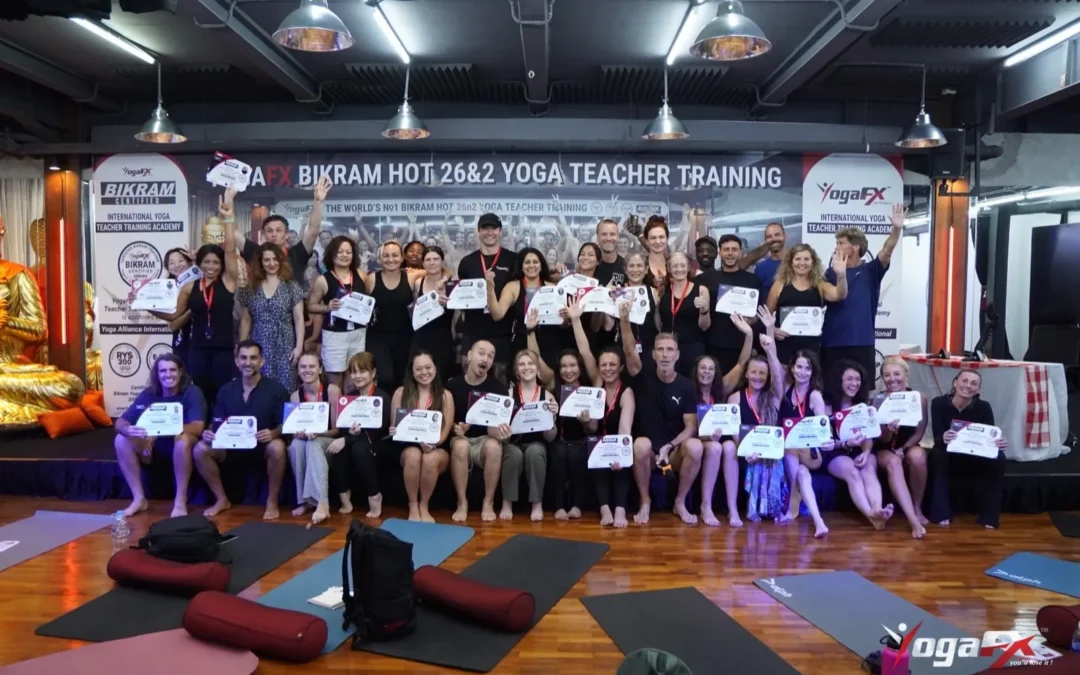
To become a Bikram yoga teacher, practise the 26&2 sequence regularly, then complete a 200-hour teacher training in the fixed sequence and its spoken dialogue. After graduating, you register as an RYT 200 with Yoga Alliance and audition at a 26&2 studio by teaching the dialogue word for word. Training takes six days to nine weeks, depending on the format.
What makes this path different is the method itself. A Bikram yoga teacher never demonstrates. Instead, you guide a heated room through the same 26 postures and 2 breathing exercises, using the same words, every class. So the skills you need, and the training you choose, are more specific than most guides admit.
The YogaFX training referenced in this guide is led by Mr. Ian Terry, E-RYT 500, who spent five years, 2014 to 2019, training with the founder of the method and has taught more than 12,000 hours.
At a Glance
- 200 hoursThe training standard for a Yoga Alliance RYT 200
- 26 + 2Fixed postures and breathing exercises, taught by voice only
- 6 days to 9 weeksHybrid intensive or traditional residential training
- 90 minutes at 40°CThe class you will teach, at 40% humidity
How to Become a Bikram Yoga Teacher: 7 Steps
- Practise the 26&2 as a student. Learn the postures and the heat from the student’s side first.
- Understand what “Bikram certified” means today. Official and independent routes now coexist.
- Choose your training route. Residential, hybrid or part-time.
- Start learning the dialogue early. It’s the biggest single workload.
- Complete the training. Posture clinic, dialogue delivery and supervised teaching.
- Register and insure. RYT 200 with Yoga Alliance, plus liability cover.
- Audition at a 26&2 studio. Teach the dialogue in front of the owner.
Step 1: Practise the 26&2 sequence as a student
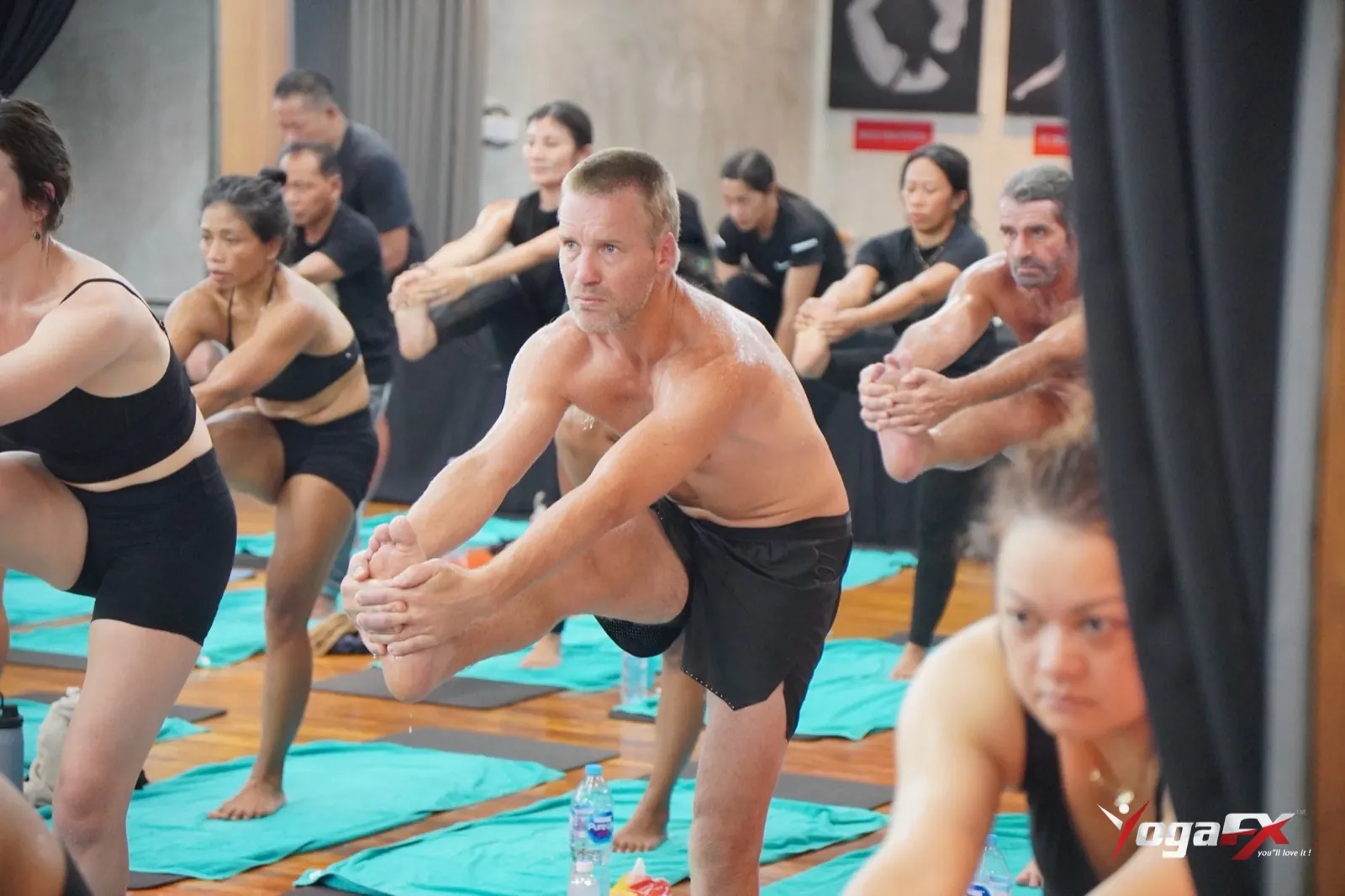
Every Bikram yoga teacher starts as a Bikram student. You need to know how each posture feels at 40°C before you can talk someone else through it. A standard class runs 90 minutes at around 40°C (105°F) with 40% humidity, so your body needs time to adapt.
There’s no fixed number of classes you must take. However, a few months of regular practice makes training far easier, because you can focus on teaching instead of coping with the heat. Two or three classes a week is a realistic base for most people.
While you practise, listen closely to your teachers. Notice where they pause, which words they stress, and how they correct students without stopping. That’s your first lesson in delivery. If you want to know the order before your first class, our guide to all 26 postures and 2 breathing exercises walks through it.
Step 2: Understand what “Bikram certified” means today
For decades, there was only one route: a long residential training under the founder’s own brand. That’s no longer true.
In 2015, a US federal appeals court ruled that a yoga sequence can’t be protected by copyright (Bikram’s Yoga College of India v. Evolation Yoga, Ninth Circuit). As a result, independent schools can legally teach the 26&2 sequence and its method. Today, many studios call it 26&2, Hot 26 or Original Hot Yoga rather than Bikram.
So when you compare trainings, look at what you’ll actually receive:
- Yoga Alliance RYT 200: the internationally recognised 200-hour credential that studios and insurers check.
- A 26&2-specific certificate: proof that you were trained in the fixed sequence and its dialogue.
- The right to teach the method: any properly trained teacher can teach the sequence, whichever school certified them.
Step 3: Choose your training route
Bikram yoga teacher training now comes in three main formats. Each one leads to the same job, so pick the one you can realistically finish.
| Route | Typical length | Time away from home | Who it suits |
|---|---|---|---|
| Traditional residential | Around 9 weeks, full time | 2 months or more | People who can leave work for two months |
| Hybrid intensive | Online study, then 6 days in person | About 1 week | People with jobs who can take one week off |
| Part-time studio course | Several months of weekends | None | People who can train locally on weekends |
Time away from home, by training route
How long each format keeps you away from work and family, based on Table 1.
The residential format gives you the most hours in the room. In contrast, a hybrid course moves anatomy, philosophy and early dialogue study online, so the in-person days focus on heat, correction and teaching. Part-time courses are rare for the 26&2 method.
Travel matters too. If you live far from a training hub, add flights, accommodation and time off to the comparison. A shorter in-person block often costs less overall, even when the tuition looks similar on paper.
Step 4: Start learning the dialogue early
The dialogue is the script every Bikram yoga teacher delivers, word for word, for all 26 postures. It runs to roughly 30 pages, so nobody memorises it during training alone.
Instead, start with the opening breathing exercise and the first few standing postures. Then add one posture at a time. Our 26&2 dialogue memorisation guide breaks it into stages, with methods that work.
How to build the dialogue, one stage at a time
Learn it in the order you will teach it, and only move on when the last stage feels automatic.
- The opening breathing exerciseStart with Standing Deep Breathing, the first words of every class.
- The first few standing posturesHalf Moon, Hands to Feet and Awkward set the rhythm of the class.
- Add one posture at a timeKeep saying the earlier postures aloud as you add each new one.
- The floor series and the closing breathFinish with the floor postures and Blowing in Firm Pose.
- Arrive ready to deliver, not to memoriseIn training, your in-person days go into pace, pauses and projection.
Graduates who prepare the dialogue before they arrive consistently get more from training, because the in-person days can go into delivery rather than memory.
Step 5: Complete the training
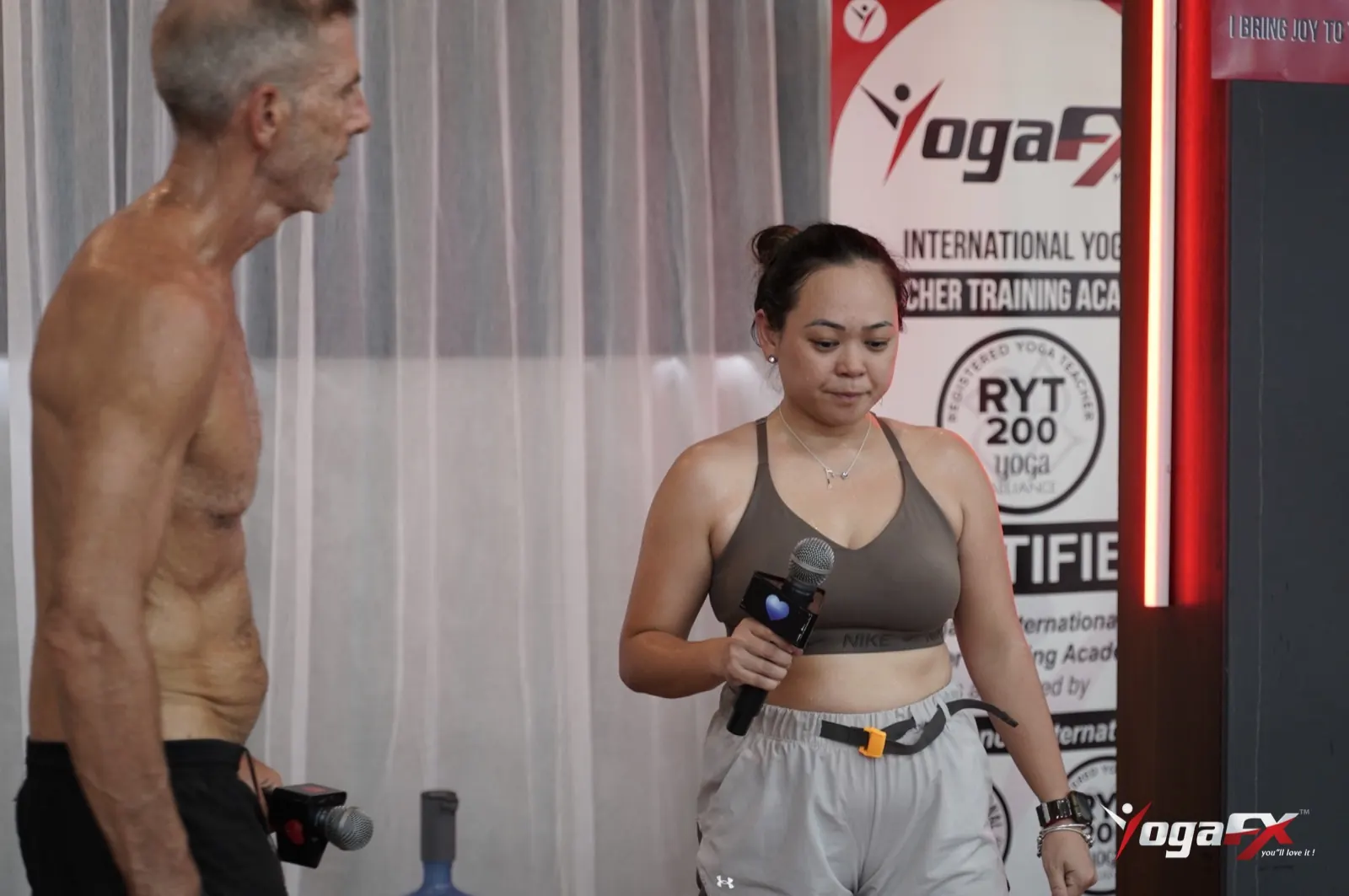
Whichever route you choose, a Bikram yoga teacher training covers the same core areas:
- Hot classes, often two a day, so you feel the sequence from the inside
- Posture clinics, where each posture is broken down for alignment, common errors and safe modifications
- Dialogue delivery, with feedback on pace, pauses and projection
- Anatomy and heat physiology, including hydration and the warning signs of overheating
- Supervised practice teaching, first in short sections, then a full class
It’s demanding. Our article on what Bikram yoga teacher training is really like describes the long days honestly, so nothing catches you off guard.
Step 6: Register and get insured
Finishing a course doesn’t automatically make you an RYT 200. You register yourself with Yoga Alliance once your school confirms your hours, and you can check any school on the Yoga Alliance directory before you enrol. Our guide to Yoga Alliance certification explains the rules for online hours.
Next, arrange professional liability insurance. Most studios ask a new teacher for proof of cover before the first class, and teaching in heat makes that step more important, not less. See what insurers ask new teachers.
Keep a simple record of every class you teach from day one: the date, studio and class length. Studios like to see it, and the hours count if you later apply for advanced credentials.
Step 7: Audition at a 26&2 studio
Most 26&2 studios hire through an audition. You deliver the dialogue for a set of postures, or a full class, while the owner watches. They’re checking three things:
- Accuracy: do you know the dialogue, in order, without notes?
- Delivery: does your voice carry, with the right pace, in the heat?
- Room awareness: do you notice students who are struggling and keep them safe?
Are you ready for your audition? Tick what you can do today
The first three are what a studio owner checks. The last three are what they will ask to see.
New teachers usually start with early morning or late evening slots. That’s normal, and it’s where most teachers build their confidence.
What a Bikram Yoga Teacher Does Differently
- No demonstration: you teach entirely by voice, so your eyes stay on the students.
- No music: the dialogue and your timing set the rhythm.
- The same sequence every time: students know what’s coming, so your precision matters more, not less.
- Teaching in heat: you speak continuously for 90 minutes in a room around 40°C.
As a result, a good Bikram yoga teacher sounds calm and precise rather than energetic. The best ones make the dialogue feel personal, even though every word is set.
How Long Does It Take to Become a Bikram Yoga Teacher?
Most people need three to six months from their first regular class to their first paid class:
- 2 to 3 months of practice as a student, two or three classes a week
- 3 to 4 weeks of online preparation, on a hybrid course
- 6 days to 9 weeks of in-person training, depending on the route
- A few weeks to register, get insured and audition
From first class to first paid class
A typical timeline on a hybrid course. A traditional residential course replaces stages 2 and 3 with around 9 weeks in person.
- 2 to 3 monthsPractise as a student, two or three classes a week
- 3 to 4 weeksOnline preparation: dialogue, anatomy and theory
- 6 daysIn-person training: heat, posture clinic and teaching
- A few weeksRegister as RYT 200, get insured and audition
Total: 3 to 6 months from your first regular class to your first paid class.
The 200 training hours are a Yoga Alliance standard. On a hybrid course, many of those hours are completed online before you travel, so you spend less time away from work and family. For a week-by-week plan, see how long it takes to become a yoga teacher online.
How Much Does Bikram Yoga Teacher Training Cost?
The cost depends on the format, the location and whether accommodation is included. A residential training adds two months of living costs and lost income to the tuition, while a hybrid course keeps the in-person block to one week.
At YogaFX, the 6-Day RYT 200 Hybrid MasterClass in Seminyak, Bali costs:
| Option | Price |
|---|---|
| Early Bird | US$1,899 |
| Twin Share (course + shared room) | US$1,999 |
| Single Room Premium | US$2,199 |
A small deposit secures your place, and interest-free instalments start from US$250 a month. Flights, meals and visas are not included. See everything included in the MasterClass →
Do You Need Experience? Requirements Explained
- Yoga experience: no teaching experience is needed. A few months of regular 26&2 practice is the best preparation.
- Age: there is no upper age limit. Many teachers start in their 40s and 50s, and the 26&2 suits mature teachers because you teach by voice, not by demonstration.
- Fitness: you need to practise the sequence safely in the heat, not perform every posture perfectly.
- Health: check with a doctor first if you are pregnant, or have a heart condition, blood pressure problems or a history of heat illness.
Can You Become a Bikram Yoga Teacher Online?
You can complete the theory online: the dialogue, anatomy, philosophy and class structure. However, the 26&2 is taught in a heated room by voice, and you can only learn to read a hot room in one. That’s why most schools, including YogaFX, combine online study with an in-person practical block.
If you can’t travel yet, the YogaFX online course lets you start the theory now. Its full fee is credited toward the MasterClass if you join one later.
What Does a Bikram Yoga Teacher Earn?
Pay varies widely by country, studio and experience. Most new teachers are paid per class, and income grows as you add regular slots, private sessions, workshops and retreats. In Bali, a yoga teacher’s monthly income typically ranges from about US$1,000 to US$3,000 or more, and foreign teachers need a valid work permit to teach there.
Specialising helps. Hot yoga studios need teachers who know the full dialogue, and fewer teachers are trained in it. Read our full guide to yoga teacher pay in Bali →, or compare pay and course costs in our hot yoga instructor salary guide.
What YogaFX Graduates Say
“I came in nervous and leaving certified and confident. If you’re thinking about doing your training here, stop thinking and just go for it!”
Xuan, Google review, 2026
“At first, i thought the training would overwhelm me as i am a newbie in yoga journey. But, no! Thanks for Mr. Ian, even i can teach very well.”
Idam, Google review, 2024
“This was my first Bikram Yoga Teacher Training and it was amazing for me, new opportunities, new educations… this is not only Yoga Teacher Training, this is a life coaching.”
Eliroas, Google review, 2023
Train With YogaFX
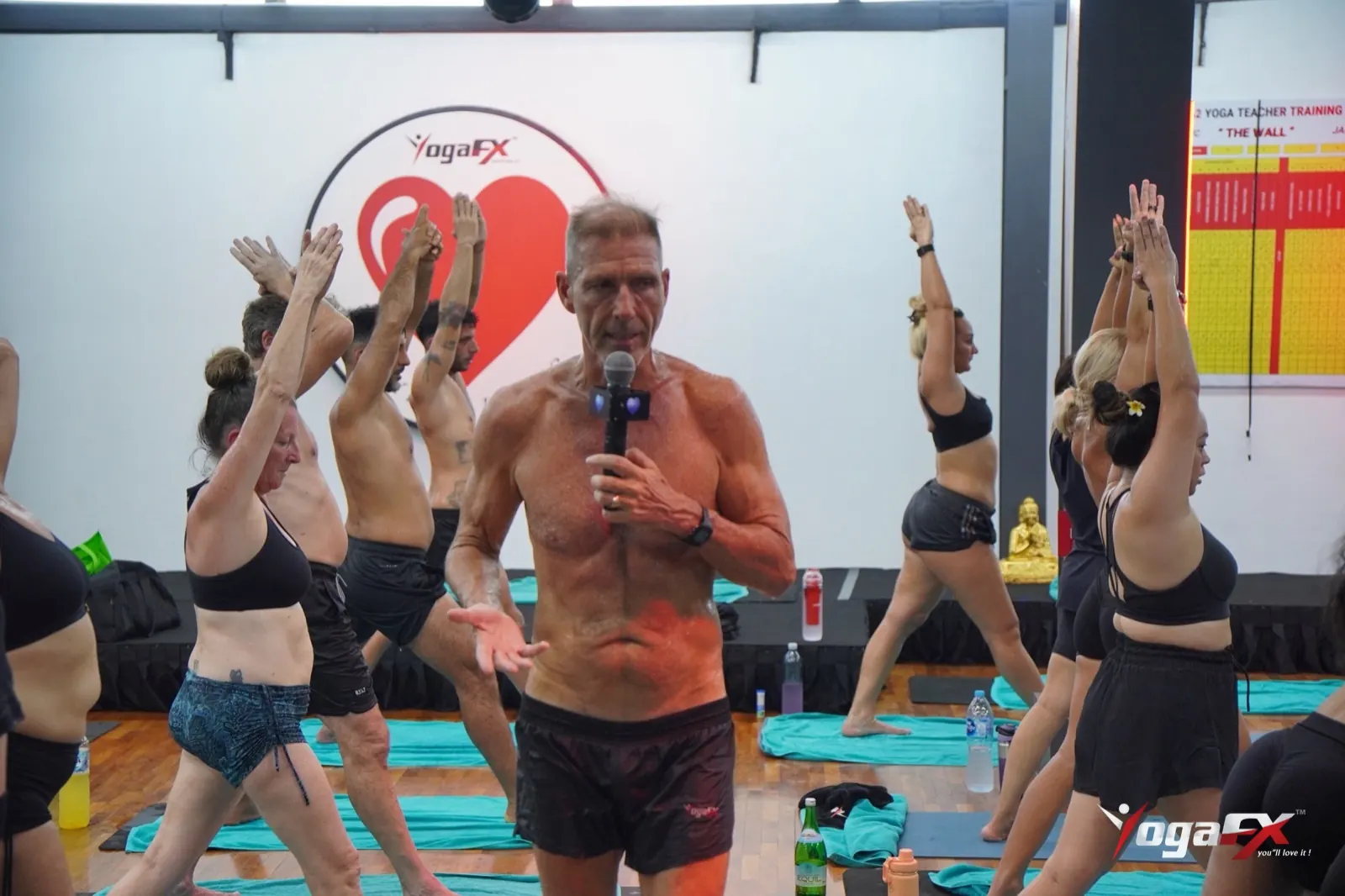
The YogaFX 6-Day RYT 200 Hybrid MasterClass follows all seven steps in one programme. You start with online preparation at home, then spend six practical days in Seminyak, Bali with Mr. Ian Terry, teaching real students from day one. You graduate with two certificates: Yoga Alliance RYT 200 and Bikram Hot 26&2 200-Hour International Yoga Certification.
Next MasterClass: 24 to 29 January 2027 · Seminyak, Bali
See course dates · Take the quiz: are you ready?
Frequently Asked Questions
How do I become a Bikram yoga teacher?
Practise the 26&2 sequence regularly, then complete a 200-hour teacher training in the fixed sequence and its spoken dialogue. After graduating, register as an RYT 200 with Yoga Alliance, arrange liability insurance, and audition at a 26&2 studio by teaching the dialogue word for word in front of the owner.
How long does it take to become a Bikram yoga teacher?
Most people need three to six months from regular practice to their first paid class. In-person training takes six days on a hybrid course, after three to four weeks of online preparation, or around nine weeks on a traditional residential course. Registration and an audition usually take a few more weeks.
How much does Bikram yoga teacher training cost?
It depends on the format and what is included. At YogaFX, the 6-Day RYT 200 Hybrid MasterClass in Bali costs US$1,899 Early Bird, US$1,999 with twin-share accommodation, or US$2,199 with a single room, with interest-free instalments from US$250 a month. Flights, meals and visas are extra.
Can I become a Bikram yoga teacher with no experience?
Yes. You don’t need any teaching experience, and many trainees arrive as regular students rather than advanced practitioners. A few months of 26&2 practice before training is the best preparation, because you can then focus on learning the dialogue instead of coping with the heat.
Can I become a yoga teacher at 40 or 50?
Yes. There is no upper age limit, and many teachers start in their 40s and 50s. The 26&2 suits mature teachers well, because you teach by voice rather than by demonstrating every posture. You need to practise the sequence safely in the heat, not perform it perfectly.
Can you become a Bikram yoga teacher online?
You can study the theory online, including the dialogue, anatomy and class structure. However, teaching a heated room by voice is a practical skill, so most schools combine online study with an in-person block. At YogaFX, you prepare online at home and then train for six days in Bali.
Is a Bikram certification the same as Yoga Alliance RYT 200?
No. Yoga Alliance RYT 200 is the general 200-hour credential that studios and insurers check, while a Bikram Hot 26&2 certificate shows you were trained in the fixed sequence and its dialogue. YogaFX graduates receive both, so they can teach the 26&2 and other yoga classes.
What is the best yoga teacher training in the world?
The best training depends on what you want to teach. Look for a Yoga Alliance Registered Yoga School, a lead trainer with real teaching hours, plenty of practice teaching real students, and genuine graduate reviews. The YogaFX MasterClass is led personally by Mr. Ian Terry, E-RYT 500, with 12,000+ teaching hours.

Founder and lead trainer of YogaFX International Yoga Teaching Academy, with more than 12,000 hours of teaching. He trained for 5 years, from 2014 to 2019, with the founder of the Bikram Hot 26&2 method.
Published · Last reviewed and updated
You may also like
Explore all articles ↗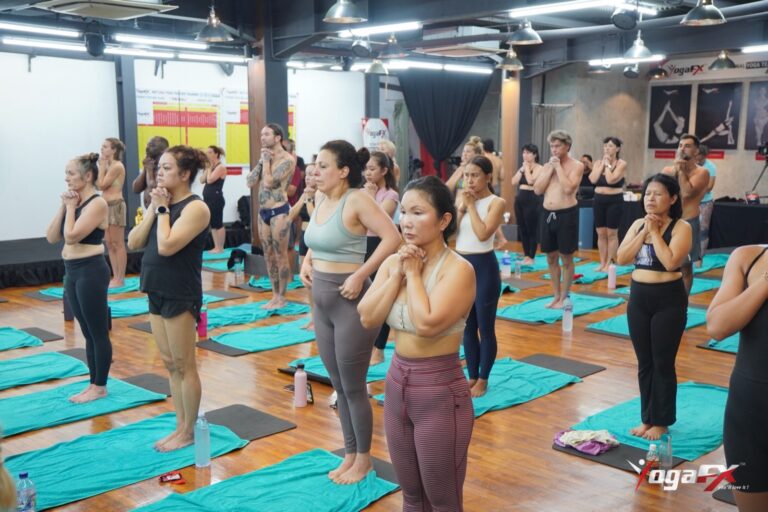 Hot Yoga Science and Benefits10 min read17 Nov 2026
Hot Yoga Depression Study: How the Harvard Trial Was Run and Measured
Read article ↗ Hot Yoga Science and Benefits12 min read16 Nov 2026
Tired After Hot Yoga? Fatigue and Mood Studies Explained
Read article ↗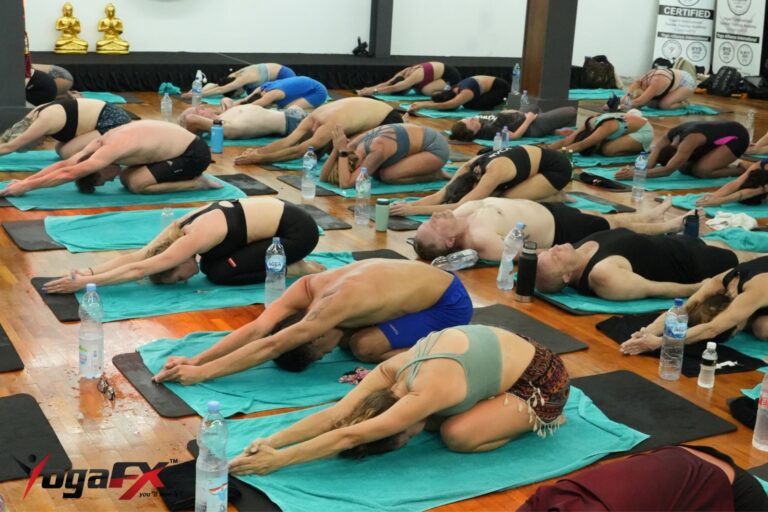 Yoga for Athletes and Yoga Sport12 min read16 Nov 2026