
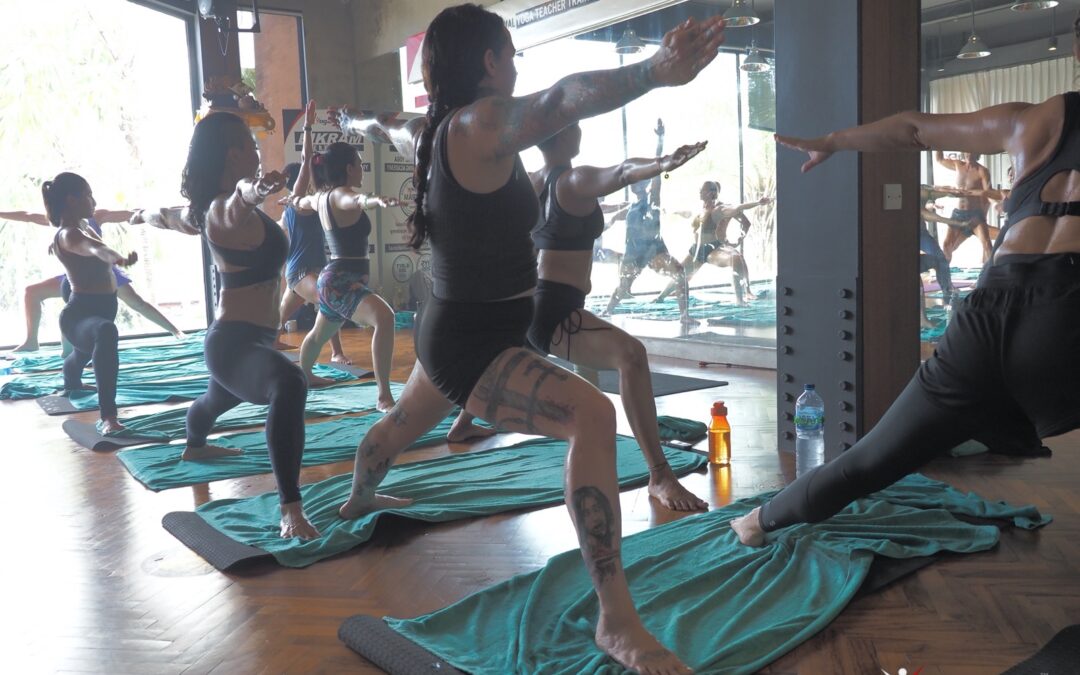
Awkward pose (Utkatasana) is a standing pose where you bend the knees, sit the hips back and hold your own weight in the thighs. You can learn it at home by moving in a fixed order and holding each part for a short, steady count. This lesson gives you seven spoken cues, a sustained-hold ladder and a safe way out.
In this article12 sections
- Awkward Pose at Home: What Sustained Work Feels Like
- Seven Spoken Cues for Awkward Pose at Home
- The Sustained-Hold Ladder: Build Time Under Load Safely
- Set Up Your Home Room for Awkward Pose
- Warm Up First, Then Come Out Slowly
- Five Awkward Pose Mistakes at Home and Their Fixes
- What Health Sources Say About Holding Poses Safely
- How Mr. Ian Terry Teaches Sustained Cues
- A Twelve-Minute Home Routine Around Awkward Pose
- What YogaFX Students Say
- Take Awkward Pose Further With the Online Course
- FAQ
A quick note before we start. This is general information, not medical advice. If you have a knee, hip or back problem, high or low blood pressure, a recent injury, or you are pregnant, please consult a healthcare professional before you practise.
Awkward Pose at Home: What Sustained Work Feels Like
Most poses ask you to reach for something. Awkward pose asks you to stay put while your legs do the talking. After about five seconds the thighs start to burn, the mind starts to bargain, and the cues you learned either help or fall apart.
That is why we teach it with a voice, not a photo. A picture shows the shape. A spoken line tells you what to adjust while the muscles are tired, which is exactly when form slips. In the online course you read a line aloud, hold the position, then read the next line.
Where awkward pose sits in the sequence
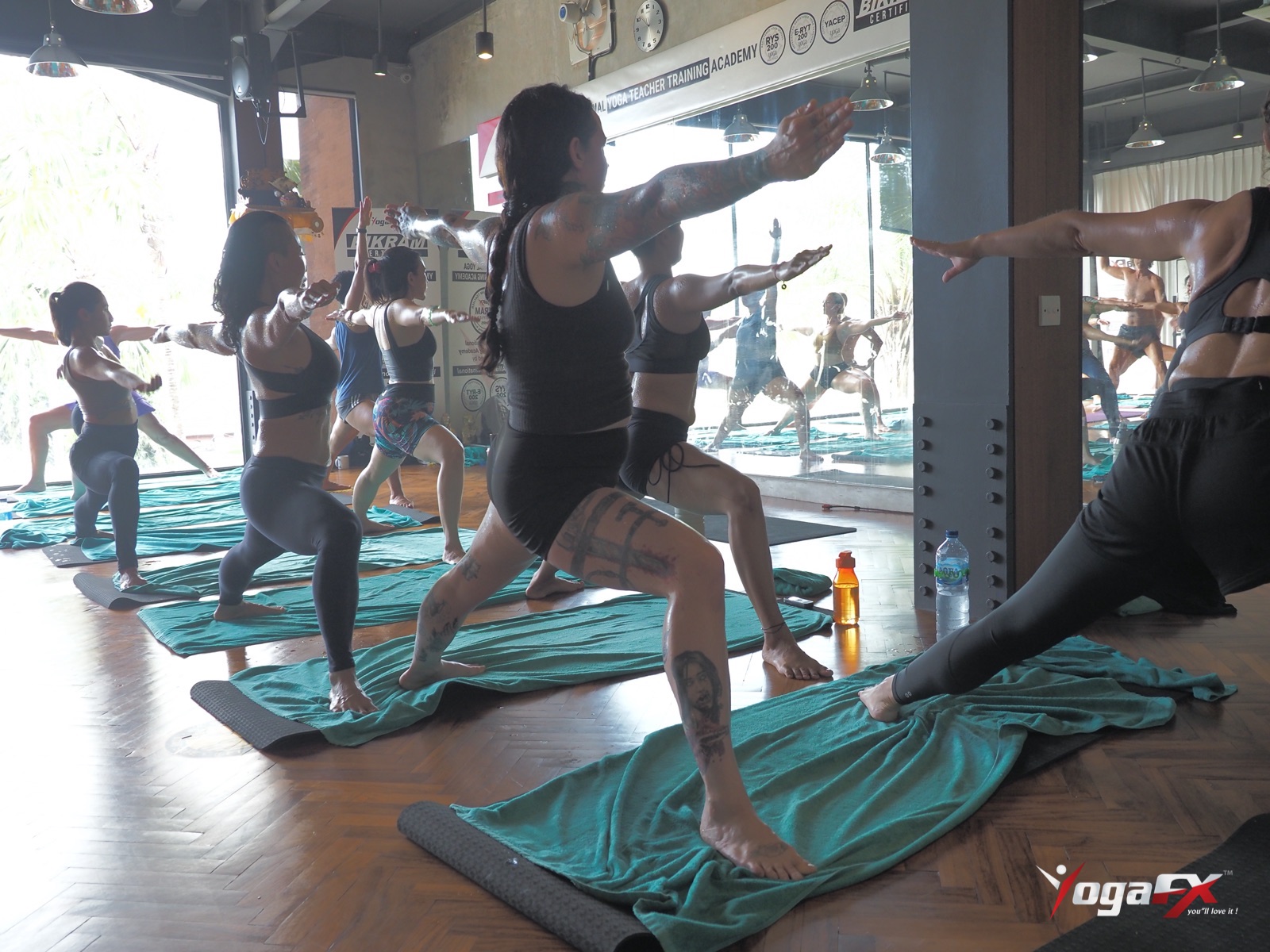
In the Original Hot 26&2 class, awkward pose is the third standing posture. It arrives early, so your legs are fresh but your focus is already tested. Our page on the 26&2 poses shows the full class order, and the studio view of awkward pose in a full class explains how the three parts feel in the heated room.
At home you will practise at room temperature. That's deliberate. You learn the shape and the cues first, and if you add heat later, you do it with a teacher in the room.
Why the name fits
Utkatasana is the Sanskrit name, and utkata is often translated as powerful or fierce. The English name is simpler. The body is bending in a way daily life rarely asks for, so the pose feels clumsy at first. Nearly everyone feels that, and it'll fade with practice.
Seven Spoken Cues for Awkward Pose at Home
Read each line aloud, or record yourself saying it, then do what it says. Pause for one breath between lines. This is our own plain-language script for home study. It is not the class dialogue, which a trained teacher delivers live.
| Line | What you say aloud | What it protects | Error it catches |
|---|---|---|---|
| 1 | Stand with your feet together, arms by your sides, weight even on both feet. | Gives you a calm, level starting point | Weight leaning on one leg |
| 2 | Raise your arms to shoulder height, palms facing each other. | Keeps the shoulders from hunching | Arms drifting down as the legs tire |
| 3 | Bend your knees and sit the hips back as if lowering onto a low chair. | Shares the load between thighs and glutes | Knees pushing forward past the toes |
| 4 | Keep your chest tall and your eyes level. | Protects the lower back | Folding forward to ease the legs |
| 5 | Keep your knees in line with the middle of your feet. | Guards the knee joints | Knees collapsing inward |
| 6 | Hold and breathe slowly through the nose. | Keeps the effort steady, not frantic | Holding the breath while the legs burn |
| 7 | Press through your feet and stand up slowly, then rest. | Gives the body time to adjust to upright | Snapping up and feeling lightheaded |
Notice how each line protects the next. A level start makes the sit-back honest, the tall chest keeps the back quiet, and tracking the knees keeps the joints happy. If you drop one line, the shape changes.
Hold time and rounds
In class, the pose is built in three parts, and each part is held for about ten seconds. At home, start with three slow breaths in a single part. Rest standing for a few breaths, then repeat once. Two short rounds teach more than one long hold, because the first round shows where you rush and the second lets you fix it.
The Sustained-Hold Ladder: Build Time Under Load Safely
Sustained cues only work if you can stay in the pose long enough to hear them. Don't chase a long hold on day one. A good hold is the one where your knees stay lined up, your breath stays slow and your chest stays tall. Use the ladder below, and step down on any day that feels heavy.
Rung 1
Three breaths, half depth
Sit back only a little, arms on hips. Start every week here.
Rung 2
Five breaths, half depth
Arms reach forward at shoulder height. Most beginners stay here for weeks.
Rung 3
Ten slow counts
Match the class hold, resting standing between rounds.
Rung 4
Two rounds of ten counts
Only when knees, back and breath all stay calm in the second round.
Stop sign
Stand up and rest
Sharp pain in a knee, back pain, tingling or dizziness. Stand tall and stay there.
Move up only when the rung below feels steady across several sessions. If one week feels worse than the last, go down a rung. Nobody's keeping score, and a calm second round is worth more than a heroic first one.
A leg-fatigue check you can do in the pose
Burning thighs are normal here. Sharp or pinching sensations are not. Ask yourself three quick questions while you hold, and answer them honestly:
- Where is the burn? Front of the thighs and seat is fine. A pinch at the front of the knee means come up.
- Can I still breathe slowly? If the breath turns fast or stops, shorten the hold.
- Are my knees still over my feet? If they drift inward, rise a little and reset.
Set Up Your Home Room for Awkward Pose
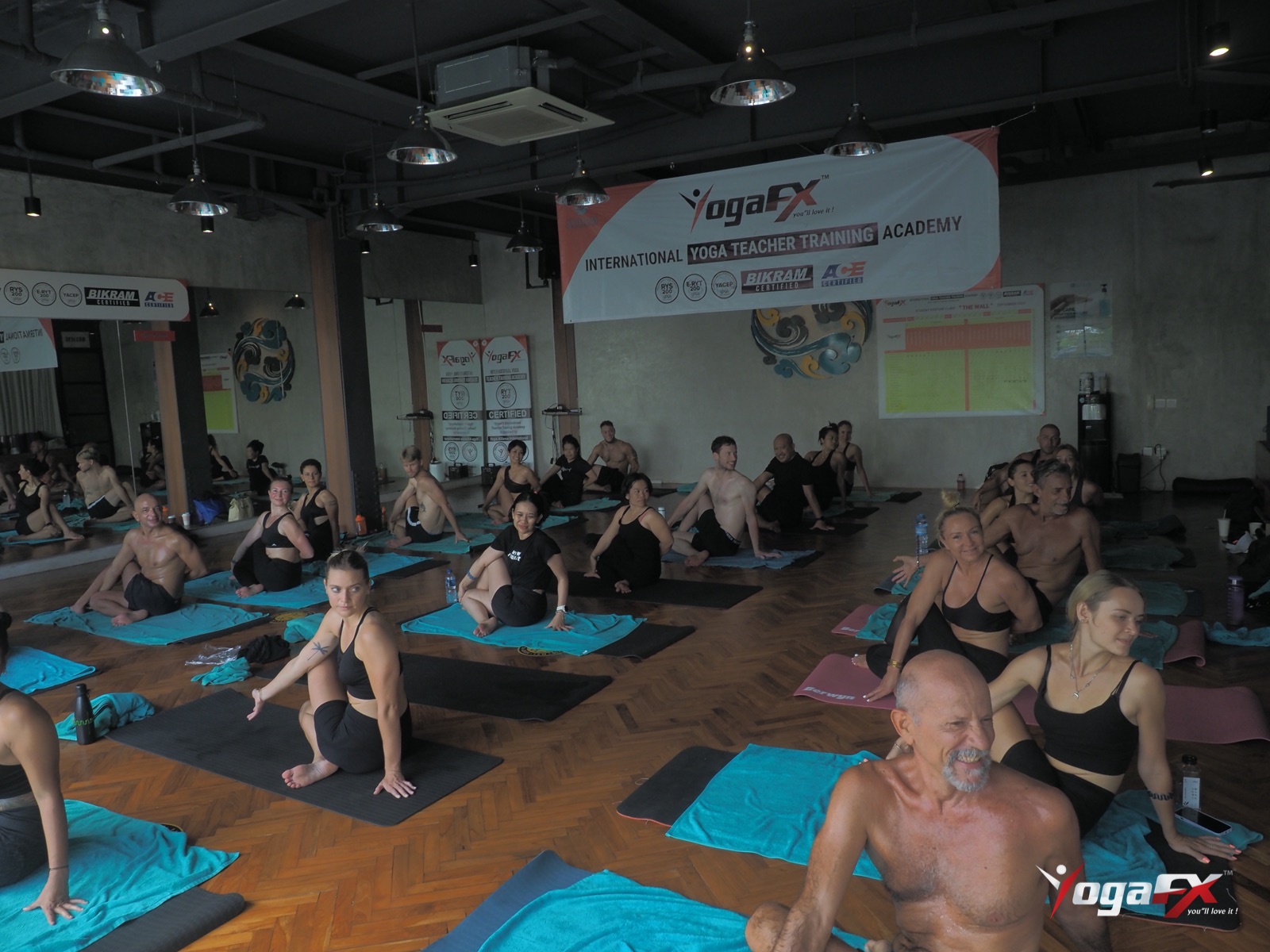
You don't need much space. You need a clear patch of floor about the length of your mat, a non-slip surface and enough room to lift your arms without touching anything. Wooden floors in a studio look lovely, but a mat on a firm floor works just as well.
| Setup item | What it does | Use it when |
|---|---|---|
| Non-slip mat on a firm floor | Keeps the feet steady while the thighs work | Always, especially on smooth floors |
| A wall or chair within reach | Gives a quick hand for balance without leaning on it | You are new to the pose or tired |
| Phone propped side-on | Lets you check knee position and forward lean on video | You practise alone and want feedback |
| A mirror in front | Shows whether the knees stay in line with the feet | You can watch yourself without craning the neck |
| A towel and water bottle nearby | Lets you wipe your hands and sip between rounds | Any session, to prepare for resting after holds |
If you want to see how awkward pose fits next to the other standing postures, our guide to hot yoga poses for men puts all 26 postures into a four-week plan you can follow at home.
Warm Up First, Then Come Out Slowly
Do not start cold
Awkward pose is a hold, not a stretch, but the Mayo Clinic logic still applies to cold muscles. Its stretching guide says you may hurt yourself if you stretch cold muscles, and it suggests a light warm-up of five to ten minutes first. At home, that can be brisk walking or marching on the spot, then a few ankle circles and slow bodyweight sit-backs to a chair.
The slow exit, step by step
Most students think about the way in. Teachers think about the way out. When you change position fast, some people feel lightheaded, so we move in small stages.
- Press through both feet. Keep the chest tall as you start to rise.
- Straighten the legs slowly. Do not snap the knees back.
- Lower the arms. Let them hang loose at your sides.
- Breathe for three slow breaths. Keep the gaze soft and the jaw relaxed.
- Step off the mat only when steady. If you feel dizzy, sit and sip water.
Rest matters as much as the shape. Our page on what to do when you feel dizzy covers the signs that mean you should sit down, and it's worth reading before your first session.
Five Awkward Pose Mistakes at Home and Their Fixes
Home practice removes the teacher's eyes, so small errors can repeat for weeks. These are the five we see most, with the first fix to try.
- Folding forward to escape the burn. Lift the chest and look straight ahead. If it is too much, rise a few inches.
- Knees collapsing inward. Press the knees gently toward the little-toe side of the feet.
- Sitting too deep, too soon. Go to rung one and earn depth over weeks.
- Holding the breath. Breathe in through the nose, out through the nose, and slow it down.
- Skipping the second round. The first round is the draft, and the second is where you fix it.
For example, a student who always feels awkward pose in the front of the knees is usually pushing the knees forward over the toes. Sending the hips back, like sitting on a low chair, moves the work into the thighs and seat where it belongs.
What Health Sources Say About Holding Poses Safely
Tension, not pain
Mayo Clinic advises that you expect tension while stretching, not pain. In its words, “If it hurts, you’ve pushed too far.” It also warns against bouncing. Awkward pose has no bouncing, but the idea carries over: smooth movement in, smooth movement out, and no pushing through a sharp signal.
Yoga safety in general
The National Center for Complementary and Integrative Health says yoga is generally considered a safe form of physical activity for healthy people when performed properly. It adds that injuries can occur, that sprains and strains are the most common, and that the knee or lower leg is the area most often hurt. Serious injuries are rare.
The same page says hot yoga has special risks related to overheating and dehydration, and that you should avoid it while pregnant. That is one more reason we teach awkward pose at room temperature at home.
Effort in a full class
A 2014 University of Wisconsin study (Porcari et al.) measured a 90-minute Hot 26&2 class and reported about 333 kcal for women and 460 kcal for men, at around 80 percent of maximum heart rate. That figure covers a whole class in a heated room, not one pose at home, so treat it as context only.
What we do not claim
Searches for awkward pose promise everything from flat abs to a faster metabolism. We don't make those claims. Awkward pose is a sustained lower-body hold, and we judge it by how your knees, breath and chest behave. If you have pain, speak to a healthcare professional first.
How Mr. Ian Terry Teaches Sustained Cues
Mr. Ian Terry, E-RYT 500, has more than 12,000 teaching hours. He trained for five years, from 2014 to 2019, with the founder of the Original Hot 26&2 method. For a pose like awkward pose, that background shows up in how trainees learn to speak.
Trainees practise naming where the knees should track, where the chest should stay and when a student should rise early. They fix one cue at a time and then say it again from memory. A video cannot tell which cue a student needed, but a trained voice can.
That is also why this lesson gives you a script. When you can say the seven lines from memory, you can check your own awkward pose, and later you can cue a friend. For the method behind the wording, see learning the dialogue from home.
A Twelve-Minute Home Routine Around Awkward Pose
Awkward pose works best as one part of a short session. Here is a simple plan for a firm floor with a mat. You won't need any other equipment.
- Minutes 1 to 4: Walk briskly or march on the spot. Add arm circles and ankle circles.
- Minutes 5 to 6: Do eight slow bodyweight sit-backs to a chair, without bouncing.
- Minutes 7 to 8: Stand on the mat and read lines one to five aloud. Practise the knee line in a mirror.
- Minutes 9 to 11: Do two rounds of awkward pose on rung one or two. Rest standing between rounds.
- Minute 12: Stand tall, breathe slowly and say line seven on the way up.
Do this two or three times a week and keep a one-line note after each session. For instance: “knees stayed in line, chest tall.” After a fortnight, the notes show you the pattern. Drink water before you start, and stop if you feel dizzy. You don't need to heat the room, and you shouldn't.
What YogaFX Students Say
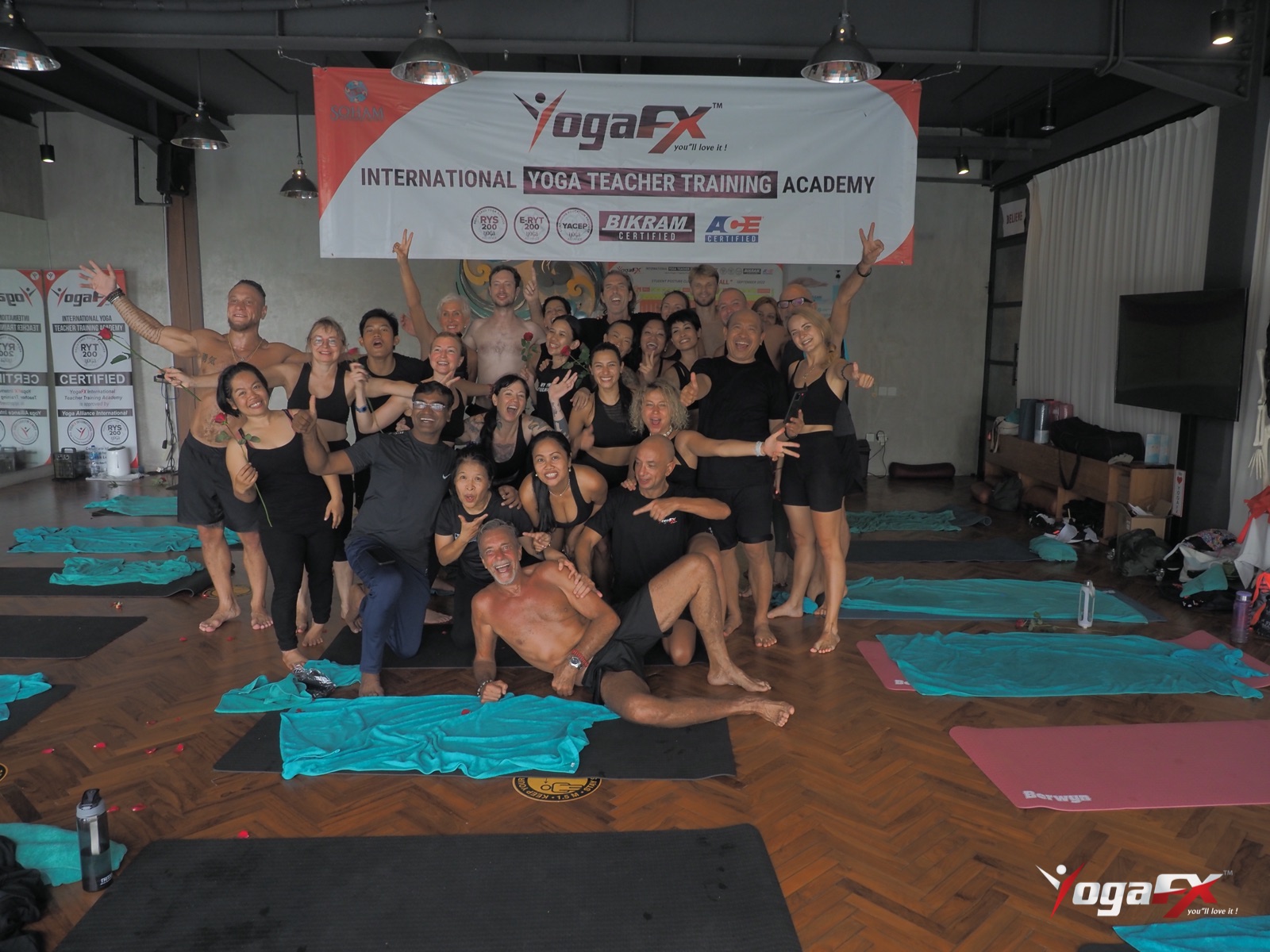
Instructions tell you what to do. Students tell you how it feels to learn it. Here are three reviews from people who trained with YogaFX.
“It was an amazing Life Changing Experience with YogaFX. It’s not just teacher training but creating the NEW You.”
Karen, Google review, 2018
“This was one of the hardest things I’ve ever done physically, but you guys really inspiring.”
Britt, YouTube review, 2026 (transcript, lightly edited)
“It’s good to know I’m not the only quiet Mouse in the room.”
Eva, YouTube review, 2025 (transcript, lightly edited)
You can hear Britt describe how demanding the training felt in her 5-star YouTube review below.

Take Awkward Pose Further With the Online Course
If this lesson made you curious about the spoken method, the next step is our hot yoga teacher training online course. It teaches the postures, the dialogue and the science from home, on your own schedule, led by Mr. Ian Terry. The course costs USD 329, or four payments of USD 82.
Since 2017, YogaFX has trained more than 1,500 graduates from over 80 countries.
This article is part of our online yoga teacher training guide. Related reading in Teacher Training Guides: Tripaneer Bankruptcy: 7 Steps to Protect Your Yoga Teacher Training Deposit and Tripaneer Reviews and the Bankruptcy: Look Beyond the Booking Screen Before You Pay.
Want hands-on practice in a heated room? See the Bikram yoga teacher training in Bali, led by Mr. Ian Terry, our lead trainer.
FAQ
What is awkward pose in yoga?
Awkward pose, or Utkatasana, is a standing pose where you bend the knees and sit the hips back as if lowering onto a low chair, with the arms reaching forward. The thighs and glutes hold your weight, so it feels clumsy at first. In the Hot 26&2 class it is built in three parts.
Why is it called awkward pose?
The name describes how the shape feels, not how it looks. Your body is bending in a way daily life rarely asks for, with the weight held in the thighs while the chest stays tall. Most people feel clumsy for the first few tries, which is normal and fades with practice.
How long should you hold awkward pose at home?
In class, each of the three parts is held for about ten seconds. At home, start with three slow breaths in one part, rest standing, then repeat once. Build toward ten counts only while your knees, back and breathing stay calm. Short holds with good form teach more than one long hold.
Is awkward pose hard on the knees?
It can be if the knees collapse inward or push far past the toes. Keep them in line with the middle of the feet and sit back less deep. The NCCIH says the knee or lower leg is the area most often hurt in yoga. Stop at sharp pain and speak to a healthcare professional.
Can you practise awkward pose at home without a teacher?
Yes, at a modest depth, on a non-slip mat, with a wall or chair nearby for balance. Say the cues aloud and record a side-on video to check your knees and forward lean. Stop if you feel pain or dizziness. A teacher can add feedback later in a live class.
Still have questions? Message Mr. Ian and the YogaFX team on WhatsApp and we will answer them personally.

Founder and lead trainer of YogaFX International Yoga Teaching Academy, with more than 12,000 hours of teaching. He trained for 5 years, from 2014 to 2019, with the founder of the Bikram Hot 26&2 method.
Published · Last reviewed and updated
You may also like
Explore all articles Teacher Training Guides11 min read22 Nov 2026
Camel Pose for Home Practice: Ustrasana Lesson and Safe Depth
Read article ↗ Teacher Training Guides11 min read22 Nov 2026
Triangle Pose Step by Step: 7 Safe Cues to Learn at Home
Read article ↗ Teacher Training Guides11 min read22 Nov 2026