
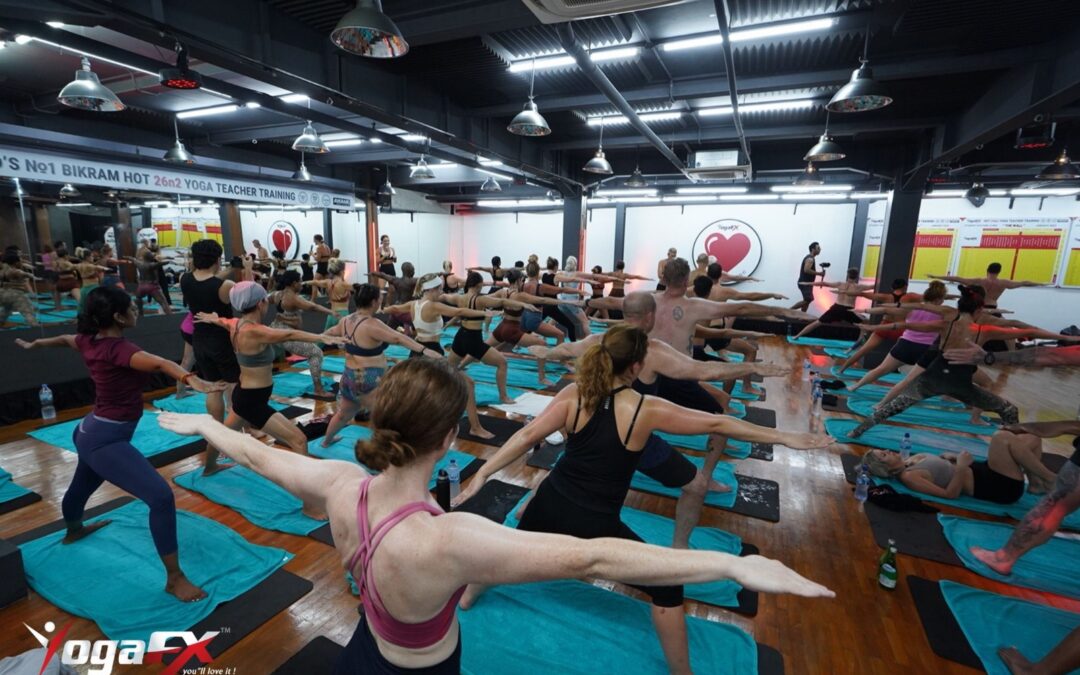
How many men do yoga? In the United States, 10.3% of men practised yoga in 2022, up from 8.6% in 2017, according to the National Health Interview Survey. Women practised at more than twice that rate. The exact figure depends on the survey, so this guide sets each source, date and sampling limit side by side.
Mr. Ian Terry, an E-RYT 500 teacher with 12,000+ teaching hours, reviews the evidence we publish at YogaFX. On this question, the survey data gives a clear answer. Men are a minority of practitioners everywhere it has been measured. However, that minority has grown, and the size of the gap shifts with how each survey asks the question.
Every number below comes from a published source that we opened and read. Where a source does not report something, we say so instead of filling the gap. That matters, because yoga statistics are often copied from page to page without their sample sizes or dates.
How Many Men Do Yoga? The Survey Numbers Side by Side
Four large surveys give a usable picture of how many men do yoga in the United States and England. They ask different questions, in different years, of different samples. So the best way to read them is next to each other, with the measure spelled out. That is also the fastest way to see what the men in yoga statistics really say.
| Survey | Year and sample | What it measures | Result for men |
|---|---|---|---|
| US National Health Interview Survey (NCHS Data Brief 325) | 2017, adults 18+, n = 26,742 | Used yoga in the past 12 months, age-adjusted | 8.6% of men, against 19.8% of women |
| US National Health Interview Survey (NCHS Data Brief 501) | 2022, adults 18+ | Used yoga in the past 12 months, age-adjusted | 10.3% of men (95% CI 9.6 to 11.0), against 23.3% of women |
| Yoga Journal and Yoga Alliance (2016 Yoga in America Study) | 2016, US adults | Share of all US practitioners who are men | 28% of practitioners, against 72% women |
| Health Survey for England (Ding and Stamatakis) | 1997 to 2008, 81,090 respondents | Yoga in the last four weeks, all adults | No sex-specific rate reported; women far more likely |
Reading the table: rate versus share
The first two rows are the cleanest answer to the question. They give the percentage of men who do yoga, which is a rate: out of every 100 men, how many practised. The third row is a share: out of every 100 practitioners, how many are men. Mixing those two up is the most common mistake in articles on this topic.
A back-of-envelope check
Here is the back-of-envelope link between them. Suppose there were equal numbers of adult men and women. Then a 10.3% male rate and a 23.3% female rate would put men at about 31% of practitioners (10.3 divided by 33.6). The 2017 rates give about 30%. That lands close to the 28% share reported in 2016, even though the surveys are unrelated.
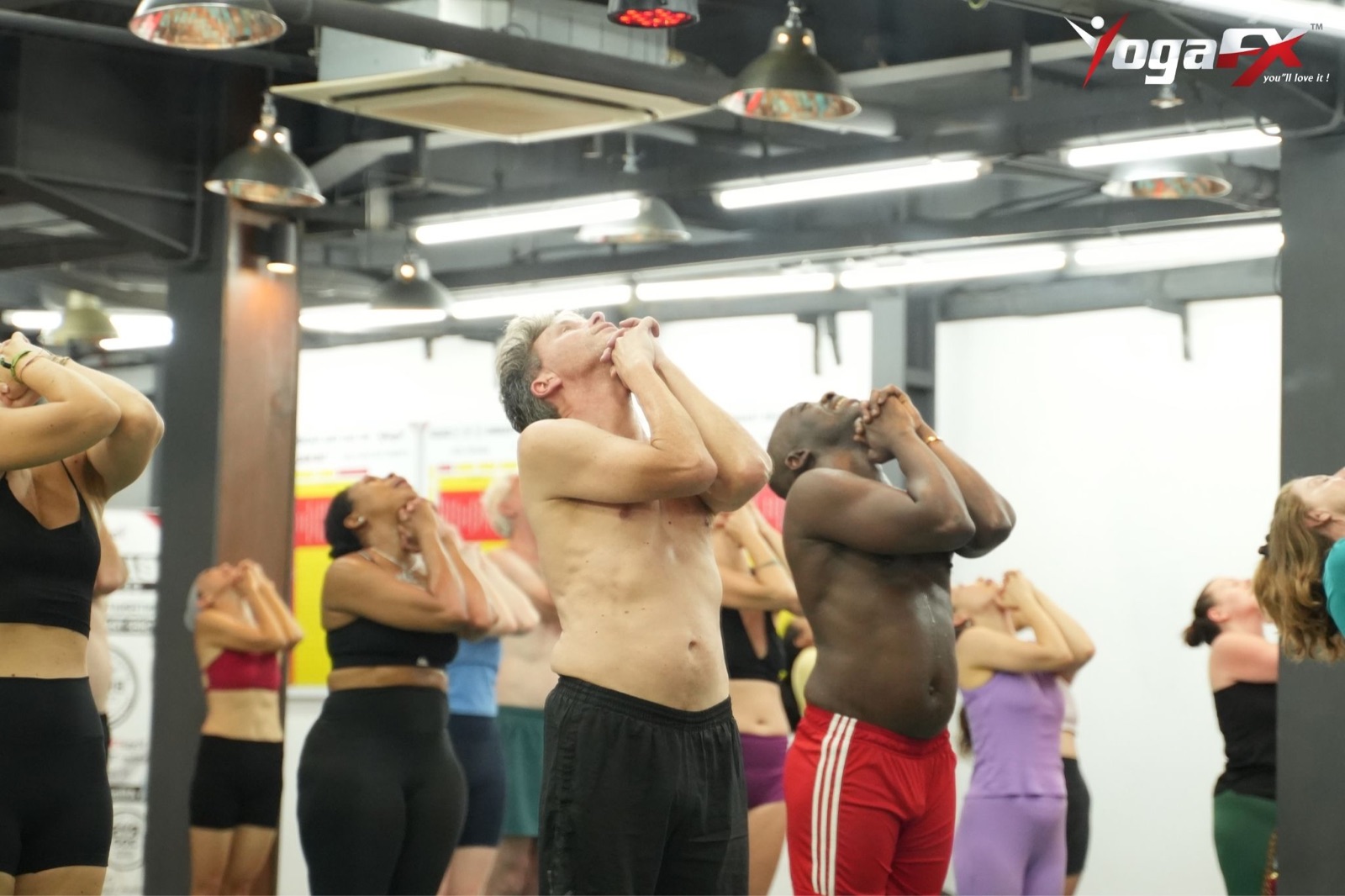
How Many Men Do Yoga Now? A Decade of US Data
The CDC's National Health Interview Survey is the strongest trend source, because it asks the same household question across years. It is a nationally representative survey of the civilian population, run by the National Center for Health Statistics. Interviewers ask whether the person practised yoga "as part of a class or on your own" in the past 12 months.
For all adults, NCHS Data Brief 325 reports yoga use rising from 9.5% at the baseline (ten years before the latest brief) to 14.3% in 2017. Then NCHS Data Brief 501 puts 2022 at 16.9%.
The baseline and 2017 samples held 34,525 and 26,742 adults, and the CDC flags that first rise as statistically significant. The NIH's National Center for Complementary and Integrative Health also summarised the same 2017 results, with women at 19.8% and men at 8.6%.
What changed for men
Now look at men alone, because that's the question. The 2017 brief gives a male rate of 8.6%. The 2022 brief gives 10.3%, with a 95% confidence interval of 9.6% to 11.0%. That is a rise of 1.7 percentage points, or roughly one fifth in relative terms. Women moved from 19.8% to 23.3%, a rise of 3.5 points, which is about 18% in relative terms.
- Men's relative growth was slightly faster. Their rate rose by about 20%, against about 18% for women, although both started from different bases.
- The gap barely changed. Women were 2.3 times as likely as men in 2017 and 2.26 times as likely in 2022.
- The direction is clear, the size is soft. We found no significance test for the men-only change in either brief, so treat it as a direction rather than a proven jump.
Cross-checking the totals
Triangulation helps here. At the baseline, the Yoga Journal study counted 20.4 million US practitioners. The CDC brief gives 22.4 million adults, and the journal paper by Cramer and colleagues estimates about 21 million past-year users from the same survey year. In 2016 and 2017, the figures were 36.7 million and 35.2 million. Three methods landing this close is reassuring. It suggests the totals are sound, though the sex split is softer.
One more detail shows how method changes the number. The Cramer and colleagues paper reports 8.9% past-year use for the baseline year, using weighted frequencies. The CDC brief reports 9.5% for that year after age adjustment. The gap is only 0.6 points. Still, it is a reminder that two honest sources can print two different numbers for one year.
Who Practises: Age, Income and Class Habits
Knowing how many men do yoga is only half the story, because who they are matters too. The national briefs do not split every detail by sex, so be careful here. The figures below describe all adults, not men alone. They still tell you what kind of person turns up, and men follow the same broad pattern.
NCHS Data Brief 501 reports yoga use falling steadily with age: 21.3% of adults aged 18 to 44, 14.1% of those aged 45 to 64, and 8.0% of those aged 65 and older. Income shows an even steeper gradient. Yoga use was 10.4% below 200% of the federal poverty level, 14.0% between 200% and 400%, and 23.0% at 400% or more.
| Group | Subgroup | Share who practised yoga |
|---|---|---|
| Age | 18 to 44 | 21.3% |
| Age | 45 to 64 | 14.1% |
| Age | 65 and older | 8.0% |
| Income | Below 200% of poverty level | 10.4% |
| Income | 400% of poverty level or more | 23.0% |
| Ethnicity | Asian non-Hispanic | 22.5% |
| Ethnicity | Hispanic | 10.5% |
The earlier Cramer and colleagues analysis of the baseline survey adds what practitioners actually do. Among past-year practitioners:
- 51.2% attended yoga classes.
- 89.9% used breathing exercises.
- 54.9% used meditation.
Most gave general wellness or disease prevention as their reason (78.4%). Back pain was the specific problem named most often, at 19.7%.
Those reasons are not split by sex in the abstract we read. So we cannot say that men practise for back pain more than women do. What we can say is that wellness, not performance, was the most common stated motive across all practitioners.
Why Surveys Disagree on How Many Men Do Yoga
A survey figure is an estimate with a margin around it. Before you quote one, check four things: who was asked, when, how the question was worded, and how many people answered. The table below grades each source on those points.
| Source | Strength | Limit to remember |
|---|---|---|
| NHIS 2022 (CDC) | Large, nationally representative; published confidence intervals; male rate given. | Self-reported; 55.7% of adult interviews were at least partly by telephone; no sample size on the page we read. |
| NHIS 2017 (CDC) | Large sample (26,742); same question as other years; male rate given. | No baseline-year sex split on the page; no confidence intervals shown. |
| Yoga in America 2016 | Counts practitioners and spending; benchmarks two earlier Yoga Journal studies. | Sample size and method not on the summary page; gives a share, not a rate. |
| Health Survey for England | 81,090 respondents across three periods. | Four-week window and an exercise-context question; the authors call it conservative. |
| YouGov UK 2024 | Nationally representative online sample of 1,520. | Measures what people associate with yoga, not who practises. |
The England figures
The England paper deserves a closer look, because it's often missed. Ding and Stamatakis used the Health Survey for England and found yoga in the last four weeks rising from 0.46% in 1997 to 1999, to 0.94% in 2003 to 2004, and 1.11% in 2006 and 2008.
Only 603 of the 81,090 respondents reported practice. The authors also found that women were far more likely to practise (odds ratio 7.41, pooled across years).
Those English rates look tiny beside the US ones. However, the authors explain why the two are not comparable. The English question covered four weeks, not twelve months. It was open-ended, so respondents were not prompted. And it sat in a sports and exercise section, so people doing breath work or meditation might not have mentioned yoga.
Attitude data is not participation data
Attitude data is a different thing again. A YouGov survey of 1,520 UK adults in April 2024 found that 69% of Britons link yoga with physical exercise and 60% with meditation. Men and women were nearly level on spirituality (28% and 30%). None of that is a practice figure. That tells you how yoga is seen, not how many men practise, so it shouldn't be quoted as a participation rate.
Before you quote a figure on how many men do yoga
- Rate or share? A percentage of men is a rate. A percentage of practitioners is a share.
- Which window? Past 12 months, past four weeks and "ever" give very different numbers.
- Which year? A figure from ten years ago is a snapshot, not today's answer.
- Whose sample? A studio's own enrolment forms describe that studio, not the nation.
For that last point, see a separate report that adds one academy's own enrolment figures. It reports one teacher training academy's applicants and states its own sampling limits, which makes it a useful companion to the national figures here.
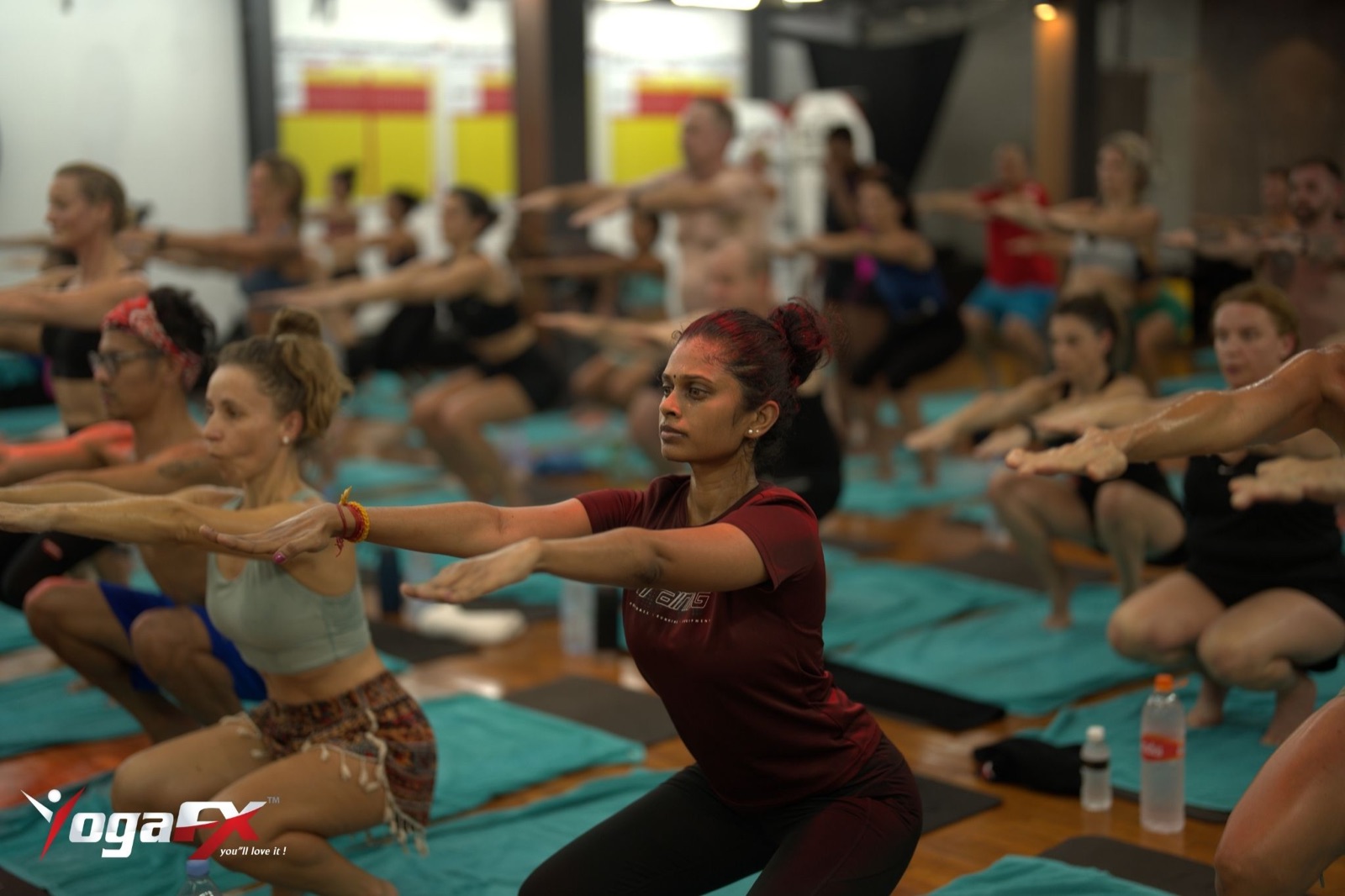
What These Surveys Cannot Tell You About Hot Yoga
If you came here asking how many men do yoga in heated rooms, the data runs out. None of the sources above separates heated practice from other styles. The NHIS question asks about yoga "as part of a class or on your own". It does not ask about room temperature. So the honest answer to how many men do yoga in a hot room is that no national survey we found measures it.
That gap matters for anyone weighing a hot yoga teacher training. Heat adds real demands, and the controlled research on men is small. We keep that evidence on its own pages instead of mixing it into a participation article: what the research shows for men, study by study, and how men and women respond to the heat differently.
Two cautions apply to every health claim around yoga. First, a survey shows who practises, not what practice does, and that's an important line. Second, anyone with a heart condition, high blood pressure or another medical issue should speak to a healthcare professional before starting heated practice.
Three practical questions come up for any man weighing hot yoga. Will the heat be too much for a beginner? Can a stiff body cope? Will a man in his forties feel out of place? We answer the first two in can men do hot yoga, and the third in yoga for men over 40. For a wider look at what practice may offer, read our guide to yoga benefits for men.
What Students Say About Training With Mr. Ian
Numbers describe a population. Students describe the experience. We share these reviews from the YogaFX review store, with first names only, because they show who actually turns up and why they stay.
"This was an amazing adventure, I cannot recommend highly enough! Whether you want to become a teacher, refresh your training, or just improve your practice, this is a great way to meet some wonderful people…"
Gary, Google review, 2025
"I truly enjoyed my time attending the course and the practice sessions; the teacher Mr Ian are great. It is fruitful and enjoyable."
Musyatun, Google review, 2023
Jennifer, in a 2024 YouTube review, said she had too much to say and got too emotional to say it all, so she simply thanked the team over and over. You can watch her full video below.
These reviews say nothing about gender, so they are not evidence about men specifically. They do show what the programme feels like from the student's side, which is the missing piece in any participation statistic.
Where YogaFX Fits for Men Who Want to Learn
At YogaFX, our online hot yoga teacher training lets students learn the 26&2 hot yoga series at home, at their own pace. That suits men who like the idea of training but not the idea of walking into a crowded room as a newcomer.
Mr. Ian Terry leads the programme, drawing on 12,000+ teaching hours and a lineage that includes five years, from 2014 to 2019, training with the founder of the Bikram Hot 26&2 method.
Here is the takeaway from all the men in yoga statistics we reviewed. The answer to how many men do yoga is roughly one US man in ten, and that share has been rising. So when people ask how many men do yoga, we give them the survey range, not one headline.
You are not alone, and you are not early. You are joining a group that is growing in every survey that has measured it.
FAQ
What percentage of men do yoga?
On how many men do yoga in the US: about 10.3% practised in the past 12 months in 2022, up from 8.6% in 2017, per the CDC's National Health Interview Survey. Women practised at 23.3%. These figures are age-adjusted and self-reported, so treat them as estimates, not exact counts.
How many men do yoga compared with women?
Far fewer men than women. In the 2022 NHIS, 23.3% of women and 10.3% of men practised yoga, so women were more than twice as likely. The 2016 Yoga in America Study found a similar pattern, with women making up 72% of US practitioners and men 28%.
Is the number of men doing yoga growing?
Probably, yes. The male rate rose from 8.6% in 2017 to 10.3% in 2022 in the NHIS. However, we found no significance test for the men-only change, and the two briefs are separate publications, so read it as a direction rather than a precise measure of growth.
Why do surveys give different numbers for yoga?
Surveys differ in the time window, the wording and the sample. The US NHIS asks about 12 months. The Health Survey for England asked about four weeks, and found 1.11% in 2006 and 2008. Different windows produce different rates, so compare numbers only when the measure matches.
Can men do hot yoga?
Yes, but heat adds demands, so start gently and listen to your body. No national survey separates hot yoga from other styles, so participation figures for heated practice are unknown. Anyone with a medical condition should speak to a healthcare professional first. Our guide on whether men can do hot yoga goes deeper.
Still have questions? Message Mr. Ian and the YogaFX team on WhatsApp and we will answer them personally.

Founder and lead trainer of YogaFX International Yoga Teaching Academy, with more than 12,000 hours of teaching. He trained for 5 years, from 2014 to 2019, with the founder of the Bikram Hot 26&2 method.
You may also like
Explore all articles ↗ Teacher Training Guides11 min read14 Nov 2026
International Yoga Sports Federation and Yoga as a Sport: What Recognition Requires
Read article ↗ Teacher Training Guides11 min read13 Nov 2026
Sauna After Hot Yoga? What Core Temperature Data Suggests
Read article ↗ Teacher Training Guides10 min read13 Nov 2026