Hot yoga blood pressure research is small, careful and easy to misread. In an 8-week trial of healthy adults, resting readings did not change, yet neck arteries became more compliant in the younger group. In a 10-person pilot, readings dipped slightly in adults with raised pressure. Treat it as evidence to read, not advice to follow.
This article is general education, not medical advice. If you have high or low blood pressure, or you take medication for it, consult a healthcare professional before any heated class.
Hot Yoga Blood Pressure in Short: What Two Studies Found
Two studies carry most of what we can say about hot yoga blood pressure from sources we could open and check. They measured different things in different people. One followed healthy adults for 8 weeks. The other followed adults with elevated readings for 12 weeks.
Healthy adults, resting readings: no significant change after 8 weeks of 90-minute classes, three times a week (Hunter et al., 2013).
Healthy adults, artery wall: carotid artery compliance rose and the stiffness index fell in 24 young adults, but not in 18 older adults.
Adults with elevated readings: in a 10-person randomized pilot, average systolic pressure fell from 126 to 121 mmHg and diastolic from 82 to 79 in the hot yoga group. The five people with no classes did not change.
Vascular function in that pilot: no change in either group.
Certainty on hot yoga blood pressure: low. The samples are tiny, and the pilot was a conference presentation, not a full paper.
So the honest summary of hot yoga blood pressure research is mixed. Heated classes did not push healthy readings up or down. A very small pilot then saw a modest drop in people who started above normal. That's a signal worth testing, but it isn't a result to bet your health on.
Blood Pressure and Vascular Compliance Are Not the Same Thing
Most pages on hot yoga blood pressure blur two ideas together. Blood pressure is the force of blood against artery walls. Vascular compliance describes the wall itself, meaning how far it stretches each time your heart pushes blood through. One can move without the other, and in these studies it did.
Reading the Two Blood Pressure Numbers
A reading such as 126/82 has two parts. The top number, systolic, is the pressure when the heart beats. The bottom number, diastolic, is the pressure between beats. Both are measured in millimetres of mercury, or mmHg. The gap between them is called pulse pressure.
The 2019 pilot sorted people by these numbers. According to the American Heart Association release, elevated meant systolic 120 to 129 with diastolic under 80. Stage 1 hypertension meant systolic 130 to 139 or diastolic 80 to 89.
What Compliance and Stiffness Mean
A compliant artery stretches a little with each heartbeat and then recoils. A stiff one stretches less. The 2013 trial measured this in the carotid artery in the neck, using two numbers: carotid artery compliance and the β-stiffness index. Higher compliance and a lower stiffness index point the same way.
Why report both pressure and compliance? Because blood pressure shows the pressure inside the pipe, while compliance describes the pipe. Reading them together stops a change in one from being mistaken for a change in the other.
Every Hot Yoga Blood Pressure Measurement, Side by Side
Most articles on hot yoga blood pressure quote one number and stop. The table below lists every measurement reported in the two studies, so you can see what moved and what stayed still. We left out anything we could not verify at the source.
Measurement
What it describes
What the study reported
Study
Resting blood pressure
Pressure in the arteries at rest
No significant change in 42 healthy adults after 8 weeks
Hunter et al., 2013
Carotid artery compliance
How far the neck artery stretches
Increased in 24 young adults, not in 18 older adults
Hunter et al., 2013
β-stiffness index
Stiffness of the artery wall
Decreased in young adults, not in older adults
Hunter et al., 2013
Carotid pulse pressure
Gap between top and bottom numbers
No significant change in either group
Hunter et al., 2013
Average blood pressure
Group average at 12 weeks
Systolic 126 to 121 mmHg and diastolic 82 to 79 mmHg in the yoga group; no change in controls
Pilot, 2019
Waking and sleeping pressure
Day and night pattern from 24-hour readings
Waking readings fell in the yoga group; sleeping readings did not change
Pilot, 2019
Vascular function
How well vessels respond
No change in either group
Pilot, 2019
Perceived stress
Self-reported stress
Fell in the yoga group only
Pilot, 2019
Measurements reported in two hot yoga studies. Sources: Journal of Alternative and Complementary Medicine (2013) and the American Heart Association Hypertension 2019 Scientific Sessions release.
What the Table Tells You at a Glance
Read down the last column. Four of the eight rows come from healthy adults, and only two show a clear change in them. The other rows come from a pilot of ten people. That mismatch in size is the first reason to stay calm about any hot yoga blood pressure headline.
The Hot Yoga Blood Pressure Numbers at a Glance
If you only want the figures, here they are in one place. Each card comes from the studies above, and the sources sit under the graphic.
42
Adults in the 2013 trial
24 young and 18 middle-aged or older, all completing 8 weeks.
40.5°C
Room in the 2013 trial
90 minutes, three times a week, 40 to 60% humidity.
No change
Resting blood pressure
Healthy adults, both age groups, after 8 weeks.
5 + 5
People in the 2019 pilot
Five took hot yoga for 12 weeks, five took no classes.
126 → 121
Average systolic, mmHg
Pilot yoga group, with diastolic 82 to 79.
Hot yoga blood pressure in five numbers. Sources: Hunter et al., Journal of Alternative and Complementary Medicine, 2013; American Heart Association News and release, 5 September 2019.
The 2013 Trial: Healthy Adults, 8 Weeks in a Heated Room
The first study we cover, on hot yoga blood pressure and arteries, came from Stacy Hunter, Hirofumi Tanaka and colleagues. It was published in the Journal of Alternative and Complementary Medicine in December 2013. Twenty-four young adults (average age 30) and 18 middle-aged and older adults (average age 53) completed the programme.
Classes were Bikram yoga, the style now taught as Original Hot 26&2 Yoga. Each lasted 90 minutes in a room heated to 40.5°C with 40 to 60% humidity, three times a week. The team measured blood pressure, blood fats, insulin, flexibility and the carotid artery.
What Changed and What Did Not
Blood pressure: no significant change in either age group.
Carotid compliance and stiffness: better in young adults only. Carotid pulse pressure did not change.
Flexibility: sit-and-reach scores rose in both groups.
Older adults: total and LDL cholesterol fell, and so did insulin and the insulin resistance index (HOMA-IR).
Young adults: total and HDL cholesterol fell.
The authors summed it up this way: "A relatively short-term Bikram yoga intervention improved arterial stiffness in young but not older adults and significantly reduced insulin resistance index in older but not young adults."
Limits of the 2013 Trial
The abstract does not describe a control group. That means we cannot separate the effect of yoga from a new routine, the season or simple attention. Also, flat hot yoga blood pressure results in healthy adults say little about people whose readings start high. That is the gap the second study tried to look at.
The 2019 Hot Yoga Blood Pressure Pilot: Five Against Five
The second study was presented at the American Heart Association Hypertension 2019 Scientific Sessions by Stacy Hunter of Texas State University, with co-authors A. Tobi Fadeyi and James Shadiow. American Heart Association News covered it, and the full news release lists the details.
People: 10 adults aged 20 to 65, with elevated readings or stage 1 hypertension.
Exclusions: nobody took blood pressure medication, and everyone had been sedentary for at least six months.
Design: randomized, with five people in hour-long hot yoga classes and five in a no-class control group.
Dose: three classes a week for 12 weeks, in rooms around 105°F.
What the Pilot Reported
The hot yoga blood pressure result was small. In the yoga group, average systolic pressure fell from 126 to 121 mmHg and diastolic pressure from 82 to 79. The control group stayed the same. When the team looked at 24-hour readings, waking pressure fell in the yoga group while sleeping pressure did not. Perceived stress also fell in the yoga group only.
However, vascular function showed no change in either group. So the two studies disagree a little, because the 2013 trial saw compliance improve in young adults. Different measures, different people and tiny groups can easily produce that. It's exactly what small studies do.
How Cautious the Researchers Were
The researchers didn't hide that the findings were early. Hunter said "larger studies need to be done before we can say with confidence that hot yoga has a positive impact on blood pressure." The release also advises people to talk to their doctor before starting any new exercise regimen. We agree.
What Neither Hot Yoga Blood Pressure Study Can Tell You
Before you repeat any hot yoga blood pressure number from either study, check the limits. Here are the ones that matter most.
Small groups. 42 people in one study and 10 in the other cannot settle a medical question.
One researcher. Both studies involve Stacy Hunter, so independent replication is still thin.
Not a full paper. The pilot was a conference presentation, so it has not passed the same review as a journal article.
No medication. The pilot excluded people on blood pressure medication, so it says nothing about them.
Short follow-up. Eight and twelve weeks cannot show heart attacks or strokes, and neither study reports them.
The wider field looks similar. A 2025 systematic review by Willmott and colleagues gathered 43 hot yoga studies covering 942 participants. That works out to about 22 people per study, which shows how thin each single finding still is.
Yoga in General and Blood Pressure: What Harvard Health Said
Harvard Health looked at yoga in general, not hot yoga. In 2015, Harvard Heart Letter editor Julie Corliss summarized a review in the European Journal of Preventive Cardiology. People who did yoga "shaved five points off their blood pressure", and the piece suggested yoga may lower heart disease risk about as much as brisk walking. You can read the Harvard Health article yourself.
Notice what that does and does not say. It covers yoga in general, so it can't tell you about a 40.5°C room. It also advises anyone with a medical condition to start with a gentle class. For a grade-by-grade look at the heated trials, see our guide on whether hot yoga is good for your heart.
Hot Yoga Blood Pressure Worries: Questions to Bring to Your Doctor
If you practise alone at home, no teacher is watching your face for signs of strain. That makes preparation matter more, not less. Write your questions down and take your home log, if you keep one.
Is my blood pressure stable enough for a 90-minute class in a hot room?
Does my medication change how I handle heat or fluid loss?
Which readings or symptoms should make me stop and sit down?
Should I track my pressure at home, and how should I record it?
Would a cooler or shorter class be a safer first step?
Drinking enough also matters in the heat, and our guide to hot yoga hydration covers water and electrolytes. Chest pain, a racing heartbeat, confusion or fainting needs urgent medical help, not a rest on the mat.
How Online Teacher Trainees Should Use Hot Yoga Blood Pressure Research
If you are studying to teach, this topic is a good test of your judgment. Students will ask about hot yoga blood pressure. A good teacher answers with what was measured, then says "ask your doctor" and means it.
Use these four checks before you repeat any hot yoga blood pressure claim in class:
Who took part? The pilot had 10 adults. The 2013 trial had 42.
Was there a control group? The pilot had one. The 2013 abstract describes none.
How long did it last? Eight weeks and twelve weeks, not years.
Was it peer reviewed? The 2013 trial was a journal paper. The 2019 pilot was a conference presentation.
Mr. Ian Terry, E-RYT 500, leads the course. He has more than 12,000 teaching hours and trained for five years, from 2014 to 2019, with the founder of the method. Our approach to the science on this site matches the checklist above: describe what was measured, and never promise an outcome.
Research is one half of a good teacher. The other half is learning to deliver the class calmly and clearly. Two graduates of the hybrid course, where theory is studied at home before the practical week in Bali, described that experience.
"I was able to study the theory from home, and get comfortable with the dialogue."
Anne, Google review, 2025
"All the materials were shared in a timely manner, which gave me plenty of time to study before arriving."
Anne, Yoga Alliance review, 2026
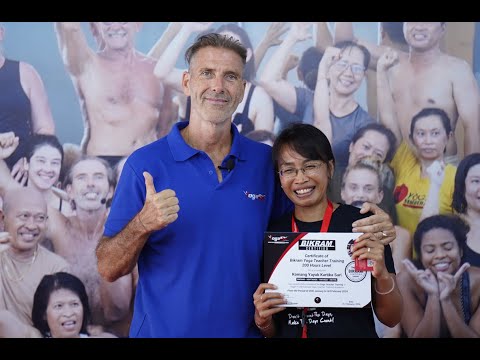
One more trainee, KP, mentions his own blood pressure in his graduation video review from September 2022. The captions are rough, so please watch it yourself rather than rely on our summary. One person's comment is an anecdote, not evidence, and it should not change what you do without your doctor.
The Bottom Line on Hot Yoga Blood Pressure
Here is where the evidence leaves us. Hot yoga blood pressure research shows no change in healthy adults and a small, early dip in ten people with raised readings. It also shows better carotid compliance in young adults, which is a separate finding.
So if you are healthy, these studies give you no reason to fear the heat or to expect a blood pressure change. If your readings run high, the useful next step is a conversation with your doctor, not a hot yoga blood pressure experiment on your own.
Learn the Physiology at Home With YogaFX
If this look at hot yoga blood pressure made you want to understand the body in the heat, that curiosity is what good hot yoga teachers share. Our online hot yoga teacher training lets you study the 26 postures, the dialogue and the science from home, at your own pace.
The online course costs US$329, or four payments of US$82. YogaFX has trained more than 1,500 graduates from 80+ countries since 2017, and the lead trainer is Mr. Ian Terry.
The evidence is thin. In an 8-week trial of 42 healthy adults, resting blood pressure did not change. In a 10-person pilot of adults with elevated readings, average systolic pressure fell from 126 to 121 mmHg. Larger trials are needed, and your doctor should guide any decision.
Can you do hot yoga with high blood pressure?
Only with your doctor's approval. The 2019 pilot included adults with elevated or stage 1 readings but excluded anyone taking blood pressure medication, so it cannot speak for them. Ask your doctor about heat, fluids and medication before a first class, and consider a gentler, cooler option first.
Does hot yoga raise blood pressure?
The two studies on hot yoga blood pressure did not report a rise. Resting readings stayed flat in healthy adults after 8 weeks, and the pilot yoga group trended down. They compared readings before and after weeks of practice, not minute by minute. Dizziness or chest pain means stop and sit down.
What is vascular compliance?
Vascular compliance describes how far an artery wall stretches when blood pushes through it, and a stiffer artery stretches less. In the 2013 trial, carotid compliance rose and the stiffness index fell in young adults, but not in older adults. It is a different measure from blood pressure.
Is Bikram yoga bad for blood pressure?
The studies we reviewed did not find that. The 2013 trial used Bikram yoga classes and saw no significant change in resting blood pressure among healthy adults. That says little about people with medical conditions or heart disease, who should ask their doctor before starting any heated class.
What is a male yoga teacher called? Most people say yoga teacher or yoga instructor. The traditional Sanskrit word for a man who practises yoga is yogi. Students also say master or guru out of respect, but those aren't credentials. This guide explains each male yoga instructor name, what the certificates mean, and how online students can choose.
A male yoga teacher leads an outdoor YogaFX workshop in Bali.
What Is a Male Yoga Teacher Called? The Short Answer
If you're training online and want a simple answer, use yoga teacher. It's clear, widely understood, and it works on a certificate, a website or a studio sign. Yoga instructor is a close second. It sounds a little more technical, so you'll see it often in gyms and job listings.
Yoga teacher. The default term for someone who leads yoga classes.
Yoga instructor. Common in gyms, online courses and job listings.
Yogi. A traditional masculine word for a person devoted to yoga, often used with respect.
Because the words overlap, the real question is usually where you plan to use them. A title that works in a studio can look odd in an email signature, and the reverse is also true. The next section sorts the yoga teacher titles by place.
Yoga Teacher Titles by Place: What Online Students Should Use
Online students meet titles in many spots, such as a class link, a social bio or a certificate. Each spot calls for a slightly different word. The table below shows what works, why it works and what to check before you publish it.
Where you use it
Word that works
Why it works
Check before you publish
Live class listing
Yoga teacher
Students type these words into search first
Does the page name your training school?
Instagram or YouTube bio
Yoga teacher or yogi
Teacher is clear and yogi feels personal
Never add a credential you can't show
Certificate and CV
RYT 200, once earned
Yoga Alliance names the credential
Match your name and year to the certificate
Email signature
Yoga teacher, then the credential
Short and easy to scan
Keep to one title per line
Comments and class chat
"Teacher" or his first name
Warm, and nobody has to guess
Ask what he prefers
Which male yoga instructor name fits each online setting.
One pattern shows up in every row. A plain word comes first, and a credential follows only when it's true. That habit keeps your profile honest and easy to read.
What Is a Male Yogi Called? Yogi Is a Practice, Not Only a Title
Students often ask a related question: what is a male yogi called? The short answer is simply yogi. In English the word covers any practitioner, and the feminine form is yogini. It describes someone who lives the discipline, so it isn't a job title. A man who teaches can be a yogi, and so can a student who never leads a class.
For that reason, many teachers use the word in personal conversation and leave it off a résumé. Showing up for your own practice, teaching carefully and admitting what you don't know all earn respect. A certificate tells people your training hours. Your daily habits tell them the rest.
Teacher and Master shirts show how titles appear in a YogaFX class.
Credentials Behind the Name: RYT 200 and E-RYT 500
Yoga Alliance uses RYT for Registered Yoga Teacher. The RYT 200 credential means you completed a 200-hour training. The E-RYT 500 is an advanced designation, and it requires more training and teaching experience than RYT 200. Neither credential contains the word master. So if a bio uses it, check the certificate behind it.
Mr. Ian Terry holds the E-RYT 500 credential. He has taught more than 12,000 hours and is a Master Trainer with the Republic of Indonesia Yogasana Sports Federation. That background is why students at YogaFX call him Mr. Ian and treat the credential as a fact, not a slogan.
From Online Student to Titled Teacher: The Path in Four Steps
Many online students want to know when they can start using a title. The cards below show the path in the YogaFX MasterClass format, from the first lesson at home to the word on your own profile.
1. Learn online
Pre-course study at home, before you travel.
2. Train in Bali
A 6-day intensive, checking in Sunday and out Friday.
3. Get certified
Yoga Alliance RYT 200-Hour plus the Bikram Hot 26&2 200-Hour International Yoga Certification.
4. Choose your title
Start with yoga teacher, then add the credential you've earned.
Source: YogaFX Bikram Hot 26&2 Yoga Teacher Training MasterClass details.A teacher leads a class beside YogaFX teacher training banners.
Choosing Your Own Title on a Website or Bio
If you teach, you'll need a title for your website, your social profiles and your class listings. Choose the word your students already use. For most men, that's yoga teacher, and it reads well in a headline.
Be precise about credentials. A line that reads RYT 200 is true only when you hold that certificate. So show the year and the training school on the page. Anyone can check it, and a precise bio builds more trust than a grand one.
Use yoga teacher for headlines and listings.
Add RYT 200 or E-RYT 500 only when you hold the certificate.
Use yogi in personal writing about your practice, not as a job title.
Avoid master unless a school or federation awarded it to you in writing.
Three Naming Mistakes New Teachers Make
New teachers are eager, and that's a good thing. Still, three habits cause trouble later, so it helps to spot them early.
Borrowing a bigger title. Calling yourself a master after one course invites questions you can't answer.
Stacking labels. A line such as "yogi, guru, master teacher" confuses readers. One clear word works better.
Hiding the training. If students can't see where you trained, they'll assume there is nothing to see.
Each mistake has the same fix. Say what you are, say where you trained, and let your classes do the rest.
What a Good Male Teacher Does in Class
A title says little about how a class feels. Students notice whether the teacher gives clear cues, slows down for beginners and watches for strain. Those habits matter more than the word on the door, so they're the reason a student keeps coming back.
In a heated room, the teacher also sets the pace. Water breaks, rest in child's pose and a clear instruction to leave the room if you feel unwell are part of a safe class.
According to Mayo Clinic, heat exhaustion can show up as heavy sweating, dizziness, fatigue, muscle cramps, nausea and headache. The page advises stopping activity, moving somewhere cooler and drinking cool water or a sports drink. A teacher who explains these points before the first posture earns trust quickly.
A balancing outdoor class shows how a teacher keeps a group together.
How Titles Work in an Online Class
Online teaching changes how a title lands. On a screen, students can't read your body language across a room. As a result, your name card, your class description and your first sentence carry more weight than they would in a studio.
Because of that, say who you are in the first minute. For example, "I'm Daniel, your yoga teacher for the next 60 minutes" is plain and friendly. It also answers the unspoken question of what a male yoga teacher is called in this room, without any fuss. Then give one line on your training, such as the school and the year.
Put your title on the screen name. "Daniel, yoga teacher" is easy to read on a small phone.
Keep the class page honest. List your certificate and the school, so new students can verify them.
Invite questions early. Students who feel welcome ask about form, heat and rest before a problem starts.
These small habits also help with search. People who type a male yoga instructor name into Google are often looking for a real person they can trust, so a clear, checkable profile beats a clever one.
How to Check a Teacher's Credentials Before You Trust the Title
The question of what a male yoga teacher is called matters less than whether the certificate is real. Before you enrol in any course, check the credential. Yoga Alliance keeps a public registry, so you can search for a teacher by name and see whether an RYT credential is listed.
Use these three checks:
Ask for the full name on the certificate and the training school.
Search the registry for that name and compare the credential it shows.
Ask about the hours: how many the training covered and when it finished.
A good school answers these questions in a sentence. If the answers are vague, the title is probably vague too, whatever the teacher is called. You can read more about what a real programme includes in our guide to hot yoga certification.
What Research Says About Heated Yoga Teaching
Heated yoga is a serious subject for researchers. A 2025 systematic review in Sports Medicine - Open by Willmott and colleagues, titled Hot Yoga: A Systematic Review of the Physiological, Functional and Psychological Responses and Adaptations, pooled 43 studies with 942 participants. It looks at how heated practice affects the body and the mind.
A 2023 randomised controlled trial by Nyer and colleagues in the Journal of Clinical Psychiatry tested community-delivered heated hatha yoga for moderate-to-severe depression. Over eight weeks, 59% of the yoga group had a drop of 50% or more in depression symptoms, against 6% of a waitlist group. Those are trial results, not a promise for any one student.
Neither study answers what a male teacher should be called. They do explain why a clear, well-trained teacher matters in a heated room, where students need to know when to rest and when to stop. Yoga isn't a treatment for any condition. If you have heart disease, are pregnant or live with depression, speak with a healthcare professional before you start heated classes.
How Students Address a Male Teacher
Use the name the teacher gives you. At YogaFX, students call the lead teacher Mr. Ian. In class, a simple "thank you, teacher" works with any male instructor and never sounds awkward.
Outside class, ask. A teacher who has a preferred title will tell you. If he doesn't, first names are safe in most of the yoga world.
What Students Say About Their Male Teacher
Students often describe a teacher by how he treats them, not by his title. A Google review from Elvia, Google review, 2023, says: "Your passion for educating all students is extraordinary." Elvia followed the Bikram YTT training of January 2023.
A YouTube review from Putu, YouTube review, 2024, recorded after a graduation ceremony, says: "Thank you Mr Ian, thank you for the class."
Another trainee, Septa, YouTube review, 2024, calls the course a "lifechanging experience" in a video review. Short comments like these often matter more to a new student than a long list of credentials.
Training Online Before a Batch in Bali
The Bikram Hot 26&2 Yoga Teacher Training MasterClass combines online pre-course study with an intensive in Bali. The next batch checks in on Sunday 24 January 2027 and checks out on Friday 29 January 2027, at Soham Wellness Center in Seminyak. The Early Bird price is US$1,899, against a normal price of US$1,999.
Mr. Ian Terry, E-RYT 500 and Master Trainer with the Republic of Indonesia Yogasana Sports Federation, leads the training. He has taught more than 12,000 hours, and YogaFX has trained more than 1,500 graduates from over 80 countries. If you want to know what the course covers before you commit, the course page and a short call with the team are the fastest way to find out.
Prefer to start at home? The YogaFX online course costs US$329, or 4 x US$82. It lets you test the teaching style before you plan any travel.
Why Men Ask This Question, and Where to Go Next
Many men ask this question because they feel they don't see enough male teachers in their own classes. The answer is practical. Choose the title that matches the work you do, and let your training and your consistency do the rest.
Most people call him a yoga teacher or a yoga instructor. Both terms are accurate and widely used in studios, online courses and job listings. The traditional Sanskrit word is yogi, which describes a male practitioner of yoga. Master is an informal honorific that many students use, but it is not a standard certificate title.
Do I need RYT 200 to call myself a yoga teacher?
The word yoga teacher is not a protected title in most places, but studios and insurers often ask for a recognised certificate. RYT 200 shows that you finished a 200-hour training with a registered school. Check what your employer or studio requires, and only state the credential once you hold it.
Can online students use a title before the Bali intensive?
In the MasterClass format, certification comes after the intensive in Bali, so wait until you hold the certificate before you list RYT 200. Until then, describe yourself as a yoga teacher trainee or a student. That wording is honest, and it still tells people you are on a path toward teaching.
Is it rude to call a male teacher guru?
Guru is a respectful Sanskrit word for a teacher who guides, so it is not rude in itself. Still, many modern teachers avoid it for themselves, and it can sound grand on a bio. If a student uses it warmly, that is fine. Follow your own teacher's lead about which word he prefers.
Are male yoga teachers in demand?
Demand depends on your city, your class style and how you market your teaching. Look at local listings and studio schedules before you decide. Your training, your voice and your consistency will matter more than your gender. We cover this in more detail in our article on are male yoga teachers in demand.
Still have questions? Message Mr. Ian and the YogaFX team on WhatsApp and we'll answer them personally.
The nitric oxide benefits you can get from heat and exercise come down to one thing: wider, more flexible blood vessels. Your vessel lining makes nitric oxide, and both movement and warmth nudge that system. The evidence is real but modest, and none of it requires a supplement.
This guide to nitric oxide benefits is for home learners who want the physiology straight. We read the studies on exercise, heat and hot yoga, grade each claim, and say plainly what nobody has proven. Mr. Ian Terry, E-RYT 500, asks every YogaFX trainee to explain the science without overselling it. So that is the standard we hold ourselves to here.
This article is general education, not medical advice. If you have a heart condition, take blood pressure medication or are pregnant, consult a healthcare professional before heated exercise.
Nitric Oxide Benefits in Plain Language
Nitric oxide (NO) is a small gas that your body makes all day long. The lining of your blood vessels, called the endothelium, releases it to tell the muscle in the vessel wall to relax. When that muscle relaxes, the vessel widens and blood moves through more easily. Doctors call this widening vasodilation.
That one job explains most of the nitric oxide benefits people talk about. Because wider vessels let blood reach working muscles and skin more easily, the idea is attractive. So when you search for nitric oxide benefits, you are really asking how to keep your vessel lining responsive.
Online, the claims run far ahead of the evidence. Instead of repeating them, we separate three things:
What is well established. The vessel lining uses nitric oxide to relax vessel walls, and exercise can improve that response.
What is plausible. Heat and hot yoga may add to the effect, but the trials are small and short.
What is unproven. Anything about detoxing, sexual performance, brain boosts or supplement doses. We make no such claims here.
With that frame in place, the rest of the article follows the chain from movement, to blood flow, to nitric oxide, to vessels. That means every nitric oxide benefits claim below has a source behind it.
How Exercise Builds Nitric Oxide Benefits
Shear Stress: The Signal That Starts It
When you exercise, blood flows faster along your vessel walls. That drag on the lining is called shear stress. A major review by Green, Maiorana, O'Driscoll and Taylor in The Journal of Physiology (2004) describes increased flow through the vessel as the likely physiological stimulus for endothelial nitric oxide production. You can read the full text on PubMed Central.
The same review says exercise training has been shown, in many animal and human studies, to augment endothelial, NO-dependent vasodilatation. It also suggests training may help by up-regulating the enzyme that makes nitric oxide, known as eNOS. In short, repeated bouts of flow teach the lining to respond better, and that is where the real nitric oxide benefits start.
Why Healthy People See Smaller Changes
Here is the honest catch. According to the same review, the improvement is found less often in healthy subjects. It also depends on how much muscle takes part in the training. So a person with a stiff, unresponsive vessel lining has more to gain than a fit twenty-five-year-old.
That is why you should be wary of any page that promises a big nitric oxide boost from a single workout. Instead, the bigger story is steady training over weeks, not a one-off spike.
Use It or Lose It
The review adds a warning that every home learner should hear. The gains in nitric oxide function dissipate within weeks of training cessation. For example, someone who practises for twelve weeks and then stops for two months should not expect to keep the nitric oxide benefits.
That is a useful message for teachers too. Consistency is the whole point. That is why our online course asks students to build a weekly rhythm before they build a perfect posture.
What Heat Adds to the Picture
Exercise is only half of a hot class. The other half is the room. At 40°C and 40% humidity, your body has to push heat out through the skin. It does that by widening the small vessels near the surface. So your face turns red and your skin feels warm.
A 2014 review in Comprehensive Physiology by Johnson, Minson and Kellogg covers how the nervous system drives this skin vessel widening during whole-body heating. Its abstract lists mechanisms involving cotransmission, nitric oxide and other effectors. The review page is hosted by the University of Texas Health Science Center at San Antonio.
We only had access to the abstract, so we will not put a percentage on how much of the skin response comes from nitric oxide. What the abstract supports is simpler: nitric oxide is one of several players when heat opens up skin vessels.
Heat and Exercise Together
In a hot class both stimuli arrive at once. Movement raises flow through working muscles, and warmth opens skin vessels. Because the heart has to supply both, heart rate climbs. Both stimuli shape the nitric oxide benefits you might see. For numbers on that, see our review of hot yoga and heart health trials.
It also explains why heat is a stress as well as a tool. Because your body is working harder to keep its core temperature steady, a hot room is not automatically better than a cool one for your vessels.
Heat, Exercise and Nitric Oxide Side by Side
Stimulus
What your body does
Where nitric oxide fits
Our evidence grade
Exercise blood flow
Faster flow drags along the vessel wall (shear stress)
Flow is the likely trigger for endothelial nitric oxide production
A (review of many human studies)
Regular training, weeks to months
Vessel lining responds better to its own signals
Training augments NO-dependent widening, more often in people with impaired function
A (review), B for healthy adults
Whole-body heat
Skin vessels widen to release heat
One of several mechanisms discussed in the review
B (abstract only checked)
12 weeks of hot yoga, 3 classes a week
Vascular health improved in a randomised trial
Vessel-lining test, an indirect signal of nitric oxide activity
B (small trial, one lab)
Stopping practice
Gains fade
NO benefit dissipates within weeks of stopping
A (review)
How exercise, heat and hot yoga link to nitric oxide, with our own evidence grade. Sources: Green et al., J Physiol 2004; Johnson et al., Compr Physiol 2014; Hunter et al., Exp Physiol 2018.
Grades follow the scale we use across this site: A means a review or several consistent human studies, B means a small trial or a partial reading of the source, and C means a pilot or a single study without a control group.
Nitric Oxide Benefits at a Glance
If you only have a minute, the five cards below hold the numbers that matter. Every figure comes from the trial schedule, the class conditions we teach, or the review we cite.
1 trigger
Blood flow
Faster flow past the vessel wall is the likely stimulus for nitric oxide production.
12 weeks
Trial length
The Bikram Yoga Heart Study ran for 12 weeks, not 12 days.
3 a week
Classes per week
The dose the trial used: three Bikram classes every week.
40°C / 40%
Class conditions
Temperature and humidity of a 90-minute YogaFX class.
Weeks
Until gains fade
Nitric oxide function dissipates within weeks of stopping training.
Nitric oxide benefits in five numbers. Sources: Green et al., The Journal of Physiology 2004; Hunter et al., Experimental Physiology 2018 (via the Physiological Society); YogaFX class standards.
What Hot Yoga Trials Show About Your Vessels
So far we have talked about exercise and heat in general. Does a hot yoga class deliver the same nitric oxide benefits? The best test is the Bikram Yoga Heart Study, published in Experimental Physiology in 2018 by Hunter, Laosiripisan, Elmenshawy and Tanaka.
The Bikram Yoga Heart Study
The team randomised adults to heated Bikram yoga, room-temperature yoga or a control group. The yoga groups practised three times a week for 12 weeks. The outcome was endothelium-dependent vasodilation, a test of how well the vessel lining widens an artery.
The Physiological Society summarised the result, and it is worth reading closely: the researchers concluded that the heated environment did not seem to play a role in the improvements in vascular health. You can read that summary on the Physiological Society site, and the study page at the University of Texas at Austin.
What This Means for the Heat Question
That finding surprises many students. For example, it suggests the postures, the steady effort and the regular schedule may matter more than the thermostat. So a hot room is a choice you can enjoy, but it is not a nitric oxide shortcut.
A 2025 systematic review of 43 studies with 942 participants by Willmott and colleagues pulled hot yoga research together. We could not open the full text during our check, so we cite it by name only. It is a good starting point if you want the wider hot yoga research picture.
Limits and Safety: What We Cannot Claim
A fair article tells you what the studies do not show. Here are the limits, in plain language:
Indirect measures. Vessel-lining tests are a signal of nitric oxide activity, not a direct reading of it.
Small, short trials. Twelve weeks is long enough to see vessel changes, but far too short to say anything about heart attacks or strokes.
One main lab. Much of the hot yoga evidence comes from a small number of research groups, so independent replication is thin.
No supplement claims. We do not discuss pills, powders or gummies, and nitric oxide benefits beyond vessel function remain unproven. If you are thinking about a supplement, ask your doctor or pharmacist first.
Heat adds its own load. Because your heart works harder in a hot room, some people feel dizzy when they stand up fast. So talk to your doctor first if you have a heart condition, take blood pressure tablets or diuretics, or are pregnant. Our hot yoga hydration guide covers water and electrolytes.
A Weekly Routine Built From the Trials
If your doctor agrees that heated exercise is fine for you, copy the dose researchers used. That way your routine matches the nitric oxide benefits research instead of a guess.
Aim for three classes a week. The Bikram Yoga Heart Study used three sessions weekly.
Give it 12 weeks. Vessel changes showed up over months, not days.
Drink before, during and after. Sip steadily rather than gulping at the end.
Rest when you need to. Sitting down in the room is always allowed, and it is a smart choice.
Keep going after week 12. The review says benefits dissipate within weeks of stopping, so plan for the long run.
Expect the first two weeks to feel hardest because your body is adapting to the heat. After that, most people find the same class feels calmer.
What a Hot Yoga Teacher Should Say About Nitric Oxide
Students will ask. Someone at the front desk, in the changing room or on a video call will say, "Is this boosting my nitric oxide?" A good teacher answers calmly and accurately, and explains nitric oxide benefits without hype. Mr. Ian Terry, E-RYT 500, has more than 12,000 teaching hours, and he teaches trainees to answer health questions with what the research supports and nothing more.
Here is a short script you can adapt. It comes from the studies above, so every line can be defended:
"Exercise can improve how your vessels widen." This is supported by the Green 2004 review.
"Heat opens the vessels in your skin, which is why you flush." This is supported by the Johnson 2014 review.
"In one trial, the hot room did not add extra vascular benefit." This is from the Bikram Yoga Heart Study summary.
"The benefit fades if you stop, so consistency matters." This is from the Green 2004 review.
"I can't tell you what to take. Ask your doctor." This keeps you inside your scope as a teacher.
So notice what the script leaves out. It makes no promise about blood pressure, performance or detoxing. If a student asks about those, point them to our guide to what the hot yoga physiology module should teach, and encourage them to see a healthcare professional for personal advice.
What Our Trainees Say About Learning the Science
Research measures vessels. Our graduates talk about the experience of the heat and the people around them. These comments come from video reviews recorded at the end of YogaFX teacher trainings.
"It's shown me how to be soft, it's shown me how to be tender, it's shown me how to be warm, open."
"Thank you my team, all of you, for being very supportive during the dialogue."
Maha, YouTube review, 2025
Peter, in his 2025 YouTube review, said a fellow trainee had inspired him and was about to teach her first class back home the following Sunday. That is the practical result we hope for. It means graduates who go home and teach with confidence.
If this article made you curious about nitric oxide benefits, that curiosity is exactly what a good teacher needs. Our hot yoga teacher training online course lets you study the 26 postures, the dialogue and the science at home, on your own schedule. Mr. Ian trained for 5 years, from 2014 to 2019, with the founder of the method. Since 2017, YogaFX has trained more than 1,500 graduates from 80+ countries.
Know the postures. Start with our guide to the 26&2 poses, including the floor series.
Plan your study time. See how an 8-week online course fits around work in our guide to online teacher training.
When you are ready for the heat in person, the next step is the 6-day Bikram Hot 26&2 Yoga Teacher Training MasterClass in Bali. The next batch checks in on Sunday 24 January 2027 at Soham Wellness Center in Seminyak. The Early Bird price is US$1,899 (normally US$1,999), with payment plans from US$250 a month.
FAQ
What are the main nitric oxide benefits?
The main nitric oxide benefits start with this: nitric oxide helps the muscle in your blood vessel walls relax, so vessels widen and blood flows more easily. Regular exercise can improve that response. The benefits are best supported for vessel function, and claims beyond that need stronger evidence. Talk to a healthcare professional about your own health goals.
Can you increase nitric oxide naturally?
Regular exercise is the best-supported natural route. A review in The Journal of Physiology found training augments nitric oxide dependent vessel widening, and increased blood flow is the likely trigger. The gains fade within weeks of stopping, so a steady weekly routine matters more than a single intense session.
Does hot yoga boost nitric oxide?
We did not find a hot yoga study that measured it directly. A 12-week trial found vascular health improved, but the researchers concluded the heated room did not seem to play a role. Hot yoga is exercise, so it likely works like other exercise. It is not a proven nitric oxide shortcut.
Is heat or exercise better for nitric oxide?
Exercise has the stronger evidence. Reviews link training to better nitric oxide dependent vessel widening, while heat mainly opens skin vessels, with nitric oxide as one of several mechanisms. In the one hot yoga trial we checked, the hot room added no clear vascular benefit over room-temperature yoga.
Are nitric oxide supplements worth it?
We make no supplement claims, because the studies we cite are about movement and heat. Supplements can interact with medicines, especially blood pressure tablets. Before you buy any product, ask your doctor or pharmacist whether it is safe for you. Exercise remains the best-supported starting point.
Hot yoga hydration starts the day before class, not at the water break. Mayo Clinic says some studies suggest a healthy adult needs about 2.7 to 3.7 litres (91 to 125 fl oz) of total fluid a day, and more when you sweat. In one hot yoga study, students sweated about 0.9 litres (30 fl oz) an hour but drank only 0.2.
Hot Yoga Hydration in Short: 5 Honest Rules
Here is the short version of hot yoga hydration, graded the way we grade every claim on this site. The evidence is small and the people studied are few. Still, five rules hold up when you read the sources and watch real students in a heated room:
Start early. Drink steadily through the day before class. The sports medicine guideline says to begin several hours ahead, so you arrive hydrated.
Sip, don't chug. A large gulp in the last 15 minutes tends to leave the stomach sloshing. Small, steady sips work better.
Match your drinking to your sweat. Students in a hot class study sweated more than four times as much as they drank, and they underestimated how much they lost.
Add electrolytes when you sweat a lot. Sweat carries sodium, and drinks with electrolytes can beat plain water in some situations.
Don't overdo it. Too much plain water can push blood sodium too low, which Mayo Clinic calls life-threatening, although it is rare in healthy adults.
None of this is medical advice. Please consult a healthcare professional before changing your fluid habits, especially if you have a heart, kidney or blood pressure condition, or take medication. Hot yoga hydration is personal, and the sections below show you how to find your own numbers.
How Much Water Should You Drink for Hot Yoga?
People often ask how much water hot yoga really needs. The honest answer is that nobody can give you one number, and good hot yoga hydration starts with that. The Mayo Clinic guide says the right amount "depends on many things." Some studies suggest that the average healthy adult gets enough with about 11.5 cups (2.7 litres) to 15.5 cups (3.7 litres) of total fluid a day.
That total includes every source. Food provides about 20% of the water you need, and tea, soup and other drinks count too. So plain water is only part of the picture. The same page says hot or humid weather makes you sweat more, so you need to drink more than usual to replace what you lose.
For exercise, the advice is simple: drink before, during and after a workout. The American College of Sports Medicine position stand on exercise and fluid replacement (Sawka et al., 2007) adds a timing rule. Prehydrating should begin at least several hours before the activity, so that you start well hydrated and your urine output has returned to normal.
A Practical Check: Colour and Thirst
Mayo Clinic gives two easy signs that you are drinking enough. You are not thirsty often, and your urine is colourless or light yellow. Check both on the morning of class. If your urine is dark, start drinking early and keep going through the day.
A hot class is long and demanding. A Hot 26&2 class at YogaFX runs 90 minutes in a room at about 40°C (104°F) and 40% humidity. That is a lot of time to lose fluid, so what you do in the hours before matters more than what you do in the last ten minutes.
Why We Say Don't Chug
At YogaFX we teach students not to drink a litre of water 15 minutes before they step into the room. It leads to stomach sloshing and nausea, and it makes the first postures harder. Instead, spread your fluid across the day, then take small sips in the hour before class.
If you eat before class, keep it light. Our guide to feeling tired after hot yoga explains how fluid, food and heat together shape how you feel afterwards, and how to tell normal fatigue from a warning sign.
What Researchers Measured in a Hot Yoga Class
Most hot yoga hydration advice is borrowed from running and cycling. A few teams have measured the real thing. The best match we found is a study of 21 hot yoga students, published in the International Journal of Exercise Science in 2017 by Campbell, Pritchett and colleagues at Central Washington University.
The Study at a Glance
The team asked how much hot yoga students sweat, how much they drink, and whether they start class hydrated. The class lasted one hour at 38.7°C (101.7°F) and 36% relative humidity. Water was freely available. Here is what they found:
What was measured
Result in the study
What it means for you
Who took part
21 men and women, average age 33
A small group, so read it as a snapshot
Room
38.7°C (101.7°F), 36% humidity, one-hour class
Close to a Hot 26&2 room, but our class is 90 minutes
Started class hydrated
76% were euhydrated (urine specific gravity below 1.020)
Most arrived in good shape, and about one in four did not
Sweat rate
0.9 litres (30 fl oz) an hour on average (spread of 0.6)
Some students sweat far more than others
Fluid drunk
0.2 litres (6.8 fl oz) an hour on average, and 33% drank nothing
Drinking lagged far behind sweating
Body mass lost
0.9% on average, and about half lost 1% or more
Below the 2% mark on average, but easy to cross in a longer class
Sweat sodium
49.1 mmol per litre on average (spread of 19.2)
Salt loss differs a lot from person to person
Awareness
Students underestimated their sweat loss
Feeling is a poor gauge, so measure it
Hot yoga hydration in one study. Source: Campbell, Pritchett et al., International Journal of Exercise Science, 2017.
What Stands Out
Three points stand out. First, drinking lagged behind sweating even with free access to water. Second, the spread was wide, so an average hides the students at either end. Third, people underestimated what they lost. The authors concluded that hydration guidance should be personalised.
We agree with that, and it is why we teach a method rather than a rule. The study also has limits. It was a one-hour class with 21 people, and our class is longer. A longer class gives more time to lose fluid, so your own numbers could be higher than the average here.
Before, During and After: A Hot Yoga Hydration Plan
Now let us turn the evidence into a hot yoga hydration plan you can repeat. The table below groups it by phase. Every row points back to a source, so you can see why it is there.
Phase
What to do
Why it helps
The day before and the morning of class
Sip steadily all day. Aim for pale urine and little thirst.
Guidelines say to prehydrate several hours ahead, and Mayo Clinic gives 2.7 to 3.7 litres (91 to 125 fl oz) of total fluid as a general range for adults.
The last hour before class
Take small sips. Keep any snack light. Skip the big gulp.
Chugging leads to stomach sloshing and nausea in a heated room.
During class
Sip when your teacher allows a break. Breathe through your nose and stay calm.
The 2017 study found students drank far less than they sweated.
Right after class
Rehydrate slowly, then add electrolytes if you sweated heavily.
Sports medicine guidance says to replace the fluid and electrolyte deficit.
The next hour
Cool down for 10 to 15 minutes before a cold shower, then eat a balanced meal.
Rapid cooling right after class can stress the body, so let it settle first.
A hot yoga hydration plan by phase. Sources: Mayo Clinic (2026), American College of Sports Medicine (2007), Campbell et al. (2017), YogaFX class guidance.
Notice what the plan does not say. It does not tell you to force down water during the standing series. Large amounts of cold water while you are working hard tend to cause cramps and nausea. So the work is done before and after, and class itself is for small sips.
Electrolytes in Hot Yoga: When Is Water Not Enough?
Electrolytes in hot yoga matter because sweat is not just water. (It is not a detox either: see whether hot yoga sweats out toxins.) The students in the study averaged 49.1 mmol of sodium per litre of sweat, with a wide spread. That means a hot class takes salt out of the body as well as fluid. How much depends on your body, your fitness and how well you are used to the heat.
The sports medicine guideline treats this carefully. It says sweat rates and sweat electrolyte content vary between people, so fluid plans should be personalised. It also says drinks with electrolytes and carbohydrate can offer benefits over water alone under certain circumstances. It does not say everyone needs them every time.
Simple Ways Students Replace Electrolytes
Coconut water. Many students sip it after class, along with their water.
An electrolyte tablet. Dissolve one in your bottle on days you sweat heavily.
A small pinch of salt. Some students add it to a bottle, though the amount should be small.
A balanced meal. Food brings sodium and other minerals back after class.
Mayo Clinic also reminds us to watch sugar, salt and calories in sports drinks, and it says water is the best everyday choice. So think of electrolytes as a tool for heavy sweating, not a daily habit. If you have high blood pressure or take medication, ask your doctor about salt first.
Hot Yoga Hydration in 5 Numbers
The graphic below pulls the key hot yoga hydration figures into one place, so you can screenshot it for your bag.
0.9 L
Sweat per hour
Average sweat rate in a one-hour hot class.
0.2 L
Drunk per hour
Average fluid intake, far below the sweat rate.
33%
Drank nothing
One in three students took no fluid in class.
2%
Body mass line
Sports medicine calls a water deficit above this excessive.
2.7 to 3.7 L
Total daily fluid
A general adult range from Mayo Clinic, including food.
Hot yoga hydration in five numbers. Sources: Campbell et al., International Journal of Exercise Science (2017); American College of Sports Medicine (2007); Mayo Clinic (2026).
Test Your Own Sweat Rate in 3 Steps
The sports medicine guideline suggests a method that costs nothing. You can estimate your own sweat rate by measuring body weight before and after exercise. You can use it after any hot practice, including a home practice in a warm room, and it turns a guess into a number.
Weigh yourself before. Use the same scale, wear little, and dry off first. Write the number down.
Weigh yourself after. Dry off again, and use the same scale and clothing. Write that number down too.
Add what you drank. The weight you lost, plus the fluid you drank, is roughly the fluid you sweated. One kilogram is about one litre.
Here is a made-up example. Say you weigh 70.0 kg (154.3 lb) before a 90-minute class and 69.4 kg (153.0 lb) after, and you drank 0.5 litres (17 fl oz) during it. You lost 0.6 kg (1.3 lb), so you sweated about 1.1 litres (37 fl oz). That is roughly 0.7 litres (24 fl oz) an hour, and a weight loss of about 0.9%, which is under the 2% mark.
Repeat the test on three or four classes, because your numbers change with the weather, your sleep and your food. After a few tries you will know whether you sweat a little or a lot. That is more useful than any rule of thumb, and it is the personalised guidance the researchers asked for.
When You Drink Too Much: The Other Side of Hot Yoga Hydration
Under-drinking gets the headlines. Over-drinking is the other risk in hot yoga hydration, and it is why we say sip rather than chug. Mayo Clinic says drinking too much water is rare, and typically not a problem for healthy adults. It adds that some athletes do it when they prepare for a long or intense workout.
The mechanism is simple. When you drink too much water, your kidneys cannot get rid of the excess. Your sodium levels then become too low. Mayo Clinic calls this hyponatremia and says it can be life-threatening. That is one more reason to add electrolytes, not just more water, on heavy sweat days.
So use two guides together. Day to day, let thirst and pale urine steer you. For a bigger picture, use your sweat test. If you ever feel confused, very nauseous or unwell after drinking a lot, stop and get medical help.
What to Do If You Feel Dizzy in the Room
Good hydration for hot yoga lowers the odds of dizziness, but it does not remove them. Heat, standing balance and long holds can all make you light-headed. Know the steps before you need them.
Lower your centre of gravity at once. Turn around, with your head to the mirror and your feet to the wall.
Lie down on your back in savasana and breathe slowly through your nose.
Never force movement through dizziness, and stay in the room. Tell your teacher.
Chest pain is different. Stop, and get urgent medical help.
We teach students to stay in the room because moving between very different temperatures can add to the problem. If you rest and the dizziness does not pass, tell the teacher straight away. Most teachers would rather pause the class than watch a student push through.
Heat safety is also part of teacher training. Our guide to hot yoga certification and heat safety shows what teachers must know, so you can see how seriously teachers take it.
Setting Up Hot Yoga Hydration for Home Practice
If you study online, most of your practice happens at home. That gives you something a studio cannot: full control of your bottle, towel and timing. A few simple habits make a home practice safer and calmer.
Keep a bottle within reach. Put it beside the mat, so you never have to leave the practice for water.
Use a towel. A good towel keeps your grip as you sweat, and it gives you somewhere to rest your hands.
Warm up gently. A room that is warm, not hot, lets you learn the postures before you add real heat.
Cool down properly. Rest for 10 to 15 minutes before a cold shower, and rehydrate slowly.
Home practice is the heart of our online course, and hot yoga hydration is part of it. You learn the 26 postures, the dialogue and the science first, and you find your own hydration numbers at your own pace. Then you walk into a heated room already knowing how your body behaves.
What Our Trainees Say About the Heat
Numbers cannot tell you how a hot class feels from the inside. These comments come from YogaFX students, taken word for word from their public reviews. They are about the whole training, not only hydration, but they show how students describe the sweat and the effort.
"It was sweat, tears, laughter… it was training, life coaching, therapy."
Mariana, Google review, 2022
"I love how I sweated. I don't think I did this much in my life."
Kartika spoke in Indonesian, and the line above is the English translation. You can watch her graduation video below.
What Hot Yoga Teachers Need to Know About Hydration
A teacher who understands hot yoga hydration protects every student in the room. Teacher trainees study this as carefully as any posture, because heat strain is where a class can quietly go wrong. A trained teacher watches for several things:
Flushed skin or nausea. These can mean a student needs cooling and attention.
A sudden end to sweating. A student who stops sweating in a hot room needs to rest and be checked.
A student who never drinks. The study above shows one in three took no fluid, so a gentle reminder can help.
A student who keeps drinking and feels worse. That is a reason to slow down, not push more water.
Good teachers also explain the plan. They tell new students how to prepare, when to sip, and what to do after class. That is easy to say and hard to teach well, which is why we teach it in steps and check it in practice.
Learn Hot Yoga Hydration and the Full Dialogue Online With YogaFX
Students often ask why teachers fuss about hot yoga hydration. A good teacher answers with evidence, not hype. Our hot yoga online course lets you study the 26 postures, the dialogue and the physiology at home, on your own schedule, and it is Yoga Alliance certified. See the 8-week breakdown of online yoga teacher training to learn how the weeks fit together.
The course is led by Mr. Ian Terry, E-RYT 500, who has more than 12,000 teaching hours. He trained for 5 years, from 2014 to 2019, with the founder of the method. Since 2017, YogaFX has trained more than 1,500 graduates from 80+ countries, and we hold more than 550 reviews across Google, Yoga Alliance and YouTube.
Learn the science with its limits. Read each study the way we did above.
Practise at home first. Find your own sweat rate before you add real heat.
Know the next step. Graduates of the Bali MasterClass register with Yoga Alliance as RYT 200.
When you are ready for the heat in person, the next step is the 6-day Bikram Hot 26&2 Yoga Teacher Training MasterClass in Bali. You will meet the same room, the same dialogue and the same teachers you studied online.
FAQ
Does hot yoga dehydrate you?
It can if you drink less than you sweat. In one study of 21 hot yoga students, people sweated about 0.9 litres (30 fl oz) an hour and drank about 0.2, and one in three drank nothing. Starting hydrated and sipping through class lowers the risk. Check your own numbers with a before and after weigh-in.
How much water should I drink after hot yoga?
There is no single number. Mayo Clinic advises drinking before, during and after a workout, and sports medicine guidance says to replace the fluid and electrolyte deficit. Weigh yourself before and after class, then drink slowly until you have replaced roughly what you lost. Ask a doctor if you have a medical condition.
Can hot yoga cause an electrolyte imbalance?
Sweat carries sodium, so heavy sweating plus plain water alone can leave electrolytes low. Mayo Clinic says drinking too much water can drop sodium too low, which it calls hyponatremia, though it is rare in healthy adults. Add electrolytes on heavy sweat days and sip instead of chugging.
Should I drink water during hot yoga?
Yes, in small sips when your teacher allows a break. A 2017 study found students drank far less than they sweated, even with free water. Avoid gulping large amounts of cold water during hard postures, because it can cause cramps and nausea. Do most of your drinking before and after class.
Can you drink too much water before hot yoga?
Yes. Drinking a large amount just before class can cause stomach sloshing and nausea. Over a longer period, too much plain water can lower blood sodium, which Mayo Clinic says can be life-threatening, although it is rare. Spread your fluid across the day and sip in the last hour.
Savasana benefits show up in three places after a hot class: your heart rate and blood pressure settle gradually, your breathing slows, and your mind learns to rest. Small trials of savasana report lower heart rate and blood pressure over weeks. One study also suggests the rest works best after effort.
Savasana Benefits at a Glance: 5 Honest Reasons It Matters
Here's the short version, graded the way we grade every claim on this site. Savasana isn't magic, and the evidence is small. Still, five points hold up when you read the studies and watch what happens in a heated room:
Gradual recovery. A cool-down lets heart rate and blood pressure come down in steps, which exercise experts link with fewer dizzy spells.
Lower numbers in a small trial. After six weeks of daily practice, 35 medical students showed lower heart rate and blood pressure, while a control group did not change.
Effort first, rest second. A 2014 study found that cardiovascular recovery was greater after postures than after savasana alone.
A pause for the breath. Slow nasal breathing is how we teach the body to leave the effort state and settle.
A skill you can practise at home. It needs no equipment, so you can learn it long before you step into a heated room.
These savasana benefits come from different studies, so none of them proves the others. We take each one apart below. As always, please consult a healthcare professional before starting if you have any heart or blood pressure concern. If you want the wider picture first, start with the guides linked through this article.
Savasana Meaning: What Corpse Pose Is and Why It Has That Name
Shavasana joins two Sanskrit words: shava, meaning corpse, and asana, meaning posture. That is why people also search for corpse pose benefits. The name describes stillness, not death. You lie on your back, rest your arms a little away from your sides, and let your legs fall open. Then you stop trying. Understanding the name is the first step to understanding savasana benefits.
Spelling varies. You will see savasana, shavasana and savasana pose, and all of them point to the same posture. In Hot 26&2 Yoga the posture appears several times in one class, so it earns an article of its own.
Most students find it the hardest pose in the room. The body is still, but the mind isn't. That makes sense. After 90 minutes of precise instruction, balance and heat, a quiet mind takes practice. Teachers treat savasana as a skill to build, not a reward you get for surviving the class.
Because it is a skill, the savasana benefits grow with repetition. Your first few attempts may feel restless, and that's normal.
Why Final Rest Matters After Heat
A Hot 26&2 class runs 90 minutes in a room at about 40°C (104°F) and 40% humidity. You practise 26 postures and 2 breathing exercises. The standing series asks the most of your heart and big muscles, and the floor series asks less. Savasana sits between the two as a bridge, and that bridge is where the savasana benefits begin.
That bridge matters because stopping hard effort all at once is jarring. Cleveland Clinic quotes exercise physiologist Karen Feakes, who explains that a cool-down brings heart rate, blood pressure and breathing down in steps. A sudden dip in blood pressure or heart rate can leave you dizzy or lightheaded, she says. She adds that this matters even more for people with diabetes, high blood pressure or heart conditions.
The same article suggests a general cool-down of about three to ten minutes. That advice covers exercise in general, so it isn't a rule for savasana. Still, it explains why teachers never rush students from effort straight back to the street.
Recovery Zones in Plain Language
We teach a simple map of the class. These bands are our teaching shorthand, not a medical standard, and the studies we checked don't measure every posture one by one. Your own response will vary with age, fitness, heat acclimation and medication. Here is where the savasana benefits show up in a class.
Standing series. It creates the most cardiovascular demand. Balance, long holds and heat keep heart rate and breathing at their highest.
Savasana after the standing series. Muscular effort drops and breathing becomes more controlled, so your heart rate has a chance to slow.
Floor series. Most of it is lower demand, a Zone 1-style recovery. Cobra, Locust, Bow and Camel bring effort back for a short time.
Final savasana. It is the closing chance for your heart rate to settle and for your nervous system to calm before you leave the room.
If you'd like the numbers behind the effort side, read our guide to heart rate zones in a hot class. For the stress side, see our notes on hot yoga and the stress hormone cortisol.
What to Do If the Heat Hits You Mid-Class
Safety is one of the quieter savasana benefits, because savasana is also your safety valve. If you feel dizzy or lightheaded, lower your centre of gravity at once. Turn around with your head to the mirror and your feet to the wall, then lie down on your back in savasana. Never force movement through dizziness, and stay in the room.
Keep your mouth closed and breathe calmly through your nose. If symptoms don't settle, tell the teacher. Chest pain is different: stop, and get urgent medical help. Our guide on feeling tired after hot yoga explains how to tell normal fatigue from a warning sign.
What the Studies Say About Savasana Benefits
Few trials test savasana benefits on their own, and none we found test it in a heated room. So read the table as a map of what is known, not a promise. Every figure comes from the source named in the first column.
Four Sources at a Glance
Source
Who took part
What was done
What it found
Main limit
American Journal of Health Promotion, 2014
67 first-year medical students (35 practising, 32 control)
Shavasana with soothing background music, 1 hour a day for 6 weeks
Lower heart rate, systolic and diastolic blood pressure, and better heart rate variability indices. No change in the control group.
Young medical students. Music and a daily hour differ from a class.
International Journal of Yoga, 2014 (Bhavanani et al.)
22 healthy young nursing students
Heart rate and blood pressure tracked during 10 minutes of lying down after five different postures, with shavasana as the comparison
Cardiovascular recovery was greater after the postures than after shavasana alone.
Small sample. The abstract gives no numbers.
Cleveland Clinic, 2024 (Karen Feakes)
Expert advice, not a trial
General cool-down guidance after exercise
Cool-downs bring heart rate, blood pressure and breathing down in steps. Three to ten minutes is suggested.
Not specific to yoga or to savasana.
Nyer et al., Massachusetts General Hospital, 2023
Heated yoga group and waitlist group, 8 weeks
Heated yoga classes
59.3% of the yoga group had a 50% or greater drop in depressive symptoms, against 6.3% of the waitlist group.
Tests whole classes. Savasana alone is not isolated.
Savasana benefits in four sources. Sources: American Journal of Health Promotion (2014), International Journal of Yoga (2014), Cleveland Clinic Health Essentials (2024), Journal of Clinical Psychiatry (2023).
Study One: Six Weeks of Daily Shavasana
The American Journal of Health Promotion trial is the closest match to our question about savasana benefits. Researchers asked 35 first-year medical students to practise shavasana with soothing background music for one hour a day over six weeks. A control group of 32 students did no relaxation practice.
At the end, the practising group had a lower heart rate and lower systolic and diastolic blood pressure. Their heart rate variability indices also improved. Heart rate variability is the small change in time between heartbeats, and researchers use it as a window on the nervous system. The control group showed no significant change.
The authors concluded that short-term relaxation practice can improve autonomic balance and support cardiovascular health in young adults. That's encouraging, but we'd read it with care. The students were young and healthy, the practice lasted an hour a day, and music was playing. A class ending in a short savasana, with no music, is a different dose.
Study Two: Effort Before Rest Beats Rest Alone
The second source adds a useful twist. In the International Journal of Yoga study, 22 healthy young nursing students did one posture a day on seven days, in random order. The team recorded heart rate and blood pressure before and after each posture, then through ten minutes of lying down.
Shavasana served as the comparison. The authors report that cardiovascular recovery was greater after the postures than after shavasana alone. They read this as a better response when effort comes before relaxation. That fits the way a hot class is built, with the long effort first and the rest after it.
In other words, savasana benefits seem to depend on what comes before it. Lying down after nothing is pleasant. Lying down after work is where the recovery shows.
The Mood Question
A 2023 randomized trial from Massachusetts General Hospital (Nyer et al.), published in the Journal of Clinical Psychiatry, compared heated yoga with a waitlist over 8 weeks. In the yoga group, 59.3% had a 50% or greater drop in depressive symptoms, against 6.3% of the waitlist group. You can see how the Harvard trial was run in our own review.
The trial tested whole classes, so we can't credit savasana benefits alone. We include it because final rest is part of every class in that setting. It's context, not proof that the rest causes the change.
What We Can't Say Yet
No heated-room trial of savasana alone. The studies above test it at room temperature or as part of mixed classes.
No treatment claims. Savasana may help you recover and relax. It doesn't treat blood pressure, depression or any other condition.
No sweat or toxin claims. The research we reviewed measures heart rate, blood pressure and mood, not any clearing of the body.
If you take blood pressure medication or have a heart condition, speak to your doctor before adding any new practice, and tell your teacher before class.
Where Savasana Sits in a 90-Minute Class
The graphic below shows the class format in five cards, so you can see where the rest fits.
90 min
One class
A fixed sequence from opening breath to final rest.
26 + 2
Postures and breathing exercises
Standing series first, then the floor series.
40°C
Room temperature
Natural tropical heat, not electric heaters.
40%
Humidity
The room stays warm and damp the whole class.
Rest
Savasana between and after
Short rests link the work, and a final savasana closes the class.
Where savasana benefits fit inside a Hot 26&2 class. Source: YogaFX class format.
Notice that nothing in the graphic is about playing music or watching a demonstration. Teachers guide the room with a scripted dialogue, so the final rest begins with words and ends in quiet. The trial in Study One used music, which is one more reason to treat its numbers as a guide only.
How to Practise Savasana at Home: 6 Steps
You don't need a heated room to learn the pose or to feel the first savasana benefits. Practise on a mat, a towel or a carpet, after your own stretching or a walk, because the research suggests rest works best after effort.
Lie on your back. Rest your head on the floor. A folded towel under it is fine if your neck feels strained.
Set your limbs. Let your feet fall open and rest your arms a little away from your sides, palms up.
Close your mouth. Breathe slowly through your nose, which is how we teach heart rate to settle.
Soften from the top down. Release your forehead, jaw, shoulders and belly one at a time.
Let thoughts pass. When your mind wanders, note it and come back to the breath. Don't fight the wandering.
Come out slowly. Deepen your breath, move your fingers and toes, roll onto one side, and sit up gradually.
If your lower back complains, try a bolster or rolled towel under your knees. If you feel faint lying flat, or you're pregnant, ask a healthcare professional which position suits you, and tell your teacher.
Start with a few minutes. Research gives no single best length, so let your comfort and your teacher guide you. Over a few weeks, notice whether you settle faster. That is the practical sign the savasana benefits are building.
What Teachers Watch During Final Rest
Teacher trainees study savasana benefits and risks as carefully as any standing posture, because it's where a class can quietly go wrong. Our online course teaches the dialogue and the 26&2 poses so you can see where the rest sits. A trained teacher watches for several things:
Held breath. A student who tenses and stops breathing isn't resting yet.
Restlessness. Fidgeting often means the student is fighting stillness, not failing at it.
Heat strain. Flushed skin, nausea, or a sudden end to sweating means the student needs cooling and attention.
Dizziness on rising. Students should sit up gradually, never spring up.
A good teacher says little and watches closely. That balance is hard to learn from a video alone, which is why we teach it in steps and check it in practice.
What Our Trainees Say
Numbers can't tell you how rest feels from the inside. These comments come from YogaFX students, taken word for word from their public reviews.
"this is something that we all will be able to take with us for the rest of our life"
"There is a great atmosphere in the classes, sweet participants, entertaining and motivating teacher."
Anouk, Google review, 2020
Rachel is talking about the whole training, not only the final rest. Still, her words about something to keep for life describe what savasana benefits become over time. You can watch her full review below.
The second video is a short review from another graduate.
Learn Savasana and the Full Dialogue Online With YogaFX
Students often ask a teacher why the class ends in stillness. A good teacher answers with evidence, not hype. Our hot yoga online course lets you study the 26 postures, the dialogue, the savasana benefits and the physiology at home, on your own schedule. See the 8-week breakdown of online yoga teacher training if you want to know how the weeks fit together.
The course is led by Mr. Ian Terry, E-RYT 500, who has more than 12,000 teaching hours. He trained for 5 years, from 2014 to 2019, with the founder of the method. Since 2017, YogaFX has trained more than 1,500 graduates from 80+ countries, and we hold more than 550 reviews across Google, Yoga Alliance and YouTube.
Learn the rest as part of the class. Study where savasana sits in the sequence before you practise it.
Understand the science. Read each study the way we did above, with its limits.
Know the next step. Graduates of the Bali MasterClass register with Yoga Alliance as RYT 200.
When you're ready for the heat in person, the next step is the 6-day Bikram Hot 26&2 Yoga Teacher Training MasterClass in Bali. The next batch checks in on Sunday 24 January 2027 at Soham Wellness Center in Seminyak. The Early Bird price is US$1,899 (normally US$1,999), with payment plans from US$250 a month.
FAQ
Why is savasana important after yoga?
Savasana gives your heart rate, blood pressure and breathing time to come down gradually after effort. A 2014 study found recovery was greater after postures than after lying down alone, which suggests rest works best after work. It also gives your mind a short pause before you leave the room.
What is savasana and its benefits?
Savasana, or corpse pose, is a lying-down posture from the Sanskrit words for corpse and posture. Savasana benefits seen in small trials include lower heart rate and blood pressure after weeks of practice, plus better recovery after effort. It does not treat any medical condition.
Is savasana a meditation?
Savasana is a rest posture, and many teachers use it to practise meditation-style attention. You lie still, follow your breath and let thoughts pass. In a Hot 26&2 class it works first as recovery after effort, so it's best to treat it as rest with attention, not a trance.
Is savasana good for high blood pressure?
One small trial of daily shavasana found lower systolic and diastolic blood pressure in young medical students. That does not show it treats high blood pressure. If you have a blood pressure condition or take medication, ask your doctor before starting any practice and tell your teacher.
How long should savasana be?
Research gives no single best length. Cleveland Clinic's exercise physiologist suggests a general cool-down of three to ten minutes, though that advice isn't specific to yoga. In class, follow your teacher. At home, start with a few minutes and extend it as you settle comfortably.