
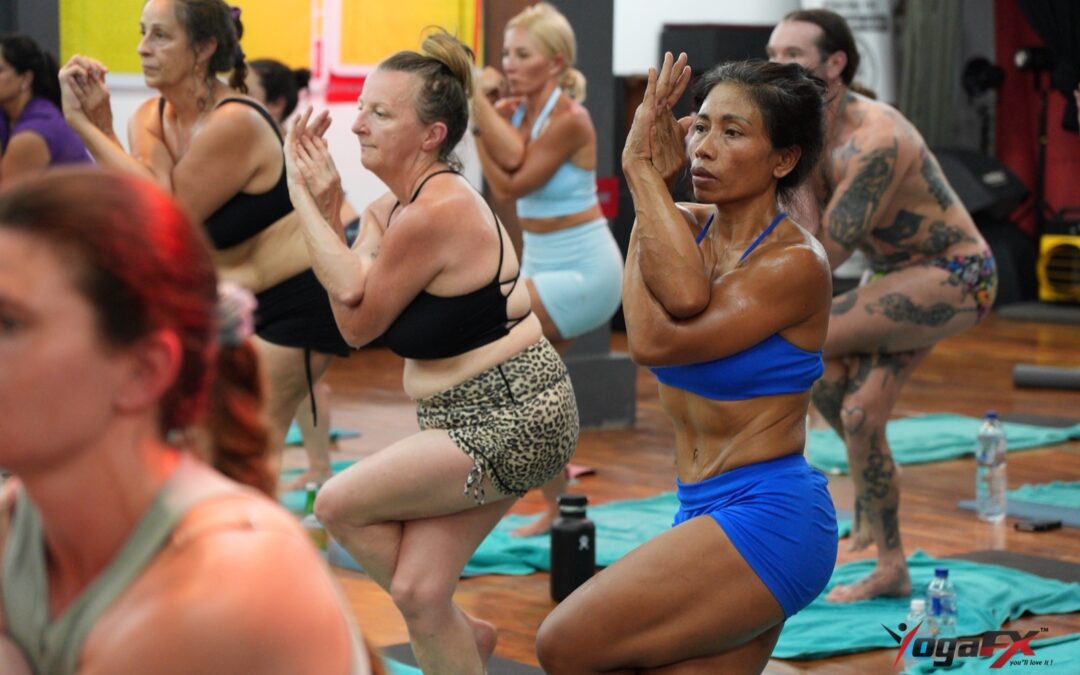
Competitive yoga is scored posture by posture on a 0 to 10 scale. In one published rulebook, an athlete performs six postures in three minutes, holds each for at least three seconds, and loses points for falls, wobbles and slow exits. Judges reward balance, flexibility, strength and calm breathing.
This guide is for the student who has watched a competitive yoga clip and asked, “How does anyone decide who wins?” It walks through the scorecard line by line, shows where the rules differ between federations, and explains how studying the postures online builds the skills a judge rewards.
Mr. Ian Terry, E-RYT 500, adds the teacher's view. He has more than 12,000 teaching hours and is a Master Trainer of the Republic of Indonesia Yogasana Sports Federation. In his teaching, a judge and a good teacher look for the same thing: a shape you can enter, hold and leave with control.
Competitive Yoga Scoring in Short: The 0 to 10 Scale
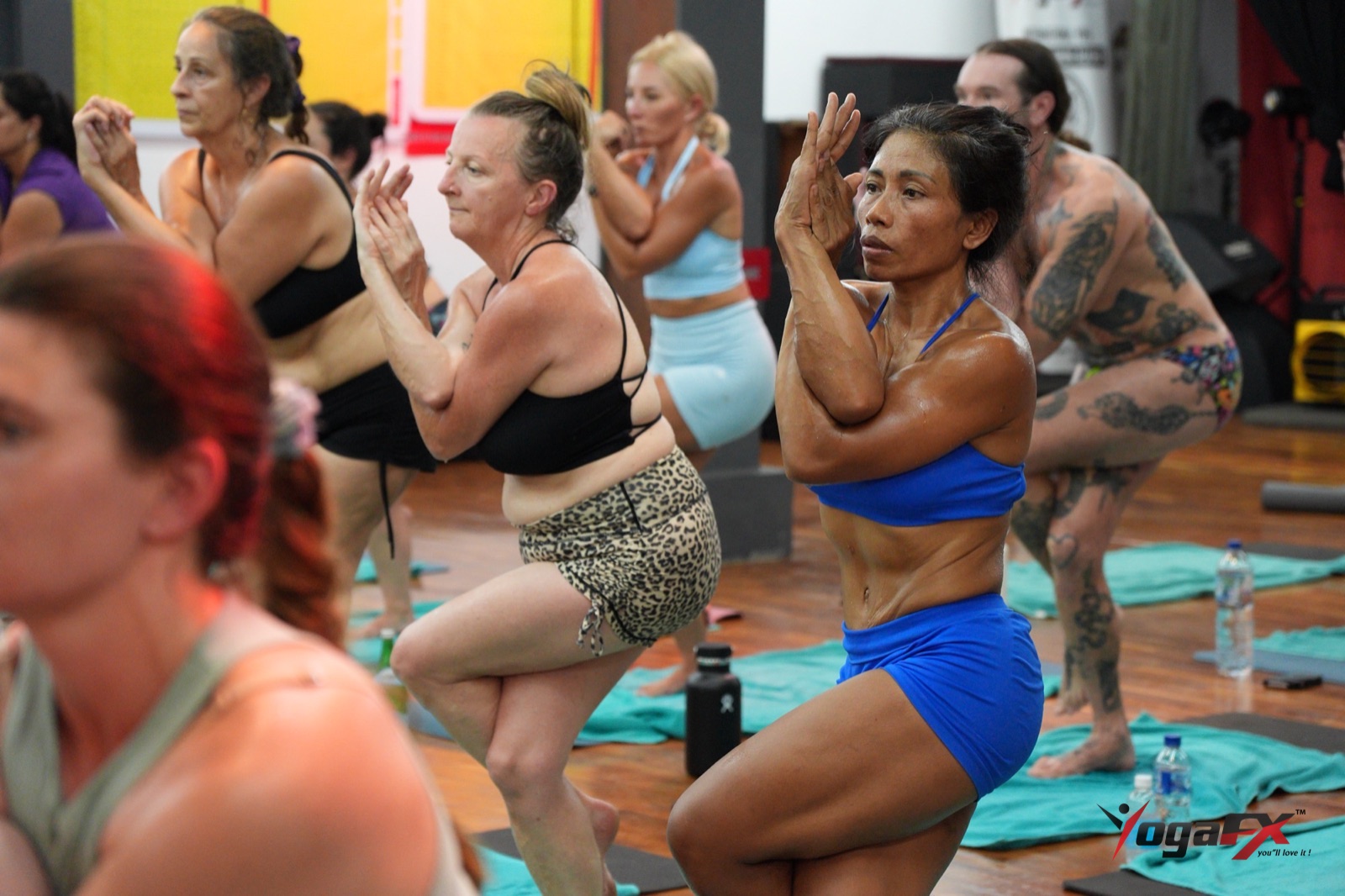
Most competitive yoga rulebooks borrow ideas from gymnastics, but the core is simple. Each posture starts from a base score, and the judges take points away for faults. The USA Yoga Sports Federation rules for 2023-24 say each posture is judged on a scale of 0 to 10 points before any reward or penalty for extra or missing skills.
Those extra and missing skills can add or remove 0.5, 1, 1.5 or 2 points. So a flawless basic shape is not the ceiling, and a risky shape done badly can cost more than it earns. That is why strong athletes pick postures they can repeat under pressure.
Here are the rules that shape a routine in that rulebook:
- Six postures chosen from the current posture guidelines, one from each of six groups.
- Three minutes to finish, ending back in a neutral standing position.
- A minimum hold of three seconds, with normal, comfortable breathing.
- Five seconds of stillness for full marks, plus a controlled exit that retraces the entry.
- Three, five or seven judges, decided by the event organiser.
Notice what is missing from that list. Nobody scores your mood, your lineage or your spiritual progress, and that's deliberate. Competitive yoga measures the physical side of the practice, which is why the Indian word for it is yogasana, the posture limb of yoga. For the wider story of events and federations, see this overview of how the sport is organised.
The Six Posture Groups a Competitive Yoga Routine Must Cover
A routine is not a free choice of favourites. In the USA Yoga rules, the athlete must choose one posture from each of six groups. The structure forces a balanced competitive yoga display, so an athlete cannot win with six backbends.
- Backbends: shapes that open the front of the body and test spinal flexibility.
- Forward compressions: folds that test hamstring length and hip control.
- Tractions: shapes that stretch the spine and shoulders under load.
- Twists: rotations that test the spine and the hips together.
- Lifts: arm or core supported shapes that test strength.
- Inversions: shapes with the hips above the head, where control matters most.
The rules also ask the athlete to show three qualities during the routine: balance, flexibility and strength. Each one must appear at least twice. A missing quality costs 1 point, so a routine without enough strength work loses marks even if every shape looks lovely.
One small rule surprises newcomers. The athlete must say the name of each posture aloud, in English, before starting it. A posture that is not announced scores zero. In short, the judges want a performance that is planned, not improvised.
How Judges Deduct Points: Falls, Wobbles and Slow Exits
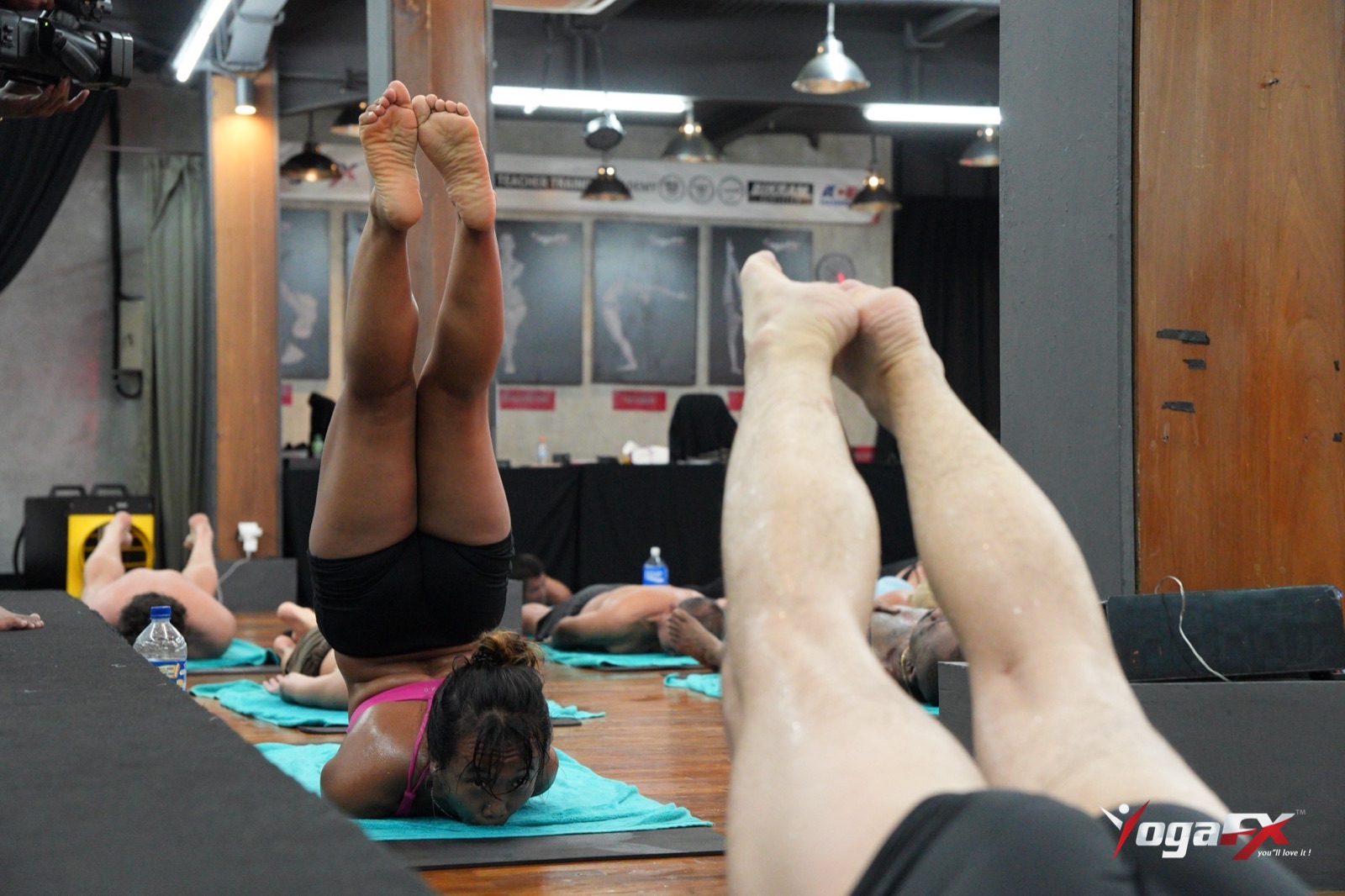
Think of a competitive yoga score as a bank balance that mostly goes down. The table below turns the 2023-24 USA Yoga rules into plain language, with a drill you can try at home. Each competitive yoga penalty comes from the rulebook, and each drill is simply a way to practise the skill behind it.
| Fault | Penalty in the 2023-24 rules | Home drill to build the skill |
|---|---|---|
| Hold of 5 seconds or more | No time deduction | Count five slow breaths before you move |
| Hold of 4 to 4.99 seconds | Minus 0.5 points | Add one more breath to every hold |
| Hold of 3 to 3.99 seconds | Minus 1 point | Time your holds with a phone timer |
| Hold under 3 seconds | The posture scores zero | Practise the entry slowly, then stop moving |
| Fall before completing the posture | One second chance, capped at 5 points; a second fall scores zero | Rehearse the weak step on its own |
| Fall after completing the posture | 0.5 to 2 points, depending on how bad it looks | Practise the exit as carefully as the entry |
| Postures out of sequence | 1 point from the first of any two out of order | Write the order down and say it aloud |
| Missing balance, flexibility or strength | 1 point for each missing quality | Check your routine against all three |
| Unannounced or wrong posture | The posture scores zero | Say each name in full before you start |
The faults judges see most
Beyond the big penalties, the rules list smaller deductions in steps of 0.5 or 1 point, up to 2 per posture. They read like a checklist of nerves: a slipping grip, a loss of muscle control, signs of struggling, finishing off centre, extra movements between postures, and visible misalignment.
Two of these deserve a closer look. “Signs of forcing or struggling” means a clenched face counts against you. Meanwhile, “extra movements between postures” means fidgeting is a fault. Both are habits, so both can be trained.
Finally, the clock matters. If time runs out before you finish a posture, that posture scores zero. If it runs out while you are exiting, you lose 1 point. The tie-break rewards the athlete with the best execution percentage, then the routine closest to three minutes without going over.
How the judges are kept honest
A panel of three, five or seven judges scores independently. The head judge may question a judge about how a rule was applied. However, the head judge may not make a judge change a score just because they see the shape differently. Appeals are allowed only for misapplied rules, computer errors or time-judge errors, and never for technical merit.
That design explains the next trend. Because two humans can score the same triangle differently, competitive yoga is moving towards software. An Indian government presentation, Yogasana as a Competitive Sport, says work on an automated scoring system “to introduce objectivity in marking” has begun.
What Competitive Yoga Judges Reward: Balance, Flexibility, Strength
Strip away the rule numbers and a competitive yoga scorecard rewards three physical skills. A hot yoga class trains all three, which is why many hot yoga students drift towards competitive yoga. The research is modest, so here is what it does and does not show.
Balance and flexibility improve with regular classes
A 2021 study in Frontiers in Public Health followed 82 healthy young women. The 49 women in the yoga group attended ten weekly beginner classes of 90 minutes, and 33 women formed a control group. The yoga group improved on flexibility, balance and core strength tests, according to the published abstract by Csala and colleagues.
Be careful with the result. The group was young, healthy and new to yoga, and the abstract does not say how people were assigned. It does not tell us anything about athletes. So treat it as a sign that these skills respond to practice, not as a training plan for a podium.
Hot classes load the body hard
Stamina matters too. The University of Wisconsin team led by Porcari (2014) tracked volunteers through a 90-minute heated class, and their heart rates sat near 80% of maximum for much of it. So the strength and stamina side of a routine is real work, not a stretch.
If you want the evidence in more depth, read our posts on whether hot yoga builds muscle and whether hot yoga counts as cardio.
As always, talk to a healthcare professional before starting a demanding practice, especially with heart disease, high blood pressure or a heat sensitivity. Competition-level flexibility is also a poor goal for most people. Pain is never part of the score.
Yogasana Sport in India: A Different Code of Points
The USA Yoga rulebook is only one competitive yoga system. India runs a separate code of points for the yogasana sport. In an April 2025 interview with WION, an Asian Yogasana official said there is “a specific code of points for all the events”.
According to that report, the Indian system lists about 250 optional asanas and five compulsory ones. Athletes pick two asanas for traditional events and five for other events. Dedicated software records the marks, and judges mark any deviation from the asana, from how it is entered, or from how it is left.
The same article says penalties apply for performing asanas wrongly or out of sequence. It gives no penalty values, so we cannot compare the two scales number for number. The point is the shared logic: shape, entry, exit and order all count.
Marking skill pays off in competitive yoga. At the World Yogasana Sports Federation Championships in Ahmedabad (4 to 8 June 2026), Indonesia left with seven medals, and YogaFX graduates were part of that story. Over the years our graduates have collected 12 medals, from regional to world level.
Is Competitive Yoga Still Yoga? A Teacher's Honest Answer
Some teachers reject competitive yoga on principle. The Wikipedia entry on the sport records that critics see it as a contradiction, and one teacher calls the whole idea offensive.
We take that seriously, and you'll hear the same doubts from many teachers. A scoreboard can turn attention into comparison. Yet a posture done with control, steady breath and no force is what a calm practice asks for anyway, and the judge simply attaches a number to it.
So hold both views. Competitive yoga is a useful lens if it helps you notice your own habits. It is a bad idea if it makes you push into pain.
How Online Study of the Postures Prepares a Competitor
Most competitive yoga deductions in the table are knowledge faults, not talent faults. Athletes lose points for the wrong order, the wrong name, a rushed hold or a messy exit. All of those are learned at a desk and a mat long before you stand on stage.
That is where structured online study helps a competitive yoga beginner. In online yoga teacher training with YogaFX, you learn each posture in the Original Hot 26&2 Yoga series by name, in order, with the dialogue that guides the entry, the hold and the exit. Our page on the 26&2 poses shows every posture in the series.
- Names and order: you learn the sequence so well that you could say it in your sleep.
- Entry and exit: each posture is taught step by step, so you can retrace it exactly.
- Hold discipline: you practise holding still while you breathe normally.
- Balance, flexibility and strength: the series mixes all three, so you know which one you lack.
Let's be realistic about the limits. Video lessons don't replace a coach who watches your shapes, and the rules above are just one federation's. If you want a competitive yoga coach, ask your national federation about its rulebook first.
From online study to the teaching route
If you want to learn to teach, the route goes online first, then to the 6-day in-person MasterClass in Bali. Our guide to 7 honest checks for an online hot yoga certification explains how to judge any course, because a cheap certificate is not worth much.
Our teaching view is plain. Learn the posture as a teacher would explain it, then learn how a judge would mark it. The first makes you safe, and the second makes you precise.
What Trainees Say About the Teaching
Three YogaFX trainees describe the experience in their own words. Each review is quoted as given, with first name, source and year.
“The school and learning platform was phenomenal - it was user friendly and honestly very engaging.”
Malini, Yoga Alliance review, 2026
“Well organized awesome event awesome Team Excellent experience.”
Chris, YouTube review, 2024
“You help me walk away from being my worst enemy.”
Mariana, YouTube review, 2023
You can watch Chris's 2024 YouTube review from his RYT 200 graduation ceremony below.
None of these trainees talk about scores. They talk about being pushed and supported, which is what good posture coaching feels like from the inside.
FAQ
Is yoga a competitive sport?
Yes, in some countries. Yogasana is recognised as a competitive sport in India, and national and world championships judge athletes on posture performance. Many teachers disagree with the idea, because yoga is more than postures. In class, nobody ranks you, so you can practise without any scoreboard.
How does competitive yoga work?
Athletes perform set postures on stage while judges score them one by one. In the 2023-24 USA Yoga rules, an athlete performs six postures in three minutes, and each is scored from 0 to 10. Judges deduct points for falls, wobbles, slow exits and missing skills, and the athlete with the highest total score wins the event.
How are yoga competitions scored?
Each posture is scored from 0 to 10, then judges add or subtract points for extra or missing skills. A hold under three seconds scores zero, and a hold of five seconds or more avoids time deductions. Panels use three, five or seven judges, and scores stay final unless an appeal succeeds.
How do you compete in yoga?
Start by contacting your national yogasana or yoga sports federation, because each has its own rulebook, age groups and events. Learn the compulsory postures, practise the order and your timing, and ask a coach to mark you in a mock routine. Then enter a local event before a national one.
Can adults take part in yoga competitions?
Yes. The 2023-24 USA Yoga rules list youth divisions for ages 9 to 17 and adult divisions for 18 and over, plus a 50 and over group, each with male and female categories. Other federations set their own age bands, so always check the current rules and the event page before you register.
Still have questions? Message Mr. Ian and the YogaFX team on WhatsApp and we will answer them personally, whether the question is about competitive yoga, online teacher training or the 6-day Bali MasterClass. Chat with us on WhatsApp

Founder and lead trainer of YogaFX International Yoga Teaching Academy, with more than 12,000 hours of teaching. He trained for 5 years, from 2014 to 2019, with the founder of the Bikram Hot 26&2 method.
You may also like
Explore all articles ↗ Teacher Training Guides11 min read14 Nov 2026
International Yoga Sports Federation and Yoga as a Sport: What Recognition Requires
Read article ↗ Teacher Training Guides11 min read13 Nov 2026
Sauna After Hot Yoga? What Core Temperature Data Suggests
Read article ↗ Teacher Training Guides10 min read13 Nov 2026