
Original hot yoga teacher training should teach heat physiology, not just postures. A good course shows you how a 90-minute class at about 40°C changes heart rate, core temperature and sweat. It then trains you to spot a struggling student and respond. Ask any school for its physiology syllabus before you pay.
Most pages about original hot yoga teacher training list the 26 postures and the dialogue, then stop. That's fair, because those two are the core skill. But you will teach in a hot room, so the body in front of you matters just as much as the script in your hand.
Mr. Ian Terry, E-RYT 500, has logged 12,000+ teaching hours and trained for five years, from 2014 to 2019, with the founder of the Bikram Hot 26&2 method.
He puts it plainly: a teacher who can't read a flushed face is not ready to hold the room. This guide sets out what the physiology module of original hot yoga teacher training should contain, so you can check any programme against it, including ours. It also suits anyone comparing 26 and 2 yoga teacher training options.
What Original Hot Yoga Teacher Training Should Teach About Heat
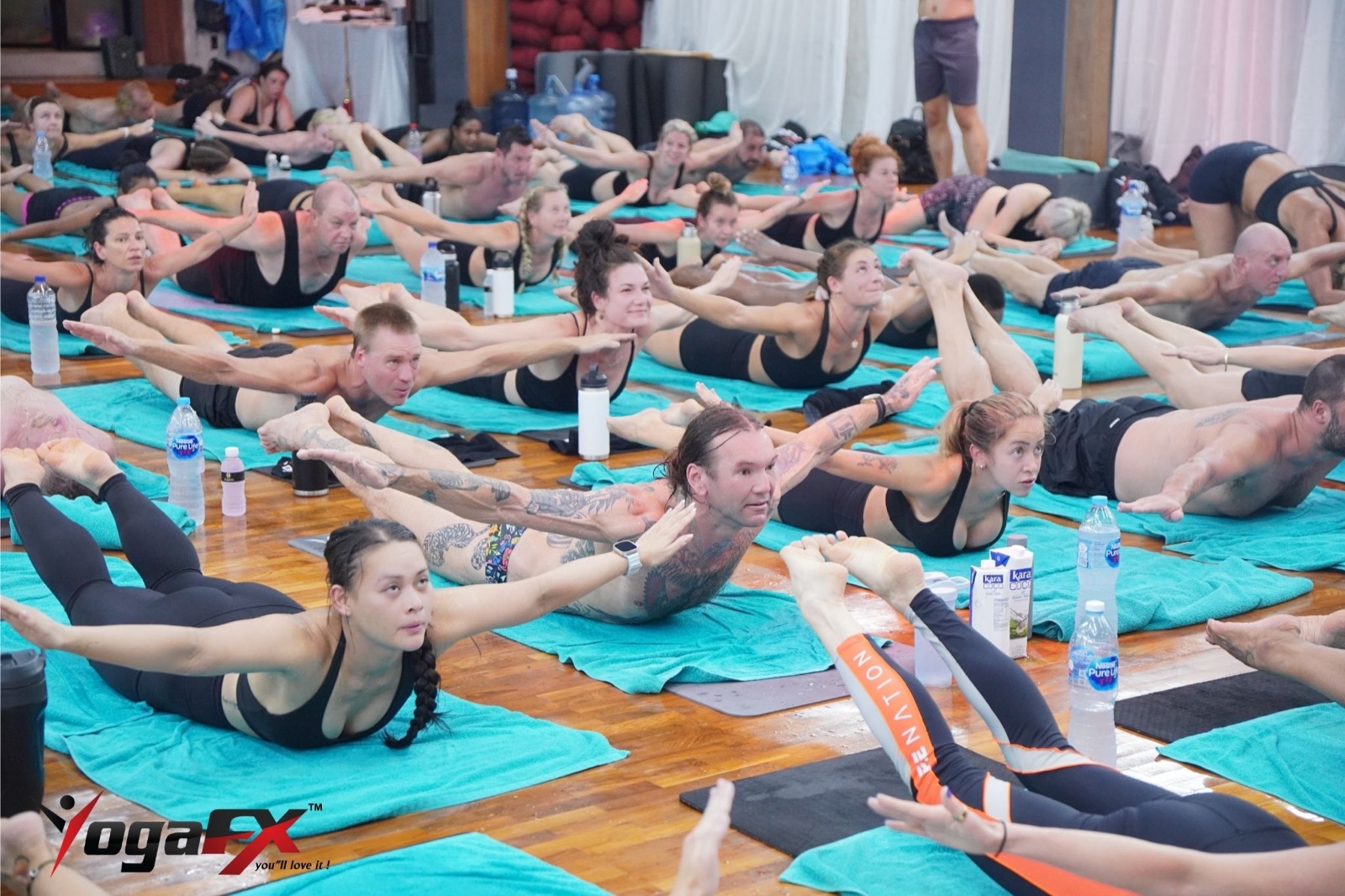
In a standard class the room sits near 40°C with about 40% humidity. The teacher speaks the whole class and never demonstrates. Because of this, you can't lean on a demo or a playlist to carry students through hard minutes. You have to read bodies from across the room and use your voice to change what they do.
Why heat deserves its own module
That's the reason physiology belongs in original hot yoga teacher training as its own module. In our October 2026 research report on hot yoga teacher trainings (R1a), we read the published hour breakdowns of one widely used 240-hour standard. It lets anatomy count inside a block of 150 hours shared with posture lab and teaching skills. So a school can meet the standard and still give heat very little time.
Seven abilities a heat module should build
We think a physiology module should leave you able to do seven things:
- Explain why heart rate climbs in a hot room even when the postures look slow.
- Describe how the body loses heat, and why 40% humidity changes that.
- Give a clear water and rest message before class starts.
- Recognise the early signs of heat exhaustion from across the room.
- Respond in the first minute, with words a student can follow.
- Know which students to ask about a doctor before they join.
- Stay inside your scope: you coach, you don't diagnose.
| Heat lesson | What a trainee should be able to do | How a trainer can check it |
|---|---|---|
| 1. Heart rate load | Explain why the class works the heart hard | Trainee answers a student's question aloud, without notes |
| 2. Core temperature | State what rises, by how much, and why it matters | Short oral quiz using the study figures |
| 3. Sweat and humidity | Describe cooling by evaporation in a humid room | Trainee explains it in two sentences a beginner understands |
| 4. Water and rest | Deliver a pre-class message in 30 seconds | Timed delivery in a posture clinic |
| 5. Warning signs | Name the early signs of heat exhaustion | Role-play: trainer acts out the signs, trainee responds |
| 6. First response | Give a calm, clear instruction in the first minute | Practised in the heated room, not a classroom |
| 7. Scope of practice | Know when to stop coaching and say 'see a doctor' | Written scenarios, marked against a checklist |
Heart Rate and Core Temperature: The Numbers Behind the Class
Any original hot yoga teacher training module should start with data. Researchers at the University of Wisconsin-La Crosse measured what one class does to the body. Their work was summarised by the American Council on Exercise in a ProSource report on Bikram yoga and core body temperature. Twenty healthy, regular practitioners aged 28 to 67 took part. Each wore a heart-rate monitor and swallowed a core-temperature sensor for one class.
The heart-rate numbers surprise most new trainees. On average, men reached about 80% of predicted maximum and women about 72%. The highest readings were 92% for men and 85% for women. So the class is real work for the heart, even if it looks like a calm stretch. A trainee in original hot yoga teacher training should be able to say this plainly to a nervous beginner.
What happens to core temperature
Core temperature tells the second half of the story. The average highest reading was 103.2°F for men and 102.0°F for women. Seven of the 20 people went above 103°F, and one man reached 104.1°F. These figures are why heat physiology matters in bikram hot yoga teacher training and in every other route into this method.
The report adds that none of the volunteers showed signs of heat intolerance, and that the risk of heat illness rises at 104°F.
What one hot class asks of the body
These figures come from one class and 20 volunteers, so treat them as a pattern to respect, not a rule to quote as fact for everyone. Our companion article on the research behind the 26&2 sequence grades the wider studies. Here the lesson for a trainee is simpler: your students' bodies do work close to a danger line, so your pacing words matter.
A trainer should turn these numbers into three habits. First, you remind students to drink before they feel thirsty. Second, you give permission to rest, and you say it out loud. Third, you scan the room every few postures, not only when someone looks unwell.
Sweat, Humidity and Water: How the Body Loses Heat
Sweat is the body's cooling system. It cools you only when it evaporates from the skin. In a room at about 40% humidity, the air holds a lot of moisture already, so sweat drips off instead of drying. As a result, a student can pour sweat and still feel hot.
That is a good thing to teach plainly, because new students believe a wet shirt means a good workout. It doesn't. It means the body is trying to cool down. If you want the fuller picture, our article on what sweat really does in a hot class explains why sweating is about temperature, not about clearing anything out of the body.
Your water message should be short, because students in a hot room can't take in a lecture. A strong pre-class message covers four points:
- Drink before class, so students don't start the first posture already behind.
- Sip between postures, because gulping a full bottle at once feels heavy.
- Sit down when you need to. Resting is part of practising.
- Tell me if you feel dizzy, sick or very weak, and I'll help straight away.
Notice that none of this needs a medical claim. You're giving practical, low-risk guidance. Anything beyond that, such as advice on medication or a health condition, belongs with a healthcare professional.
Reading the Room: Early Signs of Heat Exhaustion
The Mayo Clinic lists the signs of heat exhaustion clearly. They include heavy sweating, faintness, dizziness, fatigue, a weak and rapid pulse, muscle cramps, nausea and headache. The skin can feel cool and moist, with goose bumps, even in a hot room.
In a teacher training you practise spotting these from the front of the room, with a student's face and breathing as your clues. A trainee should be able to say, without thinking, what to look for:
- A face that goes pale or very flushed, especially with glazed eyes.
- A student who stops following, or drifts out of the posture and doesn't come back.
- Unsteady balance in a posture that was fine ten minutes ago.
- Fast, shallow breathing that doesn't settle after a rest.
- A student who covers their mouth or looks queasy.
What to do in the first minute
Mayo Clinic advice for suspected heat exhaustion is simple: stop all activity and rest, move to a cooler place, and drink cool water or a sports drink. In a studio that translates to a short instruction. You tell the student to sit or lie down, you point to the cooler air near the door, and you hand them water.
The same page says to get medical help right away if a person becomes confused or distressed, loses consciousness, or cannot drink. It also describes heatstroke as a core temperature of 104°F or higher. A teacher doesn't measure core temperature in class, so this is a reason to act early, not a number to check.
Here is a practical way to sort what you see:
| What you see | What it may mean | What a trained teacher does |
|---|---|---|
| Heavy sweat, tired, slightly flushed, still following | Normal effort in a hot room | Remind the class to sip water and rest when needed |
| Dizzy, pale, cramping or queasy | Possible heat exhaustion | Stop the student's practice, move them to cooler air, give water, stay close |
| Confused, unresponsive, can't drink | Possible emergency | Call for medical help straight away and keep the student safe |
This table is a teaching aid, not a diagnosis. A trainee who can use it calmly is already ahead of one who learned heat safety from a single slide.
Who Should Speak to a Doctor Before Joining a Hot Class
A good module also teaches the questions you ask before a student starts. Heat is a stress on the body, and some people need a doctor's view first. People with heart conditions, those who are pregnant, and those who take certain medications should check with a healthcare professional before a first class.
This is where scope of practice matters. You're not there to judge anyone's health. You're there to say, kindly, "please check with your doctor first", and then to respect the answer. Trainees practise that sentence aloud until it sounds natural, because it is awkward the first time you say it to a stranger.
The research also points to humility. The ACE report studied apparently healthy, regular practitioners. It says little about beginners, older students or anyone with a health condition. So a teacher can describe what the study found, but can't promise that a class is safe for a particular person.
How Original Hot Yoga Teacher Training Tests Heat Knowledge
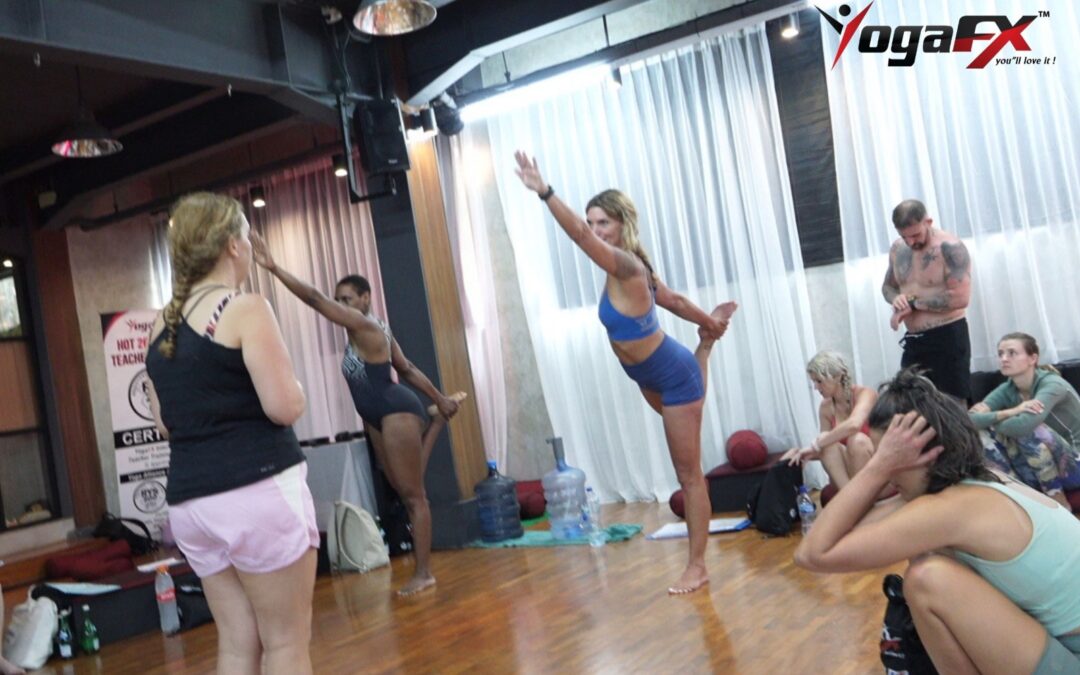
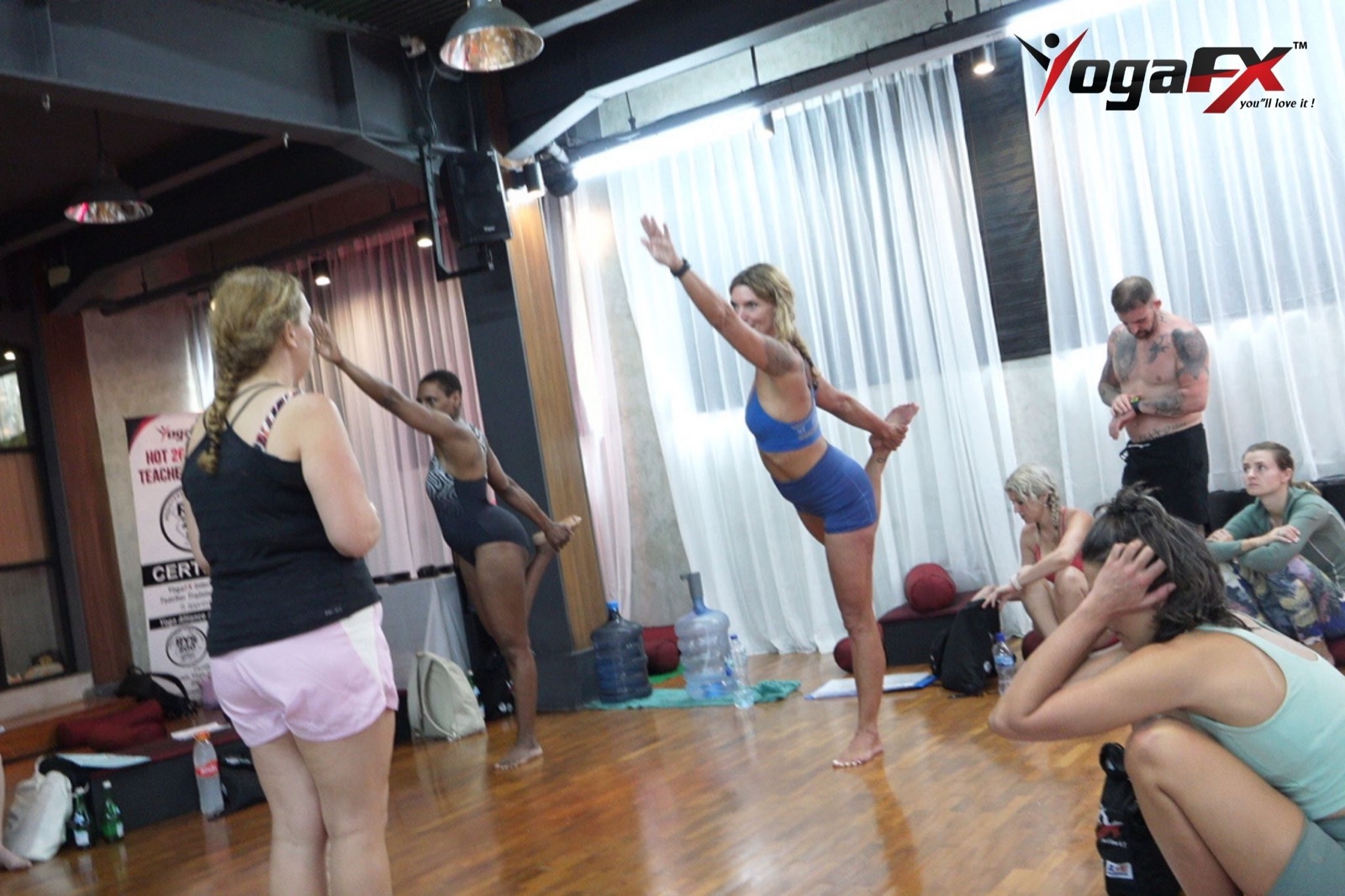
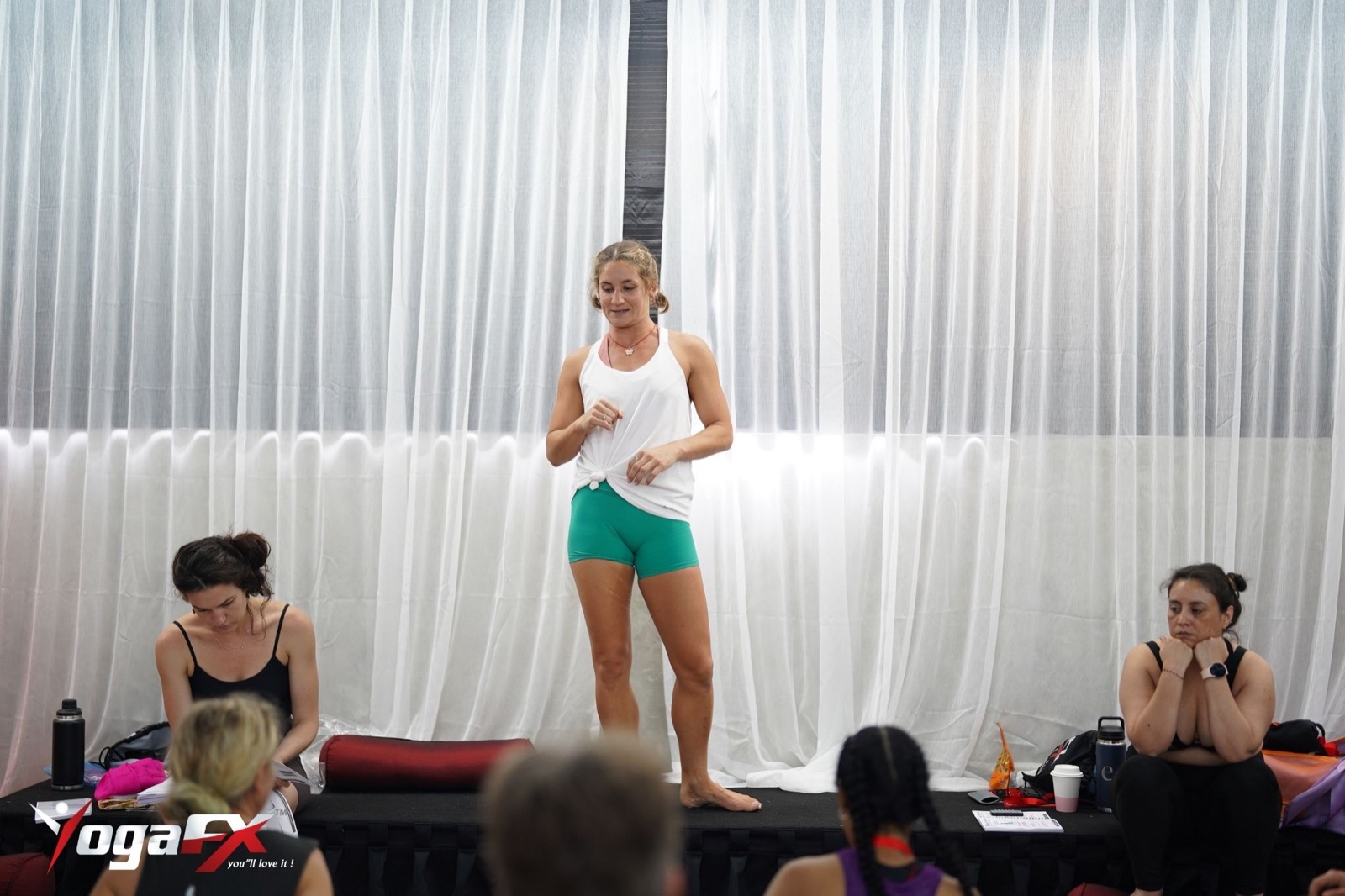
Knowing a fact and using it under pressure are different skills, and original hot yoga teacher training should test both. That's why a heat module should be tested in the heat. At YogaFX, trainees practise in the same conditions they teach in, and they get feedback after every practice class.
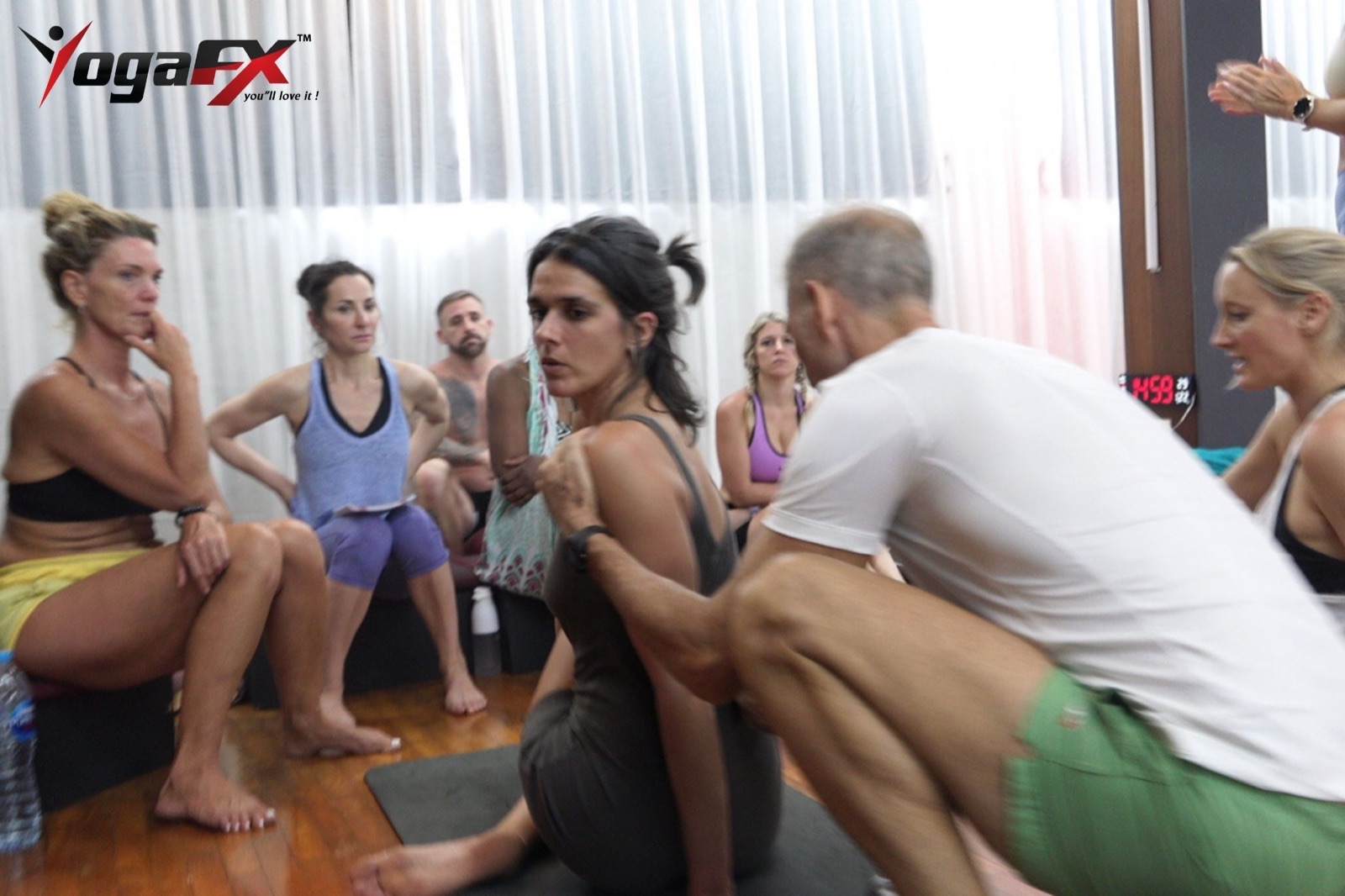
Posture clinics carry much of this work. A trainee corrects a peer in one posture, and a trainer watches for two things: is the correction clear, and does the trainee notice the person's state while giving it? Mr. Ian often stops a clinic to ask the group what they saw in a student's face, because that habit of looking is what protects a room.
You can use five questions to check any programme, whether it is ours or someone else's:
- Is there a written physiology syllabus, with hours attached to the original hot yoga teacher training, that you can read before paying?
- Do trainees practise in the heat, or only discuss it in a cool classroom?
- Is first response taught and tested, with role-play and a checklist?
- Are the studies named, with their limits, instead of vague claims about benefits?
- Does the trainer say where teaching ends and a doctor's advice begins?
A programme that answers yes to all five takes original hot yoga teacher training seriously. One that can't answer the first question deserves a follow-up call.
Learning Original Hot Yoga Teacher Training Online First
Why study the theory first
Heat physiology is one of the best parts of original hot yoga teacher training to learn before you arrive. The ideas are the same for every student, whichever bikram hot yoga teacher training school you pick, so you can study them at home at your own pace.
You can then bring your questions to the live training, where the heat is real. Many people search for 26 and 2 yoga teacher training online for this reason, and the theory half works well on screen.
That's how YogaFX builds its programme: you study online first, then complete an intensive in Bali, and you graduate with two certificates, Yoga Alliance RYT 200 and Bikram Hot 26&2 200-Hour. After you finish, you keep lifetime access to the YogaFX Online Academy, with posture clinics, dialogue demonstrations and 50+ premium yoga lectures. Our programme overview sets out the format and dual certificate in full.
If you're comparing routes, two of our guides help. The first is an honest 8-week breakdown of online yoga teacher training. The second explains how Yoga Alliance counts online hours, which matters if you want to register.
Remember that online study can't replace practising in the heat, and no 26 and 2 yoga teacher training online course should claim otherwise. It prepares you. The live training is where you feel a 40°C room for 90 minutes and learn what your students feel.
What YogaFX Students Say About the Training
Reviews aren't research, but they show how the training feels from a student's seat. Here are three, in the students' own words, from the YogaFX review pages.
I join YogaFX Yoga Teacher Training in January, so excellent! I meet many friends and very much enjoy the training. Thankyou for amazing experience Ian. YogaFX love it!
Prana, Google review, 2019
The 26&2 training at YogaFX was excellent. You are teaching almost from the start of the course and your confidence increases daily.
Marion, Google review, 2024
Truly recommend Ian and his team to anyone who wants to obtain their RYT200 and Hot Yoga Teacher Training.
Ozge, Yoga Alliance review, 2025
Together, the YogaFX review pages hold 150 Google reviews, 50 Yoga Alliance reviews and 357 YouTube testimonials. Mr. Ian's own words on the work sum up how he thinks about it: "there can be no greater investment than the one that you make in your health, because without it, nothing else matters."
Choosing Original Hot Yoga Teacher Training With Heat in Mind
Here's the short version. Pick original hot yoga teacher training that teaches the postures and the dialogue, then ask one more question: how does it teach you to look after the people in the room? A school that gives heat real hours, tests it in the heat and names its sources is preparing you for the job you'll actually do.
Mr. Ian, who founded YogaFX in 2017 to offer original hot yoga teacher training with heat knowledge at its core, and has trained 1,500+ graduates from 80+ countries, built the programme on that idea. Yoga is not a replacement for medical care, and anything in this article is general information, so please consult a healthcare professional about your own health.
FAQ
What should original hot yoga teacher training teach about heat?
A good course teaches how heart rate and core temperature rise in a 90-minute class at about 40°C. It also covers sweat and humidity, water and rest messages, early signs of heat exhaustion and a first response. Trainees should practise these in the heated room, not only in a classroom.
How hot does the body get in an original hot yoga class?
In one study of 20 practitioners, average peak core temperature was 103.2°F for men and 102.0°F for women. Seven of the 20 went above 103°F, and the highest reading was 104.1°F. It was a small study, so check with a healthcare professional if you have a health condition.
What are the signs of heat exhaustion in a hot yoga student?
Mayo Clinic lists heavy sweating, faintness, dizziness, fatigue, a weak and rapid pulse, muscle cramps, nausea and headache. Skin can feel cool and moist. A teacher should stop the student's practice, move them to cooler air and offer water. Confusion or loss of consciousness needs medical help immediately.
Can I learn the physiology part of original hot yoga teacher training online?
Yes, the theory travels well online because it is the same for every student. Studying it first lets you bring better questions to the live intensive. You still need to practise in real heat to feel the effort and to learn how to read students in a hot room.
Is YogaFX official Bikram Choudhury teacher training?
No. YogaFX is independent training, not official Bikram Choudhury teacher training. Mr. Ian Terry, E-RYT 500, trained for five years, from 2014 to 2019, with the founder of the Bikram Hot 26&2 method, and now teaches the method with more than 12,000 teaching hours behind him.
Still have questions? Message Mr. Ian and the YogaFX team on WhatsApp and we will answer them personally.

Founder and lead trainer of YogaFX International Yoga Teaching Academy, with more than 12,000 hours of teaching. He trained for 5 years, from 2014 to 2019, with the founder of the Bikram Hot 26&2 method.
You may also like
Explore all articles ↗ Teacher Training Guides11 min read14 Nov 2026
International Yoga Sports Federation and Yoga as a Sport: What Recognition Requires
Read article ↗ Teacher Training Guides11 min read13 Nov 2026
Sauna After Hot Yoga? What Core Temperature Data Suggests
Read article ↗ Teacher Training Guides10 min read13 Nov 2026