
E-RYT 500 means Experienced Registered Yoga Teacher at the 500-hour level. The teacher finished 500 hours of Yoga Alliance registered training, then taught for at least four years. In an online course that experience matters most, because your trainer must catch mistakes through a screen.
Most pages stop at the definition. This guide goes one step further and asks what the title guarantees when you learn online, and what it leaves to you to check. Mr. Ian Terry, E-RYT 500, leads the YogaFX course, so we use his record as the worked example.
What Is E-RYT 500? The Requirements in Plain Words
So, what is E-RYT 500 in practice? It is a credential that Yoga Alliance gives to teachers who have trained and then taught. The "E" stands for experienced. Yoga Alliance describes these credentials as recognising teachers who have met additional teaching requirements beyond their RYT training (see its teacher training options page).
The E-RYT 500 requirements sit in the Yoga Alliance Standards for Registered Yoga Teachers. We read the main route line by line. It has three parts:
- Training. A 500-hour yoga teacher training registered with Yoga Alliance, either as one programme or as a 200-hour course plus a separate 300-hour course.
- Time. A minimum of four years of teaching after that training.
- Teaching hours. 2,000 hours submitted. Of these, 1,500 must come after an RYS 200 or RYS 500 training, and the other 500 after an RYS 300 or RYS 500 training.
The standard also lists a separate experienced teacher pathway for teachers who trained in other ways. It asks for a minimum of 10 years of teaching and 3,000 hours of teaching experience. Most working teachers take the main route above.
Here is a quick way to feel the size of 2,000 hours. A teacher who leads about ten one-hour classes a week for 50 weeks logs 500 hours in a year. So four years is a floor, not a long time on paper, yet it is a lot of real rooms.
The E-RYT 500 main route in five numbers
What E-RYT 500 Guarantees, and What It Does Not
The title proves something real. A teacher cannot reach it by buying a course. Someone checked the hours, and the years had to pass. That is a solid floor when you are choosing who will train you.
But a floor is not a ceiling. The table below sets each part of the E-RYT 500 requirements next to what it proves, what it cannot prove, and the check you should still make before you enrol online.
| Requirement | What it proves | What it cannot prove | Your check for an online course |
|---|---|---|---|
| 500 hours of registered training | The teacher studied anatomy, method and ethics at a registered school | That the teacher can explain it clearly on camera | Ask the trainer to show a short sample lesson |
| 2,000 teaching hours | Thousands of hours in front of real students | That those hours were in your style, such as a heated, scripted class | Ask which style the hours were taught in |
| Four years minimum | Time to see many bodies, injuries and bad days | That the teacher is still teaching today | Ask when the trainer last taught a public class |
| Listing in the Yoga Alliance directory | The status can be checked by anyone | Warmth, timing or how well the teacher gives feedback | Read recent student reviews and watch a class video |
Read the third column twice. A credential tells you a teacher has been through the work. It does not tell you the teacher is good at passing that work on to you.
Why Trainer Experience Matters More When You Learn Online
In a studio, a weak trainer is easy to spot. You see the room, you feel the pace, and you can ask a question the moment it comes up. Online, almost all of that disappears. You get a video, a workbook and a way to send questions.
That is why experience carries so much weight. When a trainer cannot touch your shoulders or step beside your mat, the trainer has to see the problem from a short recording or a written question. Spotting a rushed word, a tight jaw or a locked knee from a small screen is a skill. Teachers build it over thousands of classes.
Three jobs an experienced trainer does for you
- Diagnose fast. A trainer who has heard the same mistake hundreds of times can name it in one sentence and give you a fix.
- Choose what matters. Online courses hold a lot of content. An experienced trainer knows which parts decide whether you can teach a real class and which parts can wait.
- Protect you from shortcuts. New teachers often skip the slow parts. A trainer who has watched many graduates succeed or struggle will tell you which slow parts to keep.
For a scripted style such as Original Hot 26&2 Yoga, this is even more true. Teachers stay off the mat and guide the class with a spoken dialogue, word for word. Learning it online is realistic, because the text can be drilled again and again. The skill that is hard to build alone is pacing, so you need someone who has delivered it for years to listen to you. Our guide to how online yoga teacher training really works shows the weekly routine.
What the Research Says About Heat and Teaching Safely
Experience also matters for safety, and a hot room raises the stakes. A 2025 systematic review in Sports Medicine - Open by Willmott and colleagues pooled 43 studies with 942 participants, 76% of them female. It found that a single hot yoga session raised body temperature and heart rate, and that long-term practice was linked to cardiometabolic and functional adaptations.
The same review is careful about what it cannot say. Its authors call the psychological findings promising but inconclusive. They note that some studies lack rigorous designs, and that case reports describe ill health after hot yoga. They also write that claims of greater health benefits than other forms of yoga or exercise are, at present, unsubstantiated.
We like that honesty, and it shapes how we teach. Hot yoga is a real physical load, not a treatment for any condition. A trainer has to know the difference between a student who is working hard and one who is in trouble.
The CDC gives a useful checklist in its page on heat-related illnesses. Symptoms of heat exhaustion include headache, nausea, dizziness, weakness, irritability, thirst, heavy sweating and a raised body temperature. For heat stroke the page lists confusion, slurred speech, loss of consciousness and seizures, and says body temperature can reach 106°F or higher within 10 to 15 minutes. It was written for workers, but the body reacts to heat the same way on a yoga mat.
Here is where teaching hours show up. A teacher with 2,000 or more hours has met the pale student, the shaky student and the student who pushes too hard. That teacher stops the class early, moves the student to cooler air and asks the right questions. A trainer who has never seen it may freeze. This is general information, not medical advice, so please speak to a healthcare professional about your own health before you practise in the heat.
Reading an E-RYT 500 Record: Mr. Ian Terry as the Example
A title is a summary. The record behind it tells you more. So let us read one in full. Mr. Ian Terry holds E-RYT 500 status, and the table below sets out what his record covers and why each part matters to someone studying online.
| Part of the record | The figure | Why it matters when you learn online |
|---|---|---|
| Teaching hours | More than 12,000 | Many more rooms, bodies and problems than the 2,000-hour minimum asks for |
| Training at the source | Five years, 2014 to 2019, with the founder of the method | The dialogue you study online comes from first-hand training, not from a copy of a copy |
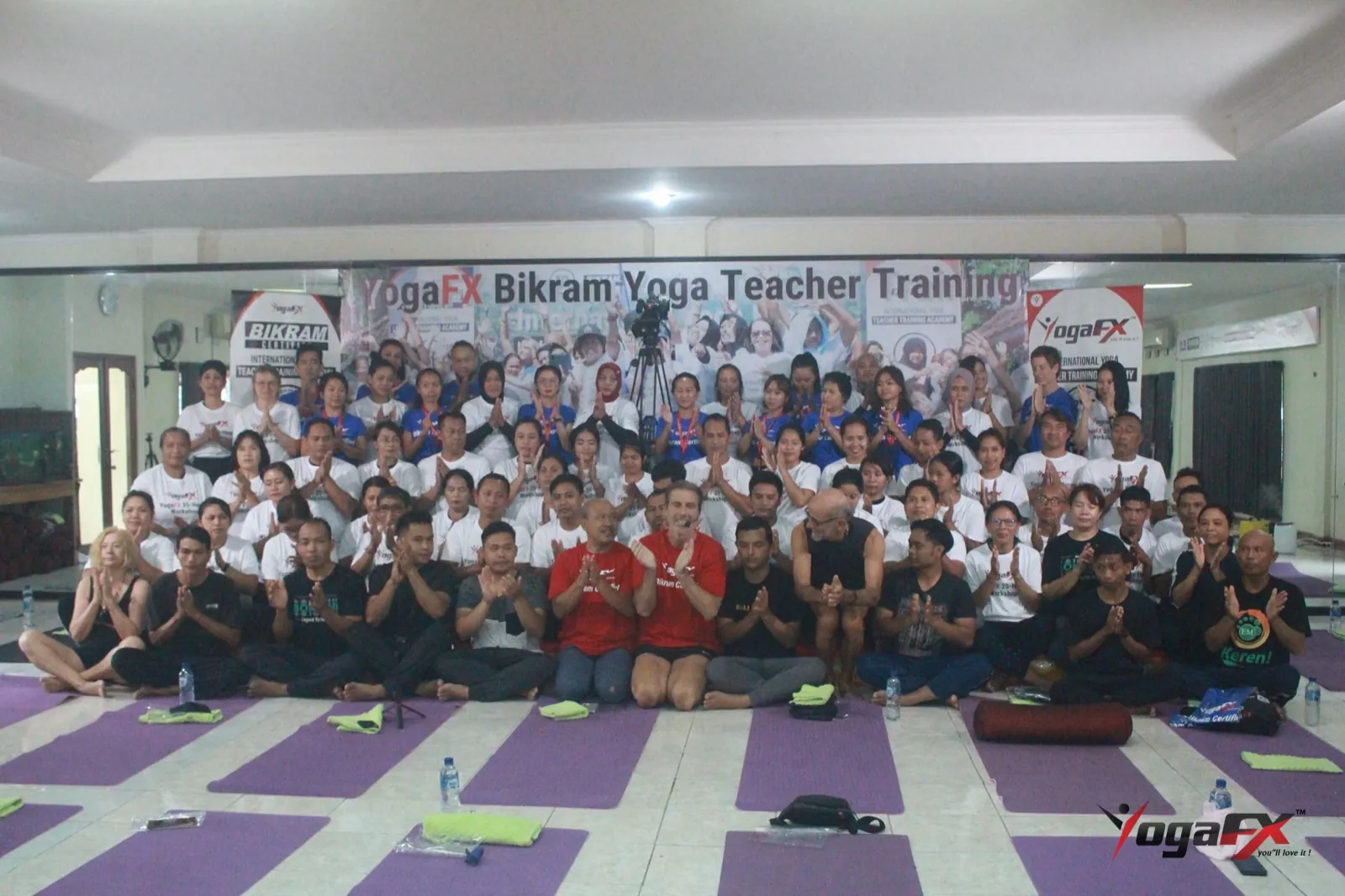
| Graduates | More than 1,500 from over 80 countries, since 2017 | Feedback from students in many time zones, languages and starting points |
| Hot yoga listings | 2,128 of the 13,863 E-RYT 500 teachers in the Yoga Alliance directory list hot yoga (October 2026 count) | Few E-RYT 500 teachers list the heated style, so a trainer who does is less common |
| Student reviews | 150 on Google, 50 on Yoga Alliance and 357 on YouTube | You can read and watch what past students said before you pay |
| Public role | Master Trainer, Republic of Indonesia Yogasana Sports Federation | An outside body has trusted his teaching standards |
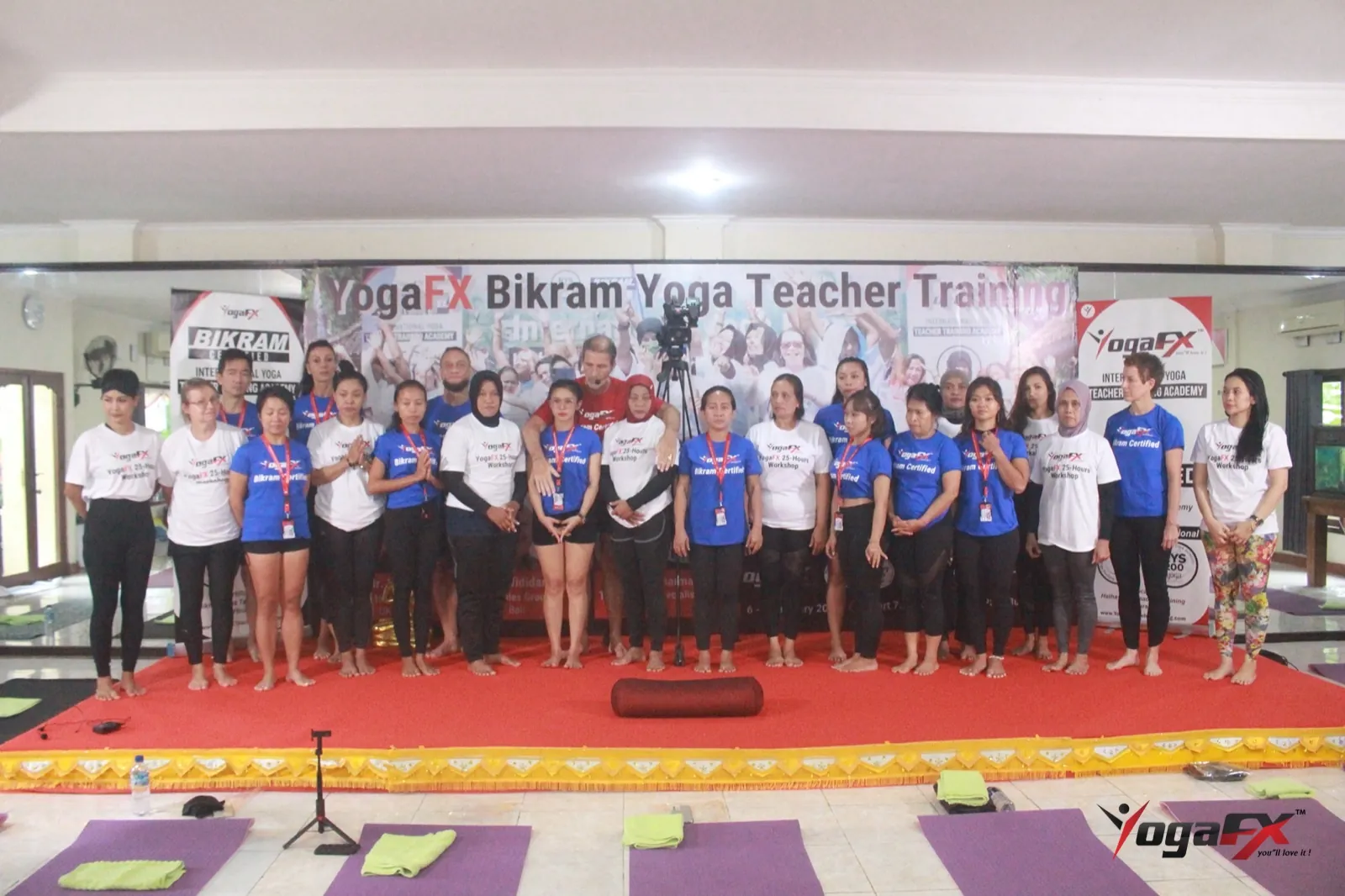
One more piece of his record is not on any register. Mr. Ian speaks personally with every student before they enrol, and those calls sometimes run up to an hour and a half. He asks about your goals, your fears and your background. As a result, you know who is guiding you before the first lesson, which is rare for an online course.
We also looked at how other hot yoga trainings describe their leaders. In YogaFX's October 2026 review of 19 trainings in one hot yoga network, contact courses ran from 4 to 9 weeks, or 7 to 12 weekends, and listed hours ranged from 160 plus 81 practice hours up to 500. Most lead trainers teach mainly in their own studio. Length and format vary a great deal, so the trainer's record is the one thing worth comparing line by line.
Five Questions to Ask Any Online Course About Its Lead Trainer
You now know what E-RYT 500 can and cannot tell you. Use these five questions to fill the gap before you pay. They work for any school, including ours.
- Who exactly teaches me? Ask for a name, then look it up in the Yoga Alliance directory and match the tier to the claim.
- In which style were your teaching hours earned? Hours in a gentle flow class are not the same as hours in a heated, scripted class.
- How do I get feedback, and how fast? Live calls, recorded replies and in-person days all work, but the school should say which one you get.
- Can I see the trainer teach? A short class video tells you more about pace and tone than any badge.
- What happens after the course? Look for lasting access to lessons and a clear next step, such as continuing education hours as your career grows.
If a school cannot answer these in writing, keep looking. Our short guide on what to check before you pay for a hot yoga certification covers more warning signs, and our explainer on who registers and accredits a yoga school shows what the registry does and does not check.
If you want the wider picture of how the titles fit together, from RYT 200 up to E-RYT 500, see this broader guide to what RYT 500 means from our UK site.
What YogaFX Students Say About Learning From an Experienced Trainer
Reviews are not research. They do show how the teaching feels from the student's side. Three trainees from our YouTube reviews describe it in their own words.
Erick said the training changed his mind, his body and his future. He thanked Mr. Ian for guiding the group through it "expertly" and called it more dynamic and fun than he expected.
Erick, YouTube review, 2024 (paraphrased)
Jason called the experience truly life-changing and said it was one of the most amazing things he had ever done.
Jason, YouTube review, 2023 (paraphrased)
Anika had a hard first experience with hot yoga. Over the next year she fell in love with it, and she said the training made her love it even more.
Anika, YouTube review, 2025 (paraphrased)
These are personal accounts, and results differ from student to student. If you want more, the YogaFX review pages hold 150 Google reviews, 50 Yoga Alliance reviews and 357 YouTube testimonials.
From the Online Course to the Bali MasterClass
The YogaFX online course works as the first stage of a hybrid path. You study at home, with guidance from experienced teachers when you get stuck. Then you can join Mr. Ian for the 6-day Bikram Hot 26&2 Yoga Teacher Training MasterClass in Bali, which graduates with Yoga Alliance RYT 200-Hour and Bikram Hot 26&2 200-Hour International Yoga Certification.
After the MasterClass, graduates keep lifetime access to the YogaFX Online Academy, including Posture Clinics, Dialogue Demonstrations and more than 50 premium yoga lectures. Read about the in-person MasterClass in Bali if you are weighing the next step.
Yoga is not a replacement for medical care, and this guide is general information. Please consult a healthcare professional about your own health, especially before practising in the heat.
FAQ
What does E-RYT 500 mean?
E-RYT 500 means Experienced Registered Yoga Teacher at the 500-hour level with Yoga Alliance. The teacher completed 500 hours of registered training and then logged years of teaching. The letter E stands for experienced, so the title shows time in front of students, not only time spent studying.
What are the E-RYT 500 requirements?
Yoga Alliance asks for a 500-hour registered training and at least four years of teaching after it. Applicants submit 2,000 teaching hours, with 1,500 taught after an RYS 200 or RYS 500 training and 500 after an RYS 300 or RYS 500 training. A separate experienced teacher pathway also exists.
How long does it take to become an E-RYT 500?
The Yoga Alliance standard sets a minimum of four years of teaching after the 500-hour training. That matches the hours too. A teacher who leads about ten one-hour classes a week for 50 weeks teaches 500 hours a year, so reaching 2,000 hours takes four years at that pace.
Does an E-RYT 500 trainer matter in an online course?
Yes, because online study removes the room. A trainer cannot adjust you by hand on screen, so the trainer's eye and judgment do the work. An experienced trainer has seen your mistake before and can fix it from a short recording. Ask how and when that feedback happens.
How can I check a trainer's E-RYT 500 status?
Search the trainer's full name in the Yoga Alliance online directory and confirm the tier matches the claim. Then ask which style the teaching hours came from, and watch the trainer in a recorded class. Names can be spelled differently, so ask politely if you find nothing at first.
Still have questions? Message Mr. Ian and the YogaFX team on WhatsApp and we will answer them personally.

Founder and lead trainer of YogaFX International Yoga Teaching Academy, with more than 12,000 hours of teaching. He trained for 5 years, from 2014 to 2019, with the founder of the Bikram Hot 26&2 method.
You may also like
Explore all articles ↗ Teacher Training Guides11 min read14 Nov 2026
International Yoga Sports Federation and Yoga as a Sport: What Recognition Requires
Read article ↗ Teacher Training Guides11 min read13 Nov 2026
Sauna After Hot Yoga? What Core Temperature Data Suggests
Read article ↗ Teacher Training Guides10 min read13 Nov 2026