

Hot yoga calories burned in one class usually land between about 150 and 460, depending on class length, body size and effort. Two lab studies measured it with breath analysis, not guesses. One found 286 calories on average. The other found 330 for women and 460 for men. The heat adds very little.
Hot Yoga Calories Burned: The Short Answer
Most pages online quote one number and stop. Here we grade every number by how it was measured, the way we grade every claim on this site. Four findings sum up the evidence:
- A San Diego State team measured 286 calories on average in 24 adults, with a spread from 179 to 478.
- A Colorado State team measured about 460 calories for men and 330 for women in a 90-minute class.
- Heat changed little. A one-hour crossover trial found 156 calories heated and 151 at room temperature.
- Heart rate misleads. It ran near 160 beats per minute while the energy cost matched a brisk walk.
That is useful news for a teacher or a student. This guide comes from the team at YogaFX, led by Mr. Ian Terry, E-RYT 500, who has more than 12,000 teaching hours. It is general information, not medical advice. If you have a heart condition, take blood pressure medication or are pregnant, please consult a healthcare professional before any heated practice.

What Two Lab Studies Measured About Hot Yoga Calories Burned
Only a few research teams have measured hot yoga calories burned directly. They did it by capturing the oxygen people breathe in and out, which is the standard lab method. Two of those teams studied a full Bikram class, so we start there.
San Diego State University, 2014
Researchers tested 24 adults aged 18 to 57 in an environmental chamber. Some were new to the class, and some had practised for a while. The study abstract in Alternative Therapies in Health and Medicine reports an average of 286 calories, with a range from 179 to 478.
Experience mattered. Relative to body weight, new students burned 3.7 calories per kilogram and experienced students 4.7. Experienced students also worked harder, with a heart rate near 86% of predicted maximum against 72% for newcomers.
Colorado State University, 2014
A second team, led by Brian Tracy with Megan Fritz and colleagues, tested 19 seasoned practitioners aged 18 to 40 through a 90-minute class. The university news report gives about 460 calories for men and 330 for women. It describes the effort as roughly a brisk 3.5 mph walk held for the full 90 minutes.
Read this one with care. The findings were presented at a 2014 sports medicine conference, and the news page said the paper was still being drafted. It also lists funding from Bikram's Yoga College of India and PURE Action. We treat it as useful but unconfirmed.
The Evidence Graded Side by Side
| Source | Who and how | Calories or effort found | Our grade and the catch |
|---|---|---|---|
| San Diego State University, 2014 | 24 adults (5 men, 19 women), novice and experienced, measured in a chamber | 286 on average, range 179 to 478; 3.7 vs 4.7 calories per kg | Moderate. Peer-reviewed, but small and mostly women. All sessions were hot, so no heat comparison. |
| Colorado State University, 2014 | 19 experienced practitioners (11 women, 8 men), 90-minute class | About 460 (men) and 330 (women); heart rate near 160 beats per minute | Low to moderate. Conference results in a news report, with industry funding. |
| Houston Methodist, 2020 | 16 experienced practitioners (14 women, 2 men), same one-hour class twice | 156 heated vs 151 at room temperature; heart rate 113 vs 109 | Moderate. Good design (a crossover), but a small group and one hour only. |
| Harvard Health calorie table | Estimates for set body weights, not measured in yoga students | 133 calories per 30 minutes of walking at 3.5 mph, for 155 lb | Reference only. A planning guide built from formulas. |
Notice how wide the ranges are. Two students on neighbouring mats can differ by hundreds of calories in the same class. So treat every figure here as a range, never as a promise.
Does the Heat Change Hot Yoga Calories Burned?
This is the question students ask most. The cleanest answer comes from a Houston Methodist crossover trial. Sixteen experienced practitioners did the same one-hour Bikram sequence twice, once at 105°F and once at 74°F, in random order. The open-access paper in the International Journal of Exercise Science reports the results.
Total energy was 156 calories heated and 151 at room temperature. Mean oxygen use and heart rate did not differ between the two rooms. The heated class did shift the fuel mix, with a lower respiratory exchange ratio of 0.89 against 0.95. In plain terms, the body leaned a little more on fat and a little less on carbohydrate. The total did not move.
So the heat does not burn extra calories in any way you could count. It does make you sweat, and it makes the class feel harder. For a wider look at that comparison, see our breakdown of hot yoga vs regular yoga in three trials.
Four Numbers From the Lab
460 / 330
Calories in 90 minutes
Men and women in the Colorado State group. About a brisk 3.5 mph walk.
156 vs 151
Heated vs room temperature
Calories in one hour. The gap was not significant.
160
Beats per minute
Average heart rate in that class, high for such a modest energy cost.
1,000
The claim, not the finding
Some practitioners report this much. No study above measured it.
Why a Watch Overstates Hot Yoga Calories Burned
Every teacher hears it after class: "My watch says I burned 800." Most wearables estimate calories from heart rate. In a hot room your heart pumps blood to the skin to cool you, so the pulse climbs without a matching rise in muscle work.
The Colorado State group shows the gap clearly. Their volunteers averaged about 160 beats per minute, yet the energy cost matched a brisk walk. The San Diego State group saw the same split. Experienced students ran at 86% of predicted maximum heart rate, while the average energy cost stayed near 286 calories.
So treat a watch reading of 700 or 800 as a ceiling, not a fact. We would rather tell a student an honest range they can plan around than a big number that disappears the first time they test it.
A Walking Test for Any Hot Yoga Calories Burned Claim
Here is a simple check you can run yourself. The Colorado State team said a 90-minute class matched a brisk 3.5 mph walk. The Harvard Health calorie table lists 133 calories per 30 minutes of walking at that pace for a 155 lb person.
Multiply by three and you get about 400 calories for 90 minutes. That sits inside the measured range of 330 to 460. The two sources agree, which gives us more confidence in the answer. Harvard's figures are estimates, so use this as a sanity check rather than a measurement.
Estimate Your Own Hot Yoga Calories Burned at Home
Many of our online students practise at home long before they enter a heated room. You do not need a lab to plan sensibly. Follow these steps:
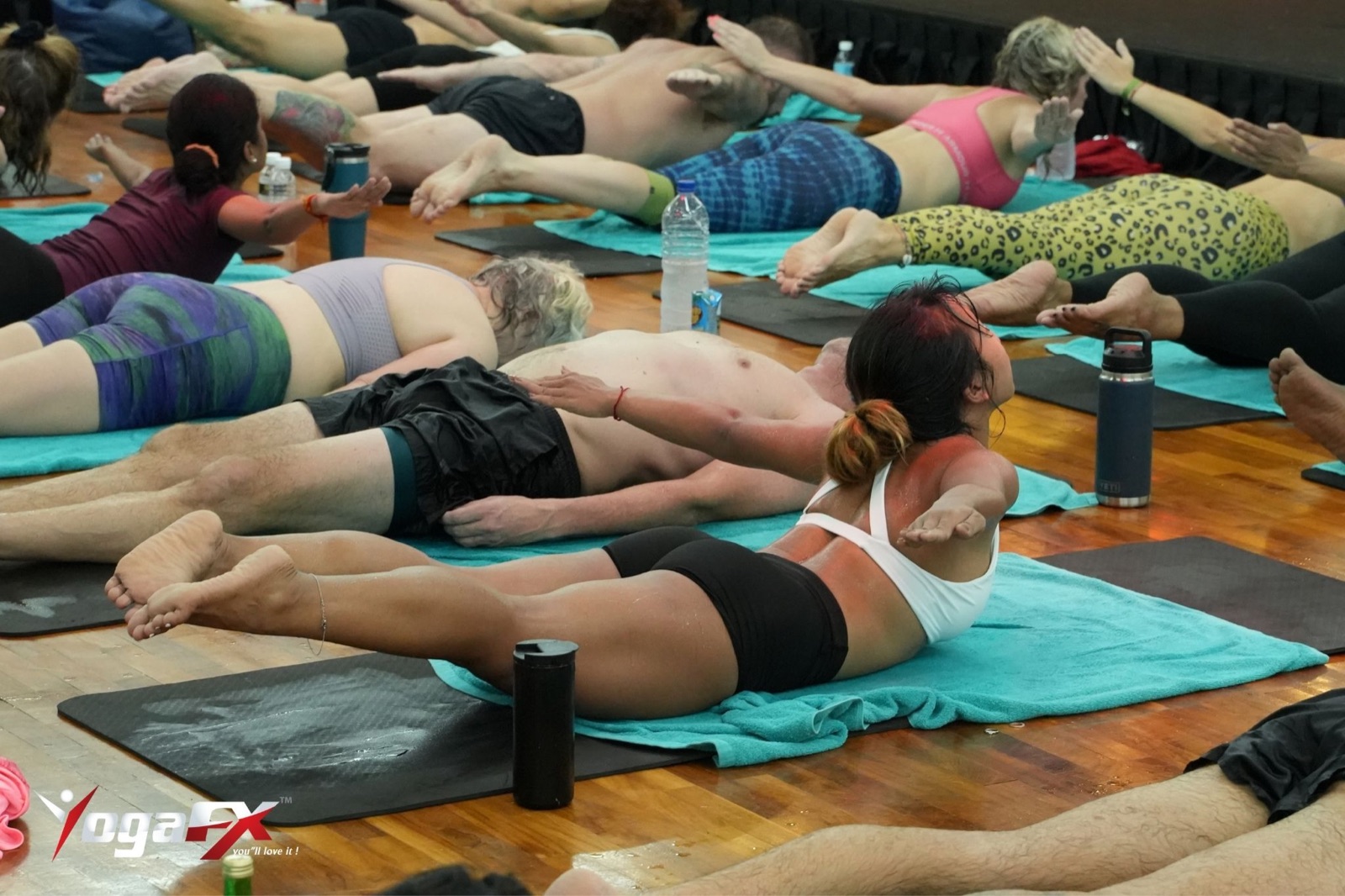
- Pick your class length. A 90-minute 26&2 class and a 60-minute flow are different totals.
- Start from a per-minute range. The Houston group averaged about 2.6 calories a minute. The Colorado State women averaged about 3.7, and the men about 5.1.
- Adjust for body size. A heavier body spends more energy on every hold and balance.
- Adjust for experience. In San Diego, experienced students burned 4.7 calories per kilogram and new students 3.7.
- Subtract your rest. Every posture you sit out lowers the total, and that is fine for safety.
Here is a worked example. A 70 kg beginner might burn roughly 260 calories in a Bikram class (70 times 3.7). After months of regular practice, the same person might reach about 330 (70 times 4.7). Practice, not temperature, closes that gap.
If weight change is your goal, a class costs about as much as a brisk walk, so food, sleep and consistency matter more. Our guide to hot yoga and weight loss in controlled studies covers what trials found. For effort rather than energy, see whether hot yoga is a good workout.
What Changes Hot Yoga Calories Burned From Class to Class
If the heat is not the main driver, what is? The research and our teaching experience point to a short list:
- Body weight. Heavier bodies use more energy, which partly explains why the Colorado State men averaged more than the women.
- Experience. Students who know the sequence work closer to their limits and rest less.
- Class length. A longer class burns more in total, simply because it lasts longer.
- Time out of the posture. Sitting down, towel breaks and water stops all lower the number.
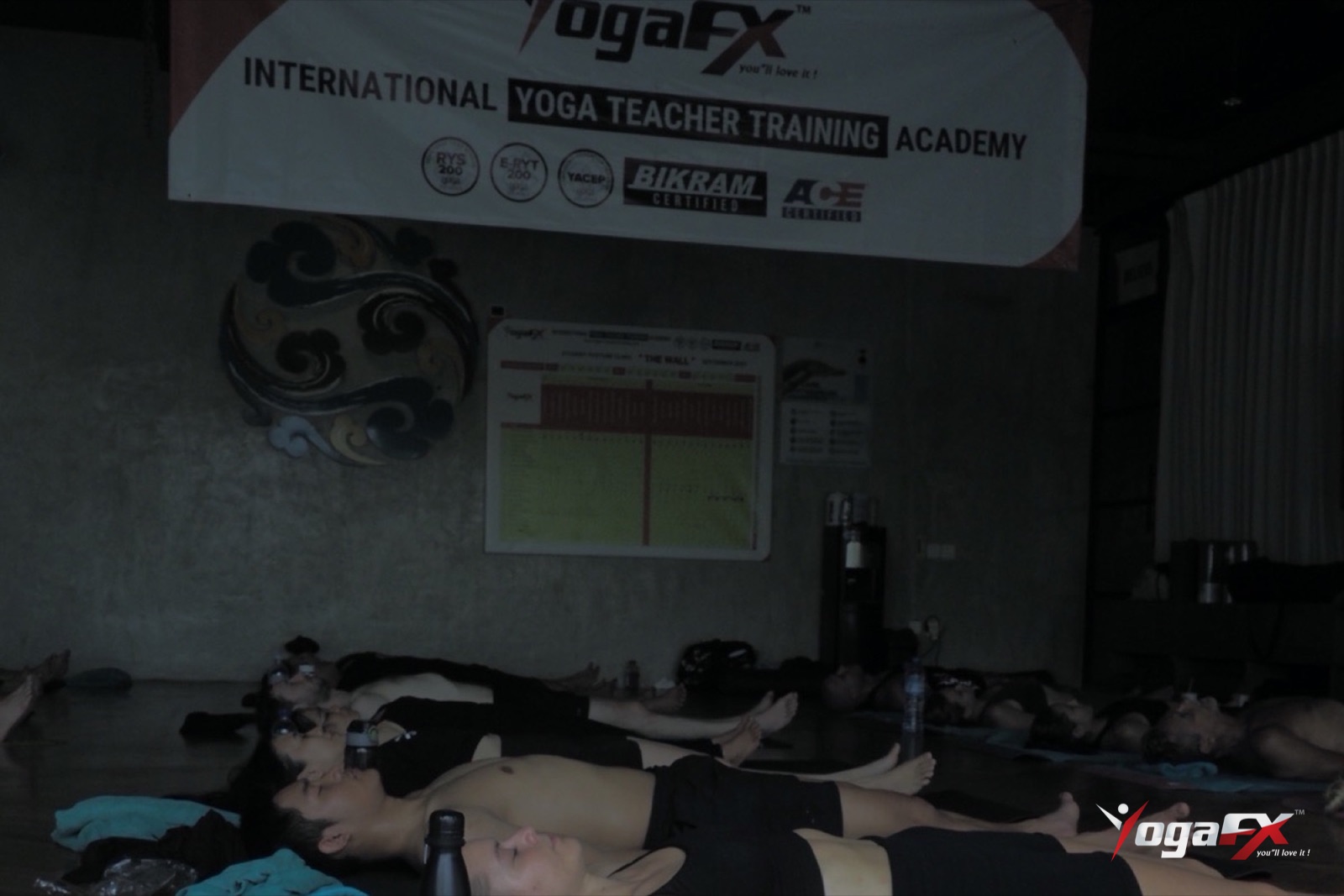
The slowest part of class also counts. The final relaxation at the end adds almost nothing to the total, but it is where the body recovers. A good teacher protects that time rather than cutting it to chase a bigger number.
Safe Effort Matters More Than Hot Yoga Calories Burned
A bigger calorie number is never worth a heat illness. In a University of Wisconsin-La Crosse study of one heated Bikram class, core temperature rose steadily. The American Council on Exercise write-up reports that the highest readings averaged 103.2°F for men and 102.0°F for women. Seven of the 20 volunteers passed 103°F, and one man reached 104.1°F.
That group was healthy and used to the class. A beginner has not adapted yet, so the safe plan is to start gently. Sit down, cool off and tell the teacher if you notice any of these:
- Dizziness, confusion or a pounding headache. These are early signs of heat strain.
- Nausea or cramps. Drink water and rest before you try another posture.
- Chest pain or a racing heartbeat that does not settle. Stop and seek urgent medical help.
What Graduates Say About the Work in the Heat
Numbers cannot capture how a class feels. So here are two YogaFX graduates, quoted from their public reviews.
"I especially appreciated for Ian and Ritesh who have been two of the most important mentors in my life."
Katy, Yoga Alliance review, 2019
"we are becoming one family"
Elvia, YouTube graduation video, 2023
Neither mentions a calorie count, and that is the point. People stay with hot yoga for the teaching, the group and the change they feel. You can watch Elvia's graduation below.
Learn to Teach the Numbers With YogaFX
A new student's first question is often about calories, not alignment. How you answer decides whether they come back for class two. Our online hot yoga teacher training course lets you study the 26 postures, the dialogue and the physiology at home, on your own schedule. Trainees learn to give a range, to separate sweat from fat and to praise effort.
Mr. Ian Terry has taught more than 12,000 hours and trained from 2014 to 2019 with the founder of the Bikram Hot 26&2 method. Since 2017, YogaFX has trained more than 1,500 graduates from 80+ countries. See how study works in our 8-week breakdown of online yoga teacher training. If you want the same question answered from another angle, our sister training site has a fuller guide to the same calorie studies.
When you are ready for the heat in person, the next step is the 6-day Bikram Hot 26&2 Yoga Teacher Training MasterClass in Bali. The next batch checks in on Sunday 24 January 2027 and checks out on Friday 29 January 2027 at Soham Wellness Center in Seminyak. The Early Bird price is US$1,899 (normally US$1,999), with payment plans from US$250 a month.
FAQ
Is hot yoga good for burning calories?
It burns a moderate amount. Lab studies measured 286 calories on average in one group and 330 to 460 in a 90-minute class in another. That is similar to a brisk walk of the same length. It works well for balance, strength and flexibility, but it is not a calorie-torching workout.
How many calories does a 45 or 75-minute hot yoga class burn?
No study measured those lengths, so these are scaled estimates. Using the lab paces, a 45-minute class comes to roughly 115 to 230 calories, and a 75-minute class to roughly 195 to 380. Your own number depends on body size, experience and how much you rest.
Can a calculator tell me my hot yoga calories burned?
Only roughly. Online calculators and tables, including Harvard Health's, use formulas for set body weights and are not measured in yoga students. Use them as a planning range, then compare with the lab figures above. Treat any single number as an estimate, not a score to beat.
Does a high heart rate mean I burned more calories?
Not in a hot room. Colorado State volunteers averaged about 160 beats per minute, yet the energy cost matched a brisk walk. Heat raises your pulse as your body cools itself. So a watch that estimates calories from heart rate will often read higher than the real burn.
Will hot yoga help me lose weight if the burn is this small?
It can support a plan, but it is not a shortcut. One class costs about as much as a brisk walk, so food, sleep and how often you practise matter more. Regular classes also build the habit that keeps people moving. Ask a healthcare professional about your own goals first.
Still have questions? Mr. Ian and the YogaFX team answer them personally. Take the 2-minute quiz to see if you're ready to teach hot yoga, or message Mr. Ian on WhatsApp for course dates.

Founder and lead trainer of YogaFX International Yoga Teaching Academy, with more than 12,000 hours of teaching. He trained for 5 years, from 2014 to 2019, with the founder of the Bikram Hot 26&2 method.
You may also like
Explore all articles ↗ Teacher Training Guides11 min read14 Nov 2026
International Yoga Sports Federation and Yoga as a Sport: What Recognition Requires
Read article ↗ Teacher Training Guides11 min read13 Nov 2026
Sauna After Hot Yoga? What Core Temperature Data Suggests
Read article ↗ Teacher Training Guides11 min read13 Nov 2026