Celebrities who do Bikram yoga are mostly athletes, and four of them have a documented practice we could open and check: Kareem Abdul-Jabbar, Joe Johnson, Aaron Rodgers and Andy Murray. Two say Bikram, two say hot yoga. Below, each claim sits next to what published research can and cannot back up.
Mr. Ian Terry, E-RYT 500, teaches this method every week, and the question of who else trains this way comes up often.
This guide answers it with care. It matches each famous practitioner to the kind of research that fits what they said about the practice. It does not claim any of them endorses YogaFX, and none of them does.
Celebrities Who Do Bikram Yoga: Four Cases We Could Verify
We opened every source on this page before we used it. This guide to celebrities who do Bikram yoga follows that rule.
A name only made the list of celebrities who do Bikram yoga when a page we could read said the person practises Bikram or hot yoga. That rule is strict, so the list is short. It is also checkable, which most celebrity lists are not.
The Four Names at a Glance
Name
Sport
Label in the source
What the source says
Kareem Abdul-Jabbar
Basketball (NBA)
Bikram yoga
Wrote in 2008 on his own site: "I practice Bikram yoga as well as several other styles." (kareemabduljabbar.com)
Joe Johnson
Basketball (NBA)
Hot yoga
Introduced to hot yoga around 2009 by a trainer; describes a 90-minute class at 105 degrees. (Andscape, 2021)
Aaron Rodgers
American football (NFL)
Hot yoga
Did "a ton of yoga" in the first three months of the 2014 offseason, three days a week: "Hot yoga. Very hot." (Sports Illustrated, 2014)
Andy Murray
Tennis
Bikram yoga (reported)
Said in 2008 he had done five or six classes and it was "really good fun." The reporter says his trainers like Bikram yoga. (The Irish Times, 2008)
Table 1. Four athletes with a documented Bikram or hot yoga practice, and what each source says.
Notice the label column. Only Kareem Abdul-Jabbar uses the word Bikram himself.
The Murray story comes from a reporter, and the two American players say hot yoga. We kept each label exactly as the source wrote it. That matters because a hot yoga class and a Bikram class are not the same thing, and a headline that blurs them is selling you a story.
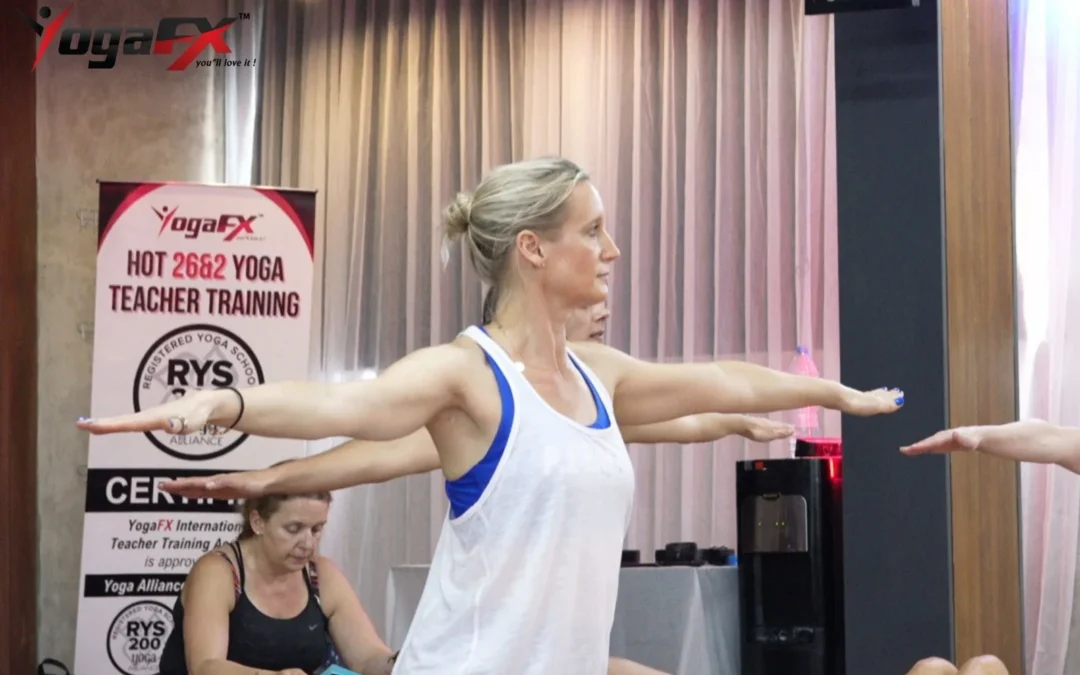
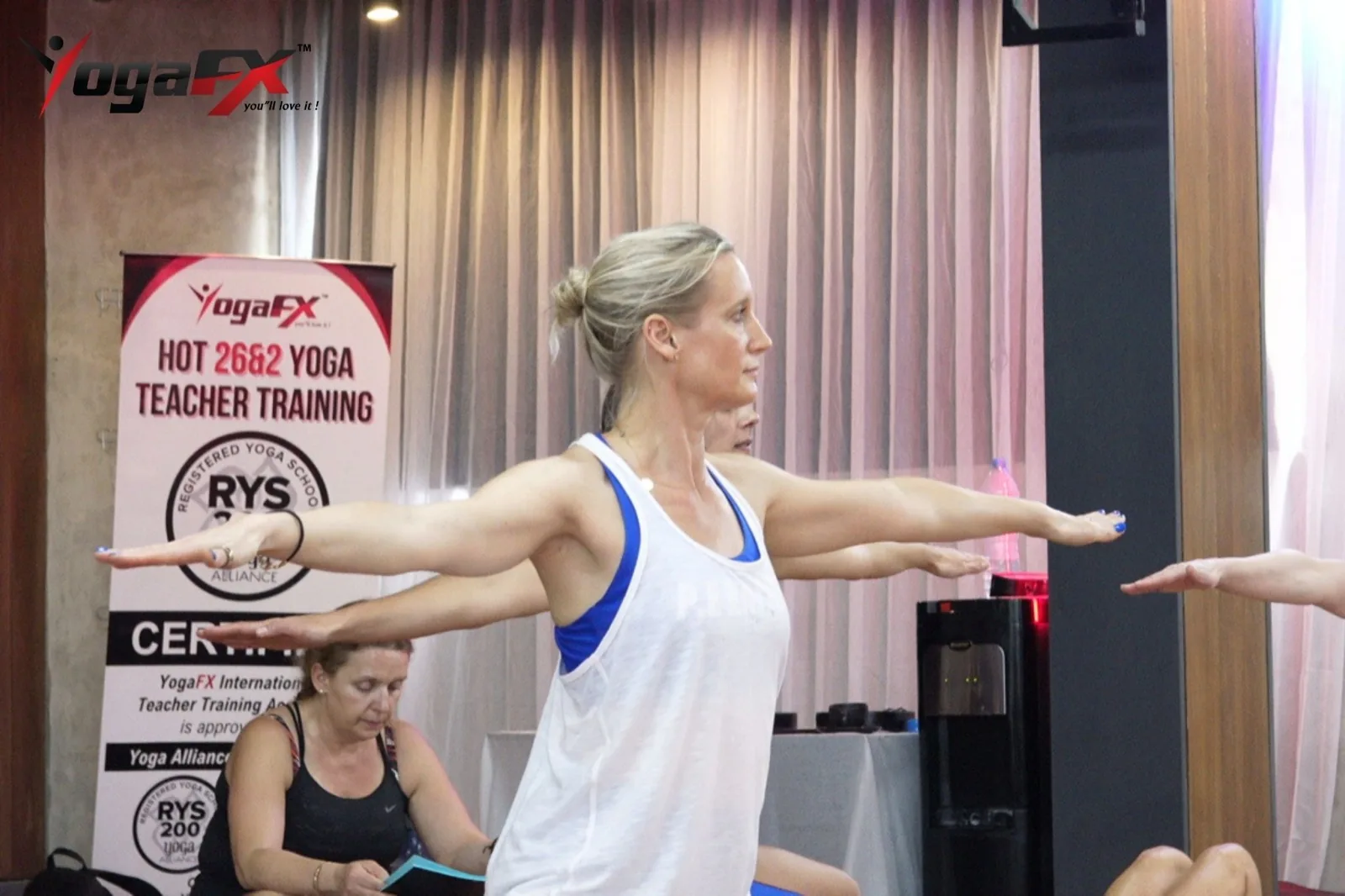
A full heated class at the YogaFX studio in Bali. The athletes in this guide train in rooms like this one.
How We Checked Each Claim About Celebrities Who Do Bikram Yoga
A quote from one of the celebrities who do Bikram yoga is a story, not a study. We treated it that way.
For each name we asked three questions: did the person say it, is the practice labelled Bikram or hot, and does the page give a date? Anything that failed one of the three stayed off the list.
We also left people out on purpose. Several famous names appear on lifestyle lists, but the pages behind those lists often repeat each other without a first-hand quote.
If you want the wider set of names, our sister site publishes a longer list of documented practitioners with a different focus. This page stays narrow and ties each case to evidence.
Three limits apply to everything below:
Quotes are personal reports. They show what an athlete believes helped, not what a trial proved.
Dates differ. The Murray and Abdul-Jabbar pages are from 2008, the Rodgers page from 2014 and the Johnson page from 2021.
Research describes groups. A review of hundreds of people does not predict how one body responds to heat.
What Celebrities Who Do Bikram Yoga Actually Said
Kareem Abdul-Jabbar: Bikram in His Own Words
Abdul-Jabbar is the clearest of the celebrities who do Bikram yoga because he names the style himself. In a 2008 article on his own website he describes himself as an enthusiastic yoga practitioner since high school. He says he practises Bikram yoga alongside several other styles.
He also links yoga to his career.
On the same page he calls it one of the reasons he could play professional basketball for so long with few injuries. In a separate TV appearance reported by theScore he described yoga as "the best preventative maintenance" in the offseason, although that report does not mention Bikram by name.
That is a long-career claim, so it is worth being careful. One player, one career, many other factors. It is a good reason to try the practice, not proof that it works.
Joe Johnson: Hot Yoga at 105 Degrees
Johnson gives the most detail about the class itself. In a 2021 Andscape profile he says a trainer introduced him to hot yoga around 2009, while he played for the Atlanta Hawks. He describes "an hour and a half in 105-degree heat with 40-degree humidity."
The same article mentions knee and Achilles tendon problems earlier in his career. It does not say those problems were why he started, so we do not say it either. What it does show is a player who was still talking about the habit in 2021, more than ten years after he started.
Aaron Rodgers: Three Months of Very Hot Yoga
Rodgers answered a reader question in a 2014 Sports Illustrated column. He said he did "a ton of yoga" during the first three months of the offseason, about three days a week, and described the class as "Hot yoga. Very hot. Lots of sweating."
Notice what he did not say. He gave no promise about injuries or performance. He described a routine and left it there, which is a more useful model for a beginner than a bold claim.
Andy Murray: Heated Rooms and a Hope of Getting Used to Heat
In January 2008 Murray told The Irish Times he had done "five or six classes now" and found them "really good fun." The reporter wrote that his trainers were fans of Bikram yoga and that he spent December in heated rooms. Murray added that he hoped the yoga would leave him used to the heat.
That's a modest, believable quote from an athlete who was new to the class. It also leads into the first research question here: does heat acclimation really prepare the body for heat?
A seated twist in a hot yoga class at the YogaFX studio.
What Research Can and Cannot Say About These Claims
Here we match each claim made by celebrities who do Bikram yoga to a source we could open. We only used government health pages for this section, because they loaded fully and state their numbers plainly.
Several well-known Bikram studies sit on PubMed and PMC pages that blocked our automatic access during this check, so we did not quote them. If you want those, open them yourself and read the full text.
Matching Each Claim to a Source
Claim
Source we opened
What it says
Strength of fit
Murray: hope that yoga would leave him used to heat
A 2020 review of 12 studies (672 people) found lower perceived stress in all of them. A 2019 review of 38 studies (2,295 people) found a substantial effect on anxiety symptoms.
Heat illness is linked to high temperature, high humidity and strenuous activity. Staying hydrated and getting acclimated lowers the risk.
Strong and directly relevant
Table 2. Claims made by celebrities who do Bikram yoga, and what the sources we opened say.
What the Evidence Adds Up To
The honest reading is mixed. Yoga has decent evidence for stress and anxiety, and the heat-adaptation idea is reasonable.
But none of these pages tests famous athletes, and none shows that a Bikram class beats other training. If you want a deeper look at the mood side, our guide to hot yoga and anxiety trial data goes study by study.
4
Names checked
Each one has a page we opened and read.
2 + 2
Bikram vs hot
Two sources say Bikram, two say hot yoga.
105°F
One class, described
Johnson's 90-minute class, in his own words.
7 to 14
Days to adapt
CDC / NIOSH advice for building up heat exposure.
672
People in a stress review
NIH summary of 12 yoga studies on stress.
Figure 1. The list at a glance. Sources: Andscape (2021), CDC / NIOSH (2026), NIH NCCIH, Sports Illustrated (2014), kareemabduljabbar.com (2008), The Irish Times (2008).
Heat Safety: What the Athletes Do Not Tell You
Interviews with celebrities who do Bikram yoga skip the hard parts. A 90-minute class in a hot, humid room is a real load on the body.
Mayo Clinic links heat illness to high temperature, high humidity and strenuous activity, and says it becomes more likely when the heat index passes 91 degrees Fahrenheit. It also lists a core temperature of 104 degrees Fahrenheit or higher as the heatstroke threshold.
The two government pages give slightly different timelines for adapting. CDC / NIOSH suggests building exposure over 7 to 14 days for workers. Mayo Clinic says it can take several weeks to adjust to hot weather. Both agree on the direction: start gently, and let the body catch up.
A sensible beginner plan, based on those pages, looks like this:
Build up slowly. Start with short exposure and add time over one to two weeks or longer.
Hydrate before and after. Mayo Clinic says staying hydrated helps the body sweat and keep its temperature down.
Pick cooler parts of the day for home practice when you can, as Mayo Clinic suggests for exercise in heat.
Stop if you feel unwell. Dizziness, nausea or confusion mean leave the heat and rest.
If you coach others, this is also the core of any good teacher training. This page is general information, not medical advice. Please consult a healthcare professional before you start a heated class, especially if you have a heart or blood pressure condition.
Final relaxation at the end of a class, with the teacher guiding the room.
Bikram or Hot Yoga: Why the Label Matters
Before you copy any celebrities who do Bikram yoga, know the label. Bikram yoga is a fixed class: 26 postures and 2 breathing exercises, 90 minutes, in a heated room.
Hot yoga is a wider term for any yoga class in a heated room, and the sequence can change from studio to studio. The press uses both labels loosely, so we copied each one from its source. What athletes do hot yoga is not always what Bikram means.
For an athlete that difference is practical. A fixed sequence lets you measure progress posture by posture and compare one month with the next.
A free-flowing hot class feels different every time. That is why NBA players hot yoga routines vary so much. Neither is wrong, but you should know which one you are reading about when you see a celebrity headline.
If you want the training side, our guide to hot yoga for athletes explains the heat acclimation research and what athletes who do hot yoga can build at home.
From the Star to the Student: Who Sits Next to You
Celebrities who do Bikram yoga use the same heat and the same postures as everyone else.
At YogaFX, Mr. Ian Terry teaches that method to students from more than 80 countries. He holds the E-RYT 500 credential, has more than 12,000 teaching hours, and trained for five years, from 2014 to 2019, with the founder of the Bikram Hot 26&2 method.
He has also trained more than 1,500 graduates since 2017, and you do not need to be an athlete to join. Most of what he knows about heat comes from watching ordinary bodies deal with it, class after class.
What students say
We keep student voices close to the original. These come from our video reviews on YouTube, where we have 357 testimonials. Names are first names only.
"I'm very happy that I got my certificate on two hundred hours yoga teacher training."
Yanti, YouTube review, 2019
Jeanett, in a 35-second YouTube review from 2019, thanks the team for the inspiration she took from the training. Nyoman, in a 71-second YouTube review from 2024, thanks the team for the opportunity and celebrates finishing the course (paraphrased from the video).
How to Practise Like an Athlete Without Being One
You do not need a contract to borrow the routine. The celebrities who do Bikram yoga in this guide share a pattern: they treat the class as maintenance, they keep it regular, and they do not oversell it. Here is a version for a normal week:
Pick one label. Decide whether you want the fixed Bikram sequence or a freer hot class, and stick with it for a month.
Schedule it. Rodgers described three days a week. Start with fewer if you are new, then build up.
Track one thing. A fixed sequence lets you note how far you reach in a forward fold or how long you hold a balance.
Protect your recovery. Sleep and water matter as much as the class. Read the heat safety section again before your first long session.
Ask a teacher. A good teacher corrects shapes and watches for signs you are overheating.
Mr. Ian Terry built our online course for people who want to learn the method at home first and study the physiology behind it. If you are curious about the course itself, start with our honest breakdown of online yoga teacher training.
Study the Method Online With Mr. Ian
Reading about celebrities who do Bikram yoga is a good start, but learning the method is a different job. Celebrities who do Bikram yoga attend classes; teachers learn how to run them.
YogaFX offers online hot yoga teacher training led by Mr. Ian Terry, with the science and graded evidence at the centre. You study the sequence, the physiology and the heat safety, and you learn to explain each in plain language.
None of the athletes named on this page is part of our course or promotes it.
Celebrities who do Bikram yoga include Kareem Abdul-Jabbar, who says in his own words that he practises it alongside other styles. Andy Murray was reported in 2008 to be training in heated Bikram classes. Other famous athletes, such as Joe Johnson and Aaron Rodgers, describe hot yoga, which is a broader heated style.
Which celebrities do hot yoga instead of Bikram?
Joe Johnson describes a 90-minute hot yoga class at 105 degrees and has done it since around 2009. Aaron Rodgers described very hot yoga three days a week during a 2014 offseason. Both use the hot yoga label, not Bikram, so we kept them in the hot category.
Why is Bikram yoga good for you?
Research on yoga in general links it to lower stress and anxiety symptoms, according to reviews summarised by the US National Center for Complementary and Integrative Health. Heat adds a load, so build up slowly. These findings describe groups of people, not guaranteed results, so check with a healthcare professional first.
Who should not do hot yoga?
Anyone with a medical condition, anyone who feels unwell or dehydrated, and anyone new to heat should check with a healthcare professional first. Mayo Clinic links heat illness to high temperature, high humidity and strenuous activity. Start with short exposure, drink water, and leave the room if you feel dizzy.
Is this an official Bikram Choudhury teacher training?
No. Our online hot yoga teacher training is independent training led by Mr. Ian Terry, E-RYT 500. He trained for five years, from 2014 to 2019, with the founder of the Bikram Hot 26&2 method. We are not an official Bikram Choudhury programme, and no athlete in this guide is part of it.
How hard is Bikram yoga?
It is demanding because the class runs 90 minutes in a heated room with a fixed sequence of 26 postures and 2 breathing exercises. Beginners often rest during postures, and that is normal. Build up gradually, hydrate, and focus on staying in the room rather than finishing every posture.
Hot yoga vs sauna is a comparison of moving in heat against sitting in heat. The sauna study we checked followed 2,315 Finnish men for a median of 20.7 years. The hot yoga trial we checked ran for 8 weeks with 80 adults. They measured different outcomes, so neither one crowns a winner.
Mr. Ian Terry, E-RYT 500, has more than 12,000 teaching hours in hot rooms. This guide to hot yoga vs sauna follows his teaching on pacing heat, and it keeps that teaching apart from the published research so you can see which is which.
This is general information, not medical advice. Please consult a healthcare professional before you add any heat session to your week, especially if you have a heart condition, low blood pressure, depression or you are pregnant.
Hot Yoga vs Sauna: The Short Answer
Both rooms raise your body temperature, but the real difference is what you do while you are in them. In a sauna you sit still. In a hot class you work for 90 minutes. So that one change decides what the research can and cannot tell us.
Here is the short version of hot yoga vs sauna, using only studies we opened and read. Because the evidence is thin in places, we flag each limit as we go.
Sauna evidence: a large Finnish cohort links frequent sauna bathing with fewer fatal heart events in middle-aged men. It is observational, so it shows a link and not a cause.
Hot yoga evidence: one 8-week randomised trial found a larger drop in depression symptoms than a waitlist. It was small and had no active comparison group.
No head-to-head study: we found no trial of hot yoga vs sauna side by side. Any claim of a winner therefore goes beyond the data.
Your goal decides: rest in heat and skill in heat are different jobs, and the choice section below shows how to pick.
If you would like a studio view of the same question, one Bali team wrote up how a Bali studio compares a heated class with a sauna visit. This guide takes a different route. It reads the two studies side by side and asks what each one really measured.
Passive Heat vs Active Heat: What Really Differs
For example, researchers talk about passive heat and active heat. Passive heat means the room heats you while you rest. Active heat means you generate warmth by working inside a warm room. Because of that, a sauna counts as the first and a hot yoga class as the second.
Hot yoga vs sauna: sitting in heat
In a sauna, heat is the only load. Your skin warms and you sweat, but your muscles do no work. So any effect that a sauna study reports comes from heat exposure on a resting body, plus whatever else sauna users do differently from non-users.
Hot yoga vs sauna: moving in heat
In a standard YogaFX class the room runs at 40 degrees Celsius (104°F) and about 40% humidity, and the class lasts 90 minutes. You stand, balance, bend and breathe on a set script. As a result, heat and effort stack on top of each other, and that is a very different job for the body than sitting on a bench.
Mr. Ian guiding a full class. In hot yoga vs sauna, the teacher, the script and the group are what the sauna lacks.
Why this matters for the research
Yoga adds movement, breathing, attention and a group of people. That means a good result in a yoga trial cannot be pinned on heat alone. Sauna cohort studies have the opposite problem. People choose how often they use a sauna, and frequent users may differ in other habits. For that reason, hot yoga vs sauna is never a clean test of heat, and you shouldn't read it as one.
Hot Yoga vs Sauna Evidence at a Glance
The hot yoga vs sauna table below sets the two studies next to each other. It uses only figures we read in the study records. Where a record gave no number, we say so instead of guessing.
Question
Sauna study (Finland)
Hot yoga study (heated hatha yoga)
What it means for you
Study type
Prospective cohort, so it observes
Randomised controlled trial against a waitlist
A trial can test cause, but only for its own question
Who took part
2,315 men aged 42 to 60
80 adults randomised, with moderate-to-severe depression
Different people, so results do not transfer
How long
Median follow-up of 20.7 years
8 weeks
Years of follow-up versus a short course
What was measured
Fatal heart events and deaths from any cause
Depression symptom scores
Different outcomes cannot be ranked against each other
Headline result
4 to 7 sessions a week vs once a week: sudden cardiac death hazard ratio 0.37 (95% CI 0.18 to 0.75)
59.3% of the yoga group cut symptoms by half or more, vs 6.3% on the waitlist
Both are promising, and both are specific
Main limit
Observational, men only, one region of Finland
Small, and no active comparison group
Neither study tested the other room
Sources: Laukkanen, Khan, Zaccardi and Laukkanen, JAMA Internal Medicine, 2015; Nyer and colleagues, Journal of Clinical Psychiatry, 2023. The last column is our reading, not a study result.
Read this hot yoga vs sauna table with one caution. A hazard ratio of 0.37 means a lower relative risk in that group of men. It does not mean a sauna will cut your own risk by that amount. Likewise, the yoga result describes one trial group, not every student. That is why we show the limits next to every number.
Five numbers behind the comparison
Hot yoga vs sauna: five numbers from two studies
2,315
Finnish men followed
Aged 42 to 60 at the start of the sauna study.
20.7 years
Median follow-up
Long enough to count deaths, not just habits.
0.37
Hazard ratio
Sudden cardiac death, 4 to 7 sauna sessions a week vs once a week.
80
Adults randomised
Heated yoga trial, 8 weeks, with a waitlist group.
59.3% vs 6.3%
Symptom response
Yoga group vs waitlist, symptoms down by half or more.
Sources: Laukkanen, Khan, Zaccardi and Laukkanen, JAMA Internal Medicine, 2015 (PubMed 25705824); Nyer and colleagues, Journal of Clinical Psychiatry, 2023 (PubMed 37883245).
Sauna Research: A 20-Year Finnish Cohort
The sauna study is a 2015 paper in JAMA Internal Medicine by Laukkanen, Khan, Zaccardi and Laukkanen. Its title is Association between sauna bathing and fatal cardiovascular and all-cause mortality events. It used data from the Kuopio Ischemic Heart Disease Risk Factor Study in Eastern Finland.
The team followed 2,315 men aged 42 to 60. Baseline data were collected between 1984 and 1989, and follow-up lasted a median of 20.7 years. During that time there were 190 sudden cardiac deaths, 281 fatal coronary heart disease events, 407 fatal cardiovascular events and 929 deaths from any cause.
How often mattered
The researchers sorted the men by how often they used a sauna. The comparison group went once a week. Here is what the paper reports for sudden cardiac death:
Once a week: 601 men, used as the reference group.
Two to three times a week: 1,513 men, hazard ratio 0.78 (95% CI 0.57 to 1.07). That interval crosses 1, so the result is not clear on its own.
Four to seven times a week: 201 men, hazard ratio 0.37 (95% CI 0.18 to 0.75), with a P value for trend of .005.
Session length showed a similar pattern. Compared with sessions under 11 minutes, sessions over 19 minutes had a hazard ratio of 0.48 for sudden cardiac death (95% CI 0.31 to 0.75). Sessions of 11 to 19 minutes did not differ clearly (0.93, 95% CI 0.67 to 1.28).
The paper also reports similar trends for the other heart outcomes and for deaths from any cause. However, the session-length link was not significant for all-cause deaths, so the longer-session result needs careful reading.
Limits to keep in mind
This is an observational study, so it shows only that men who used saunas more often had fewer fatal events, but it cannot show that the sauna caused the difference. For example, men who sauna four to seven times a week may live differently in other ways. The authors themselves say the mechanisms need further study.
Men only: the study says nothing direct about women.
One region: all participants came from Eastern Finland, where sauna is a regular habit.
No yoga: nobody in the study was doing hot yoga, so it cannot rank the two.
So the sauna paper is useful for hot yoga vs sauna questions, but it answers a narrow one. It tells you about frequent sauna habits in Finnish men. It doesn't tell a visitor who uses a sauna twice a year what to expect.
Hot Yoga Research: An 8-Week Randomised Trial
The hot yoga trial is a 2023 paper in the Journal of Clinical Psychiatry by Nyer and colleagues. Its title is A Randomized Controlled Trial of Community-Delivered Heated Hatha Yoga for Moderate-to-Severe Depression. The trial ran between March 2017 and August 2019, and it compared heated yoga with a waitlist.
A total of 80 adults were randomised, and 65 were analysed: 33 in the yoga group and 32 on the waitlist. The average age was 32.7, and 81.5% of participants were female. Yoga participants attended a mean of 10.3 classes over the 8 weeks.
What the trial found
Because the trial had a control group, we can see that depression symptoms fell more in the yoga group than on the waitlist, with a Cohen's d of 1.04 (P below .001). In plain terms, that is a large difference between the groups, so the result deserves attention.
The paper also counted responders, meaning people whose symptoms fell by 50% or more. In the yoga group 59.3% responded, against 6.3% on the waitlist.
The floor series, with water bottles close by. Fluids are part of every heated class.
What the trial cannot tell you
The waitlist group did no activity at all. Because that group simply waited, the trial cannot say whether heated yoga beats room-temperature yoga, a gym session, a walk or a sauna. The authors describe their results as feasibility, acceptability and preliminary efficacy, and they call for more research with active comparison groups.
Heated hatha yoga: the paper describes heated hatha yoga, not the Bikram Hot 26&2 class specifically.
Depression focus: participants had moderate-to-severe depression, so the result may not apply to people without it.
Early evidence: this is one trial, so it needs repeating before anyone treats it as settled.
For hot yoga vs sauna, please read this as early research, not as a treatment plan. If you are managing depression, speak with a healthcare professional first. Yoga can sit alongside care, but it does not replace it.
Why Hot Yoga vs Sauna Has No Clear Winner
It's tempting to line up the two headline numbers and pick the bigger one. That would be a mistake in any hot yoga vs sauna debate. The studies differ in four ways that matter, so each difference makes a direct comparison unfair.
Different people: middle-aged Finnish men in one study, and adults with depression, mostly women, in the other.
Different outcomes: fatal heart events in one, depression scores in the other.
Different time scales: about 21 years of follow-up against an 8-week course.
Different comparisons: sauna users compared with other sauna users, and yoga compared with a waitlist.
As a result, the honest reading of hot yoga vs sauna is modest. The sauna paper links frequent sauna bathing with fewer fatal heart events in one group of men. The yoga paper links heated yoga with larger drops in depression scores in one group of adults. Neither tests the other room.
The studies can't choose for you, so your goal has to. Here is how we guide students who ask us about hot yoga vs sauna. This part is YogaFX teaching guidance, not a research result.
You want to learn a skill: choose the class. A teacher, a script and a group give you something to practise, and a sauna offers none of that.
You want quiet time in heat: a short sauna visit can fit, provided your doctor has no objection.
You want to do both: keep them on separate occasions at first, and notice how you feel before you combine them.
You are new to heat: start with a short, gentle session in either room, and build up slowly over several weeks.
Safety rules that apply to both
Ask a healthcare professional first if you have a heart condition, low blood pressure, depression or you are pregnant.
Drink water before and after, because you lose fluid in both rooms.
Leave the room and sit down at the first sign of dizziness, headache or weakness.
Never treat a long, hard session as a badge of honour.
Many students ask whether sweat does a cleaning job in either room. We do not make that claim, and neither study we read tested it.
If You Plan to Teach: Reading Heat Is Part of the Job
Students will ask you about hot yoga vs sauna. They will quote a headline, so they will expect a straight answer. A teacher who can say that one study followed Finnish men and did not test yoga earns trust quickly, because that answer is true and it is specific.
That is why we teach heat, including hot yoga vs sauna questions, as a subject, not only a setting on a dial. Mr. Ian trains teachers to separate what research shows from what experience suggests. For example, a trainee learns to say "this trial found" instead of "science proves". That habit protects your students, and as a result it protects you.
You can start that learning at home. The online part of the YogaFX MasterClass lets you study the theory first, so you arrive in Bali ready to practise it. That is the whole point of a hybrid course: theory on your schedule, then teaching skills under a trainer's eye.
What YogaFX Trainees Say
Numbers describe the research. Trainees describe what it's like to learn inside the heat, which is the part hot yoga vs sauna studies can't measure. These two comments come from video reviews recorded at the end of teacher training.
Alena, in a 2025 video review, thanked Mr. Ian for his support and said that being in a room with 60 people felt powerful (close paraphrase from the video). Alena, YouTube review, 2025.
“This has been wonderful and I am very grateful for this experience and for meeting every single individual here.”
Dior, YouTube review, 2024
Dior's YogaFX graduation video review.
Train Online First, Then Finish in Bali
Mr. Ian Terry, E-RYT 500, trained for five years, from 2014 to 2019, with the founder of the Bikram Hot 26&2 method. Since 2017, YogaFX has trained 1,500+ graduates from 80+ countries.
The YogaFX MasterClass is a 6-day hybrid. You study online first, then join an intensive in Bali. The next group checks in on Sunday 24 January 2027 and checks out on Friday 29 January 2027 at Soham Wellness Center in Seminyak.
It leads to Yoga Alliance RYT 200-Hour certification and the Bikram Hot 26&2 200-Hour International Yoga Certification. Early Bird pricing is US$1,899 (normally US$1,999), with instalments from US$250 a month and no interest. You can explore the online hot yoga teacher training here.
FAQ
Is hot yoga the same as a sauna?
No. In a sauna you sit in heat. In a hot yoga class you move for 90 minutes in a room at about 40 degrees Celsius (104°F) and 40% humidity, so effort and heat combine. The research differs too, because the sauna and yoga studies we checked measured different outcomes in different people. Wet heat is a different case again, which we cover in hot yoga vs steam room.
Is hot yoga or sauna better?
In hot yoga vs sauna, it depends on your goal, and the research does not crown a winner. The sauna study we checked looked at heart deaths in Finnish men, while the hot yoga trial looked at depression symptoms. If you want movement and a teacher's guidance, choose class. If you want quiet heat, a short sauna visit fits.
Is hot yoga as effective as a sauna?
No study we opened tested that. The sauna cohort followed 2,315 men for a median of 20.7 years and tracked deaths, while the heated yoga trial lasted 8 weeks and tracked depression symptoms. Because the outcomes, people and designs differ, any claim that one is more effective goes beyond the evidence.
Can sauna replace exercise?
The studies we checked do not say so. The Finnish cohort looked at how often men used a sauna, not whether it replaced training. A hot yoga class adds movement, balance and breathing practice that sitting in a sauna does not. Treat the sauna as a separate habit, and ask your doctor about your plan.
Does hot yoga have sauna benefits?
We cannot say. The sauna paper reports links with fewer fatal heart events, and no yoga study we opened measured those outcomes. The hot yoga trial found larger drops in depression symptoms than a waitlist. Both sets of results are early and specific, so avoid treating them as interchangeable.
Still have questions? Message Mr. Ian and the YogaFX team on WhatsApp and we will answer them personally.
A yoga teacher dress code male instructors can follow on camera and in class comes down to four things: fitted quick-dry shorts above the knee, a close-fitting top in one plain mid-tone colour, bare feet, and nothing that hides your knees, hips or shoulders. Alignment must stay visible, and sweat must be able to leave the skin.
This yoga teacher dress code male guide is for the man who teaches, or plans to teach, hot yoga through a screen. It follows the evidence-first approach of our online hot yoga teacher training, led by Mr. Ian Terry, E-RYT 500. If you teach in a studio instead, read how our Bali teachers dress for natural tropical heat. Here, the camera sets the rules.
The Yoga Teacher Dress Code Male Teachers Need on Camera
A camera turns a whole room into a small rectangle. Students at home see your shape, not your presence, so every choice counts. So the yoga teacher dress code male teachers use online has one extra job: it must show your joints clearly. Here is the working standard, in five points:
Bottoms. Fitted shorts that end above the knee, so students can see your knee line in every standing posture.
Top. A thin, close-fitting synthetic tank, or a fitted short-sleeve tee. Nothing baggy.
Colour. One plain mid-tone that differs from your wall and your mat.
Feet. Bare, always. Socks slide and hide the ankle.
Extras. A thin headband, a small towel within reach and a water bottle just outside the frame.
That is the whole answer for most men. The rest of this yoga teacher dress code male guide explains why each choice earns its place, and where teachers go wrong. We also look at what the research says about heat and sweat, because a good yoga teacher dress code male teachers can trust should rest on more than habit.
A male teacher in fitted shorts and a headset mic. Nothing hangs loose, and the knees stay visible.
Why Alignment Has to Show When You Teach Online
In a YogaFX class, the teacher speaks a fixed dialogue and does not demonstrate. That puts all the weight on your words. Online, the screen adds a second channel. Students often glance at it to see whether their own shape matches yours.
Clothes that hide your knees, hips or shoulders weaken that check. So the best yoga teacher dress code male instructors can pick is the one that gets out of the way. Three things decide how your kit reads on screen.
What the camera can and cannot see
A webcam flattens depth and compresses detail. A loose hem or a baggy leg turns into one dark blob. Fitted fabric keeps the outline of the thigh, knee and calf, so a student can see when a leg is straight. That matters in postures where the line of the leg is the whole point.
Colour and contrast
For example, a yoga teacher dress code male should include a colour rule. Pick a plain mid-tone colour, such as slate, navy or forest green. Black on a dark wall melts into the background. White on a pale wall does the same. Strong logos and busy prints pull the eye away from your body and onto the pattern.
Movement and flapping
Cameras exaggerate motion, so small movements look big. A loose tee that swings during a forward fold looks like a flag. Instead, choose a top that stays still, and test it by recording one full round of postures before you teach anyone.
Camera Kit Guide: What Works and What Hides Alignment
Use this table as a packing list for any yoga teacher dress code male teachers follow online. Each row names the piece, how it reads on camera, what to avoid and a quick fix.
Piece
Shows alignment well
Hides alignment
Quick fix
Shorts
Fitted, above the knee, plain mid-tone
Knee-length baggy shorts, cargo pockets
Choose a shorter inseam and check it in a test recording
Top
Thin fitted tank or close tee
Loose cotton tee, hoodie, flapping hem
Swap for a synthetic tank that stays still
Colour
One mid-tone that contrasts with the wall
Black on dark walls, white on pale walls
Move the camera or change the shirt, not the lights
Fabric surface
Matte, quick-dry synthetic
Shiny panels that throw glare at the lens
Hold the shirt up to the light first
Head and hands
Thin headband, small towel nearby
Caps, thick wristbands, dangling jewellery
Keep the face and wrists clear
Spare set
Dry kit ready for the next class
Damp kit from the last session
Hang one set while you wear the other
On-camera kit guide for a male hot yoga teacher
A full room in a forward fold. Fitted kit keeps every back and hamstring line easy to read.
What the Evidence Says About Heat, Sweat and Clothing
Here is where we keep ourselves honest. None of the sources below tested yoga clothing. They describe how heat, sweat and humidity work in the body, and the yoga teacher dress code male teachers use follows from that. Think of it as sound reasoning from solid clinical guidance, not a trial result.
Overdressing. The Mayo Clinic page on heat exhaustion lists overdressing, "particularly in clothes that don't allow sweat to evaporate easily," as a cause of heat exhaustion.
Humidity. The same page says that when humidity is high, sweat can't evaporate as easily, so the body has more trouble cooling itself.
Trapped sweat. The Mayo Clinic heat rash page says heat rash occurs when sweat is trapped in the skin, and advises loose, lightweight clothing that wicks moisture away in hot weather.
Fluid loss. The Mayo Clinic dehydration page notes that hot, humid weather increases the amount of sweat and fluid lost, and that dehydration is more likely in people who are active in the heat.
Read that as a teacher. You talk, move and correct for a whole class, so your fabric has to help sweat leave. This is general information, not medical advice. If you have a heart, blood pressure or heat-related condition, check with a healthcare professional before you teach or practise in a hot room.
Four heat facts behind a teacher's kit
1. Overdressing
Clothes that block evaporation are listed as a cause of heat exhaustion.
2. Humidity
When humidity is high, sweat evaporates less easily, so cooling is harder.
3. Trapped sweat
Sweat held in the skin causes heat rash. Lightweight, wicking cloth is advised.
4. Fluid loss
Hot, humid weather raises sweat and fluid loss, especially if you are active.
Source: Mayo Clinic pages on heat exhaustion, heat rash and dehydration (linked above).
Choosing Each Piece: Bottoms, Tops and Feet
Bottoms in a yoga teacher dress code male: why fitted shorts beat pants
A teacher steps, kneels and leans in all class long. Loose shorts ride up or catch on a heel. Fitted shorts with a short inseam avoid both, and they show the knee. Our guide to hot yoga shorts for men explains why bare knees help students learn alignment. Check three things before you buy:
Liner. A rough seam rubs after an hour of sweat.
Squat test. Squat in front of a mirror. If the fabric goes see-through, leave it on the shelf.
No drawstring. A knot digs in during forward folds and comes undone mid-sentence.
Tops in a yoga teacher dress code male: tank, tee or shirtless?
The top is where most men hesitate. A bare chest is common in a hot room, but on camera it brings extra risks. Room light can wash out skin tone, and many hosts expect a top. So a thin, close tank is the safe default. Our piece on hot yoga shirts for men looks at shirt or shirtless through the lens of core cooling.
Cotton is the usual mistake. It holds water, hangs heavy after twenty minutes and clings in the wrong places. A wicking synthetic dries faster and keeps its shape on screen.
Feet, towels and the small things
Bare feet are part of the practice. Because of that, they let students see your ankles and toes. Keep nails trimmed. A small towel within reach keeps sweat out of your eyes while you speak. A thin headband does the same for your forehead. If you want the student side of the wardrobe, see our guide to Original Hot 26&2 clothes for men.
A floor-level view of a posture class. Fitted kit keeps the teacher clear of mats and towels.
Five Mistakes in a Male Yoga Teacher Dress Code on Camera
Most problems with a yoga teacher dress code male come from a handful of habits. Each one is easy to fix once you spot it. Because a camera exaggerates everything, small errors look big on screen. Here are the five we see most often:
Black on a dark wall. Your legs disappear, so students cannot check their own leg line against yours.
The comfortable loose tee. It feels fine to you. On screen it flaps, and it hides the waist and hips.
No test recording. You only learn about the glare, the see-through fabric or the sliding hem when a student tells you.
Dressing for the heater, not the room. Kit that suits a hot studio can feel wrong in a cooler spare room, so match it to your real temperature.
No spare set. A second class the same day means a damp shirt, and a damp shirt clings.
Fix any one of these and your yoga teacher dress code male setup improves at once. Fix all five and the clothes stop being the topic, which is exactly the point.
Adapting the Yoga Teacher Dress Code Male Teachers Use to Your Room
Not every home room is hot. If you teach in a warm, heated space, stay with thin shorts and a light tank. If your room is cooler, a thin, fitted long-sleeve layer is fine for the warm-up. Remove it before the postures where students need to see your shoulders and ribs.
Whatever the temperature, the principle holds. Choose cloth that moves with you, dries fast and lets the camera see your joints. That is the core of any sound yoga teacher dress code male instructors can use at home or in a studio.
Set Up Your Room So Your Yoga Teacher Dress Code Male Kit Reads Well
The best kit still fails in bad light. A few small changes make your yoga teacher dress code male choices work harder. These are practical suggestions from our own experience, not research findings.
Light from the front. A window or lamp behind the camera lights your whole body. Light behind you turns you into a silhouette.
Frame the full body. Place the camera far enough back that head, hands and feet all stay in shot during the widest posture.
Plain background. A blank wall lets your shape stand out. Move mirrors or bright artwork out of frame.
Clear floor. Remove cords, bottles and spare towels that sit near your mat.
Test first. Record one round of postures, then watch it with the sound off.
Watch the recording as a student would. Can you see the knees? Does the shirt move on its own? Is any part of the body lost against the wall? If yes, change one thing and record again.
Live Class or Practice Recording: Quick Checks
Whether you teach live or record a practice class for feedback, run the same yoga teacher dress code male checklist. It takes two minutes, and it saves a lot of awkward moments. If you are still deciding whether to train, our guide for a male yoga teacher starting online covers the wider picture. Before every session, ask yourself:
Is my kit clean, fitted and dry?
Can I bend, step and speak without adjusting it?
Do my knees, hips and shoulders show against the wall?
Would a student notice my clothes before my cues?
If the answers are yes, yes, yes and no, you are ready to teach. Keep a second set hanging nearby, because you will want it. Putting on a damp shirt before a live class is uncomfortable on camera and in the body.
What Students Say About Learning With Mr. Ian
Clothes matter less than the person wearing them, and no yoga teacher dress code male can replace good teaching. Here is what past students wrote about the teaching they received at YogaFX. First names only, with the source and year.
“the teacher is very friendly and I always feel welcome”
Sue, Google review, 2020
Suar, who described being an absolute beginner, wrote in a 2020 Google review that they felt a strong connection straight away. They praised the warm, relaxed and caring way Mr. Ian teaches.
“Thank you for everybody who support like a family”
Luh, YouTube review of an RYT 200 graduation, 2023 (the video mixes Indonesian and English)
Dress Code and Teacher Training With YogaFX
Trainees often ask whether a yoga teacher dress code male is graded. It is not a test item, but it shapes how a student trusts you. A teacher in tidy, fitted kit looks ready, and a ready teacher is easier to follow on a small screen.
Mr. Ian Terry, E-RYT 500, has logged more than 12,000 teaching hours and founded YogaFX in 2017. More than 1,500 students from over 80 countries have trained with YogaFX, and its students have left more than 550 reviews across Google, Yoga Alliance and YouTube. Our online hot yoga teacher training builds on that experience.
If you want to see how it works for you, tell the team where you are in your teaching journey using the contact details below. We will point you to the right next step, so you can start with a clear plan.
FAQ
What should a male yoga teacher wear on camera?
Wear fitted shorts above the knee, a thin close-fitting top in one plain mid-tone colour, and bare feet. Students at home need to see your knees, hips and shoulders to check their own shape. Avoid baggy fabric, busy prints and shiny panels that bounce light back at the lens.
Can a male yoga teacher teach shirtless online?
Some hot yoga studios allow it, but a screen changes the picture. Skin tone can wash out under room lighting, and many platforms and employers expect a top. A thin, fitted tank is the safer default. Check the rules of whoever hosts your class before you go live.
Can yoga teachers wear yoga pants?
Yes, if the pants are thin, stretchy and fitted at the knee. Loose or thick pants hide the knee line, which students use to check their own posture. In a warm room, shorts also help sweat leave the skin, so most teachers choose shorts for hot classes.
Can you wear shorts to hot yoga?
Yes. Shorts are the usual choice in a hot room. Pick a fitted pair above the knee in a quick-dry fabric, so they stay put in forward folds. Skip heavy cotton, because it holds sweat. The Mayo Clinic advises lightweight clothing that wicks moisture away in hot weather.
How many sets of teaching kit do I need for online classes?
Two full sets is a sensible minimum, three if you teach most days. Sweat-soaked kit takes time to dry, and putting on a damp shirt before a live class is uncomfortable on camera and in the body. A spare dry set also means you never rush before going live.
Still have questions? Message Mr. Ian and the YogaFX team on WhatsApp, or use our contact page, and we will answer them personally.
To learn how to become a hot yoga teacher, build a steady practice in the heat, complete a 200-hour training, learn to teach a set sequence by voice, register as an RYT 200 with Yoga Alliance, and audition at a studio. You can study the theory online first, then add a short in-person block.
This guide follows that online-first route. It comes from Mr. Ian Terry, E-RYT 500, who spent five years, 2014 to 2019, training with the founder of the Hot 26&2 method and has taught more than 12,000 hours. So the advice below is what he tells people who ask him where to start.
Most guides on this topic assume you can leave work for two months. That is not realistic for many people. Here, you will see how to become a hot yoga teacher in practice: what certification you need, what it costs, which skills to build, and how to do most of the work from home.
At a Glance
200 hoursThe training standard behind a Yoga Alliance RYT 200
US$329The YogaFX online course, or 4 x US$82
6 daysIn-person practical block in Seminyak, after the online part
12,000+Teaching hours behind lead trainer Mr. Ian Terry, E-RYT 500
1,500+Graduates from more than 80 countries since 2017
Source: YogaFX programme, pricing and instructor figures; the 200-hour standard comes from Yoga Alliance RYT 200 requirements.
How to Become a Hot Yoga Teacher: 7 Steps
The order matters. Each step prepares the next one, and skipping ahead usually means repeating work later. Here is the short version of how to become a hot yoga teacher, then each step in detail.
Build a steady practice in the heat. Know the sequence from the student side first.
Choose a certification that counts. A 200-hour credential, plus a method certificate.
Pick your training route. Online, hybrid or local.
Learn to teach a set script. The dialogue is the biggest workload.
Complete the training hours. Posture clinics, anatomy and supervised teaching.
Register and get insured. Yoga Alliance RYT 200 plus liability cover.
Audition and teach with a safety plan. Water, rest rules and a heat illness plan.
Step 1: Build a steady practice in the heat
Every hot yoga teacher starts as a hot yoga student, so the first answer to how to become a hot yoga teacher is simple: practise. You need to know how each posture feels at 40°C (104°F) before you can talk someone else through it. A standard YogaFX class runs 90 minutes at around 40°C (104°F) with 40% humidity, so your body needs time to adapt.
There is no fixed number of classes you must take. However, a few months of regular practice makes training far easier, because you can focus on teaching instead of coping with the heat. If you are new to heat, start gradually and let your body adapt over several weeks.
While you practise, listen closely to your teachers. Notice where they pause, which words they stress and how they correct students without stopping the class. That is your first lesson in delivery.
Trainees take notes between sessions. Good teachers study as hard as they practise.
Step 2: Choose a certification that counts
Hot yoga is a broad label. Some classes follow a fixed sequence, and others are free-flowing vinyasa in a warm room. That difference decides what you are trained to teach, so ask any school exactly which style its certificate covers before you enrol.
Whichever style you pick, look for two things:
Yoga Alliance RYT 200. The internationally recognised 200-hour credential that studios and insurers check.
A method certificate. Proof that you were trained in the specific sequence and dialogue you will teach.
A lead trainer with real teaching hours. It tells you how much supervised practice you will get.
At YogaFX, graduates receive two certificates: Yoga Alliance RYT 200 and the Bikram Hot 26&2 200-Hour International Yoga Certification. For how Yoga Alliance counts online hours, read our guide to Yoga Alliance certification from home.
Step 3: Pick your training route
The route you choose shapes how to become a hot yoga teacher in real life. There are three practical options, and each leads to the same job, so choose the one you can realistically finish.
Route
What you do
Time away from home
Cost at YogaFX
Online course only
Study theory, the dialogue and anatomy at home, at your own pace
None
US$329, or 4 x US$82
Online course plus in-person MasterClass
Study online first, then six practical days in Seminyak with Mr. Ian Terry
About one week
Early Bird US$1,899; Twin Share US$1,999; Single Room Premium US$2,199
Local studio training
Weekend or residential course near you, if one exists for your style
Varies by school
Varies by school
Table 1. How to become a hot yoga teacher: three routes, with YogaFX prices where they apply.
The online course is where most people should begin. It lets you test the workload before you pay for travel, and it keeps the in-person days for what only a heated room can teach. For a week-by-week view, see our honest breakdown of online yoga teacher training.
Travel matters too. If you live far from a training hub, add flights, accommodation and time off to the comparison. A short in-person block often costs less overall, even when tuition looks similar on paper.
Step 4: Learn to teach a set script
In a set-sequence class, the teacher never demonstrates. Instead, you guide the room by voice, using the same words every class. That script is called the dialogue, and of everything in how to become a hot yoga teacher, it is the biggest single workload.
So start early, and start small. Learn the opening breathing exercise, Standing Deep Breathing, and the first few standing postures, then add one posture at a time. Say each one aloud, because reading silently does not train your voice. Our guide to learning the dialogue from home breaks the method into four steps.
One cheap habit helps more than most. Record yourself teaching five minutes of the sequence and play it back. You will hear where your voice drops, where cues arrive late and where you rush.
The dialogue is delivered with a microphone from the podium. Practising aloud at home saves training time later.
Step 5: Complete the training hours
Whichever route you take, a hot yoga teacher training covers the same core areas:
Hot classes, so you feel the sequence from the inside
Posture clinics, where each posture is broken down for alignment, common errors and safe modifications
Dialogue delivery, with feedback on pace, pauses and projection
Anatomy and heat physiology, including hydration and the warning signs of overheating
Supervised practice teaching, first in short sections, then a full class
It is demanding, and the in-person days are long. That is why the online preparation matters when you plan how to become a hot yoga teacher: trainees who arrive already comfortable with the words spend their energy on delivery instead of memory.
Step 6: Register and get insured
Finishing a course does not automatically make you an RYT 200. Once your school confirms your hours, you register yourself with Yoga Alliance, and you can check any school on the Yoga Alliance directory before you enrol.
Next, arrange professional liability insurance. Most studios ask a new teacher for proof of cover before the first class. Teaching in heat makes that step more important, not less.
Registration is the paperwork side of how to become a hot yoga teacher, but it matters. Finally, keep a simple record of every class you teach: the date, the studio and the class length. Studios like to see it, and the hours count if you later apply for advanced credentials.
Step 7: Audition and teach with a safety plan
Most set-sequence studios hire through an audition. You deliver the dialogue for a set of postures, or a full class, while the owner watches. They check three things:
Accuracy: do you know the words, in order, without notes?
Delivery: does your voice carry at the right pace in the heat?
Room awareness: do you notice students who are struggling and keep them safe?
New teachers usually start with early morning or late evening slots. That is normal, and it is where most teachers build their confidence. The audition is the last practical hurdle in how to become a hot yoga teacher, so rehearse it out loud. The next section explains the safety plan every new teacher should bring.
Skills Every Hot Yoga Teacher Needs
Knowing how to become a hot yoga teacher on paper is only half the job. Certification gets you in the door, and skills keep students coming back. The good news is that most of these skills can be trained at home, before you spend anything on travel.
Skill
What it looks like in class
How to train it at home
Voice delivery
Clear cues, steady pace and small pauses so the room can respond
Record five minutes of the dialogue and play it back
Memory
Every posture in order, word for word, without notes
Learn one posture a day and say it aloud while you walk or cook
Reading the room
Noticing who is holding their breath or looks unsteady
Study class recordings and note who needs a cue
Heat tolerance
Staying clear-headed for a full 90-minute class
Build up your own practice gradually and check with your doctor first
Safety judgement
Knowing when to tell a student to rest
Rehearse out loud what you would say, and when
Table 2. How to become a hot yoga teacher: five core skills and how to build each one at home.
Your own practice is the foundation. You can only talk students through what you have felt yourself.
Heat Safety: What Every New Hot Yoga Teacher Should Know
Teaching in heat is different from teaching in a cool room, so how to become a hot yoga teacher safely is part of the answer from day one. Mayo Clinic Sports Medicine says plainly that "the intensity of the workout and the hot temperatures have the potential to cause heat-related illness." It advises people to check with a doctor before trying hot yoga, especially with health concerns or during pregnancy.
The same page lists conditions where it is probably best to skip hot yoga: heart disease, problems with dehydration, heat intolerance and a history of heat-related illness such as heatstroke. As a teacher, you will meet students with some of these, so you need to know them well. This is general information, so please consult a healthcare professional about your own situation.
CDC's heat stress guidance describes what to watch for. Heat exhaustion can bring headache, nausea, dizziness, weakness, irritability, thirst and heavy sweating. Heat stroke is more serious, with confusion, slurred speech, loss of consciousness or seizures, and it is an emergency.
A simple safety plan for a new teacher looks like this:
Tell students the rest rule before class. Anyone can sit down at any time, and nobody needs to explain why.
Scan the room every few minutes. Look for students who stop responding, look unsteady or go very quiet.
Keep water within reach. Mayo Clinic advises drinking plenty of water before, during and after class.
Know your emergency number. If someone is confused or loses consciousness, call emergency services at once, then move them somewhere cooler.
How to Become a Hot Yoga Teacher Online: What You Can Learn at Home
You can complete much of the theory online, which is the biggest shift in how to become a hot yoga teacher in recent years: the dialogue, anatomy, philosophy and class structure. At YogaFX, the online course is self-paced and costs US$329, or 4 x US$82. There is also a Starter Kit at US$98, or 2 x US$49, if you want the extra materials.
However, a heated room is a different classroom. You can only learn to read a hot room by standing in one, with a trainer correcting your voice and your timing in real time. That is why most schools, including YogaFX, combine online study with an in-person practical block.
How Long Does It Take to Become a Hot Yoga Teacher?
It depends on how much practice you already have and how much time you can give each week. The fixed parts are easy to name. The Yoga Alliance standard is 200 hours, and the YogaFX in-person block is six days. Everything else flexes around your life.
Practice as a student: a few months of regular classes is the best preparation.
Online course: self-paced, so many people fit it around work.
In-person block: six days at the YogaFX MasterClass in Seminyak.
Registration and audition: usually a few more weeks after you graduate.
So for most people, how to become a hot yoga teacher is a matter of a few months from the first regular class to the first paid class. Adjust once you see your own pace.
What Does a Hot Yoga Teacher Earn?
When people ask how to become a hot yoga teacher, they soon ask what it pays. Pay varies by country, studio and experience. Most new teachers are paid per class, and income grows as you add regular slots, private sessions, workshops and retreats. Specialising helps too, because fewer teachers are trained to deliver a full set-sequence class word for word.
For a current picture of pay against training cost, read our hot yoga instructor salary guide. Read it before you decide how to become a hot yoga teacher, because the cheapest course is not always the best value.
What YogaFX Graduates Say
"I'm so happy to get a certificate as a yoga teacher. And if you want to be a yoga teacher, please come here."
"I didn't come here just for the training. I got more than just the postures. It's your years of experience, everything that you've given us, your words of wisdom, your encouragement, your support, the positivity."
"What a gift I was given to have such a beautiful experience change how I see myself in so many profound ways!"
Arianti, Google review, 2018
A set-sequence teacher never demonstrates: the class follows your voice for 90 minutes.Training at YogaFX leads to a Yoga Alliance RYT 200 and a Hot 26&2 certificate.
Train With YogaFX
The YogaFX 6-Day RYT 200 Hybrid MasterClass follows all seven steps of how to become a hot yoga teacher in one programme. You start with online preparation at home, then spend six practical days in Seminyak, Bali, with Mr. Ian Terry, teaching real students. You graduate with two certificates: Yoga Alliance RYT 200 and the Bikram Hot 26&2 200-Hour International Yoga Certification.
Interest-free instalments start from US$250 a month, and a small deposit secures your place. Flights, meals and visas are not included. If you are in Bali, the Seminyak studio also offers a Free 1-Day Guest Pass, so you can take your first class free before you decide.
FAQ: Becoming a Hot Yoga Teacher
How do I become a hot yoga instructor?
Here is how to become a hot yoga teacher in short. Build a steady hot practice, complete a 200-hour training in your chosen style and learn its sequence. Then register as an RYT 200 with Yoga Alliance, get insured and audition at a studio. Most people study the theory online first.
How long does it take to become a hot yoga instructor?
Most people need a few months from regular practice to their first paid class. The Yoga Alliance standard is 200 hours, and the YogaFX in-person block lasts six days after self-paced online study. Registration and an audition usually take a few more weeks after you graduate.
How much does it cost to become a hot yoga instructor?
It depends on the format. The YogaFX online course costs US$329, or 4 x US$82. The 6-Day RYT 200 Hybrid MasterClass in Bali costs US$1,899 Early Bird, US$1,999 Twin Share or US$2,199 Single Room Premium, with instalments from US$250 a month. Flights, meals and visas are extra.
Can you become a yoga teacher with no experience?
Yes. You do not need teaching experience, and many trainees arrive as regular students rather than advanced practitioners. A few months of regular hot classes before training is the best preparation, because you can then focus on learning the words and delivery instead of coping with the heat.
How many hours do you need to become a hot yoga teacher?
Studios and insurers look for a 200-hour credential, such as Yoga Alliance RYT 200. YogaFX graduates receive that plus a Hot 26&2 certificate for the sequence. YogaFX is an independent training, not the official Bikram Choudhury Teacher Training, so check what each school actually certifies.
Can you become a hot yoga teacher online?
You can study the theory online, including the dialogue, anatomy and class structure. However, teaching a heated room by voice is a practical skill, so most schools combine online study with an in-person block. At YogaFX, you prepare online at home and then train for six days in Seminyak, Bali.
Still have questions? Message Mr. Ian and the YogaFX team on WhatsApp and we will answer them personally.
Men's yoga teacher training can start at home. You study the theory, the science and the scripted 26&2 dialogue online, then add a practical week in Bali for the certificate. This guide shows how a man can split that journey, what the research does and does not say, and what to check before you book.
Mr. Ian Terry, an E-RYT 500 teacher with 12,000+ teaching hours, leads the training at YogaFX. Between 2014 and 2019 he spent five years training with the founder of the Bikram Hot 26&2 method, so the advice below comes from someone who has taught the room, not only the screen.
This article is general information, not medical advice. If you have a heart condition, high blood pressure, a history of fainting in the heat, or you take regular medication, please consult a healthcare professional before any heated practice.
Men's Yoga Teacher Training Online: What You Can Learn at Home
Men's yoga teacher training splits into two jobs. The first job is knowledge: anatomy, philosophy, the order of the postures and the exact words you will speak. The second job is skill: standing in front of a room, holding attention and correcting a body in real time. Home study handles the first job well. The second needs people in a room.
That split matters if you work full time or run a family. You can do the first job on evenings and weekends. Then you book one short block for the second. Our online hot yoga teacher training course covers the home side, and the sections below show how to use it.
The theory. Anatomy, physiology and philosophy are study topics, so a screen and a notebook are enough.
The posture order. The Original Hot 26&2 sequence has 26 postures and 2 breathing exercises, always in the same order.
The dialogue. You learn the scripted words by saying them aloud, and that needs no studio.
What needs a room. Teaching practice, live correction and the certificate week cannot be done alone at a kitchen table.
Start with our page on the 26&2 poses so the order sits in your head before the words do.
A trainee practises a seated forward bend while classmates watch during a YogaFX teacher training session.
Who Is Asking About Men's Yoga Teacher Training?
Men are still the minority in yoga rooms. The CDC National Center for Health Statistics reports that 10.3% of US men practised yoga in 2022, against 23.3% of women. The figures come from the 2022 National Health Interview Survey, which asked adults whether they had practised yoga in the past 12 months, in a class or on their own. Women were more than twice as likely as men to say yes.
The long view points up. The NCCIH page on yoga effectiveness and safety says US adult yoga use grew from 5.0 percent in 2002 to 15.8 percent in 2022. That figure covers all adults, and the CDC figures are age-adjusted, so we quote each number with its own source and do not blend them.
Both sources measure people who practise. Neither counts teachers. So they tell you that the pool of students is large and growing, but they cannot tell you how many studios want a teacher who finished men's yoga teacher training. We would rather say that plainly than invent a demand figure.
What the Research Cannot Tell Men About Men's Yoga Teacher Training
NCCIH notes that yoga research has mostly involved predominantly female, non-Hispanic White, well-educated people. As a result, few studies speak directly for men. We therefore avoid promising male-specific results in this guide. What we can offer is how to learn well, how to stay safe in heat, and what the training involves.
If you are comparing male yoga teacher training options, our guide to becoming a male yoga teacher looks at what to expect once you have the certificate.
10.3%
Of US men practised yoga
CDC survey, 2022, in the past 12 months.
23.3%
Of US women did
More than twice the male rate in the same survey.
2 days
Testing beat restudying
On delayed tests at 2 days and 1 week, recall practice won.
26 + 2
One fixed sequence
26 postures and 2 breathing exercises, in the same order every class.
6 days
In person, after home study
Sunday check-in to Friday check-out in Bali.
Source: CDC National Center for Health Statistics, Data Brief 501 (2022 survey); a 2006 test-enhanced learning study in Psychological Science (PubMed 16507066); YogaFX course format. Each card measures something different, so do not compare them.
How to Learn the Dialogue at Home: What Memory Research Shows
Heat gets the attention in men's yoga teacher training, but the script is where many trainees struggle. You must remember a long text and speak it calmly while tired and watched. Home study is where you win or lose that skill, so it pays to study the way memory research suggests.
A 2006 study in Psychological Science compared two ways of learning prose passages. Students either took one or three recall tests without feedback, or simply restudied the passage the same number of times. A final test came 5 minutes, 2 days or 1 week later.
The result is useful. At 5 minutes, restudying gave better recall. At 2 days and 1 week, the students who had tested themselves remembered substantially more. The authors also found that restudying made students feel more confident even though it did not help delayed recall.
One caution applies. The passages were prose, not a yoga script, and the volunteers were students. So read the result as a good bet, not a guarantee. It's a reason to try recall practice, not a rule. Still, it supports a simple rule for anyone starting men's yoga teacher training at home: say it from memory before you reread it.
A Weekly Routine for Men's Yoga Teacher Training at Home
Read once. Take one posture's section and read it with your notes open.
Say it with the page closed. Speak it aloud, then check which lines you missed.
Come back after two days. Repeat without looking. The gap mirrors the delayed tests in the study.
Record yourself. Play it back and listen for pace and clarity, not perfection.
Stage
What you do
How you check it
Suggested rhythm
1. Read
Read one posture section with notes open
Can you name the posture and its first cue?
Day 1
2. Say
Speak it aloud with the page closed
Count the lines you missed
Day 1 or 2
3. Recall later
Repeat from memory without looking
Write down only what you forgot
After 2 days
4. Record
Record your voice on a phone
Listen for pace, volume and pauses
Weekly
5. Teach
Deliver a short section to a friend
Ask what was unclear
Weekly
A suggested home routine for the dialogue in men's yoga teacher training. It is a routine we recommend, not a result from the study above.
Notice that nothing in the table needs a hot room. In fact, you can learn the words in a normal room at a normal temperature. Keep the heat for class, where a trainer is watching how you cope.
Why feeling confident can mislead you
Rereading feels smooth, and smooth feels like learning. The study suggests that feeling isn't a reliable guide. If you can say a section aloud without the page, you know it. If you can only follow along, you do not know it yet.
A trainee ticks off finished postures on the progress wall during training.
The progress wall in the photo does the same job as your recall checks. It makes learning visible, one tick at a time. At home you can copy the idea with a printed list of the 26 postures and a pen.
A trainer talks with trainees between practice sessions.
Heat Safety for Men Before You Book
Heat deserves its own section in any men's yoga teacher training plan. The NCCIH page on yoga effectiveness and safety gives a plain warning: hot yoga has special risks related to overheating and dehydration. It also advises practising yoga under the guidance of a qualified instructor, and not using yoga to postpone seeing a health care provider about a medical problem.
The Mayo Clinic page on heat exhaustion lists what overheating looks like. Learn these signs before your first hot class, because they are easy to miss when you are focused on a posture:
Heavy sweating and a rapid pulse. Mayo names both among the symptoms of heat exhaustion.
Faintness or dizziness. These can arrive suddenly, so sit down at the first hint.
Nausea. Treat it as a signal to stop, not something to push through.
What to do is just as clear. Mayo says to stop all activity and rest, move to a cooler place, and drink cool water or sports drinks.
It advises getting immediate medical help if the person becomes confused, loses consciousness or cannot drink. Urgent help is needed if core body temperature reaches 104 degrees Fahrenheit (40 degrees Celsius (104°F)) or higher.
Mayo also lists higher-risk groups. Adults older than 65 are one, and certain medicines are another. If either applies to you, or if you have high blood pressure or a heart condition, speak to your doctor first. Then tell Mr. Ian before you book, so he can advise you on how to build up.
Our guide to hot yoga certification and heat safety goes deeper on what a teacher must know, which matters because you will soon be responsible for other people's safety, not only your own.
A posture clinic: two trainers discuss a trainee's alignment while he holds the posture.
Home Study, Hybrid or Drop-In: Which Route Fits a Man's Week?
People searching for yoga teacher training for men often ask which route is best. Not every man needs the same route. The table sets three common paths side by side. None is better in every case. The right one depends on your job, your goal and how soon you want a certificate.
Route
Where you learn
What you get
Best for
Home study only
Online, at your own pace
Theory, posture order and dialogue practice
A man testing the idea before travelling
Home study, then the Bali week
Online first, then 6 days in person
Live correction, teaching practice, two certificates
A man who wants to teach and can take about five days off work
Drop-in classes only
A local hot studio
Practice experience, no teaching skills
A man who wants to practise before deciding
Three routes into men's yoga teacher training compared by where you learn, what you get and who each suits.
Many men starting men's yoga teacher training sit between the first and second rows. They start online because it costs little to try, and they book the practical week once the words feel familiar. That order also protects you. You arrive in Bali already knowing the sequence, so the six days go on delivery and correction instead of first contact with the script.
If you want a feel for how the in-person structure works first, read the Bali-based version of this guide on YogaFX's teacher training site. It follows the same programme from the studio side.
The Practical Week: Mr. Ian Terry and the 6 Days in Bali
Our men's yoga teacher training is a hybrid MasterClass: online preparation first, then six days together in Bali. The next batch arrives on Sunday 24 January 2027 and leaves on Friday 29 January 2027, and the venue is Soham Wellness Center in Seminyak.
Mr. Ian teaches the week himself. His E-RYT 500 credential and 12,000+ teaching hours sit alongside a Master Trainer title from the Republic of Indonesia Yogasana Sports Federation. Since 2017, YogaFX has trained 1,500+ teachers from 80+ countries.
You leave with a Yoga Alliance RYT 200-Hour certification and a Bikram Hot 26&2 200-Hour International Yoga Certification. You can read more about how that works in our in-person training in Bali page.
Early Bird pricing is US$1,899 against a normal US$1,999, a saving of US$100. Instalments begin at US$250 a month, interest free, and you can fit them to your own budget. Ask for current availability when you message, because spots change.
What to Ask Before Booking Men's Yoga Teacher Training
Can I take about five days off work? The in-person block runs from Sunday check-in to Friday check-out.
Have I practised in the heat? If not, build up gradually and tell Mr. Ian about any health condition first.
Do I know the sequence? If yes, the home study above will feel familiar; if not, start with the 26&2 poses page.
Do I want to teach, or only deepen my own practice? The answer decides whether you need the certificate week now or later.
What Graduates Say About Training With Mr. Ian
Numbers describe a market, so we also asked what training feels like. These are short quotes from YogaFX graduates, word for word. We use first names only.
“You will learn so much more than just dialogue and delivery...”
Shelley, Google review, 2026
“His motivation keeps you going through the training and beyond.”
Dany, Google review, 2025
“The training and advice he gave is utterly applicable to a real world teaching environment.”
Amanda, Yoga Alliance review, 2019
Reviews are anecdotes, not proof of results. We include them because they show what graduates noticed most: the way the training is delivered and the practical focus. Across platforms, YogaFX has 150 Google reviews, 50 Yoga Alliance reviews and 357 YouTube testimonials.
Your First Month: A Simple Plan
You don't need to decide everything today. Here is how men's yoga teacher training can look in a calm first month:
Week 1. Learn the order of the 26 postures from the poses page and say it aloud twice.
Week 2. Run the recall routine above on three posture sections and record one.
Week 3. Talk to your doctor if any heat-safety flag applies to you, then message Mr. Ian with your questions.
Week 4. Check the dates, compare your calendar and decide whether the Bali week fits this batch or the next.
That is men's yoga teacher training broken into steps small enough to fit around a job. Start with the part that costs nothing, which is learning the words, and let the rest follow when you are ready.
FAQ
Do men teach yoga?
Yes. Men do teach yoga, although most US students are women: the CDC found 10.3% of men and 23.3% of women practised in 2022. We found no public survey of hiring by teacher sex, so demand depends on your town, your skills and what local studios need.
Can a beginner do yoga teacher training?
Possibly, but heat is demanding, so build up gradually first. Men's yoga teacher training can begin with online theory and dialogue, which need no hot room. Message Mr. Ian on WhatsApp, describe your experience and any health conditions, and he will tell you honestly whether the next batch suits you.
Can you do yoga teacher training over 40?
We found no age limit in the sources we read. Mayo Clinic lists adults older than 65 as higher risk for heat exhaustion, and NCCIH advises people with health conditions to talk to their provider and the instructor. Speak to your doctor, then tell Mr. Ian before you book.
How much does men's yoga teacher training cost?
Early Bird pricing is US$1,899 against a normal US$1,999. Instalments begin at US$250 a month, interest free. The in-person MasterClass lasts six days, Sunday to Friday, in Bali, and it follows the online preparation you complete at home first.
Is this official Bikram Choudhury Teacher Training?
No. YogaFX is independent and is not official Bikram Choudhury Teacher Training. Mr. Ian Terry, E-RYT 500, spent five years, 2014 to 2019, training with the method's founder, and the course teaches the Original Hot 26&2 Yoga format to every graduate.
Still have questions? Message Mr. Ian and the YogaFX team on WhatsApp and we will answer them personally. Tell us where you are now and what you hope to teach, and we will point you to the right next step.