
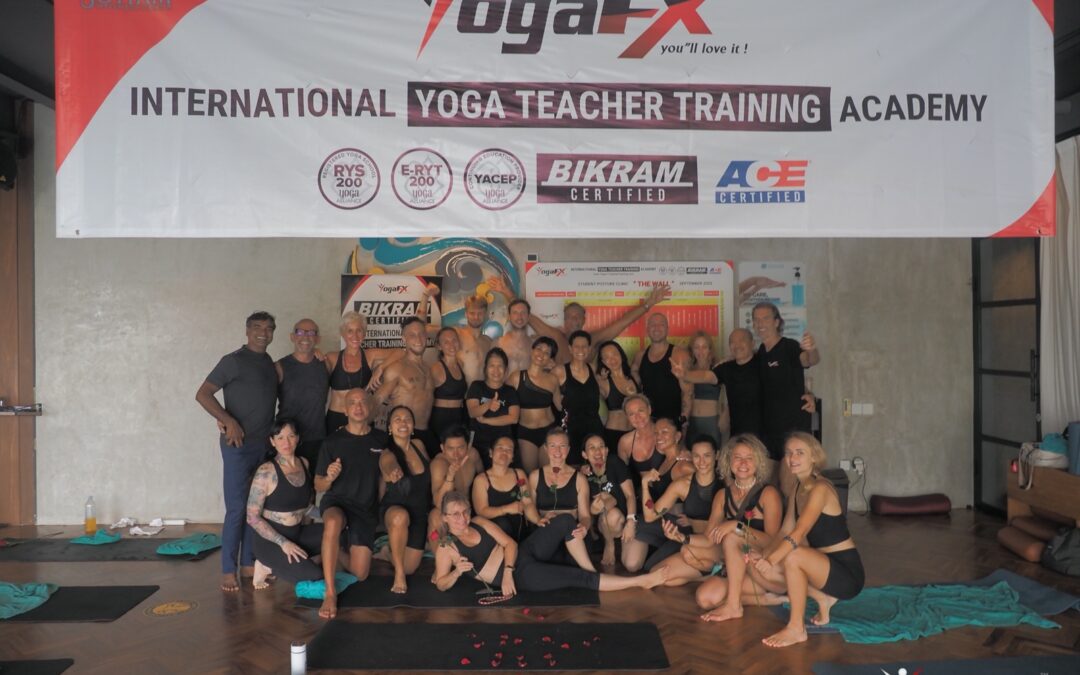
Bikram yoga history, told through research, is shorter than the lineage story and easier to check. Published studies of the heated 26&2 class go back at least to 2013 and now include a 2025 review of 43 hot yoga studies with 942 participants. The results are mostly positive and modest, and none of them proves that hot yoga beats other exercise.
That matters if you plan to teach the method, because students will ask what the evidence says. This guide follows five studies in date order. It sets out what each one measured, who took part and what it can't tell you.
Mr. Ian Terry, E-RYT 500, who trained for five years, from 2014 to 2019, with the founder of the Bikram Hot 26&2 method, shaped the way the YogaFX team reads this research.
Bikram Yoga History in Five Studies: The Timeline
Bikram yoga history looks different when you line up the studies instead of the biographies. Five papers carry most of the weight. They run from 2013 to 2025, they use different designs, and they ask different questions. So here they are in one place before we go through each one.
| Year | Study | Who and how | What it asked or found |
|---|---|---|---|
| 2013 | Tracy and Hart, Journal of Strength and Conditioning Research | Healthy young adults doing Bikram yoga training | Whether regular practice changed physical fitness in healthy young adults |
| 2013 | Hunter and colleagues, Journal of Alternative and Complementary Medicine | 24 young and 18 older adults, 8 weeks, 3 classes a week | Artery compliance rose in young adults; insulin resistance fell in older adults |
| 2015 | Quandt, Porcari and colleagues, University of Wisconsin-La Crosse | 20 regular practitioners, one 90-minute class | Heart rate averaged about 80% of predicted maximum in men and 72% in women |
| 2023 | Nyer and colleagues, Journal of Clinical Psychiatry | 80 randomised, 65 analysed, heated Hatha yoga vs waitlist, 8 weeks | 59.3% of the yoga group had a 50% or greater drop in depression score, vs 6.3% of the waitlist |
| 2025 | Willmott and colleagues, Sports Medicine - Open | Systematic review: 43 studies, 942 participants | Acute hot yoga raised body temperature and heart rate; superiority claims are unsubstantiated |
The numbers at a glance
Bikram yoga history by the numbers
2013: The Early Fitness and Artery Studies
The earliest papers in this Bikram yoga history asked simple, physical questions. Does the class change fitness? Does it change the body in ways a lab can measure? Two 2013 papers set the pattern, and both are small by today's standards.
Tracy and Hart: fitness in healthy young adults
Tracy and Hart published a study of Bikram yoga training and physical fitness in healthy young adults in the Journal of Strength and Conditioning Research. The question was practical. If people already healthy practise this fixed sequence regularly, does their fitness change? It is a useful reference point for any teacher, because it came from a strength and conditioning journal rather than a yoga one.
We report no figures from this paper because we could not confirm them in the full text. Read it yourself before you quote any number from it in class.
Hunter and colleagues: arteries, flexibility and insulin
The second 2013 paper is easier to describe in detail. Hunter and colleagues studied 24 young adults (mean age 30) and 18 middle-aged and older adults (mean age 53). Each person took 90-minute Bikram classes three times a week for 8 weeks, in a room heated to 40.5°C with 40% to 60% humidity. You can read the published record of the Hunter study yourself.
The results were mixed, so they're easier to believe. In young adults, carotid artery compliance rose and the stiffness index fell. In older adults it did not. Trunk flexibility, measured by the sit-and-reach test, improved in both groups. Insulin resistance fell in the older group but not the young one.
- Improved: carotid compliance in young adults, sit-and-reach in everyone, insulin resistance in older adults.
- Unchanged: body mass, body fat and blood pressure in both groups.
- Missing: the abstract describes no control group, so the changes cannot be tied to yoga alone.
So the Hunter paper is a good example of how to talk about the science honestly. It shows that something happened over 8 weeks. It does not show why, and it does not show that the effect lasts.
2015: What One Real Class Does to Heart Rate and Core Temperature
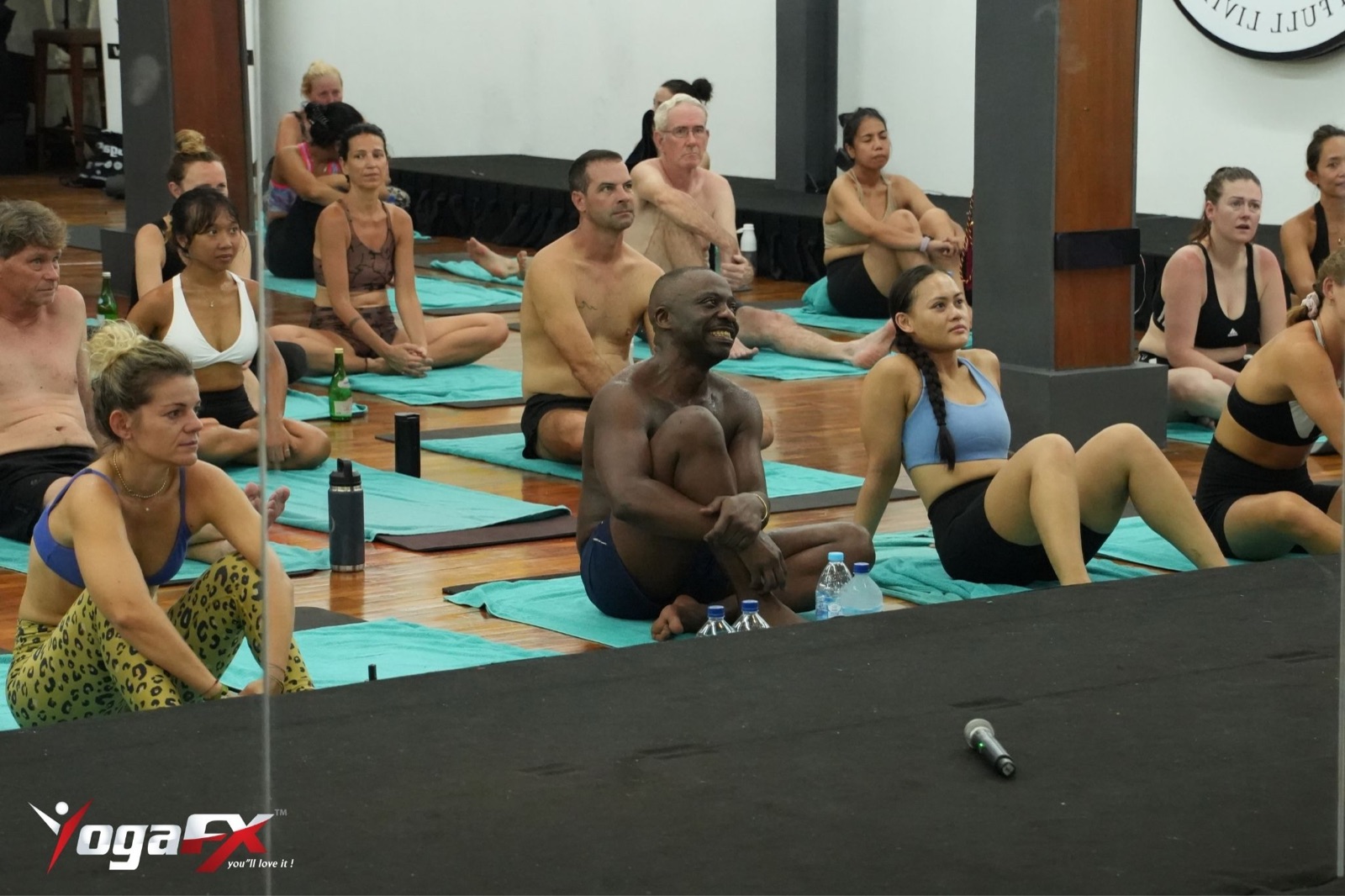
The next chapter in the Bikram yoga history of research left the lab and went into a working studio. A team at the University of Wisconsin-La Crosse, with ACE sponsorship, recruited 20 healthy volunteers: seven men and 13 women aged 28 to 67. All were regular Bikram practitioners.
Each swallowed a core-temperature sensor and wore a heart-rate monitor for one 90-minute class. The team reported the work in an ACE ProSource summary of the study.
The heart-rate numbers are the headline. The average was about 80% of predicted maximum for men and 72% for women. The highest readings reached 92% for men and 85% for women. That's a real cardiovascular load, even though the movement itself looks gentle. As a result, hot yoga counts as exercise for the heart, not just a stretch.
The temperature numbers deserve more attention. The average highest core temperature was 103.2°F for men and 102.0°F for women. Seven of the 20 people went above 103°F, and one man reached 104.1°F. Because the study covered one class and 20 volunteers, you shouldn't treat it as a rule. Read it as a warning about pacing instead.
- Drink early. Do not wait until you feel thirsty in a 40°C room.
- Rest on purpose. Sitting out a posture is part of practising, not a failure.
- Know your limits. Heart conditions, pregnancy and some medication change the rules.
If you want the cardio side in more detail, our guide asks is hot yoga a cardio workout and shows the heart rate zones posture by posture. For the cardiovascular question, see what blood pressure trials say about hot yoga and your heart.
2023: A Randomised Trial on Depression
The earlier Hunter paper described no control group. The 2023 trial in the Journal of Clinical Psychiatry added one, and that is why it matters in Bikram yoga history. Nyer and colleagues ran an 8-week randomised controlled trial of community-delivered heated Hatha yoga against a waitlist.
They randomised 80 people and analysed 65: 33 in the yoga group and 32 on the waitlist. The yoga group attended an average of 10.3 classes, which is roughly one session a week. At the end, 59.3% of the yoga group had a 50% or greater drop in depression score, compared with 6.3% of the waitlist group. The effect size was large (Cohen d = 1.04).
Two cautions apply. First, this was heated Hatha yoga, not a Bikram class, so it is a neighbour of the method rather than the method itself. Second, a waitlist is a weak comparison, because people who are waiting know they are waiting. The result is promising, not final.
Our longer read on hot yoga for depression walks through the same trial and its limits. Yoga is not a replacement for medical care, so anyone with depression should talk to a healthcare professional first.
2025: The Review That Put 43 Studies Side by Side
The most recent chapter in the Bikram yoga history of research is a review. Willmott and colleagues searched the literature and published a systematic review in Sports Medicine - Open. They found 43 studies totalling 942 participants, and 76% of those participants were female.
Bikram was the most common method, used in 74% of the studies. So, when a headline says "hot yoga research", most of the time it means the 26&2 class or something close to it. The review reported that acute hot yoga raised body temperature and heart rate but did not raise the energetic demands of the session.
Then it makes the statement every teacher should know. Claims that hot yoga gives greater health benefits than other forms of yoga or traditional exercise are, at present, unsubstantiated. That is a sober way to close the timeline, and it is the line we repeat when students ask for a miracle.
What This Bikram Yoga History Does Not Prove
Good science writing says what it can't show. Read across the five studies of Bikram yoga history, the same limits keep appearing.
- Small samples. The three single studies above had 65, 42 and 20 people.
- Mostly women. In the 2025 review, 76% of participants were female, so findings for men are thinner.
- Short follow-up. Eight weeks is common. None of the studies above follows anyone through years of daily practice.
- Weak comparisons. Waitlists and no-control designs cannot separate heat from movement.
- Heat is a stress. The same temperature that helps some people can harm others.
In practice, that means you can say hot yoga may help with flexibility, mood and artery function. You can't say it treats any condition. If you have a heart condition, are pregnant or take medication, consult a healthcare professional before you start.
Where the Research Fits in the Wider Bikram Yoga History
The research story and the legal story run side by side. So the class itself is the same under every name: 90 minutes, about 40°C, roughly 40% humidity and a scripted dialogue with no demonstration or music. Researchers measured that class, not a brand.
If you want the other half of the Bikram yoga history, our sister site walks through the court and trademark record behind the Bikram name. This article stays with the science.
Because the name has changed too, labels can mislead. You will now see Bikram yoga, 26&2, Original Hot Yoga and Hot 26&2 on studio doors. For example, a study titled "Bikram" and a trial titled "heated Hatha" can be close cousins, so read the methods. As a teacher, you should check which class a paper actually used before you quote it. Our guide to what the studies on the original sequence found shows how to do that check.
Is Bikram Yoga Copyrighted? A Short Answer for Teachers
Students often ask a legal question right after a science one. Is Bikram yoga copyrighted, and is there a Bikram yoga trademark you could infringe? We cover both in depth on our sister site.
In short, a 2015 US appeals court ruling held that the 26-posture sequence is a system, so Bikram yoga copyright does not stop a trained teacher from teaching it, and the main Bikram yoga trademark registrations were cancelled in 2014.
That's a summary, not legal advice. Trademark law is national, so check your own country before you name a studio. For the research itself, the copyright question changes nothing: the studies measured a class, and the class can be taught by anyone trained to teach it.
Mr. Ian Terry and the Method Behind the Studies
Mr. Ian Terry, E-RYT 500, trained for five years, from 2014 to 2019, with the founder of the Bikram Hot 26&2 method. He has taught for 12,000+ hours and has trained 1,500+ graduates from 80+ countries since he founded YogaFX in 2017.
That is why this site treats the research as part of teacher training rather than as marketing. Anyone who teaches Bikram yoga history should know both halves of it.
Our approach is simple, so we state it plainly. Teach the sequence and the dialogue exactly. Quote the studies exactly. Say "may help" when the evidence is small. The research above is the standard we hold ourselves to, and we'd rather lose a sign-up than overstate a result.
What YogaFX Students Say
Reviews aren't research, but they show how the method feels from the student side. For example, here are three recent ones, in the students' own words.
The experience with YogaFX was truely amazing. The programe was intense but completely worth it, and you get to meet with some incredible people from all over the world.
Samantha, Yoga Alliance review, 2025
When Mr Ian says you will start teaching from day 1 he is not joking!
Özge, Google review, 2025
Thank you for pushing us giving this wonderful experience it has been lifechanging.
Fabiola, YouTube review (from video captions), 2024
Learn the Method Online, With the Evidence Built In
The evidence above is why we teach the method the way we do. YogaFX online hot yoga teacher training is led by the science and graded evidence, so you learn the sequence and the research on the same page. Our honest 8-week breakdown of online yoga teacher training shows how that works week by week.
- You learn the dialogue the way it is delivered in a real class.
- You learn the research with the limits attached to every claim.
- You get a clear next step from Mr. Ian and the team.
Because the Bikram yoga history in research is still being written, new teachers who can read a study critically stand out. If it made you curious about teaching the method, that is the right moment to ask questions.
FAQ
Is Bikram yoga the same as hot yoga?
Not exactly. Bikram yoga is one fixed style: 26 postures and 2 breathing exercises in 90 minutes at about 40°C. Hot yoga is the wider term for any yoga in a heated room. The 2025 review found Bikram was the most common method, used in 74% of the 43 hot yoga studies it covered.
Is Bikram hot yoga good for you?
Research suggests it may help some outcomes, such as flexibility, mood and artery function, but the studies are small and often lack control groups. The 2025 review calls claims of superiority over other exercise unsubstantiated. If you have a heart condition, are pregnant or take medication, consult a healthcare professional first.
How many studies have been done on hot yoga?
A 2025 systematic review in Sports Medicine - Open found 43 studies with 942 participants, 76% of them female. That is a small base compared with running or weightlifting. Most studies were short, and the review notes the evidence does not yet show hot yoga beats other forms of yoga or exercise.
Does hot yoga help with depression?
One 8-week randomised trial of heated Hatha yoga found 59.3% of the yoga group had at least a 50% drop in depression symptoms, against 6.3% of the waitlist group. It was a single trial against a waitlist, so it is promising rather than final. Yoga is not a replacement for medical care.
Is YogaFX official Bikram Choudhury teacher training?
No. YogaFX is independent training, not official Bikram Choudhury Teacher Training. Mr. Ian Terry, E-RYT 500, trained for five years, from 2014 to 2019, with the founder of the Bikram Hot 26&2 method, and now teaches the method with 12,000+ teaching hours behind him.
Still have questions? Message Mr. Ian and the YogaFX team on WhatsApp and we will answer them personally.

Founder and lead trainer of YogaFX International Yoga Teaching Academy, with more than 12,000 hours of teaching. He trained for 5 years, from 2014 to 2019, with the founder of the Bikram Hot 26&2 method.
You may also like
Explore all articles ↗ Teacher Training Guides11 min read14 Nov 2026
International Yoga Sports Federation and Yoga as a Sport: What Recognition Requires
Read article ↗ Teacher Training Guides11 min read13 Nov 2026
Sauna After Hot Yoga? What Core Temperature Data Suggests
Read article ↗ Teacher Training Guides10 min read13 Nov 2026