Is hot yoga good for your heart? The research says it probably is, in modest ways. Small trials of Bikram-style hot yoga show better artery function, lower blood pressure in people with mild hypertension, and a real cardio workload. However, the studies are small, and the heat itself adds strain. So it may help healthy hearts, but it is not a treatment.
Is Hot Yoga Good for Your Heart? The Short Verdict
Here's the honest version, graded the way we grade every claim on this site. The evidence that hot yoga is good for your heart comes mostly from one research group in Texas, led by Dr. Stacy Hunter. Their trials are careful, but each one has between 10 and 54 people.
That means the results are promising signals, not proof. Here is what the trials do and do not show:
Arteries: 8 to 12 weeks of classes improved how well arteries widen or how stiff they are, in some groups but not all.
Blood pressure: in healthy people it barely moved. In 10 adults with raised blood pressure, 24-hour systolic pressure fell by about 5 points.
Heart rate: a 90-minute class pushes men to about 80% of their maximum heart rate on average, so it is real cardio work.
The heat: one trial found the same artery gains at room temperature. So the postures may matter more than the thermostat.
In short, a regular practice looks good for your heart if you are healthy, but nobody has shown it prevents heart disease. And if you already have a heart condition, the heat changes the question entirely. Please consult a healthcare professional before your first class.
The Hot Yoga Blood Pressure Trials, Side by Side
Most articles quote one study and stop. Instead, the table below lists every controlled or measured trial we could verify on hot yoga, blood pressure and blood vessels. The last column is our own evidence grade, so you can see how much weight each result deserves when you ask whether hot yoga is good for your heart.
Seven Hot Yoga Trials at a Glance
Study
Who took part
Dose
Heart or blood pressure result
Our grade
Hunter et al. 2013
24 young and 18 older healthy adults
90 min, 3x a week, 8 weeks, 40.5°C (104.9°F)
Blood pressure did not change. Carotid arteries became more elastic in young adults only.
C (no control group)
Hunter et al. 2016
43 adults, 20 overweight or obese
8 weeks of Bikram classes
Arterial stiffness fell in the overweight group, not in normal-weight adults.
C (no control group)
Hunter et al. 2017
36 healthy adults, 17 young and 19 older
3x a week, 8 weeks
Artery widening (FMD) improved in middle-aged and older adults only.
C (no control group)
Hewett et al. 2017
63 stressed, sedentary adults, 79% women
3 to 5 classes a week, 16 weeks
No group change in blood pressure. People who attended more had lower diastolic pressure.
B (randomised, low attendance)
Hunter et al. 2018 (Bikram Yoga Heart Study)
52 sedentary adults aged 40 to 60
90 min, 3x a week, 12 weeks, 40.5°C (104.9°F) vs 23°C (73°F)
Artery widening improved at 23°C (73°F) and tended to improve at 40.5°C (104.9°F). No real difference between rooms.
B (randomised, small)
Hunter et al. 2018 (arterial stiffness)
54 sedentary adults aged 40 to 60
12 weeks, hot vs room temperature
Arterial stiffness did not change in either yoga group.
B (randomised, small)
Hunter et al. 2019 (conference abstract)
10 unmedicated adults with raised blood pressure
60 min, 3x a week, 12 weeks
24-hour blood pressure fell from 126/82 to 121/79 mmHg. No change in controls.
C (pilot, not yet a full paper)
Seven hot yoga trials on blood pressure and blood vessels, with our evidence grade. Sources: J Altern Complement Med (2013), J Phys Act Health (2016), J Bodyw Mov Ther (2017), BMC Complementary and Alternative Medicine (2017), Experimental Physiology (2018), Complementary Therapies in Medicine (2018), AHA Hypertension Scientific Sessions (2019).
The Pattern Across the Trials
Read the table from top to bottom and a pattern appears. The early trials had no comparison group, so we can't tell whether yoga, a new routine or simply the season caused the change. The later randomised trials are stronger, and their results are mixed but mostly positive.
What the Blood Pressure Numbers Mean in Plain Language
Blood pressure is written as two numbers, such as 126/82. The top number (systolic) is the pressure when your heart beats. The bottom number (diastolic) is the pressure between beats. Both are measured in millimetres of mercury, or mmHg.
In the 2019 pilot, the top number dropped by 5 points and the bottom by 3. That is a modest change, roughly the size seen with yoga in general. For example, a 2016 review of 32 yoga trials in the European Journal of Preventive Cardiology (Chu et al.) found an average systolic drop of about 5 points versus no exercise.
So hot yoga does not look like a blood pressure miracle. Instead, it looks like a solid form of exercise that produces exercise-sized results. That is still useful, because many people who hate running will happily come back to a hot room three times a week. Regular exercise you actually do is good for your heart, whatever the room temperature. For lab data on effort and intensity, see whether hot yoga is a good workout. If weight is your main goal, read what the hot yoga and weight loss studies found.
7 Honest Findings From the Heart Research
If you only remember one section, make it this one. These seven findings sum up whether hot yoga is good for your heart, based on what researchers actually measured.
Healthy blood pressure stays healthy. In normal-pressure adults, 8 weeks of classes did not move blood pressure up or down (Hunter 2013).
Raised blood pressure may come down. The only trial in people with high readings saw a 5-point systolic drop, but it had just 10 people.
Older arteries respond best to widening tests. Middle-aged and older adults improved artery widening, while young adults did not (Hunter 2017).
Stiffness results depend on the person. Overweight adults and young adults got less stiff arteries. Healthy middle-aged adults did not.
The postures do much of the work. Room-temperature Bikram yoga matched or beat hot yoga for artery widening (Hunter 2018).
Attendance matters. In Hewett's 16-week trial, people averaged 27 classes, and only those who came more often saw lower diastolic pressure.
The heat is a real load. Heart rate and core temperature climb steadily through a 90-minute class, which is why screening matters.
Put together, those findings explain the careful wording you see from researchers. Hot yoga is likely good for your heart in the same way other regular exercise is good for your heart. It is not yet proven to be better than that.
Four Numbers That Sum It Up
126 → 121
24-hour systolic, mmHg
10 adults with raised blood pressure after 12 weeks of hot yoga.
40.5°C (104.9°F) = 23°C (73°F)
Same artery gains
52 adults aged 40 to 60, hot room vs room temperature, 12 weeks.
80% / 92%
Men's heart rate, average / peak
Share of predicted maximum during a 90-minute class at 105°F.
7 of 20
Passed 103°F core heat
Regular practitioners whose core temperature went above 103°F in class.
Hot yoga and the heart in four numbers. Sources: Hunter et al., AHA Hypertension Scientific Sessions 2019; Hunter et al., Experimental Physiology 2018; Quandt, Porcari et al., ACE-sponsored study 2015.
What Happens to Your Heart During a 90-Minute Class
Long-term results are one half of the story. The other half is what the heat does to your heart rate, blood pressure and core temperature in real time. Two studies measured this directly. For posture-by-posture numbers, see is hot yoga a cardio workout.
Heart Rate and Core Temperature: The Quandt Study
Emily Quandt and John Porcari at the University of Wisconsin-La Crosse tested 20 regular practitioners, 7 men and 13 women aged 28 to 67. Each did a standard 90-minute class at 105°F and 40% humidity while wearing heart rate and core temperature sensors.
Men averaged about 80% of predicted maximum heart rate and peaked at 92%. Women averaged 72% and peaked at 85%. Core temperature rose steadily all class long, and seven of the 20 went above 103°F.
A workload this high is part of why the class can be good for your heart, and also why it deserves respect. You can read the full write-up from the American Council on Exercise, which funded the work.
Nobody in the study showed signs of heat illness. Even so, the authors suggested hydration, acclimatisation and shorter or cooler classes for anyone new to the heat. Their message is useful for teachers too: sweating alone does not cool a body efficiently in humid air.
Blood Pressure Posture by Posture
A 2019 pilot by Miranda Hurtado and colleagues in Chile measured blood pressure after every posture in 16 experienced female practitioners. Heart rate averaged 126.6 beats per minute and reached 168.1 at its peak.
Surprisingly, systolic pressure never rose significantly above resting levels. Diastolic pressure actually fell by about 10%, especially during the floor series. The heat widens blood vessels, which seems to offset the pressure rise you would expect from effort.
That drop is reassuring for healthy people. However, it is also why some beginners feel light-headed when they stand up quickly from the floor. If that happens, sit down, breathe and let your body catch up. A class is only good for your heart if you finish it feeling steady, not shaky.
Is Hot Yoga Bad for Your Heart? Who Should Check First
Many people search the opposite question too: is hot yoga bad for your heart? For most healthy adults the answer is no. Still, a 2025 systematic review of 43 hot yoga studies by Willmott and colleagues, published in Sports Medicine - Open, urges caution.
The review describes case reports of a sudden cardiac arrest in a 35-year-old woman and a heart attack in a 53-year-old man after hot yoga. The authors stress that the direct causes are uncertain, because underlying conditions were not ruled out. In a survey of 157 practitioners, many reported dizziness, light-headedness or nausea at some point.
What is good for your heart when it is healthy can be too much when it is not. So talk to your doctor before you start if any of these apply to you:
A diagnosed heart condition, such as heart failure, an arrhythmia, a valve problem or a past heart attack.
High or low blood pressure that is not yet under control, or regular dizzy spells.
Medication that affects heat or fluid balance, such as blood pressure pills or diuretics.
Pregnancy. A 2014 review in Canadian Family Physician advised pregnant women to avoid hot yoga because of the risks of overheating.
People who have recovered from a heart attack often ask online whether they can return to the hot room. That decision belongs to your cardiologist or cardiac rehab team, not to a blog or a studio. If they agree, start with a cooler or shorter class first.
How to Practise So Hot Yoga Is Good for Your Heart
If your doctor gives you the green light, copy the dose that researchers tested. That way you know your routine matches the evidence, rather than a guess. The steps below follow the Hunter and Hewett protocols as closely as a normal week allows.
Aim for three classes a week. Most trials used three 90-minute sessions weekly for 8 to 12 weeks.
Give it at least 8 weeks. Artery changes in these studies showed up after 8 to 12 weeks, not after a few classes.
Track your blood pressure at home. Measure at the same time each morning, so you can see your own trend.
Drink before, during and after class. Sip water through the session rather than gulping a litre at the end.
Rest whenever you need to. Sitting or lying down in the room is always allowed, and it is a smart choice, not a failure.
Expect your first week to feel harder than the next. Acclimatisation usually takes 10 to 14 days, according to the ACE experts who reviewed the Quandt data. As a result, many people find that the same class feels noticeably calmer by week three. Steady, repeated practice is what makes hot yoga good for your heart, not one heroic session.
Warning Signs to Stop and Sit Down
Stop, sit down and tell the teacher if you notice chest pain, a racing or irregular heartbeat, confusion, severe headache, nausea or cramps. For example, cramps and dizziness are early signs of heat intolerance. Chest pain needs urgent medical help, so call emergency services rather than waiting it out.
Hot Yoga vs Regular Yoga for Heart Health
Yoga at room temperature has a bigger evidence base than hot yoga. A 2013 meta-analysis of 17 studies by Hagins and colleagues found yoga lowered systolic pressure by about 4 points and diastolic by about 3.6 points in people with hypertension. The effect was larger when classes combined postures, breathing and meditation.
Harvard Health summed up the wider picture in plain terms. Yoga, it reported, may cut heart disease risk factors about as much as brisk walking, including a drop of roughly five points in systolic pressure. You can read the Harvard Health summary of yoga and the heart for the details.
So where does that leave the heat? The Bikram Yoga Heart Study found no clear extra benefit from 40.5°C (104.9°F) over 23°C (73°F). On the other hand, the hot group lost more body fat, and many students simply enjoy the heat more. If you love it and you are healthy, it is a fine choice. If heat worries you, room-temperature yoga is also good for your heart.
Bikram Yoga and Blood Pressure: Same Sequence, New Name
You will see this topic searched as bikram yoga and blood pressure as well. Nearly every trial above used the same 26 postures and 2 breathing exercises, now often taught as Original Hot 26&2 Yoga. That consistency is useful, because it means the research applies to the class most hot studios teach today.
Why the Evidence Is Still Early
Our site is built around graded evidence, so we owe you the weak spots too. The question of whether hot yoga is good for your heart is still open for four reasons:
Small samples. The largest heart trial had 63 people, and the blood pressure pilot had 10.
One main lab. Most results come from the same research group, so independent replication is thin.
Short follow-up. Nothing lasted longer than 16 weeks, so heart attacks and strokes were never measured.
Healthy volunteers. Almost nobody with heart disease took part, so the results do not apply to them.
The 2025 Willmott review reached the same conclusion. It found signs of better body composition, blood fats and artery function, which are all good for your heart, yet it called for larger, better-controlled trials. That's the honest headline: likely helpful, modest in size, and not a medical treatment.
What Our Trainees Say About Training From the Heart
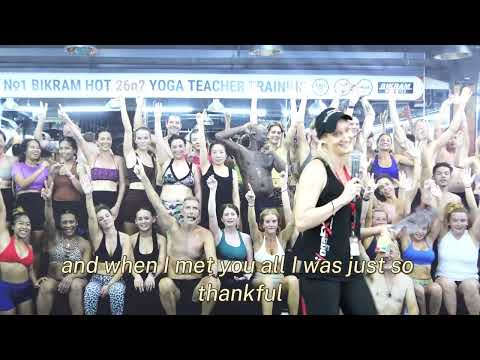
Research measures arteries. Our graduates talk about the other kind of heart, the reason they kept showing up. These comments come from video reviews recorded at the end of YogaFX teacher trainings.
"Honestly, this is the best training that I've ever learned... it's from the deep of my heart. This is what Mr. Ian has been teaching from his heart."
"I've learned that I can do it... it feels so good to just accept you don't have to be perfect... I love the practice and these classes are great, they're the best."
Louise, YouTube review, 2025
"It was so crucial for us to have posture clinics and learn about the anatomy, muscular system... and yoga's principles."
Stephanie's point about anatomy matters here. A teacher who understands the circulatory system can spot a struggling student early, and can explain honestly why a class is good for your heart without overselling it. You can watch Louise's full review below.
Learn the Science Behind the Heat With YogaFX
If this article made you curious about the physiology, that curiosity is exactly what good hot yoga teachers need. Teachers are often the first people students ask whether hot yoga is good for your heart. Our hot yoga teacher training online course lets you study the 26 postures, the dialogue and the science at home, on your own schedule.
The course is led by Mr. Ian Terry, E-RYT 500, who has more than 12,000 teaching hours. He trained for 5 years, from 2014 to 2019, with the founder of the method. Since 2017, YogaFX has trained more than 1,500 graduates from 80+ countries, and Mr. Ian keeps the class structure fixed so every student knows what comes next in the heat.
Know the postures. Start with our guide to the 26&2 poses, including the floor series where blood pressure dips.
When you're ready for the heat in person, the next step is the 6-day Bikram Hot 26&2 Yoga Teacher Training MasterClass in Bali. The next batch checks in on Sunday 24 January 2027 at Soham Wellness Center in Seminyak. The Early Bird price is US$1,799 (normally US$1,999), with payment plans from US$250 a month.
FAQ
Is hot yoga bad for your heart?
For most healthy adults, no. Trials of 8 to 16 weeks found neutral or positive effects on blood pressure and arteries, so regular practice looks good for your heart. However, a 2025 review noted rare case reports of cardiac events after hot yoga. If you have a heart problem or take heart medication, ask your doctor first.
Does hot yoga lower blood pressure?
It may in people whose blood pressure is raised. A small 2019 pilot of 10 adults found 24-hour systolic pressure fell from 126 to 121 mmHg after 12 weeks. In people with normal blood pressure, an 8-week trial found no change. Larger trials are still needed to confirm the effect.
Can you do hot yoga with high blood pressure?
Possibly, but only with your doctor's approval. Researchers have safely tested hot yoga in unmedicated adults with mildly raised blood pressure. If you take blood pressure medication, the heat can add to its effect and cause dizziness. Start slowly, drink regularly, and rest whenever you feel light-headed.
Does hot yoga get your heart rate up?
Yes. In a University of Wisconsin-La Crosse study, men averaged about 80% of their predicted maximum heart rate during a 90-minute class and women about 72%. Peaks reached 92% and 85%. That puts a hot class in the range of moderate to vigorous cardio, even though you stay on one mat.
Is hot yoga good for heart patients?
There is no research on hot yoga in people with heart disease, so nobody can say it is safe for them. Gentle room-temperature yoga is often used alongside cardiac rehab instead. Anyone with a heart condition should get clearance from their cardiologist before trying a heated class of any kind.
The best hot yoga mental health research so far says heated yoga can cut depression symptoms and lift well-being, but men barely appear in the data. In the two key trials, 79% and 81.5% of volunteers were women. So the results probably apply to men too, yet nobody has measured that directly. If you are a man looking into yoga for anxiety and depression, this guide shows what the trials measured and what they left out.
Is Hot Yoga Good for Men’s Mental Health? The Short Answer
If you're a man wondering whether a hot class could help your head as much as your hamstrings, here's the honest picture. Two randomised trials give us the strongest hot yoga mental health evidence we have. Both found real benefits. Neither one was built to answer your question.
That gap matters because men are less likely to ask for help with low mood, so they are also less likely to sign up for a depression study. As a result, the people who joined these trials were mostly women in their late twenties and early thirties.
Here is what the evidence does and does not tell a man reading it today:
It does show that 8 weeks of heated yoga lowered clinician-rated depression scores far more than waiting did.
It does show that 6 weeks of hot yoga raised mindfulness, peace of mind and life satisfaction in healthy adults.
It does not show whether men respond more, less or the same, because too few men took part to compare.
It does not replace treatment. Hot yoga sits beside professional care, not instead of it.
That's the frame for the rest of this guide. We'll walk through exactly what researchers measured, why men are missing, and how a man can use the practice sensibly while the science catches up.
What Did Researchers Measure in the Two Key Trials?
Most headlines about hot yoga mental health benefits come from just two studies. One tested people with depression in Boston. The other tested healthy adults in Cambridge, UK. The table puts them side by side, including the detail most articles skip: who actually took part.
Study
Who took part
Women in sample
Dose
What they measured
Main result
Massachusetts General Hospital (Nyer et al. 2023)
80 adults with moderate to severe depression randomised, 65 analysed
81.5%
Two 90-minute classes a week at 105°F, 8 weeks
Clinician-rated depression score (IDS-CR)
59% of the yoga group cut symptoms by half or more, vs 6% on the waitlist
Cambridge, UK (Hui et al. 2022)
290 healthy adults new to yoga
79%
Up to four 90-minute classes a week at 40°C (104°F), 6 weeks
Mindfulness, peace of mind, life satisfaction, general health, moods four times a day
Gains on five of six well-being measures vs a waitlist
Two hot yoga mental health trials compared by sample, dose and outcome. Sources: MGH Psychiatry News (2023) and Psychosocial Intervention (2022).
The Boston Depression Trial
Researchers at Massachusetts General Hospital randomised 80 adults with moderate to severe depression. Half were asked to attend two heated classes a week for 8 weeks. The rest waited. A clinician then scored each person's symptoms with the Inventory of Depressive Symptomatology, a standard rating scale.
The result was striking. 59.3% of the yoga group saw their symptoms drop by 50% or more, compared with 6.3% of the waitlist group, according to a summary from MGH Psychiatry News. The effect size was large, and no serious side effects were reported. Our separate guide to hot yoga for depression reads that trial in more detail.
Attendance was lower than planned, however. Participants averaged about 10 classes over 8 weeks, not 16. Even so, Harvard Health reported that people who managed roughly one class a week still improved.
The Cambridge Well-Being Trial
The second hot yoga mental health study asked a different question: does hot yoga help people who aren't depressed? Bryant Hui and colleagues gave 290 yoga beginners six weeks of free 90-minute classes in a 40°C (104°F) room. Participants attended about 17 classes each.
Compared with a waitlist, the hot yoga group gained in mindfulness, peace of mind, life satisfaction, eudaimonic well-being and general health. Flourishing did not change. People who started with the lowest well-being gained the most, which is worth noting for anyone who feels flat right now. You can read the full paper in Psychosocial Intervention.
The Missing Men in Hot Yoga Mental Health Studies
Look again at that women column. Only about one in five volunteers in either trial was a man. The Cambridge authors list this skew as a limitation themselves. So any claim about men's mental health yoga results is, for now, an educated guess built on mostly female data. Men past midlife can also read yoga for men over 40 and a home plan.
81.5%
Women in the MGH trial
Share of the 65 analysed adults with depression who were female.
79%
Women in the Cambridge trial
Share of the 290 healthy beginners who were female.
59%
Halved their symptoms
Heated yoga group in the MGH trial, vs 6% of the waitlist.
22.3 vs 5.6
US suicide rate per 100,000
Men vs women in 2024, about four times higher for men.
Who hot yoga mental health research measured, and who it missed. Sources: MGH Psychiatry News (Nyer et al. 2023), Hui et al. 2022 (Psychosocial Intervention), CDC NCHS Data Brief No. 572 (2026).
Why Men Don't Sign Up
The reason men are missing from hot yoga mental health data is the same reason they're missing from therapy rooms. A 2016 systematic review led by Zac Seidler at the University of Sydney looked at how masculinity shapes help-seeking for depression. Later researchers summarise its finding bluntly: men were about half as likely as women to seek help from a GP for mental health concerns.
A 2020 German study of 12 men treated for depression, published in Frontiers in Psychiatry, explains why. Before treatment, the men held onto ideas of being strong, self-reliant and the provider. So they played down symptoms and tried to fix things alone.
Why It Matters
Silence also has a cost. In 2024 the US suicide rate was 22.3 per 100,000 for men and 5.6 for women, according to the CDC's National Center for Health Statistics. That's roughly four times higher for men.
Hot yoga isn't a crisis tool, and nobody should treat it as one. If you're thinking about suicide, call or text 988 in the US, or your local emergency number, today. But for many men, a structured physical practice can be an easier first door than a waiting room.
Why a Hot Room May Suit Men Who Avoid Talking
Here's where the research on men and the design of a hot class meet. Seidler's later PhD work at the University of Sydney found that men in therapy valued structured, goal-focused treatment and wanted to understand the system they were in. The Original Hot 26&2 class is built almost entirely on structure.
Same sequence every time. 26 postures and 2 breathing exercises, in the same order, so progress is easy to see.
No talking required. The teacher speaks a scripted dialogue. You just follow it, with no group sharing.
A clear physical goal. Locking the knee in Dandayamana Janushirasana or going deeper in Ustrasana gives you a target you can measure.
A fixed time box. Each class runs 90 minutes in about 40°C (104°F) and 40% humidity, then it's over.
That doesn't prove hot yoga works better for men. It does suggest why some men who would never book a counsellor will show up to a hot room three times a week. The Frontiers study also found that men valued men-only peer groups, where they could admit weakness without judgment. A shared, sweaty, silent class can play a similar role.
Mr. Ian Terry, E-RYT 500 and founder of YogaFX, teaches the class this way on purpose. Over more than 12,000 teaching hours, he has kept the dialogue, the order and the timing fixed, so every student knows exactly what comes next. For a man who dislikes open-ended conversation, that predictability is often what makes the first class possible.
How Men Can Use Yoga for Anxiety and Depression Safely
If you want to try hot yoga for mental health, copy the dose researchers actually tested rather than guessing. That is also the safest way to test hot yoga mental health benefits for yourself, because you can compare your results with theirs. This plan follows the MGH and Cambridge protocols as closely as a normal working week allows.
Check with your doctor first. Do this especially if you have heart problems, high blood pressure, or take medication that affects heat tolerance.
Book two classes a week for 8 weeks. That was the MGH target. One a week still helped, so don't quit if life gets busy.
Keep your existing care. Some MGH participants were already taking antidepressants. Yoga was added, not swapped in.
Track one number. Rate your mood from 1 to 10 after each class. Researchers in Cambridge tracked mood four times a day for the same reason.
Hydrate and pace yourself. Sit down when you need to. Heat is a stressor, and pushing through dizziness proves nothing.
Expect the first two or three classes to feel rough, but that's normal. Many men are surprised by how hard the heat is, because a 90-minute class is a real workout. A University of Wisconsin study (Porcari et al. 2014) measured an average of 460 calories for men per class at about 80% of maximum heart rate. If you also wonder how that heat load relates to men's health, our guide to hot yoga and male fertility studies looks at what researchers actually measured.
When Hot Yoga Is Not Enough
Watch for signs that you need more than a class. These include low mood lasting more than two weeks, losing interest in things you used to enjoy, drinking more to cope, or any thoughts of harming yourself. In any of those cases, please consult a healthcare professional. The hot yoga mental health research supports the practice as an addition to care, never a replacement.
What Our Trainees Say About the Mental Side
Data tells you what happens on average. Trainees tell you what it feels like. These three comments come from video reviews recorded at the end of YogaFX teacher trainings, so each one touches on the hot yoga mental health side of the practice.
"It took me to real depth, mentally, physically. I could not even imagine it would be like that. The third day I felt like I was shining, and the fourth day was much easier."
Jamasb, YouTube review, 2026
"This is not like physical practice, but our emotion, our mental, our heart, our love." (translated)
Jamasb's description of day two as the hardest and day three as the turning point matches what many trainees report. You can watch his full review below.
The Limits of the Evidence
Our site leans on graded evidence, so it's only fair to grade this body of work too. The hot yoga mental health findings are promising, but they're early. Here's what a careful reader should keep in mind.
No active control. Both trials compared yoga with waiting, not with a gym class or room-temperature yoga. So we can't separate the heat from the exercise.
Short follow-up. The trials ran for 6 and 8 weeks, so long-term hot yoga mental health results are thin.
Small male samples. With about one man in five, neither study could test whether men respond differently.
Volunteers, not patients off the street. People who sign up for a yoga study may already be open to yoga.
None of this cancels the results. It means the honest headline is "promising, especially for women, and probably for men too." The next useful study would recruit men on purpose, for example through workplaces or sports clubs, and compare heated with unheated classes.
Bikram Yoga Mental Health Research and the 26&2 Sequence
You'll see this topic searched as bikram yoga mental health, too. The MGH team describes its classes as heated yoga in a 105°F room, and Harvard Health notes the style is also called Bikram yoga. Today most studios teach the same sequence as Original Hot 26&2.
Some men who feel the hot yoga mental health benefits first-hand decide they want to understand it properly, or even teach it. That's exactly who our hot yoga teacher training online course was built for. You study the 26 postures, the dialogue and the science at home, on your own schedule.
The course is led by Mr. Ian Terry, E-RYT 500, who has more than 12,000 teaching hours. He trained for 5 years, from 2014 to 2019, with the founder of the method. Since 2017, YogaFX has trained more than 1,500 graduates from 80+ countries.
Start with the postures. Our guide to the 26&2 poses breaks down each one.
When you're ready for the heat, the next step is the 6-day Bikram Hot 26&2 Yoga Teacher Training MasterClass in Bali. The next batch checks in on Sunday 24 January 2027 at Soham Wellness Center in Seminyak. The Early Bird price is US$1,799 (normally US$1,999), with payment plans from US$250 a month.
FAQ
Is hot yoga good for mental health?
Early research says yes. A Massachusetts General Hospital trial found 59% of people with depression halved their symptoms after 8 weeks of heated yoga, and a Cambridge trial found gains in mindfulness and life satisfaction. Most participants were women, so results for men are likely but not yet measured directly.
Can hot yoga help with depression?
It may help as an addition to care. In the MGH trial, adults with moderate to severe depression who did heated yoga improved far more than a waitlist group, with no serious side effects. It is not a replacement for treatment, so keep working with your doctor or therapist while you practise.
Can hot yoga help with anxiety?
Hot yoga may ease everyday stress. In the Cambridge trial, six weeks of classes raised peace of mind and mindfulness in healthy adults, and moods rose on studio days. Anxiety disorders were not the focus, so anyone with diagnosed anxiety should ask a healthcare professional before starting.
How many hot yoga classes to see a difference?
The MGH trial asked for two classes a week for 8 weeks, and participants averaged about 10 classes in total. Harvard Health reported that people who managed about one class a week still improved. In Cambridge, people attended around 17 classes over six weeks. So aim for two a week, but don't give up if you only manage one.
Who should not do hot yoga?
Talk to your doctor first if you have heart problems, high blood pressure, are pregnant, or take medication that affects heat tolerance. Harvard Health specifically advises people with heart conditions to check before trying it. Anyone in a mental health crisis should seek urgent professional help rather than start a class.
The median hot yoga instructor salary in the US sits close to the national figure for fitness instructors: about US$47,160 a year, or US$22.67 an hour, according to the Bureau of Labor Statistics. With hot yoga teacher training online starting from US$329, a new teacher at median pay can earn back the course fee in about 10 classes.
From Hot Yoga Teacher Training Online to Your First Paid Class
Most people looking at hot yoga teacher training online have the same two questions, and both are really about the hot yoga instructor salary waiting at the end. Can I actually get hired after an online course? And will the money I spend come back to me?
Both questions have honest answers, but they depend on the path you take. Here's the realistic route from your laptop to your first paid class.
Study the theory online. Anatomy, philosophy, teaching method and the full posture dialogue, at your own pace.
Practise the dialogue out loud. Record yourself and ask your teachers for guidance when you get stuck.
Complete your practicum. Teach full classes in a heated room with a senior trainer watching.
Audition at a studio. Most hot yoga studios ask you to teach part of a class before they hire you.
Start as a substitute. Cover classes, build trust, then take on your own regular slots.
Where your study happens, and where your pay starts
Steps one and two can be done at home. Your income begins at step four.
1Study the theory OnlineAnatomy, philosophy, teaching method and the full dialogue, at your own pace.
2Practise the dialogue out loud OnlineRecord yourself and ask your teachers for guidance.
3Complete your practicum In personTeach full classes in a heated room with a senior trainer watching.
4Audition at a studio At a studioTeach part of a class for the owner. This is where paid work begins.
5Start as a substitute At a studioCover classes, build trust, then take on your own regular slots.
Figure 3. The route from online study to your first paid class.
The online part covers steps one and two well. Steps three to five are where your hot yoga instructor salary actually starts. That is why the best online programs connect you to an in-person practicum. A certificate with no teaching experience rarely gets you hired.
Online Daily Yoga Classes
Hot Yoga and Bikram Yoga Instructor Salary: The Real Numbers
Nobody publishes an official hot yoga instructor salary figure on its own. There is no government category for hot yoga teachers alone. Instead, the US Bureau of Labor Statistics groups yoga instructors with fitness trainers and group fitness instructors. That is the most reliable yoga teacher salary data available.
Measure (May 2025)
Figure
Median annual pay
US$47,160
Median hourly pay
US$22.67
Lowest 10% earned less than
US$28,800 a year
Highest 10% earned more than
US$83,100 a year
Projected job growth, 2025 to 2035
7%
US pay for yoga and fitness instructors, May 2025
The gap between a new part-time teacher and a teacher with a full timetable, from the table above.
Under US$28,800Lowest 10% of earners, per year
US$47,160Median per year, or US$22.67 an hour
Over US$83,100Highest 10% of earners, per year
Figure 1. Source: US Bureau of Labor Statistics, May 2025. The BLS groups yoga teachers with fitness trainers and instructors.
Two things stand out. First, the range is wide. A new teacher covering a few classes a week earns far less. An experienced teacher with a full timetable, private clients and workshops earns far more. Second, the field is growing. A 7% projected rise means more studios and gyms will be looking for qualified instructors over the next decade.
Why the Average Yoga Teacher Salary Can Mislead You
Many yoga teachers work part time, and most are paid per class rather than a fixed salary. So the annual figure describes teachers with steady hours, not someone teaching two evenings a week. When you plan your own hot yoga instructor salary, think in classes per week. Yearly totals come later.
Why Hot 26&2 Training Is Easier to Turn Into Paid Work
Here's something most hot yoga instructor salary guides miss. The style you train in changes how quickly you get hired. And the Original Hot 26&2 method has a clear advantage for new teachers.
Every class follows the same 26 postures and 2 breathing exercises in the same order, for 90 minutes, guided by a set dialogue. That consistency matters to studio owners for three reasons:
You can cover any class. A trained 26&2 teacher can substitute in any 26&2 studio, because students already know the sequence.
Quality is easy to check. An owner can hear in five minutes whether you know the dialogue.
There is less to prepare. You don't build a new sequence for every class, so you can teach more classes in a week.
Better still, the dialogue is exactly what hot yoga teacher training online teaches well. You can replay the breakdown of Ardha Chandrasana or Dandayamana Janushirasana as often as you need, then record yourself until your timing matches. Many students arrive at their practicum already word-perfect on the standing series. That shortens the road to a hot yoga instructor salary.
Students also keep coming back to hot classes, and that keeps teachers busy. A Harvard-affiliated trial at Massachusetts General Hospital found that 59% of participants in heated yoga had their depression symptoms drop by half or more over 8 weeks, compared with 6% on a waitlist (Nyer et al. 2023). Results vary from person to person, and anyone with a health condition should consult a healthcare professional before starting.
What Studios Look For Before They Pay You
Your hot yoga instructor salary starts the day a studio owner says yes. So it helps to know what they check. Studio owners tend to care about the same few things, whether you trained online or in person.
A recognised 200-hour qualification. Most studios and their insurers expect it.
A confident audition. Clear dialogue, steady pacing and a calm voice in the heat.
Reliability. Teachers who arrive early and cover last-minute classes get more hours.
Your own practice. Owners want teachers who still take class themselves, because students can tell when a teacher knows the heat from the inside.
Notice what is missing from that list. It's short, but it's telling. Nobody asks whether your theory was studied online. What they judge is how you teach. That is good news for anyone choosing hot yoga teacher training online, as long as the course gives you real teaching practice.
A simple habit helps here. After every online module, teach that section out loud to a friend. By the time you audition, you will have taught the dialogue dozens of times. That practice shows, and it is what turns a certificate into a hot yoga instructor salary.
Hot Yoga Teacher Training Cost: Online vs In Person vs Hybrid
Your course fee is only part of the real cost. Time away from work often costs more than tuition, especially for in-person trainings that run for several weeks. Registration and renewal fees add to it, and our guide to the Yoga Alliance certification cost for online graduates breaks them down.
Cost factor
Fully online
In person
Hybrid
Course fee
Lowest
Highest
In between
Travel and accommodation
None
Several weeks
About a week
Income lost to time off
None
High
Low
Teaching practice in real heat
No
Yes
Yes
Ready to audition at a studio
Needs extra practicum
Yes
Yes
That's why many working students start with hot yoga teacher training online and add a short in-person practicum later. You keep earning while you study, and you only travel when you're ready to teach in the heat.
At YogaFX, the two steps connect directly. The online course is US$329 at the Early Bird price (normally US$399). If you later join the in-person MasterClass in Bali, your full online course fee is credited toward it, so the online step doesn't cost you anything extra.
How Fast Does Hot Yoga Teacher Training Online Pay for Itself?
You can work this out with one simple formula. Divide what you spent on training by what you earn per class. The answer is the number of classes it takes to break even.
Classes to break even = training cost ÷ pay per class
Here's a rough example using the BLS median hourly rate. A 90-minute hot class is 1.5 hours, so at US$22.67 an hour, one class earns roughly US$34. On that basis:
Online course only (US$329): about 10 classes to break even.
Online course plus the Bali MasterClass (US$1,799 Early Bird): because the online fee is credited, your total stays at US$1,799, or about 53 classes.
Teaching three classes a week, that is roughly a month for the online course and around four months for the full hybrid route. Your own hot yoga instructor salary will differ by city, studio and experience. Treat this as a starting point, not a promise.
How many classes until your training pays for itself?
Training cost divided by about US$34 per 90-minute class, the BLS median hourly rate.
Online course only (US$329)About 10 classes
Roughly 1 month at three classes a week
Online course + Bali MasterClass (US$1,799)About 53 classes
Around 4 months at three classes a week, with the online fee credited
Figure 2. Break-even estimate. Your own pay per class will differ by city, studio and experience.
To run your own figures, use the free calculator below. Enter your city, likely pay rate and the number of classes you plan to teach.
What Raises or Lowers Your Hot Yoga Instructor Salary
Location. Big cities usually pay more per class, but rents and living costs are higher too.
Class count. Ten classes a week and three classes a week are two very different incomes.
Experience. Studios tend to raise rates for teachers who fill their classes.
Extra income streams. Privates, workshops and online classes all add up.
None of these depend on whether you studied online. Your hot yoga instructor salary depends on how well you teach and how many people want your class. A good hot yoga teacher training online gives you the first. Showing up week after week builds the second.
It also pays to be patient in year one. Most new teachers start with substitute slots and a couple of regular classes. Then the timetable fills as students start asking for you by name.
How Much Do Online Yoga Teachers Make?
Training online also prepares you to teach online, which can lift your hot yoga instructor salary early on. Many teachers grow their hot yoga instructor salary by adding online income on top of studio classes, especially in their first year while their timetable grows.
Live online group classes for students who practise at home in a warm room.
Private sessions by video, often with higher rates per hour than group classes.
Posture clinics and workshops on single postures or problem areas such as backbends.
Recorded courses you build once and sell many times.
For example, a new teacher might run two online classes a week for friends and colleagues while finishing the course. By qualification day, she could already have a small group ready to follow her to a studio.
Online teaching income varies even more than studio pay, because it depends on your audience. What it rewards is the same skill hot yoga teacher training online builds: clear verbal cueing. In a dialogue-based method, students follow your words, not your demonstration, and that translates naturally to a camera.
6 Ways to Grow Your Hot Yoga Instructor Salary
Say yes to substitute classes. They're the fastest way into a regular timetable.
Teach at more than one studio or gym. Spread your hours across locations.
Offer private sessions in person or by video.
Run workshops on single postures, breathing or beginner foundations.
Teach corporate or retreat classes when the opportunity comes up.
Keep learning. Yoga Alliance continuing education and advanced credentials can open better-paid roles over time.
The YogaFX Hot Yoga Teacher Training Online
YogaFX built its hot yoga teacher training online course for people who want to start teaching without leaving work for a month. It's led by Mr. Ian Terry, E-RYT 500, who has more than 12,000 teaching hours, trained for 5 years (2014 to 2019) with the founder of the method, and serves as Master Trainer for the Republic of Indonesia Yogasana Sports Federation.
What You Get in the Full 200-Hour Package
On-demand lessons on any device, at your own pace.
Complete workbooks on anatomy, philosophy and teaching methodology.
Interactive quizzes with instant feedback and explanations.
Progress tracking toward your certification.
Support from experienced teachers whenever you get stuck.
Bonuses That Help You Start Earning Sooner
10 extra premium lectures on anatomy, philosophy and teaching method.
Full MasterClass credit. Your course fee is credited toward Mr. Ian's in-person MasterClass Practical Teacher Training.
Pre-course preparation credit, so your online study counts as preparation for the practical days.
Yoga Alliance RYT-200 and YACEP upgrade options as your career grows.
Lifetime access to your videos, workbooks and certificate.
A 250-page Lifetime Yoga Manual on the history and benefits of hot yoga.
Price, Payment and the Next Step
The full 200-hour online package is US$399, currently US$329 at the Early Bird price, or 4 interest-free payments of about US$82 a month by card or PayPal. Students also buy two required reading books, listed on the course page.
When you're ready to teach in the heat, the next step is the 6-day Bikram Hot 26&2 Yoga Teacher Training MasterClass in Bali. Graduates earn the Yoga Alliance RYT 200-Hour plus the Bikram Hot 26&2 200-Hour International Yoga Certification.
Next batch: check in Sunday 24 January 2027, check out Friday 29 January 2027, at Soham Wellness Center in Seminyak.
MasterClass price: US$1,799 Early Bird (normally US$1,999), with payment plans from US$250 a month.
Track record: more than 1,500 graduates from 80+ countries since 2017, and 550+ reviews across Google, Yoga Alliance and YouTube.
Several YogaFX graduates now compete for Indonesia at international Yogasana championships, and many others teach in studios around the world. Watch a behind-the-scenes look at the in-person training below.
How much do hot yoga and Bikram yoga instructors make?
There is no separate Bikram yoga teacher salary figure. US government data groups all yoga teachers, Bikram and hot yoga included, with fitness instructors, whose median pay was US$47,160 a year, or US$22.67 an hour, in May 2025. New hot yoga teachers usually earn per class and part time at first, so income grows as they add regular classes, private clients and workshops.
How much is hot yoga teacher training?
It depends on the format. Fully online courses cost the least, while in-person trainings add travel, accommodation and time off work. The YogaFX hot yoga teacher training online is US$329 at the Early Bird price, and its fee is credited in full toward the in-person MasterClass in Bali.
Can you get a hot yoga job with an online certification?
Yes, if it is a full 200-hour course from a Yoga Alliance registered school with live hours and a practicum. Most studios also ask you to audition. Teaching practice in a heated room, which a hybrid route adds, makes that audition much easier to pass.
How much do online yoga teachers make?
Online income varies widely because it depends on your audience and what you offer. Teachers combine live online classes, private video sessions, workshops and recorded courses. Many hot yoga teachers use online teaching to add income alongside studio classes, especially during their first year of teaching.
How long does it take for teacher training to pay off?
Divide your training cost by your pay per class. Using the BLS median hourly rate, a 90-minute class earns roughly US$34, so a US$329 online course pays back in about 10 classes. Your own result depends on your city, studio and how many classes you teach each week.
Online yoga teacher training works in three layers: self-paced video lessons and workbooks you study at home, guidance from your trainers when you get stuck, and a teaching practicum with feedback. Most students finish a 200-hour online yoga teacher training in two to four months.
How Online Yoga Teacher Training Actually Works
Most course pages show you a price and a badge. Very few show you what a Tuesday evening of study actually looks like. So let's start there, because that's what decides whether you finish your course.
A good online course is built from three parts. Each part does a different job, and you need all three to become a confident teacher.
Self-paced lessons. Recorded lectures, workbooks and quizzes you work through on your own schedule. This is where most of the 200 hours sit.
Trainer support. Some schools add scheduled video calls. Fully self-paced courses give you guidance from experienced teachers whenever you have a question. Check which model a course uses before you enrol.
Practicum. You teach real classes and receive feedback, either on camera or in person.
The Standards for Registered Yoga Schools published by Yoga Alliance allow a 200-hour course to be fully online, fully in person, or a mix. That flexibility is why online training has grown so fast. It also means quality varies widely between schools. The science side of that standard is covered in what the RYT 200 anatomy hours include.
What You Need at Home
A laptop or tablet with a stable internet connection
A phone to record yourself teaching
A mat and enough floor space to move through a full sequence, ideally in a warm room
Five to ten hours a week you can protect from work and family
That last point matters most. Students rarely drop out of an online course because the content is hard. Instead, they drop out because they never blocked out time for it.
What a Typical Week of Online Yoga Teacher Training Looks Like
Every school runs its own timetable, but a well-built course follows a similar rhythm. Here is an example eight-week plan for a student studying around a full-time job.
Weeks
Main focus
What you do
1 to 2
Foundations
Yoga history and philosophy lectures, first anatomy module, daily home practice
3 to 4
The standing series
Posture breakdowns, learning the dialogue for each standing posture, first recordings of your own voice
5 to 6
The floor series and breath
Floor postures, the two breathing exercises, anatomy of the spine and breath
7
Teaching method
Pacing, class management, corrections, safety in the heat
8
Review and assessment
Final quizzes, a recorded practice class, feedback from your trainer
A normal week of online study mixes about three short study sessions with one longer practice session at the weekend. For example, you might watch a 40-minute anatomy lecture on Monday, finish its quiz on Wednesday and record your dialogue on Saturday morning.
Consistency beats intensity here. Students who keep to a fixed weekly slot finish far more often than those who wait for a free weekend. So if you only take one tip from this guide, put your study sessions in your calendar before you enrol.
Learning a Dialogue-Based Hot Yoga Style Online
Most online courses teach flowing styles, where the teacher demonstrates and improvises. The Original Hot 26&2 method works differently. Teachers stay off the mat and guide the class with a scripted dialogue, word for word, for all 26 postures and 2 breathing exercises. That fixed script is also why hot yoga online works so well as home practice.
That sounds hard to learn through a screen, and it's the first worry most of our students raise. In practice, it is one of the parts online study handles best, because the dialogue is a text you can drill again and again.
Read and listen. Study each posture's dialogue alongside a recording of it being taught.
Speak it aloud. Say each section until you no longer need the page.
Record yourself. Teach a posture to your phone, then compare your timing with the class recording.
Teach it to a person. Deliver it to a friend first, then to a trainer during your practicum, so someone can correct your pacing and tone.
Take Ardha Chandrasana, the half moon pose that opens the standing series. You can replay its breakdown five times in an evening, which is hard to do in a crowded training room. As a result, many students arrive at their in-person days already word-perfect on the standing series.
What online study can't fully give you is the heat itself. A class runs for 90 minutes at around 40°C (104°F) with about 40% humidity. Our guide to what the physiology module should teach covers why that heat matters for a teacher.
Research from the University of Wisconsin measured an average of 333 calories for women and 460 for men per class, at about 80% of maximum heart rate (Porcari et al. 2014). Leading people through that intensity is a skill you build in a real hot room.
Feedback Online: What to Look For
Feedback is where an online course proves its quality. Recorded videos can be bought anywhere. What matters is how, and when, an experienced trainer actually checks your work.
Schools handle this in different ways. Some run scheduled video calls. Others, like the YogaFX online course, are fully self-paced with no live sessions. You get guidance from experienced teachers when you get stuck, then hands-on feedback from Mr. Ian during the in-person MasterClass.
Whatever the format, good feedback usually covers:
Posture corrections, where a trainer checks your alignment and gives you clear fixes.
Dialogue feedback, where a trainer hears you deliver a section and corrects your timing and words.
Answers to your questions on anatomy, philosophy and the business side of teaching.
Before you pay for any online course, ask the school exactly how you get feedback and who gives it. If it can only point to a video library, with no trainer support and no practicum, keep looking. Our guide to 7 honest checks before you pay for an online hot yoga certification covers the other warning signs.
Online vs In Person vs Hybrid Yoga Teacher Training
Each format of yoga teacher training suits a different life, and the online format is not automatically the right one for you. The table below compares them on the points students ask about most.
Factor
Fully online
In person
Hybrid
Time away from home
None
Several weeks
About a week
Study pace
Your own
Fixed timetable
Your own, then fixed
Hands-on corrections
On camera only
Daily
During the in-person part
Teaching in real heat
No
Yes
Yes
Overall cost
Lowest
Highest
In between
For a dialogue-based hot style, the hybrid route usually wins, and it's the format most online students choose once they have tried both. The theory and dialogue suit online study, while the heat, the bodies and the practicum need a real room.
5 Mistakes to Avoid in Online Yoga Teacher Training
Across more than 1,500 graduates, we've seen the same few mistakes come up again and again in online training. Almost all of them are easy to avoid.
Binge-watching lectures. Watching five videos in one night feels productive, but you'll remember little of it. Short daily sessions stick far better.
Reading the dialogue silently. You learn it by saying it aloud. If you don't hear your own voice, you won't be ready to teach.
Never asking for help. If a posture or a dialogue line confuses you, ask your teachers straight away. Guessing can cost you weeks, while a quick answer keeps you moving.
Studying without practising. Keep a regular practice going alongside the theory, so the postures live in your body as well as your notes.
Never teaching a real person. Before your practicum, teach a friend or family member a few postures. It's the fastest way to find the gaps.
None of these need extra money or talent. They simply need a plan, which is why the best online courses give you a weekly structure instead of a folder of videos.
Who Online Yoga Teacher Training Suits Best
Career changers who can't leave work for a month but can study in the evenings.
Parents and carers who need to fit study around family life.
Dedicated practitioners who want to understand the 26 postures deeply, even if teaching comes later.
If you learn best surrounded by other people every day, a fully in-person course may suit you better. Either way, the same 200-hour standard applies to any online course you choose.
How Long and How Much Does Online Yoga Teacher Training Cost?
How Long It Takes
Speed is not the goal. Understanding is. At five to ten hours a week, a 200-hour online course takes most people two to four months. Full-time students can finish sooner. Because most courses give lifetime access, you can also pause for a busy month and pick up again later.
What It Costs
Prices vary widely. Some courses cost less than a weekend workshop. Others cost as much as a holiday. Fully online courses are usually the cheapest route, while in-person trainings add venue, travel and accommodation costs on top of tuition.
The hidden cost is time off work. A month-long residential course can mean a month of lost income and rent paid at home while you are away. That is why many working students prefer to study online first and keep the in-person part short.
Want to see whether teaching could pay the course back? Our guide to the hot yoga instructor salary walks through the maths. Or run your own numbers with the free calculator below, using your city, pay rate and the number of classes you plan to teach.
YogaFX built its hot yoga teacher training online course for exactly the student described above: someone who wants to learn the Original Hot 26&2 method properly without leaving work for a month. The course is led by Mr. Ian Terry, E-RYT 500, who has more than 12,000 teaching hours and trained for 5 years (2014 to 2019) with the founder of the method.
What the Full 200-Hour Package Includes
On-demand lessons you study at your own pace, on any device.
Complete workbooks covering anatomy, philosophy and teaching methodology.
Interactive quizzes with instant feedback and explanations.
Progress tracking so you always know how close you are to certification.
Guidance from experienced teachers when you get stuck, so you are never left alone with a question about a posture, a dialogue line or a quiz answer.
Bonuses Included With Enrolment
10 extra premium lectures going deeper into anatomy, philosophy and teaching method.
MasterClass credit. Your full course fee is credited toward Mr. Ian's in-person MasterClass Practical Teacher Training if you join later.
Pre-course preparation credit, so the online course doubles as your preparation for the in-person days.
Yoga Alliance RYT-200 and YACEP upgrade options as your teaching career grows.
Lifetime access to your videos, workbooks and certificate.
A 250-page Lifetime Yoga Manual on the history and benefits of hot yoga, as a digital download.
Price and Payment
The full 200-hour online package is US$399, currently offered at a US$329 Early Bird price. You can also split it into 4 interest-free payments of about US$82 a month, paid by card or PayPal. Students also buy two required reading books, listed on the course page.
From Online Study to the Bali MasterClass
When you are ready for the heat, the next step is the 6-day Bikram Hot 26&2 Yoga Teacher Training MasterClass in Bali. It is a hybrid program: online pre-course study first, then an intensive with Mr. Ian. Graduates earn the Yoga Alliance RYT 200-Hour plus the Bikram Hot 26&2 200-Hour International Yoga Certification.
Next batch: check in Sunday 24 January 2027, check out Friday 29 January 2027, at Soham Wellness Center in Seminyak.
MasterClass price: US$1,799 Early Bird (normally US$1,999), with payment plans from US$250 a month.
Track record: more than 1,500 graduates from 80+ countries since 2017, and 550+ reviews across Google, Yoga Alliance and YouTube.
Because the online course fee is credited toward the MasterClass, starting online costs you nothing extra if you later decide to finish in Bali. Watch a behind-the-scenes look at the in-person days below.
Why Students Stay With the Practice
Many people sign up for online training because the practice helped them first. Research suggests that is more than a feeling. A Harvard-affiliated trial at Massachusetts General Hospital, published in the Journal of Clinical Psychiatry, found that 59% of participants in heated yoga saw their depression symptoms drop by half or more over 8 weeks, compared with 6% on a waitlist (Nyer et al. 2023).
These results describe the practice, not a promise for every student. If you have a health condition, please consult a healthcare professional before starting a hot practice or a training.
You study recorded lessons, workbooks and quizzes at your own pace, with guidance from trainers when you get stuck. Some schools add scheduled video calls, while others are fully self-paced. You finish with a practicum, teaching real classes and receiving feedback before you are certified.
How much is online yoga teacher training?
Prices vary widely between schools. Fully online courses are the cheapest route, while in-person trainings add travel and accommodation. The YogaFX full 200-hour online package is US$399, currently US$329 at the Early Bird price, with an option of four interest-free monthly payments.
How long does it take to complete 200 hour yoga teacher training online?
Most students finish in two to four months, studying five to ten hours a week around work. Full-time students can finish faster. Because most online courses include lifetime access, you can pause during a busy period and continue later without losing your progress or your materials.
How many hours of yoga teacher training do you need?
Two hundred hours is the standard most studios and gyms expect before they hire a new teacher. It is the entry level for Yoga Alliance registration as an RYT 200. Shorter courses of 15 to 60 hours are continuing education for teachers who already hold a 200-hour qualification.
Can you do online yoga teacher training fully online?
Yes. Yoga Alliance lets registered schools deliver a 200-hour course fully online, fully in person or as a mix of both. For hot yoga, many students still add a short in-person intensive, because teaching in a heated room is a skill best built with a trainer beside you.
A hot yoga certification should teach you heat safety, not just postures. Research shows a 90-minute hot class can push core temperature above 103°F in some practitioners. So a teacher must read the room, set limits and spot trouble early. This guide sets out what the evidence says.
What Should a Hot Yoga Certification Teach About Heat?
Most people choose a course by price, dates or style. Few ask what the school teaches about the heat itself. That's the gap that matters. You'll be responsible for a room of people whose bodies are working hard in a hot, humid space. So a good hot yoga certification starts with heat, not with posture names.
A credible hot yoga certification should leave you able to do five things:
Explain heat physiology. You can describe how the body warms up, how it sweats, and why a fit student and a new student react differently.
Read the room. You can see early signs of heat stress from the front of the class, not only after someone stops moving.
Set limits. You know when to tell a student to rest, sit out a posture or leave the room for a few minutes.
Manage water and pacing. You can guide hydration and class rhythm without turning the class into a lecture.
Respond calmly. You have rehearsed what to do if a student feels faint, and you have done it under supervision.
None of these skills come from memorising a posture list. Instead, they come from time in a hot room with a senior trainer next to you. That's why the format of your hot yoga certification matters as much as its curriculum. If you're still choosing between formats, our guide to online yoga teacher training explains what can and cannot be learned at home, and our hot yoga teacher training online page shows how YogaFX splits the theory and the hot-room practice.
What the Research Says About Core Temperature and Heart Rate
Teachers often say hot yoga is "safe" or "dangerous" without quoting a number. The research is more useful than either slogan. For example, here is what three sources found, and what each can and cannot tell you about hot yoga certification standards.
The American Council on Exercise Study: Core Temperature in Bikram Classes
Researchers at the University of Wisconsin-La Crosse measured 20 regular Bikram practitioners through a 90-minute class. They were 7 men and 13 women, aged 28 to 67. The study was sponsored by the American Council on Exercise. Lead author Emily Quandt and colleagues, including John Porcari, reported the results in the ACE write-up of the study.
The findings are specific. The average highest core temperature was 103.2°F for men and 102.0°F for women. Seven of the 20 people went above 103°F, and one man reached 104.1°F by the end of the class. Heart rate averaged about 80% of predicted maximum for men and 72% for women, with peaks near 92% and 85%.
The authors noted that temperatures like these can be a concern for some participants, because the risk of heat-related illness rises at 104°F. They also noted that none of the participants showed signs of heat intolerance. Both points matter. The numbers are high, yet nobody in the study became ill.
What the Numbers Show
Measure (90-minute Bikram class)
Men
Women
Average highest core temperature
103.2°F
102.0°F
Average heart rate, share of predicted maximum
About 80%
About 72%
Peak heart rate, share of predicted maximum
About 92%
About 85%
Participants above 103°F
7 of 20 people (men and women combined)
7 of 20 people (men and women combined)
Core temperature and heart rate in 20 Bikram practitioners. Source: ACE-sponsored study, Quandt, Porcari and colleagues, 2015.
Heat in a 90-minute hot class: the numbers a teacher should know
20
People measured
Regular practitioners, 7 men and 13 women, aged 28 to 67.
103.2°F
Men, average peak
Average highest core temperature for the men in the study.
102.0°F
Women, average peak
Average highest core temperature for the women.
7 of 20
Above 103°F
Seven participants passed 103°F at some point in class.
104°F
The caution line
Risk of heat-related illness rises here, say the authors.
Source: American Council on Exercise sponsored study, Quandt, Porcari and colleagues, 2015.
A Thesis That Found No Difference Between Hot and Basic Yoga
Not every result points the same way. A 2013 master's thesis at the same university compared a 60-minute basic yoga class with a 60-minute hot class. The postures were identical, and twenty people took part. The thesis by Ashley Nereng, titled Heart rate and core temperature responses during basic yoga compared to hot yoga, reports no significant difference in heart rate or core temperature. Its author concluded that hot yoga did not produce unsafe responses.
Why the gap? The classes were shorter, the postures sat inside a 40-minute exercise block, and the people were different. A thesis isn't a peer-reviewed paper either. So it adds a data point, but it doesn't cancel the larger numbers above. Any hot yoga certification should teach you to hold both findings at once. Most healthy practitioners cope well, but some will run hot.
The 2025 Systematic Review: Benefits Are Real, but Caution Is Advised
A 2025 review of hot yoga research looked at more than 40 studies and over 900 participants. Its abstract, published by the Physiological Society, says acute hot yoga raises body temperature and heart rate. It does not raise energy demand compared with non-heated yoga. It also says caution is advised, given various case reports of ill health.
The same abstract states that claims of greater benefits than other yoga styles are, for now, unsubstantiated. That's a good habit to copy. When you teach, don't claim hot yoga does more than it can prove. Say what the research shows, say what it doesn't show, and send anyone with a medical condition to a healthcare professional first.
Research on the benefits is growing too. A 2025 systematic review (Willmott et al.) linked the 26-posture practice with flexibility and well-being.
A Harvard-affiliated trial at Massachusetts General Hospital also found that 59% of participants in heated yoga had their depression symptoms drop by half or more over 8 weeks, compared with 6% on a waitlist (Nyer et al., 2023, Journal of Clinical Psychiatry). These are findings about the practice, not promises for every student, and any hot yoga certification should teach you to say so.
Reading Heat Stress in a Real Class
Numbers on a page are one thing. A teacher needs to see heat stress on a living person, in real time, from the front of a room. So here is what experienced trainers look for.
Early Warning Signs
Dizziness or unsteadiness when a student comes up from a forward bend.
Nausea or a headache that was not there at the start of class.
Confusion or a blank stare, where a student stops following the dialogue.
Skin that goes very pale or very flushed, or sweating that suddenly stops.
Fighting the breath, where a student gasps or cannot recover between postures.
These signs are common in heat illness guidance, and they explain why the ACE authors flagged 104°F as a concern. They aren't a diagnosis. If a student looks unwell, your job is to slow the class, offer a rest and, where needed, get help.
What a Teacher Does Next
Tell the student, in a calm voice, to sit or lie down. Do not make them finish the posture.
Move them to the coolest part of the room, or out of the room if they ask.
Offer water in small sips, and keep the rest of the class moving so nobody feels watched.
If symptoms do not ease quickly, stop the class and call for medical help.
You can't learn this from a video. You learn it by standing in a hot room, watching real students, and having a senior trainer tell you what you missed. That's why a good hot yoga instructor certification includes a supervised practicum, not just lectures.
Practicum time is where trainees learn to read a room, with classmates and trainers watching.
How Should a Hot Yoga Teacher Certification Train You for Heat?
Yoga Alliance sets minimum hours for the core subjects of a 200-hour course, and heat safety can sit inside those areas. A good school shows it in anatomy and physiology, teaching method and the practicum of its hot yoga teacher certification. Our guide to how online hours are counted for Yoga Alliance shows how the hours split up.
Questions to Ask Every School
When you compare schools, ask how each one covers heat. The table below turns that into questions you can email before you pay for a hot yoga certification.
Question to ask
A good answer
A red flag
Which hours cover heat physiology?
Names the module, the trainer and the hours
"It is part of everything we do"
Will I teach in a heated room before I graduate?
Yes, with feedback from a senior trainer
Only online, or only in an unheated room
What do you teach about warning signs?
A written protocol you can read
No protocol, or "we have never had a problem"
Who leads the heat sessions?
A named E-RYT 500 trainer with years of teaching
No named trainer
Do you claim hot yoga beats other styles?
No, claims stay within the research
Big health claims with no sources
Five questions to ask any school about heat safety before you pay for a hot yoga certification.
One more point about format. Online study handles theory well, because you can replay a lecture on thermoregulation as often as you like. But a screen can't tell you what a hot room feels like. For most people, a hybrid hot yoga certification is the practical answer: theory goes online, and the in-person days go to practice.
Many studios heat their rooms with electric systems. At YogaFX, classes run in Bali's natural tropical heat, at about 40°C (104°F) with 40% humidity. That doesn't make the class safer or riskier by itself. What it does is give trainees a practical lesson in how humidity changes sweat, breathing and pacing.
Mr. Ian Terry, E-RYT 500, has more than 12,000 teaching hours. He trained for five years, from 2014 to 2019, with the founder of the Original Hot 26&2 method. As a result, trainees learn to read a room by watching their students, not a thermostat.
Posture Clinics and Supervised Practice
A posture clinic is where trainers watch the class while trainees give feedback, so the heat lessons stick.
A posture clinic during the YogaFX practical days in Bali.
Reviews can't replace research, but they show how the training feels from the inside. These three come from YouTube testimonials recorded by YogaFX trainees.
"I know everybody had my back just like I had everybody else's back."
Marion, YouTube review, 2024
"Educational, supportive, life-changing and very realistic, no magic fairy dust."
Chelsea, YouTube review, 2019
Justin said Mr. Ian "is amazing and he's always about us and not necessarily him," then invited the whole group to give a standing ovation.
Justin, YouTube review, 2025
Those comments share one theme: support. A student who feels looked after is more likely to speak up when the heat gets too much. That habit matters just as much for the people they'll teach later.
The video below shows the practical days of the training, so you can see the group in action.
The YogaFX Path to a Hot Yoga Certification
Format and Schedule
YogaFX offers its hot yoga certification as a 6-day Bikram Hot 26&2 Yoga Teacher Training MasterClass. Theory comes first, online and at your pace. The practical part follows in person in Bali, and the Sunday-to-Friday schedule keeps time off work short.
What You Receive
Dual certification. Graduates receive Yoga Alliance RYT 200 and a Bikram Hot 26&2 200-Hour International Yoga Certification.
Lead trainer. Mr. Ian Terry, E-RYT 500, Master Trainer of the Republic of Indonesia Yogasana Sports Federation.
Track record. More than 1,500 graduates from 80+ countries since 2017, and 550+ reviews across Google, Yoga Alliance and YouTube.
Next batch. Check in Sunday 24 January 2027, check out Friday 29 January 2027, at Soham Wellness Center in Seminyak, Bali.
Price. The Early Bird rate is US$1,799 (normally US$1,999), and interest-free instalments start from US$250 a month.
If you're weighing the cost of the course against what teaching can earn, see what the hot yoga instructor salary looks like in practice.
Please note that health claims in this article describe research findings, not guarantees. If you have a heart condition, are pregnant, or have any medical concern, consult a healthcare professional first.
FAQ
What certification do you need to be a hot yoga instructor?
Most studios ask for a 200-hour yoga teacher training from a Yoga Alliance registered school, then registration as an RYT 200. Hot yoga studios also want proof you trained in their style and learned heat safety. A dual certification, such as RYT 200 plus Bikram Hot 26&2, covers both.
Is hot yoga safe for teachers and students?
Research shows most healthy practitioners cope with hot classes, yet some reach core temperatures above 103°F. One study found 7 of 20 people did, and the authors noted heat illness risk rises at 104°F. Teachers must know the warning signs and send students with medical concerns to a doctor first.
Can you get a hot yoga certification online?
Yes, for the theory side: anatomy, philosophy and the dialogue. What a screen can't give you is live teaching practice in a heated room. That is why hybrid courses add an in-person intensive, where you lead real classes and get feedback from a senior trainer.
How do you spot heat stress in a hot yoga student?
Look for dizziness, nausea, a headache, confusion, very pale or flushed skin, or a student who can't recover their breath between postures. Slow the class, move the student to a cooler spot and offer sips of water. If symptoms don't ease quickly, stop the class and call for medical help.
Can you teach yoga without certification?
In most countries no law requires a certificate. In practice, though, nearly every studio, gym and insurer asks for a 200-hour qualification. Without one, finding work or liability cover is hard. You also won't have practised teaching in heat under supervision, which is the skill that protects your students.
Still have questions? Message Mr. Ian and the YogaFX team on WhatsApp and we will answer them personally, or go straight to the online course enrolment page. Please note that YogaFX runs independent training, not official Bikram Choudhury Teacher Training.