How to choose a yoga teacher training comes down to proof, not promises. Check who registered the school, what the lead trainer has really taught, where the reviews came from, and how many hours are live. Each check takes minutes, and together they separate a real programme from a good brochure.
Mr. Ian Terry, E-RYT 500, asks every applicant at YogaFX to test us the same way. This guide gives you the tests, a table to run them, and the limits of the research, so you can decide how to choose a yoga teacher training with evidence instead of a sales page.
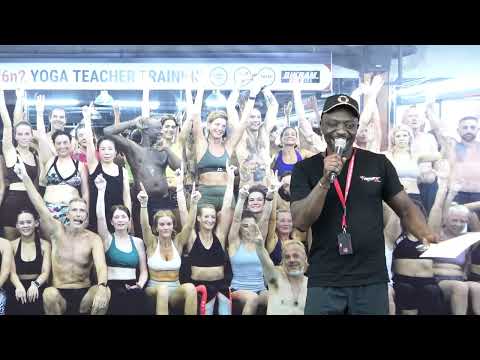
Trainees in a YogaFX studio class. Watching real classes is one of the checks in this guide.
How to Choose a Yoga Teacher Training: Claim by Claim
Schools describe themselves in a few repeated phrases. Each phrase is a claim, and a claim is only worth the evidence behind it. If you are working out how to choose a yoga teacher training, the table below turns seven common claims into something you can verify in an evening.
Claim you will read
Evidence that would settle it
Where to check
A weak answer looks like
Accredited
A named body you can look up
Yoga Alliance school directory, searched by exact school name
A logo with no link behind it
Internationally certified
Who issues the certificate and who outside the school recognises it
The issuer's own web page
The school's own seal and nothing else
Experienced lead trainer
Total teaching hours and who trained them
Trainer profile and teaching videos
Years in business instead of hours taught
Hundreds of happy students
Reviews on platforms the school does not run, spread over several years
Google and Yoga Alliance review pages
Testimonials found only on the school's own site
Live feedback
Written live hours and a named person who corrects you
Schedule and syllabus
"Full support" with no hours attached
Safe heated training
A syllabus unit on heat, hydration and warning signs
Syllabus and discovery call
No mention of heat at all
Career support
What is included, in writing, and who answers your questions
Written quote
A promise of guaranteed work
Table 1. How to choose a yoga teacher training: seven common claims, the evidence that settles each, and where to check it.
What the Table Tells You
Read the last column first. Every weak answer has the same shape: a label with nothing behind it. A strong answer, on the other hand, always points somewhere you can click. So start with the first two rows, because they are free and fast, and move down only if the school passes.
Notice that none of the seven claims is about price or location. Those matter, but how to choose a yoga teacher training you can finish depends on proof first. If you want the same idea written as nine questions for applicants planning to train in Bali, we set it out in a nine-question checklist on our Bali training site.
How to Choose a Yoga Teacher Training: Five Evidence Levels
Not all proof weighs the same. A word on a website costs nothing, while a trainer correcting you in real time cannot be faked. The infographic ranks five kinds of evidence from easiest to fake to hardest.
1
A claim
A word such as "accredited" or "certified". It costs nothing to write, so it proves nothing alone.
2
A listing
A directory entry you can find by the exact school name, at the level the school advertises.
3
A record
Teaching hours you can ask for. Mr. Ian Terry has taught 12,000+ hours, and any lead trainer should give you theirs.
4
Outside reviews
150 Google and 50 Yoga Alliance reviews for YogaFX, written on platforms we do not run.
5
A watched class
Live hours when a trainer sees you teach and corrects you on the spot. This is the hardest level to fake.
Source: YogaFX records; Yoga Alliance school directory page, read 14 November 2026. Cards stack on narrow screens.
A good school gives you evidence at all five levels. A weak one stops at level one or two, and that's usually where the brochure ends. Because levels four and five need the most effort from the school, they tell you the most about how it will treat you after you pay.
How Do You Check a Yoga School’s Registry Listing?
What a Registry Can and Cannot Show
How to choose a yoga teacher training starts with the registry, because the word "accredited" sounds official yet has a precise meaning in education. The U.S. Department of Education says accreditation ensures that institutions of higher education meet acceptable levels of quality. That system is built for colleges, so a yoga school using the word should name the body behind it.
Most schools mean something simpler. Yoga Alliance describes itself as the global registry for yoga teachers and schools, and its footer says it is a nonprofit 501(c)(6). It doesn't call itself an accreditor or a government regulator on the pages we read. A registry listing shows a school met a published standard. It does not show how well that school teaches.
A Five-Minute Directory Check
We opened the public directory on 14 November 2026. Its search has a designation menu that includes RYS 200, RYS 300 and RYS 500. Here is the routine:
Search the exact school name from your invoice or booking page, not the brand name on the homepage.
Compare what you find with what the school claims. A school that says RYS 200 should appear under it.
Look up the lead trainer separately, because a school listing is not a teacher listing.
Save a dated screenshot and file it with your booking confirmation.
A listing is a real signal, and a missing one isn't a verdict, just a question.
In YogaFX's 2026 research comparison of 31 hot yoga teacher trainings (reports R1a and R1b, built from public records retrieved in October 2026), we found a Yoga Alliance listing for 10: four of the 19 schools in one group and six of the 12 in the other. So registration is not universal, even among well-known names.
Keep that in mind as you work out how to choose a yoga teacher training: search the name yourself, and write down what you find.
For the full rules on how the school and the teacher listings connect, read our guide to who registers the school.
A trainee talks with a trainer on the studio floor at a YogaFX intensive. Ask to speak with the lead trainer before you pay.
How Should You Read Yoga Teacher Training Reviews?
Reviews carry more weight than anything else in how to choose a yoga teacher training, so they deserve the most suspicion. In August 2024 the U.S. Federal Trade Commission announced a final rule banning fake reviews and testimonials. According to the agency, it covers fake and AI-generated reviews, bought reviews, insider reviews that hide a connection, company-run sites posing as independent, and review suppression.
You don't need to be a lawyer to use that list. Treat it as a reading guide.
Five Questions for Any Review
Ask these of every review you see:
Who wrote it? A name, a year and a platform beat an anonymous quote.
Where does it live? A review on the school's own site is an advert. One on Google or Yoga Alliance is harder to edit.
Does it name the teacher and the training? Detail is hard to invent, while praise like "amazing!" is easy.
Is it spread over years? A burst of reviews in one month proves little.
Is every review perfect? Real groups include small complaints, so look at how the school answers them.
What Three YogaFX Graduates Said
YogaFX has 150 Google reviews, 50 Yoga Alliance reviews and 357 YouTube testimonials. We do not edit the Google ones. Here is what two graduates wrote there, and a third spoke on camera.
Mr Ian Terry is truly exceptional. His expertise, passion, and dedication to the practice of Bikram yoga are evident in every class.
Septa, Google review, 2024
He really brings out your best and genuinely wants you to succeed.
Ivara, Google review, 2023
Shiro, in a 2025 YouTube review of about 30 seconds, thanks Mr. Ian and the team on camera after finishing the course. Watch it, then judge the person speaking, not only the words.
Video helps for another reason. You can see how a trainer talks to students and whether trainees look supported. If you want to read how graduates describe their results, our post on yoga teacher training reviews and the evidence separates what they report from what research backs up.
Hours, Format and Live Feedback: What an Online Course Can Teach
Format is where marketing hides the most when you choose a yoga teacher training. A course can be "online" and still give you real feedback, or it can be a folder of videos. The difference is live hours, so ask for them as a number.
The U.S. National Center for Complementary and Integrative Health (NCCIH) gives advice that applies to teachers as well as students. It says to practise yoga under the guidance of a qualified instructor, and to ask about the training and experience of the instructor you are considering. You can read it on the NCCIH yoga safety page.
The same page warns that hot yoga has special risks related to overheating and dehydration. That is a practical reason to weigh live hours when you decide how to choose a yoga teacher training.
That warning matters for you as a future teacher. Someone must teach you to notice a struggling student in a heated room. So ask what the syllabus says about heat, and compare the answer with what a good hot yoga certification should teach about heat safety.
Questions for the Live Component
How many hours are live? Ask for a number, split into live and self-study.
Who corrects you? A named trainer who watches you teach is worth more than a forum.
What if you miss a session? A clear answer here usually means the school has seen it before.
What do you practise out loud? A scripted method needs speaking practice, not only reading.
Our approach is online first, then live. You study at home, then attend a six-day intensive in Bali where you teach and get corrected in person. The page on how online yoga teacher training works walks through an eight-week plan, and it shows what you can learn from a screen and what you cannot.
Trainees talk together during a break at a YogaFX intensive in Bali.
What Research Can and Cannot Tell You About a Hot Yoga Course
Some schools lean on science to sound convincing. Research is useful, but only if you read it at its real size. Two sources are worth knowing, and both come with limits.
A 2025 Systematic Review
The first is a 2025 systematic review by Willmott and colleagues in Sports Medicine - Open. It pooled 43 studies and 942 participants. Acute hot yoga raised body temperature and heart rate, but the energy cost was not higher than non-heated yoga.
The authors called the psychological findings promising but inconclusive. They also said claims that hot yoga beats other yoga or exercise are not yet substantiated.
A 2023 Randomised Trial
The second is a randomised trial by Nyer and colleagues in the Journal of Clinical Psychiatry (2023). Of 65 adults analysed, about 59% of the heated yoga group had a fall of half or more in depressive symptoms over eight weeks. In the waitlist group, it was about 6%. The authors describe the results as preliminary, and they call for studies with active comparison groups.
What to Take From the Research
So what should you take from this?
Research helps you decide how to choose a yoga teacher training only in a modest way: it supports careful questions about heat and modest claims. It does not support slogans like "proven to fix" anything. If a school page promises a medical result, treat that promise as marketing.
This article is general information, not medical advice, so consult a healthcare professional before training in a heated room if you have any health concern.
How YogaFX Answers the Same Checks
This is how YogaFX answers the question of how to choose a yoga teacher training. Please hold us to the table above, row by row.
Our lead trainer is Mr. Ian Terry. He holds the E-RYT 500 credential and has taught 12,000+ hours. Between 2014 and 2019 he spent five years training with the founder of the Bikram Hot 26&2 method. He is also a Master Trainer for the Republic of Indonesia Yogasana Sports Federation.
If you want to know what E-RYT 500 does and does not prove, ask any lead trainer to explain theirs.
Since 2017, YogaFX has trained more than 1,500 graduates from over 80 countries. Graduates leave with the Yoga Alliance RYT 200 and the Bikram Hot 26&2 200-Hour International Yoga Certification. Mr. Ian also speaks personally to every student before enrolment on a discovery call, so you can ask him anything first.
The next intensive checks in on Sunday 24 January 2027 and checks out on Friday 29 January 2027, at Soham Wellness Center in Seminyak, Bali. When you are ready to talk, start at our hot yoga teacher training online page and ask us to prove every claim above. We would like you to.
A Seven-Day Plan to Check Any School
Use this plan whenever you need to know how to choose a yoga teacher training. Spread the checks over a week so you decide calmly instead of under a countdown timer.
Day 1: Write down the school's claims from its homepage, in its own words.
Day 2: Search the Yoga Alliance directory by exact school name, then the lead trainer.
Day 3: Ask who issues the certificate and who outside the school recognises it.
Day 4: Read reviews on Google and Yoga Alliance, and sort them by date.
Day 5: Watch two full teaching videos and note how the trainer corrects people.
Day 6: Ask for live hours, the syllabus unit on heat, and a written quote.
Day 7: Book a discovery call, then compare answers across schools on the same basis.
Because the plan only needs a browser and a notebook, it'll protect your deposit at no cost. A school that welcomes these checks has told you something good. A school that resists them has told you something too. That is how to choose a yoga teacher training with evidence: ask, check, compare, then decide.
FAQ
Can a beginner do yoga teacher training?
Many schools accept beginners, but a steady practice helps. Build a few months of regular classes first, especially before a heated course. Tell the school about any injury or health condition upfront so it can advise you honestly, and ask what preparation it expects before the live part begins.
How many hours do you need to teach yoga?
There is no single rule for every studio or country. Yoga Alliance lists RYS 200 as its foundational 200-hour training for new teachers, and many studios ask for that. Check what the studio you want to teach at accepts, and what its insurer asks, before you choose a course.
Are yoga teachers certified?
Many are, but certification is usually voluntary and issued by schools or registries, not by a government licence. Rules vary by country and studio. Read our guide to whether you need a licence to teach yoga, then ask your target studio and insurer what they require before you pay.
Which yoga teacher training is best?
There is no single best course, only the best fit for your goal and your evidence checks. Compare schools on the same basis: registry listing, lead trainer record, outside reviews, live hours and heat safety. The school that answers all five clearly, in writing, is usually the right choice.
How can I tell if reviews of a yoga school are real?
Look for reviews on platforms the school does not run, with a name, a date and detail about the teacher. Check that they spread over several years and include mixed comments. Be cautious when every review is perfect, anonymous or found only on the school's own website.
A yoga championship rewards flexibility, strength and control, and research backs each of them in part. One 8-week trial found looser hamstrings and a stronger deadlift in hot yoga students. A 2025 review of 43 studies also reported flexibility gains. No study tested champions, so use the findings as a guide, not a promise.
What a Yoga Championship Actually Measures
Athletes at a yoga championship perform postures in front of judges. The judges score how well each posture is done. A good score needs a wide range of motion, enough strength to hold the shape, and calm control while the body shakes a little.
So the useful question is not who wins. It is which physical qualities practice can change, and how we know. This guide answers it with three sources we opened and checked: one controlled trial, one systematic review and one clinic guide.
Flexibility. Deep forward folds, backbends and splits only score well when the joints allow the full shape.
Strength. Holding a posture still for several seconds takes muscle, especially in the legs, hips and back.
Control. Balance and steady breathing keep a posture clean when the clock is running.
The rest of this article takes flexibility and strength one at a time, because the research behind them is different.
Yoga Championship Flexibility: What the Studies Found
The 8-week hot yoga trial
The clearest data comes from Tracy and Hart (2013), published in the Journal of Strength and Conditioning Research. Twenty-one healthy young adults took part. Ten did Bikram yoga for 8 weeks, 24 classes in total, and 11 did no training.
The yoga group improved lower back and hamstring flexibility by a large margin compared with the control group. Shoulder flexibility rose as well. The authors described these as beneficial musculoskeletal changes that matched the training.
That matters for a yoga championship, because forward folds and backbends rely on exactly those areas. It also shows how fast change can start: 24 classes in 8 weeks is about three a week.
A standing leg stretch on the World Yogasana Championship stage asks for hip and hamstring range, two areas the trial measured.
The 2025 review of 43 studies
A bigger picture comes from the 2025 systematic review by Willmott and colleagues in Sports Medicine - Open. It pooled 43 studies and 942 participants. Most of the studies used Bikram yoga, and about three quarters of the people were women.
The review lists flexibility and balance among the functional adaptations seen with hot yoga training. It also reports changes in body composition and bone mineral density. The authors call parts of the psychological evidence promising but inconclusive.
They also add a warning. They say that case studies report ill health after hot yoga, so caution is advised. And they describe claims that hot yoga beats other yoga or traditional exercise as unsubstantiated.
What a clinic guide adds
Mayo Clinic says research has shown that stretching can improve flexibility and, as a result, the range of motion of your joints. It suggests holding each stretch for about 30 seconds and stretching at least two to three times a week. It also advises against bouncing and warns that you may hurt yourself if you stretch cold muscles.
Put together, the three sources agree on one thing. Flexibility responds to regular, repeated practice, and it fades if you stop.
Yoga Championship Strength: What the Evidence Supports
Strength is where people expect the most from yoga and where the evidence is thinner. In the same 8-week trial, the yoga group gained isometric deadlift strength compared with the control group. An isometric test measures how hard you can pull without moving, which is close to holding a posture.
Handgrip strength did not change. Resting heart rate, blood pressure and treadmill fitness did not change either. So the study points to a specific effect on the back and legs, not a general fitness boost.
The 2025 review does not list strength as a headline result in its abstract, so we don’t claim it for hot yoga as a whole. If you want the full picture on muscle, read our guide on whether hot yoga builds muscle.
Balancing Stick asks the legs, hips and back to hold one long line still, the kind of strength judges reward.
Yoga Championship Research at a Glance
The table below sets the three sources side by side, so you can see what each one measured and where it stops.
Source
Who or what
Flexibility
Strength
Main limit
Tracy and Hart, 2013
21 healthy young adults, 8 weeks, 24 classes
Lower back, hamstring and shoulder gains vs control
Deadlift strength up, handgrip unchanged
Small groups, short study
Willmott et al., 2025
43 studies, 942 participants
Listed as a functional adaptation
Not a headline result
Uneven study quality
Mayo Clinic guide, 2023
Stretching advice for adults
Better range of motion with regular stretching
Not covered
Not a yoga trial
Table 1. What three checked sources say about flexibility and strength, and their limits.
24 classesIn 8 weeksThe trial group practised about three times a week.
21 adultsSmall sample10 did yoga and 11 were controls, so treat results as early.
43 studies942 participantsThe 2025 review behind the flexibility finding.
30 secondsPer stretchThe hold time Mayo Clinic suggests, with no bouncing.
2 to 3 timesPer weekThe minimum stretching rhythm in the same guide.
12 medals5 gold, 3 silver, 4 bronzeWon by YogaFX graduates in national, Asian and world events.
Figure 1. Yoga championship research in numbers. Sources: Tracy and Hart 2013; Willmott et al. 2025; Mayo Clinic stretching guide 2023; YogaFX graduate records.
Where the Evidence Stops
Honest science also names its limits. Here’s what matters most if you hope to train for a yoga championship.
No athletes were studied. The trial used healthy young adults who were not competitors, so it cannot tell us what makes a medal winner.
The sample was small. Ten people in the yoga group is enough to suggest an effect, not to settle it.
The trial was short. Eight weeks shows early change. It says little about years of training.
Heat was part of the package. Because the classes were heated, we cannot say how much of the gain came from the heat and how much from the postures.
None of this makes the findings useless. It means the right reading is modest: regular practice can improve flexibility, and may improve some strength, in healthy adults. The review authors reach a similar view when they say superiority over other exercise is unsubstantiated.
For the bigger question of how the sport is governed, see our explainer on the international yoga sports federation and what recognition requires.
How to Read a Yoga Championship Study Headline
News about a yoga championship often arrives with big claims attached. A headline might say yoga “makes you a champion” or that one style beats all others. Here’s a quick way to test it before you believe it.
Check who was studied. Results from healthy young adults may not apply to older students, beginners with injuries or elite athletes.
Check the comparison. A control group that did nothing is an easy bar. Gains against a group doing other exercise would be stronger evidence.
Check the size. Small groups can show real effects, but they can also show chance. Look for the number of people and the length of the study.
Check what was measured. A deadlift pull, a sit-and-reach test and a judge’s score are three different things.
Check who funds and reviews it. Peer-reviewed journals and university or hospital sources are a safer base than a studio brochure.
Apply these five checks to the yoga championship research above and the picture stays honest. The trial is real and well described, and it is also small and short. The review is broad, and its authors still call for better study designs.
The same habit helps when you read about the sport itself. Medal tables, federation news and ranking claims all deserve a second look at the source. That’s why we link every study we cite, so you can open it and judge for yourself.
What the research does not tell you
No study we found links a hot yoga programme to a result at a yoga championship. We can’t say how many classes produce a podium finish, or whether flexibility or strength matters more for a given event. Those questions need studies of competitors, and they haven’t been done yet.
What the research does support is simpler. Regular, guided practice can improve range of motion in healthy adults, and it may add some strength in the back and legs. For most students, that’s a useful reason to keep showing up, whether or not a yoga championship is the goal.
Mr. Ian Terry’s View From the Training Floor
Mr. Ian Terry holds the E-RYT 500 credential and has more than 12,000 teaching hours. He trained for five years, from 2014 to 2019, with the founder of the Bikram Hot 26&2 method. He is also a Master Trainer for the Republic of Indonesia Yogasana Sports Federation.
That role gives him a view of both the studio and the competition floor. YogaFX graduates have won 12 medals across national, Asian and world events: 5 gold, 3 silver and 4 bronze. At the World Yogasana Sports Federation Championships in Ahmedabad, held 4 to 8 June 2026, Indonesia took 7 medals: 1 gold, 2 silver and 4 bronze.
Two of those athletes are graduates. Ivara Candra Kartika (class of 2023) won one gold and one bronze in Ahmedabad. Arkan Fauzan Riyanto (class of 2022) won two silver and three bronze.
What does Mr. Ian teach that carries over? Three habits come up again and again in class:
Precision first. A scripted class trains students to follow exact cues, which is the same discipline judges reward.
Calm under stress. Heat, a full room and a clock all pull attention away from the posture, so students practise pulling it back.
Small steps, repeated. Range of motion grows from regular practice, not from one heroic session.
Credentials matter when you choose who teaches you, and our guide to the E-RYT 500 meaning explains what the title does and does not prove.
Mr. Ian Terry, Master Trainer for the Republic of Indonesia Yogasana Sports Federation, at the 1st World Yogasana Championship 2026 in Ahmedabad.
What YogaFX Students Say About Pushing Their Limits
Numbers show averages. Students describe what a change feels like. These are three reviews from the YogaFX YouTube channel, shown by first name, with short close paraphrases of what each person said.
In a Locust posture, Manou could not raise a leg past 45 degrees at first. With help from Mr. Ian and a fellow trainee, the leg went past 90 degrees, and Manou says the moment brought tears.
Manou, YouTube review, 2025 (paraphrased)
Ivara credits Mr. Ian for pushing every single day. Even when the answer was “I cannot,” the reply stayed the same: “you can do it.”
Ivara, YouTube review, 2025 (paraphrased)
Jennifer says she researches everything first, from the teacher’s credibility to the safety of the training, and wanted to be sure it would go exactly as she expected.
Jennifer, YouTube review, 2024 (paraphrased)
Jennifer’s habit is a good model for you too. Check the teacher, check the evidence and check the safety before you commit.
A Safe Yoga Championship Style Week at Home
You don’t need a stage to train the qualities above. You need a plan that respects the limits of the research. Here is a simple weekly rhythm built on the checked sources.
Five rules for the week
Practise three times. The trial group averaged about three classes a week, and Mayo Clinic suggests stretching at least two to three times weekly.
Warm up first. Walk or cycle gently for 5 to 10 minutes, because stretching cold muscles raises the risk of a strain.
Hold, do not bounce. Stay about 30 seconds in each stretch and breathe normally.
Aim for tension, not pain. If it hurts, you have pushed too far, so back off.
Keep it cool at home. You don’t need a heated room to practise range of motion.
Heat safety if you do practise warm
MedlinePlus advises drinking fluids before, during and after exercise, even if you are not thirsty. It also lists warning signs of heat illness, such as heavy sweating, dizziness, headache and nausea. At the first sign, get out of the heat and cool down. Pale yellow urine is a sign you are drinking enough.
Please consult a healthcare professional before starting a heated practice, especially if you have a heart condition, are pregnant or take regular medication. The review authors themselves advise caution.
From Yoga Championship Knowledge to Teaching Skill
Understanding the research is useful whether you compete, practise or teach. A good teacher explains why a posture is cued a certain way, and can say what the evidence does and does not support.
That’s the idea behind our online hot yoga course at YogaFX, which is led by the science and graded evidence. You learn the sequence, the physiology and how to coach students safely, and you can study from home. Mr. Ian leads the training.
If you plan to teach, check how a school is listed and how hours are counted. Our guide on Yoga Alliance certification from home explains the rules in plain language.
FAQ
Is yoga a competitive sport?
Yes, in many countries. Athletes perform set postures in front of judges, who score how well each one is done. Some practitioners still argue that competition clashes with the spiritual roots of yoga, so opinions differ. Rules and scoring vary by federation, so check the one running the event.
Does yoga improve flexibility for a yoga championship?
Research suggests it can. In an 8-week trial of 21 healthy young adults, the Bikram yoga group improved lower back, hamstring and shoulder flexibility compared with a control group. A 2025 review of 43 studies also lists flexibility among hot yoga adaptations. Studies of champions are still missing.
Does yoga build the strength a yoga championship needs?
Partly. The same 8-week trial found more isometric deadlift strength in the yoga group, but handgrip strength did not change. The 2025 review does not highlight strength in its abstract. So yoga may build strength in the back and legs, not everywhere.
How often should I stretch to improve flexibility?
Mayo Clinic suggests stretching at least two to three times a week and holding each stretch for about 30 seconds. Breathe normally, avoid bouncing and expect tension, not pain. Warm up for 5 to 10 minutes first, because stretching cold muscles can cause injury.
Is hot yoga safe to practise for competition training?
It is safe for many healthy adults, but not for everyone. Researchers advise caution because some case reports describe ill health after hot yoga. Drink fluids, watch for dizziness or nausea, and stop if you feel unwell. Consult a healthcare professional first if you have a medical condition.
Still have questions? Message Mr. Ian and the YogaFX team on WhatsApp and we will answer them personally. We can explain how the online hot yoga course works and whether it suits your goals, whether you want to compete or simply teach.
Yoga teacher training reviews describe health changes far more often than they describe certificates. In 482 YogaFX reviews, graduates mention strength, flexibility, energy, confidence and calmer moods. Research supports some of these claims. One heated yoga trial, for example, found lower depression scores. Still, a review alone cannot prove any of them.
That gap matters because you are choosing a school. Most yoga teacher training reviews are warm, specific and sincere, yet they are still stories told after the fact. For example, they tell you what a graduate felt. Instead, they rarely tell you what changed, by how much, or whether the same thing would happen to you.
So we did two things. First, we counted which health themes appear in our own reviews. Second, we checked each theme against research we could open and read. The result is a short guide. It shows what graduates report, what studies back up, and how to read any school's reviews without being misled.
Mr. Ian Terry, an E-RYT 500 with more than 12,000 teaching hours, leads the YogaFX trainings behind these reviews. He asks trainees to treat their own results the way this article does. That means curiosity, plus a healthy dose of caution.
This article is general information, not medical advice. Please consult a healthcare professional before starting hot yoga or a teacher training. That matters most if you have a medical condition or an injury, or if you are pregnant.
What Yoga Teacher Training Reviews Say About Health
We ran a keyword count across the yoga teacher training reviews held in the review store that backs this site. It holds 482 reviews with written or transcribed text. Of these, 129 come from Google, 19 from Yoga Alliance and 334 from YouTube video testimonials. We searched for words linked to six health themes, such as strength, flexibility, confidence, calm, energy and injury.
A keyword count is crude. One review can mention several themes, and a word like "strong" can mean a strong practice or a strong teacher. Even so, the pattern is clear enough to be useful, and it is shown in Table 1.
Health theme in reviews
Reviews that mention it
Share of 482
What the research we checked says
Strength or flexibility
42
8.7%
A small study summarised by Harvard Health found gains after 8 weeks
Energy or sleep
31
6.4%
No teacher training trial found; treat as personal report
Confidence
21
4.4%
Not measured in the sources we opened
Stress or calm
15
3.1%
One 8-week heated yoga trial found lower depression scores
Injury or pain
12
2.5%
No promises possible; ask a healthcare professional first
Anatomy or science taught
12
2.5%
A course feature, not a health outcome
Table 1: Health themes found by keyword count in 482 YogaFX reviews. One review can appear in more than one row.
So two things stand out. Physical themes lead the list, which is what you would expect from a course built on a physical practice. And the injury and pain theme is the smallest, which tells us graduates rarely frame their training as treatment.
The research column is just as telling. Only the stress and mood theme has a controlled trial that we could open. That trial studied regular classes, not teacher training. For every other theme, the plain summary is that the reviews are the main evidence available.
Trainees tick off postures on the progress wall, one of the habits reviewers describe.
Stress and Mood: Where Yoga Teacher Training Reviews Meet a Trial
Calm and confidence turn up in graduate stories again and again, usually in plain words. One Google reviewer, Ebtesam, wrote about the effect of encouragement from her trainer:
“Mr. Ian, thank you for always believing in me and telling me constantly 'I can do this'.”
Ebtesam, Google review, 2022
That's a confidence story, and it's a good one. It is also a story about a relationship with a teacher, not about heat, postures or physiology. A reader can enjoy it and still ask what a controlled study would add.
The trial behind the claim
The best match we found is a randomised trial by Nyer and colleagues at Massachusetts General Hospital. It appeared in the Journal of Clinical Psychiatry in 2023. We read its record on Europe PMC. The team compared 8 weeks of community-delivered heated hatha yoga with a waitlist in adults with moderate-to-severe depression.
What the trial found
Who took part: 80 adults were randomised, and 65 were analysed (33 in the yoga group, 32 on the waitlist).
What happened:59.3% of the yoga group cut their depression symptoms by half or more, against 6.3% of the waitlist group.
How big was the effect: the drop in symptom scores was larger for yoga, with a Cohen's d of 1.04.
How much yoga: participants attended 10.3 classes on average over the 8 weeks.
However, the authors call the result "preliminary" and say that trials with active comparison groups are still needed. We agree with that caution. A waitlist group knows it is not getting the treatment. So some of the gap may come from expectation and attention, not from heat or posture.
So the lesson is narrow but useful. Heated yoga practised regularly has some early trial support for mood. Nobody has yet run a trial on teacher training itself. For more detail on the mood research, see our guide to hot yoga for depression. It reads that evidence without the hype.
If you live with depression or any mental health condition, please speak with a doctor or therapist before changing your treatment. Yoga should sit alongside professional care, not replace it.
Practice teaching puts trainees on the stage, which many reviewers say built their confidence.
Strength, Flexibility and Fitness: The Most Common Claim
Physical change is the biggest theme in our reviews, and it is the easiest to believe. Training hours add up, so a trainee who practises and teaches for many hours a week will usually feel stronger and move more freely.
What the beginner research adds
Research on beginners points the same way, although the evidence is modest. A Harvard Health article on the benefits of yoga describes a small study of sedentary people new to yoga. After eight weeks of practice at least twice a week, they had more muscle strength and endurance. Their flexibility and cardio-respiratory fitness improved too.
But notice what that study doesn't say. It does not say how much a trainee will gain. It also does not cover a full teacher training with long days of practice. That means it supports the direction of the claim, not the size.
Here's how that plays out in practice, according to the reviews we read:
Reviewers who arrived fit often describe gains in flexibility and control rather than raw strength.
Reviewers who arrived out of practice describe the biggest change, which fits the beginner research above.
Reviewers who teach after graduating describe staying strong because they keep practising, not because the course ended.
Daily stretching and practice is the physical habit most reviewers describe.
Jilly, a Yoga Alliance reviewer, put the bigger picture this way after her training:
“This is a simply outstanding training course. Not just for Yoga but self development.”
Jilly, Yoga Alliance review, 2019
That line captures why a keyword count undersells these yoga teacher training reviews. Many graduates talk about strength and flexibility. But the sentence that follows is usually about something less measurable, like discipline or self-belief.
Injuries and Pain: What Reviews Can and Cannot Tell You
Injury is the smallest theme in our reviews. Yet it is the one where careless reading does the most harm. For example, a review that says "my back felt better" is a report from one person with one history. It is not advice for yours.
What reviews can tell you is how a school behaves when a student has a limit. Cristina, a Yoga Alliance reviewer, described exactly that:
“The information complemented the practice and provided alternatives of postures for people with certain injuries.”
Cristina, Yoga Alliance review, 2024
That is a useful signal. It suggests the trainers taught alternatives instead of pushing everyone into the same shape. It is also the kind of detail you can ask a school about before you enrol.
Harvard Health's own advice on yoga is simple and worth repeating. Check with your doctor before you start a new exercise programme. That applies doubly to hot yoga. Long teacher training days add heat, volume and fatigue on top.
Ask the school: how do trainers adapt postures for injuries, and who decides when a trainee should sit out?
Tell your trainers early: old injuries, blood pressure, pregnancy and medication all matter in a heated room.
Look for specifics in reviews: a named adaptation beats a general line such as "the teachers were caring".
Trainees review their posture progress together at the clinic wall.
Five Numbers to Keep in Mind When You Read Health Claims
482
Reviews searched
Written or transcribed reviews in our store, from Google, Yoga Alliance and YouTube.
8.7%
Mention strength or flexibility
The most common health theme, found by keyword count.
65
People analysed in the trial
33 did heated yoga and 32 waited, so the study is small.
8 weeks
Length of the trial
Short enough to show early effects, too short to show lasting ones.
59.3% vs 6.3%
Symptoms cut by half or more
Yoga group against waitlist group in the same trial.
Sources: keyword count of the YogaFX review store; Nyer et al. 2023, Journal of Clinical Psychiatry, via Europe PMC.
Put those five numbers side by side. As a result, the shape of the evidence behind yoga teacher training reviews is easy to see. So we have a lot of stories, a small trial for one theme, and a gap between the two. That is a normal place for a young field to be. It is also a good reason to read reviews carefully.
How to Read Yoga Teacher Training Reviews for Health Claims
You don't need a statistics degree to read reviews well. A few habits will protect you from over-reading a glowing paragraph, whichever school wrote it. Here is the checklist we use when we read yoga teacher training reviews from any school:
Look for the specific change. "I could finally hold the posture" says more than "I feel amazing".
Note the starting point. A beginner and a long-time athlete will describe the same course very differently.
Check the timeline. A review written on the last day describes a mood. One written a year later describes a habit.
Separate the course from the teacher. Many praise a person, not a method, and that does not transfer to another trainer.
Watch for medical language. Words like "miracle" or "fixed" are a red flag for a review, and for a school that promotes it.
Read the three-star reviews. They usually name the hard parts: the heat, the hours, the cost.
Ask who the reviewer is. A named first name, a date and a source make a review easier to trust.
Spending twenty minutes on these questions will tell you more about any set of reviews than counting stars. For the bigger picture, our guide to accredited yoga teacher training online explains how to check who actually registers a school.
Online, Hot Yoga and Bikram Reviews: What Differs for Health Claims
Not every review describes the same course, so match the type to your question. Online yoga teacher training reviews mostly describe screens, pacing and tutor feedback. They rarely report physical change, because the practice happens at home.
Hot yoga teacher training reviews talk more about heat tolerance, stamina and recovery. Bikram yoga teacher training reviews, which relate to the Original Hot 26&2 Yoga method, often add the fixed 26-posture class and how it felt to lead it. Each type answers a different health question, so read the kind that fits yours. If you are still comparing schools, our guide to choosing a yoga teacher training with evidence shows how to weigh them.
Why Graduates' Stories Are Not Proof
We love our graduates' words, but we also know their limits. Four things keep any set of reviews from counting as proof of a health effect.
Selection: people who finish a course and choose to review it are more likely to be happy with it.
Self-report: a review records how someone felt, not a blood pressure reading or a depression score.
No comparison group: we cannot know what would have happened to the same person without the course.
Mixed causes: a trainee also changes sleep, food, friends and routine, so the yoga is only one ingredient.
None of this makes the reviews worthless. Instead, it makes them what they are: first-hand accounts that tell you what the experience is like. Studies then answer a different question, which is what the practice might do under controlled conditions.
So the sensible reading puts both together. Yoga teacher training reviews describe the lived experience. Trials test narrow claims. A good school tells you clearly which is which. When a site blurs the two, treat that as information about the site.
How YogaFX Online Hot Yoga Training Handles Health Claims
The yoga teacher training reviews in this article come from graduates of YogaFX trainings in Bali. The photographs show a 2025 training. This site covers the online side of hot yoga teacher training. It follows the rule we applied above: say what the evidence shows, and say what it does not.
Mr. Ian Terry holds E-RYT 500 status and has taught for more than 12,000 hours. He has trained more than 1,500 graduates from over 80 countries since YogaFX began in 2017. That experience is why he is careful with health promises, because he has watched too many trainees treat a good week as a fix.
Questions are always welcome, whether they are about the course, the science or your own health. Message Mr. Ian and the YogaFX team on WhatsApp and we will answer them personally.
FAQ
Is yoga teacher training worth it?
It depends on your goal. Graduates in our reviews value the teaching skills, the structure and the personal growth, and fewer of them mention income. Weigh the full cost against how you plan to use the certificate. Then read reviews from people with goals like yours before you commit.
What is yoga teacher training like?
Expect long days that mix practice, anatomy, philosophy and practice teaching. Reviews describe a structured course where trainees teach each other and receive feedback. Hot yoga trainings add heat to the workload. So build your stamina first, and tell your trainers about any injury or health condition before day one.
Can you do yoga teacher training online?
Yes, many schools now teach part or all of the hours online. Ask how the hours count towards registration, how practice teaching is assessed, and who the lead trainer is. Then read reviews from graduates who studied in the same format, because an in-person review may not describe your experience.
How does yoga teacher training change you?
Reviews most often mention a stronger practice, more confidence and a calmer outlook. Each is a personal report, not measured proof. One heated yoga trial found larger drops in depression scores than a waitlist. However, it studied regular classes, not teacher training. Treat both as signals, not guarantees.
Can you do yoga teacher training as a beginner?
Many schools accept students with limited experience, but requirements differ, so ask before you enrol. A steady practice for several months helps you cope with the daily hours. Be open about injuries and ask how trainers adapt postures. If you have a medical condition, check with a healthcare professional.
Still have questions? Message Mr. Ian and the YogaFX team on WhatsApp and we will answer them personally. Tell us your goals, your experience level and any health questions, and we will tell you plainly whether the course fits you.
The international yoga sports federation (IYSF) is a world body for competitive yoga, but by its own account it is not yet recognised by the IOC. Its website says it is working toward the IOC’s criteria. Recognition asks for governance, rules and anti-doping systems, not just good postures and a big championship.
That gap is the whole story of the international yoga sports federation right now. This guide explains what recognition involves, step by step, and where yoga stands on each step. It also shows how to check any federation’s claims yourself, because the names are easy to mix up. For a different view of the same body, our sister site has a federation-by-federation breakdown.
Mr. Ian Terry, E-RYT 500, brings the teacher’s side. He has more than 12,000 teaching hours and is a Master Trainer of the Republic of Indonesia Yogasana Sports Federation. Our working rule for the international yoga sports federation, and for every other body, is simple: a sport is a set of rules you can verify, so we read the primary pages before writing a word of this.
Balance postures such as Standing Bow Pulling Pose are practised in class before anyone thinks about a scoreboard.
What the International Yoga Sports Federation Is, and What It Is Not
The international yoga sports federation presents itself as the global governing body for “Yoga Sports”. In other words, the IYSF wants to be to yoga what other world federations are to their sports. Its homepage lists an Executive Committee, an Athletes’ Commission and a Technical Committee. It also lists international judges and international coaches.
Three things it isn’t are worth stating early, because search results blur them:
Not a teacher registry. A credential such as RYT 200 comes from a school and a registry. A federation certifies judges and coaches for a sport.
Not owned by one style. A federation scores posture families. It does not sell a brand of yoga.
Not automatically “Olympic”. A world championship is not the same as recognition by the IOC.
If you came here comparing a federation with a teacher registry, our guide to who registers an online yoga school covers the registry side. Here we stay on the sport side.
How Recognition Works: What the International Yoga Sports Federation Would Need
The IOC’s own page defines the term. It says International Sports Federations are international non-governmental organisations recognised by the IOC as administering one or more sports at world level. The page adds that a federation seeking recognition must ensure its statutes, practice and activities conform with the Olympic Charter.
That’s a governance test, not a talent test. The Olympic Charter, which is in force as from 24 June 2026, sets the conditions for the Games and the relations between the federations, the national Olympic committees and the movement. It has a rule titled “Recognition of IFs” (Rule 25), so the process is written down and public.
So recognition is a ladder with named rungs. The table below sets each rung beside what it checks and where yoga stands, using only pages we opened and read.
Recognition rung
Who decides
What it checks
Where yoga stands (IYSF’s own wording)
1. Run a sport worldwide
The federation
Rules, committees, a regular world event
IYSF lists committees and a 17th World Championship, 4 to 6 December 2026, in Italy
2. Train and certify officials
The federation and its national members
Judges and coaches at set levels
IYSF certifies judges and coaches at three levels (A, B, C); only national federations certify national officials
3. Build national members
Country federations
One body per country that selects athletes
Indonesia, for example, has a national yogasana federation with a Master Trainer
4. Conform with the Olympic Charter
The IOC
Statutes, practice and activities in line with the Charter
IYSF says it is “actively working to meet” the criteria
5. Handle anti-doping and fair play
The sport and WADA-aligned rules
Anti-doping rules harmonised with the Code
IYSF says it adheres to the principles of the World Anti-Doping Convention and Fair Play
Recognition ladder built from the IOC federations page, the Olympic Charter page and the IYSF website. Checked 14 November 2026.
Read the last column carefully, because it’s where the answer sits. Rungs 1 to 3 are things the IYSF can build itself. Rungs 4 and 5 depend on outside bodies, which is why they take years.
Where Yoga Stands Today: Five Checks on the Federation Itself
Instead of trusting a headline, run the same five checks on the IYSF that you would run on any federation. We did, using its own site, because a primary source beats a summary.
Is there a rulebook? Yes. The IYSF rules page says its rules apply to all IYSF official competitions and links the posture guidelines.
Is the format clear? Yes. Athletes perform a six-posture routine within three minutes, one posture from each of six groups: backbends, forward compressions, tractions, twists, lifts and inversions.
Are the stillness rules measurable? Yes. A posture needs at least three seconds of stillness to score and five for the maximum, with deductions in between.
Are the categories published? Yes. The rules list five divisions: youth (9 to 11, 12 to 14, 15 to 17), adult (18 and over) and senior (50 and over).
Is the history consistent? Not fully. The IYSF history page gives more than one founding date, one line saying 2003 and another saying it was founded in Lausanne in 2013 and registered in 2014.
That last result isn’t a scandal. It’s a reminder to read the primary page, cross-check dates, and say so when sources disagree. As a result, a federation can have a sound rulebook and still need tidier records.
The recognition status, stated fairly
On recognition itself, the IYSF is honest on its own site. It says it is “on the path to official recognition” and is working to meet the IOC’s criteria. We found no claim of current IOC recognition on the pages we read, and none of government recognition. So “is yoga an Olympic sport?” has a plain answer today: not on IYSF’s own account.
A quick way to test any claim
When a page says “recognised”, ask three questions. Who recognised it? Where is that body’s own page saying so? And what date is on it? If the answer to the second question is only the federation’s own website, treat the claim as a hope, not a fact. That test works for the IYSF, and it works equally well for a school that says it is “internationally accredited”.
Doping, Fair Play and Why Judges Matter More Than Medals
Anti-doping is the second pillar of recognition. The World Anti-Doping Code is described by WADA as the core document that harmonises anti-doping policies, rules and regulations within sport organisations and among public authorities around the world. A yoga body can adopt the same principles, and the IYSF says it does.
Officials are the other pillar for any federation. Scores only mean something if the people giving them are trained the same way. IYSF’s three official levels, A for international, B for national and C for local, show the structure a recognised sport needs: a pathway from local judge to world judge.
Local (C): judges and coaches working at club and regional events.
National (B): certified by the national federation, since only national federations can certify national officials.
International (A): the level that judges world events.
Most competitors start where everyone starts: in a full room, learning one posture at a time.
International Yoga Sports Federation: The Numbers at a Glance
17th
World Championship
IYSF lists it for 4 to 6 December 2026 in Marina di Camerota, Italy.
150+
Athletes expected
IYSF’s homepage expects 150+ athletes and 30+ countries.
6
Postures, 3 minutes
One posture from each of six groups, inside three minutes.
3 sec
Minimum stillness
Three seconds to score, five seconds for the maximum.
3
Official levels
Judges and coaches are certified at levels A, B and C.
5
Divisions
Three youth bands, adult 18+ and senior 50+.
Source: IYSF website and rules pages (iysf.org), read 14 November 2026. Figures are the federation’s own statements.
Why a Sport Needs National Federations: The Indonesia Example
International bodies set the stage. National federations build the athletes. That is the third rung in the table, and it is where our own story sits.
In June 2026 the Republic of Indonesia Yogasana Sports Federation confirmed Mr. Ian as a Master Trainer. At the World Yogasana Sports Federation Championships in Ahmedabad, 4 to 8 June 2026, Indonesia took 7 medals: 1 gold, 2 silver and 4 bronze. Over the years, YogaFX students have won 12 medals in total, 5 gold, 3 silver and 4 bronze. For the flexibility and strength research behind results like these, see yoga championship performance and the research.
Notice what that shows about national bodies. A national federation can send a team to a world event even while the IYSF is still working toward recognition. Our competitive yoga scoring guide explains how those scores are built, line by line.
Control in a backbend is a skill you can study and rehearse long before any event.
Three Myths About the International Yoga Sports Federation
Three misunderstandings come up again and again when people search for this topic. Each one is easy to test against the sources above.
Myth 1: A big world championship means the sport is recognised
A championship shows that a federation can organise an event. Recognition is a separate step, and the IOC page ties it to conformity with the Olympic Charter. The IYSF can fill a hall in Italy in December 2026 and still be working toward that step, exactly as it says on its own site.
Myth 2: A federation title replaces a teaching certificate
It does not. A federation certifies judges and coaches for competition. A teaching registration confirms that a school met a training standard. Many people need both, but they answer different questions, and neither one stands in for the other.
Myth 3: There is one world rulebook
The IYSF rulebook applies to its own official competitions. Other bodies, such as the USA Yoga federation and its national championship, run their own rulebooks, with different scoring details. So a USA yoga championship routine isn’t automatically an IYSF routine. Always read the rules of the specific event before you train for it.
What This Means If You Want to Teach, Coach or Judge
Recognition of an international yoga sports federation would change what teachers can do. A recognised sport needs coaches who can teach to a scoring standard, not just lead a flow. That opens practical doors, but each one has a different entry ticket:
Teaching: start with a registered course. Our guide to the E-RYT 500 meaning explains why the lead trainer’s experience matters online.
Coaching: go through your national federation, since only national bodies certify national coaches.
Judging: the pathway runs from local to national to international levels, as the table showed.
Here is where study online helps. Most deductions in any yoga scoring system come from knowledge, such as the order of postures, the entry, the hold and the exit. In the YogaFX online hot yoga course you learn each posture in the Original Hot 26&2 Yoga series by name and in order, before you ever step into a studio.
The six-day hybrid route
The YogaFX Bikram Hot 26&2 Yoga Teacher Training MasterClass is a 6-day hybrid programme: you study online first, then train in Bali. It leads to Yoga Alliance RYT 200 plus a Bikram Hot 26&2 200-Hour International Yoga Certification.
The next batch checks in on Sunday 24 January 2027 and checks out on Friday 29 January 2027, at Soham Wellness Center in Seminyak. So if you want to teach, read how to judge any course in our online hot yoga certification checks.
A note of care. Hot yoga is demanding and is not right for everybody. This article is general information, so please talk to a healthcare professional before you start, especially if you have a heart condition, are pregnant or take medication.
What Trainees Say About Learning With Mr. Ian
Standards only matter if the teaching is good. Here are three trainees in their own words, summarised closely. Each carries a first name, a source and a year.
Oche, Google review, 2020: gave positive marks for communication, quality and professionalism (close paraphrase of the rating tags).
Agung, Google review, 2019: called the experience fantastic and said it left him relaxed inside (close paraphrase).
Thomas, YouTube review, 2023: expected a tough physical class and instead found a diverse, supportive group and a very professional standard (close paraphrase, from his graduation video).
You can watch Thomas’s YouTube graduation review below. In total we have 150 Google reviews, 50 on Yoga Alliance and 357 video testimonials on YouTube.
What We Could Not Verify
Honest sourcing means saying what we could not confirm. We could not open PubMed or PMC to check health studies, so this guide makes no health claims from them. We also read only part of the IYSF posture-guidelines PDF and none of its 2027 rules, so check the current rulebook before you compete. Rules change.
FAQ
Is yoga an Olympic sport?
Not on IYSF’s own account. Its website says it is working to meet the IOC’s criteria and is on the path to official recognition. Recognition depends on governance and anti-doping systems, so a large world championship alone does not make a sport Olympic. Check the IOC federations page for the current list.
Why is yoga not considered a sport by everyone?
Many teachers see yoga as more than postures, so a scoreboard feels like a contradiction. Others point out that judged postures are physical skills with clear rules. Both views exist. Competitive yoga, called yogasana, measures only the physical side, and nobody has to compete to practise.
What is the difference between a yoga federation and Yoga Alliance?
A yoga sports federation governs a competitive sport and certifies judges and coaches. Yoga Alliance is a registry for yoga schools and teachers, such as RYT 200. They do different jobs, so a federation title does not replace a teacher registration, and a registration does not make you a judge.
How many divisions does the international yoga sports federation have?
Its rules list five divisions: youth ages 9 to 11, 12 to 14 and 15 to 17, adult 18 and over, and senior 50 and over. Rules can change between events, so read the current rules page and the event notice before you register for any championship.
How do I check if a yoga federation is legitimate?
Look for a published rulebook, named committees, trained judges, a clear event history and national members. Then compare dates across its own pages, as we did here. Ask whether any outside body, such as the IOC, has actually recognised it, and read that body’s page, not the federation’s claim.
Still have questions? Message Mr. Ian and the YogaFX team on WhatsApp and we will answer them personally. Chat with us on WhatsApp
A sauna after hot yoga adds a second heat load to a body that is already warm. In one 90-minute class study, average peak core temperature reached 102.0°F for women and 103.2°F for men. So leave a real gap, drink water first, and keep any sauna short if you are healthy.
That advice comes from a mix of data and teaching practice, and we'll keep the two apart in this guide. The data comes from published studies. The spacing rules come from how Mr. Ian Terry, E-RYT 500, with more than 12,000 teaching hours, trains teachers to manage heat.
This article is general information, not medical advice. Please consult a healthcare professional before you add a sauna to your routine, especially if you have a heart condition, low blood pressure or you are pregnant.
Most healthy adults can fit a sauna after hot yoga into the same week, and many do. Plenty of people even plan one as part of a spa day. What matters is how much heat your body has already absorbed when you walk into the cabin. No study we opened tested the two back to back, so nobody can promise a result either way.
Here is how we read the evidence, in plain terms:
The class is already a heat session. Core temperature rose steadily through a 90-minute class in the best study we found.
A sauna is passive heat on top. You sit still, but your heart rate and sweating still climb.
The research on benefits is modest. Pooled trials of passive heating did not show clear gains on most markers.
Spacing is the safe lever. A gap, water and a short stay are things you control, and teachers use them every day.
Heat management is taught in the room, not left to guesswork.
What Core Temperature Looked Like in a 90-Minute Class
The clearest data point comes from the University of Wisconsin-La Crosse. A team led by Emily Quandt and John Porcari measured core temperature with a swallowed sensor in 20 healthy, regular Bikram practitioners, 7 men and 13 women, aged 28 to 67. The study was reported by the American Council on Exercise in 2015, and the class ran for 90 minutes.
The class is described as heated to 105°F with 40 percent humidity. Men's average highest core temperature was 103.2°F (about 39.6°C). Women's was 102.0°F (about 38.9°C). One man finished above 104°F, and seven of the 20 volunteers passed 103°F at some point. Humid heat adds its own strain, which we compare in hot yoga vs steam room.
The researchers reported that participants began to hit what they called dangerous core temperatures about 60 minutes in. They also saw no signs of heat intolerance in anyone. Both facts are true at once, and that is why this study matters when you plan a sauna after hot yoga.
Core temperature in one 90-minute class, in degrees Celsius
38.9°C
Women, average peak
102.0°F across 13 women.
39.6°C
Men, average peak
103.2°F across 7 men.
40.1°C
Single highest
104.1°F, one man at the end of class.
7 of 20
Passed 103°F
About 39.4°C (102.9°F), reached by seven volunteers.
About 60 min
When it got risky
Temperatures rose steadily through the class.
Source: Quandt, Porcari and colleagues, University of Wisconsin-La Crosse, reported by the American Council on Exercise, May 2015. Celsius values are our conversions from the published Fahrenheit figures.
Keep the limits in view. Twenty people is a small sample, and all of them were experienced. A beginner has not yet adapted to the heat, so the strain could be higher for someone new. The sponsor was ACE, and the study was a single class with no control group.
Think of your body as a radiator that has been running for 90 minutes, which is why timing matters so much. A sauna after hot yoga doesn't start from a cold baseline. It starts from a body that has already been shedding heat through sweat and sending blood to the skin.
Mayo Clinic's page on infrared saunas puts the sauna effect simply: people like saunas because they cause reactions like moderate exercise, such as vigorous sweating and an increased heart rate. That's the point, because a sauna is not a rest from heat. It is more heat, delivered while you sit.
Cabin temperature varies too. A 2009 review titled Far-infrared saunas for treatment of cardiovascular risk factors, written by Richard Beever in Canadian Family Physician, describes far-infrared saunas heating to approximately 60°C (140°F), against about 85°C (185°F) for traditional saunas. So "a sauna" can mean very different air temperatures. Because of that, the right stay length changes with the cabin, and a sauna after hot yoga in an 85°C (185°F) room is a different ask from one in a 60°C (140°F) room.
Trainees learn to read heat load before they learn to cue a posture.
Sweat is a cooling system, not a score
A wet towel does not tell you that a session worked. It tells you your body is trying to cool down. The more you sweat, the more fluid you need back, which is why Porcari's advice in the ACE report was blunt: nothing is gained from withholding water in any setting.
Four sources shaped this guide, and the American Journal of Preventive Cardiology review is the newest of them. Each one answers a different piece of the question, so none of them answers all of it. The table keeps that honest.
Source
What it measured
Key finding
What it cannot tell you
Quandt and Porcari, University of Wisconsin-La Crosse (ACE report, 2015)
Core temperature and heart rate in one 90-minute heated class, 20 practitioners
Average peak 103.2°F for men and 102.0°F for women; danger signs from about 60 minutes
Anything about a sauna session afterwards
Hamaya et al., American Journal of Preventive Cardiology (2025)
20 randomised trials of passive heating, including saunas and hot yoga
Pooled systolic blood pressure change of -2.46 mmHg, not statistically significant
Whether a sauna helps after a class
Beever, Canadian Family Physician (2009)
Published studies of far-infrared saunas for cardiovascular risk factors
No adverse effects reported in the studies reviewed; limited evidence of benefit
Safety for healthy people stacking heat after exercise
Mayo Clinic, infrared sauna FAQ
A summary of infrared sauna research and effects
Saunas cause reactions like moderate exercise; larger studies are needed
Timing, hydration or who should avoid heat
What four sources say about heat, and where each one stops. The sauna after hot yoga combination itself was not tested in any of them.
Read the last column twice. It shows the real gap in the evidence. That gap is why we focus on pacing rather than promises. For example, a student who asks about a sauna on a recovery day gets a plan built on the class load, not a guess about benefits.
Does a Sauna After Class Help? What Passive Heating Trials Found
Maybe, but the best pooled evidence on a sauna after hot yoga, or any passive heat, is cautious. People add one because they hope it boosts recovery or heart health. In 2025, Rikuta Hamaya, Howard Sesso and colleagues pooled 20 randomised trials of passive heating, including hot water bathing, saunas, hot yoga and local heating. You can read the full review in the American Journal of Preventive Cardiology.
The headline is modest. Across the trials that measured systolic blood pressure, the pooled change was -2.46 mmHg, and that was not statistically significant. Whole-body heating alone showed -4.11 mmHg. The authors said passive heating may not improve most of the cardiometabolic or vascular markers they checked.
They also warned that the blood pressure result should be read with caution, because the trials differed a lot from one another. In plain English, the research does not back big promises here.
What's reasonably supported: a short, calm heat session can feel pleasant for a healthy adult.
What's uncertain: lasting effects on blood pressure, vessels or recovery.
What's not shown: that stacking a sauna on a hot class does anything extra.
For a broader look at how infrared cabins compare with a class, our guide to hot yoga versus infrared sauna goes through the heat physics step by step.
Sensible Spacing for Hot Yoga and Sauna on the Same Day
If you want hot yoga and sauna on the same day, spacing is your safest tool. The ACE researchers recommended shortening class length, lowering room temperature and focusing on hydration. You can't change the studio, but you can change what you do afterwards.
The steps below are teaching guidance from YogaFX, not findings from the studies above. Treat them as a cautious starting point and adjust with your doctor's advice.
Cool down properly first. Sit, sip water and let your breathing settle, because extra heat is easier to handle once your pulse is calm.
Leave a real gap. Beginners do best with hours between class and sauna, not minutes. The evening works well after a morning class.
Keep the sauna short. The sauna studies we read used about 15 minutes, so start there or below. A shorter session is easier to stop.
Drink before, not after you feel flushed. Don't wait for thirst.
Leave at the first warning sign. Cramps, headache, dizziness or weakness mean stop and cool off.
New to heat? Go slowly. The ACE report notes that most healthy people take roughly 10 to 14 days to acclimatise to exercising in a heated room. A new practitioner should not add a cabin on top during that fortnight.
Rest and good humour are part of a sensible heat day.
When the gap should be longer
Some days call for no sauna at all. If class felt unusually hard, if you slept badly, or if you were short on water, skip it. A cool shower and a light meal do the job, so there is no need to chase extra heat.
The same goes for double sessions. Two classes in a day plus a sauna is a lot of heat for one body. Instead, pick the session that matters most and let the rest wait for another day.
Who Should Check With a Doctor First?
None of the sources we read gave a full list of people who should avoid heat. So we won't invent one. We can say that heat puts extra work on the heart and circulation, and that your own doctor knows your history.
Please ask a healthcare professional before using a sauna after hot yoga if any of these apply:
You have a heart or blood pressure condition.
You're pregnant or trying to conceive.
You take medication that affects blood pressure or fluid balance.
You've fainted in heat before, or you feel unwell today.
Numbers describe the heat. Graduates describe the learning around it. Here are two public reviews from YogaFX trainees.
"I cannot recommend this program highly enough, and would strongly suggest it to anyone and everyone - even if you have no background in yoga."
Greta, Google review, 2026
Fiona, in a 2024 YouTube graduation video, describes the training as intense but sensible, with help given throughout the day and a team that supports each student (paraphrased from the video). Fiona, YouTube review, 2024.
Fiona's YogaFX graduation video review.
Learn to Manage Heat Safely, Online First
Questions like "is a sauna after hot yoga safe?" are exactly what a teacher hears every week. Answering them well takes more than opinion. It takes heat physiology, a repeatable sequence and the habit of reading the sources, which is how our online course is built.
Mr. Ian Terry, E-RYT 500, spent 2014 to 2019 training with the founder of the Bikram Hot 26&2 method. Since 2017, YogaFX has trained 1,500+ graduates from 80+ countries.
The YogaFX MasterClass is a 6-day hybrid. You study online first, then join an intensive in Bali. The next group checks in on Sunday 24 January 2027 and checks out on Friday 29 January 2027 at Soham Wellness Center in Seminyak.
It leads to Yoga Alliance RYT 200-Hour and the Bikram Hot 26&2 200-Hour International Yoga Certification. Early Bird pricing is US$1,899 (normally US$1,999), with instalments from US$250 a month and no interest. You can explore the online hot yoga teacher training here.
FAQ
Is it bad to sauna after hot yoga?
It isn't proven bad, and it isn't proven good. No study we opened tested the two together. A hot class already raises core temperature, so a sauna adds more heat. If you're healthy, leave a gap, drink water and keep it short. Check with your doctor if you have a medical condition.
How hot does your body get in a hot yoga class?
In a University of Wisconsin-La Crosse study of 20 regular practitioners, average peak core temperature was 103.2°F for men and 102.0°F for women over 90 minutes. One man reached 104.1°F, and seven people passed 103°F. Researchers saw dangerous temperatures from about 60 minutes, though no one showed signs of heat intolerance.
Does a sauna after class help recovery?
The evidence is weak. A 2025 meta-analysis of passive heating trials found a pooled systolic blood pressure change of -2.46 mmHg that was not statistically significant. The authors said passive heating may not improve most markers they checked. It can feel pleasant, but recovery benefits are unproven.
How long should a sauna session be after yoga?
There's no research-based number for after a class. The sauna studies in a 2009 review used sessions of about 15 minutes. Our teaching advice is to start well below that, leave hours between class and sauna if you're new, and step out at the first sign of dizziness, headache or weakness.
Who should ask a doctor before using a sauna after hot yoga?
Ask first if you have a heart or blood pressure condition, you're pregnant, you take medication that affects blood pressure or fluids, or you've fainted in heat. The sources we read give no full list, so your own doctor is the right person to decide. This guide is general information, not medical advice.
Still have questions? Message Mr. Ian and the YogaFX team on WhatsApp and we will answer them personally.